The Brits have a very layered way of moving up in the world of performing arts: you start at the bottom, and work your way up. I rather prefer that over the hope-you-get-noticed-and-rocket-to-fame model of American show business. One of the more interesting of these rising through the ranks stories is Nicholas Roeg, an intriguing cinematic voice who managed to keep his extremely singular nature in his ascent to the director’s chair.
After his debut feature, Performance, and its follow-up Walkabout, Roeg directed this mind-bending movie, described by himself as “an exercise in film grammar”. Based on a Daphne du Maurier short story, it’s the tale of Laura and John Baxter (Julie Christie and Donald Sutherland), a couple in the months after the accidental drowning death of their daughter. They’re currently living in Venice, where John is supervising the restoration of a decaying church. At dinner one night, they encounter a pair of vacationing English sisters (Hilary Mason and Clella Mantania) , one of whom is blind, but psychic. The blind one tells Laura she can see her dead daughter, who is attempting to warn John he is in danger if he stays in Venice.
There is a lot to what she says: there has been a series of unsolved murders, and John keeps seeing a tiny figure darting about in the shadows of the winding streets, seemingly wearing his daughter’s favorite red raincoat – which she was wearing when she drowned. John himself also has the Second Sight, a notion which he vigorously denies, until he has a vision which sets in motion his doom.
Roeg is messing with the viewer from the beginning, presenting the daughter’s death in a early morning scene snipped into several converging, simultaneous storylines, separate realities that eventually merge into one harrowing whole. John’s psychic ability is foretold as he spills a drink on a slide of one of the Venetian churches he’s researching, his daughter in one of the pews; the drink causes the red dye of the slide to run (she is, of course, wearing the raincoat in the picture), bringing a dreadful premonition to him as he runs out the door to the nearby pond, too late.
This fragmented vision of reality, strings flailing about in an effort to wrap themselves into the cord of fate, runs throughout the movie. John wandering lost in the alleys of the seedier side of Venice, stopping suddenly and saying, “I know this place,” unaware that he is foreseeing his own eventual death; the final shock that we see coming from a mile off (like John, if he would only let himself see as the blind sister does) which is nonetheless so visceral, so shocking, (and it must be said, Christie and Sutherland are so good in their roles) it burns itself into your mind, even though you thought it prepared.
This movie was a bit of a cause celebre amongst my classmates at the time, probably as much for the sex scene as the horror story (oh, hush, you were in high school, too, at some point). Don’t Look Now presents a universe where everything is connected, but it is still a chaotic, uncaring place, full of danger and terror. I’m actually kind of glad I didn’t receive that message in high school; I’m a little better prepared for it now.
It’s strange to see Carnival of Souls so venerated now – it’s even out on the Criterion Collection. A quickly-produced low-budget movie meant as a calling card to the movie industry, now acknowledged as a classic. Well, okay, there are more than a few of those in the Collection, but it’s rare that we get to watch one during Hubrisween.
Just in case you recently switched living arrangements from underneath a rock, Carnival opens with a drag race gone wrong, as a car carrying three women plunges off an old bridge into a river and sinks immediately. While the river is being dredged for the car and the bodies, one of the women – Mary Henry (Candace Hilligoss) stumbles from the muddy river, unable to remember anything since the crash.
Mary’s a skilled organist taking a position at a church in Utah, though she denies being particularly religious. On the way to this new life, she is stricken by the sight of an abandoned pleasure palace on the shore of a lake. Her increasing obsession with the place becomes a problem, though not as much as the ghoulish, silent white-faced man who seems to be stalking her.
Since we’re dealing with a movie half a century old, I think we can stop being so precious and just say that Mary died in that car wreck, and she’s only been pretending to be alive all this time. It’s something that anyone who’s read “An Occurrence at Owl Creek Bridge” or seen an episode of Twilight Zone has already figured out by the first half hour mark, if not ten minutes in. The difference is in the delivery of that revelation, which is where Carnival manages to edge itself into the realm of actual art.
There are two times in the movie when Mary finds herself in a silent world, unable to interact with any of the people bustling around her, as if she’s ceased to exist. It’s amazing how affecting something like killing the ambient sound in a sequence can truly be. These segments, and the scenes taking place in the decaying Saltair Amusement Park (an amazing setting that was only waiting to be discovered), its downbeat denouemant, are what give the movie its power to chill.
Producer/director Herk Harvey (who also plays the ubiquitous dead-faced man) was a veteran of numerous “mental hygiene” and industrial shorts, and went into his two-week shoot with a budget of $17,000 and a five man crew. Years of quick production put him in good stead as the shoot proceeded guerilla-style in Salt Lake City (offering a man in a van twenty-five bucks to “nearly” run over Hilligoss, for instance). Much of the movie was shot in Lawrence, Kansas, where Hervey and his cohorts were well-known and respected (“You need to shoot in my church? Sure!”).
The oddest note in the movie is struck by Hilligoss’ portrayal of Mary; judging from interviews with her and Harvey, the cold, non-social aspect of the character is a choice by the director, which Hilligoss struggled with. It may be good for the story – Mary is a character that never truly lived, and now desperately wishes to, but doesn’t know how. It does, however (and as Hilligoss feared) limit viewer sympathy for the protagonist.
Faring better is Sidney Berger as the only other occupant of Mary’s boarding house, John. John is a realistic, horny working guy, equal parts good humor, sexual bluntness and desperation. Mary acquiesces to his constant efforts to get close to her simply because her fear of the Man and the call of the abandoned park are beginning to terrify her. Even the horndog, though, is unwilling to expose himself to her increasing instability. Berger went on to a sterling career as head of the drama department at the University of Houston, and had to put up with some frequent razzing about the role, but honestly, he is, in many ways, the best actor in the movie.
Carnival did not fare well on its initial release, and was, as is so often the case, screwed over by a con man masquerading as a distribution company. It was also cut by as much as eight minutes, and since I saw the original, uncut version, that might have actually been an improvement – it does drag in parts. But when it was sold to TV, frequent airings allowed its strengths to be appreciated, and a cult grew. And this is why, even knowing the Twilight Zone properties of the script, it is possible to still watch this small, well-organized picture and still be able to pick up a chill or two.
One of the great boons to a movie collector on a budget is the twice-yearly Criterion Sale at Barnes & Noble. We will not speak of the July version last year, because I was broke that month. Last November, however, the combination of the 50% off sale, a coupon, and a membership bought in better days resulted in me walking out of the store with the newly-released Jacques Tati box set for thirty-five bucks.
Tati was a mystery to me; I had no idea he even existed until I moved to the Big City and was exposed to the wondrous world of repertory movie houses. We had two back in those days, and it was the River Oaks Theater – still around, to this day – that had the wonderful sheets detailing the month’s double features, that I found stuck to most friends’ refrigerators. It was on one of these that I read of M. Hulot’s Holiday and Mon Oncle, and the bare paragraph describing Tati and his work. It sounded very intriguing, but I was working in a warehouse during the day and acting at night – time for a movie was rare. But that double feature kept coming back, year after year, so it must have been good.
So, when the Sale started mere days after the box set was released, I regarded it as a Sign.
And then I started rationing them out, because he made only six features in his life.
His first feature, Jour de Fête (1949), or “Day of the Celebration” (more popularly, The Big Day), was intended as a tribute to a tiny French village where Tati and several of his friends had found refuge during the Nazi occupation. The rustic village has a number of instantly identifiable types, serving as a sort of Commedia del Arte cast as the movie unfolds. A carnival comes to town, as the village celebrates… well, something. A centenary or Bastille Day, perhaps. The nature of the celebration isn’t important, it’s what it brings to town that matters.
Tati is Françoise, the local mailman, the usual butt of jokes amongst the villagers, and a prime target for the two carnies running the merry-go-round, as they find him a willing participant in his own debasement. A large tent is set up, showing movies throughout the day (the soundtrack of a Western provides an ingenious backdrop for a meet cute between a carnie and a local girl, much to the disgust of the carnie’s wife), and it is in that tent that Françoise sees a film of airplane and motorcycle stunts, purporting to be the American Postal Service at work!
This leads to a tremendous burst of energy in the last part of the movie, when Françoise (egged on by the carnies, of course) attempts to perform his postal duties as quickly as possible, in often dangerous ways, such as tethering his bicycle to a moving truck so he can use its tailgate as a desk, all the while shouting “L’Americaine!” (translated as “American-Style!”) This is apparently taken almost wholesale from his earlier short film, School for Postmen, but as an ignorant Yank, I didn’t know and didn’t care. It’s a marvelous sequence that left an enormous, happy grin on my face.
Tati didn’t shift into International Recognition gear until his second movie, Monsieur Hulot’s Holiday (1953),in which the title character (played by Tati himself, of course) wreaks havoc on a quiet seaside resort, usually with the very best of intentions. Like Jour de Fête, the story is episodic, but much more solid, as this time the viewer is certain as to the identity of the main character. Hulot, with his tall, angular frame (far too large for his rattletrap jalopy, whose noisy passage surpasses that of Jack Benny’s Maxwell), odd hat and ever-present pipe instantly inserts himself into the Classic Book of Clowns, probably inconveniencing someone while doing so and creating a catastrophe, all unawares.
I’m aware that Tati made his initial fame as a performing mime, and that most people use “clown” as a pejorative, but the true Clown works on a higher level than mere greasepaint and child-frightening costumes. Charlie Chaplin, Buster Keaton, Marcel Marceau, Claude Kipnis, Red Skelton, Jackie Gleason: all superior clowns, their best work rarely requiring anything so distracting as dialogue (in fact the version of Holiday I watched had been re-edited by Tati in 1978, eliminating virtually all dialogue); their comedy not only entertains but often comments and sometimes even teaches.
Holiday, in fact, announced the arrival of an artist in no uncertain terms. Beautiful, idyllic scenes of peaceful seashore vistas are matched perfectly with hectic scenes of a train station swarming with harried vacationers trying to find their way to supposed peace and relaxation. It’s brilliant stuff, and Tati will continue to impress, not only with the staging of his setpieces, but the artist’s eye toward composition.
The Tati statue, at the resort where Holiday was filmed.
These two movies together form a delightful entrée into the man’s work, as it becomes plain how much he had advanced in only a few years. Jour de Fête is a perfectly good movie, but Monsieur Hulot’s Holiday has been rightly praised as a masterpiece. I read several reviews that puzzled me, that criticized the episodic nature of the story, and that they did not find Tati funny. These people went in expecting Chaplin or Keaton and say so, and that way – expecting an entertainer to fall conveniently into a pre-drilled hole – will always result in disappointment. Much of the humor in Holiday is so mild as to be nearly Canadian (the apparent oxymoron “gentle slapstick” is often used) but I laughed out loud many times. Ask any of my embittered friends who are stand-up comedians: it is tough to deliberately make me laugh out loud.
Anyway, these two movies begin and end similarly: a crowd comes to town, it bustles for a while, the crowd leaves town. Françoise’ frantic mail delivery is sidelined so he can help bring in the harvest. The vacationers say their goodbyes and head home, but Hulot is ignored, more readily accepted by the bored children playing in the dirt at beach’s edge. There are a couple of people who specifically seek him out to say goodbye, having found him a delightful distraction in a pack of stolid, joyless people – but we are only too aware that Hulot was deprived of a last romantic picnic and goodbye from that attractive blonde girl who also found him entertaining, an opportunity sabotaged by his comedy rattletrap car. Such is the fate of the Clown, why we love and pity him so, and why we will always find room for him in our hearts.
There was a moment watching Man Bites Dog that I had an appropriate moment of deja vu (well, appropriate except that the filmmakers are Belgian, not French). When the small indy film crew following prolific serial killer/hit man Benoit (Benoit Poelvoorde) admit that they’re running out of money and must stop filming, and Benoit offers to take over as producer. That nibbled at me for a few minutes until I realized where I had seen it before: the Adi Shankar/Joe Lynch unofficial Venom short, Truth in Journalism. Substitute Eddie Brock for Benoit.
Reviewing news stories about Truth in Journalism reveal that Shankar was very upfront about the Man Bites Dog influence (and that very few of these reporters had ever seen Man Bites Dog). He describes it as a “super-niche” movie, which may be true, but it shouldn’t be, because it is very, very influential.
Benoit is an efficient, ruthless killer who has disposing of bodies down to scientific ratios, and exactly which victims are likely to have money socked away, and where. “I like to start every month with a postman,” he says, as this allows him to target pensioners. The film crew following Benoit is already complicit in his numerous crimes (you will lose track of how many murders are committed in shock-cut montages), but they also start getting more involved, as when director Remy (Remy Belvaux) drags off the body of a dead watchman – Benoit doesn’t want to touch him, because the murdered man was black and he is afraid of getting AIDS.
So, yes, besides being a thief and murderer, he’s also racist and frequently cruel to what friends he does have, but is also capable of being extremely charming and playing the comic. As the cast is using their real first names, the segments with Benoit’s mother and grandparents are all quite real – they thought the boys were making a movie about Benoit, so of course they are unaware of how “little Ben” is making his way in the world.
This is a comedy, make no mistake, though it is comedy blacker than the inside of a lump of coal at the center of the earth. Possibly the best example of this is the fact that the film crew keeps losing sound men, by which I mean they keep getting killed in the course of filming, with a tearful Remy delivering the exact same eulogy and dedication of the film to each fallen audio guy – right down to the same pregnant girlfriend. Jeez, Remy, think of a new name.
But the darkness at the heart of the movie is still constant, leading up to a night of drunken carousing, when the crew actually participates in a particularly repulsive gang rape and double homicide, and all pretensions about being impartial observers and recorders go by the wayside.
The actual, real filmmakers had no idea the movie would be as well-received as it was; shot over the course of a year whenever they had the money, using family and friends, this was supposed to be a “calling card”, proof that they could actually make a feature. That in their desperation to find a hook for a movie to be made with nearly no money, they manage to pretty accurately predict reality TV (along with another excellent “super-niche” movie, Series 7), and provide a template for found footage movies yet to come – and eventually wind up in the Criterion Collection – is pretty amazing.
It’s also sadly predictable for this sort of thing that none of the filmmakers, save Benoit, has gone on to much of a career. Like Leonard Kastle and The Honeymoon Killers, lightning struck once, and we’ve all been waiting for it to strike again.
It usually surprises people that I’m not a big Hitchcock fan. Oh, it’s not like I hate his movies. I love Psycho, enjoy Rope (flawed experiment though it may be) and the episodes of Alfred Hitchcock Presents that he himself directed. But I didn’t care for Vertigo, The Birds just sort of leaves me cold, and… well, you get the picture.
I’m spending a lot of Act Three of my life watching movies and often re-appraising how I relate to them. Given that a lot of my opposition to Hitchcock’s work was due to Contrarianism on my part (ask me how long I went refusing to buy any Beatles albums), it’s only fair that I give him another shot every now and then, so why not that most Hitchcockian of Hitchcock movies, The 39 Steps?
Richard Hannay (Robert Donat) has his evening at the Music Hall interrupted by a scuffle between drunken ruffians and police, which is itself interrupted by two gunshots. He helps a woman (Lucie Mannheim) out through the crush of panicked people, and she surprises him by asking to go home with him. Being a smooth operator, Hanny complies, and finds she is far more intriguing than he suspected: she fired those two shots to get away from two men who are pursuing her. She is, in fact, a spy trying to intercept some secret aircraft plans that have been stolen and are destined to smuggled out of England to some unnamed foreign power. She asks for a map of Scotland, and promises to tell Hannay just what the heck “the 39 steps” she mentioned is all about in the morning, if he is still interested.
Well, except the next morning, she has a knife in her back and collapses on the sleeping Hannay, a map of Scotland with a village’s name circled in red clutched in her hand.
Hannay, presuming the police will not believe him, sneaks out past the two spies watching the front of his building and heads for Scotland, ensuring that the police will think he murdered the lady in his apartment. Thus begins a series of chases and hairsbreadth escapes, as Hannay tries to find out what “The 39 Steps” is, where the plans are, and what he can do to stop the plot without going to jail for murder. Eventually he winds up handcuffed to the lovely Pamela (Madeleine Carroll), who has turned him in twice, but the enemy agents assume she knows too much, and once she eventually finds out Hannay is telling the truth, falls in love with him. Which still leaves the problem of the police, the plans, the spies, and just what the heck the 39 Step are anyway.
Hitchcock was on a bit of a roll at this point in his early career; the year before had seen The Man Who Knew Too Much, featuring an exciting young actor from Germany named Peter Lorre, and the next few years would produce Sabotage, Secret Agent, and The Lady Vanishes, before Hitchcock dashed off Jamaica Inn to fulfill his contractual obligations and then split to America and the bigger toybox offered by David O. Selznick.
Here, you can see a lot of the elements that Hitchcock would repeat throughout his career: the man wrongfully accused and pursued by both the authorities and the bad guys (I think it’s this trope that causes me to avoid Hitchcock movies, it speaks to a persecution complex on my part), the shadowy McGuffin that drives the plot (and which pales in importance compared to the plot it sets in motion), the spunky blonde heroine who suffers all sorts of abuse. And it is all managed with such panache, perfect pacing and underlying jet black humor that it’s no surprise it was a huge hit. Donat and Carroll are absolutely perfect, but you can say this about any role in this movie. It is just so damn well-made.
For some reason, I had thought that Hitchcock remade The 39 Steps later in his career; though there are two remakes, Hitchcock didn’t direct either one. I can be forgiven for thinking this, as Hitchcock did remake several of his earlier pictures, and if you get right down to it, he did remake The 39 Steps – he just called it North by Northwest. Which, yeah, is another movie I need to give a second chance. I do recall enjoying it a half a century ago.
I suppose, if you take a look at my works (ye mighty, and tremble), you might think that all I watch are bad movies. After all, I wrote for many years a site called The Bad Movie Report (hello, Web 1.0, if not.05). That part of my branding grew so ingrained that when I tried to write about something I thought was good, the e-mails would come in “How dare you even talk about [redacted] it’s not a bad movie!” Small wonder I eventually walked away. I’m claustrophobic; I don’t like being boxed in.
Just like everyone else, I enjoy a good movie. I just disagree at times about what constitutes a “good movie”.
This means there are holes in my education. Some -perhaps more than I would care to admit – are due to my pushing back against popular opinion. I don’t trust the masses. They can be kind of stupid. A lot more is due to availability. I can’t just turn on Netflix and watch Godard’s Breathless or Murnau’s The Last Laugh – I have to actively seek it out, find it, and probably pay for it, before I can even think of watching it.
So several years back, I started educating myself. I’m not getting any younger, and there are movies I heard about all my life, and have just never gotten around to seeing. I tried keeping lists of Movies I Will By God Be Watching This Year, and those didn’t really pan out. They’re still stuck on top of this page, if you want to see my failure. It’s just best for me to set aside a month and say, this month. The good stuff. I find Roger Ebert’s essays on The Great Movies a rock-solid starting place. Let us continue:
The Gospel According to St. Matthew (1964)
I had been looking forward to this for some time, ever since experiencing Pier Paolo Pasolini’s Trilogy of Life movies (The Decameron, The Canterbury Tales, Arabian Nights). Having then experienced Pasolini’s controversial Salo, It seemed proper to finally indulge that desire. As Sean Frost pointed out, it’s not every director that has the guts to handle De Sade and the New Testament.
Here’s the thing: I had been led to believe that this was a fairly politicized version of Jesus, and given Pasolini’s personal views, I really expected such. But there really isn’t that much of it in evidence here: there is a special emphasis on Jesus’ speeches to the masses between the triumphant procession of Palm Sunday and Passover, where he is really socking it to the Pharisees and generally sealing his eventual fate, and therefore, the redemption of Mankind. It seems a pretty traditional movie version of the accepted text.
But here’s the other thing: I’m not entirely sure I trust the print I saw.
The version that was available to me was on Amazon’s video service, and as a Prime member I had access to the movie for free. There are two things about that version that marred my experience: the first was a transparent watermark in the corner for Film Chest, which I was eventually almost able to ignore. The other thing, far more damaging, was that it was dubbed in English.
Yes, I have been completely spoiled by the Criterion Collection.
My suspicious nature concludes that anything could have been substituted in the dubbing process. I also sort of doubt my own little paranoid conspiracy theory, but the dub job does the movie absolutely no favors. Flavorless, flat and rushed, it’s like listening to the English dub of Speed Racer, but without the charm.
There’s still a lot to like in the movie, however. Pasolini was able to do amazing things with a period piece on a limited budget, bits of Italy and Morocco standing in for the Holy Lands, embracing a low-level, unflashy aesthetic that adds significantly to the realism. He also has an eye for the most remarkable faces for the camera to dwell upon, sometimes grotesque, sometimes beautiful, always real and honest.
I really did want my political Jesus, though. I wanted a movie version of Baigent, Lee and Lincoln’s The Messianic Legacy. Frustrated Gnostic that I am, I still feel Judas is getting a raw deal. But possibly Pasolini, lapsed Catholic though he was, still could not bring himself to totally smash some icons.
You know what? It is suddenly a week since I wrote that last part. When I said I couldn’t possibly do a formal Movie Challenge, a movie a night for a month, I was being way more prophetic that I thought possible.
The next flick I watched was The Honeymoon Killers, which is not on Ebert’s list, but it is in the Criterion Collection. It was my turn to pick a movie for the Daily Grindhouse podcast, and after two incrediblymediocre movies, we were ready for something better. It was a calculated risk on my part, because I’d never seen Honeymoon Killers, but I did know my first exposure to it was via one of Danny Peary’s Cult Movie books, so that seemed a fair indicator.
We were supposed to record last Wednesday, but Joe Cosby’s work had shifted into Hell Mode, so it was just going to be me and Jon Abrams. Then Jon’s workplace turned on him, and the podcast world doesn’t need an audio version of this blog. So it got delayed.
That is the shorthand version of last week. Crisis and exhaustion were the watchwords of the day, and when I managed to wind up in my easy chair, I didn’t have the energy for anything more involved than one of the many true crime shows on Netflix.
Speaking of true crime: The Honeymoon Killers is based on a true story – yeah, I know, we’ve heard that before – of a murder case from the late 40s to early 50s. TV show producer Warren Steibel and opera composer Leonard Kastle both hated the movie Bonnie & Clyde, feeling it was “too glamorous”, with even bloody violence given artistic merit. Steibel, wanting to branch out into movie production, managed to get $150,000 together – still peanuts, in 1969 – and convinced Kastle, the only writer he knew, to do the screenplay.
Kastle puts together a pretty good chronicle of the relationship between suave con man Ray Fernandez and overweight nurse Martha Beck, although all he had to go on was trial records and newspaper clippings. Kastle loved filmmakers like Goddard, Truffaut and Pasolini, and constructed the story like one of their neo-realist movies. The effect is a sort of documentary verisimilitude, a low-level reality, aided by the black-and-white photography (which also glosses over the fact that they could not afford to do a true period piece).
The center of the story is the unlikely romance between Ray and Martha, and how Martha’s jealousy interferes with Ray’s studied predatory gigolo procedures, and eventually leads to murder. That build-up leads to pretty horrific murder scenes that would be considered fairly tame these days, but have an added punch thanks to the relatively staid events leading up to them. Tony Lo Bianco and Shirley Stoler are perfectly cast, and carry the movie effortlessly.
Kastle, who eventually took over direction after two others didn’t work out (and one was a young Martin Scorsese), may be taking his cues from European directors (and does a great job – his visual storytelling is efficient but elegant), but he also seems to derive some inspiration from the 1967 In Cold Blood, another piece of true-crime cinema with a black-and-white, documentary approach. Though in Kastle’s case, it was more a matter of financial necessity, which he then proceeded to exploit, and exploit very well. There are simply some things you can do with black-and-white that is impossible with color film.
Well, I had meant to save my babbling for the podcast, but I guess this is rehearsal, eh?
One thing I learned about The Honeymoon Killers was just how much Kastle shortened and in a lot of cases, actually whitewashed the story: Martha Beck’s backstory was particularly heartbreaking, and the two were accused of over twenty murders, not just the four we witnessed. Well, Hollywood, and all that. The necessities of fiction, of telling a good story.
Then how to address John Ford’s My Darling Clementine, the tale of the legendary Shootout at the OK Corral, where damned near nothing is true?
First of all, none of that is John Ford’s fault. The script is largely based on Stuart Lake’s posthumous biography of Wyatt Earp, Frontier Marshal, which in true Shootist style, is a collection of bunkum. The 1939 movie of the same name gets it just as wrong, if not wronger. To be sure, there is still a deal of controversy among historians about what exactly went down at the OK Corral, but we can be pretty sure that whatever it actually was, it wasn’t very photogenic.
In this particular alternate universe, Wyatt Earp (Henry Fonda) and his brothers are driving a herd of cattle west, and not doing a particularly good job of it. While the three oldest, Wyatt, Morgan (Ward Bond) and Virgil (Tom Holt) head into Tombstone to get a shave and a beer, the Clanton gang, led by Walter Brennan, rustle the cattle and kill the youngest Earp, James (a baby-faced Don Garner). The Earps take jobs as lawmen in Tombstone, at least until they can track down their brother’s murderers. Doc Holliday (Victor Mature) runs a saloon in town, and he and Wyatt strike up an uneasy friendship, strained all the more when Doc’s old girlfriend Clementine (Cathy Downs) finally tracks Doc down, and Wyatt takes a liking to her.
Holliday, rather famously, is dying from consumption, and tries to send Clementine packing, egged on by his current girlfriend, a fiery saloon girl with the unlikely name of Chihuahua (Linda Darnell). Chihuahua’s fecklessness will eventually provide Wyatt with the piece of evidence he needs that the Clantons were responsible for James’ death, but that also gets her a bullet in the back from Billy Clanton (John Ireland). After that, it’s only a matter of time until everybody winds up at the OK Corral slinging lead.
This is Fonda and Ford’s first movie together after their tours of duty in World War II, and there is a tinge of melancholy and loss over the proceedings not evident in their pre-War work. Ford still works the atmosphere and period textures like few other directors ever managed, and some of the lighting effects in the nighttime scenes are spectacular – easily the best being the scene in which Holliday must operate on the wounded Chihuahua in the empty saloon, the improvised operating table illuminated by every oil lamp in the joint, surrounded by the deep black forms of people standing by, unable to help.
That’s also a bit indicative of the post-War Ford spinning his wheels a bit, though; the scene is directly lifted from his earlier Stagecoach, right down to the drunken doctor calling upon nearly forgotten skills for emergency surgery, assisted by his patient’s hated rival. An earlier scene with Fonda delivering a monologue over James’ grave is also reminiscent of a similar scene in Young Mr. Lincoln.
You really sort of expect Tombstone to have been mysteriously relocated to Monument Valley – this is a John Ford Western, after all. The liberties taken with history only get more fanciful from there. Virgil was the Marshal in Tombstone, with Morgan, James and Wyatt occasionally pitching in to help. James, Virgil and, yes, Wyatt, were all married when they moved to boomtown Tombstone – dreadful sorry, Clementine. Holliday’s friendship with Wyatt went back several years before Tombstone, and unlike here and Frontier Marshal, he survived the Shootout. There were two Clantons present, and four other suspected rustlers, and only Billy Clanton and two brothers, the McLaurys, died.
Hell, these days we’re told the Shootout actually happened down the street from the OK Corral.
The lead-up to the Shootout is a great deal more complex than Clementine would have us believe, but the messy details of reality would only get in the way of a good story. It’s intriguing to consider that the version we’ve had on TV and in theaters for the past 65 years was trimmed of nearly 30 minutes by producer Darryl F. Zanuck, according to his own sensibilities and some preview audiences that necessitated retakes months after the movie wrapped. A nearly complete version of Ford’s version was actually discovered at UCLA in ’94. It’s not necessarily better, either, just… different.
Anyway, I think I now really need to watch something in color.
A lot of us know about Shane Carruth through his first feature, Primer. If you’re any kind of a science fiction fan, you’ve probably seen it. If not, well… it’s currently not on Netflix Instant, which is where I first encountered it, but it’s definitely worth seeking out, a time travel story that’s brainy, dense, and remarkably free of the usual claptrap that surrounds such stories. Also, like the best Nolan movies, you need to pay attention every minute, and your gray matter is going to get a workout.
Now take that and square it, and you may be ready to approach Upstream Color.
Any attempt at a synopsis is going to get nightmarishly complex. Check out any of those on various streaming media, and you will find yourself wondering, “What movie did they watch?” I’m no better, but here goes:
A guy called only Thief (Thiago Martins) has found a worm that lives in certain exotic orchids; if a person ingests it, the parasite makes them instantly docile and extremely susceptible to brainwashing techniques, which he uses to steal every cent they have and cover his tracks… in case they survive the harrowing aftermath. At the beginning of the movie, he does this to Kris (Amy Seimetz), leaving her dazedly trying to cut out the worms scurrying under her skin with a butcher knife. Another mystery man called The Sampler (Andrew Sensenig) attracts her to a remote location with electronic music that is also coaxing normal earthworms out of the ground. He uses a crude but effective method to get the parasites out of Kris and into an anesthetized pig. The next day, Kris awakes as if from a nightmare, and attempts to try to put her completely destroyed life back together.
Eventually Jeff (our auteur, Shane Carruth) becomes attracted to her, and a relationship forms. Jeff, it turns out, has a similar black hole in his life, in which he abused his position as a broker to embezzle a lot of funds. They start finding out they have a lot of things in common, and a lot of things they shouldn’t have in common, because their identities are still fractured and bleeding into each other. The Sampler is not as beneficent as he seems; he has a whole herd of pigs, all carrying parasites from other victims, and he uses the connections these parasites still have with their former hosts to sample their lives.
That is about as bare bones yet cohesive as I can get. Like Primer, there is a hell of a lot of grist for the conversation mill here. Where it’s going to differ from Primer, though, is that much of that is so much more abstruse than its predecessor. The motivations of The Sampler are still beyond my comprehension, and that may in fact be the point: our lives are frequently shaped by unknowable forces, by people who we will never meet but nonetheless have power over us. I found it hypnotic and engrossing; others are just going to be pissed off.
One of my major frustrations with fiction is a perverse one – I love having a mystery to ponder, so much so that I feel let down when that mystery is solved (probably the main reason I liked Lost so much, even though most people use it as a swear word these days). I’m still chewing on Upstream Color days later. I like that. Some people won’t. I’m okay with that. (This being the Internet, I also find that this tolerance is not reciprocated, and I expect I will soon be told why I am an idiot. Whatever.)
Another one I had seen twenty years or so ago (on laserdisc, no less).
Carl Theodor Dreyer was looking for a more commercial property after his Passion of Joan of Arc was a critical and box office failure. (It is now, of course, widely regarded as a masterpiece) So hey, why not a horror movie? Remembering the problems Murnau went through with Nosferatu and a litigious Florence Stoker, he derived his inspiration from a collection of stories by Sheridan Le Fanu, In A Glass Darkly, which had recently gone into the public domain – so odd to consider that at the time, these things happened automatically 50 years after a creator’s death.
Supposedly Vampyr is based on the famous story “Carmilla”, which Hammer Films would go on to milk some forty years later. I say supposedly because the only thing the two have in common is a female vampire – and after gender, we draw the line.
A young traveler, Alan Gray (Julian West) stops at a remote inn; he is visited by a man who tells him, “She must not die,” and leaves him with a small package that is labeled “To be opened in the event of my death”. Gray investigates, and soon finds himself embroiled in the woes of a family being afflicted by the title creature, aided by the village doctor. The man who visited him (the father of the victim) is assassinated by one of the vampire’s henchmen, so the package is opened: it contains a book about vampires, which turns out to be damned handy, as it even name checks the woman who is causing all the trouble.
There is a delirious, dream-like quality about Vampyr, even before its most famous sequence, when Gray, pursuing the doctor into the night, passes out because he’s still weak from a blood transfusion given to the dying victim. He has an out-of-body experience in which his body is sealed into a coffin with a window over his wide-open eyes, and taken to a churchyard to be buried.
Besides the constant barrage of dream imagery and labyrinthine buildings for our protagonist to wander through, Dreyer’s camera is often in motion for very modern, swift dolly moves, at times feeling like a chiaroscuro Shining without benefit of a Steadicam. Most of the movie is silent, with the very few pieces of dialogue recorded by a still-experimental method; the silent parts show all the power and expertise of Dreyer’s mastery of that form.
The vampire storyline itself is pretty standard stuff these days, after almost a century of such tales. What sets Vampyr apart is that marvelous visual palette, and the embellishments wrought by Dreyer: shadows detached from the bodies that cast them, a vampire that is so obviously an old woman, certainly not the Ingrid Pitt Carmilla.
The major fun I have in considering the movie is that “Julian West” – actually the film’s financier, the Baron Nicolas de Gunzberg – looks a little like H.P. Lovecraft, and the villainous Doctor (Jan Hieronimko, a Polish journalist – Dreyer liked using non-actors) has a passing resemblance to Albert Einstein. I like to think of the two of them as pals, filming a movie with borrowed equipment on the weekends, Lovecraft playing hookey from his writing and Einstein from his chalkboards. That, though, is a silly thing, and shouldn’t take away from my admiration for Dreyer’s final product.
Yeah, somehow I’d managed to live my life without seeing this one either.
In a Haiti with a curiously small black population, Neil Parker (John Harron) has brought in his lady love Pamela (Madge Bellamy) to get married. On the boat over, Pamela encountered rich scalawag Charles Beaumont (Robert Frazer), who wants Pamela for his own. Under the guise of letting the two marry in his mansion, Beaumont sets to work trying to steal her from her man. When this doesn’t work, he enlists the help of local witch doctor Murder Legendre (Bela Lugosi).
Using a drug Legendre gave him, Beaumont poisons Pamela on her wedding day. She apparently dies, is laid to rest in a tomb, and is later exhumed by Legendre and his hit squad of zombies, all former enemies he has now enslaved. Beaumont is troubled by the fact that the woman he wanted is now a blanked slate, a zombie herself, which leads Legendre to poison him, too, Meanwhile, Neal rouses himself from his multi-day drunk to take on Legendre with the aid of a sympathetic missionary (Joseph Cawthorn).
White Zombie has some memorable images – the one you see quoted in documentaries whenever the movie is mentioned is Legendre’s zombies toiling away in his sugar mill, with one zombie slipping and falling into the cane mill’s blades, without the other zombies noticing or caring. But really, the movie belongs to Lugosi, at the height of his powers, before he became a cliche over-used by hack directors. He has several moments of cold-blooded villainy that will simply take your breath away.
The movie gets points from me for employing “the zombie drug” alluded to in Serpent and the Rainbow, offering up a somewhat rational explanation for the goings-on, even if that goes out the window with Legendre’s psychic power over his zombie slaves, embodied in the “zombie grip” of his two hands clasped together. White Zombie has another thing in common with Vampyr, too, in that the older character – the missionary here, the manservant in Vampyr – does all the heroic stuff. Take that, you young hooligans.
Is it my imagination or is that Criswell doing the narration on this trailer?
X: Xtro (1983)
Well, here’s a movie starting with X I hadn’t seen yet.
Sam Phillips (Phillip Sayer) is abducted by a UFO in full sight of his young son, Tony (Simon Nash). Three years later, Sam returns, but in a spectacularly gross and gruesome way that results in the death of three people. He shows back up at his old apartment, claiming amnesia. His wife (Bernice Stegers) is understandably confused but sympathetic, her new boyfriend (Joe Daniels) is pretty pissed off, and the au pair girl (Maryam D’Abo, debuting here) just wants to screw her boyfriend. Tony is ecstatic to have his dad back, especially once Dad infects him with some alien DNA and he starts getting psychic powers.
As if his bloody, mutating return didn’t make it obvious, Sam is no longer human. His main mission seems to be retrieving his son, but there is a much darker purpose to his visit, and it involves eggs laid in Maryam D’abo. By the kid.
Xtro is beloved by a lot of people, because it is pretty weird in all the right ways and gooey in others. The initial return, a costume utilizing a man spidering around with a face glued to the back of his head, is suitably freaky; but just as effective are more subtle scenes, such as Sam turning on a gas heater but not lighting it, contentedly breathing in the toxic fumes.
Where the movie starts losing me is when it falls into the 80s trope of becoming a body count movie, with Tony using his newfound psychic powers to get rid of busybodies and interlopers. The alien has a dozen different ways to kill people (and uses them all, just to keep the proceedings fresh) and the kid can apparently create matter at will, using the power of his mind. Why all the subterfuge? If these aliens are so immensely powerful, why do these things in secret?
There are at least two sequels, but unless I’m desperate again for an X movie, there nothing here to interest me.
Y: Young Mr. Lincoln (1939)
Yeah, there’s a change that’ll give you whiplash.
This is a rah-rah end-of-the-Depression years John Ford movie with all the fixin’s, produced under the steely eye of Darryl F. Zanuck, and starring Henry Fonda (with a fake nose and trick boots to make him taller) as the Great Man. And God, is it ever good.
This takes Abe from his early days running a general store (when a family who can’t pay for any provisions off-handedly mention they do have a lot of worthless old books in the back of their wagon, oh how his eyes light up); it skips over his time in the legislature and gets right to his days as a “jackleg lawyer”, operating only off the knowledge he’s gleaned from those “worthless old books”. He’s not doing bang-up business, either, until a murder at Springfield’s annual picnic gains him a client and a mission to save two young men from the gallows, not to mention a lynch mob.
This is period-piece myth-making, a form at which Ford truly excelled. Though the case is based on an actual one, Lincoln was not the attorney, and he probably never pulled a 19th Century Perry Mason act either, dramatically revealing the true murderer at the last moment. But dammit, he should have, and I don’t mind being told he did. It’s an early example of the central tenet of The Man Who Shot Liberty Valance” “When the legend becomes fact, print the legend.” It’s not a documentary, nor was it ever claimed to be; but in this era of gritty reboots and revisionism, I don’t mind being told a figure I’ve admired across the ages actually might have been an okay fellow.
Yep, I saved one for this. Also known as Zatoichi: Darkness Is His Ally, this is Shintaro Katsu’s swan song to the character, and it fell outside the scope of the Criterion Box Set I ran through a few months ago.
I’d like to give you a nice plot summary here, but there actually isn’t one. There’s the usual essential elements of a Zatoichi movie: a young and ruthless yakuza assassinating his way to the top, a thoroughly corrupt official, and… eventually… an attractive young lady for the official to attempt to force himself upon. Of course, a ronin who is impressed by Ichi, and is tasked with taking Ichi down. Groups of guys show up occasionally to kill him. We’re never really sure who’s sending them. Maybe it’s a subscription service or something.
Ichi meanders from one of these elements to another, once more trotting out his scam at a crooked gambling house where he makes the less scrupulous gangsters bet on dice that have fallen outside the cup, only to show that the real dice they should be betting on were inside the cup all the time. As usual, this results in a bunch of bilked baddies trying to kill him, but a high-ranking female yakuza chief intercedes. Later, she’ll have a dalliance with the aged Ichi in a bath, and we find out that “bring our efforts to fruition” is period slang for “simultaneous orgasm”.
Well, it’s an Ichi movie, so we know he’s eventually going to kill the corrupt official to rescue the innocent girl, then go up the street to kill all the local yakuza, who have been obligingly cutting their numbers in half with a turf war of their own, anyway. The thing is, Ichi’s dealings with these gangsters has been minimal, so that really is how it seems: he’s in the neighborhood, sword-cane’s out, might as well slaughter a hundred guys.
It’s an unfortunate, more-of-the-same end note for the character, or at least Katsu’s version, which was also the only version for nearly thirty years. One really hopes for more, but one also has to realize that not every cultural icon gets to make a Shootist or an Unforgiven. More’s the pity.
The second of two Zatoichi Team-up movies (the first being Zatoichi Meets Yojimbo). The One-Armed Swordsman movies were apparently very popular in Japan. In them, Chinese superstar Jimmy Wang Yu (well, superstar until Bruce Lee arrived on the scene) plays a man who loses his arm through treachery, but masters a form of swordplay using a shortened sword to eventually rescue the spiteful woman who maimed him. There are only two of these flicks featuring Wang Yu; by the time this entry in the Zatoichi series was made, he had split from Shaw Brothers and was replaced in The New One-Armed Swordsman by David Chiang. (There’s at least one more attempt in a 1976 Taiwanese movie, One Armed Swordsman vs Nine Killers, but it’s not really the same guy).
We can’t even really be sure this is the same One-Armed Swordsman, anyway, except for the fact that it’s Wang Yu, he still dresses in black and has the same broken sword… here his name is Wang Kong, and there are no references to the rich backstory of the Chang Cheh-directed movies. Wang Kong has been invited to live in a Japanese temple by an old friend who is a monk there; speaking no Japanese, Wang is glad to fall in with a traveling family of Chinese entertainers who enjoy living in their adopted country.
This group encounters a parade of samurai delivering abalone to the Shogun – the father tells Wang that everybody must clear the road, under pain of death. They do so, but their young boy runs into the road after a kite, and the samurai move to kill him. Mother and father intercede, are cut down, and Wang, naturally enough, cuts a bunch of them down with his shortsword before escaping into the woods. The boy also gets away as the samurai, to cover up that so many of them were killed by one man with a busted sword, slaughters everyone else on the road, blaming their deaths on a berserk Chinaman.
With Zatoichi’s usual luck, he finds the orphaned boy and eventually the fugitive Wang. The two men cannot speak each other’s language, and the boy is of little help. Wang’s distrust of Ichi reaches a peak when Ichi goes searching for food and information, and the yakuza hired by the samurai family kill the kindly Japanese hiding Wang and the boy. The surviving daughter, Wang and the boy make it to the Japanese temple, believing Ichi betrayed them for the reward. The truth is, Wang’s “friend” at the temple is the true villain, conspiring with all involved for money and power. This all leads to two grand battles: Wang against the samurai, Ichi against the yakuza. Then the two men meet, and Ichi, unable to speak with Wang, cannot convince him of his innocence, resulting in the final battle.
There are two remarkable things about this movie: the most obvious is that the samurai are confounded by what Wang Yu would call in Master of the Flying Guillotine “Good Jumping!” His (incredibly unrealistic, but who cares) kung fu leaps allow him to escape them on a regular basis. The second is (SPOILER ALERT) Ichi has to kill Wang Kong in self-defense, which is especially remarkable given Wang Yu’s reputation as a fairly disagreeable egotist. There are rumors of an alternate cut, of course, but it turns out that even this version didn’t get a home video release in Japan until fairly recently.
At the moment of his death, Wang realizes Ichi was okay, after all, and Ichi bemoans their inability to communicate. Overall, a pretty heavy message for an action flick.
Zatoichi at Large (1972)
With his usual terrible timing, Ichi happens upon a woman on the road who has been attacked and robbed – on top of that, she is giving birth. After delivering the baby and the barest amount of information, she dies, leaving the masseur once more burdened with a baby and one hell of an obligation. He is also being followed by a child who will spend most of the movie chucking rocks at his head.
Ichi will find the woman’s family, and, sure as shooting, the village is being taken over by a thuggish yakuza boss, who was to be the recipient of the money the woman was carrying, payment for a debt. The local constable is seemingly ineffective, and in fact seems to resent the times Ichi stands up for the villagers against the villain. The rock-throwing kid will cause Ichi to be captured by the bad guys, but Ichi will be rescued by that other staple of the series, a ronin who desires a duel with a worthy opponent. We know it’s all going to end up with another battle royal, and Ichi will still get away, propelled to his next adventure on a tide of the blood of the wicked.
Things that set this adventure apart: the bizarre variety of traveling entertainers groaning under the new Boss’ taxes (I particularly enjoyed the monkey samurai drama), and the constable’s rebellious son. Rebellious teenagers were pretty big in Japanese cinema at the time, and this isn’t the last time we’ll see them in the series. This is actually the most solid Zatoichi movie in a while,and we should enjoy that warm feeling, as next up is…
Zatoichi in Desperation (1972)
Ichi meets an old woman when both are crossing a rickety bridge. The old woman is playing a samishen as she walks, and tells Ichi she is going to meet her daughter, a prostitute in a nearby village. The bridge gives way underneath her, and Ichi, unable to save her, of course has to seek out the daughter and try to rescue her from her life in a bordello. The major twist here is that the daughter, the popular girl in the house, enjoys her life there and doesn’t really want to be rescued, but when Ichi shows up with a stack of gold coins obtained at the local crooked yakuza gambling house, she allows herself to be swept away. She quickly gets bored when she finds out Ichi doesn’t want to have sex with her. The fact that Ichi spends so much effort trying to reform her means he misses out on the people who would usually come under his protection: a boy who is beaten to death by yakuza when he throws rocks at them while they’re grinding the faces of the poor, and the boy’s sister, who, rather than take the freed prostitute’s place in the bordello, gathers up the boy’s body and walks into the ocean to drown.
The prostitute eventually conspires with her lover to entrap Ichi so the local Boss can kill him for an even bigger Boss with a grudge against the masseur. Thinking she’s been taken hostage – and by this point, this is close to the truth, as the Boss shows his true viler-than-usual colors – Ichi surrenders himself, has both his hands stabbed through by harpoons, then is released again to await his fate at dawn, supposedly helpless. But this is Ichi we’re talking about, and he literally ties his sword to his bleeding hand so can still spend the rest of the movie cutting the yakuza to ribbons.
This is star Katsu’s second directorial gig, and his first in the series. That this should result in the bleakest entry in the series is a bit of a surprise. There are some self-consciously arty shots, and a lot of the shots seem to be close-ups through a telephoto lens. This is quite definitely a film of the early 70s, from the gritty nihilism to the cinematography to the downbeat ending. Downbeat endings are not uncommon in the Zatoichi movies, but rarely are they backed up by such an unrelenting story. Not a movie for a light-hearted evening.
Zatoichi’s Conspiracy (1973)
Ichi once more feels the need to visit his old hometown.This is about the fourth time he’s decided to do this, and it seems like it’s a different hometown every time, but what the heck. This time he hopes to visit the woman who wet-nursed him as a child, only to find she died a few years back. Ichi also runs afoul of a childhood friend who has returned to the village for different reasons: farmers have been victimized by the local commissioner for years, pouring their tribute rice into a rigged measuring box, insuring perpetual tax debt. The prodigal pays the back taxes, but the villagers then find this gives him the right to stripmine the local quarry, whose stone they had been selling to make it through the lean years.
I told you that rebellious teenagers were the rage in Japanese cinema – this time there’s a full gang of four juvenile delinquents, three of whom – the guys – almost succeed in killing Ichi for the bounty placed on him (but they’re young idiots, and they do it by leading him into a bottomless bog, which means they’d have no proof, and therefore no bounty. They get scared and run away, anyway, leaving him to be rescued by the girl in the group).
Ichi will give his childhood friend three chances to leave town, which naturally gives the wretch three chances to kill Ichi, who will, as usual, get fed up and wind up taking down the villainous Commissioner and his minions, the old pal, and anyone else stupid enough to get in the way. The juvies redeem themselves, sort of, and Ichi walks out on yet another woman who loves him and who he loves. And that’s the end of the series.
Except it’s not – Zatoichi would make the jump to television and have a successful run there for several years, an ironic development considering the (by this time) bankrupt and shuttered Daiei Studios saw the series as a tool to combat the encroachment of TV on their box office returns. Katsu would bring the character to the big screen one more time, in 1989 – but that is beyond the scope of this Criterion box set.
The character is enduring and fascinating, to be sure. Takashi Kitano would do a revamp of the character in 2003, there would be an attempt at a feminine reboot in 2008, and the influence on Western cinema is unmistakable, with movies from Blind Fury to The Book of Eli. 25 movies in little more than a decade is a sure indicator that something is there, something the public hungered for and rewarded… at least for a while. As a resource for examining this phenomenon, and the times in which it arose, the Criterion box is extremely valuable, and captures a slice of Japanese cinema history pretty darn thoroughly.
The New Year has begun, work is ramping up again. The Criterion Zatoichi box set is designed to facilitate binge watching, but I know myself too well: familiarity can breed contempt, so I started leavening my Zatoichi-watching with other movies. We’ll get to those later; for now, here’s my latest Zatoichi watches:
Zatoichi the Outlaw (1967)
Right at the front, there it is, an announcement that this is the first movie by “Katsu Productions”. Star Shintaro Katsu had so much success with this series that he formed his own production company, which would continue on after the failure of Daiei, even producing two other popular series, Hanzo the Razor and Lone Wolf and Cub.
Outlaw is a pretty definite attempt to establish there’s been a change in management. As ever, Ichi manages to stumble into a conflict between two yakuza gangs. One, led once more by veteran heavy Tatsuo Endo, is using crooked dice games to bilk drought-stricken farmers of their money and, eventually, their land. The other, led by Boss Asagoro (Rentaro Mikuni), is more in line with what Ichi considers classic yakuza philosophy: live on the shadowy side of life, but look after the common man where you can. Endo is in league with the corrupt Inspector General Suga (Ko Nishimura), and continues to attempt to draw Asagoro into a war. To circumvent this, Ichi assassinates Endo, then goes on the lam for a year to escape the wrath of Suga.
This is unusual enough; usually the death of the bad Boss is at the end of the movie, and Ichi walks off into a gorgeous sunset, the entire story taking up maybe a week of subjective time. This time, though, we find Ichi keeping a low profile, falling in with a massage service filled with louts and fools, until word reaches the service that he is a wanted criminal, and Ichi hits the road once again, only to find out that in the interim, Sugo has made Asagoro the local constable, and the once-noble yakuza chief has fully gone over to the Dark Side.
An intriguing character throughout this is Shusui Ohara (Mizuho Suzuki), a fallen samurai who refuses to carry a sword. He is teaching the farmers about things like crop rotation and organizing into communes – let’s face it, he’s a socialist, and non-violent, to boot; another person who lays a guilt trip on Ichi for his swordplay. Fearing the growing popularity of this community organizer, Suga and Asagoro arrest him and accuse him of being an Imperialist, which is an executable crime under the shogunate.
So after his final showdown with the traitorous Asagoro (and it is thanks to Rentaro Mikuni’s talent and this new production regime’s sensibilities that we’re kept guessing as to Asagoro’s true intentions until the bitter, bloody end), Ichi must still rescue Ohara, giving the movie its most indelible image: the organized farmers carrying the wounded Ichi on a wooden panel in an enforced march through the countryside to intercept the transport carrying him to his death. Because the villagers, at least, realize that only Ichi has the skills to save their savior. True to form, after he is released, Ohara says, “So, you spilled blood on the land after all.” To which Ichi replies, “Yeah, but the land needs you,” and then, probably tired of this hippie bullshit, limps off, the farmers yelling their thanks but not offering him as much as a band-aid.
The Outlaw is the most political Zatoichi movie yet, and that lends it a philosophical complexity that oddly, I find I almost resent. It also shows Ichi at his most fallible, and there is only so much of the harm he causes in this story that can undone by more harm. I am apparently a simple, brutish lout who likes his stories black and white; more likely, Katsu had been thinking for some time that it was time for his franchise to grow up and deal with some of the ramifications of the avenging angel act. He’d tried to do this with Zatoichi’s Pilgrimage, but was outvoted by the studio heads at Daiei. Now his own boss, he could plumb the additional depths the series required to continue successfully.
Zatoichi Challenged (1967)
Once again, Ichi finds himself saddled with a child, and is determined to return him to his distant father. This time, though, the boy is six years old, and something of a brat.
With his usual impeccable timing, Ichi shares a room at a crowded inn with a dying woman, and promises to take her son to his father, an artist who lives in another village. First the two fall in with a traveling troupe of actors, an odd interlude that serves mainly, it seems, to spotlight the vocals of one of the actresses. This light diversion serves, at the very least, to introduce the fact that a local yakuza Boss named Gonzo (quiet, Thompson fans) is forcibly taking over the territory of the nicer Boss who’s been hosting the actors for years. The troupe’s troubles with Gonzo also serve to reintroduce a mysterious samurai from the prelude of the movie, Akazuka (Jushiro Konoe), whose wanderings will intersect Ichi’s with greater frequency.
Ichi tracks the artist, Shokichi, to a potter, where he was serving as an apprentice until he vanished a year before. The potter mutters about him hanging around Gonzo’s gambling dens before his disappearance, and thus detective Ichi goes to work, with a surprising amount of that work accomplished thanks to an impromptu massage appointment.
Ichi finds out what we’ve known for a while: Shokichi is a prisoner at Gonzo’s compound, and is being forced to design pornographic images for dishes and pottery that will be fired with gold and silver and sold to wealthy lords – a practice which was punishable under shogunate law by death. Akazuka is working as a government agent, and his orders are to kill everyone involved with this scheme, including the unfortunate artist. When Akazuka refuses to yield to Ichi’s pleas for mercy on the artist’s part, the two engage in one of the best fights in the series thus far. Superbly choreographed in a gentle snowfall, Akazuka proves himself a worthy opponent by lasting against Ichi longer than anybody else. In fact, at one point, Akazuka has won… but realizes that Ichi was willing to die for the artist, puts away his sword, and walks away into the snow, leaving a trail of his own blood.
This is the movie that the Rutger Hauer movie Blind Fury was based upon, with, of course, the pornographic crockery replaced by designer drugs. The presence of the child is probably what caused to the filmmakers to think this could be a commercially viable concept. In truth, the child is more a plot device than anything, and is so annoying we wonder why Ichi gets so attached to him. I don’t even recall Blind Fury getting a theatrical release (apparently it did, but not a wide one). It was largely shot in Houston, and my pal, the late Red Mitchell, had a small role as a Neo-Nazi thug who got zatoichied by Hauer, but he was cut from the final version. All I got out of the production was Tex Cobb threatening my life because I couldn’t roll a joint for him fast enough.
But back to Zatoichi. My man Kenji Misumi is at the helm again, and it shows in slow, purposeful unveiling of the plot. His skills kind of fail, though, to make that brat likable. Maybe that’s just me.
Zatoichi and the Fugitives (1968)
The Zatoichi theme song, introduced midway through Zatoichi the Outlaw, with vocals by Katsu himself, is now fully-formed – as does seem to be the new production regime’s mission statement, which is to take the title character and put him through seven kinds of hell. See how much damage he can take, and still kill everybody in the end.
The fugitives of the title are a band of sociopathic thieves who are murdering their way across the countryside, one step ahead of the law. Two of their number make the mistake of trying to take advantage of a blind man eating rice balls by the side of the road. Since that man is Ichi, they’re both going to die quickly once their swords come out (one with a hypertensive geyser of blood that presages Shogun Assassin). This is witnessed by Oaki (the devastatingly cute Yumiko Nogawa), the female hanger-on of the bandits, ensuring that the rest of the gang will be gunning for a blind man. One of them literally – his specialty is a pistol.
Ichi is going to cross paths with these fugitives several times, and pass up the opportunity to cut them to pieces several times. This speaks to his growing distaste for using his deadlier skills – he prefers to use his reputation to scare the local Boss into releasing an ailing girl from her indentured servitude – but he will pay dearly for that charity, as will several others. The Boss-turned-corrupt-official will use the gang to slaughter the village headman and his family, then Ichi will be severely wounded by the gun-packing bandit.
Ichi has, meantime, taken up with the local doctor (the always welcome Takashi Shimura), a genuinely good man with a surprising link to the band of fugitives. The Boss takes the doctor and his daughter prisoner, hoping to force them to reveal where the wounded Ichi is recuperating. He might as well have signed his own death warrant, as the half-dead blind man is limping his way to the compound in a driving rainstorm to rescue his friends, resulting in one of the greatest reveals in action cinema: a bloody, soaked Ichi stepping out of the darkness and telling the Boss in a sepulchral tone, “I have returned from Hell for you.”
This is one of the darkest Ichi stories yet; it’s a general darkness that seems to have flowed through world cinema in that troubled time. By the final scene, Ichi has done precisely what he had to in order to survive, but he senses that this very act has rendered him an outcast from the very people he has been trying to save. Bleeding, exhausted, he limps into the night, and that melancholy theme song plays again. It’s a surprisingly downbeat denouement, the bitter fruits of this harvest. A similar ending was attempted in Zatoichi the Outlaw, but it is far more successful here. It resonates perfectly with Ichi’s growing discomfort with his role as avenging angel, and just feels remarkably complete, if that makes any sense.
If the series had to end anywhere, this would have made a perfect stopping point. Fortunately, I don’t get to make that call, and still have seven movies in the set to watch.
It’s inevitable in the course of 25 movies that I would hit one that I found less than impressive, and with The Doomed Man I hit that particular wall. The movie begins with Ichi being caned for “illegal gambling”. In a flashback to his jail cell the previous evening, we see the man in the next cell telling Ichi that the officials do this every so often just to make an example. This man, however, is Shimazo (Koichi Mizuhara), a yakuza second-in-command who was running a simple errand for his Boss, but who was arrested the second he hit town, accused of crimes – including murder – he did not commit. He begs Ichi to tell his Boss what has transpired, so his name can be cleared and his life spared.
Ichi, however, has a moment of clarity on the road and realizes that every time he does something like this, he winds up in trouble. After winning big in an archery contest, Ichi finds himself in the company of a “mendicant monk” (read: con man) played by comic actor Kanbi Fujiyama, and events seem to guide him to the same village Shimazo begged him to visit. Not the least of which is that the monk has a new con: pretending he is Zatoichi, getting exorbitant fees from desperate minor yakuza bosses, running up a bar tab, and splitting town.
This is the most straightforward Zatoichi plot yet, and for some reason that makes me feel cheated. Half the fun of previous entries was watching the convoluted relationships eventually come together as Ichi assembled information; here, it’s pretty much given that the two Bosses involved are at fault for Shimazo’s plight and one interrogation later, Ichi has the letter that will save his life. Under these circumstances, the subplot with the monk seems like mere filler, although it has one of the better set pieces, when a group of killers seeking Zatoichi descend on the fake one.
It’s also not a Zatoichi movie without that massive final fight, and Doomed Man makes up for any shortcomings with a ton of murderers trying to stop Ichi from delivering his letter on the fog-enshrouded docks of a fishing village. That and some beautiful scenic photography raise this movie above the average, and it is really only because of the extraordinary quality of the movies preceding it that I would condemn a movie for merely being average.
Zatoichi and The Chess Expert (1965)
The twelfth movie is a return to form, as the plot is so intricate the last set of characters isn’t even introduced until halfway through the movie.
At this point Ichi is trying very hard to kill only as a last resort, illustrated by the opening sequence where he is attacked by five yakuza and he only wounds them, content to let them retreat. Of course, that also means they’ll still be pursuing him through the picture, but so be it. Ichi then makes the acquaintance of a wandering ronin obsessed by dai shoji, often called “Japanese chess”. Ichi likes the game, too, and the ronin, Jumonji (Mikio Narita) is impressed by the blind man’s ability to play without seeing the board. The two wind up traveling together, and Jumonji begins playing the game blindfolded, to even the match.
Ichi is also running the same scam he used at the very beginning of Tale of Zatoichi to bilk large sums of money from dishonest dice gamblers. This puts another yakuza gang on his heels, and during one donnybrook, a passing girl is injured. Ichi, who feels the call of giri (duty) more keenly than other supposedly honest men, takes it upon himself to raise the money for the expensive medicine the girl will require to recover from the ensuing infection and fever. This leads to one of the best, most suspenseful sequences yet, as Ichi fends off an attack from the yakuza in a reedy swamp, releases he has lost the precious box of medicine in the reeds during the fight, and searches the area with increasing, literally blind, desperation.
Kenji Misumi has become my favorite director in the series, with this, the very first movie, and the Zatoichi-with-a-baby flick Fight, Zatoichi, Fight. Misumi doesn’t skimp on the swordplay, but also takes his time with the plot and the development of relationships, and this yields some stellar moments. He always finds a way to let Katsu show some genuine, deep emotions, and his Zatoichi movies – this one especially – display a moral complexity that leaves the viewer chewing over possibilities long after the first pass.
Zatoichi’s Vengeance (1966)
Once again Ichi finds himself in possession of a package to be delivered, and once again he determines not to do it, and once again, fate pushes him in the proper direction to not only fulfill the duty thrust upon him, but to make another delivery of king-sized whoopass on those most deserving it.
This time Ichi receives a purse from a dying man killed for cheating at dice; the ronin hired to butcher him (Shigeru Amachi) also winds up at the village where the dead man’s son lives, a village only recently taken over by a cruel yakuza boss. This, of course, is the gang that you know Ichi will inevitably turn into Bad Guy Soup, but things are complicated by a blind monk (Jun Hamamura) Ichi encounters on the road, who constantly lays a guilt trip on the masseur about his violent ways, and how those ways are corrupting the admiring son. This results in Ichi allowing himself to receive a humiliating beating from the thugs, to rob the boy of his new idol – and that will lead to the vengeance of the title.
There are some nice variations on the usual Zatoichi themes here. Ichi has been dealing with his conscience on matters of violence before this point, and is only too keenly aware of the impact of his actions on the boy, to the point where he begins carrying a normal cane instead of his cane sword. The problem is, assholes keep being assholes, which something even the monk admits when Ichi, after his beating, comes upon the yakuza attempting to kidnap a woman to extort even more money from the merchants, and he exacts the first down payment on his vengeance. The monk is trying to make some sort of point about a Zen-like duality in his responses, but let’s face it: he’s just screwing with Ichi’s head.
This is Amachi’s second appearance in the series, playing a character diametrically opposed to the noble, tubercular samurai of the first movie. His character here, Kurobe, is a samurai who has definitely lost his way, and his personal path to ruin has also destroyed the life of his lover, who is now a prostitute in a local bordello. Kurobe must kill Ichi so the Boss will pay off her debt to the brothel and they can begin their lives together anew; but it is not a conclusion that she even wants anymore, nor is it likely, given Ichi’s skill.
Zatoichi’s Pilgrimage (1966)
As ever, I am indebted to Criterion’s supplementary material, and especially Chris D., for pointing out to me things that are not quite so obvious on a first pass. Pilgrimage has a different feel from previous Zatoichi movies, and this was originally by design; director Kazuo Ikehiro and star Katsu brought in Kaneto Shindo, the director of Onibaba (and, in a couple of years, Kuroneko) to pen a tale of Ichi traveling to the 88 temples of the region to pray for the spirits of those he has killed. He also prays that he will not be called upon to kill again.
Ichi is praying to wrong gods, or, more to the point, the heads of Daiei Studios worshipped different gods entirely; the Zatoichi movies were its only consistent money-makers, and the story was quickly rewritten to provide a more typical experience. A lone bandit ambushes Ichi shortly after his prayer, and Ichi reluctantly follows the dead man’s remarkably intelligent horse to the man’s home – where he will, against all odds, fall in love again, this time with the sister of the man he cut down.
The Boss who sent the doomed man to kill Ichi is determined to take over the entire area, including the sister and her house. The wily villagers – or “weasels” as the sister refers to them, prefer to just sit back and let the infamous Zatoichi take care of their bandit problem. This leads to a High Noon-style showdown, with the badly outnumbered Ichi taking on the gang as the sister pounds on doors, uselessly begging the villagers to help.
Ikehiro isn’t using the same frenetic camerawork he employed in Chest of Gold or Flashing Sword; he uses, instead, a very fluid, moving camera that still sets this apart from the more passive point-of-view of other entries. One can bemoan the what-if, the introspective Zatoichi movie that was lost to a more commercial product; but Pilgrimage is still refreshing enough in its approach to make it stand out from its brethren.
Zatoichi’s Cane Sword (1966)
That’s an unusual enough title, but what you’re not expecting is how appropriate it turns out to be.
Ichi finds his usual dying man on the road, then circumstances route him to that man’s village, where, as usual, a predatory brute of a Boss and his thugs have taken over from the benign dead guy on the road. What elevates this movie above the usual is that Ichi has a chance meeting with Senzo (Eijiro Tono), an alcoholic blacksmith who was once a renowned sword maker. Senzo recognizes Ichi’s cane sword as the work of his mentor, and his trained eye also detects a tiny crack in the blade. He estimates that the sword has one more good blow in it, then it will snap.
Ichi leaves the cane sword with Senzo, as a memento of his past master, and that is the crux of what makes this movie so good: Ichi will spend the better part of the story bladeless, surviving only by his quick wits and formidable reputation (the fact that he can still dole out a serious beating with a common staff versus bullies with swords is a definite plus).
Eventually, though, Ichi is going to have to return to Senzo to retrieve his cane sword, because the evil Boss and an equally corrupt Inspector General must be stopped, a maiden’s honor must be protected, and lots of bad guys are being mean to honest people. The resolution regarding the movie’s title character is somewhat telegraphed, but that doesn’t make it any less satisfying. This is an especially entertaining attempt to vary the Zatoichi formula, and fifteen movies into the series, that variation is very welcome, indeed.

 Click ^^ for Hubrisween Central, here for our Letterboxd page.
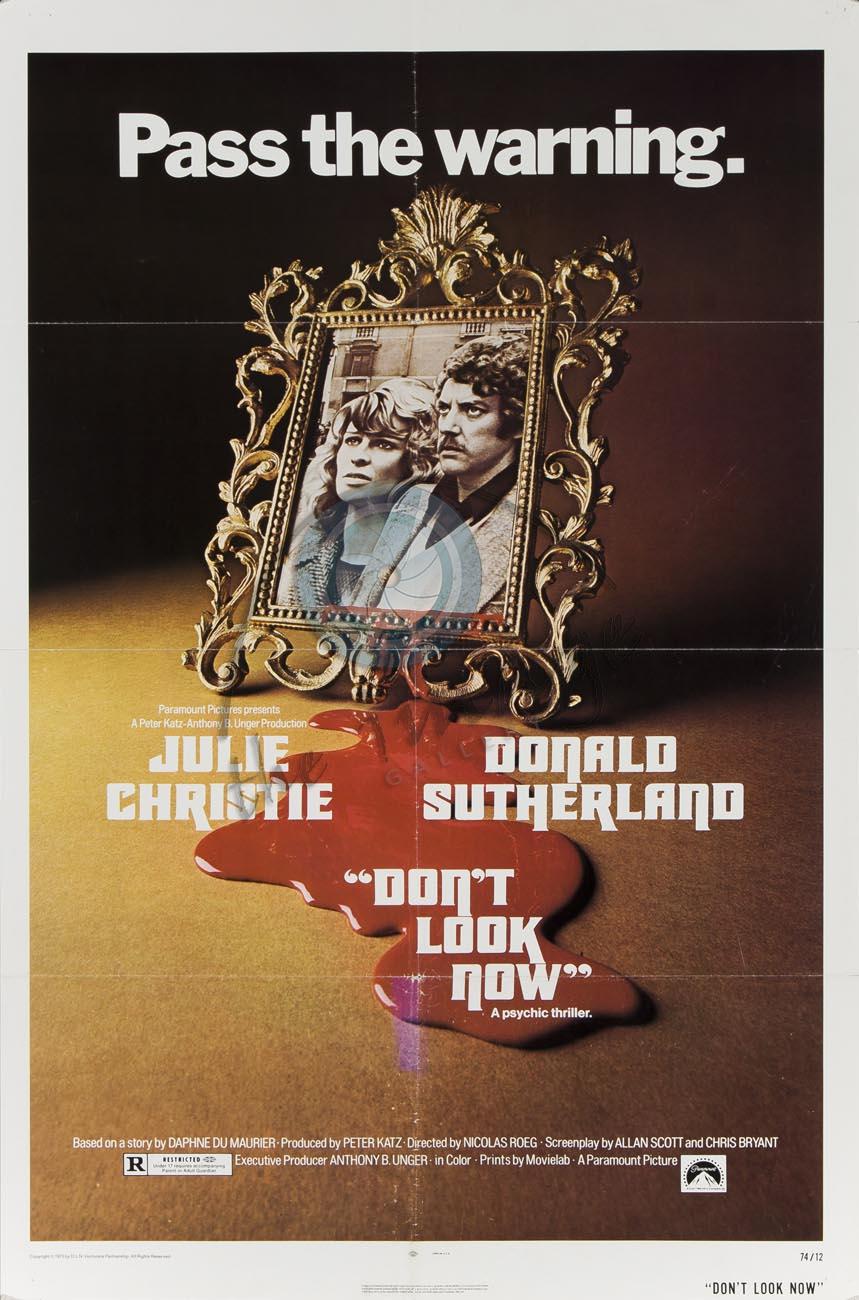 The Brits have a very layered way of moving up in the world of performing arts: you start at the bottom, and work your way up. I rather prefer that over the hope-you-get-noticed-and-rocket-to-fame model of American show business. One of the more interesting of these rising through the ranks stories is Nicholas Roeg, an intriguing cinematic voice who managed to keep his extremely singular nature in his ascent to the director’s chair.
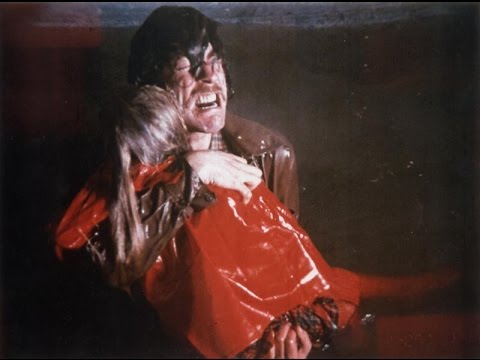 There is a lot to what she says: there has been a series of unsolved murders, and John keeps seeing a tiny figure darting about in the shadows of the winding streets, seemingly wearing his daughter’s favorite red raincoat – which she was wearing when she drowned. John himself also has the Second Sight, a notion which he vigorously denies, until he has a vision which sets in motion his doom.
 This fragmented vision of reality, strings flailing about in an effort to wrap themselves into the cord of fate, runs throughout the movie. John wandering lost in the alleys of the seedier side of Venice, stopping suddenly and saying, “I know this place,” unaware that he is foreseeing his own eventual death; the final shock that we see coming from a mile off (like John, if he would only let himself see as the blind sister does) which is nonetheless so visceral, so shocking, (and it must be said, Christie and Sutherland are so good in their roles) it burns itself into your mind, even though you thought it prepared.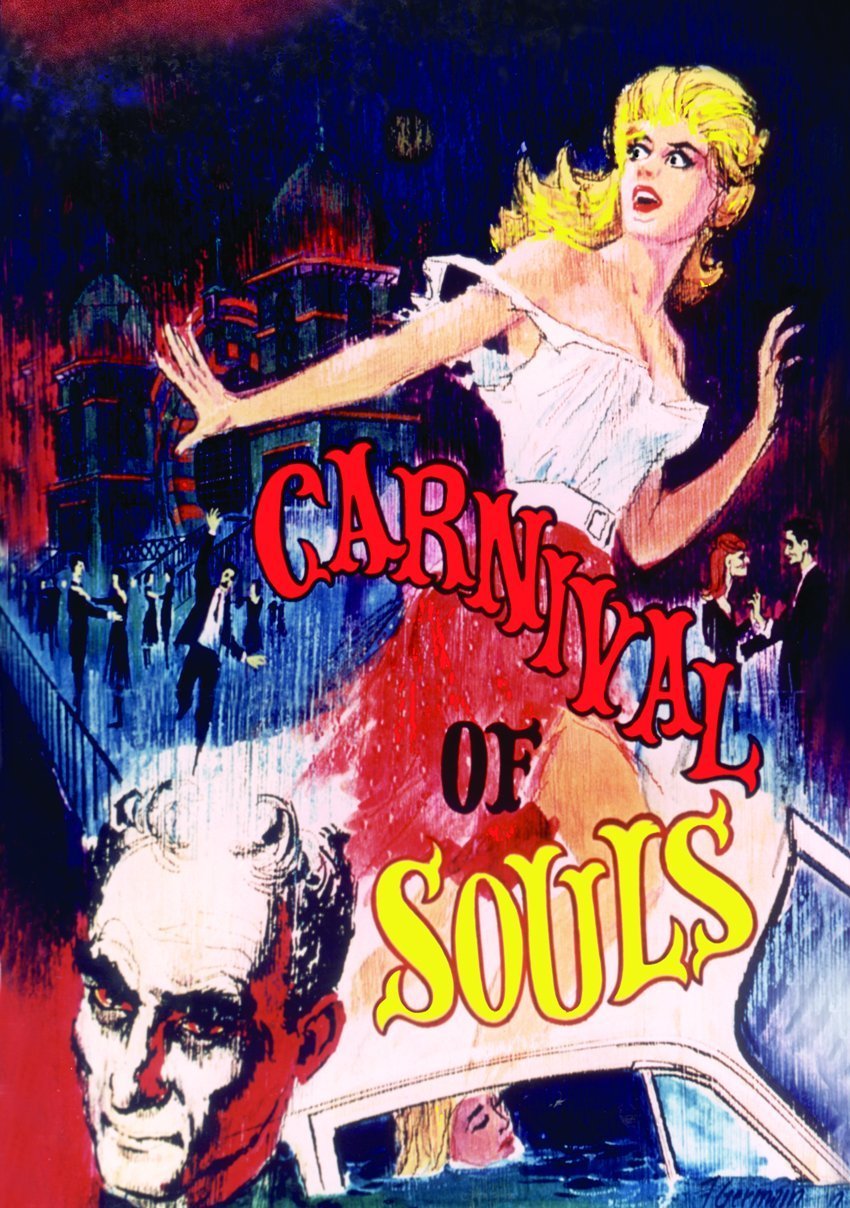
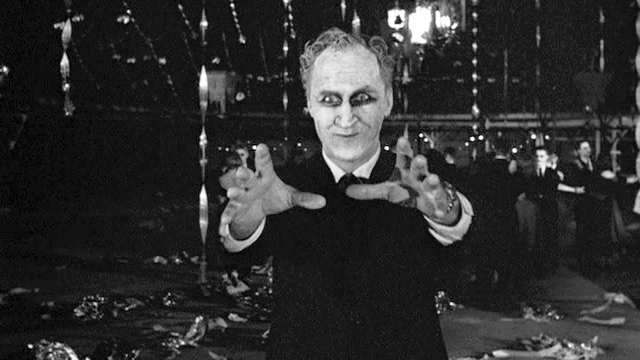


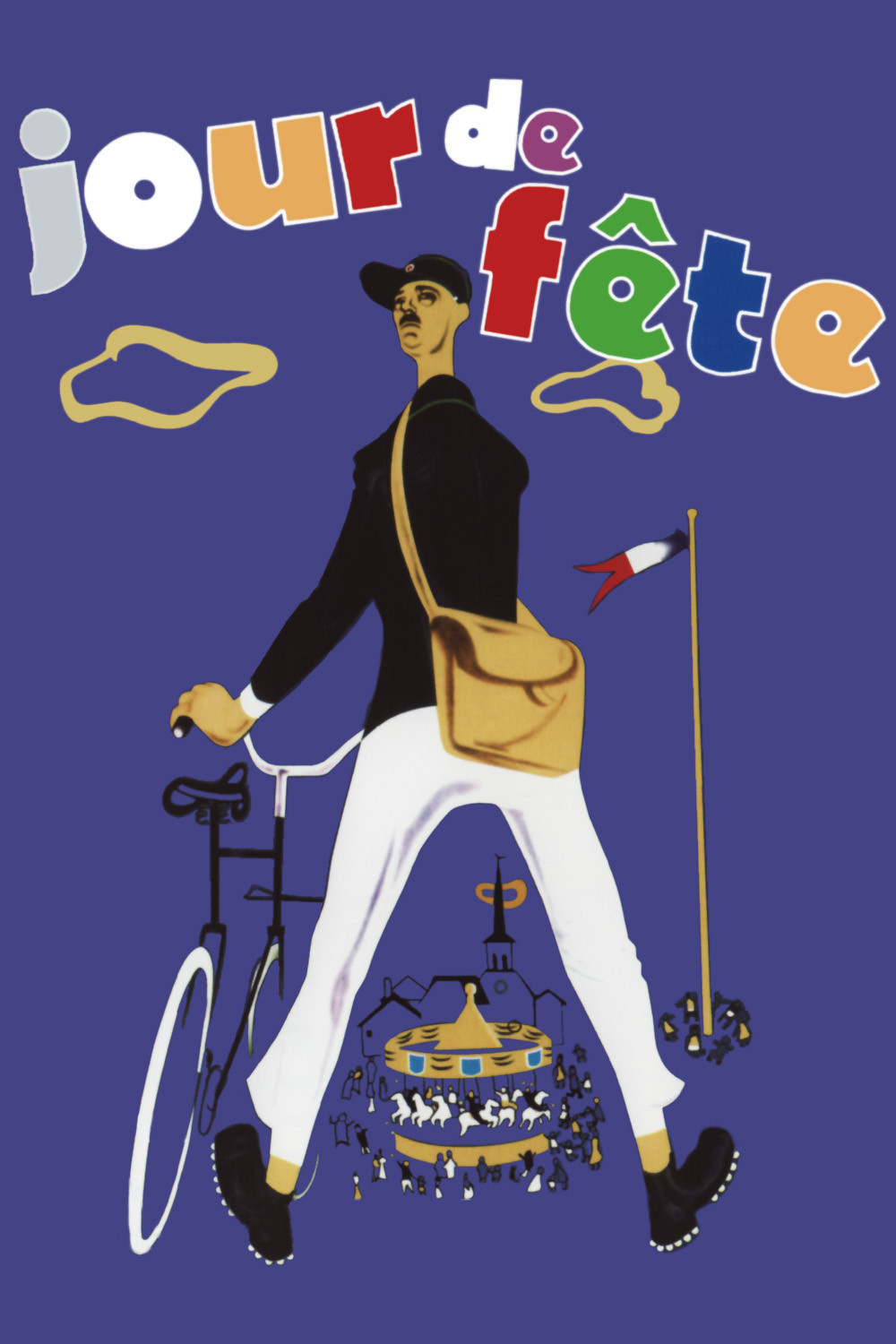
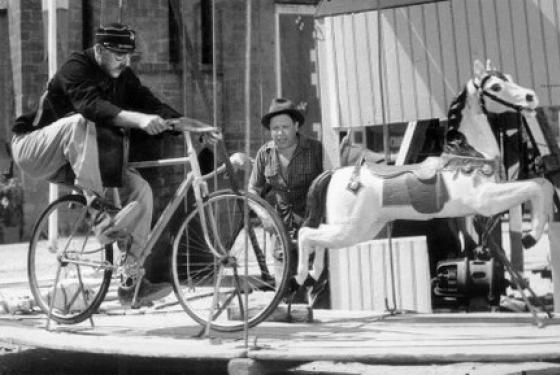

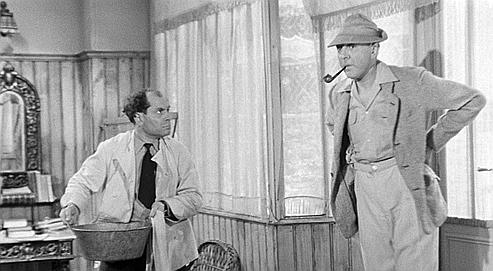
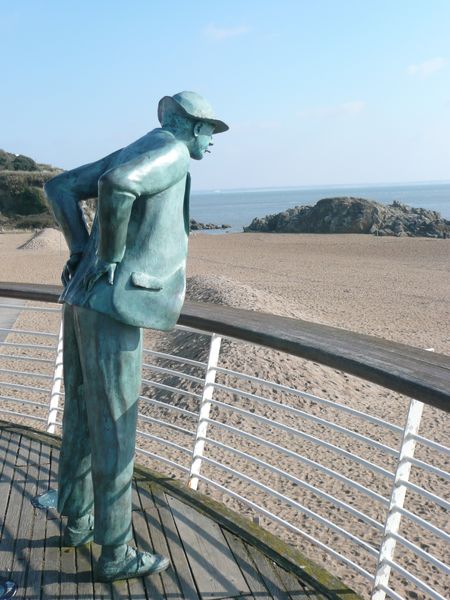


![man-bites-dog-screenshot-2[1]](https://drfreex.com/wp-content/uploads/2014/08/man-bites-dog-screenshot-21.jpg)
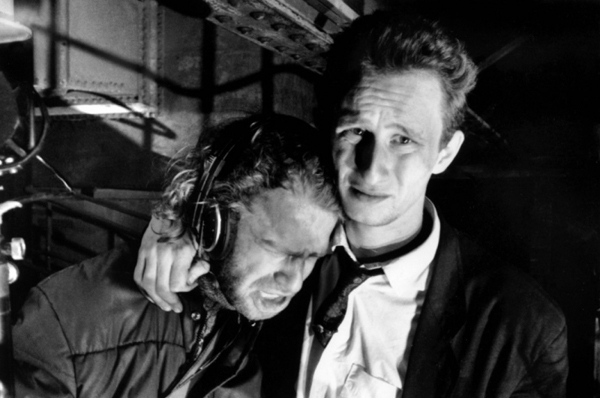


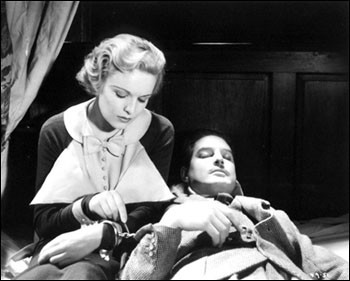
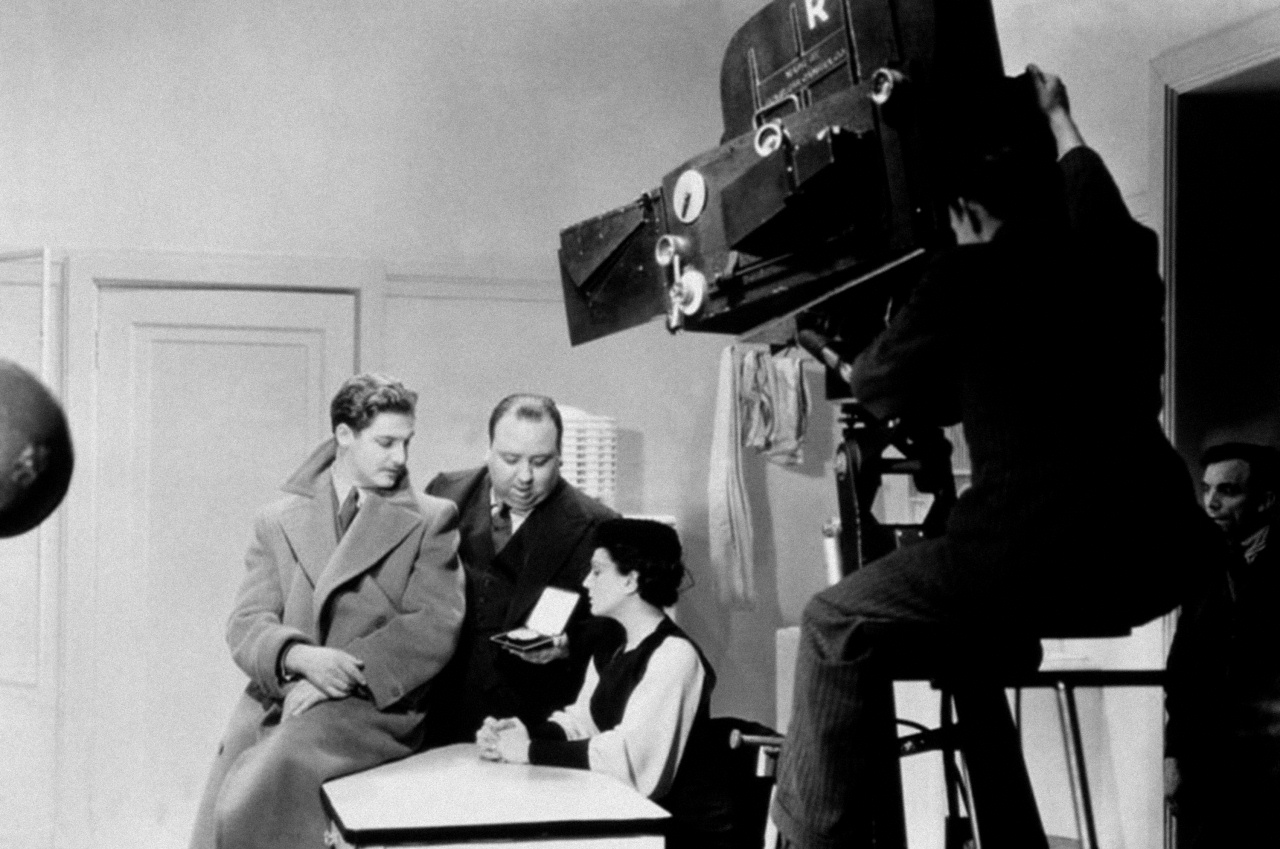


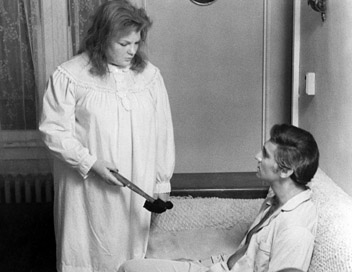


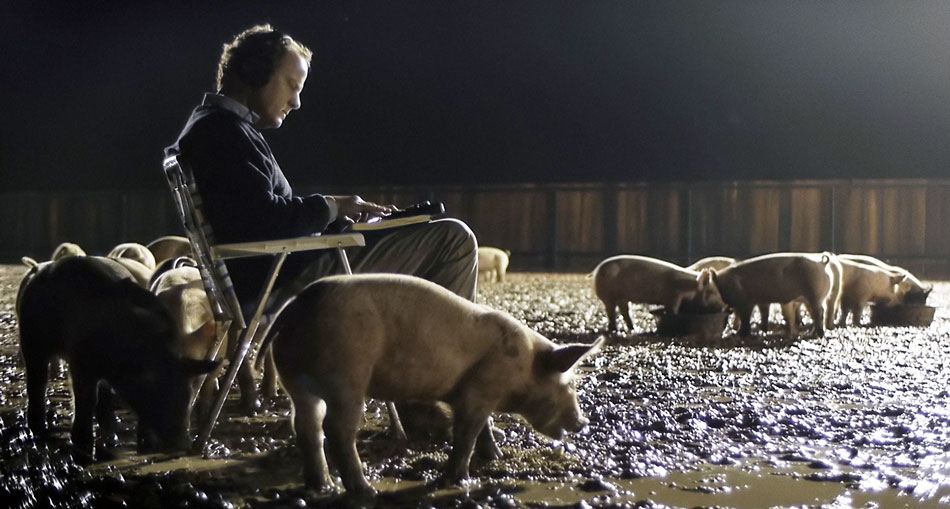


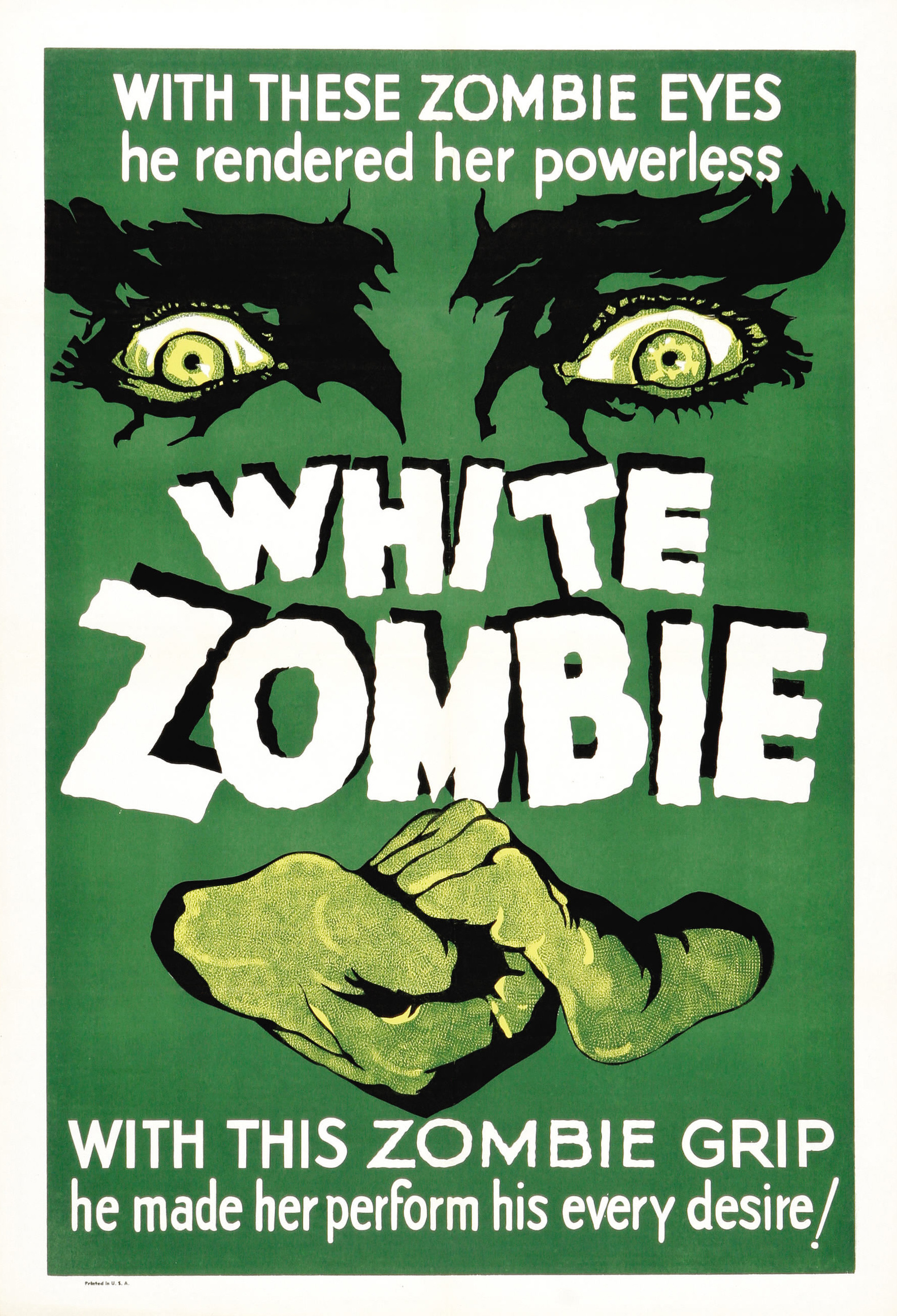



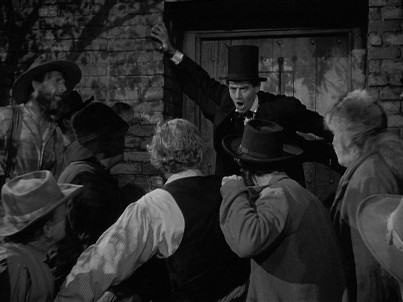
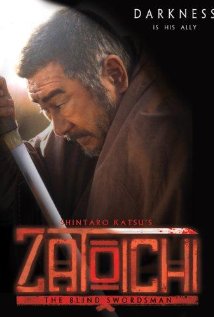


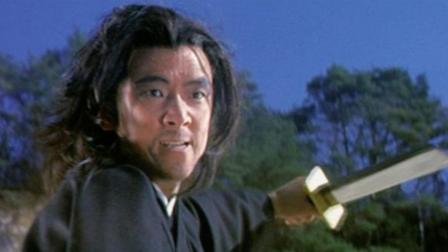


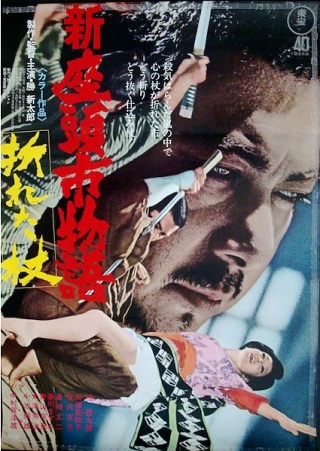


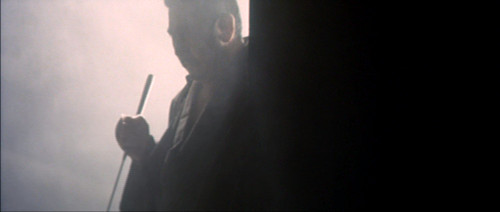

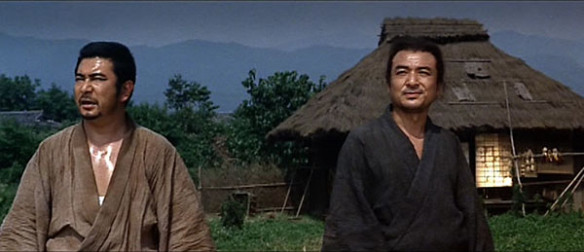

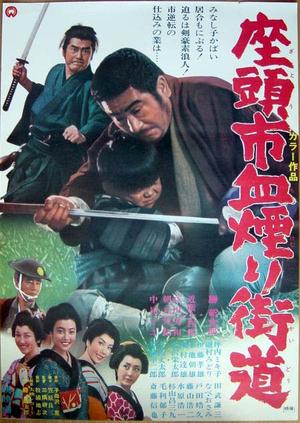


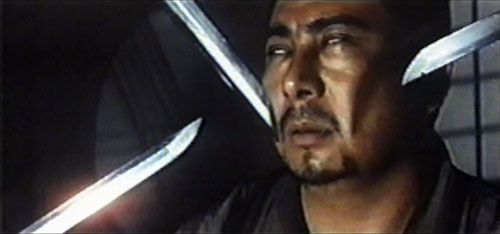


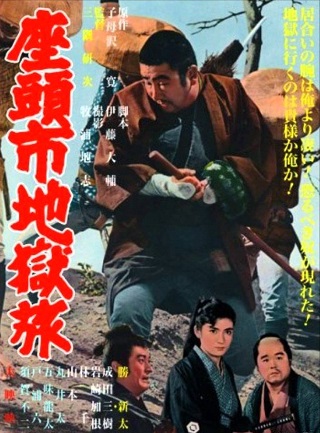

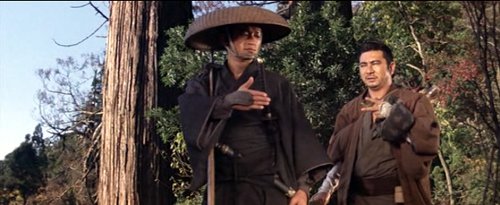


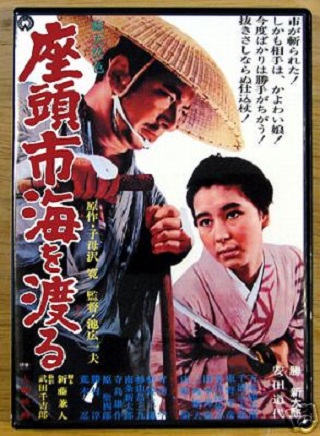
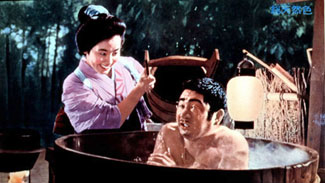
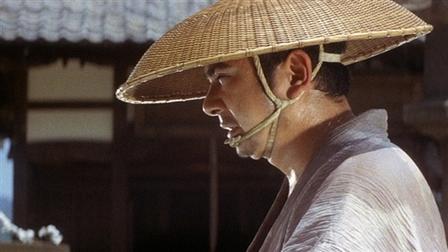
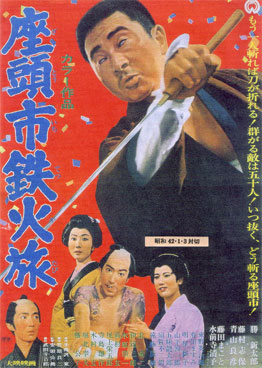
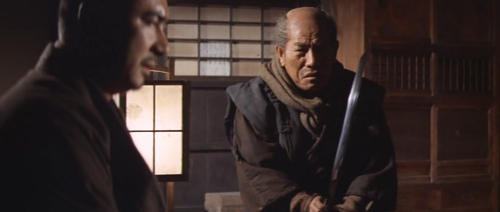

 drfreex.com