A Report from Busyland

You know what? It actually does chafe my lazy ass when I don’t weigh in here for a while. Really, it does. Though that amounts to the posterior of a rat when I don’t have the time to do a halfway decent job of it; I suppose if I didn’t care about things like spelling and general grammar it would be a lot easier. Speaking of spelling and grammar:

Most of my free time is taken up by being paid to slam words together. I’m currently working on three separate projects, of which only one is a sure thing, but that sure thing is paying me actual money. Money is good, I like money. I’m fairly certain that not stressing over getting the bills paid has put an extra month or two on the back end of my lifespan.

SAY HELLO TO MY LEETLE FRIENDS!

SAY HELLO TO MY LEETLE FRIENDS!

Money also helps in the other current fun struggle of my life, my recent diagnosis of Type 2 Diabetes. That is not going as swimmingly as I would like, but pfft! What does? It doesn’t take a pack of scientists to point out to you that Eating Right is expensive, which makes no goddamn sense to me, but that only means that it fits in well with the rest of the world at large. I started with unregulated sugars near the three hundred mark, and now generally clock in under 200. I need to exercise more, but A) gyms are also expensive, and B) we are currently experiencing one King Hell heat wave, which renders the outdoor exercise idea kinda risky. Twenty years ago, I would get up at 4am to get in five miles before the sun came up and tried to obliterate the city. I was also twenty years younger then.

Besides trying to coax creativity out of a brain trapped in a system with changing blood chemistry, I find that the other thing cutting into my movie-watching time is the twice-daily blood test. Most of my movie-watching got done in the evening, after dinner. I now have to wait 30 minutes after din-din to do the evening stick, and I haven’t gotten good enough at it to perform the ritual in my easy chair. I need a desk or table to hold everything at the ready, glucometer, lancet, alcohol pad. Doing otherwise really tempts the Blood Gods and I wind up wasting a test strip, which even bought at a discount cost 25 cents a pop. What I’ve gotten really good at is cursing, though many would opine I already had a fair mastery of that art.

As I’m writing prose, I’m also reading more. I’m pleased to announce that so far, Richard Kadrey’s Kill City Blues may be his best yet. But I feel that I’m stealing time away even for that.

Enough. I watched some stuff.

BurdenOfDreams_poster01Ever since Fitzcarraldo, I had wanted to see Les Blank’s documentary on its making, Burden of Dreams, which, unlike a lot of Blank’s work, is fortunately available on a Criterion disc. Given Herzog’s penchant for absolute, even dangerous realism – that is damn well a real boat being hauled up that incline – it is no surprise that the actual filming was a massive clusterfuck on the level of Apocalypse Now.

But the surprising thing is – and Herzog acknowledges this in the supplementary material – is that Blank produces a documentary that is not so much a retelling of the filmmaking process, but of the life around the process, how it affects and possibly even changes people. The film junkie in me is kind of disappointed, but Herzog admires and respects the result, so I probably should, too.

My son & I went to see Pacific Rim, and we had a whole lot of fun. I am bemused that a whole generation of kids are going to know the word kaiju and have no idea who Godzilla is, or worse, think he’s a giant iguana. Maybe next year’s movie will change that.

Yes, I know a lot of people diss Pacific Rim. I don’t care. Haven’t you figured that out yet?

And speaking of not caring: it was about that time that Sharknado hit. It certainly lit up Twitter, though that didn’t seem to convert into ratings numbers; nevertheless, it was rebroadcast the next week, got a theatrical booking, and the sequel is on the way.
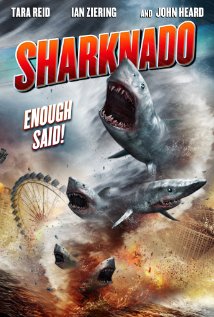
Sharknado_posterI don’t have cable (too expensive for something I wouldn’t use). This did not stop people from chiding me over my lack of opinion and bloviating about Sharknado. They were disappointed in me. Where was my bad movie moxie? When was I going to watch it? Huh? Huh?

Well, since I am apparently some sort of dancing monkey, I found a way to see it. The movie achieves Maximum Stupid in the first three minutes and spends the rest of the movie trying to match it. It comes close many times. This really is the sort of thing I would have gone on and on about for 2000 words back in the day, but you know what? There are lots of people already doing that for Sharknado. I see despairing posts from other critics about how they’re tired of spectacle, how Man of Steel‘s fight scenes put them to sleep, waaaaah. That’s how I am with stupidity. Especially willful stupidity. Make no mistake, that’s what this is; once they had that title, they ran with it. I appreciate that. However…

I had Wild Strawberries and The Life & Death of Colonel Blimp waiting on me upstairs, but there I was, succumbing to peer pressure and watching Sharknado. This dancing monkey didn’t even get some coins in his tin cup.

So after spending most of its running time wondering where the title character was and saying things like, “Wow, you can firebomb a tornado out of existence from a helicopter?”, I shot the world the finger and watched Onibaba.

full.onibaba-mexicanlobby-21292__11538.1374517744.1280.1280Onibaba had been on my radar for a long, time, since my teen years when it cropped up in a book about horror movies. So it finally got scooped up in one of those Barnes & Noble Criterion sales.

Based on a Buddhist fable, it’s the tale of two Japanese women in the (I think) period of constant civil war preceding the Tokugawa era. They are a mother and her daughter-in-law; the son went off to war and while they wait for him to come back and work the farm, they make ends meet by waylaying defeated samurai seeking to hide in the sea of reeds surrounding their hut. The samurai’s bodies are tossed down a  deep hole and their armor and weapons traded to the local black marketeer for grain.

The son’s friend returns with news of the son’s death, and so begins the unraveling of the relationship between the two women. The friend makes a play for the recently widowed daughter-in-law, and she returns his interest. Mom is worried that she’ll be left to fend for herself, and is also dealing with not a small amount of sexual frustration herself.

onibaba2While the two young’uns are out dallying, Mom has to take out a samurai wearing a demon mask all by herself, and gets an idea. Once she takes the mask off his corpse – revealing a hideously disfigured face – she uses the mask to scare the daughter away from her nighttime visits to her stud. Since I found this in a book of horror movies, we can be pretty sure that this is going to backfire in some terrible manner.

Onibaba is definite slow-burn material; director Kaneto Shindo (who passed away only last year, and was also responsible for Kuroneko, another Criterion offering) serves up great vistas of tall reeds swaying in the wind like a vertical ocean, its turbulence obscuring and drowning his characters. It’s astounding how erotically charged the relationships become, how the daughter blossoms under the interloper’s attentions. This is another movie that, although made in 1964, when even Roger Corman was making color movies, could not have been produced in any medium but black and white. The characters, though far from smart, are drawn with such craft that their survivalist cunning was more than a tonic for Sharknado.

Absentee Landlord Writes In

You may not believe it, but I do try to post here at least once a week. That really doesn’t seem too much to ask, does it? A few hours a week, devoted to this little corner of the Web? Except that this hasn’t happened this month, and here’s why.

The stunningly obvious: there was that Roger Ebert month burning me out on watching movies and writing about them, followed up by the local Independence Day festivities, which always serves to point up exactly how old I am and how many of my body parts have been busted over the years (fewer than Jackie Chan or Evel Kneivel, but then, I don’t feel their pain except in the most vicarious ways). I retreated to one of my older favorite activities: sitting in my easy chair and reading.

devil saidSo, for our first digression: I finished Richard Kadrey’s Devil Said Bang, the fourth Sandman Slim novel. I love Kadrey’s work – its punk tone, the characters, the dialogue. It’s Raymond Chandler for people who cut their teeth on splatterpunk and b-movies. If I have one complaint about Kadrey’s novels, it’s that his prose is so stripped down, eschewing even the idea of chapters, that his novel’s climaxes don’t have as much raw power as they deserve. His endings seem a little too tidy, with the exception of Aloha From Hell, which had a pretty remarkable game-changing denouement. I still look forward to Kill City Blues, out at the end of this month – his novels are great rides, and the pros far outweigh the cons.

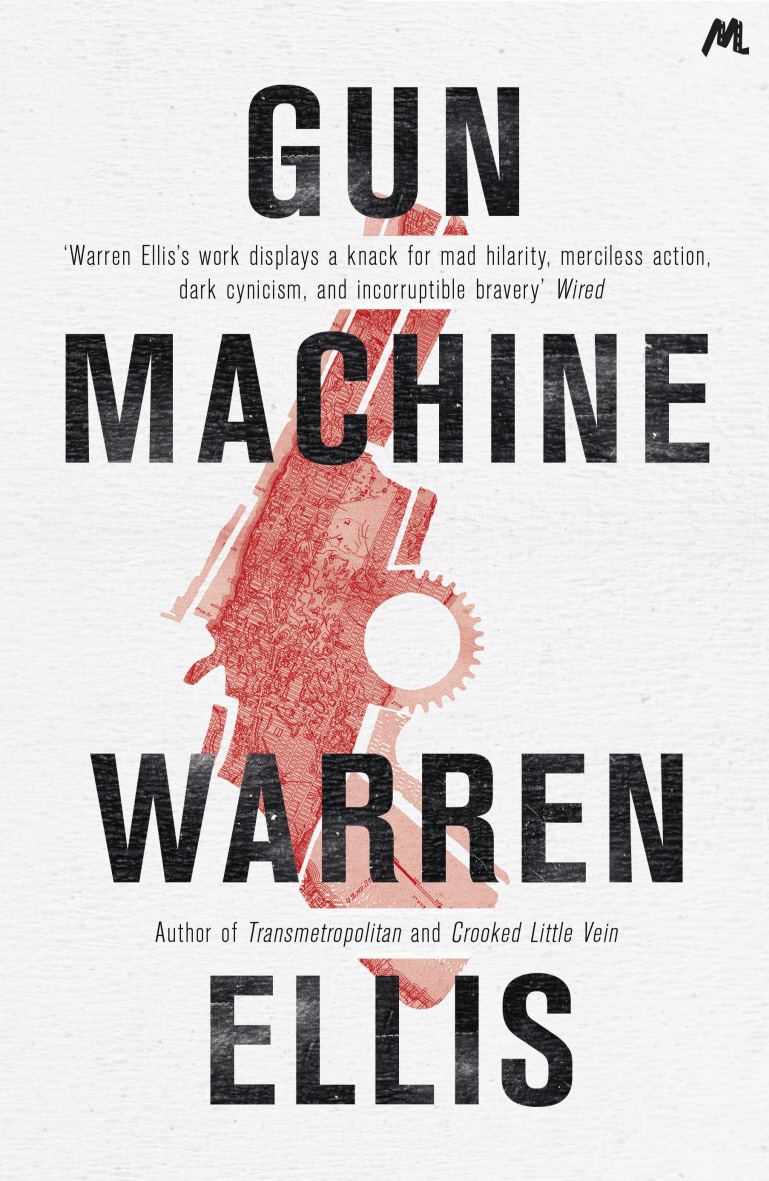
gun machineWarren Ellis’ Gun Machine was taken up after that, which, while not as gonzo as his previous prose novel, Crooked Little Vein, is still a bracing, fiery beast of a detective novel. In one day, NYPD detective John Tallow loses his partner and opens the most bizarre case in the city’s history when he discovers evidence of a serial killer’s work going back 20 years: a room decorated with guns used in practically every unsolved homicide in that time. He’s aided in his investigation by two eccentric CSUs named Bat and Scarly, a very entertaining Odd Couple. Intriguingly, the killer himself seems to slip and slide between present day and pre-Revolutionary War Manhattan. The ending was a tad disappointing, but the characters are incredible, and it’s with a mixture of joy and sorrow that I find out Gun Machine is being developed for TV.

I needed something to fill my time between Gun Machine and the release of Kill City Blues (which I hope to tide me over until Lyndsay Faye’s Seven for a Secret comes out in September), when I remembered Andrew Vachss had a new novel out, Aftershock.

andrew-vachss-aftershockI’ve been reading Vachss for years, starting with his Burke books. He writes fascinating, dark books filled with compelling characters on the fringe of society. He’s also a writer who pumps a very large amount of his personal rage into his novels. Aftershock is very obviously based on the Stubenville High School rape case, and presents a new character, Dell, a highly-trained, emotionally-damaged mercenary trying to make a new life with the woman he loves (a former nurse with Doctors Without Frontiers who saved his life and his soul). Dell has the smarts and the skills to take on the people responsible for the rape culture in his new hometown, but is savvy enough to use the System to pull it up by the roots. Not my favorite Vachss novel, but I also have to admit I could not put the book down in the last 75 pages or so.

Well, that was a nice diversion. Now let’s get to the bad stuff.

There has, thank God, been an uptick in paying work this year. The hanging on by fingernails stuff was getting very wearying. That, you might point out, is good, and I agree. I enjoy having a little money as compared to no money at all. But. This also means I was able to pay for the labwork my doctor was insisting on. Oh, it was high time for it, I admit. I’ve been on blood pressure and two forms of cholesterol medication for the past year and a half. In my last bout of dental work, a routine BP check showed it to be running a little high, so that dosage needed to be looked at, blah blah blah.

When I received my copy of the lab results, I knew trouble was on the way. I had successfully gotten a couple of the cholesterol counts down, but one was still a little too high and my triglycerides were through the roof, and probably took out three jet liners on their way up. But there were other indicators that confirmed some suspicions I’d had for a year and more.

At my last eye exam, the optometrist said, “Hm, your eyes are dilating very slowly.” There was a lessening of sensation in my feet. My vision would be very blurry after waking up – when I managed to sleep. My blood pressure med is a diuretic, so I had to go to the bathroom more often, but I was doing that with ridiculous frequency. Constant fatigue was beginning to be a problem.

hmmm-diabeetus-you-saySo while the nurse practitioner was going over my results with me, she looked up and said, “Have you gone diabetic on me?” I could only say, “Sure looks like it, doesn’t it?” Following in the footsteps of my father and his father before him.

So I have more pills now. No insulin – at this point, we try to control it with pills, diet and (ha!) exercise, meaning I have to find one that doesn’t put me on the cane more than I already am. A lot of the lifestyle changes I had already made; I’m now working on stuff like reducing carbs and saying farewell to my beloved hot dogs. Sugar I largely cut out years ago. I stick myself for the glucometer twice a day; the initial outrageous readings have trended downward since.

The blurry vision has abated. I’m sleeping a little better. I may not have pep in my step but my mind seems clearer of late. It’s kind of like I was cocooned in some sort of white noise for the last few months and that’s finally diminishing as my chemistry normalizes.

Needless to say, this isn’t an experience I recommend. Just stepping into the field of glucometers was a nasty eye-opener, as those things and their test strips are based on the printer/ink cartridge business model. The first thing I did was search the Internet for a place that sold test strips at a quarter of the price of my drug store. My wife, who has years of experience as a diabetic, has been an invaluable resource to me in this time. I think she’s glad to finally have someone close to share this with.

fail-owned-wendys-failSo that took up quite a lot of my time (the saga of six separate trips to the lab? Won’t bore you with that story). Finally, in attempting to end this on an up note, I’ll say that a couple more writing projects have presented themselves. One won’t start paying off until next year, but another will this year – and the other writer backed out on this one due to time constraints, so I’m flying it solo – for more money – but that means my work there just doubled. My weekend acting gig has decided it is time to mount a new show NOW DAMMIT, so there goes even more time. My time management skills will get a workout, even if it’s not the kind of workout I need.

I’m still finding time to watch the occasional movie, though. Maybe I’ll even have time to tell you about those. Some time.

The Return of the Crap of July

If you’ve been around me any length of time, you know that every July my Day Job tries to kill me. We cover the City’s Independence Day Festivities; the July 4th Concert, itself, is not so bad – it’s in an air-conditioned auditorium. Ah, but July 3rd, and the Parade – which takes place at 7pm, necessitating setting up equipment and running cable in the heat of a Texas Summer afternoon – that can be perilous. Because of my advanced age, I get reduced duty, but I feel every one of my infirmities at the end of day, and several days afterwards.

So I always celebrate my survival by watching terrible movies at a Crapfest.

I arrived on time, which meant I was practically the last one there. This was to be one of our most well-attended Crapfests, making seating tricky. I, however, had purchased a camp chair earlier in the day for the lordly sum of seven dollars, so I was set.

Host Dave started off with a vintage VHS of the classic days of Night Flight, including an episode of Dynaman, which thrilled me to no end. I followed up with some files culled from Everything is Terrible, with the biggest hit on everyone’s psyche being provided by Philip Michael Thomas’ music video. Hell, Don Johnson did it, why not?

Once again, I found myself leading off the movies. I had spent a goodly amount of time second-guessing myself here; this was soon after the passing of Hong Kong movie legend Lau Kar-leung and I wanted to show one of his movies. I had narrowed it down to Heroes of the East, my personal favorite, and Legendary Weapons of ChinaLegendary Weapons is more of a traditional kung fu movie, and ends with a king-hell fight between Lau and his younger brother, who were both accomplished martial artists. Heroes of the East gets my vote for best martial arts movie EVAR, but the first 40 minutes or so is character-developing comedy (punctuated by some minor fights), which could be the kiss of death for a rowdy bunch of Crapfestistas.

She's baaaaack...

She’s baaaaack…

The deciding vote in my head was influenced by one thing: Dave had dug up a copy of Witch With Flying Head, a Taiwanese horror movie I had long wanted to see. Taiwanese movies are visually similar to Hong Kong movies, so I tossed out the Lau movies and went with Lady Terminator, which I wrote about recently, doncha know. I knew the mob would appreciate it. It has boobies.

The main subjects during the viewing were: this was not as good a movie as Terminator (“You’re complaining about the quality of a movie at Crapfest?” asks Dave), and the fact that my seven dollar chair folded under me, trapping me in a cheap steel talon of death. Yeah, thanks for helping me out of that, guys. I look forward to standing by while you sink in quicksand some day. Alan very kindly surrendered his seat to me, and Dave wheeled out his office chair for Alan.

Lady Terminator also brought the terms “Vagina snake” and “Wang shot” into our vocabularies, for better or worse.

humanoidNext up was another Alan discovery, The Humanoid, which was fortuitous, because I had recently stopped hating Alan for Road to RevengeThe Humanoid is another Italian science-fiction movie produced after the success of Star Wars, but what it has over the venerable Starcrash is that the filmmakers got to actually see the movie they were ripping off before making their version. The Humanoid  often has the look down, from Death Star corridor look-a-likes to a villain with a black helmet modeled on Samurai and gladiator armor. This advanced civilization, like Star Wars’ has also advanced beyond the need for things like bras. Just like Starcrash, though,when we finally get a space dogfight, all the models still zoom around in a straight line.

Oh, the plot? Uh… Dark Helmet wants to do bad stuff. He is aided by Barbara Bach as Space Countess Bathory and her pet Mad Scientist, Poor Arthur Kennedy. Poor Arthur Kennedy has some sort of hate-on against Corinne Clery, because she gave him a bad review on Space Yelp or something, and once he uses some nook-you-ler popcorn mixed with an atomic missile to turn Richard Kiel into a “humanoid” with super strength and invulnerability (and give him a shave, to boot), he sends the monster to kill Clery, but she’s the tutor of The Golden Child who uses Zen mysticism to bring the Humanoid back to himself and also there are two albino space elves who crop up to save the Golden Child when necessary.

In other words, I had no damned idea what was going on.

humanoid_09I haven’t even mentioned the robot dog, which is a real 1979 robot – in other words, limited mobility and utility. Most of the time was spent with Dave and I convincing the others that Corinne Clery was O in The Story of O and the darkness punctuated by men desperately using their smartphones to access Google Image Search, and then, once more, cursing that we were not watching another movie.

I don’t usually feel this nice, but here’s Humanoid cut down to ten minutes, almost half of which is the opening credits. Prepare to have your heart broken, as were the hearts of many Crapfest attendees, by the credit, “Music by Ennio Morricone”. Take what comfort you can in the fact that the spoken language is Italian, which means you have to concentrate on the pretty pictures:

flying headNow finally we had Witch With Flying Head, and it turned out my choice of Lady Terminator had given Dave a reverse case of the nerves, because technically the monster in Witch With Flying Head is a penanggalan, an Indonesian monster which is a woman’s head severed from her body, flying around with its guts dangling beneath, as detailed in Mystics in Bali, a movie shown at an earlier Crapfest. Dave was worried about two Indonesian flicks on the same bill – an inverse version of my earlier worries – but this movie was Taiwanese, as earlier stated.

Back in the 90s I watched an awful lot of Chinese laserdiscs with my pal Parker, and a lot of them had the same flaws as this copy: taken from a widescreen master with the telecine set to the absolute middle of the screen, causing the subtitles to drool off the edges of the screen. VHS tracking fuzz at the bottom of the screen, often obscuring the already-blurry subtitles. Those subtitles were often created on the fly, a bi-lingual translator dictating to a typist for whom English was a second language, resulting in very fractured results (which form my most cherished memories of those days). Then the operator shifting the image down to obscure the fuzz, and obliterating the subtitles. No image control on the print, meaning that nighttime scenes – and in a horror movie, there are a LOT of nighttime scenes – that would have alright with a projector bulb behind it, were pitch black.

In other words, welcome to how we had to watch obscure cult movies at the turn of the century, you spoiled brats. Let me tell you about the time I watched Jigoku without subtitles.

WitchWithFlyingHead+1977-27-bOh God, now you want a plot, don’t you? Okay. So this nice lady gets cursed by a wandering sorcerer who wants to marry her (this actually happens quite a bit in HK horror movies) so that she becomes “the flying evil” – a penanggalan – at night, until she accedes to the wedding. She and her two ladies-in-waiting escape to the country, where she can’t hurt anyone while she’s the Flying Evil – yet she does, anyway, because, you know, movie. A wandering wise man manages to lessen the curse (and number of snakes in her body) so that she will only become the Flying Evil on the 15th of each month, and leaves her friends a spirit box that will trap the Flying Evil on those nights. Until he learns some better mojo and can come back to cure her completely.

But then a Snake Monster sets up shop in the vicinity, seducing men in the night and killing them. Our cursed lady uses the spirit box to trap the Snake Monster, and winds up falling in love with and marrying the man she saved. The women always make hubby leave on the 15th of each month – eventually, taking their child with him – and so it goes. Until the Snake Monster escapes, the original sorcerer shows up, still hot for marriage, and everything comes down to a low-budget monster magic showdown at the end.

Now, I can say I’ve seen it, but I really wish Mondo Macabro or someone would put out a decent print so I can say that I’ve seen it. There is a full-length (and likely illegal) version on YouTube that is un-subtitled, but at least you can see everything. I was pleased to discover that the penanggalan is actually pretty well done.

wsposterHow do you wrap up an evening like that? There is only one way, prompted by the uncommon attendance of David (Not Dave), and that was Can’t Stop The Music.

Can’t Stop The Music, as if you didn’t know, is the fictionalized story of how The Village People got together in the glory days of the late 70s. I had never gotten more than five minutes into it, because those first five minutes feature Steve Guttenberg, in short shorts, on roller skates. Past that, though, the movie’s a pretty harmless affair, a combination of old showbiz movie cliches and lets-put-on-a-show tropes. Mark kept entoning that shortly after this movie, Valerie Perrine turned into the Sea Hag or something, causing one to think that Perrine had burned Mark’s village to the ground when he was a child.

The other memorable thing is the acting debut of Olympic decathlete Bruce Jenner. Jenner seems to feel that as long as his face is moving, he is acting, and he acts a lot. This leads to many scenes where Steve Guttenberg and Bruce Jenner try to out-mug each other. There is also a scene, just prior to the “YMCA” production number, where Jenner’s costume manages to out-gay The Village People, which is sort of amazing. After the “YMCA” number, every man in the room had turned gay, except for David, who had become supergay. Such is the power of cinema.

Here, you can be gay, too:

So I crossed off a couple of wanna-sees that evening, which is all I ask of a Crapfest. Well, food and folks, of course, but there are few things we enjoy so much as being able to say, “My God, that was really horrible.”

After Ebert: More Movies 2

Having survived covering the City’s Independence Day festivities (two days of grueling remote television work), I should probably finish playing catchup on my movie watching.

vhs2First off, about a year ago I held forth on V/H/S, a horror anthology where all the stories were presented in the found footage format. Bucking the trend, I like it if it’s done well – my definition of “done well” is apparently far looser than most others. Then again I also recognize shades of quality between “Excellent” and “Worst Thing EVAR”. Like any movie anthology, V/H/S had its high and low points, and was successful enough to spawn a sequel. I wish they’d stuck with the original title, SuperV/H/S, but that was probably deemed too obscure a reference, so V/H/S 2 it was.

This time there are only four stories, which proves to be beneficial. As usual, our primary concerns with the found footage format is 1) Why is there a camera running? and 2) Why does whoever’s running this camera keep shooting while the story unfolds around them?

The first story, “Phase I Clinical Trials” circumvents both of these by presenting us with a man who lost an eye in a car accident and is fitted with an electronic eye that restores his sight, but also has an embedded chip recording everything for clinical test data. The catch (and there had to be a catch because this is, after all, a horror movie) is that he starts seeing some very unfriendly-looking ghosts. Not the most original concept, but it helps that he’s found by a woman who had a similar cochlear implant some time before, and who can hear the ghosts. This first story gave me at least one jump scare (even when I knew it was coming), some chills, and even a couple of laughs. Its only crime is that it could have used a little more development.

The second story,  “A Ride in the Park” by The Blair Witch Project‘s Eduardo Sanchez and Gregg Hale, kicks the quality up a considerable notch. A bicyclist attaches a GoPro camera to his helmet to record his *ahem* ride in the park, which is interrupted when he rides into the zombie apocalypse. Okay, a first person view of the ZomApoc has been done, but this time the cyclist gets bitten so it becomes a first zombie view. “A Ride in the Park” makes use of what has become common knowledge of zombie tropes to form a lean, mean story that is exactly as long as it needs to be.VHS2_Still02

I might have been satisfied with “Ride” being the best in show, except next up was the real reason I was jonesing to see V/H/S 2, the segment “Safe Haven” by Timo Tjahjanto and Gareth Huw Evans. I blush to admit that I am unfamiliar with Tjahjanto’s work, but I became a fan of Evans when I saw The Raid: Redemption and Merantau in the same day.

“Safe Haven” involves a TV crew finally getting permission to tape an interview with a controversial religious leader in his equally controversial commune. It turns out that this guru, a combination of Jim Jones and David Koresh, has agreed to let the crew in because their presence coincides with his cult’s horrific endgame, which proceeds to play out in real time.

2013-05-23-vhs2_havenEvans and Tjahjanto open up the found footage concept neatly; not only does the crew have two cameras, but each member has a spy camera concealed in the top button of their shirts (they’re hoping for a muckraking expose, not the fair and balanced story they promised), but once they arrive at the commune, the directors can also rely on the extensive closed circuit TV network. “Safe Haven” is the longest of the stories (and the probable reason for four rather than five stories in this outing), and that really pays off. There’s even a bit of character development, for pete’s sake.

The last story, “Slumber Party Alien Abduction” probably suffers from following “A Ride in the Park” and “Safe Haven”. You might remember some years back, back in the Alien Autopsy years, there was also a tape floating around that was supposed to show an alien abduction in progress at a family gathering. That’s what this is, with better special effects. This time the GoPro is put on a dog for a prank, so there’s a novel point of view, but I found it needlessly confusing and didn’t give a tinker’s damn for anybody but the dog.

But the first three are well worth watching.

I had wanted to embed the less spoiler-iffic green band trailer, but that one has links to other pages all over it (insert cursing here), so here’s the red band trailer, with some unnecessary commentary (oooh, there’s some hypocrisy right there):

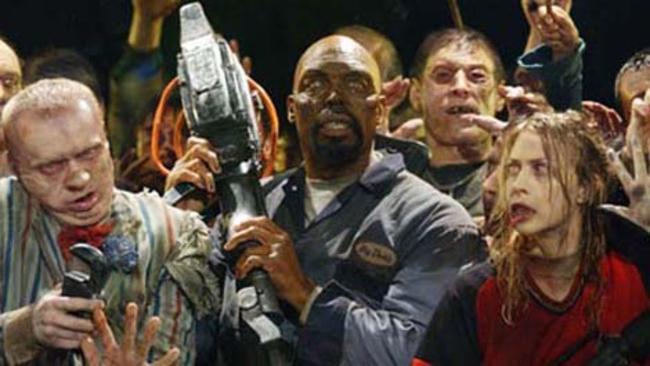
Land-of-the-Dead-2005-Hollywood-Movie-Watch-OnlineAfter that, I put aside my long-standing moratorium against zombie movies to watch George Romero’s Land of the Dead. Italian zombie movies just about did me in, then the Resident Evil movies combined with Uwe Boll’s House of the Dead informed me that the zombies of my youth were no longer edgy and scary, they were a cardboard commodity to be thrown at the screen while the director did his best Count Floyd: “Oh Look! Eesn’t it SCARY keeds! A-WOOOOO!” Something broke in me that day, and I walked away.

Land of the Dead, though, was like a breath of fresh air. Romero posits a pretty realistic outcome from his last three zombie flicks: humanity in a fenced-off enclave, at the center of which is a tower block where the rich live in luxury while the rest of the populace is either guarding the perimeter, scavenging supplies from surrounding towns overrun by zombies, or living a Thunderdome-type free market existence.

land-of-the-dead-1I knew John Leguizamo was one of the scavengers, but I was caught off-guard by Simon Baker playing their leader. As ever, Romero proves himself ten times more thoughtful than almost anybody working in the genre; the zombies are falling into their former life patterns, as implied in the earlier movies, but  Alpha Zombies are starting to emerge, and as Herbert West would point out, they’re starting to use tools. One of the city’s raids pisses off the emerging alpha zombie, and he leads a march on the distant tower; there’s a reason people refer to this as the Occupy Wall Street of zombie movies.

People rushed onto my Twitter timeline to inform me that the movie sucked or Romero should have stopped right there. Well, it didn’t, and I don’t know about him stopping. But I’m more willing now to find out, and picked up a copy of Diary of the Dead at Half-Price Books the next day. Take that, nattering nabobs of negativity!

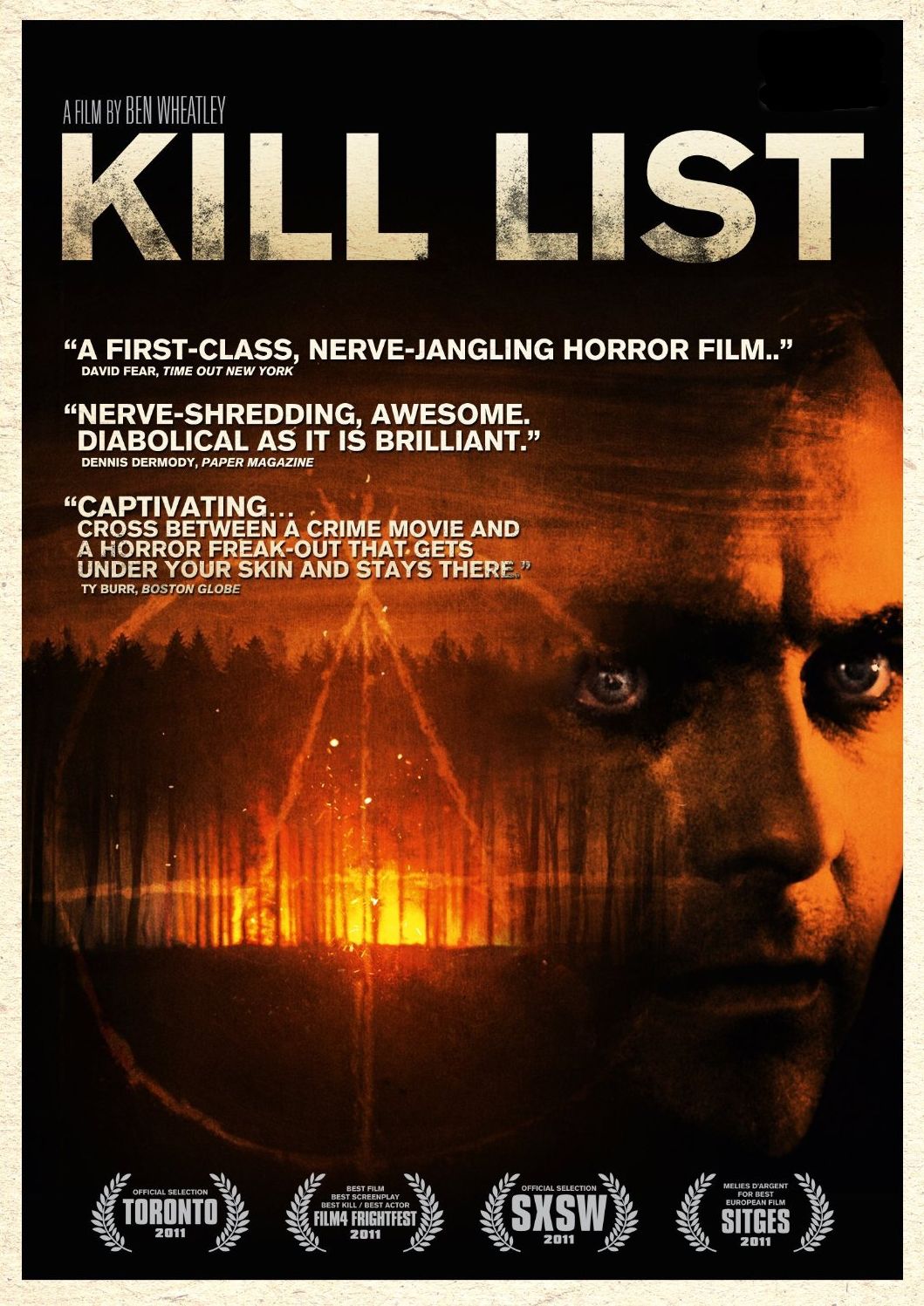
Kill_List-2011-MSS-poster-02Kill List would likely have flown under my radar were it not for the ardent advocacy of Internet film critic Scott Weinberg, who championed it on Twitter. A British movie directed by Ben Wheatley, Kill List introduces us to Jay (Neil Maskell), a hit man who’s suffering a form of PTSD after an assassination went very wrong in Kiev eight months earlier. The money is running out and his wife Shel (MyAnna Buring) is none too happy about what she perceives to be his indolence. Jay’s old mate Gal (Michael Smiley) shows up with a high-paying job, a chance to get back on the horse.

Jay and Gal are given a list of three people to murder, and they go to it with the ease of professionals comfortable with their work; things start to go awry almost immediately, though, when their first target, a priest, spots them before he shot through the head, smiles, and says, “Thank you.”

Their next target is known only as The Librarian – the library he presides over is a series of torture/snuff films, which sends the already edgy Jay right over that edge. He tortures the Librarian to find out where the films are made, and while Gal is upstairs looking for clues and money, the Librarian sincerely tells Jay it is an honor to meet him, and thanks Jay after every blow with a claw hammer.

killiist2Something really weird is going on, and after Jay makes a detour to kill everyone in the snuff film production company, Gal manages to walk him back to a sane enough place to try to back out of the contract, but their Client will have none of it: Jay is the man for the job. So Jay and Gal seek out their last target, an MP on his own country estate, at which point things begin to really go to shit.

Kill List has a very intriguing tone; it feels like a low-budget indy relationship film that loses its way and strays into Charles Bronson territory, then, totally lost, careens into a Dennis Wheatley novel. As Jay and Gal struggle through their trip to the end of the Kill List and the corresponding heart of darkness, things get stranger and more disorienting; it all leads to a gut punch of an ending, making it one of the more memorable horror movies of the last few years.

My only problem with it – and this is a personal failing – is that I find the indy relationship parts uncomfortable and in some places, mere filler. The uncomfortable part means the director and the actors are doing their job well; I’m just a slob who wants to get to his scary stuff.

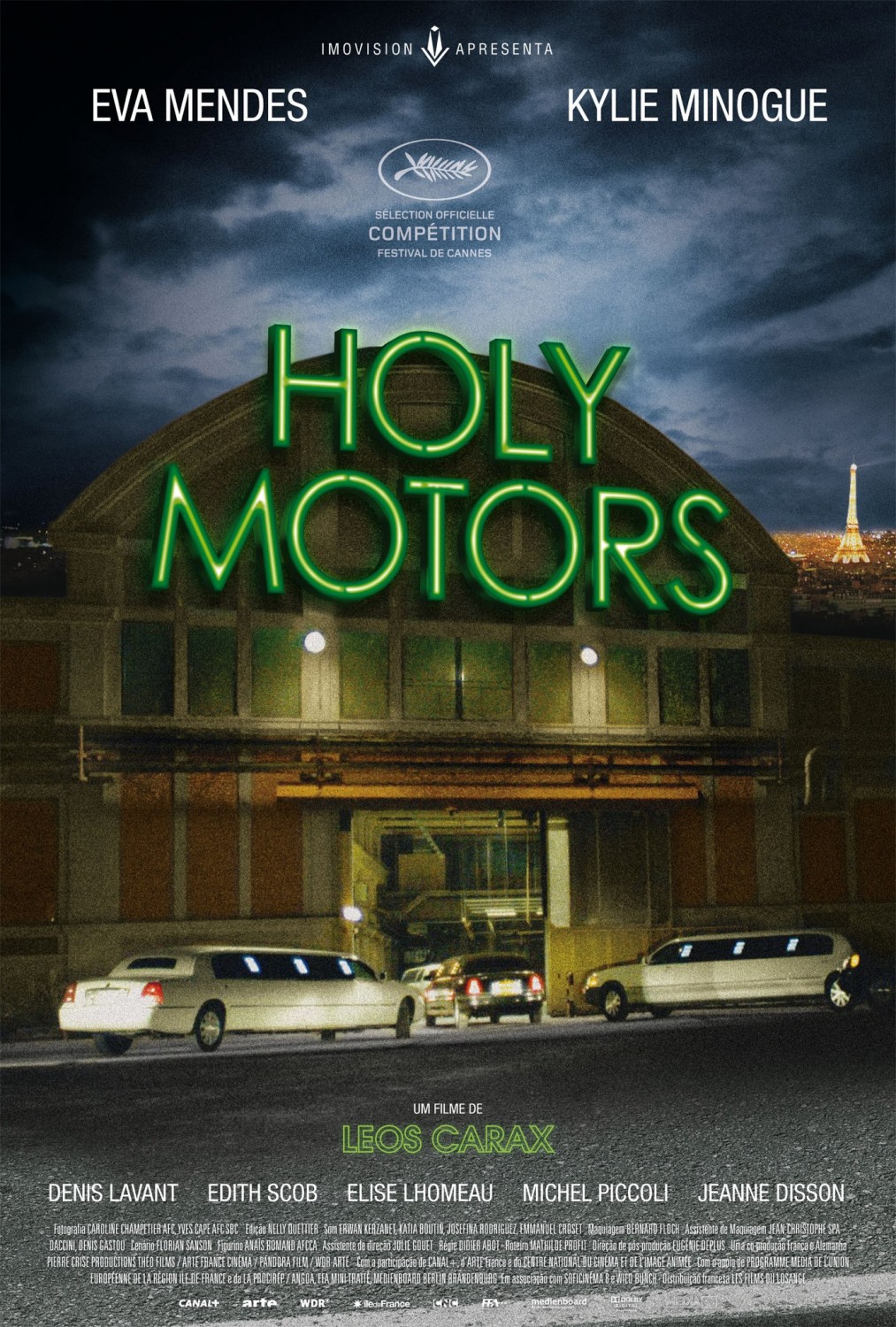
I finished up my week of weirdness with Holy Motors, and now I am going to have to try to describe it.

holy_motors_ver5_xlgDenis Levant is M. Oscar, an actor who is driven around town in a limousine, chauffeured by Edith Scob (yes, Eyes Without A Face Edith Scob) to his various assignments. The limousine is a self-contained costume and makeup shop. Oscar has nine assignments that day, and he will become nine different people.

This sounds like some espionage movie, but it’s not; it’s a surreal collection of short scenes that have no relation to each other, played out for the benefit of who-knows? He will become an elderly beggar woman, a bizarre troll-like creature, the father of an awkward adolescent girl, an old man on his death bed. He will meet two other such actors (at least). He will get killed twice, none of which seems to matter.

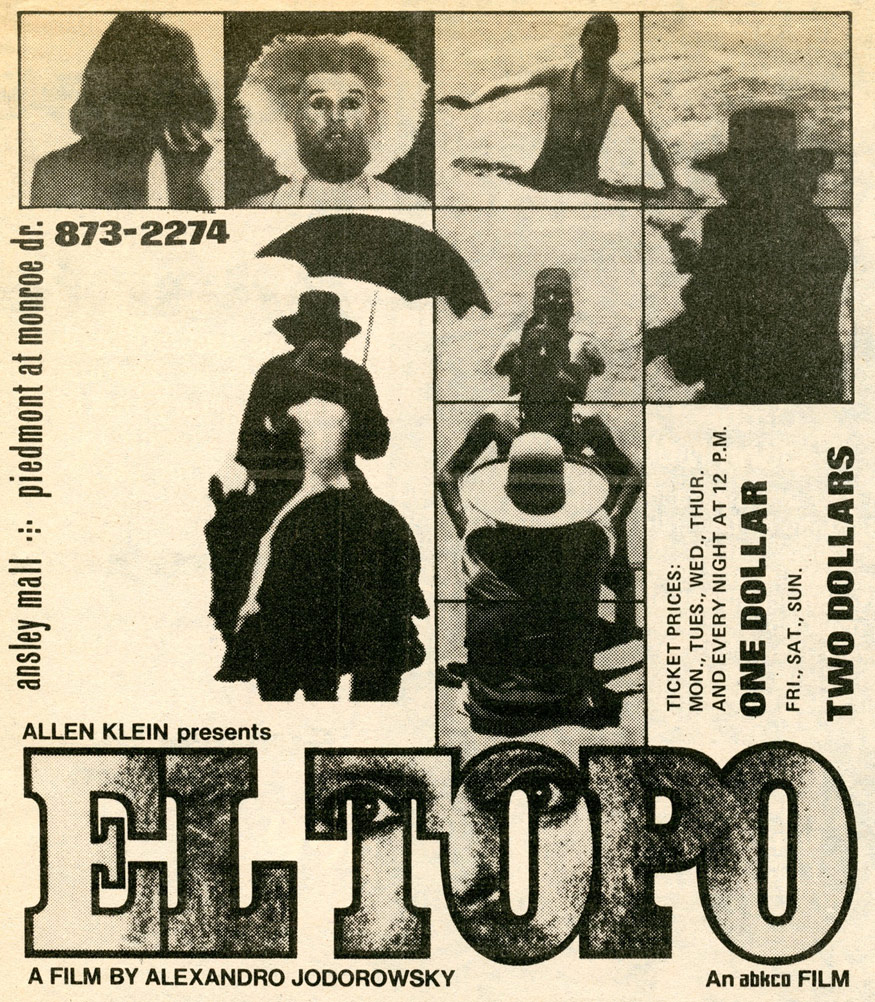
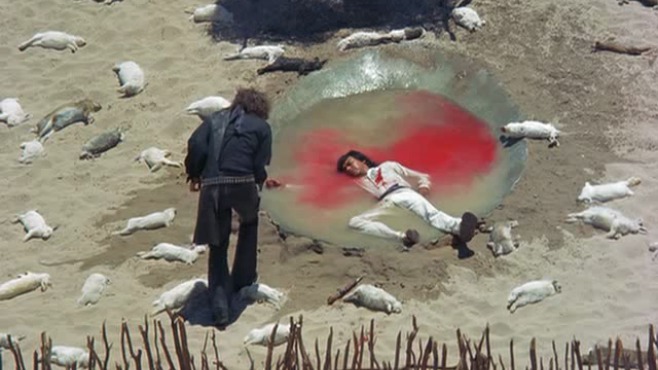
Any attempt to describe it further would simply involve a listing of every event. It is a deuced odd film. Its surrealism is not on the extravagant level of Alejandro Jodorowsky, but attempts to assign logic and a through-line to it would likely cause headaches if not serious damage. If nothing else, it is a great showcase for the talent of Denis Levant; If you want to mutter to yourself “What the living hell-” for two hours (and have no Jodorowsky available), it will fit the bill.

After Ebert: More Movies

If there is one thing I have learned about doing movie-watching challenges – these crop up on the Letterboxd social site – it’s that a month of watching a movie a night and then writing it up causes my mental gears to start smoking alarmingly as the month comes to an end, and I wind up taking a break. This one was lengthier than the last, I admit. I was engaging my brain in other activities, like reading (Warren Ellis’s Gun Machine) and giving Facebook casual gaming another go. The gaming was numbing, the reading wasn’t: perfect combo.

But I did still watch the occasional movie. “Occasional” has ballooned to an unwieldy number, so it’s time to start cleaning out that bin.

shootistThe Shootist was on The List, and it seemed a good cornerstone to merge the quality of the Ebert Great Movies with the stream of movies I usually watch: good quality intersecting with pop culture. The Shootist came out in 1976, the year I entered college, when movie watching took a back seat to education and mere survival. I recall I had a shot at seeing it at the student cinema for 50 cents or a dollar, but I probably had rehearsal that night. Such is the life of a theater arts major. So I went for decades without seeing it.

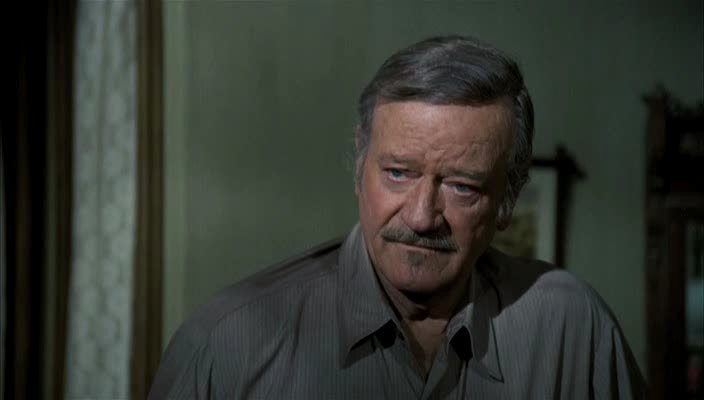
The Shootist features John Wayne as J.B. Books, an aging gunslinger who moseys into town at the cusp of the 20th century, visiting an old doctor friend to get a second opinion, and the news isn’t good. Books has advanced prostate cancer (apparently distressingly common among men who rode horses all day long), and is given less than a month to live. Books checks into a nearby boarding house and sets to preparing to die, knowing that a man of his notoriety will not be allowed an anonymous death. He grows close to the widow running the boarding house (Lauren Bacall) and her troublesome son (Ron Howard). He finally elects to not die a prolonged, painful death, but sets to cleaning out some accounts with a final, arranged four-way gunfight.

1360084977_2Based on Glendon Swarthout’s novel of the same name, The Shootist was nearly not as awesome a movie as it eventually became. During pre-production, it was generally felt that John Wayne was the logical choice to star, but was too ill to actually make the movie. He had been cancer-free since 1969 – at the cost of a lung and several ribs – but his 70th birthday was staring him in the face, and time takes its toll, no matter the spirit of the man. George C. Scott was preparing to play the role, and he would have been predictably amazing, but when the Duke caught wind of the project – well, everything just fell in line. I love Scott, but Wayne brings with him the weight of an entire career, as we see flashbacks of a younger Wayne in older movies. The degree to which this movie is enriched by that true fictional past cannot be underestimated.

Wayne’s casting had the effect of attracting a phenomenal cast – we’ve already mentioned Lauren Bacall, but also Jimmy Stewart, Richard Boone, and Hugh O’Brian, who reportedly offered to do the movie for free just so he could be in it. This high caliber of personnel also extends to the other side of the camera, including absolutely the best director for the project, Don Siegel. Siegel was never a terribly flashy director but he was always a rock solid, engaging storyteller, the perfect choice for a character-driven Western.

So yeah, I liked it. Kind of surprised it wasn’t on Ebert’s list; it’s rare to see such a perfect coda to an actor’s career. Maybe he just hadn’t gotten around to writing it up.

I watched Star Trek Into Darkness, as required by Nerd Law. I was entertained while it was running, but had some burning questions afterward. That link takes you to those questions on another site, sort of the ultimate spoiler space.

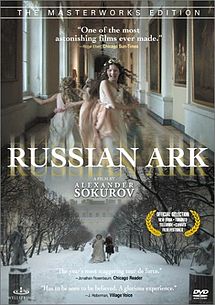
215px-RussianarkEarlier in the year, I had taken in Mark Cousins’ multi-part Story of Film on Netflix, and one of the movies that was excerpted, which I had heard only vague things about and was immediately inspired to put on the watchlist was Aleksandr Sokurov’s Russian Ark. Ark follows a strangely timelost narrator (our subjective camera) and a disagreeable French diplomat from the 19th century, as they wander about the Russian State Hermitage Museum in St. Petersburg and meet historical figures like Catherine the Great and Czar Nicholas (and Alexandra and a young Anastasia) as well as some contemporary Russians. Even the constantly bitching Frenchman is an historic figure, the Marquis de Custine. There are some astonishing setpieces and astounding costumes on display.

What makes the entire thing remarkable is that it is shot as one take – 96 minutes long! – as the Steadicam glides through its various vignettes. That is a feat which required months of rehearsal, but sadly only pays off occasionally. Much of the time it seems like a taped museum tour (but what a museum!), though the final half-hour, recreating a grand ball just before the Bolshevik revolution, is simply incredible, especially when the camera leaves with the richly costumed partygoers and goes down a massive staircase, finding itself confronted by hundreds of people in perfect period costume. It is jaw-dropping, and well worth the effort to see.

Pretty sure Tillman Buttner, the DP who was operating the Steadicam, and his poor boom operator were exhausted afterwards. Especially since I recall reading they did two takes.

wreckit_ralph_ver16_xlgOne weekend I went to pal Dave’s because he had not yet seen Django Unchained and that needed to be remedied. But we also caught up on Wreck-It Ralph – yes, it was a sublime, bizarre double feature – and I loved it unreservedly. I’m not sure I would have loved it as much if I hadn’t been able to identify all the Roger Rabbit-style video game cameos, but that becomes a minor cavil when you consider the well-constructed story, full of heart and great characters. Disney has learned well from Pixar, and Wreck-It Ralph is the result.

I went back to The List for the next weekend and Around the World in 80 Days, not the Disney-fied 2004 Jackie Chan vehicle but the 1956 David Niven/Cantinflas road show monster. It’s a movie of parts rather than a whole, which rather echoes Jules Verne’s adventure novel, which was also episodic as hell. In case you don’t have a rudimentary education: David Niven is Phileas Fogg, a wealthy punctilious Englishman who makes a wager at his gentlemen’s club that he can, as the Daily Telegraph claims, travel around the world in a mere 80 days. He sets out on this the same day with his new valet, Passpartout (Cantinfas) and a carpet bag full of money. Adventure ensues.

around_the_world_in_eighty_days_ver2Around the World was largely conceived as a delivery vehicle for producer Michael Todd’s Todd-AO Vision, a process that delivered Cinerama-width spectacle while using only one camera (the previous year’s Oklahoma! was the process’ debut).  The movie is rife with splendid sunsets and some instances of things-rushing-at-the-camera that bring to mind the roller coaster in This Is Cinerama, and some grand landscapes… though spoilsport literalists will point out that most of the movie was shot on backlots, not on location around the world, as the producer would prefer us to think.

This is the movie that coined the term “cameo role”, and there are a ton of them, especially once the movie hits San Francisco, the center of a cluster of them: Marlene Dietrich, George Raft, Red Skelton, Frank Sinatra, John Carradine and Buster Keaton in the space of ten minutes. But Todd’s real coup was Cantinflas, at the time the wealthiest, most beloved actor in Mexico. Known as the Mexican Chaplin, the comedian had never made an English language movie, his success was such that he probably didn’t feel the need – yet somehow Todd prevailed upon him.

around_the_world_in_80_days_11Watching Around The World unfold, you start suspecting how Todd managed it; though Fogg is supposedly the hero, all the movie’s action devolves onto Passpartout. There is an entire segment in Spain that does not occur in the novel, involving Passpartout in a bullfight. That is strictly there for Cantinflas, who had no small amount of bullfighting experience himself. Passpartout is the agent for change throughout the movie, while Niven is generally playing whist or dallying with young Shirley MacLaine, oddly cast as an Indian princess. Cantinflas did finally attempt another English language movie in 1960, Pepe, which sadly flopped at the box office, despite having almost as many star cameos as Around the World.

I’ll just mention that the scene between Cantinflas and Red Skelton in San Francisco was obviously cut short, which is a shame. Two great comic talents playing off each other, and it could have gone on much longer.

Around the World in 80 Days is interesting primarily as a relic of that bygone practice, the Road Show Engagement. Its value as entertainment is going to depend on the level of your yearning for such fare, gently satiric (S.J. Perelman gets a screenwriting credit), with adventure scenes that are rarely as pulse-pounding as they seem to wish to be.

Though I was left with a yearning to see The Great Race again… Hm.

Okay, one more, and we will be halfway done.

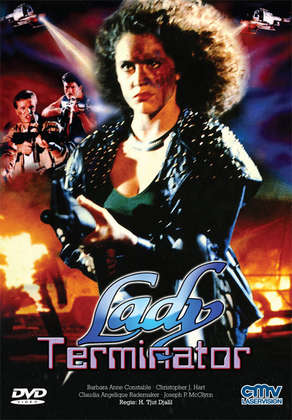
600full-lady-terminator-posterLady Terminator has been in my possession for ages, and I finally put it on The List to force the issue of seeing it. This is an Indonesian movie by H. Tjut Djalil, the director of Mystics in Bali, perhaps the finest penanggalan movie ever made.  That was in 81, by 1989 Djalil had a larger budget, better equipment, and the ability to show naked breasts. These are all ingredients for a grindhouse hit.

As with Mystics, Djalil capitalizes on an Indonesian legend, the South Sea Queen, who lives in a palace at the bottom of the ocean and keeps killing her male consorts during sex. Finally, one heroic fellow satisfies her, but literally pulls a snake out of her lady zone, which she screeches is her “inner essence”. The snake turns into a dagger, and when our curiously anglo fellow declares he will not give it back, and her murdering days are over, the Queen proclaims she will avenge herself on his great-granddaughter, and vanishes in a puff of smoke.

ladyterminatorIn the present day, a beautiful anthropologist gets too nosey while scuba diving and gets possessed by the Queen, turning her into an unkillable leather-clad aerobics instructor with a taste for automatic weapons and, yes, killing guys during sex, apparently by biting off guys’ junk with her hoohah. (The lady is serious about her kegels).

Lady Terminator is serious about its title, reproducing two and a half scenes from The Terminator, even that eyeball surgery scene, although it makes little to no sense. LT is determined to kill the granddaughter, a rising pop star, and she has no time-traveling soldier to protect her, so she has to make do with the only Caucasian cop on the Indonesian police force. I’m reduced to bullet points here to detail the awesomeness:

  1. Indonesian security guards carry Uzi pistols.
  2. We establish early on that bullets have literally no effect on LT, yet the cops will continue to use them for the next hour or so.
  3. Due to this, by the end of the movie, our Caucasian is apparently the only cop left alive in the entire country.
  4. If you’re the Caucasian’s Rambo-esque American pals, called in to help on short notice, you can bring all sorts of ordnance into the country, no problem.
  5. Yes, the granddaughter has the dagger, and could have saved hundreds of lives by just stabbing the bitch, but then we wouldn’t have a movie.

ladyterminator2Indonesian movies have a very high fun content. There is just a whole lot of determination to simply entertain, and if the action gets repetitious, it makes the completely over-the-top climax even more welcome. This is eventually going to make it as a Crapfest entry, and I don’t know what higher accolade I can give it.

A Month of Roger Ebert’s Great Movies, part eight

By now you know the rap, that members of the Letterboxd community were doing a month-long challenge to watch thirty of the movies in Roger Ebert’s list of Great Movies, and a viewing of Beyond the Valley of the Dolls to boot. At least that was what I thought; returns to the site find that original Challenge page gone, and only one other list beside mine using the “EbertMay” tag.

Ah well. I watched a lot of good movies. Only two left to finish up the Challenge.

The Last Temptation of Christ (1988)

last_temptation_of_christThis was twenty-five years ago? Good Lord (to turn a phrase).

I didn’t see this at the theaters because a) I’m not a Christian, though raised as one and pretty up on the scriptures – moreso than some professed Christians, apparently; and b) I was on staff of a small regional theater at the time. That theater is doing very well for itself now, but back then we’re talking horrific schedules, day and night, grueling definitely-for-young-people stuff. I can place the movie in that period only because I leaned on Peter Gabriel’s soundtrack heavily for a particularly awesome version of Hamlet we mounted in that time.

Ha ha, you young’uns that were born at the tail-end of the 80s and in the 90s missed quite a to-do, let me tell you. Televangelism, riding so high in the late 70s and early 80s, had suffered through some pretty bad scandals, and Last Temptation proved a very convenient “Hey! Look over here!” distracting target. Protests and picket lines were numerous. Molotov cocktails were thrown inside a Paris theater showing the movie.

There was an interview with Martin Scorsese, the director, that I recall reading. It was memorable because the journalist reported the complicated phone tag, the mysterious directions to a nondescript apartment, where the door was answered by a burly, armed security guard, before he could even get into the same room as Scorsese; that’s how serious the shit had gotten. There are people who still refuse to watch the Academy Award nominee Hugo because Scorsese directed Last Temptation a quarter of a century ago.

None of these people ever bothered to watch this movie, either. Of course.

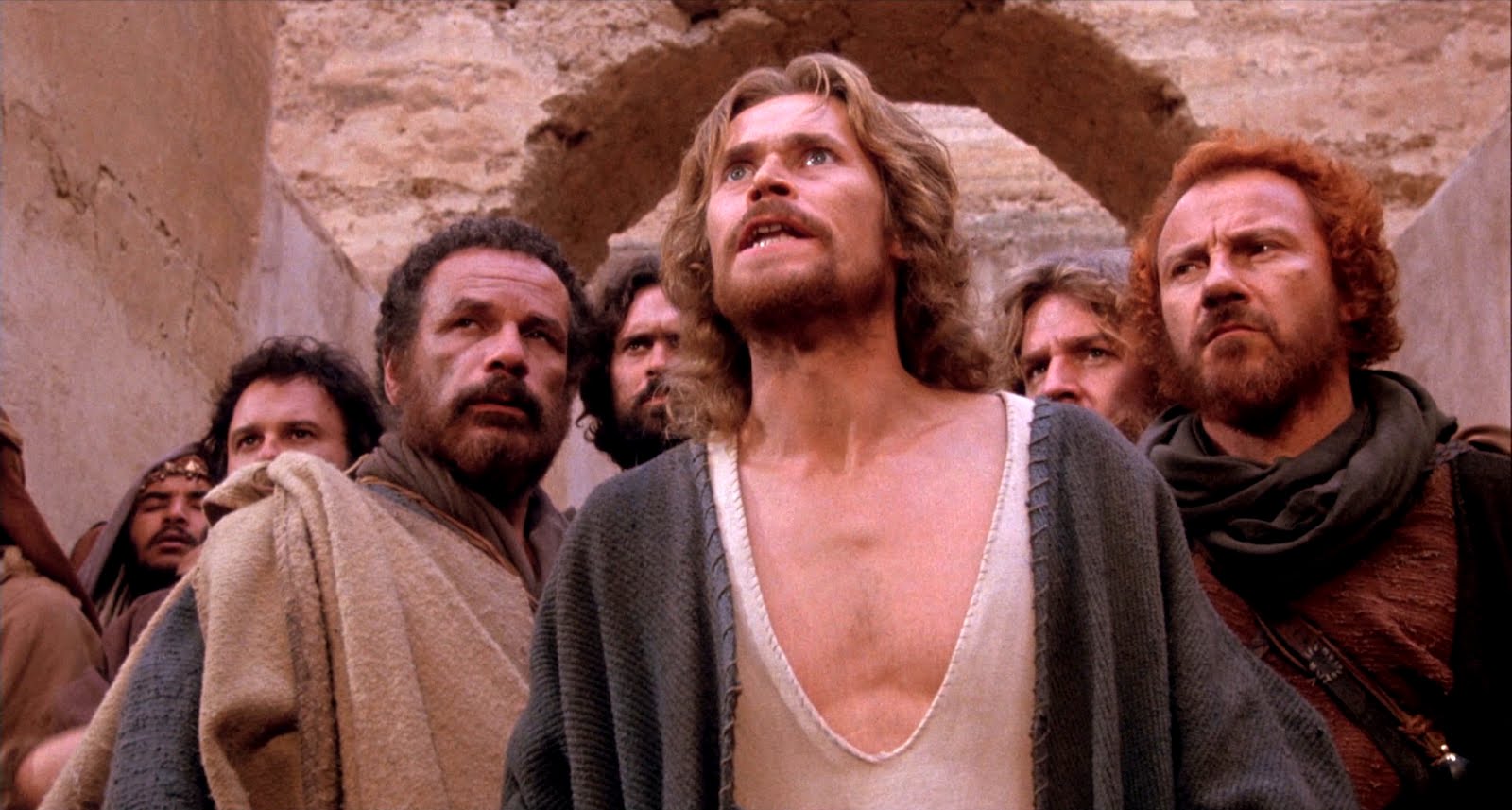
large_the_last_temptation_of_christ_blu-ray_x09The reason for this rancor is two-fold: the first is right there in the title. On the cross, a young girl appears to Christ (played by Willem Dafoe), who introduces herself as his guardian angel. She reveals the crucifixion was a test, like the time God ordered Abraham to sacrifice his son, and just like then, the test has been passed. There is no reason for Jesus to die, and he finds himself free of the cross and nails. He marries Mary Magdalene, has sex with her – this is where the line got drawn – and when she dies, he takes up with Martha and Mary (the sisters of Lazarus) and sires several children, living as a normal man. This has ramifications, resulting in the ultimate sacking of Jerusalem and Jesus’ discovery that the girl is actually Satan, using a far more sophisticated pitch than he employed when Jesus was fasting in the desert. Jesus denies this last temptation, and finds himself on the cross again, saying, “It is accomplished.”

But never mind that, they showed Jesus getting it on.

The second blow Against All That Is Decent is presenting Jesus as a conflicted man instead of the confident avatar of all that is good and decent, as presented in Vacation Bible Schools.

There is a valid school of theological thought that notes the concept of God evolves as civilization develops; thus we go from a God who heartily endorses wiping out entire tribes to the rather radical concept of the same God preaching love. One scholar goes so far as to posit God pouring a part of Himself into a mortal vessel, to suffer as his creation does, as a sort of apology to those creations, with that apology ultimately taking the form of a slow, agonizing death. Suicide as an act of contrition.

TLToC1The political angle is probably another thorn in the side of fundamentalists (though heaven forfend they should abandon their political activities). An eye-opening book for me (come to think of it, read at about this time) was Michael Baigent’s The Messianic Legacy, which examined Jesus and the disciples in their roles as political activists. Viewing Last Temptation has left me with the desire for a re-read. As Pontius Pilate (David Bowie) says to Jesus after he denies being King of the Jews or any special divinity, “That just makes you another Jewish politician.” Politics is an unfortunate, constant fact of life, even of civilization. How could a Messiah avoid them, especially if one of the roles of the Messiah is to deliver his people from oppression, either secular or spiritual?

We won’t even address the subject of Judas, here removed from the role of Designated Villain to Disciple With The Toughest Job, possibly the most faithful disciple of all. That is the sound of heads exploding in the distance.

The Last Temptation of ChristSo it turns out The Last Temptation of Christ was the Jesus movie I had wanted all my life: it does not ignore the “Son of Man” part of the story, though I can’t say it glories in it, either. Jesus is confused, conflicted, unsure, fearful – all the things a contrite Deity should feel, as He experiences what his creation must deal with on a daily basis. If the Scriptures are to be believed, Jesus was at least half human, and that is the half that most doctrine studiously ignores. You hardly ever hear about the Cursing of the Fig Tree, for instance, which was a pretty human moment, no matter how many attempts to turn it into an example of the power of prayer.

So did it convert me? No. But then I don’t really believe that was the purpose behind it. Scorcese said he had always wanted to make a Jesus movie, and when the original production was cancelled by Paramount, he persevered. Universal finally green-lighted it, with a truncated shooting schedule and a budget fully half of what Paramount had agreed to – and at that, Scorsese had to agree to make a “Commercial” movie in exchange (Universal got Cape Fear out of the deal, so it was pretty good investment, overall). This was a passion production (you should forgive the double meaning) for Scorsese and many of the personnel (like Barbara Hershey, who had given Scorsese a copy of the book back during Boxcar Bertha), and it shows.

So the angry True Believers can keep themselves warm with their protest signs and their molotov cocktails. I’ve got my Jesus, and I am perfectly okay with him.

The Bride of Frankenstein (1935)

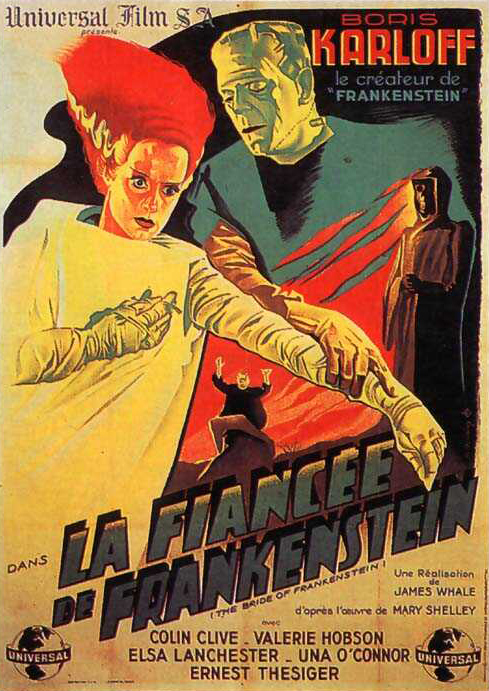
Poster - Bride of Frankenstein, The_07So a little more tampering in God’s domain. I definitely took it easy on myself for the last movie in the Challenge, finally pulling out that Universal Monsters Blu-Ray set again.

After the incredibly successful Frankenstein, director James Whale spent the next four years scrupulously refusing to do a sequel, until he was promised artistic freedom. The result is one of the best horror films ever made.

After an odd little vignette that has Mary Shelley (Elsa Lanchester) telling Byron that the end of her novel was not the end of the story (and also has Byron referring to the Monster itself as Frankenstein, Universal Pictures buying into and perpetuating that little bit of cultural mangling), Bride literally begins at the end of the first movie, the burning of the windmill with the Monster inside. Much as Baron Frankenstein survives, so does the Monster, falling through the burning floor into a flooded chamber.

Stills-bride-of-frankenstein-19762045-1600-1246So the Monster roams the countryside, and he’s more than a little put-off with his treatment, made worse when he rescues a shepherdess from drowning and, naturally, it is assumed he’s attacking her. It’s perfectly obvious that Whale’s sympathies lie with the misunderstood monster, and it’s never more clear than the famous scene where the Monster finds the blind hermit, drawn by the smells of food and beguiled by the music of his violin. This sequence is genuinely touching, both the hermit and the Monster reduced to tears of gratitude for deliverance from their loneliness.

Concurrent to that, Victor Frankenstein has renounced tempering in God’s domain and is trying to finally get married and leave Gothicland, when he is visited by one of his old teachers, Dr. Septimus Praetorius (a silky smooth and utterly charming Ernest Thesinger), who has been conducting his own experiments in life creation: a series of homunculi living in jars. He wants Frankenstein’s aid in creating something more substantial, an actual, life-sized human being. The younger scientist, having recently survived one such creation, refuses.

Stills-bride-of-frankenstein-19762095-1546-1133The Monster, never having a surplus of luck, gets rousted from the hermit’s cabin (by an interfering John Carradine, no less), gets captured, escapes (killing several villagers, whom everybody’s getting sick of, anyway) and takes refuge in a huge mausoleum, where he is discovered by a grave-robbing Praetorius. Realizing that he has found a perfect lever to move the intractable Frankenstein, Praetorius promises the Monster that he will make a friend for him – a woman, to be his bride.

Bride is the very rare sequel that betters its predecessor, by not only giving the audience more of the same, but also expanding intelligently on the themes of the first. Karloff himself felt that the hermit teaching the Monster to speak was a mistake, and to be sure, all the power of the original movie derives from his astonishing, mute performance. But as the Monster becomes more adult, as it were,speaking in simple sentences and continually brutalized by a world uninterested in understanding his plight, we are also watching his corruption; manipulated by Praetorius, he finally becomes the villain the world expected, though at the end, consumed by sorrow and despair, he does try to set things right by the only means he knows, or has been allowed to learn: by destruction.

the-bride-of-frankensteinMention must definitely be made of the Bride, also played by Elsa Lanchester. A striking figure, moving like a clockwork robot, due to Pretorius’ artificial brain, the five foot Lanchester stands on stilts concealed beneath her flowing robes to bring her to seven feet. As archly pointed out in Gods and Monsters, not only have the mad scientists dressed her, but they’ve done her hair, now cascading upwards over a wire mesh foundation. Lanchester modeled her performance, the startled hissing at the Monster’s appearance, on wild swans. For all its brevity, it is one of the most unique, memorable performances of the universal Classic Monster series.

The Bride is also the only Classic Monster to achieve her fame without killing anybody. Not that she ever really had the chance…

A Month of Roger Ebert’s Great Movies, part seven

As a tribute to the late Roger Ebert, some members of the Letterboxd community spent May visiting films in his Great Movies series. Since this dovetails with my personal project of filling shameful voids in my film education, I decided to commit myself, once more, to a regimented schedule for which I don’t really have time, but hey, you know. Movies.

Mulholland Dr. (2001)

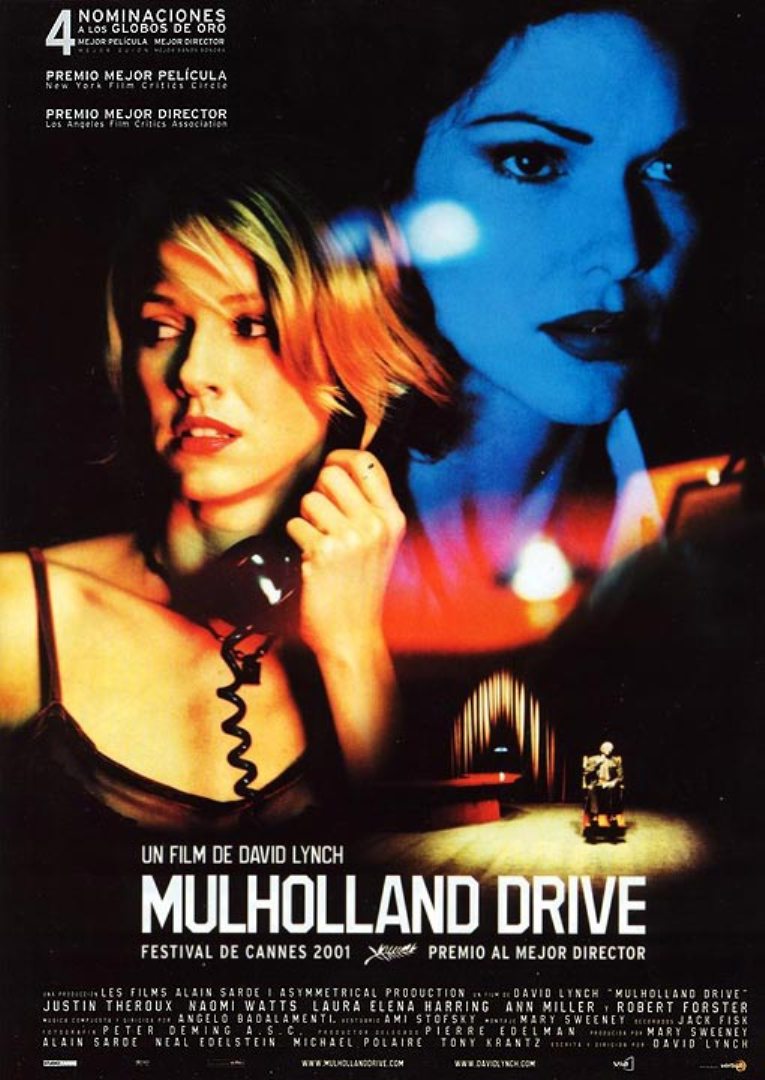
mulholland-drive-poster-_2David Lynch has been called a lot of things, but probably the most succinct is challenging. Here, though, We have a movie that is adapted from a failed TV pilot, so the viewer feels secure that at least it’s going to be as comprehensible as Twin Peaks, right?

That’s if the viewer has forgotten how weird Twin Peaks could get.

Naive small town girl Betty (Naomi Watts) arrives in LA to spend a few weeks at her aunt’s apartment, hoping to break into show biz (the aunt is out-of-town on a movie shoot). What she finds in the apartment is an amnesiac who calls herself Rita (Laura Herring), pulling the name off a Rita Hayworth movie poster. We know that Rita was on a limousine on the titular street and she was apparently the victim of some set-up robbery when the limo was smashed into by drag-racing teens – Rita, however, doesn’t even remember that. When the girls search her purse for ID, they find many thousands of dollars and an odd key that fits a triangular lock – and so the Scooby-Doo sleuthing begins, with the girls not totally unaware that there are men searching for Rita, not the least of which is the most inept hit man in the history of the universe (Mark Pellegrino).

mulholland_drive_snap_2In the course of the first part of the movie, most of the Strange with a capital “S” is provided by movie director Adam Kesher (Justin Theroux), who suddenly finds a shadowy organization demands the star of his next movie be a certain actress – “This is the girl” – and when he refuses, his entire world – personal, financial and artistic – is jerked out from under him. The organization is apparently run by familiar face Michael J. Anderson (Twin Peaks’ Man From Another Place), but Kesher meets with a fellow apparently above even him, known only as The Cowboy (Monty Montgomery), who wears a ten-gallon hat and no eyebrows.

Keep in mind I’m telling you the normal stuff. I haven’t gone into the spirit of death and horror who lives behind a Denny’s, or the eerily recurring red lampshade, or other Lynchian touches. At the two hour mark in a two-and-a-half hour movie, the girls go to a club in the middle of the night – Club Silencio (“No hay banda! There is no band! All this is… a tape recording!”) at which point we go full-on Lynch, and just when we think the plot has gone circular, it has turned into a damned Spirograph.

mulholland-drive-2001-to-2-gThe major portion of Mulholland Dr was supposed to form part of the third season of Twin Peaks, featuring Audrey Horne miraculously surviving the explosion in the Season Two finale and getting shuttled off to Los Angeles to find… well, you know by now. Knowing this doesn’t really help, since it leaves you wondering what would have been the outcome in that case, and then you start wondering if Season Three would have ever revealed why Josie Packard’s soul was trapped in the knob of that bedside table. Which doesn’t really aid any analysis of Mulholland Dr, but watching Lynch movies opens up some really odd brain connections.

I think we can conclude that the Audrey Horne version of the story would omit the R-rated lesbian sex scenes between Watts and Harring, not to mention the denouement of the last half-hour, which would fuel a fair number of discussions at movie nights. What I like about these accessible dreamscapes by Lynch is that on some level, you absolutely cannot intellectualize what is going on, you can only intuit it, engage with it on a primal level. This is a hypnotic, mesmerizing movie, genuinely suspenseful, often hilarious, ultimately puzzling. So yeah, I enjoyed it.

I am also fascinated by Lynch’s ability to wring existential terror out of a Roy Orbison song – this is twice that I know of. That, and if Lynch ever decided to do a serious full-on horror movie, we would all be screwed.

Dark City (1998)

darkcity1If there is a general upside to this determination I seem to have to watch movies on MY terms, not other peoples’, it’s that I missed out on Dark City the first time around.

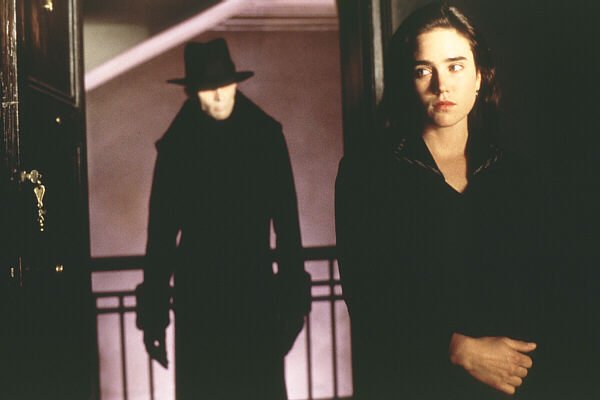
I thought Dark City would make a good follow-up to Mullholland Dr., and I was right, as the movie begins with John Murdoch (Rufus Sewell) awakening with amnesia, in an apartment with a murdered woman. A phone call tells him “they” are coming for him and he must run. “They” are indeed after him, a trio of cadaverous men in black overcoats and fedoras, and who can seemingly make people sleep at will. Murdoch, of course, tries to piece together who he is, and what’s going on, but that last one is a tall order: at midnight, everybody in the city goes to sleep, and the men in black – and there are a lot more than three – change the world, making buildings grow like plants, changing people’s personalities.

dc08There is one non-blackclad doctor (Kiefer Sutherland) who seems to be collaborating with these mystery people, but is also fearfully trying to get in touch with Murdoch. A police inspector (William Hurt) is pursuing Murdoch for serial murder – the previous investigating officer has apparently gone mad and left the force.  The Inspector is working with Murdoch’s wife (Jennifer Connelly). And one of the Men In Black (Richard O’Brien) is injected with Murdoch’s memories in a desperate attempt to track him down – desperate because Murdoch is showing signs of possessing the same world-changing powers as they.

First, we’re going to agree this is a hell of a good cast. Second, we are going to stand dumbfounded that this is actual thoughtful science-fiction, not some other genre script gussied up with sci-fi exteriors. Third, we’re going to find out that the studio did their best to kill it.

Well, not kill it, but damage it. This is where my stubborn refusal to drink from the trough at the same time as many comes in handy. “Thoughtful” movies being poison, and people stupid, uncomprehending animals, director Alex Proyas was convinced to tack a voiceover onto the movie’s beginning, which spelled out the movie’s plot. The plot I spent an enjoyable 111 minutes watching unspool.

Good God, I would have been pissed. There is nothing that turns me against a movie faster than having it treat me like an idiot. Fortunately, I only know of this voiceover through Ebert’s review; the Director’s Cut does away with it entirely. That’s the only version that exists in my universe because that is a good movie.

Cat People (1942)

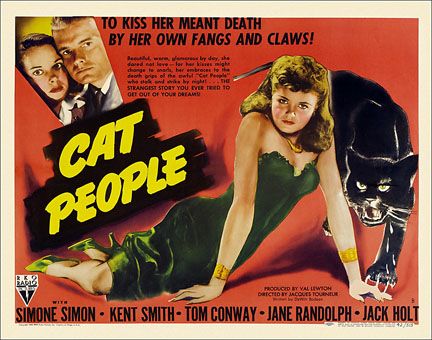
CatPeopleHS-BAnother busy day, time to call in the 73 minute Cat People.

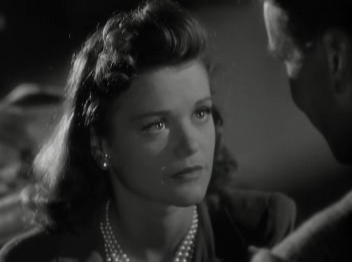
A chance meeting at the zoo between engineer Oliver Reed (Kent Smith) and immigrant artist Irena Dubrovna (Simone Simon) leads to romance and marriage. There is one snag: Irena’s Serbian hometown is supposedly home to people that turn into great cats when their passions are inflamed. Though these weird people were supposedly eliminated in the Middle Ages, Irena believes in them strongly enough that she will not even allow her new husband to kiss her. The frustrated Oliver slowly awakes to the fact that his longtime pal at the office, Alice (Jane Randolph) carries a torch for him, and is not so adverse to the kissing stuff. The major problem there: jealousy is also a passion, and Irena begins stalking the two.

This was the first of the low-budget horror movies produced by Val Lewton at RKO, directed by Jacques Tourneur; these movies are rightly considered classics, but the modern horror fan is not going to have much patience with Cat People, at the very least. Tourneur is playing a game of ambiguity here. Is Irena truly a supernatural being, or just a very neurotic young woman on the verge of a violent breakdown? It was that approach that got Tourneur replaced barely four days into shooting , and Lewton went all the way to the studio head to get him reinstated. The Supervisor that fired Tourneur, though, is responsible for an actual panther showing up in one scene, removing all ambiguity and novelty. Those suspense scenes that remain untampered with are justly considered classic and Paul Schrader had no problem lifting them for his far more explicit 1982 version.

Cat-People-1942-SimonIt would have been nice to see Cat People as originally conceived (and The Wolf Man, and a host of others), but it’s worthwhile to watch any of the Lewton films and consider that here are people who worked on Citizen Kane and The Magnificent Ambersons now working on horror movies.  The budgets may have shrunk, but the talent had not.

Speaking of which, definitely check out William Dieterle’s The Devil and Daniel Webster (1941) for the same reasons: good movie, lots of Kane  alumni, and Simone Simon as the living personification of sex. Oh, and Walter Huston as a particularly fine devil.

Rashomon (1950)

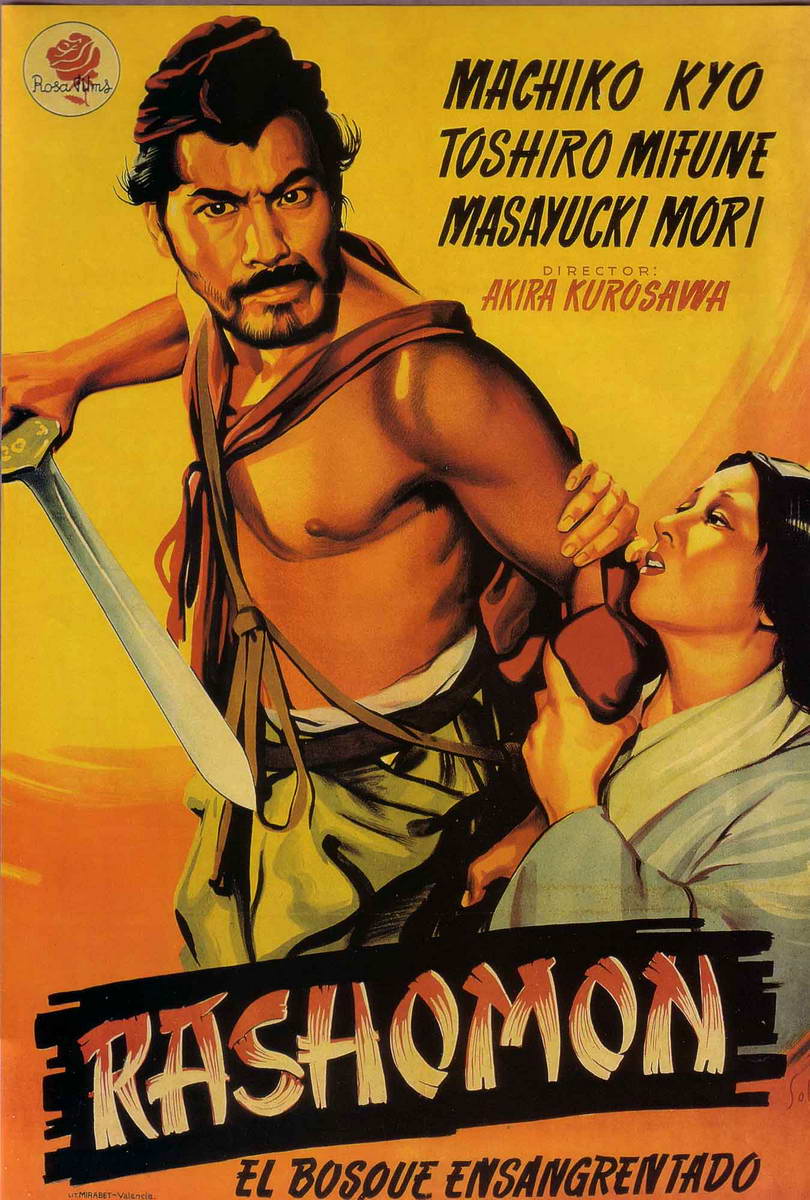
rashomon_sp2Coming into the home stretch on the Challenge, it gets a little wearying, so I opted for some comfort food. Besides it had been… well, I was about to say 30 years since I had last seen Rashomon, but that is too damn depressing.

Three men take shelter from the pouring rain in a burnt-out city  gate: a monk (Minoru Chiaki), a wood chopper (Takashi Shimura) and a Commoner (Kichijiro Ueda). The first two men are very disturbed, having testified at an inquest earlier that day, and they relate to the Commoner what transpired.

The Woodcutter had found the dead body of a samurai in the woods. The notorious bandit Tajomaru (Toshiro Mifune)  had been captured with the dead man’s horse and some of his effects. He confesses to tricking the samurai (Masyuki Mori) and his wife (Machiko Kyo) into the woods, overpowering the man, raping the woman, and eventually killing the samurai in a duel at the woman’s insistence.

All well and good, except the wife, found hiding in a temple, tells an entirely different story. When the dead man tells his story, via a medium, it is different from the other two. There is yet another version of the story, lurking about, but it is best you discover it for yourself.

rashomon-sliceKurosawa makes some intriguing stylistic choices (making the viewer the judge in the inquest scenes) and pulls some camera moves that would be appropriated throughout the ages in his forest scenes. This is a movie so ingrained in our cultural purview that The Simpsons can make reference to it with impunity. It also marked Kurosawa’s full-blown introduction to the international cinema scene, and my God, the movies that were to come.

The oddest hangover for this is a desire to once more see the 1964 Western version of this, The Outrage, which I have seen only once during a seemingly accidental showing on TCM years ago.  Based on Fay and Michael Kanin’s play version, it stars Paul Newman as the Bandit, Laurence Harvey as the Husband, and Claire Bloom as the wife. The three guys in what is now a train station? Howard deSilva as a Prospector, William Shatner as the Priest, and Edward G. Robinson as “The Con Man”.  I recall it having some entertaining differences from the Kurosawa version, and besides: I collect Kurosawa rip-offs.

(Turn on Closed Captioning for English subtitles)

A Month of Roger Ebert’s Great Movies, part six

As a tribute to the late Roger Ebert, some members of the Letterboxd community are spending May visiting films in his Great Movies series. Since this dovetails with my personal project of filling shameful voids in my film education, I decided to commit myself, once more, to a regimented schedule for which I don’t really have time, but hey, you know. Movies.

Aguirre, The Wrath of God (1972)

487303-1020-aOne of the things I went into this challenge swearing was that I was going to source every movie from my collection, local library system, or Netflix, and then I proceeded to immediately violate that vow. I had long meant to break my fast of non-documentary Werner Herzog, and there had been a box set of all the movies he had made with Klaus Kinski, put out by Anchor Bay in the 00’s. This monumental temptation combined with it being at its lowest price ever on Amazon – somewhere in the $25 range – tipped over into scheduling two of his most famous works for the month.

Aguirre takes place during Gonzalo Pizarro’s disastrous expedition to the Amazon River to find the fabled golden city of El Dorado. He did this by trekking his army – of soldiers and lots of Indian slaves – over the Andes mountains, and that is where the movie begins, with seemingly hundreds of people in period costumes (including two women) carefully picking their way down a mountain path, burdened by baggage and equipment. There is no trickery involved, no matte paintings or CGI, that is a bunch of people literally climbing down a mountain. This seems to be a prime indicator of how Herzog works.

Once at the immense river, Pizarro decides to send a party on rafts to see if they can find any indication of El Dorado within a week. He places Don Ursua (Ruy Guerra) in charge, with Aguirre (Kinski) his second. Against Pizarro’s better judgement, Ursua’s wife Inez (Helena Rojo) and Aguirre’s daughter Flores (Cecelia Rivera) are allowed to accompany them.

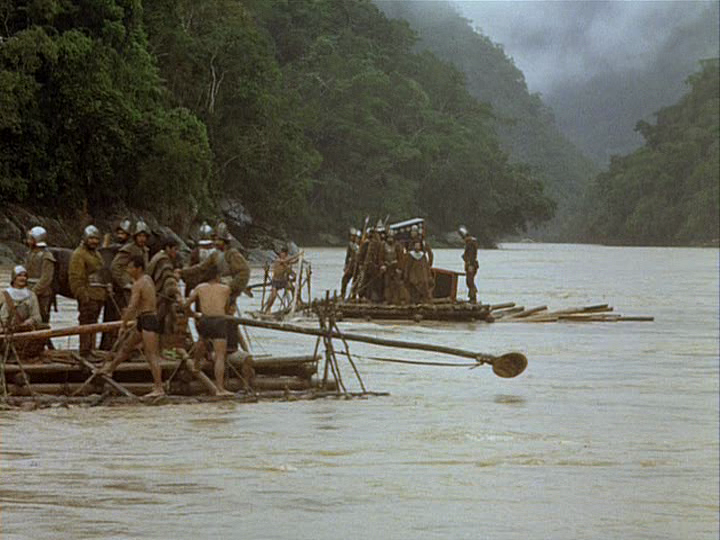
vlcsnap-2010-09-17-23h10m40s196The raft-borne party is almost immediately in trouble, encountering rapids that leave one raft trapped in an eddy against a cliff wall, and this is where the true power of Herzog’s approach is revealed: those are his actual actors on the rafts, in the rapids, and his actual cameras. Though you can never claim the movie employs a documentary approach, there is a visceral, fearsome quality to the footage that cannot be matched.

aguirrecut_55258Things get worse: the trapped raft is slaughtered in the night by unseen Indians. The Amazon rises fifteen feet, carrying away the original rafts and drowning much of the shoreline, denying the new rafts any but the rarest opportunity to make landfall. Rather than turn back as ordered, Aguirre leads a mutiny, intending to claim the city of gold not for Spain, but himself. Cannibals are encountered. An increasingly creaky and ill-kept cannon is employed. Starvation, fever, and sudden death by arrow, dart and spear become the norm, until the totally insane Aguirre finds himself master of a raft populated by corpses and monkeys.

Starvation and fever are probably apt terms for the grueling movie shoot. This is the movie that gave rise to the legend of Herzog pulling a gun on Kinski to keep him from walking off the set (if you can truly refer to these shooting locations as “sets”). Kinksi himself provides some pretty top-notch madness in his portrayal, his body seemingly becoming as contorted as his mind as the picture progresses. Though I never really got over the novelty of hearing Spanish conquistadors speaking German, the rest of the cast scurries to keep up with Kinski, and the ensemble is remarkable, not only in their acting but their stamina.

Mere summaries of the plot of Aguirre cannot match the visceral punch of the movie itself. This truly is a movie that must be seen, on its own terms, to truly appreciate. The money for that box set was damned well spent.

The trailer’s dubbed, but it is a very good dub:

Fitzcarraldo (1982)

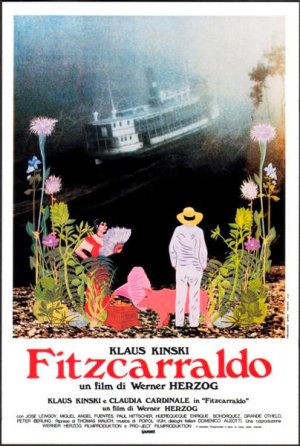
l_83946_a0aafffeIt was almost impossible to not follow up Aguirre with Fitzcarraldo, as Herzog and Kinski return to Peru for another grueling historical adventure. This time we’re in the early 20th century and Kinski Is Brian Sweeney Fitzgerald (called Fitzcarraldo because the natives can’t pronounce “Fitzgerald”), a man who’s bankrupted himself attempting to build a Trans-Andean railroad. His main dream, though, is to build an opera house in this Peruvean rubber boom town, and since he can convince none of the rubber barons to put their money into this, he must become a rubber baron himself.

After a meeting with the most sympathetic of the barons, Fitzcarraldo has a daring plan: there is a section of the rain forest that is so far unexploited because of treacherous rapids. He aims to get to this unspoiled region by actually porting his 300-ton second-hand steamship over the narrowest isthmus between two rivers, a plan so daring that even the mechanic, a spy for the rubber baron, is impressed and joins in whole-heartedly. Clearing the jungle from the proposed path and actually moving the ship overland is only possible because the feared Jivaro natives, impressed by the boat, Fitzcarraldo’s immaculate white suits, and his phonograph records of Caruso, feel the boat is a holy vessel on a mission to purge evil spirits.

fitzcarraldo-posterFitzcarraldo is almost three hours long, but it’s one of those movies where it doesn’t feel like three hours, but at the end, you are exhausted and feel like you’ve been on that trip down the river yourself. True to form, Herzog doesn’t cheat with miniatures on that impossible portage – that is a real damn ship being dragged up an impossible slope, something engineers warned against. There is a part of Les Blank’s documentary on the making of the movie, Burden of Dreams, that shows a scene where one of the cables snaps during filming, and it’s quite likely that Kinski himself as well as other actors could have been decapitated or otherwise maimed. This is lunatic filmmaking at its finest, and the scenes of the ship slowly moving uphill invoke an incredible amount of tension in the viewer that would be impossible with models or CGI.

The movie also has lush scenery to spare and several shots that must have been ravishing on a big screen. Jason Robards at one point had the title role, but fell ill and was forbidden by his doctor to return to the production. Apparently Jack Nicholson at one point was the replacement, but felt the production was too insane, even for him. So it fell to Kinski, Herzog’s “best fiend”, and it has to be admitted that he brings to the role an injured vulnerability that plays well against the character’s seemingly unrealistic optimism. The experience would have been markedly different with the either of the earlier two actors.

And now I have got got got to see Burden of Dreams. I only know of that one scene through Mark Cousins’ The Story of Film.

Beyond the Valley of the Dolls (1970)

beyond_the_valley_of_the_dollsThis was one of the conditions of the Challenge: watch 30 movies from Ebert’s Great Movies, and also this movie, which, while it was not on the list, was actually written by Roger Ebert.

The movie version of Jacqueline Susann’s Valley of the Dolls made money, so a sequel was inevitable; Susann herself wrote one, but Fox didn’t like it. The conditions of the contract gave them the right to make the sequel, with or without Susann, so somehow it fell into the lap of Russ Meyer, leading to the disclaimer at the very beginning that this is not a sequel to Valley of the Dolls.

As Ebert points out on his commentary track on the DVD, Meyer wasn’t all that interested in making sex movies; his primary interests were melodrama and comedy, something that is apparent to anyone who ever watched more than one of his movies. And Beyond the Valley of the Dolls offers melodrama in great dollops. Meyer and Ebert found Valley to be the tale of young innocents in the showbiz trade having their lives wrecked by sex and drugs, but it was sadly lacking in rock and roll. Ergo, Beyond is the tale of a female rock trio who move to LA, hit it big and immediately life gets complicated and melodramatic.

MPW-68199The screenplay is nothing special, outside of a few quotes that have become memorable camp classics. What Beyond does best is remind us of just how good a filmmaker Russ Meyer actually was – those montages over the rock songs of the Carrie Nations are superbly done, and actually progress the story. There is a backstage scene after one of their gigs that could have been crowded and sloppy, but instead clearly establishes every major character arc and relationship – it is really a small master class in managing such scenes.

Quite a bit is made of the blood-soaked ending, inspired by the Manson Family killings while Meyer and Ebert were still formulating the movie. You can see how actually conservative are the underpinnings of the story when the dead include the lesbian and the one character to have an abortion; but in case you missed it, the voice of Marvin Miller will appear at the end to recap what lessons you should have learned.

The acting is often as ripe as the dialogue, but that just serves to cement that everything here is of a piece. The Carrie Nations consists of two Playmates and a model, and they do just fine. John Lazar as quick-tongued promoter Z-Man is given all the best lines and delivers them with a quicksilver panache that makes you wonder why the hell you haven’t seen more of him in the intervening years. David Gurian, as the band’s unsophisticated manager, deserves some kind of acting award for making it look like having sex with (future Mrs. Russ Meyer) Edy Williams was a chore.

There is absolutely no use pretending Beyond the Valley of the Dolls is anything but trash. But as entertaining, well-made trash, it has very few real competitors.

El Topo (1970)

tumblr_m5z5m5q5cR1qzhoqfo1_1280It was either sheer perversity or sheer traditionalism that made me hit “Play” on El Topo at midnight. This is the movie that single-handedly started the Midnight Movie phenomenon, a phenomenon that even hit my teenage Texas town, which had a large college population. My midnight movies usually ran to Amicus double features or an amazing night with all four Beatles movies in a row, but their ancestry can be traced to El Topo, John and Yoko, and Beatles manager Allen Klein, who is the Abkco Films you see at the very beginning.

El Topo begins as an existential Western, with the title gunslinger (director Alejandro Jodorowsky himself) traveling the desert with his naked 7 year-old son, dispensing harsh justice to a murderous villain called The Colonel and his bandits. He leaves his son with a group of rescued monks and heads into the desert to face the Four Masters that reside there. He defeats them by trickery, which exacts a large cost on his psyche when he realizes exactly what he has become, and what he has destroyed. At this point we are not even halfway through the movie; the rest tells of his redemption by helping a group of crippled outcasts escape from their underground prison.

El_TopoLike The Holy Mountain – a Jodorowsky movie I much prefer – a spare synopsis is not going to even begin to replicate the experience of actually seeing the movie. Jodorowsky’s imagery is not as outlandish here, but it is still lush and plentiful. A small town massacred by the Colonel, where there is so much blood in the streets it looks like rain puddles. The grave of the first Master becomes a beehive. The third master lives in a corral of rabbits, who start keeling over dead as El Topo approaches. A church where the worship service is composed of the congregation playing Russian Roulette. It goes on and on to a dizzying, violent end that makes a little more sense than The Holy Mountain, but only a little.

2013 is a pretty good year for Jodorowsky. His first movie in 23 years, The Dance of Reality is poised for release, a documentary about his aborted attempt to make the movie version of Dune has done well at Cannes. But all this serves to point up that the man has only made 9 movies in his life, and not for lack of trying. I have only seen three of those movies, and those were enough to convince me that this paucity of Jodorowsky movies is a damn crime against humanity.

A Month of Roger Ebert’s Great Movies, part five

As a tribute to the late Roger Ebert, some members of the Letterboxd community are spending May visiting films in his Great Movies series. Since this dovetails with my personal project of filling shameful voids in my film education, I decided to commit myself, once more, to a regimented schedule for which I don’t really have time, but hey, you know. Movies.

Vertigo (1958)

vertigoVertigo, unfortunately, fell victim to what I call First Steak Syndrome.

That requires some explanation. Like a lot of people my age, my brain was scarred as a youth by The National Lampoon, when it was a magazine easily available on newsstands. A continuing feature was the Foto Funnies, which were lame jokes in a six-grid photo layout, which was always an excuse to show a topless model with alarmingly large breasts. The pertinent one involved the guy in bed with her (the set was almost always a bed) talking about how, if a person had never eaten a steak, but had been told all their life how incredible a steak was, how good it tasted, when that person finally had a steak, the result would inevitably be disappointment, because the steak had been so built up all their lives. The punchline was the pendulous model saying, “Not until I’m married,” but that’s not the important part. The important part is the lifelong build-up.

And this has happened to me several times in my seemingly endless catch-up on the Movies I Should Have Been Watching All This Time But Haven’t. When I watch a movie that has been praised so unanimously that it is impossible to watch it tabula rasa, that your viewing begins on the first frame with the weight of expectation pitched unnaturally high. Vertigo is, alas, one of those. It was first recommended to me highly in college, but that was when it was unavailable in any form; finally it was released again in 1984 with four other Hitchcocks that had been in rights limbo. It is heavily referenced in two of my favorite discoveries from last year, Chris Marker’s La jetee and Sans soleil. It replaced Citizen Kane as the #1 movie of all time in the Sight and Sound Critic’s Poll last year, for God’s sake. Yet I am immune to its charms.

That likely also has something to do with my own relationship with Hitchcock: I’m not a big fan. There is something about his movies that distance me from the events on the screen, even as I note the craftsmanship. The one Hitchcock movie I positively adore is Psycho, and small wonder, as it is his version of a B movie, my poison of choice. So, as I watch Vertigo unspool, I am appreciative of the technique, I note that Bernard Hermann and Alfred Hitchcock were made for each other, and don’t care much beyond that.

?????????????????I guess I should say that Vertigo is the story of police detective Scottie Ferguson (Jimmy Stewart), who is recovering from a nasty incident involving a chase across tenement rooftops that left a uniformed officer dead and Scottie with acrophobia and a sense of vertigo whenever heights are involved. His leave of absence is interrupted by an old school chum who begs him to follow his increasingly erratic wife (Kim Novak), who seems to be haunted by her ancestor, a woman who committed suicide a hundred years before. Of course, the two fall in love before she plunges to her death off the bell tower of an old Spanish mission, Scottie unable to stop her because of his crushing fear of heights. Then, after six months in a mental ward, Scottie sees a woman on the street who looks uncannily like his lost love…

Vertigo is based on a novel by Pierre Boileau and Thomas Narcejac, who can count in their credits Diabolique and Eyes Without A Face. Unlike either of those, Vertigo rests on a conspiracy that ultimately fails because one of the conspirators makes two very stupid mistakes – well, three, really – leading to the final reveal. As a study in obsession, it is queasily great. As a mystery, not so much so.

It flopped badly when it premiered in ’58 (and is now regarded as Hitchcock’s masterpiece – sound familiar?), and a lot of blame over the years has been placed on Stewart’s shoulders. At age 50, he was thought to be too old to be playing a romantic lead to an actress literally half his age (again – sound familiar?). Hitchcock later said he thought Kim Novak was miscast (he had wanted Vera Miles), but truthfully, Novak is fine, essaying a difficult role very well.

The Conversation (1974)

resize_imageThe Conversation is another character study about an unpleasant character. Harry Caul (Gene Hackman) is a surveillance expert who is neurotically protective of his own privacy. As the movie opens, he is engaged in his latest job, taping the conversation of a young couple during lunchtime in a busy park. Obviously thinking they have a safe place to talk, they are blissfully unaware of the three hypersensitive microphones with sniper scopes trained on them or the man with a shopping bag and a hearing aid tailing them.

As Caul mixes these four sources to provide the clearest version of their conversation, he becomes aware that the two are having an affair, and they are fearful of the woman’s husband, almost certainly Harry’s client. Harry’s claim to fame is an impossible surveillance he somehow managed in New York several years previous, taping a conversation under such guarded circumstances that it led to a bloodbath in a corrupt union, and the torture/murder of an entire family. Haunted by his culpability, however tenuous, to that crime, the already troubled Caul begins to fear that history will repeat itself, the two lovers will be murdered, and it will once again be his fault.

The-Conversation-1The Conversation is as post-Watergate as a movie can come. Harry’s evolving paranoia is well pricked-on by Francis Ford Coppola’s direction and grimy early 70s design. The titular conversation itself was shot with several different line readings, so the actual performance changes as Harry’s attitude toward it does. Coppola has said that movies like this and his earlier The Rain People were the sort of movies he wanted to spend his life making; the fact that this would mean living in a world without The Godfather movies or Apocalypse Now puts one in the unfortunate position of being glad he didn’t get his wish. Even with a lower budget and smaller scope, the cinematography here is highly detailed and enveloping: in that first aerial shot of the crowded park, you look exactly where Coppola wants.

Gene Hackman picks this as a personal favorite among all his roles, and he does an uncomfortably good job of portraying a shabby man with a shabby soul. The cast constantly surprises, with Teri Garr, a very young Harrison Ford (in a role that was supposed to be small, but Ford so impressed Coppola he expanded it), Robert Duvall, and that Rosetta Stone of 70s cinema, John Cazale.

A bit of a tough nut to crack, but very worthwhile.

Chinatown (1974)

film-noir-chinatown-1974-movie-poster-via-professormortis-wordpressThanks to HBO, I had seen the last five minutes of Chinatown many times. It was time to catch up on the other two hours and five minutes. Besides, I had a crime thing going on.

In 1937 Los Angeles, private detective Jake Gittes is hired to investigate the possible infidelity of city water engineer Hollis Mulwray (Darrell Zwerling, who played Ham in Doc Savage, The Man of Bronze, and yes, I was distracted by that bit of trivia). Gittes finds it, then is surprised to find out that the woman who hired him was not Mrs. Mulwray – that would be Faye Dunaway – and when Mulwray turns up dead, Gittes finds himself on the trail of a conspiracy involving two very important parts of LA life – water and land.

People argue over whether Chinatown is neo-noir or just plain noir, so ably does it imitate the truly American genre from the 40s, but come now – the movie is so far removed from The Maltese Falcon or Double Indemnity that it’s clearly a new, meaner generation of that beast. Simple human greed is always a factor in noir, but here the greed is magnified a thousandfold, the corruption on a massive, government level. Director Roman Polanski trades in dark, venetian blind-lit rooms for sun-burned Los Angeles streets and parched orchards. Previously hinted-at sexual crimes, buried in Hayes Code-constricted noir is extremely – and famously – overt here.

Generally speaking, I don’t have a good relationship with the Polanski movies I’ve seen, but Chinatown is a seriously good movie. This is the movie that elevated Jack Nicholson to a romantic lead, and Faye Dunaway just keeps cropping up in these Great Movies, doesn’t she? There’s probably a reason for that.

Easy Rider (1969)

MPW-23917I didn’t feel like yet another crime movie, so I went with more Nicholson.

Though Easy Rider isn’t truly a Nicholson movie. What it is is a remarkable bellwether in American cinema. The third-grossing movie of the year (behind Butch Cassidy & The Sundance Kid and Midnight Cowboy), it kicked off the New Hollywood with a vengeance. Like that other surprise counter-culture hit, Bonnie and Clyde, it also borrows a lot from the French New Wave.

There’s not much plot in Easy Rider, but there is a hell of a lot of earnestness. Wyatt (Peter Fonda) and Billy (director Dennis Hopper) make a small fortune smuggling cocaine in motorcycle batteries. They buy new bikes and set out to find America, or at least make it to New Orleans in time for Mardi Gras. Along the way they pick up alcoholic ACLU lawyer George (Nicholson), and introduce him to marijuana. They pick up two hookers in the Big Easy and have an acid trip in a cemetery.  Everybody gets killed by rednecks. The end.

2077615734_0f6ef42587It’s an odd and interesting trip, so very different from the TV version, Then Came Bronson, just one of the many attempts to cash in Easy Rider‘s commercial success.I’m intrigued at how, without much in the way of visual effects, the trip sequence in the St. Louis No. 1 cemetery so accurately captures the LSD experience.

None of these guys were exactly strangers to Hollywood at this point, but this movie definitely – and most certainly in Nicholson’s case – brought them from the ranks of small roles and day players on TV shows to the ranks of actual Movie Stars, and not just in B pictures. Again, like Bonnie and Clyde, actual locals take many of the roles, but you can also catch young Karen Black, Toni Basil, and Luke Askew for once not playing a lunatic. Fonda is his usual straight-shooting dreamer, and Hopper has the courage to make his balancing role a paranoid jerk.

And if nothing else, Easy Rider has some arrestingly beautiful scenery played against THE BEST DAMNED MOVIE SOUNDTRACK EVER.

I should also point out, for the sake of completeness, that roughly between Network and Some Like It Hot in our last installment, I hit a day where I was called into work a City Council meeting to cover for a co-worker, and I had to employ my second cheat: Ebert had written about three Chuck Jones Warner Brothers cartoons, and I watched them in the waning hours of that Wednesday. They are What’s Opera, Doc?, Duck Amuck, and One Froggy Evening. All successfully subvert the usual template of Looney Tunes shorts, and are well-deserving of the respect shown them. There are copies available on YouTube, but are of such abysmal quality, I’m not even going to try linking them here.

A Month of Roger Ebert’s Great Movies, part four

As I write this, it is Sunday morning of the Memorial Day weekend. I was up until 3am last night, watching movies, yet here I am, awake. Even if I stay up until bleary-eyed, apparently all I still get is five hours sleep, at most. Man, getting older is awesome. Anyway, the last couple of weeks have been jammed with work and watching movies for the Roger Ebert Great Movies Challenge on Letterboxd.com. Enough to keep me from writing about anything except the latest Crapfest, so let’s use this lack of sleep to clear some of that out.

Un Chien Andalou (1929)

OLYMPUS DIGITAL CAMERAAs was inevitable, I was up against a scheduling problem one Saturday; I had my weekly Show that evening, which took up the portion of the day I usually employ as movie-watching time; there was no real possibility of watching a movie after The Show, my usual dodge, as the following day was Mother’s Day, and we were driving to visit my Mom, and I needed to try to get more than my usual five hours sleep. It was time to employ my first cheat, which was to drop one of the movies from my list that I did not have a burning desire to watch just yet, and substitute Un Chien Andalou, only 16 minutes long, and, at the time, available on Netflix Instant. A legendary collaboration between Luis Buñuel and Salvador Dali, Un Chien is one surreal image after another – the only criterion was both men had to agree before something was added. Any description or review of the short is going to wind up being a laundry list of that imagery, much of which is deliberately shocking – it was several viewings before I could watch that eyeball-slicing scene – and definitely memorable.

The most remarkable thing that can be said about Un Chien Andalou is that, although the imagery is deliberately random, and there is absolutely no underlying story, the mind still tries to rationalize that nonexistent story, organizing and creating symbolism where there is none. That’s actually highly entertaining and a triumph for Dada.

It may not currently be available on Netflix, but there’s always YouTube:

Network (1976)

network_posterWhen that weekend finally wound down, I was able to – finally – watch Network in its entirety, and that turned out to be a bracing experience.

Network news anchor Howard Beale is going through a slow-motion nervous breakdown when he is fired from his position for flagging ratings. When he announces he will commit suicide on the air, of course, ratings spike, so Howard keeps his job for a little while, until that spike diminishes. But when his breakdown goes full-blown, and he busts into his news set wearing only a raincoat and pajamas, and soaking wet, urges the viewers to shout out their windows, “I’m mad as hell and I’m not going to take it anymore!” – and people across the country do – a star is born.

Network is startlingly prescient about a number of things, some deliberately so. Writer Paddy Chayefsky heard about a multinational corporation jockeying to buy ABC, and realized that such a sale would be the death knell for broadcast news departments as they stood at the time: money-losing, but regarded as a necessary prestige product. Corporations don’t understand that, and news departments suddenly had to become profit centers. This hadn’t happened yet in ’76, but it was on the way.

Another bit of prophecy that Chayefsky probably hoped was too outlandish to come true is contained in one old-school executive refusing to give airtime to “a raving lunatic” and being told to sit down and shut up. At that moment, the modern viewer should be able to name at least three raving lunatics being given airtime just tonight. Ambitious executive Diana Christensen (Faye Dunaway) crafts a new form of newscast which will seem all too familiar today as “infotainment”, the only problem being that Chayefsky and director Sidney Lumet don’t go broad enough to full visualize the mess that is modern journalism.

7041084_origOne thing that will also strike the viewer is that Network is largely built on monologues and soliloquies, usually the province of live theater. Paddy Chayefsky also wrote quite a bit for the stage, and it shows here. I don’t mind, coming from a theatrical background myself. Hell, there should be more monologues, if they’re the quality of the speeches delivered here. The writing is so good in these that Beatrice Straight – playing William Holden’s long-suffering wife – won a Best Supporting Oscar for her sole extended scene in the movie.

There are some problems, of course. My major one is Chayefsky once more presenting us with a female character with daddy issues to explain why a young actress winds up in bed with an actor twice her age. He did this in 71’s The Hospital between Diana Rigg and George C. Scott, and here it is again in Network. Whether this is Chayefsky cracking wise about these pairings being insisted upon at the studio level (you shouldn’t have to think too hard to think of a half-dozen similar mismatches in movies), or wish-fulfillment on the writer’s part, I don’t know.

But I was serious about wanting more monologues.

Some Like It Hot (1959)

MPW-78322And speaking of problems…

Everybody loves Some Like It Hot. I certainly did on my first viewing, when I was probably about 10 years old. Billy Wilder, last seen in this project as the director of the solid Double Indemnity was an amazing comedy director, and this movie is pretty much rightfully considered a classic. Yet, in my second viewing, its charms were lost on me.

Tony Curtis and Jack Lemmon play two down-on-their-luck musicians in Chicago in the 30s. When their luck dips even lower, causing them to be eyewitnesses at a St. Valentines Day-style massacre, they take the only escape route open to them, masquerading as women in an all-girl band journeying to a gig in Florida. The singer for the band, incidentally, is Marilyn Monroe.

The whole thing is farce, of course, and if you don’t appreciate a good farce, something is wrong with your soul. Curtis, Lemmon and Monroe are all at the top of their game here. So what exactly is wrong with my soul that Some Like It Hot leaves me cold?

Oddly, a lot seems to do with Marilyn Monroe. The lady is gorgeous, the camera loves her, and stories about her neuroses on set are many; Wilder manages to use all these, and Monroe’s character has her share of problems, and seems extremely vulnerable. After having a girl-to-girl talk with her, in his disguise as Josephine, and finding out exactly what sort of guy Marilyn is looking for, Curtis slips into yet another disguise as exactly the sort of guy she’s looking for – rich, but bookish. This intertwines with a truly delectable Joe E. Brown pursuing Lemmon’s female persona – Lemmon grudgingly keeping the billionaire Brown busy while Curtis uses his yacht to seduce Monroe. It’s a farce, folks, it all makes sense because it happens so quickly.

Here’s the thing, though: Curtis is obviously the opposite of rich. His course of action – even though it involves getting Monroe to actually seduce him, rather than vice versa – is doomed to heartbreak from the outset. And as I’ve mentioned, Monroe feels very vulnerable in her role as Sugar Kane Kowalski, so I don’t want to see her hurt.  Inevitably, she is, and Curtis feeling like a dick about it doesn’t help.

Lemmon+Some+Like+it+HotOne of the most interesting aspects of the movie is Lemmon’s character becoming perhaps a little too comfortable in his role as a woman, even to the point of being ecstatic when Brown asks for his/her hand in marriage. It’s 1959, though, so we don’t get to explore this in any way except as wacky comedy. Jack Lemmon was one of America’s finest actors, and I can’t imagine anyone else pulling this off so well.

One of the reasons I like Wilder so much is that he was not afraid of meta humor. Curtis’ rich playboy persona talks like Cary Grant, and a damned good impression, at that. Lemmon practically shrieks at him, “Where did you get that phony accent? Nobody talks like that!” (Cary Grant apparently agreed; when he saw they movie he claimed, “I don’t talk like that!”). George Raft, playing head bad guy Spats Columbo, snatches a coin being tossed in the air from a gunsel, sneering, “Where did you pick up that cheap trick?”

Yeah, I have my favorite little bits, and I’m put in the odd position of recommending something I really didn’t like that much. It’s good enough that I may be wrong. Joe E. Brown is a goddamn gem. And that dress Marilyn is sewn into is just unfair.

The Hustler (1961)

el_buscavidas_1961_8…is another movie I can’t say I particularly enjoyed… but then, I’m not even sure I was supposed to enjoy it.

Paul Newman plays Fast Eddie Felson, a pool shark who one character points out “Shoots good, but shoots lucky.” The match of his young life is against another legend, Minnesota Fats (Jackie Gleason), a marathon that at its peak sees Eddie triumphant… but his hubris kicks in and he eventually loses everything to the more experienced, systematic Fats, and more importantly, to Fats’ manager Bert Gordon (George C. Scott).

Most people think this movie is all about this match and ultimately the return bout; this is likely due to most of the promotional material, and the charisma of Jackie Gleason. Gleason only has about 20 minutes of screen time, though; most of the movie is Eddie rebounding from this loss, his inability to get any pool action going thanks to Gordon’s network, and a growing relationship with fragile alcoholic Sarah (Piper Laurie); they begin by simply using each other, but definite feelings begin to grow through time and shared experiences, like Eddie having his thumbs broken by Gordon’s thugs.

Gordon turns out to be the snake in this broken Garden of Eden, eventually taking Eddie under his wing and trying to exploit his skills. Turns out Eddie loves pool more than he loves Sarah, and Gordon does what he can to take Sarah out of the picture, to eliminate that distraction, with tragic results. That breaks Gordon hold over Eddie, and produces the final tempering of character that will make the hustler unbeatable.

It’s a character study of some pretty unfortunate characters, but the truly astounding thing is, it gives equal weight to its major characters; this is fully Sarah’s story as much as it is Eddie’s. Were this movie made today, it’s doubtful it would remain so. Piper Laurie is amazing in the role; it was after this movie that she took a 15-year sabbatical from acting to concentrate on her family, returning in 1976 and Carrie. This was  no doubt the right decision for her to make, but watch her performance in The Hustler and then reflect on what we missed out on in that 15 years.