So I’m what you would call a Boris Karloff fan. One day I’m going to run out of Karloff movies to watch, and that is going to be a sad day. General availability is going to render that sadness difficult to achieve, perhaps. I can’t think of any circumstances bizarre enough that I’ll get to see him play an Indian in Tap Roots, but hey, I’ve been wrong before.
Frankenstein 1970 starts out strong, with a clawed monster chasing a peasant girl through dark, fog-shrouded woods. This is damned effective movie-making. So effective that you start thinking, wait, this is just the opening, something is up, and sure enough, somebody yells “Cut!” revealing it all to be part of a movie being shot.
You will remember one of the things that will turn me against a movie is an attempt to treat me like an idiot. The movie crew is distressingly tiny – five people, and two locals – and this stick-bound tripod just shot a scene covering several hundred feet, with cuts. It’s a blatant cheat, and I’m not going to be in the movie’s corner for the next 80 minutes.
This less-than-skeleton crew is making a movie about… well possibly Frankenstein, who knows, because the director (Don “Red” Barry) keeps changing that (hell at one point he’s even decided it’s going to be a television show – who’s funding this idiot?). He rented out the actual Castle Frankenstein for his set, because the current Frankenstein (Karloff, yay!) is impoverished and needs the money to buy an atomic reactor. This is why its Frankenstein 1970, not Frankenstein 1960, as was originally planned. Obviously, it was unrealistic to expect people could buy their own atomic reactors until then.
Frankenstein has a reason to put up with those odious showbiz types, the same reason he needs the atomic generator: he’s building a monster, and this time, he’s going to get it right. After his manservant gets too nosey and finds the underground laboratory, Frankenstein uses the poor man’s brain and then proceeds to work his way through the movie people for more spare parts as needed. The Monster is fairly cost-effective, too, basically a mummy with an oversized head.
As ever, Karloff is worth watching; his Frankenstein bears the scars of Nazi torture, because he would not use his skills for their cause (considering the absurd changes the Breen Office enforced on the script, a time-lost copy of Frankenstein’s Army would have resulted in a lot of soiled trousers in that Office). Karloff gives the role his all, even injecting some creepiness toward the women in the crew. It’s more dimensional than the picture deserves, really.
The movie crew is solid enough, but annoying. It’s like there are two different movies going on, using the same set, but one is a tragic horror story and the other is an unfunny comedy. I kind of wish everybody had been working on the tragic horror story.
There are two reasons this movie got made: one was the Shock Theater package that re-introduced the Universal horror movies to television audiences, and the other was the success of the Hammer Curse of Frankenstein. This is a handsome movie, at the very least; it uses a Warner Brothers set built for an Errol Flynn movie, and it’s shot in CinemaScope, for God’s sake, using the same cinematographer as that Flynn flick, Carl E. Guthrie (clever of producer Aubrey Schenck – Guthrie already knew how to best light the set). I honestly do appreciate that the Warner prop crew put the Maltese Falcon in Frankenstein’s library.
Frankenstein 1970 doesn’t fall into the “for Karloff completists only”, but there isn’t a whole lot here to reward the casual viewer, either.
eXistenZ was David Cronenberg’s first completely original script since 1983’s Videodrome, my personal favorite of his many movies. It’s a bit disheartening that the two movies share themes, but then, Cronenberg hasn’t exactly hidden his obsessions over the years, and it only makes sense that he returns to those themes employing a different medium, a different Macguffin. In Videodrome, it was TV; in eXistenZ, it’s video games.
Jennifer Jason Leigh is Allegra Gellar, a rock star among game designers. eXistenZ is her new game, and the movie begins with a focus group gathered in what appears to be a rundown church. The people are there to play-test eXistenZ, and here is where we get the first of the Cronenbergian buzzconcepts, as each participant is assigned a “gamepod” made of “meta-flesh” which they will plug in to their “bio-ports”.
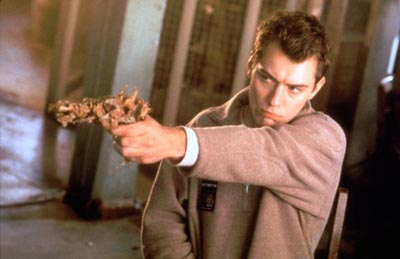
Sorry, I really am taken by that bizarre gun.
Plunging the viewer into the story in media res and filling in the details of this world is a trick Cronenberg knows well, and as 12 random volunteers plug themselves in to their borrowed gamepods and are networked to Allegra’s pod with cables that look suspiciously like umbilical cords, a latecomer arrives with an older gamepod. He takes a seat in a pew, takes out the older, larger gamepod, and from it pulls a bizarre looking gun, which he uses to shoot Allegra. A security guard shoots and kills this would-be assassin, and the wounded Allegra is entrusted to the care of a PR intern (Jude Law). They escape in the panic and go into hiding until they can figure out who wants to kill Allegra and why.
Besides the gamepods, which are flesh-colored and seem to pulse and breathe while they are being operated, the assassin’s gun is the only clue you need that this is a Cronenberg movie: to get past the metal detector at the door, the gun is made of bone and meat and fires human teeth instead of bullets. That is the Cronenbergiest thing ever.
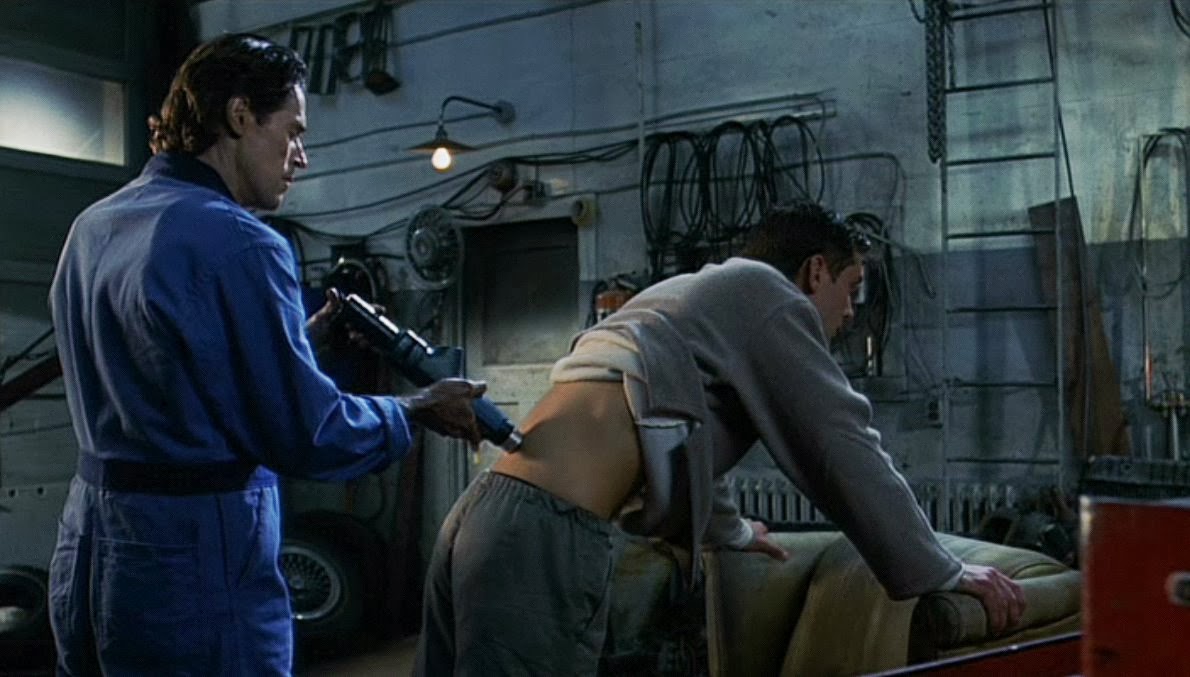
To continue coining new words, things get Cronenbergier when Allegra discovers that her new guardian, Ted Pikul, doesn’t have a bio-port, and we learn these sockets that run directly into the spinal column are installed routinely in shopping malls. “It’s like getting your ears pierced,” says Allegra.
Her gamepod was injured in the attempted assassination, and apparently has the only copy of eXistenZ, which has so far cost $38 million to develop. She has to access the game to make sure it has survived, and for that she needs a partner, and they seek out a black market bio-port supplier for Pikul. That this supplier is played by Willem Dafoe should raise red flags.
Once Allegra and Pikul do access eXistenZ is when we start traveling through Cronenberg mindfuck territory. Pikul turns out to be really good at this new virtual reality experience, though his perception of what is real and what is game begins to get very soft. Allegra is surprised at developments in her own game, which seem to be the work of the people trying to kill her, the Reality Underground.
I admit I approached this with some misgivings; near future science fiction has a tendency to get very embarrassing very fast (Johnny Mnemonic‘s cyberspace sequences were embarrassing out of the box). Cronenberg sidesteps the whole thing pretty neatly with his body horror version of the future; hell, even Jude Law’s cell phone is some sort of glowing lump. So the most jarring thing about this future is that Leigh, Law, and Christopher Eccleston are so freaking young. (not to mention that Law’s American accent is really good.)
eXistenz is probably the closest we are ever going to get to a decent film version of Philip K. Dick’s trippier stuff, like The Three Stigmata of Palmer Eldritch or Ubik (I would love to be proven wrong on that). Creepier stuff like synthetically mutated amphibians being harvested to provide the meta-flesh for gamepods put aside, it uses nestled realities with an effectiveness that wouldn’t be seen again until Christopher Nolan’s Inception, and, like its older brother, Videodrome, it leaves the viewer, like the characters, unsure of what truly is reality.
The Brits have a very layered way of moving up in the world of performing arts: you start at the bottom, and work your way up. I rather prefer that over the hope-you-get-noticed-and-rocket-to-fame model of American show business. One of the more interesting of these rising through the ranks stories is Nicholas Roeg, an intriguing cinematic voice who managed to keep his extremely singular nature in his ascent to the director’s chair.
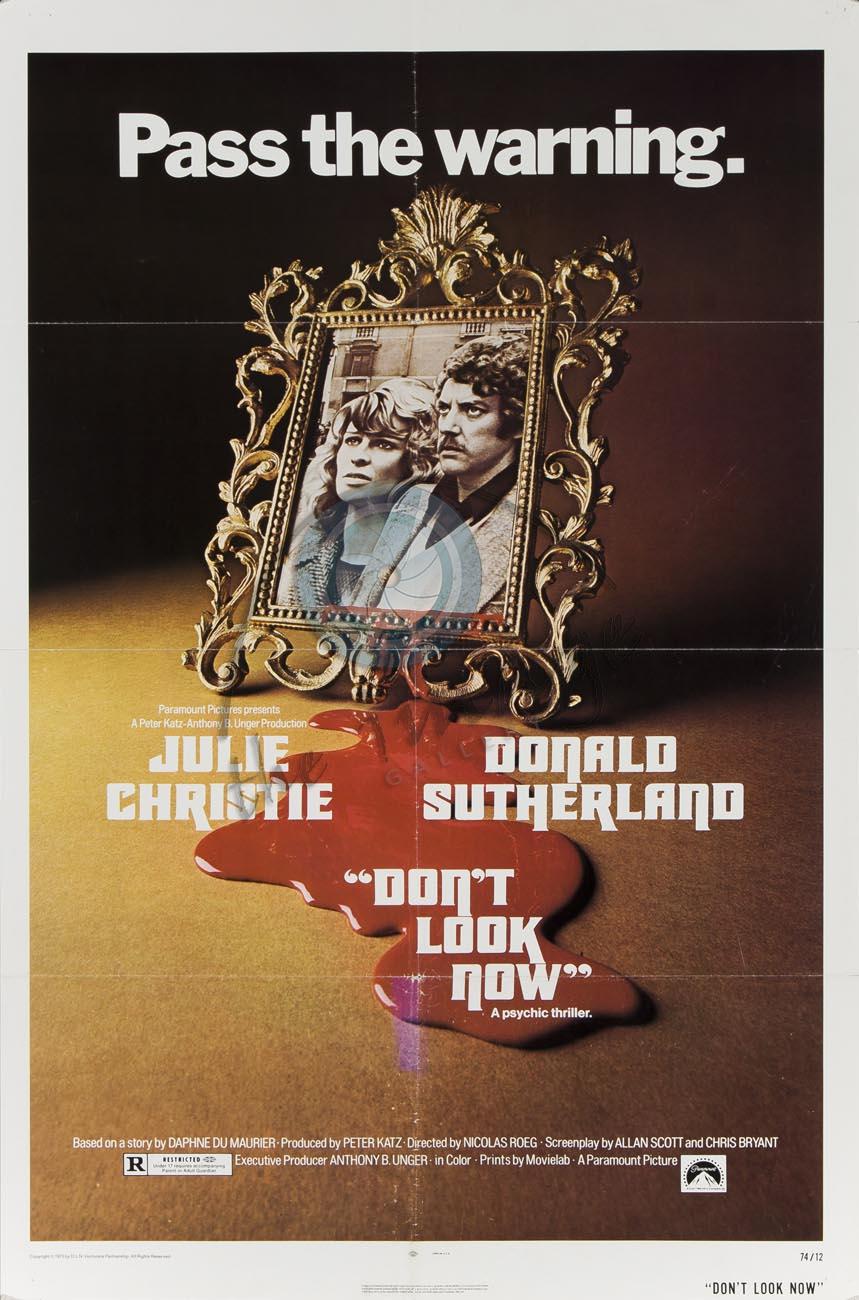
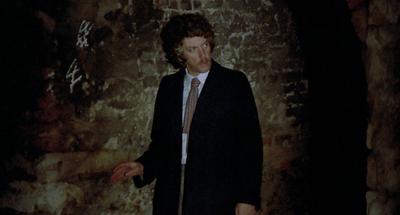
After his debut feature, Performance, and its follow-up Walkabout, Roeg directed this mind-bending movie, described by himself as “an exercise in film grammar”. Based on a Daphne du Maurier short story, it’s the tale of Laura and John Baxter (Julie Christie and Donald Sutherland), a couple in the months after the accidental drowning death of their daughter. They’re currently living in Venice, where John is supervising the restoration of a decaying church. At dinner one night, they encounter a pair of vacationing English sisters (Hilary Mason and Clella Mantania) , one of whom is blind, but psychic. The blind one tells Laura she can see her dead daughter, who is attempting to warn John he is in danger if he stays in Venice.
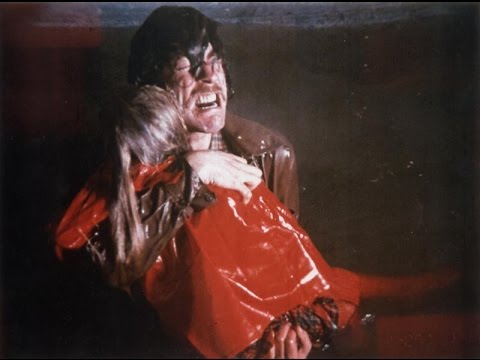
There is a lot to what she says: there has been a series of unsolved murders, and John keeps seeing a tiny figure darting about in the shadows of the winding streets, seemingly wearing his daughter’s favorite red raincoat – which she was wearing when she drowned. John himself also has the Second Sight, a notion which he vigorously denies, until he has a vision which sets in motion his doom.
Roeg is messing with the viewer from the beginning, presenting the daughter’s death in a early morning scene snipped into several converging, simultaneous storylines, separate realities that eventually merge into one harrowing whole. John’s psychic ability is foretold as he spills a drink on a slide of one of the Venetian churches he’s researching, his daughter in one of the pews; the drink causes the red dye of the slide to run (she is, of course, wearing the raincoat in the picture), bringing a dreadful premonition to him as he runs out the door to the nearby pond, too late.
This fragmented vision of reality, strings flailing about in an effort to wrap themselves into the cord of fate, runs throughout the movie. John wandering lost in the alleys of the seedier side of Venice, stopping suddenly and saying, “I know this place,” unaware that he is foreseeing his own eventual death; the final shock that we see coming from a mile off (like John, if he would only let himself see as the blind sister does) which is nonetheless so visceral, so shocking, (and it must be said, Christie and Sutherland are so good in their roles) it burns itself into your mind, even though you thought it prepared.
This movie was a bit of a cause celebre amongst my classmates at the time, probably as much for the sex scene as the horror story (oh, hush, you were in high school, too, at some point). Don’t Look Now presents a universe where everything is connected, but it is still a chaotic, uncaring place, full of danger and terror. I’m actually kind of glad I didn’t receive that message in high school; I’m a little better prepared for it now.
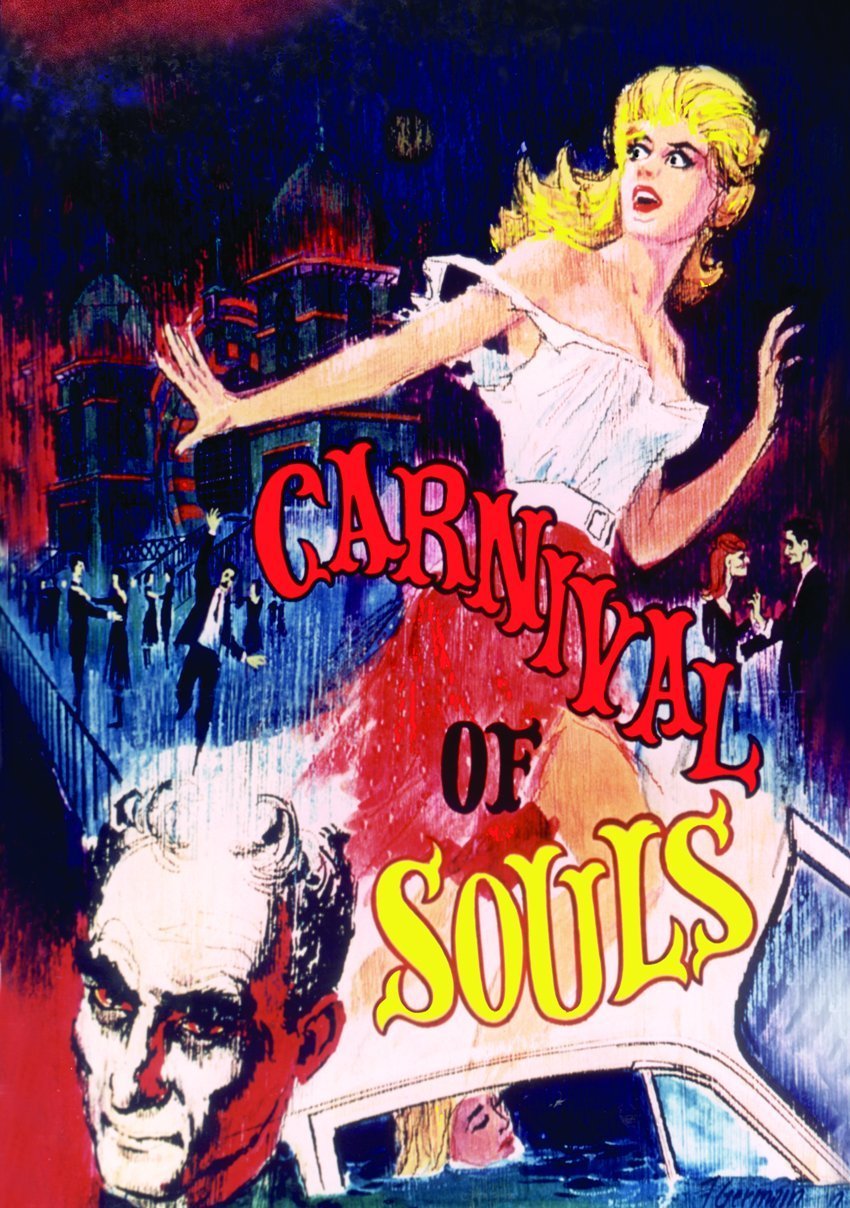
It’s strange to see Carnival of Souls so venerated now – it’s even out on the Criterion Collection. A quickly-produced low-budget movie meant as a calling card to the movie industry, now acknowledged as a classic. Well, okay, there are more than a few of those in the Collection, but it’s rare that we get to watch one during Hubrisween.
Just in case you recently switched living arrangements from underneath a rock, Carnival opens with a drag race gone wrong, as a car carrying three women plunges off an old bridge into a river and sinks immediately. While the river is being dredged for the car and the bodies, one of the women – Mary Henry (Candace Hilligoss) stumbles from the muddy river, unable to remember anything since the crash.
Mary’s a skilled organist taking a position at a church in Utah, though she denies being particularly religious. On the way to this new life, she is stricken by the sight of an abandoned pleasure palace on the shore of a lake. Her increasing obsession with the place becomes a problem, though not as much as the ghoulish, silent white-faced man who seems to be stalking her.
Since we’re dealing with a movie half a century old, I think we can stop being so precious and just say that Mary died in that car wreck, and she’s only been pretending to be alive all this time. It’s something that anyone who’s read “An Occurrence at Owl Creek Bridge” or seen an episode of Twilight Zone has already figured out by the first half hour mark, if not ten minutes in. The difference is in the delivery of that revelation, which is where Carnival manages to edge itself into the realm of actual art.
There are two times in the movie when Mary finds herself in a silent world, unable to interact with any of the people bustling around her, as if she’s ceased to exist. It’s amazing how affecting something like killing the ambient sound in a sequence can truly be. These segments, and the scenes taking place in the decaying Saltair Amusement Park (an amazing setting that was only waiting to be discovered), its downbeat denouemant, are what give the movie its power to chill.
Producer/director Herk Harvey (who also plays the ubiquitous dead-faced man) was a veteran of numerous “mental hygiene” and industrial shorts, and went into his two-week shoot with a budget of $17,000 and a five man crew. Years of quick production put him in good stead as the shoot proceeded guerilla-style in Salt Lake City (offering a man in a van twenty-five bucks to “nearly” run over Hilligoss, for instance). Much of the movie was shot in Lawrence, Kansas, where Hervey and his cohorts were well-known and respected (“You need to shoot in my church? Sure!”).
The oddest note in the movie is struck by Hilligoss’ portrayal of Mary; judging from interviews with her and Harvey, the cold, non-social aspect of the character is a choice by the director, which Hilligoss struggled with. It may be good for the story – Mary is a character that never truly lived, and now desperately wishes to, but doesn’t know how. It does, however (and as Hilligoss feared) limit viewer sympathy for the protagonist.
Faring better is Sidney Berger as the only other occupant of Mary’s boarding house, John. John is a realistic, horny working guy, equal parts good humor, sexual bluntness and desperation. Mary acquiesces to his constant efforts to get close to her simply because her fear of the Man and the call of the abandoned park are beginning to terrify her. Even the horndog, though, is unwilling to expose himself to her increasing instability. Berger went on to a sterling career as head of the drama department at the University of Houston, and had to put up with some frequent razzing about the role, but honestly, he is, in many ways, the best actor in the movie.
Carnival did not fare well on its initial release, and was, as is so often the case, screwed over by a con man masquerading as a distribution company. It was also cut by as much as eight minutes, and since I saw the original, uncut version, that might have actually been an improvement – it does drag in parts. But when it was sold to TV, frequent airings allowed its strengths to be appreciated, and a cult grew. And this is why, even knowing the Twilight Zone properties of the script, it is possible to still watch this small, well-organized picture and still be able to pick up a chill or two.
Here’s a movie that kept cropping up on late night horror movie slots, causing some consternation amongst fans expecting crepe hair werewolves or cardboard robots going berserk – a reasoned, almost stately historical drama. The station’s programmers couldn’t really be blamed – this was produced by Val Lewton, who similarly produced Cat People, Curse of the Cat People, I Walked With A Zombie, you know. It starred Boris Karloff, for pete’s sake. Similar reasoning/excuses held for Tower of London (though Camp on Blood Island was a little less forgivable).
This was the last of Lewton’s movies produced at RKO, the most expensive, and the first one to ever show a loss at the Box Office. In 1945, as Bedlam was being filmed, America was dropping atomic bombs on Japan. Small wonder that horror movies were on the wane; there’d been enough horror to go around in the real world, no need to visit it in our entertainment. Lewton would only produce three more movies in his life, and when you look at what he accomplished with remarkably small budgets, you wonder how the heck that ever happened.
It’s probably Lewton’s intellectual bent, as Bedlam is pretty much derived from an engraving by William Hogarth in his Rake’s Progress series. Quick views of other satiric Hogarth art is used for scene dissolves, and I can just imagine studio execs scratching their heads over that. The artwork was, in fact, excised for the TV version.
Bedlam is short for St. Mary of Bethlehem’s Hospital, an insane asylum in 1761 London. Our story concerns the Apothecary General of the hospital, George Sims (Karloff) and his increasing clashes with the protege of the Tory Lord Mortimer (Billy Law), the quick-witted Nell Bowen (Anna Lee). Horrified by the conditions in Bedlam – especially during Bedlam‘s most famous scene when an inmate, gilded to portray Reason in a show to honor Mortimer, suffocates (two decades before Goldfinger!) – Nell becomes a crusader for reform, eventually losing all her standing with the politically queasy Mortimer, and finally committed by Sims and a kangaroo court to become an inmate herself at the very asylum she is attempting to reform.
Nell still manages to reform Bedlam from the inside out, turning the huge common room into a much safer, healthier place. A Quaker stonemason (Richard Fraser), who had inspired her, is meanwhile working with the Whig reformist John Wilkes to get her another trial. Seeing that this new trial would be disastrous to him, Sims decides to give Nell the 18th century equivalent of a lobotomy, but the inmates rise against him, and while Nell escapes, hold a trial for their abusive warden, with surprising (but ultimately horrifying) results.
The Breen office hacked the script to pieces before it ever started filming, and it is still surprising what got through. Director Mark Robson recreates several of Hogarth’s prints in real space, often on hastily improvised sets (in fact, that enormous commons room in Bedlam is the church set from The Bells of St. Mary’s!). If Lewton could get this much period accuracy out of a tiny budget and some painted flats, it’s incredible he had to fight to get any work afterwards. Robson often said that he wouldn’t have been able to make movies like Earthquake if not for the lessons he learned under Lewton.
Karloff’s three movies with Lewton were probably the last of the classy horror movies he would make until he teamed with Richard Gordon in the late 50s. He always rankled when Bedlam was termed a horror movie, claiming it was historic drama. So it is… but nonetheless, here we are, talking about it during Hubrisween, because honestly – sometimes there is nothing so horrible as truth and history.
Now, a lot of people whose opinion I respect like Jess Franco. I have yet to find that movie that will win me over to his camp, however. It may actually happen someday, but in the meantime, I ain’t holdin’ my breath. The Awful Dr. Orlofis described by some as “Franco’s masterpiece”, which means in a career spanning around 200 movies, he hit his high point on his fifth movie. Contemplate that upon the Tree of Woe, and let us begin.
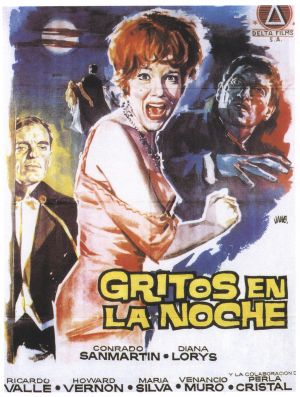
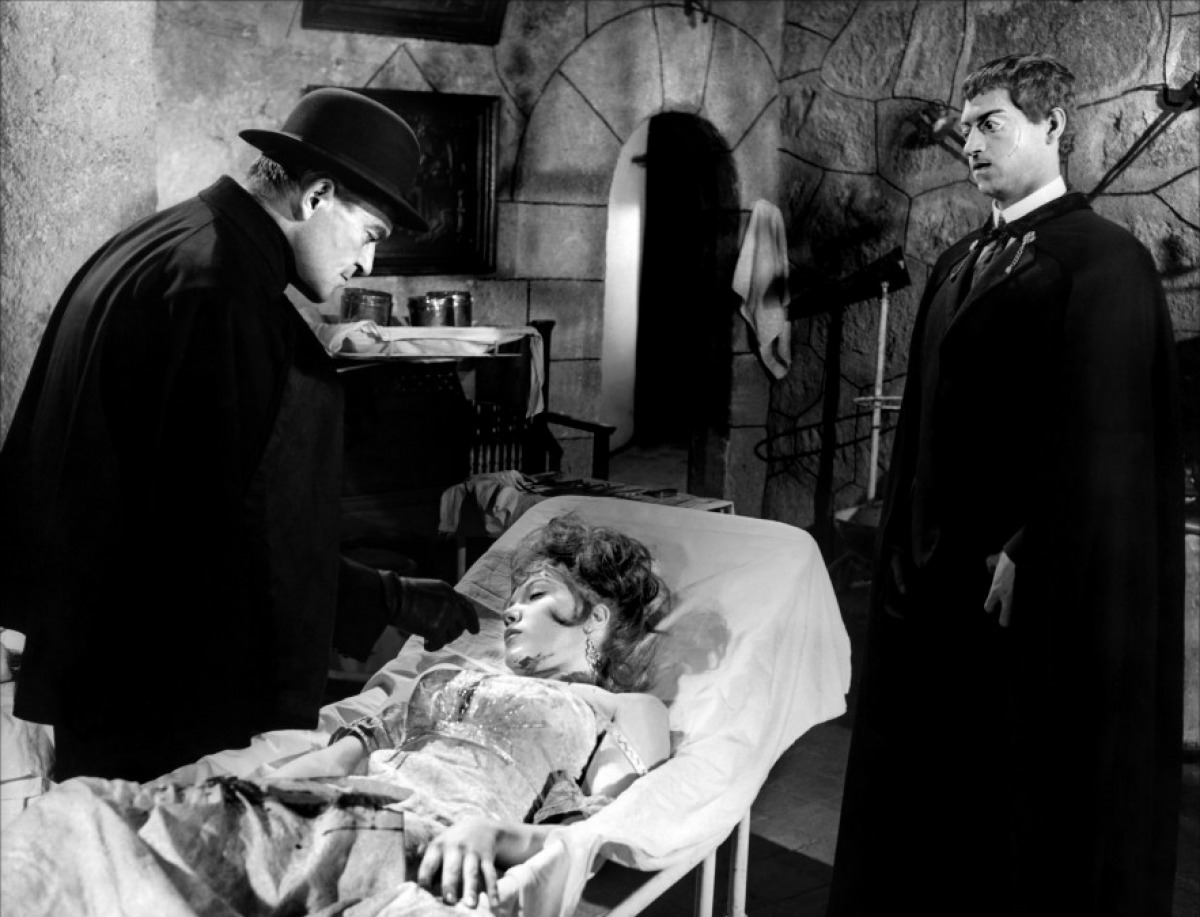
France, 1912: Four beautiful women have already disappeared, and as the movie starts, number five is killed by a disfigured, caped man, who then carries her body out, guided by the tapping of a cane. The man doing the tapping is our awful title character (Howard Vernon, here beginning a lifelong friendship and collaboration with Franco), clad in opera cape and top hat. The killer is Morpho (Ricardo Valle), whose scarred face and bulging, unblinking eyes are the classic stuff of monster movies.
We are quickly introduced to Inspector Tanner (Conrado San Martin) and his ballerina fiancee, Wanda (Diana Lorys). Tanner is put in charge of the missing woman epidemic and will prove mostly ineffective (it is, in fact only due to a comic relief drunk played by Faustino Cornejo that Tanner solves anything). Orlof is trying to restore his daughter’s face, scarred in a laboratory fire years before – after his most recent failure (an unfortunate drunken woman trapped with Morpho in an empty house, a very effective scene), he determines that his next victim must be living when he attempts the skin grafts. Then he notices that Wanda and his daughter are played by the same actress…
Okay, we can stop right now and examine the obvious, that this is the same plot as Eyes Without A Face, released only two years previous. In this instance, Franco has an excuse: he was denied a permit to film his intended fifth movie by the Spanish State Censor, and he already had a cast and crew ready to go. He wrote Orlof in a week, figuring – as is often the case – that a horror movie would be perceived as having no particular political message. This doesn’t necessarily excuse his return to this particular trough over and over again through the years, however.
Franco was a cinematic omnivore, and this really shows in this version of Les Yeux Sans Visage through the filter of a 1930s Universal monster movie (it’s a possibility that Orlof is a tribute to Bela Lugosi and his blind henchmen in The Human Monster), or one of the more contemporaneous Hammer gothic horrors. It’s certainly lacking the poetry of Franju’s film – the tormented nature of the daughter, the recipient of her father’s increasingly horrific attempts to restore her face (Lorys as the daughter is called upon to do little more than loll her head about on a uncomfortable-looking bed). There is some tribute paid to Orlof’s agony over what he’s doing, but it feels more like filler here. I’m sure the dreadful English dub is not helping out there, either.
The character of Wanda the ballerina is a new addition to the story, using herself as bait when she realizes Orloff is becoming obsessed with her. The final twenty minutes of the movie, with Wanda in the clutches of the mad scientist and her worthless boyfriend the Inspector finding every excuse possible to not read her hastily-written note, is pretty compelling, though the viewer finds himself wondering why she thinks taking such a hazardous course without notifying her policeman boyfriend in advance is going to turn out alright.
If nothing else, you have to admit that the original title, Gritos en la noche, or Screams in the Night, is a great title for a horror movie. Exactly when it became The Awful Dr. Orlof is opaque to me; I had assumed the change was made so it could occupy the lower half of a double bill with Ricardo Freda’s The Horrible Dr. Hichcock, but my Image DVD bears the french title L’horrible Docteur Orlof. I need more coffee before I can begin to untangle this, and I’m inclined to believe it’s just not worth it.
For some – like, for instance, me – it’s an okay way to kill an hour and thirty minutes. For others it’s going to be an unforgivable slog, though a couple of instances of shocking (for 1962, anyway) female nudity employing an obvious body double might wake them up.
That banner at the top of each review will take you to Hubrisween Central, a collection of links to each review as they post. And yes, there will be a 2015 version of last year’s Letterboxd page. Here’s a preview:
I haven’t been exactly idle while I’ve been gone. Though I haven’t been posting here, I’m still watching movies for that 100 Films Challenge I suckered myself into. The need to comment on movies I watch runs deep, it seems, because I’ve still been reviewing them, but on the Letterboxd site, where I feel a little better about engaging in what Warren Ellis calls “first draft writing”. I don’t know why that is, but it’s enabled me to get them off my brain and still leave time to bank Hubrisween reviews and take care of my other writing projects. Almost. (but it was a good plan)
Here’s what you’ve missed (yes, yes, this is all on my List 2015 page, but we’re all here now):
Which is where I am, right now. I’ll try to send you a postcard.
Later.
Yeah, it’s a real place. Go There, it’s fun.
My Day Job – well, Day as far as 19.5 hours a week go, because after that, you know, I’d be eligible for benefits – is, as usual, short-handed (gosh, I wonder why), so scramble is the operative word. Three shoots this week, somehow found time to edit one and a half stories. Fortunately, I do love this job. Just wish there were more of it.
I still work the other two part-time jobs.
I have a writing contract that is in the final stretch, and it still has a lot of work to be done.
I promised I would watch 100 specific movies this year.
Something has to give.
What that something is… is regular updates on this blog.
We’ve been here before. We’ll probably be here again. Until, against all odds, I become independently wealthy, this will probably be an occurrence frequently revisited.
I’ve tried to avoid writing about these 100 movies, but find I can’t, so I’m doing shorter reviews over at Letterboxd. Those reviews are linked on this page, so if you suddenly find you have a burning need to find out what I thought about Boss Nigger, that will be over there.
Regretfully, that means my in-depth article contrasting 8 1/2 with Lost Soul: The Doomed Journey of Richard Stanley’s Island of Souls will never be written. Do yourself a favor and program that double feature for yourself. There is a delightful amount of synergy there.
Things won’t be quiet here for long. Next month is October, and you know what that means:
Yes, that means you are going to get sick of me next month. And this time, there are more blogs taking part than last year, so you aren’t going to lack for horror movie reviews.
And speaking of blogathons, you have this to look forward to in November:
Yep, there’s a lot of blogs writing about the Criterion Collection and its movies on the Collection’s 30th anniversary, and honestly, I wasn’t going to take part, because as I mentioned earlier: my plate is very full and I really don’t need another run to the buffet table. Then I saw what movies had already been claimed, and it was a long list, and my eye wandered down it, and I discovered that no one had staked out my favorite movie of all time. Dammit.
So in November I am going to be writing about The Seven Samurai. This is in equal part awesome and terrifying. Writing about movies I like is always more difficult than heaping scorn on a movie that disappointed me; I want people to watch the movies that make me happy, so I don’t like to give away too much.
But this is an important movie to me. I’ve never written about it at length before. I haven’t had my yearly re-watch of it yet. So I’m going to try to forget the increased audience this event is going to bring in, and try to do it honor. And that will take time.
I’ve been binging on a lot of quality movies lately, trying to make the deadline for this 100 Movie Challenge I managed to get myself into (the number of ways I find to make watching movies feel like work is utterly astounding to me). That’s not my favored way of doing things. I like to sit back and ponder what I have just seen for a day or so. Okay, to be honest, if I don’t like what I’ve seen, I like to take a couple of days to figure out just how mean I’ll be to it. But my general covenant with movies – You entertain me, and I agree to be entertained – works and works well. I rarely have to be mean.
Didn’t totally understand. Doesn’t matter.
But sometimes I have to admit I’ve just not entertained as much as I am bumfuzzled. I’ve been going through a lot of movies with extraordinary imagery lately, and the processing on those takes longer. Some, like Alejandro Jodorowsky’s “magical autobiography” The Dance of Reality are lush but fairly accessible – I had to satisfy myself with a briefer-than-usual review on Letterboxd just to get it out of my system so I could work on the more difficult tasks, all the while aware that the clock was ticking and I’ve got to cram in ten of these movies a month to make my quota, and win the challenge. Which has no prize other than finally watching movies I’ve been telling myself I really need to watch.
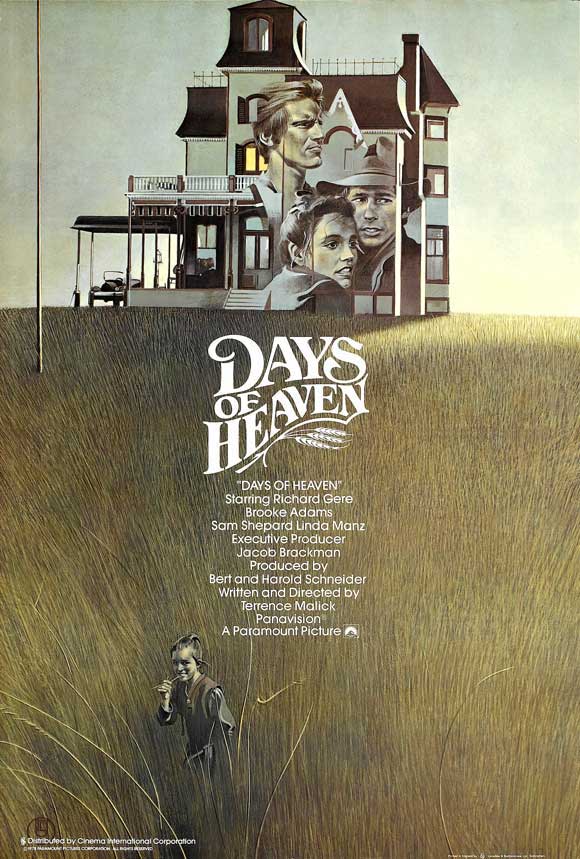
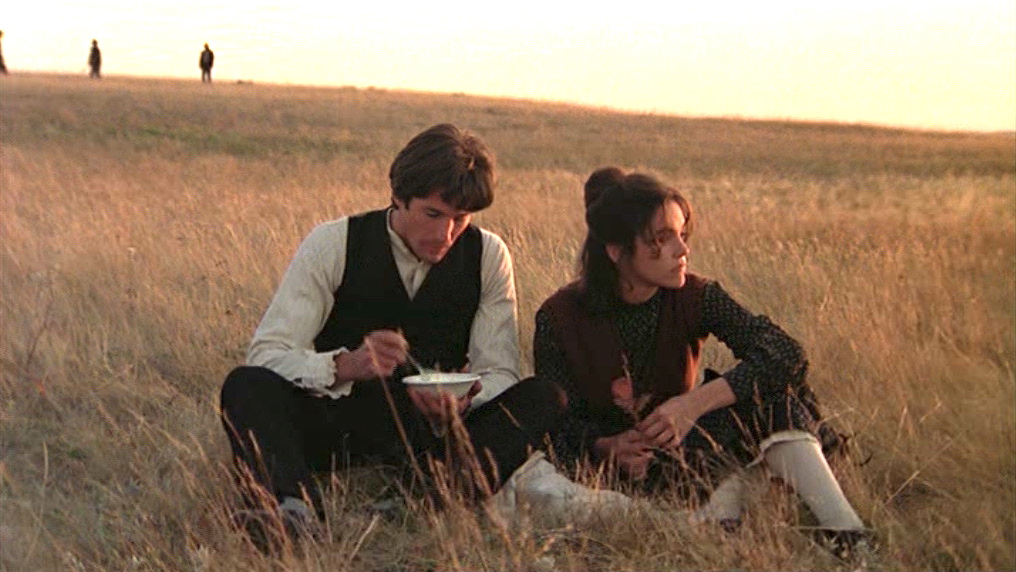
Now first up on that list is Terrence Malick’s Days of Heaven, which I grant you isn’t as jam-packed with symbolism or hidden meanings as something like 8 1/2 (which is one of the movies I’m still processing), but it is, unmistakably, all about the imagery. There is a well-deserved Academy Award for Cinematography given to Nestor Almendros (though Haskell Wexler will point out to you that he shot at least half of the movie, if you give him half a chance).
Now for a personal digression: I recall reading an article sometime in the 80s about the difficulties of being a film’s producer, and one of the passages that really stuck in my memory talked about the wonderful director the project was lucky enough to score, but who demanded that the movie only be shot during “golden time”, the hour before and after sunset and sunrise, increasing the budget by drastically limiting the shooting time available. It is only now that I realize this somewhat bitter and bemused paragraph was about Terrence Malick.
Days of Heaven is beautiful, have no doubts on that front. When a movie evokes Wyeth’s Christina’s World (and I had a print of that on my wall for years), and does it well, that’s art. Where it falls down for me is the story.
The time is 1916. Richard Gere is Bill, a hot-tempered sort who flees Chicago when, in a fit of rage, he accidentally kills a foreman in the steel mill where he’s working (the foreman is Stuart Margolin, and who among us has not desired to murder him at one time or another?). Bill hops a train with his young sister, Linda (Linda Manz), and his lover Abby (Brooke Adams). They wind up working on an enormous wheat farm in the Texas panhandle owned by Sam Shepard (The Farmer isn’t even given a name).
One problem for our peripatetic trio – besides Bill’s temper – is that they’re living under the lie that Abby is also Bill’s sister, but they don’t bother hiding their feelings for one another. The other problem is The Farmer becomes enamored of Abby (it’s Brooke Adams, who wouldn’t be enamored?). Bill overhears a conversation that indicates that The Farmer has only a year to live, and convinces Abby to marry the smitten Farmer, so their fortunes will be made. The last problem is that The Farmer is a genuinely good man, and Abby falls in love with him, too.
No, wait, the last problem is that plague of locusts. And the fire that burns the entire farm. And Bill, once again, accidentally killing the Farmer (who was, to be sure, trying to kill Bill). And then the law on their heels. And…
The cult around this movie perplexes me. It is beautiful to look at, I cannot stress that enough. These are all fine actors. That story though… that’s only one step removed from a TV miniseries from the same era, and one of those would have been better scripted, to boot (apparently Malick just let the actors improvise for a good while to “find the story”). I find I don’t have a problem with overwhelming imagery, as in 8 1/2 or Dances of Reality, as long as those images are backed up with ideas. So much of the two Malick films I have seen thus far – this and The Thin Red Line – seem to be about the beauty of nature providing a contrast for man fucking up. I get that. I got that with Easy Rider. Can we move on?
There are more Malick movies, these are just the two that were on The List. I will watch more; my resistance against these two have not been enough to turn me against Malick (though I know plenty of people who have not only walked away, but are driven to screech on social media whenever I mention him). What has been presented has been presented so well that I feel there must be something I am missing. And I am not sure which may be the true failing here – my missing whatever it is or thinking that there is something I am missing.
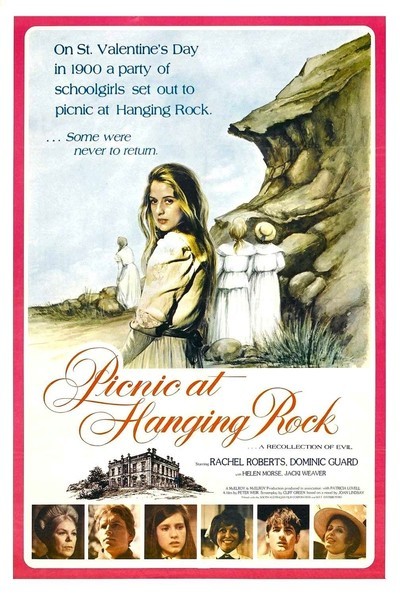
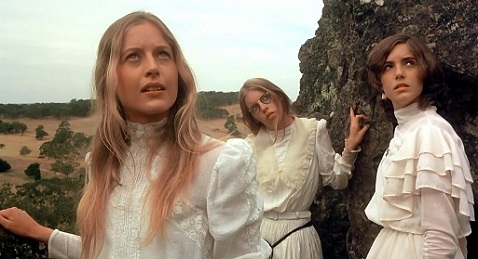
I am much more kindly disposed toward Picnic at Hanging Rock. Rather famously, it concerns the class of a girls-only boarding school in Australia who go on a picnic on Valentine’s Day, 1900 to the titular rock, a huge misshapen piece of volcanic stone jutting out of the forest. Four girls, against the prior orders of the school’s headmistress, climb the rock. Only one comes back, in a panic. One teacher goes in search of them, and she vanishes.
Picnic at Hanging Rock is mainly about the wear and tear on the people left behind by that singular event. The school and its personnel; the townspeople; the roommate of the ringleader of the missing girls, who was desperately in love with her; the son of a visiting English family who saw the girls wander off and becomes so obsessed with them that he spends the night on the Rock, hoping to find a clue as to what happened.
There is an underlying feeling of the supernatural at work, but never so overt or clear that one can say, “Aha! This is what happened!” Which has always presented a problem for the movie, especially in America, where we like our mysteries solved (That last sentence really needs a font that implies sarcasm). Even knowing that this is going to be the case, the pining in your soul for an answer, any answer, is going to be extreme. Although the story is entirely from the imagination of novelist Joan Lindsey, many have tried to research the incident, only to be stymied when they can find no corroboration. It’s rumored the production company started a rumor that it was true story, just so people might not come to the film expecting any sort of closure.
Lacking an explanation, then, Picnic at Hanging Rock, while telling a period piece in a time and a place almost none of us have experienced, still manages the magic quality of veracity; though the images are pretty and often poetic, it feels real, as we are forced to ponder similar incidents which have no explanation, no end, no matter where or when we may be. This was Peter Weir’s third crack at a feature film, and he demonstrates a remarkably sure hand at a tricky subject, ably aided by his actresses and one of the more remarkable physical locations that was just waiting to be discovered.
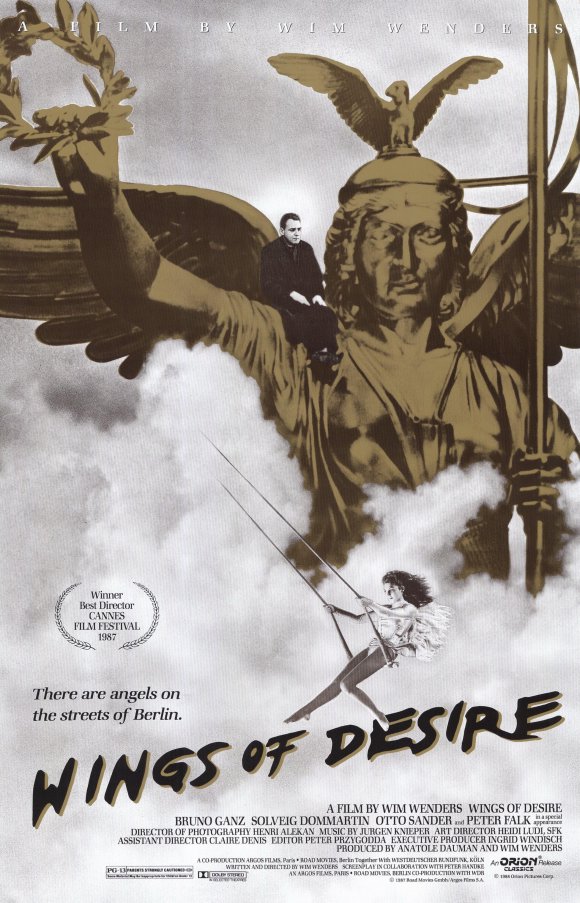
I said last week that I like to leave things on an upbeat note when possible, so I’ll finish up with another movie also packed with remarkable imagery, but one that I could understand and appreciate: Wings of Desire.
Wim Wenders, after the success of Paris, Texas had wanted to make a movie about Berlin, which was, at the time, still a city divided by the Wall. In trying to find a hook on which to rest this movie, he at one point hit upon the idea of guardian angels. And here it begins.
Bruno Ganz and Otto Sander are Damiel and Cassiel, two angels who watch and observe the people of Berlin. They can hear the thoughts of these people, but it is their lot to watch but not interfere. The most they can do is, with a touch, impart a bit of grace, a calm, a peace. It sometimes helps; sometimes it does not. The two are part of an apparent flight of angels in the city; one of the best sequences is Cassiel slowly walking through a library, luxuriating in the chorus of thoughts, nodding to his fellow angels, each at a person’s shoulder, observing. Wandering through the story is Homer (Curt Bois), an elderly writer, who may or may not be the original Homer, immortal and eternally pursuing and preserving the story of Man.
The thrust of the story concerns Damiel’s growing disenchantment with his angelic lot and a desire to become active, to, in short, become mortal. There are two things that drive this desire: a female trapeze artist (Solveig Dommartin) in a failing circus, whom Damiel first encounters complaining about the angel wings the Ringmaster wants her to wear; and an American actor (Peter Falk, playing Peter Falk), who can sense the angel’s presence, and tells him how good it can be on this side of existence.
The thematic touches are simple and glorious throughout; the angels’ world is black and white, only humans see in color. And perhaps the most striking scenery is provided by that Wall, which seemed so damned eternal in 1987. It is a frequent backdrop, covered in graffitti. When the angels walk through it to the Soviet side, the sight of those closely guarded walls so white and clean is shocking.
Hollywood, of course, sought to remake Wings of Desire after its success, and as usual sought to “improve” it. I’m not sure about the “improvement” part. City of Angels has much more of a three-act structure and solid through-line to it, but Wings of Desire, slipping in and out of Damiel’s quest, follow other threads, other people, manages to take an extraordinary, truly supernatural story, and make it feel more real that any number of movies built on carefully-studied Syd Field script models.
I really liked it, is what I’m saying. Am I missing anything Wim Wenders was trying to say? Does that matter? I liked the movie. I’m likely to tell other people to see the movie.
War is a given. Yes, let’s not beat around the bush, let’s not pontificate about the necessity of man stumbling while working toward his higher being blah blah blah. I wish you were right. I really do. But all the evidence points toward Man being a brutal, twitchy animal that needs only the slightest of motivations to get very violent, very quickly. In Wings of Desire, an apparently immortal Homer leafs through books in a library, wondering why there are no epic poems about peacetime. “What is wrong with peace that its inspiration doesn’t endure?”
We seem to be made of meat and conflict. As a writer, I am told again and again that the engine of story is conflict. Without conflict, there is no story. So, alright, we are made of meat, conflict, and stories. So I arranged my viewing in a certain way to embrace one of the biggest of those stories – World War II, for many the defining event of the last century – and it took me weeks to unpack what I had seen.
Overlord is a movie I was turned onto by the redoubtable Chad Plambeck. It was originally planned as a documentary about the Overlord Tapestry, a sort of modern-day Bayeaux Tapestry commemorating the 30th anniversary of D-Day (Overlord being the code name for the massive amphibious invasion). Director Stuart Cooper, an American expatriate, sat through three thousand hours of war footage housed at the Imperial War Museum, and he and producer James Quinn developed instead the idea of a feature film about a young Englishman called up for service in the latter part of the War.
The movie starts with a flash-forward – the first of many – of a young soldier running on a beach, his life suddenly cut short by a gunshot. This shot is mirrored by our first sight of Tom (Brian Stirner) running home to collect his luggage, so he can meet the train to report for duty. He misses his connection, and is delayed overnight while Nazi planes rain bombs down upon London. This is also the first major use of the motif Cooper will use throughout, as firemen battle the blazes and collapsing buildings in just one night of The Blitz. Tom and his story is shot in black-and-white, and the marriage of the film of two different eras is handled almost seamlessly (the skilled sound work goes a long way toward making the older footage seem more alive and current, part of the world the actors move through).
Tom will go through basic training (not without a bit of trouble), forge new friendships, and start an almost-romance with a girl which is cut short by the secretive moving about of troops, seemingly at random, in the run-up to the landing. It is to the credit of Cooper, Stirner and Julie Neesam playing The Girl (literally) that the audience feels the pain of this termination, with no time to say goodbye or even explain, as keenly as the characters.
Throughout, Tom has visions of his death on the battlefield, and it doesn’t matter where the eventual battle will be fought, he has a vision for every terrain. As Overlord approaches, he becomes convinced that he will, indeed, be one of many who will be felled on that day, and says so in a letter to his parents – which on the eve of invasion, is burned with all his personal papers, as it no longer seems to matter.
Overlord feels as gray as its cinematography, yet feels so utterly human that we never doubt the truth of what is being presented onscreen. Its major failing, perhaps, was in its timing -1975 wasn’t a good year for war. America was still smarting over the loss of Vietnam; the last completely successful war movies were probably four years in the past, movies like Patton and M*A*S*H*, neither of which could really be called typical war movies. And, at the time, if you didn’t open well in America, you simply disappeared. Which was the case with Overlord, until it was re-discovered and championed by Xan Cassavetes for her documentary Z Channel: A Magnificent Obsession, for which we may all be thankful.
As big a story as D-Day was – big enough to support many, many movies – it was not the entirety of the war. Hell, it wasn’t even the only continent or hemisphere in which it was fought. So it was time to journey to the Pacific Theater with The Thin Red Line.
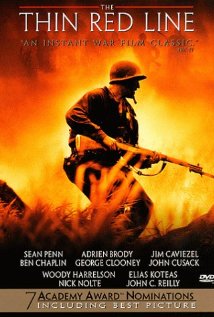
It was 20 years since Badlands and Days of Heaven, and it is really odd to consider Terrence Malick coming back with a war movie. The Thin Red Line is the second book in James Jones’ war trilogy – the first is From Here to Eternity – and since Jones served in the battles portrayed, I tend to expect some truth from him. More on that later.
The movie The Thin Red Line is first and foremost an ensemble piece, and holy moley what an ensemble. Off the top of my head: James Caviezel, Nick Nolte, Sean Penn, Adrien Brody, Elias Koteas, John C. Reilly, Ben Chaplin, John Cusack, Woody Harrelson, John Travolta, Jared Leto, John Savage, George Clooney I mean holy crap. That sounds like the cast of a late 20th century version of The Longest Day, except that it’s a Malick film.
That means there’s a lot of internal monologue laid out over the movie, by various characters, and sometimes you’re not really sure who’s talking. Like the girl’s musings in Days of Heaven, it feels like a Beat poetry fest suddenly overlaying the movie proper. In this case, most of them seem to be pulled from Jones’ text (and a few from From Here to Eternity, just to be sure), cementing Malick’s reputation as a philosopher-filmmaker, for better or worse. Many people think that’s for the worse.
What cannot be denied, though, is the quality of the Oscar-nominated cinematography by John Toll. The contrast of the beauty of the countryside with the absolute terror and bloodshed and random death of the Battle of Mount Austen is hypnotic and engrossing. One image that will stick in my mind forever: a young soldier, cowering against the earth as Japanese bullets whiz over his head, noticing a fragile leaf that closes as his fingers brush against it, fascinated even as death flies and comrades die all around him. It’s an image cribbed from Picnic at Hanging Rock, but it’s a memorable one.
This portion of The Thin Red Line does handle the truth of the situation pretty well: this was the first combat experience for many of these soldiers, and that panic and havoc are well-conveyed. The booklet in the Criterion blu-ray reprints an article by James Jones from the 1963 Saturday Evening Post, shortly after Thin Red Line‘s publication. It’s entitled “Phony War Films”, and it contains this passage:
“…the true test of a true antiwar film is whether or not it shows that modern war destroys human character. None of these films does. Instead, they show that (for our side, if not for the enemy) war develops and enlarges human character.”
There is some of this in Malick’s Thin Red Line. Ben Chaplin, in a truly excellent portrayal as Private Bell, is a soldier who finds himself doing brave things not because he’s a hero, but because this is where he is, and if he does these things, maybe things will be better tomorrow, maybe more of his buddies will be alive. This means he winds up on the front line, taking out a hardened machine gun bunker in the only firefight shown in the movie, hectic and terrifying. Bell writes to his wife often throughout the movie, his memories of them together a source of strength, After this battle, his letters tell of his struggle to not change, to come back to her the same man as when he left. His reward is a letter telling him she has fallen in love with an Air Force captain, and asking for a divorce.
The balance to this is Caviezel’s Private Witt, a former AWOL who sees a bright light in everyone, even the enemy. Sean Penn’s Sergeant Welsh, slowly being eaten alive by the war, regards him as a “magician” for that. One of them will survive the movie. I’ll bet you know which.
I find myself on the fence about Malick. I don’t hate what I’ve seen, but I’m not sure if I like it or not. That means I’ll watch more of his movies to figure that out, which puts him in the win column for now.
But for the sheer embodiment of Jones’ earlier statement about war grinding out all character in a person, we have to move back north again, for Elem Klimov’s Come and See.
I owe Mark Cousins’ The Story of Film: An Odyssey for my even knowing about Come and See. The few scenes referenced therein, a few episodes of the Hardcore History podcast, and the constant threats of “The Russian Front!” in Hogan’s Heroes was about all the prep I had for this one.
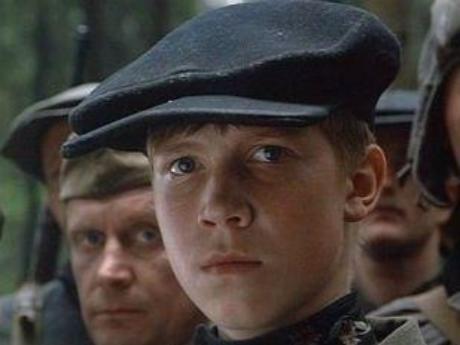
We start with Flor (Aleksey Kravchenko), a young Belorussian boy (Kravchenko was 14 at the time), digging in a WWI battlefield, much against his father’s wishes. Flor finds an old rifle, cleans it up, and joins the partisans in the surrounding woods fighting the invading Nazis. His dreams of glory are crushed when the commander leaves him behind to help establish a secondary camp. He’s not allowed to nurse his hurt feelings for long, though, as German bombs destroy the camp and troops begin filtering through the woods. He and a girl from the camp (Olga Miranova) escape to Flor’s village, only to find that the Nazis have already been there, and the bodies are stacked like cordwood behind a barn.
Flor… before.
Flor finds the remnants of his village – vice versa really, he is shell-shocked, half-deaf, and almost gets himself and the girl killed in a bog – and he eventually heads out with a small guerilla force to find food for the refugees. The war is not going to be kind to this venture, and attrition will eventually leave Flor on his own. He attempts to steal a cart, only to be taken in by his attempted victim as a new wave of Nazi troops flood over the region. Flor’s rifle and partisan uniform are hidden in a haystack and he is hastily given a peasant tunic and the quick biographies of his new family, in case the Nazis ask.
The Nazis do not ask. They round up the entire village into a central building, lock the doors, and set the building on fire. Flor escapes this fate only through a whim of the commanding officer, who needs a victim for the photo op quoted on the video box. He is left in the middle of the burning village, devastated and ravaged as the landscape itself. He reclaims his rifle and uniform, and follows the Nazi’s tracks to where they have been ambushed by the very partisans Flor had joined a seeming lifetime ago.
Flor… after.
Klimov filmed Come and See in chronological order, and we see the progression of Flor’s descent into the madness of war, how the events wear upon him. Klimov had sought to have Kravchenko hypnotized, so the filming would not cause him any lasting damage; but the boy was resistant to hypnosis. So filming proceeded, and by the time we reach the end of the movie, some of the 14 year-old’s hair had gone gray. That is not entirely acting and makeup at the end.
This truly is one of the great antiwar movies, by simply telling the truth. The slaughter of the village – which the closing credits tell us was the fate of 628 Belorussian villages and their occupants – is only one atrocity in a vast sea of them.
I’d like to end this with something calming, something soothing, but I fear I cannot. Every day someone new is beating the drum for war somewhere, and moreover, there is always war somewhere, not even for intelligible reasons beyond our apparent need for these stories, this fiction of war that is disproven over and over again, yet we seem to continually pitch headlong toward it. Perhaps our thirst for such stories really is that great, even though we have many, many sad stories to relate already.

 Click ^^ for Hubrisween Central, here for our Letterboxd page.
 So I’m what you would call a Boris Karloff fan. One day I’m going to run out of Karloff movies to watch, and that is going to be a sad day. General availability is going to render that sadness difficult to achieve, perhaps. I can’t think of any circumstances bizarre enough that I’ll get to see him play an Indian in Tap Roots, but hey, I’ve been wrong before.
 Frankenstein has a reason to put up with those odious showbiz types, the same reason he needs the atomic generator: he’s building a monster, and this time, he’s going to get it right. After his manservant gets too nosey and finds the underground laboratory, Frankenstein uses the poor man’s brain and then proceeds to work his way through the movie people for more spare parts as needed. The Monster is fairly cost-effective, too, basically a mummy with an oversized head.
 As ever, Karloff is worth watching; his Frankenstein bears the scars of Nazi torture, because he would not use his skills for their cause (considering the absurd changes the Breen Office enforced on the script, a time-lost copy of Frankenstein’s Army would have resulted in a lot of soiled trousers in that Office). Karloff gives the role his all, even injecting some creepiness toward the women in the crew. It’s more dimensional than the picture deserves, really.
 There are two reasons this movie got made: one was the Shock Theater package that re-introduced the Universal horror movies to television audiences, and the other was the success of the Hammer Curse of Frankenstein. This is a handsome movie, at the very least; it uses a Warner Brothers set built for an Errol Flynn movie, and it’s shot in CinemaScope, for God’s sake, using the same cinematographer as that Flynn flick, Carl E. Guthrie (clever of producer Aubrey Schenck – Guthrie already knew how to best light the set). I honestly do appreciate that the Warner prop crew put the Maltese Falcon in Frankenstein’s library.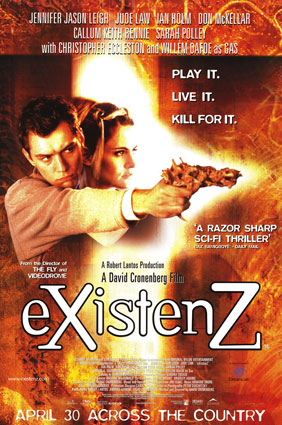



















 drfreex.com