H: Haunted Spooks (1920)

Hubrisween 3 BlackClick ^^ for Hubrisween Central, here for our Letterboxd page.

tumblr_lhrml7iYPO1qbcfcko1_500When one is doing a challenge like Hubrisween, it behooves one to occasionally program oneself a softball. So let’s all say “Hello!” to our designated softball, the 1920 Harold Lloyd short, Haunted Spooks.

By 1920, after numerous shorts for the Hal Roach studios, Lloyd was finally beginning to find his own voice. He had cast off the imitation of other, successful stars, donned a pair of glasses with no lenses, and became the character that would be known and loved for years: honest, earnest, kinetic, and extremely physical.

Haunted Spooks is pointed to as the first of Lloyd’s mature works. And true to Lloyd’s character and future works, it damn near killed him.

The plot is somewhat complex for a two-reeler. First, there is some Southern gentlemen who has passed away and left his plantation to his only daughter, on the stipulation that she live there with her husband for a year. If she fails this, the mansion goes to her evil uncle (the will doesn’t say “evil uncle”, but you know what I mean). The problem is, she’s not married.

0911shorts111Switch to Harold Lloyd, who is one of many young men wooing a rich young lady. In a truly funny sequence, he manages to freeze out the most ardent of his rivals, and gain the father’s consent to marry her. After getting this permission, though, he finds his lady love in the arms of another man, and so spends the next five minutes unsuccessfully trying to commit suicide. No, wait, trust me, it’s really funny!

His final attempt, trying to get run over by a car, puts him in touch with the heiress’ lawyer (it’s his car), and within minutes, the lovelorn Lloyd is wed to The Girl (Mildred Davis, who in a few years would actually be Mrs. Harold Lloyd). They pile into her rattletrap Ford, and journey to their new home.
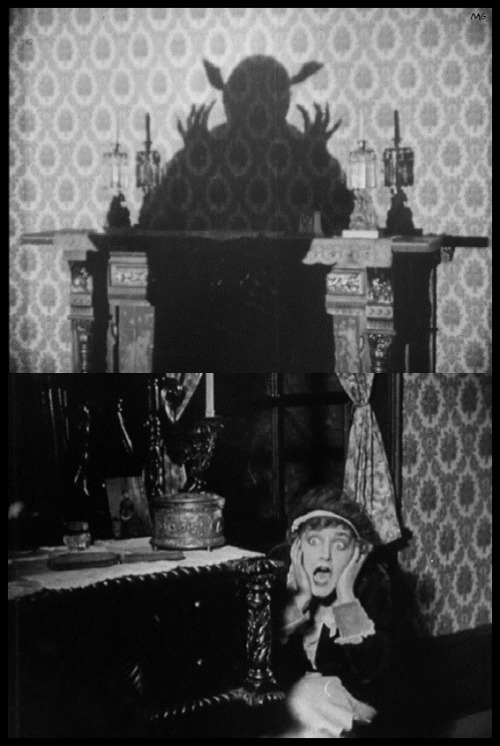
tumblr_ln8fa5pOGC1qbcfcko1_500Meantime, the Evil Uncle (Wallace Howe) is inspired by a thunderstorm to tell the superstitious staff that the mansion is haunted. Yes, the domestics are all black, so just steel yourselves for the Standard Comical Negroes of the time. Lloyd and the Girl arrive just in time to nearly get trampled by the stampeding servants, leaving only the petrified Butler (Blue Washington). Thereafter follow multiple people wearing sheets for various reasons, people running from them, and the occasional coating with flour to risible effect.

The thing is, this is all hilarious, and must have been even moreso in 1920 when it was all relatively new (maybe?). The bits are well staged, frenetic, and even at this far remove, often unexpected and always humorous. And we can – and should – tut-tut at the racial stereotyping, but we must also admit that it is fairly forward-thinking when the formerly terrorized Butler is the one who discovers and completely exposes the subterfuge, giving Lloyd and The Girl their happy ending and one of the better closing lines, from The Girl: “By the way – what’s our name?”

So how did this amped-up yet scaled-down episode of Scooby-Doo nearly kill this promising young comic star? Turns out it wasn’t anything that actually happened during filming (and given later successes like Safety Last! is only logical to assume). It was, in fact, while shooting a publicity still. He was supposedly lighting a cigarette from a lit bomb fuse, and the supposed prop bomb actually exploded.

tumblr_l1h34g2KMD1qbcfcko1_500No matter where I went in my research, I could not find the whys and wherefore of how Harold Lloyd was handed something that would actually blow up. That would seem to me a very interesting story, but I suppose it is amazing enough that Lloyd, having lost the thumb and forefinger of his right hand, his face severely burned and temporarily blinded, made such an astonishing comeback. He regained his vision and is using a prosthetic glove in the second half of the short. He is, in fact, using it so well that it is only apparent by its color (it’s lighter than Lloyd’s intact left hand) or by careful freeze-framing. Lloyd’s own doctors had to see the movie twice before they could determine when he was using it.

So yes, Haunted Spooks doesn’t refer to the sheet-wearing Uncle or his accomplice, but to the terrified servants. That’s a shame. But it would also be a shame to let that discourage you from enjoying a particularly energetic gem from the silent era. I laughed more than I shook my head in sad disbelief. Here, let me make it easier for you:
F: Frankenstein 1970 (1958)

Hubrisween 3 BlackClick ^^ for Hubrisween Central, here for our Letterboxd page.

frankenstein_1970_1958_poster_01So I’m what you would call a Boris Karloff fan. One day I’m going to run out of Karloff movies to watch, and that is going to be a sad day. General availability is going to render that sadness difficult to achieve, perhaps. I can’t think of any circumstances bizarre enough that I’ll get to see him play an Indian in Tap Roots, but hey, I’ve been wrong before.

Frankenstein 1970 starts out strong, with a clawed monster chasing a peasant girl through dark, fog-shrouded woods. This is damned effective movie-making. So effective that you start thinking, wait, this is just the opening, something is up, and sure enough, somebody yells “Cut!” revealing it all to be part of a movie being shot.

You will remember one of the things that will turn me against a movie is an attempt to treat me like an idiot. The movie crew is distressingly tiny – five people, and two locals – and this stick-bound tripod just shot a scene covering several hundred feet, with cuts. It’s a blatant cheat, and I’m not going to be in the movie’s corner for the next 80 minutes.

This less-than-skeleton crew is making a movie about… well possibly Frankenstein, who knows, because the director (Don “Red” Barry) keeps changing that (hell at one point he’s even decided it’s going to be a television show – who’s funding this idiot?). He rented out the actual Castle Frankenstein for his set, because the current Frankenstein (Karloff, yay!) is impoverished and needs the money to buy an atomic reactor. This is why its Frankenstein 1970, not Frankenstein 1960, as was originally planned. Obviously, it was unrealistic to expect people could buy their own atomic reactors until then.

imagesFrankenstein has a reason to put up with those odious showbiz types, the same reason he needs the atomic generator: he’s building a monster, and this time, he’s going to get it right. After his manservant gets too nosey and finds the underground laboratory, Frankenstein uses the poor man’s brain and then proceeds to work his way through the movie people for more spare parts as needed. The Monster is fairly cost-effective, too, basically a mummy with an oversized head.

monsters_csg313_frankenstein_1970As ever, Karloff is worth watching; his Frankenstein bears the scars of Nazi torture, because he would not use his skills for their cause (considering the absurd changes the Breen Office enforced on the script, a time-lost copy of Frankenstein’s Army would have resulted in a lot of soiled trousers in that Office). Karloff gives the role his all, even injecting some creepiness toward the women in the crew. It’s more dimensional than the picture deserves, really.

The movie crew is solid enough, but annoying. It’s like there are two different movies going on, using the same set, but one is a tragic horror story and the other is an unfunny comedy. I kind of wish everybody had been working on the tragic horror story.

frankenstein-1970There are two reasons this movie got made: one was the Shock Theater package that re-introduced the Universal horror movies to television audiences, and the other was the success of the Hammer Curse of Frankenstein. This is a handsome movie, at the very least; it uses a Warner Brothers set built for an Errol Flynn movie, and it’s shot in CinemaScope, for God’s sake, using the same cinematographer as that Flynn flick, Carl E. Guthrie (clever of producer Aubrey Schenck – Guthrie already knew how to best light the set). I honestly do appreciate that the Warner prop crew put the Maltese Falcon in Frankenstein’s library.

Frankenstein 1970 doesn’t fall into the “for Karloff completists only”, but there isn’t a whole lot here to reward the casual viewer, either.

That opening is still killer, though.

E: eXistenZ (1999)

Hubrisween 3 BlackClick ^^ for Hubrisween Central, here for our Letterboxd page.

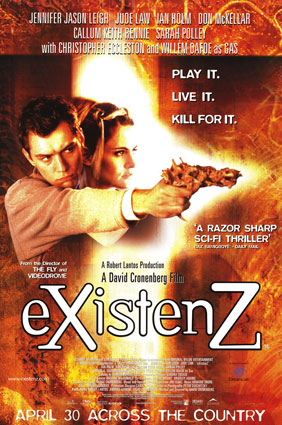
EXISTENZeXistenZ was David Cronenberg’s first completely original script since 1983’s Videodrome, my personal favorite of his many movies. It’s a bit disheartening that the two movies share themes, but then, Cronenberg hasn’t exactly hidden his obsessions over the years, and it only makes sense that he returns to those themes employing a different medium, a different Macguffin. In Videodrome, it was TV; in eXistenZ, it’s video games.

Jennifer Jason Leigh is Allegra Gellar, a rock star among game designers. eXistenZ is her new game, and the movie begins with a focus group gathered in what appears to be a rundown church. The people are there to play-test eXistenZ, and here is where we get the first of the Cronenbergian buzzconcepts, as each participant is assigned a “gamepod” made of “meta-flesh” which they will plug in to their “bio-ports”.

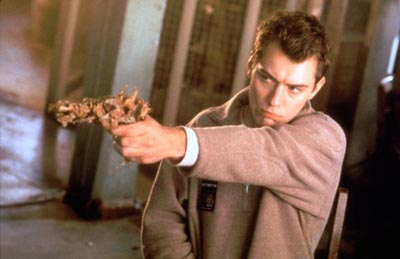
Sorry, I really am taken by that bizarre gun.

Plunging the viewer into the story in media res and filling in the details of this world is a trick Cronenberg knows well, and as 12 random volunteers plug themselves in to their borrowed gamepods and are networked to Allegra’s pod with cables that look suspiciously like umbilical cords, a latecomer arrives with an older gamepod. He takes a seat in a pew, takes out the older, larger gamepod, and from it pulls a bizarre looking gun, which he uses to shoot Allegra. A security guard shoots and kills this would-be assassin, and the wounded Allegra is entrusted to the care of a PR intern (Jude Law). They escape in the panic and go into hiding until they can figure out who wants to kill Allegra and why.

existenz-05-gBesides the gamepods, which are flesh-colored and seem to pulse and breathe while they are being operated, the assassin’s gun is the only clue you need that this is a Cronenberg movie: to get past the metal detector at the door, the gun is made of bone and meat and fires human teeth instead of bullets. That is the Cronenbergiest thing ever.

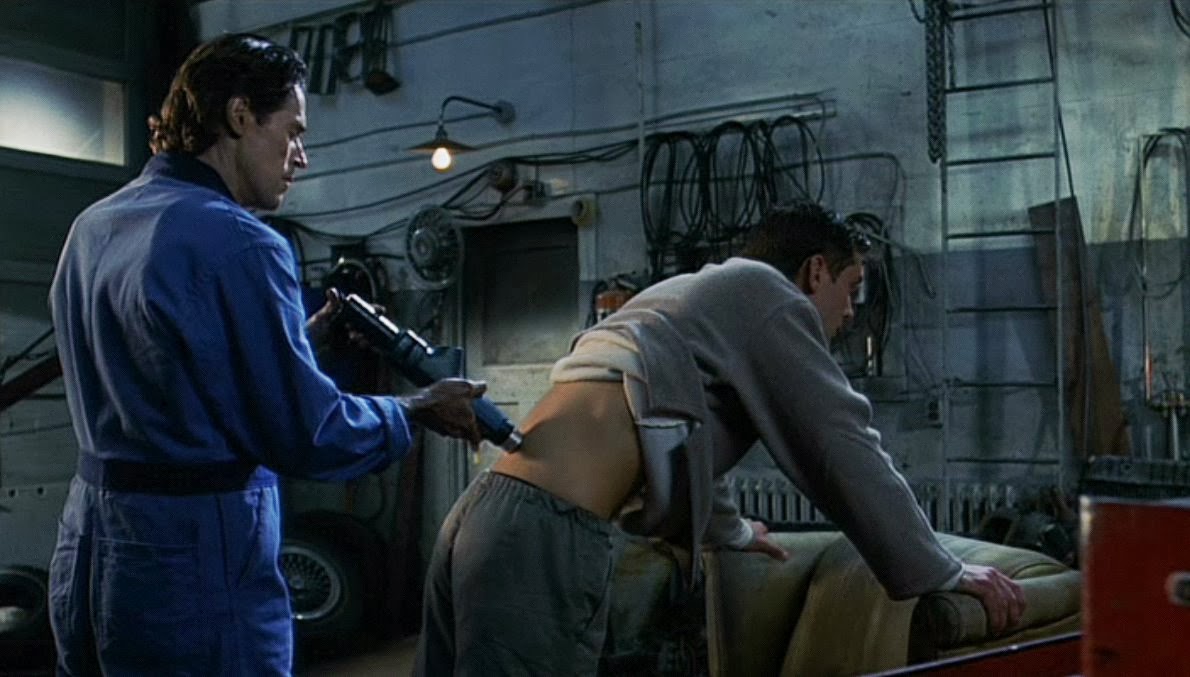
To continue coining new words, things get Cronenbergier when Allegra discovers that her new guardian, Ted Pikul, doesn’t have a bio-port, and we learn these sockets that run directly into the spinal column are installed routinely in shopping malls. “It’s like getting your ears pierced,” says Allegra.

Her gamepod was injured in the attempted assassination, and apparently has the only copy of eXistenZ, which has so far cost $38 million to develop. She has to access the game to make sure it has survived, and for that she needs a partner, and they seek out a black market bio-port supplier for Pikul. That this supplier is played by Willem Dafoe should raise red flags.

existenz02Once Allegra and Pikul do access eXistenZ is when we start traveling through Cronenberg mindfuck territory. Pikul turns out to be really good at this new virtual reality experience, though his perception of what is real and what is game begins to get very soft. Allegra is surprised at developments in her own game, which seem to be the work of the people trying to kill her, the Reality Underground.

I admit I approached this with some misgivings; near future science fiction has a tendency to get very embarrassing very fast (Johnny Mnemonic‘s cyberspace sequences were embarrassing out of the box). Cronenberg sidesteps the whole thing pretty neatly with his body horror version of the future; hell, even Jude Law’s cell phone is some sort of glowing lump. So the most jarring thing about this future is that Leigh, Law, and Christopher Eccleston are so freaking young. (not to mention that Law’s American accent is really good.)

eXistenz is probably the closest we are ever going to get to a decent film version of Philip K. Dick’s trippier stuff, like The Three Stigmata of Palmer Eldritch or Ubik (I would love to be proven wrong on that). Creepier stuff like synthetically mutated amphibians being harvested to provide the meta-flesh for gamepods put aside, it uses nestled realities with an effectiveness that wouldn’t be seen again until Christopher Nolan’s Inception, and, like its older brother, Videodrome, it leaves the viewer, like the characters, unsure of what truly is reality.

D: Don’t Look Now (1973)

Hubrisween 3 BlackClick ^^ for Hubrisween Central, here for our Letterboxd page.

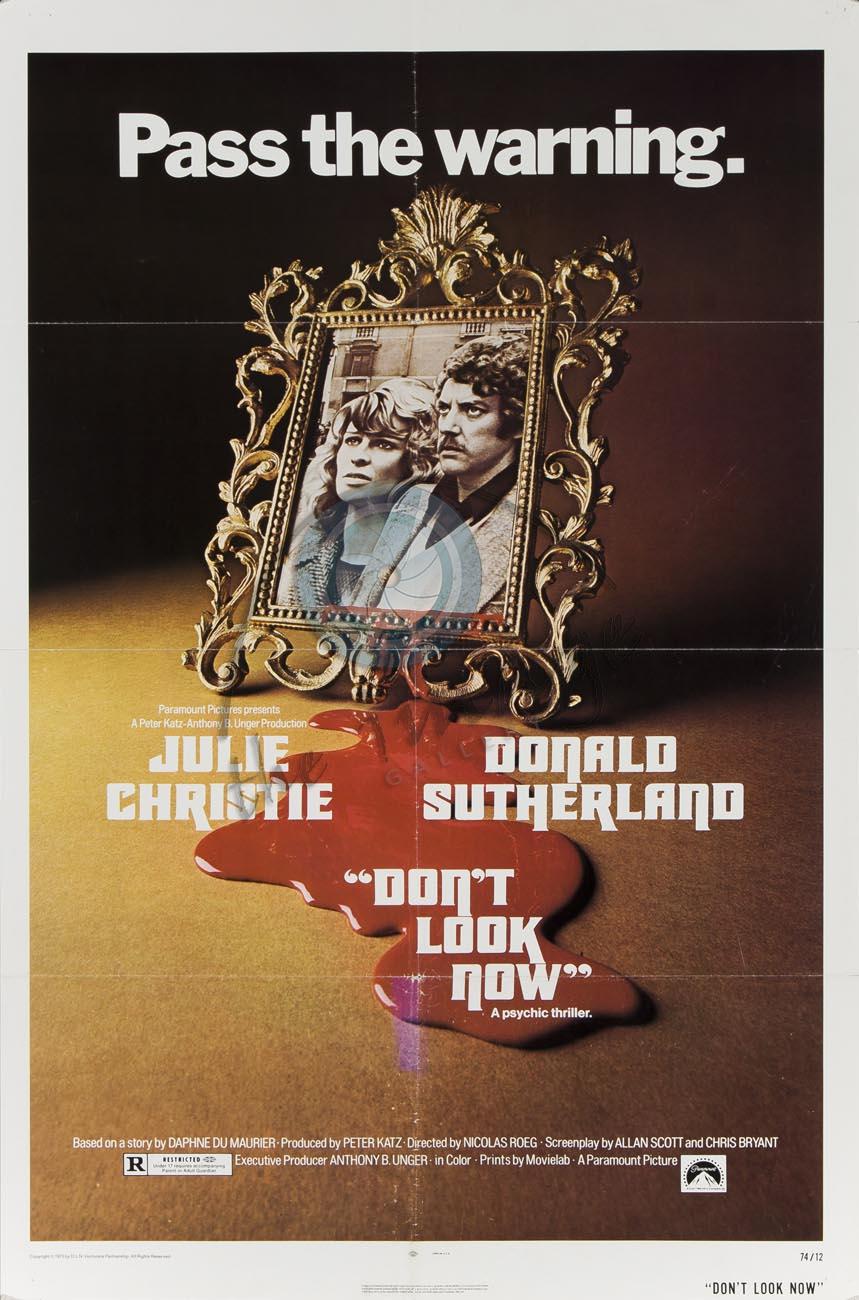
dont_look_now_b1_us1shThe Brits have a very layered way of moving up in the world of performing arts: you start at the bottom, and work your way up. I rather prefer that over the hope-you-get-noticed-and-rocket-to-fame model of American show business. One of the more interesting of these rising through the ranks stories is Nicholas Roeg, an intriguing cinematic voice who managed to keep his extremely singular nature in his ascent to the director’s chair.

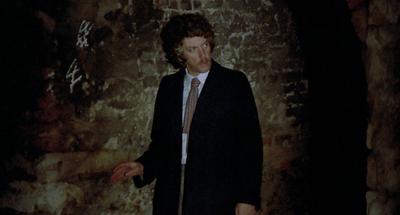
After his debut feature, Performance, and its follow-up Walkabout, Roeg directed this mind-bending movie, described by himself as “an exercise in film grammar”. Based on a Daphne du Maurier short story, it’s the tale of Laura and John Baxter (Julie Christie and Donald Sutherland), a couple in the months after the accidental drowning death of their daughter. They’re currently living in Venice, where John is supervising the restoration of a decaying church. At dinner one night, they encounter a pair of vacationing English sisters (Hilary Mason and Clella Mantania) , one of whom is blind, but psychic. The blind one tells Laura she can see her dead daughter, who is attempting to warn John he is in danger if he stays in Venice.

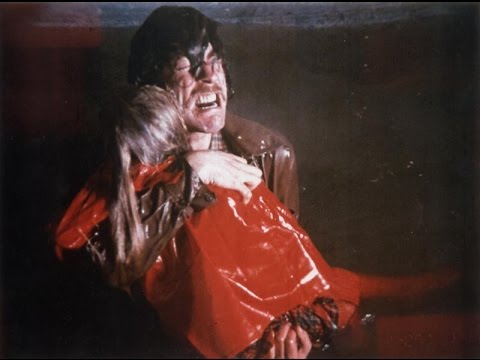
hqdefaultThere is a lot to what she says: there has been a series of unsolved murders, and John keeps seeing a tiny figure darting about in the shadows of the winding streets, seemingly wearing his daughter’s favorite red raincoat – which she was wearing when she drowned. John himself also has the Second Sight, a notion which he vigorously denies, until he has a vision which sets in motion his doom.

Roeg is messing with the viewer from the beginning, presenting the daughter’s death in a early morning scene snipped into several converging, simultaneous storylines, separate realities that eventually merge into one harrowing whole. John’s psychic ability is foretold as he spills a drink on a slide of one of the Venetian churches he’s researching, his daughter in one of the pews; the drink causes the red dye of the slide to run (she is, of course, wearing the raincoat in the picture), bringing a dreadful premonition to him as he runs out the door to the nearby pond, too late.

Don't Look Now (5)This fragmented vision of reality, strings flailing about in an effort to wrap themselves into the cord of fate, runs throughout the movie. John wandering lost in the alleys of the seedier side of Venice, stopping suddenly and saying, “I know this place,” unaware that he is foreseeing his own eventual death; the final shock that we see coming from a mile off (like John, if he would only let himself see as the blind sister does) which is nonetheless so visceral, so shocking, (and it must be said, Christie and Sutherland are so good in their roles) it burns itself into your mind, even though you thought it prepared.

This movie was a bit of a cause celebre amongst my classmates at the time, probably as much for the sex scene as the horror story (oh, hush, you were in high school, too, at some point). Don’t Look Now presents a universe where everything is connected, but it is still a chaotic, uncaring place, full of danger and terror. I’m actually kind of glad I didn’t receive that message in high school; I’m a little better prepared for it now.

B: Bedlam (1946)

Hubrisween 3 BlackClick ^^ for Hubrisween Central, here for our Letterboxd page.

m-bedlam-1946Here’s a movie that kept cropping up on late night horror movie slots, causing some consternation amongst fans expecting crepe hair werewolves or cardboard robots going berserk – a reasoned, almost stately historical drama. The station’s programmers couldn’t really be blamed – this was produced by Val Lewton, who similarly produced Cat People, Curse of the Cat People, I Walked With A Zombie, you know. It starred Boris Karloff, for pete’s sake. Similar reasoning/excuses held for Tower of London (though Camp on Blood Island was a little less forgivable).

This was the last of Lewton’s movies produced at RKO, the most expensive, and the first one to ever show a loss at the Box Office. In 1945, as Bedlam was being filmed, America was dropping atomic bombs on Japan. Small wonder that horror movies were on the wane; there’d been enough horror to go around in the real world, no need to visit it in our entertainment. Lewton would only produce three more movies in his life, and when you look at what he accomplished with remarkably small budgets, you wonder how the heck that ever happened.

rp8It’s probably Lewton’s intellectual bent, as Bedlam is pretty much derived from an engraving by William Hogarth in his Rake’s Progress series. Quick views of other satiric Hogarth art is used for scene dissolves, and I can just imagine studio execs scratching their heads over that. The artwork was, in fact, excised for the TV version.

bedlam-1946-boris-karloff-anna-leeBedlam is short for St. Mary of Bethlehem’s Hospital, an insane asylum in 1761 London. Our story concerns the Apothecary General of the hospital, George Sims (Karloff) and his increasing clashes with the protege of the Tory Lord Mortimer (Billy Law), the quick-witted Nell Bowen (Anna Lee). Horrified by the conditions in Bedlam – especially during Bedlam‘s most famous scene when an inmate, gilded to portray Reason in a show to honor Mortimer, suffocates (two decades before Goldfinger!) – Nell becomes a crusader for reform, eventually losing all her standing with the politically queasy Mortimer, and finally committed by Sims and a kangaroo court to become an inmate herself at the very asylum she is attempting to reform.

Nell still manages to reform Bedlam from the inside out, turning the huge common room into a much safer, healthier place. A Quaker stonemason (Richard Fraser), who had inspired her, is meanwhile working with the Whig reformist John Wilkes to get her another trial. Seeing that this new trial would be disastrous to him, Sims decides to give Nell the 18th century equivalent of a lobotomy, but the inmates rise against him, and while Nell escapes, hold a trial for their abusive warden, with surprising (but ultimately horrifying) results.

screen-shot-2013-08-18-at-23-05-52The Breen office hacked the script to pieces before it ever started filming, and it is still surprising what got through. Director Mark Robson recreates several of Hogarth’s prints in real space, often on hastily improvised sets (in fact, that enormous commons room in Bedlam is the church set from The Bells of St. Mary’s!). If Lewton could get this much period accuracy out of a tiny budget and some painted flats, it’s incredible he had to fight to get any work afterwards. Robson often said that he wouldn’t have been able to make movies like Earthquake if not for the lessons he learned under Lewton.

Karloff’s three movies with Lewton were probably the last of the classy horror movies he would make until he teamed with Richard Gordon in the late 50s. He always rankled when Bedlam was termed a horror movie, claiming it was historic drama. So it is… but nonetheless, here we are, talking about it during Hubrisween, because honestly – sometimes there is nothing so horrible as truth and history.


A: The Awful Dr. Orlof (1962)

Hubrisween 3 BlackClick ^^ for Hubrisween Central, here for our Letterboxd page.

Oh, God, it’s Jess Franco.

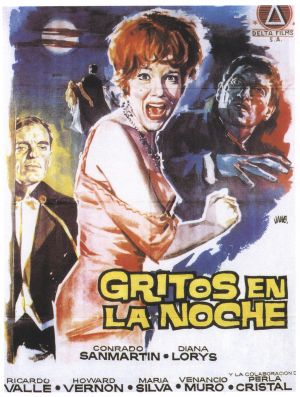
Gritos_en_la_nocheNow, a lot of people whose opinion I respect like Jess Franco. I have yet to find that movie that will win me over to his camp, however. It may actually happen someday, but in the meantime, I ain’t holdin’ my breath. The Awful Dr. Orlof is described by some as “Franco’s masterpiece”, which means in a career spanning around 200 movies, he hit his high point on his fifth movie. Contemplate that upon the Tree of Woe, and let us begin.

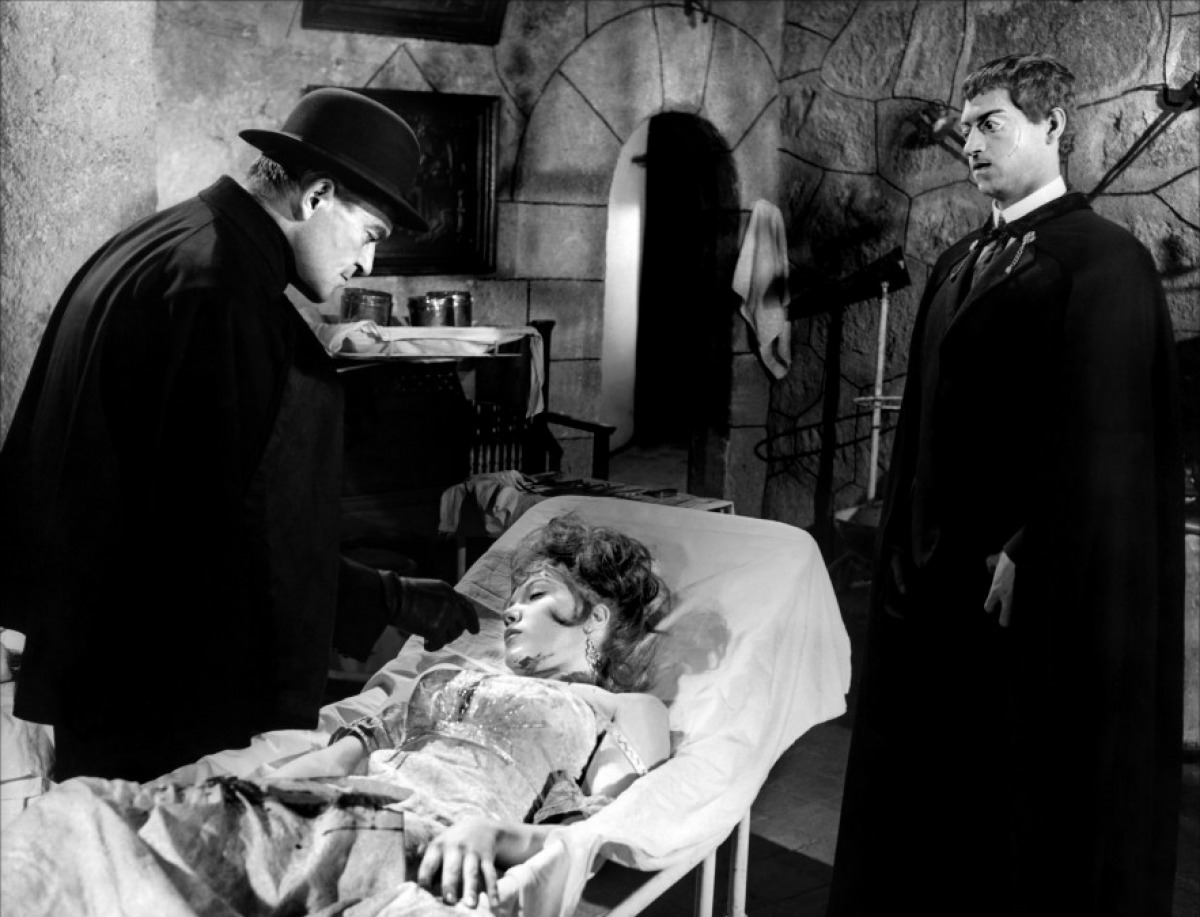
France, 1912: Four beautiful women have already disappeared, and as the movie starts, number five is killed by a disfigured, caped man, who then carries her body out, guided by the tapping of a cane. The man doing the tapping is our awful title character (Howard Vernon, here beginning a lifelong friendship and collaboration with Franco), clad in opera cape and top hat. The killer is Morpho (Ricardo Valle), whose scarred face and bulging, unblinking eyes are the classic stuff of monster movies.

awful-dr-orlof-howard-vernon-orlof-spots-wandaWe are quickly introduced to Inspector Tanner (Conrado San Martin) and his ballerina fiancee, Wanda (Diana Lorys). Tanner is put in charge of the missing woman epidemic and will prove mostly ineffective (it is, in fact only due to a comic relief drunk played by Faustino Cornejo that Tanner solves anything). Orlof is trying to restore his daughter’s face, scarred in a laboratory fire years before – after his most recent failure (an unfortunate drunken woman trapped with Morpho in an empty house, a very effective scene), he determines that his next victim must be living when he attempts the skin grafts. Then he notices that Wanda and his daughter are played by the same actress…

hqdefaultOkay, we can stop right now and examine the obvious, that this is the same plot as Eyes Without A Face, released only two years previous. In this instance, Franco has an excuse: he was denied a permit to film his intended fifth movie by the Spanish State Censor, and he already had a cast and crew ready to go. He wrote Orlof in a week, figuring – as is often the case – that a horror movie would be perceived as having no particular political message. This doesn’t necessarily excuse his return to this particular trough over and over again through the years, however.

horrible-dr-orlof-1962-02-gFranco was a cinematic omnivore, and this really shows in this version of Les Yeux Sans Visage through the filter of a 1930s Universal monster movie (it’s a possibility that Orlof is a tribute to Bela Lugosi and his blind henchmen in The Human Monster), or one of the more contemporaneous Hammer gothic horrors. It’s certainly lacking the poetry of Franju’s film – the tormented nature of the daughter, the recipient of her father’s increasingly horrific attempts to restore her face (Lorys as the daughter is called upon to do little more than loll her head about on a uncomfortable-looking bed). There is some tribute paid to Orlof’s agony over what he’s doing, but it feels more like filler here. I’m sure the dreadful English dub is not helping out there, either.

tumblr_m83sl8hbSv1r4ro7yo1_500The character of Wanda the ballerina is a new addition to the story, using herself as bait when she realizes Orloff is becoming obsessed with her. The final twenty minutes of the movie, with Wanda in the clutches of the mad scientist and her worthless boyfriend the Inspector finding every excuse possible to not read her hastily-written note, is pretty compelling, though the viewer finds himself wondering why she thinks taking such a hazardous course without notifying her policeman boyfriend in advance is going to turn out alright.

If nothing else, you have to admit that the original title, Gritos en la noche, or Screams in the Night, is a great title for a horror movie. Exactly when it became The Awful Dr. Orlof is opaque to me; I had assumed the change was made so it could occupy the lower half of a double bill with Ricardo Freda’s The Horrible Dr. Hichcock, but my Image DVD bears the french title L’horrible Docteur Orlof. I need more coffee before I can begin to untangle this, and I’m inclined to believe it’s just not worth it.

For some – like, for instance, me – it’s an okay way to kill an hour and thirty minutes. For others it’s going to be an unforgivable slog, though a couple of instances of shocking (for 1962, anyway) female nudity employing an obvious body double might wake them up.

Look, In The Trees! It’s Coming!

As promised, here it is, October, and you are going to get terribly, terribly tired of me. That is because October 6, this will begin:

Hubrisween 3 Black

Yes, a re-run of last year’s Hubrisween. Twenty-six days, a movie a day, A through Z. Last year it was the originator – Checkpoint TelstarThe Terrible Claw Reviews, and myself. This year, Web of the Big Damn Spider and Microbrewed Reviews  will join the “fun”.

That banner at the top of each review will take you to Hubrisween Central, a collection of links to each review as they post. And yes, there will be a 2015 version of last year’s Letterboxd page. Here’s a preview:

Hubrisween1

I haven’t been exactly idle while I’ve been gone. Though I haven’t been posting here, I’m still watching movies for that 100 Films Challenge I suckered myself into.  The need to comment on movies I watch runs deep, it seems, because I’ve still been reviewing them, but on the Letterboxd site, where I feel a little better about engaging in what Warren Ellis calls “first draft writing”. I don’t know why that is, but it’s enabled me to get them off my brain and still leave time to bank Hubrisween reviews and take care of my other writing projects. Almost. (but it was a good plan)

Here’s what you’ve missed (yes, yes, this is all on my List 2015 page, but we’re all here now):

Breathless

8 1/2

Trafic

The Sting

The Dance of Reality

Investigation of a Citizen Above Suspicion

The 10th Victim

Persona

Samurai Rebellion

The Lady Vanishes

In the Realm of the Senses

There. Now we’re all caught up. See you in a couple of days, then every night through Halloween.

(dammit, this song still plasters a big ol’ grin across my face!)


Z: Zombies on Broadway (1945)

Click here for Roundtable Central!Click the banner for Hubrisween Central. Or visit Hubrisween on Letterboxd


zombies_on_broadway_poster_03I believe it was Hubrisween Host Tim Lehnerer who pointed out that if you’re doing an A-Z challenge of horror movies, you are inevitably going to end up in zombie territory (especially if you’ve sworn to never watch Zaat! again). So it’s a good thing I recently came off my ten-year moratorium against zombie movies. I guess.

There is no denying there has been an absolute glut of zombie movies over the past decade and more, and though I expected everyone to get sick and tired of them, nooooooooo, they just got more insanely popular. The recent Walking Dead season premiere broke records. We’ve had a $200 million dollar zombie flick starring Brad Pitt, for God’s sake. George Romero had no idea what the hell he was starting when he was prepping a calling card to the motion picture industry back in 1968.

Poster_-_White_Zombie_01_Crisco_restorationBut what all this misses is that there was another zombie craze, back in the 1930s and extending into the 40s. Back before zombies started munching guts. Though nowhere near as prolific as their modern cousins, zombie movies were kicked off by the 1932 White Zombie, which four years later spawned a loose sequel, Revolt of the Zombies. The high point of this cycle is undeniably Jacques Tourneurs I Walked With a Zombie, and by 1945, it was high time for the zombie to be returned to his grave with a comedy, Zombies on Broadway, three years before Abbott & Costello would similarly put paid to the Universal Monsters.

wDPu1

“You do know you guys aren’t funny, don’t ya?”

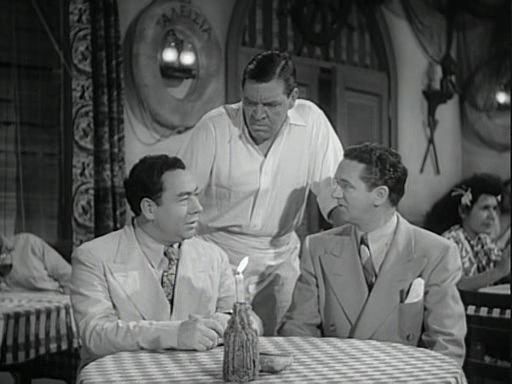
 Zombies on Broadway introduces us to the comedy team of Wally Brown and Alan Carney, who are pretty much in the mold of Abbott and Costello, though Brown’s Jerry Miles is more sympathetic than most of Bud Abbott’s screen characters (Brown and Carney were, in fact, known as “RKO’s answer to Abbott and Costello”). The two have been hired as press agents for Ace Miller (Sheldon Leonard), a gangster who’s gone semi-legit and is opening a voodoo-themed night club called The Zombie Hut. Brown and Carney have been doing a bang-up job on the PR, but they’ve made two mistakes…

…the first was the brilliant idea to advertise that a “real zombie” would appear at the club’s opening. The second is basing their radio campaign on a broadcaster who turns out to be Ace’s bete noir, Douglas Walker (Louis Jean Heydt) a weisenheimer crusader type who delights in needling the mobster on the air. This is like asking Jon Stewart to publicize Bill O’Reilly’s new country club. And worse yet, Walker knows the washed-up prize-fighter the boys intended to pass off as a zombie.

BELA-ZOMBIESWhen Walker promises to bring some professor types to vet Ace’s zombie, things get heavy for Brown and Carney, who are forced to board a ship bound for the mythical island of Saint Sebastian, to return with a real zombie or face Ace’s rather drastic consequences. You’ll recognize Saint Sebastian from the aforementioned I Walked With a Zombie. Those seem to be the same sets, too, and oh look, there’s Sir Lancelot, King of the Calypso, acting as a Greek chorus when the boys get off the ship.

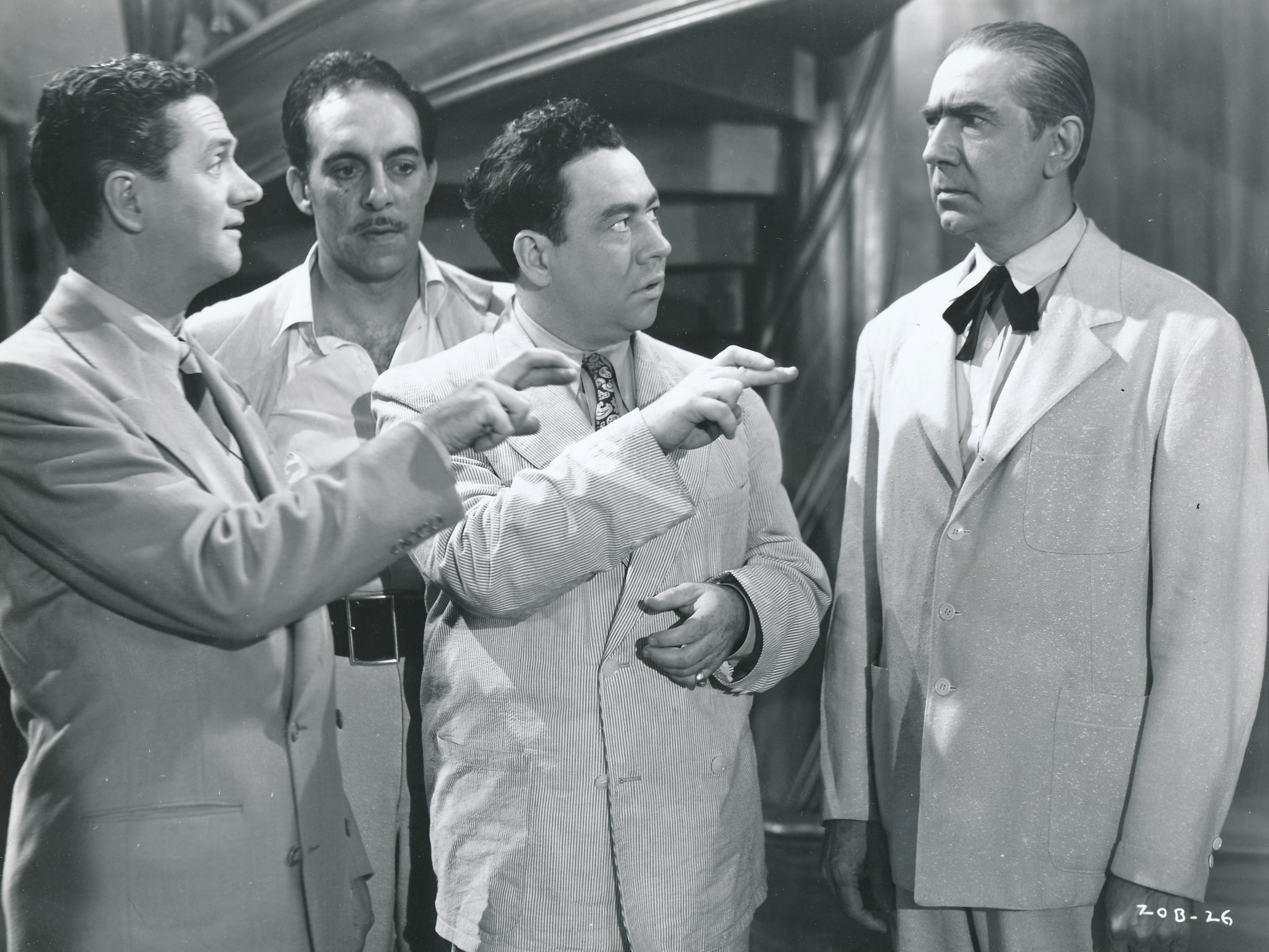
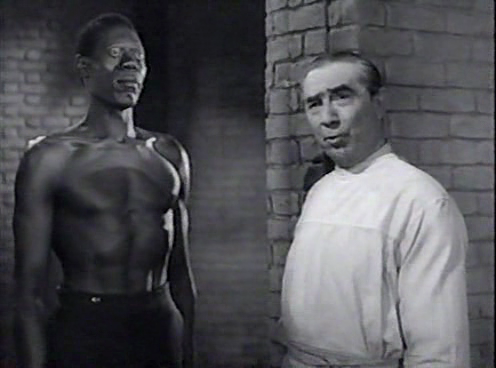
zombies on broadway (5)That’s not the only holdover from that infinitely superior movie. I’m not talking about Bela Lugosi, who is playing Dr. Paul Renault, mad scientist who is attempting to create a zombie scientifically, I’m talking about the genuine zombie in his employ, Darby Jones, who was the eerie Carrefour in the earlier film. Here, he’s a zombie named Kalaga, and gets lots more screen time, which rather cuts down on the eerieness.

Brown and Carney also pick up a spunky knife-throwing singer (Anne Jeffries) who promises to help them find a zombie if they’ll get her off the island. She’s also going to wind up on Lugosi’s list of potential subjects, but it’s Carney who will wind up with the bulging eyeballs of the zombie, and the boys’ potential savior back in New York, until the sight of a pretty cigarette girl causes him to shake off the effects of Lugosi’s experimental serum, and hilarity supposedly ensues.

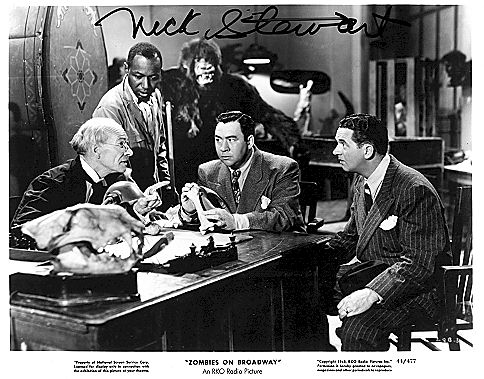
zombie

Find the funny guys in this scene. HINT: They’re all on the left.

Zombies on Broadway is reasonably well-made, and took in enough at the box office to ensure a sequel, Genius at Work, once again involving Lugosi. Sadly, Brown and Carney lack the charisma and chemistry of other comedy duos, and have thus faded into obscurity. The voodoo rituals which seemed fairly authentic in I Walked With a Zombie degenerate into a jungle hoodoo hugger-mugger more in keeping with the jungle sets from the Tarzan movies (which were used). It tries earnestly be a horror comedy in the vein of The Ghost Breakers but never manages to hit the heights of the movies it imitates. Brown and Carney simply can’t carry an extended vehicle, and when your two comedy stars are effortlessly upstaged by the then-obligatory Comical Superstitious Negro Janitor (Nick Stewart), you have a definite problem.

It would have been nice to end Hubrisween on a more positive note, but then: there was a reason I swore off zombie movies for a decade. That reason just went back further than I suspected.

Zombies on Broadway on Amazon

Y: The Yellow Sign (2001)

Click here for Roundtable Central!

Click the banner for Hubrisween Central. Or visit Hubrisween on Letterboxd


yellowsign-209x300Making movies from established classic literature is a tricky business. Making one from established classic horror literature even more so. It takes a sure, subtle author’s touch to make you look up from a book and make sure no Damned Thing has slithered into the room while you were absorbed in the story. You’d think that would be easier with a movie, all visuals and sound, but no, it’s harder. Literature has the power to make your mind, your imagination work against your own well-being. Few movies have the art to do that.

To my knowledge, this is the only serious attempt to bring one of  Robert W. Chambers’ seminal horror stories to life, and even so writer/director Aaron Vanek is sure to mention that it is “inspired by”. The Yellow Sign is the fourth story in the book, The King in Yellow, which was spoken of in reverent terms in my youth. There was a resurgence of interest in H.P. Lovecraft in the late 60s and early 70s, and I don’t think his stories have gone out of print since; therefore attention was paid to his influences, and Chambers most definitely is one.

yellowsign1 The movie first: Tess Reardon (Shawna Waldron) is the owner of a near-bankrupt art gallery. She’s having trouble sleeping, plagued by dreams of weird art, a girl sleeping in a chair covered in yellow and purple ribbons who won’t wake up, dreams always ended by a large man with empty eyes asking “Have you found the yellow sign?” Her gallery partner (Andrea Gall) says the art sounds like the work of a surrealist shown at her former gallery years before – Aubrey Scott. That show didn’t end well, she says, and Scott has been a recluse ever since.

Tess tracks Scott (Dale Snowberger) to an old, seemingly empty hotel. His apartments have become a riot of his work, compelling but dark. He agrees to a show, but only if Tess will model for his new painting. She quickly agrees.

yellowsign2While painting, Scott tells Tess a story to stop her from fidgeting. It’s about a tribe where the children seem to go mad for several years, but they are really existing in two worlds simultaneously, and when this period is over, they became the tribe’s shamen. The combination of Scott’s story and a swirling painting before her causes Tess to lapse into a trance, as the Yellow Sign appears on the canvas. In the trance she refers to Scott as “Aldones” – “You know my real name!” he gasps – and informs him the Watchman is coming for him. Panicking, Scott wakes her. She thinks she was asleep.

The tenor of her dreams change. Now the large man is driving a carriage under her window. It’s a hearse, and Scott is in the coffin, screaming to be let out.

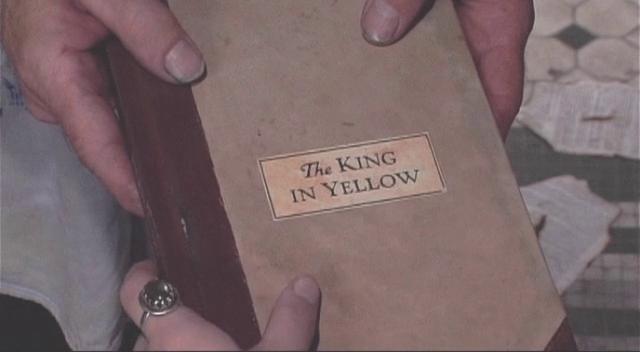
yellowsign4The next modeling session, Tess tells the painter about her childhood, and an invisible twin sister she had called Camilla. Not an imaginary friend, a real person, who was queen of a place called Ythll. Tess doesn’t realize that her childhood mirrors the story Scott had told her before. And as she leaves that day, he hands her a copy of a book: The King in Yellow, Though she tries to throw it away when she is halfway through, it comes back to her. She finishes it, and the next day, the signing of the contract with Aubrey Scott takes on a much more unearthly and deadly significance.

This sent me scurrying to my copy of The King in Yellow (the story collection, thankfully not the book in the story) to see exactly how “inspired by” was this version. Vanek’s changes are intriguing. Chambers’ story concerns a painter and his model, and the large man who lurks around the graveyard across the street from his studio, whom he describes as looking “Like a coffin worm”. His model has the dream about the coffin in the hearse, and so it goes. The movie is basically a reverse of the story, which is told from the painter’s point of view. The movie unfolds from the model’s POV, and while the ending differs greatly, well – that’s all the better for people who read the story, I suppose. It does impose a sort of order and reason on the denouement, which was pretty creepy and inexplicable in the original.

yellowsign5It’s Chambers’ refusal to explain the supernatural goings-on that so inspired Lovecraft along with that device, the evil book. The King in Yellow is a play script, a script that, if read, drives people to madness and death. Apparently the first act is quite normal; but the second act reveals several awful truths about life and the universe around us that are better left unknown.

That, of course, is next to impossible to get across in a movie. So Vanek, probably wisely, chose not to, changing The King in Yellow to the key that unlocks the mystery of what Aubrey Scott has been up to with these strange paintings (as only a slight digression, the Art Direction by Lisa Horn and paintings by Jason Voss are truly outstanding). That is concrete enough, that is do-able, it is even satisfying. Chambers did not carry on with horrific literature, his writing went to other genres over his lifetime. He’d probably be satisfied with the result.

yellowsign6At a sleek 50 minutes, The Yellow Sign doesn’t get a chance to wear out its welcome, but that also seems to have worked against it. It’s only available commercially in a somewhat hard-to-find disc called The Weird Tale Collection. That’s a pity, because it manages to get its desired effect without any of what seem to be the staples of modern horror cinema, like gore, nudity or sudden blaring loud sounds.

The Yellow Sign on Amazon

X: Xtro II: The Second Encounter (1990)

Click here for Roundtable Central!

Click the banner for Hubrisween Central. Or visit Hubrisween on Letterboxd


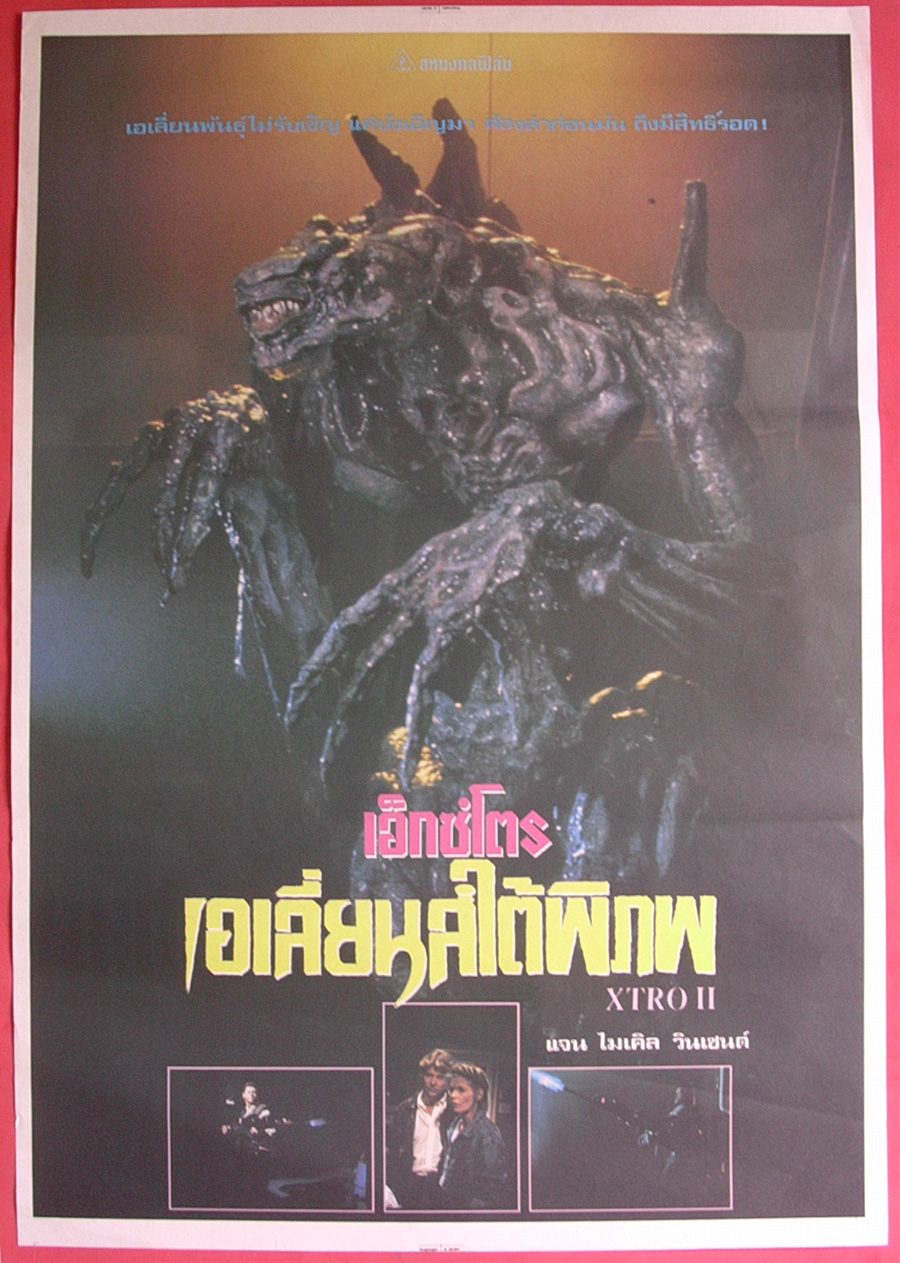
Xtro_2_-_The_Second_EncounterYou know what? We need more movies with titles that begin with “X”.

I keep doing alphabetical movie challenges, and let me tell you, such titles are thin on the ground. Earlier this year I did Xtroand I didn’t care for it. Yet now, here I am, watching Xtro 2. Gavin is also doing Xtro 2, because, like I said, slim pickin’s. Cronenberg should have just lopped off that useless initial e in eXistenz, because it would have made life a lot easier on me.

I’m …going to have to talk about Xtro 2 eventually, aren’t I.

Fine.

So there’s this massive underground scientific complex where they are attempting to project three scientists into a parallel dimension. This seems to have some value to the Department of Defense, who are threatening to shut the whole thing down, “especially in light of what happened in Texas.” What happened in Texas was a guy made the trip to the parallel dimension, came back, and blew up the complex. So our high-strung project head Dr. Summerfield (Paul Koslo) is under a great deal of pressure.

The three scientists make the jump, the weak video signal coming back from the other side shows some sort of spherical construct in the distance. Then they lose contact completely. A rescue team of four professional badasses prepares to go in after them, while the other head of the project, Dr. Julie (Tara Buckman, who you just know is the heroine because she has Linda Hamilton hair) insists on bringing in the guy who blew up the Texas complex – her former lover, Shepherd (Jan-Michael Vincent).

About the time Shepherd arrives and the pissing match between him and Summerfield begins, one of the missing scientists, Marshall (Tracy Westerholm) wanders back into the “transference vector” and is brought back. While the rescue team preps, Shepherd tries to kill the comatose Marshall in the clinic and is put under arrest. Everyone except the audience is surprised when a creature bursts out of Marshall’s chest and slithers into the air ducts.

xtroii6This has the effect of setting off the complex’s biohazard alarm. Most of the personnel leave in an orderly manner through the elevator system to the surface. Remaining are the rescue team, Shepherd, Summerfield, Dr. Julie, and some other cannon fodder  technicians who will attempt to track down and kill the alien invader before the biohazard protocols flush the base with radioactive gas.

I guess we’ll ignore the fact that all this could have been avoided if Shepherd hadn’t clammed up after blowing up Texas. “Would you have believed me?” doesn’t cut it when some preparation would have been much better than none.

A lot of people told me not to bother with Xtro 2. These people do not do movie challenges. But here is the thing: it’s not bad. It’s well made, the actors are all good. it’s got fairly high production values (except for one especially glaring thing we’ll talk about in a bit).  Its major problem: you’ve seen all this before.

I had my problems with Xtro, and I’ve been over those. But it has to be admitted that Xtro was creative in many spots, even unique. Director Harry Bromley Davenport reportedly kept the title rights to Xtro but not the story rights, and so was obligated to go the unconnected sequel route. Xtro 2 winds up being a complete reversal from its predecessor: Xtro wasn’t too well-made, but it had creative energy; Xtro 2 is well made but lifts the templates from several other successful movies, most noticably Alien, Aliens and, of course, The Andromeda Strain.

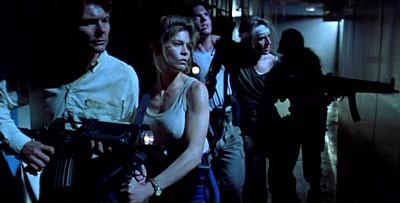
Don’t want to take my word for it? Hey, look, the leader of the rescue team has a steadicam gun:

xtro2_4

At least they didn’t go so far as to have a fiery Latina on the team.

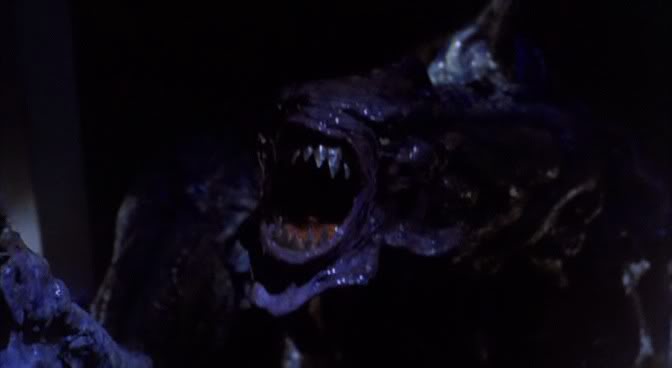
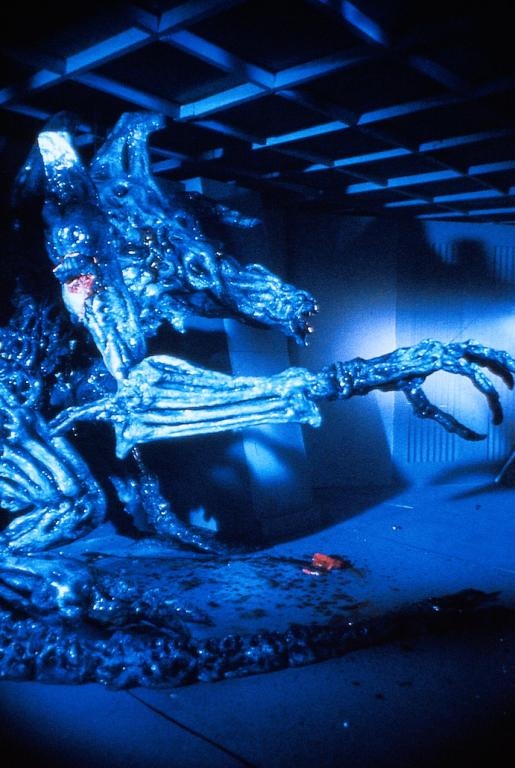
And then we have our monster, the whole reason we’re watching this. It’s necessary in these low-budget affairs to keep the monster hidden away for most of your running time, saving the full reveal for the end. So we see a lot of monster feet and monster hands, and a monster tail, and a toothy maw, and it all looks so terribly familiar when you can see it:

bscap0009Let’s turn on the lights and get a better look.

xtro2 xtro-2_367327_19453

That is the Xenomorph crossed with the goddam Rancor, so you can add Return of the Jedi to the list of movies being ripped off.

And that is really the worst thing I can say about Xtro 2: it took four writers to come up with this, and I strongly suspect each writer was assigned a different movie to imitate. And this is the result.

Xtro 2 on Amazon