The ad copy for Stanley Kubrick’s 1962 film version of Vladimir Nabokov’s Lolita is pretty incisive: “How did they ever make a movie of Lolita?” The answer seems to be, by changing everything except the broadest strokes of the novel.
There are some books it is simply insane to try to adapt to film, and chances are, someone has gone ahead and done it anyway. David Cronenberg did Naked Lunch, Joseph Strick did Ulysses. Lolita, with its extremely volatile subject matter and Unreliable Narrator, certainly fits in that category. Is it even possible to emulate the Unreliable Narrator in a movie setting? The best I can think of is Rashomon, but that’s an ill fit at best. I suppose That Obscure Object of Desire comes closest.
After the unpleasant difficulties with the making of Spartacus, we can see Kubrick going in the most opposite direction possible. The story is small in scope if not in locations; it is a comedy (a very dark one) as opposed to drama, and it is shot in black and white, which can also be seen as an attempt at distancing the audience from what is happening onscreen. In 1962, even Roger Corman was making movies in color; this was a deliberate stylistic choice. This was the first time a Kubrick production was based in England, perhaps hoping for an easier time with their film censors.
Of course, the most obvious change is increasing the title character’s age from 12 to 14, and having her portrayed by a well-developed 16 year-old, Sue Lyon – all necessary to even attempt the movie, in that pre-MPAA rating period. Even had the possibility of an “R” even been available, I can still remember the furor over Jody Foster’s underage prostitute in Taxi Driver, ditto Brooke Shields in Pretty Baby, both in the much more permissive 70s.
Humbert Humbert in this version is identified only as “divorced”, the death of his boyhood sweetheart and subsequent attempts to rekindle that relationship with girls her age, his obsession with “nymphets” is scrubbed away; Humbert sees Lolita in her two-piece bathing suit, and that is it. All that is missing is a cartoon BO-I-I-I-NG sound effect. “Lolita”, as I recall, is Humbert’s pet name for the girl, who is actually named Dolores. This too, is pitched by the wayside, perhaps to avoid confusion. I can easily see moviegoers scratching their heads and saying, “What? I thought her name was Lolita?”
So, remaining is the novel’s longing, Humbert’s scurrilous use of Lolita’s mother to gain access to the girl, and his subsequent tyrannical attempts to completely control her life, for fear he will lose her; of course, he does, and she resurfaces three years later, married, pregnant, and needing money. As was the case with Paths of Glory, an ersatz happy ending with Humbert actually marrying Lolita was considered – and it makes my head ache to try and figure out the legal and moral maneuvering that would take – but what we are left with is a modified version of the book’s ending. We are told Humbert’s fate, but not Lolita’s. Also remaining are Nabokov’s potshots at American pop culture, which Kubrick probably endorsed.
If we are talking about the major changes made, it becomes necessary to talk about the greatly expanded role of the writer, Clare Quilty, played by Peter Sellers. Though his presence is apparent in the book, he becomes a definite mover and shaker of the events in the movie, and though I never thought I would say this, Sellers actually becomes quite tiresome in this, effecting disguises to generally mess with Humbert until, as in the book, he receives his comeuppance. Annoyingly.
The rest of the cast is marvelous. James Mason as Humbert, Shelley Winters as Charlotte, Lolita’s doomed mother, and Sue Lyon are all superb as unlikable people who are still very familiar and retain some degree of sympathy.
It is to be expected that even our favorite artists have an off-day, or, to put a finer point on it, do something that doesn’t particularly resonate with us. Hell, I actually find the concept of someone turning out something I consistently love to be somehow frightening, inhuman. I think I have finally found that lead slug in my Kubrick experience. It was the first time I found myself glancing at the time repeatedly, counting the minutes left, thinking “Two and a half hours? Really?“.
Well, next up are two of my favorites, Dr. Strangelove and 2001, so I can feel better about Peter Sellers and life in general. Except for the fact that life tends to suck in Kubrick movies.
It seems that most of this year I’ve had two movies relentlessly hyped to me, and surprisingly, one of them wasn’t The Avengers. Well, Avengershas been relentlessly hyped, but honestly, something that high-profile hardly even registers on my admittedly off-kilter radar these days. I’m sure I’ll see it, but… well, it’s odd for me to think of a comic book movie as mainstream, y’know? What strange world is this?
No, there were two movies that were pretty much marketed straight to me, that just burrowed under my skin and stayed there until I could see them. One was The Cabin in The Woods, which I wrote and squeed about earlier this week, and the other was the movie that finally came to be known as The Raid: Redemption.
The setup here, as you can see, is very simple: It’s Die Hard with a SWAT team instead of Bruce Willis and a building full of coked-up crackheads and gangsters instead of a crew of mercenaries. That’s an efficient delivery system for some of the most brutal, intense hand-to-hand fighting scenes I have seen in any movie. The end credits list something like twelve doctors and paramedics and at least half that many massage therapists. They earned their money on this movie, and so did those stuntmen.
The camera work is frequently stunning, but several times, it’s just as annoying. In the fight scenes it follows the frenetic action perfectly – there’s even a time or two that the camera looks around quickly after an opponent is felled, just as any character in the fight would. Unfortunately, that carries over into the still scenes, as the shaky cam seems to take over arbitrarily, like a prize fighter bouncing on his heels to keep warmed up. Still, frantic as the violence becomes, the viewer is never in doubt as to what is happening, never puzzled about the geography in which all this is taking place, MICHAEL BAY AND EVERYBODY IN HOLLYWOOD WHO FANCIES THEMSELVES AN ACTION FILMMAKER PLEASE TAKE FUCKING NOTE.
Generally, every time I see a movie that proclaims itself to be wall-to-wall action, it becomes wearisome by the final half-hour. The Raid, however, doesn’t do that. The pacing is skillful, and the fights constantly switch the odds. It never get boring, and at a lean 100 minutes, doesn’t outstay its welcome.
The “Redemption” part of the title was apparently added when it was decided that The Raid would be the first movie of a trilogy. It’s going to be interesting to see where director Gareth Evans and star Iko Uwais take this from here.
Speaking of Evans and Uwais, I had the evening free and remembered that their first movie together, Merantau (2009) was on Netflix Instant. Fully aware there was no way it could be as frantic as The Raid, I fired it up.
Merantau is a more typical martial arts movie, very firmly in the country-martial-artist-comes-to-the-big-city-and-winds-up-fighting-crime mold, along with The Big Boss and Ong Bak, just a lot grimmer. Uwais is the rural fellow hoping to find a job in Jakarta teaching silat, his martial art of choice, but his country morals and chivalry keep getting him involved in stopping a human trafficking ring led by two white devils. Unlike in Ong Bak, Uwais doesn’t pull out any cutesy Jackie Chan physical stunts, he is too concerned with kicking ass. (This is not to denigrate Chan or Jaa in any way. As I said, this is a fairly humorless movie.)
Relentless or not, things still get pretty intense; it’s rare that Uwais is ever up against only one person – in fact, the movie has the class to let him lose his first major fight. But after that, with a damsel in distress, he gets up and proceeds to lay the field to waste.
The major difference you are going to find between Merantau and The Raid is the camerawork. The handheld shakycam is nowhere to be found here, it’s all smooth dollies and Steadicam. A second major difference is the vibrancy of colors; Jakarta is a very colorful city, even (or perhaps especially) in the lower-income and seedy urban areas where Merantau takes place. That is another major difference from The Raid, where the color scheme is drab, drawn from crushed dreams and urban decay.
A unique thing in Merantau‘s favor is the two main bad guys, the white devils (Mads Koudal and Laurent Buson) can not only fight, they can act as well, and you don’t usually get that combination in Asian film (especially in Chinese movies, my usual flavor). That really adds to the quality of the movie, that this much care is put into its construction; those parts aren’t huge, but they are important.
The best part of seeing Merantau almost immediately after The Raid is seeing the repertory company forming; Doni Alamsyah is still playing Uwais’ brother, and the comparatively small Yayan Ruhian is still playing a badass ready to give the hero a run for his money (as Mad Dog in The Raid he’s absolutely a force of nature).
So that was a day well spent. Indonesian action flicks have come a long way from The Stabilizer and Jaka Sembung and The Devil’s Sword. If there’s a major renaissance in their film industry, I welcome it, and I am definitely looking forward to whatever Gareth Evans and Iko Uwais have for us in the future.
It seems to be a corollary of my life that every time I manage to get a long weekend, the week after is going to start at an accelerated rate and just continue to speed up from there. How I managed to get last week’s entry on the Good Friday Crapfest is beyond me, but it got done. In this welter of work, the Stanley Kubrick Project may have gone by the wayside, but I did manage to watch five movies, none of which I wrote about here.
I’ll try to not be too wordy.
First off was The Stabilizer, a 1986 Indonesian action flick that pairs boundless enthusiasm with limited skill. New Zealand English teacher-turned-action-star Peter O’Brian, plays Peter Goldson, The Stabilizer. On loan from the FBI, Goldson is that special breed of person who will stabilize the balance between good and evil. He does this by punching and shooting bad guys and driving various vehicles through walls. He’s there to get Greg Rainmaker, international scum, who raped and killed Goldson’s girlfriend by stomping on her with his oversized golf shoes.
If there is one thing The Stabilizer is, it’s action packed, and some of that action is pretty okay. Slow spots are minimized, and you know you’re never more than a few minutes away from another sloppy fight or heavy machinery crashing through a wall. This is accompanied by near-constant unintentional laughs, making this the perfect Crapfest movie. Unfortunately, they won’t let me show it, no matter how many times I point to the box that says, “The Drunken Master’s Grand Theft Auto!” I’m sure Lloyd Kaufmann took the day off after writing that blurb, it’s so perfect.
Yes, Troma distributed the disc here in America, and a gesund on them for doing it. That’s the main reason I’m not allowed to show it, though. There’s an odd, unofficial No Troma rule, apparently, which extends even to stuff they didn’t make, so I might as well not even bring up movies like Sugar Cookies or even a movie Rick has been agitating for, Mad Dog Morgan. Ah well:
This was watched for a Daily Grindhouse podcast, still being edited as I write this. My major contribution was confusing Judd Omen with Jon Cypher, as I mentioned his character at the end of Pee-Wee’s Big Adventure, in the prison bus, shouting, “Great movie Pee-Wee! Action-packed!”
Which is really all I can say about The Stabilizer.
Late one night I watched American Grindhouse on Netflix Instant. It purports to be a history of the American Exploitation Movie, narrated by Robert Forster. It starts out very strongly, with clips from silent movies that I had no idea had survived, moving through the talkies up until the last decade (it’s a 2010 movie). Sadly it starts getting sketchy in the 70s, as subgenres start proliferating, and a lot seems glossed over. But it’s never boring, and a good primer for the uninitiated; those of us swimming through this stuff all our lives aren’t going to find much new.
Fittingly, the trailer will suck you right in:
Watching Spartacushad left me wanting more Hollywood epics, if only for comparison’s sake, so it was lucky for me that Daily Grindhouse asked me to review one of the new Twilight Time Blu-Rays, Demetrius and the Gladiators. But that meant I needed to watch The Robe first, as one is the sequel to the other.
For all you heathen dogs: The Robe is the tale of the Roman who won Christ’s clothes in a gambling match held at the foot of the cross. That guy is Marcellus Gallio, a debauched Tribune, played by Richard Burton. Travelling with him in his political exile in Jerusalem is his slave, Demetrius, played by Victor Mature. Demetrius becomes a devout Christian and runs off with The Robe while Marcellus is consumed by guilt over what he’s done. The Roman eventually tracks down the wily Greek, only to find himself converted to Christianity, and eventually martyred for his belief by Caligula, Emperor of Overactors, though that means it’s kind of a crock that there is no Saint Marcellus.
The Robe doesn’t feature a whole lot of budget-gobbling crowd scenes, so a lot of the time it feels like the expanded frame of this new-fangled CinemaScope is going unused, though there are great, painterly moments – the scenes on Golgotha, for instance. There are a couple of action scenes, quoted in that trailer, but they are far outnumbered in screen time by proselytizing. There is definitely more reverence on display than rambunctiousness.
Richard Burton’s taciturn portrayal of Marcellus doesn’t truly sell the character’s conversion (frankly, the script doesn’t do him any favors in this regard), and he’s rather overshadowed by Victor Mature. Michael Rennie is marvelous as Peter, and Jay Robinson’s time as Caligula is thankfully short. Jean Simmons is Jean Simmons. In all, I guess it was a pretty good Easter movie.
And then the Extremely Busy Week started. I survived it somehow. In celebration of that fact, I treated myself to lunch at the Star Cinema Grill and The Cabin in The Woods. I had the theater to myself.
I am going to scrupulously avoid saying anything about this movie except that I loved it. You know how tween girls were about Titanic? That’s me with The Cabin The Woods.
I now see that Lionsgate has scrupulously disabled embedding on all of the YouTube trailers for Cabin. Thanks a lot, guys, I’m not really sure what that accomplishes.
It’s amazing how little that trailer gives away. The Cabin in The Woods has the best blend of horror and comedy that I have seen in ages – since, ironically enough, Evil Dead II – and every serious horror fan who hasn’t seen it already, should see it now.
Yes, I’m aware that there are also people who say it’s stupid and it’s over-hyped and they want that hour and a half of their lives back. These people are big dummy stupidpants.
So then I got to watch Demetrius & the Gladiators, which I found to be one of the few sequels that was better than its predecessor. Better compositions, better balance between sermonizing and sword-slinging, it’s like a mirror image of The Robe. Demetrius’ fall from faith is a lot better handled than Marcellus’ conversion, and you’ve got actors like Ernest Borgnine and William Marshall shoring things up. Susan Hayward deserved a better script, and… oh boy, Jay Robinson gets more screentime.
While I was writing this, I see the review went live, allowing me to see every single mistake I made. Oh, well. Such is life on the Internets.
To top all this off, I finished my story for this week early, and now I’m wrapping this up. So I think it’s time to finally treat myself to The Raid: Redemption. Hi-keeba!
So there were a bunch of us who had Good Friday off, for a variety of reasons. Enough of us – back in February, we did it with only four people, and frankly, it has been done with three. At any rate, it was time for an impromptu Crapfest.
We were pretty determined to take it easy, and the first hour – Rick and I arrived at Casa Dave at 3:00 – was spent on the patio, watching Dave grill and smoke these Flintstone-style brontosaurus ribs he had hand-rubbed the day before. Alan made a surprise appearance, having been given the day off at the last minute, and when Paul arrived – his first Crapfest in a while – we began.
How Dave’s ribs tasted: artist’s representation
Well, first, we had some of those ribs. Let me say I am not a great fan of pork ribs, but Dave’s alchemy had wrought magical changes in this meat. The very last scene in Lynch’s Eraserhead, where Henry embraces the Girl in the Radiator in heaven, all white light and one sustained, heavenly note? That was the first bite into these ribs. And every subsequent bite thereafter.
Then we began.
At one of those Crapfests, in the faraway land of 2011, while we were watching 70s variety TV and watching Dave scream with horror, Paul had brought up the subject of Alice Cooper: The Nightmare, an ABC special done in the In Concert time slot. Basically, it’s Alice’s then-current album, Welcome to My Nightmare, done in long video form… in 1975. Well, I dug up a copy – it had ever only been released on VHS – and here is Vincent Price making damned sure the producers got their money’s worth:
(Or rather we would if the YouTube version of Scrooge hadn’t scoured any excerpt from that special off the Innernets. Somebody give me lots of money so I can start hosting videos on my site.)
Shorn of commercials, The Nightmare is only an hour long, and frankly, even then, it comes close to wearing out its welcome (and mind you, this is an Alice Cooper fan talking here). But just when it reaches that point, it ends, so the worst thing that can be said about it is I have been walking around with Alice Cooper music stuck in my head ever since. Not such a bad thing. (again – Alice Cooper fan)
But then, as Dave arose to change discs after the end credits rolled, something happened… somebody had put something on the disc after Alice Cooper. Something horrible. Who could have done such a thing?
*giggle*
Yes, it was the full infomercial for Harvey Sid Fisher’s Astrology Songs, shot with two cameras, a simple video switcher and probably two hours in a studio with three or maybe four interpretive dancers – we kept losing track. Mr. Fisher is still around, and still selling music – give him a shot.
You know, I was expecting the “stop” button to be hit after a couple of minutes, the joke told. But no, you guys surprised me: you stuck it out through the entire zodiac. Respect.
I also suspect that the desire to go through the whole thing was fueled by Dave’s heavy sighs and eye-rollings. And also when his wife, Ann got home and Dave was heard telling her, “No, we are not running it back so you can hear your sign!”
After that… well, the whole thing was so impromptu, we hadn’t really established a battle order. I had brought a stack of DVDs, and Dave had brutally gone through it and arranged them in order of *harrumph* quality (and totally dissed my copy of Wicked World, autographed by Barry “Things” Gillis!). When it was commanded we watch something with “lots of kicking”, it was time for The Magic Blade. Here, have a window-boxed, spoileriffic trailer:
Ti Lung plays Fu Hung-hsieh, a complete badass who may not have been based on The Man With No Name, but he is certainly wearing the only poncho in the World of Martial Arts. He also carries a remarkable custom sword that is a combination of a machete and a tonfa. If that isn’t enough for you, he’s come back to fight Lo Lieh’s character, Yen Nan-fei, a year after their first duel; the rematch gets postponed when somebody tries to kill Yen repeatedly, and Fu as well. As ever, somebody is trying to take over The World of Martial Arts, and is eliminating all competitors in his quest to obtain the legendary Peacock Dart, a sort of martial arts neutron bomb. And he’s doing it with a small army of colorful henchmen, with names like The Wood Devils and Devil Granny.
If, like me, your major exposure to old school Shaw Brothers kung fu flicks had been Chang Cheh’s blood-and-thunder exercises with the Venoms, the films of director Chor Yuen are a bracing breath of fresh air. Largely doing film adaptations of the pulpy wuxia novels by Ku Long, these are like detective novels infused with distilled Chinese martial arts flicks, and they are amazing. I started really getting into Hong Kong martial arts flicks with Chang’s Kid With the Golden Arm, when I realized that, for all intents and purposes, I was watching a comic book made flesh, all superhero battles and internecine conflict; Chor Yuen and Ku Long’s universe embraces that fully, right down to the colorful noms de guerre of the bad guys. Black Pearl, Iron Flute, The 5 Poison Kid, Serpent King… and in my limited time, I can’t find the exact reference, but I recall a villain translated as something like Venomous Eddie, the Stun-Dude.
I am thankful Image Entertainment put out a nice DVD of this using the Celestial Pictures restored print, but with the added option for the English dub. Those old, familiar voices I’ve heard for years. Best of all, if you want to severely injure your friends, use the “But still” drinking game. One of the phrases used by English dubs to fill up lip movement is “But still”, and The Magic Blade has a metric ton of them. Guaranteed alcohol poisoning by the end of the flick.
We had our second wind now, and while Rick warmed up the delicious pulled pork he had brought (which would be enriched by a variety of fruit salsas – amazing stuff) we filled the time with movie trailers from the 42nd Street Forever: Alamo Drafthouse Edition, wherein I discovered that Dave had never seen Message From Space, which I found astounding in someone who had been the Ultimate Star Wars Nerd until the prequels broke him of that behavior – and that Sonny Chiba’s The Bodyguard looks incredible:
Then, our bellies full and far too torpid to make a run for it, Dave decided it was time for his contribution. Keep in mind, now, that Dave is a vengeful monster, probably still smarting over Astrology Songs. Hell, probably still smarting over Things and Darktown Strutters. Therefore, he began the 1997 unsuccessful TV pilot for The Justice League of America. Never shown in America, it was instead shipped over to Europe, because we hate Europe.
(First, HD trailer, my ass, second of all… isn’t that the theme from the infinitely superior animated series?)
If you were smart enough to not click on that, here’s an overview, of sorts. Our licensed DC heroes are The Atom, Flash, Green Lantern, Fire, and Ice – all turned into young twenty-somethings, so it’s a sort of proto-Smallville, though I didn’t hate that series as much as I hate this idea. You see, they’re almost all sharing a house, and there are, therefore, pseudo-Big Brother interludes where the heroes, in their civvies, talk humorously about being superheroes.
Besides the obvious – who are these guys, who supposedly guard their secret identities jealously, making these interview tapes for… well, there’s a plethora of things wrong. The Flash here is Barry Allen, supposedly dead for twelve years in continuity, and chronically unemployed. We never see his origin because that took place on his freaking job as a police forensic scientist. And well, also because they stole his origin for Ice’s origin. A guy trying to get a date with Fire’s secret identity recognizes her as the heroine on TV largely because all she does is smear some makeup under her eyes. Dave, when he wasn’t giggling like the Riddler at our pain, was complaining about the off-model costumes or moaning that Green Lantern was being a dick. That, at least was to expected, because it was Guy Gardner.
Well, not all of us were too stuffed to run away, because Paul and Alan, who are always our designated wusses, slinked out during this. If you are not a Designated Wuss, you can check out the whole heavy-sigh-inducing thing on YouTube. I do not recommend it.
So we remaining three needed a bit of fresh air afterwards, and I convinced Dave to put on Point Blank, because Lee Marvin being a badass can heal many wounds.
I’ll be frank: since the last time I’d seen Point Blank,I’d read the source novel, The Hunter, by Richard Stark aka Donald E. Westlake, and I’d conflated the two; the movie is quite definitely drawn from the book, but the novel is leaner, meaner, more tense. John Boorman directed the movie, and there’s quite a bit of Boorman angst and psychedelic melancholy at play here, way more than I remembered. But it’s a good flick, a good way to decompress, and man, Lee Marvin really does want his money, which became our riff for what was left of the evening. “That guy must really want his money.”
It was late, we started packing up, and Dave found a showing of Mortal Kombat on cable. Rick said goodnight, but I remained through the end. Hey, it was MortalKombat, and if you can’t understand that, then I’m afraid you can’t understand Crapfest, either.
Events have been conspiring against me, as Hamlet would say (in one of those tiresome modern translations my wife purchases for her students). I did catch That Obscure Object of Desire before Netflix lost the rights to it, then I laid aside three hours to watch Spartacus Friday night. Hey, the IMDb says it’s only two hours, 41 minutes long, that’s plenty of time! Except that, oopsie, what I have is the restored Blu-Ray, which weighs in at three hours, 18 minutes – but it is not a slog by any means.
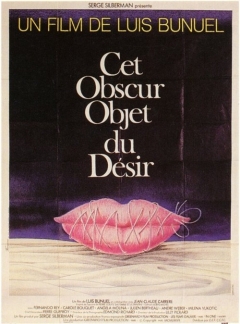
First things first: That Obscure Object of Desire, Luis Bunuel’s last film. I find myself once again stymied by Bunuel. I’m glad I saw Discreet Charm of the Bourgeoisie first, as, in a way, it prepared me. Just as the title characters in that earlier film never quite get their meal, Desire‘s protagonist – once again, the wonderful Fernando Rey – will never commiserate his relationship with Conchita, a pretty Spanish girl easily twenty-five years his junior. The reasons why become increasingly odd, an escalation over the course of months, maybe years, with Rey always trying to use his wealth to close the deal.
The most famous device employed in Desire is that Conchita is played by two actresses – Carole Bouquet and Angela Molina – both beautiful in different ways. A lot of brain time gets spent trying to figure out what each actress represents, and they frequently switch within the same scene. Apparently Maria Schneider was going the play the role, alone, but quit – some say simply announcing that she couldn’t play the role the way Bunuel wanted it, some say after a horrendous fight. Some also say, quoting from Bunuel’s memoirs, that he hired one actress on the spot to re-shoot the footage Schneider had already shot, and the other actress later, which doesn’t make a whole hell of a lot of sense; another quote from his book claims he was getting drunk at a bar and trying to figure out how to salvage his movie when the idea of using two actresses hit him.
In all, this confusion and duality of legends is really of a piece with the movie. Rey is relating the tale of his doomed relationship to his traveling companions on a train, which doubtless makes this the very definition of an Unreliable Narrator. Or possibly not, as it has to be said that Rey never has a clue as to what makes Conchita tick, and therefore, neither do we; she seems as mutable as the status of which actress is to play her at any given moment. In that way, I’m going to say that Bunuel has absolutely nailed the befuddlement of any male who has ever said or done the wrong thing and has no clue why it was the wrong thing. And, like many a man before and since, he is too busy – or too stupid – keeping his eye on the prize to try to figure anything out. He doesn’t want marriage, he wants a mistress, he wants sex. And he always seems this close…
Which is grossly simplifying and glossing over much more. Bunuel doesn’t make popcorn movies. He makes movies that engage on many levels, and you must pay attention, if only to see what will astound and confound you next.
And then there is Spartacus.
Ah, Spartacus. No obscure symbolism here. Well, not on the level of Bunuel, anyway. Straightforward, glorious story of the Third Servile War, with some historic jiggery-pokery by Howard Fast in his novel and Dalton Trumbo in his screenplay. Legend has it that Kirk Douglas was royally peeved by not getting the title role in Ben-Hur, and Spartacus was going to by-God show them, producing the movie himself through his Bryna Productions. That’s a big chip to be carrying on your shoulder, and it wasn’t long before Douglas fired the first director, Anthony Mann – apparently the only footage Mann shot that’s still in the finished picture is at the very beginning, in the salt mines. Douglas remembered that guy who directed him before, and that movie turned out pretty well. Stanley Kubrick, and Paths of Glory.
I suppose that could have been a case of Be Careful What You Wish For for Kubrick; he’s at the helm of a big Hollywood picture, but he has no real control. He’s a hired gun, and he doesn’t like it. There were apparently many fractious discussions between Kubrick and Douglas, with Douglas generally getting his way. And the astounding thing is, none of that is on the screen. This is a good, solid movie, still standing head and shoulders above most of the comparatively turgid movies that came out in the Epic Cycle of the 60s. It’s a testament to both men’s ultimate professionalism that this is the case.
Can we all just agree that Charles Laughton owns any movie he's in and just get on with our lives?
Yet I still can’t get over the feeling that it would have been better had Kubrick had more control; there is a scattered quality throughout the narrative, as if the story gets bored with one set of characters and moves quickly from the gladiators to the senate, and then thinks nah, that was a bad idea, and moves back again. Apparently, the high-power stars were re-writing the script daily, to emphasize their own roles. Again, all hail to Kubrick and editor Robert Lawrence for making the movie as cohesive as it is. And what stars! The sort of actors you could likely leave to their own devices, if need be – Laurence Olivier, Charles Laughton, Peter Ustinov… Olivier and Laughton were said to hate each other, which Kubrick put to good use. The scenes between Spartacus and Varinia (Jean Simmons), once freed of the gladiator school, feel a little too plastic, too self-consciously Hollywood… at least until the last time we see them together, and, just as in their early scenes, some genuine emotions show.
There is a lot of exceptional detail in the settings, which I’m going to mark on the Kubrick side; and probably my favorite scene takes place before the ultimate battle, as Spartacus’ slave army faces the approaching Roman legions, the masses of men changing formations as they approach the line, preparing for battle, the sun shining off shields. That ain’t CGI, baby, that’s a ton of extras, and it is breathtaking. It’s practically in real-time, with only cuts to Spartacus and Olivier as Crassus on their respective rises, watching the battle lines form. I am put in mind of people bitching about how 2001 is boring because it’s so slooow and waaaaah why can’t something blow up. Phooey on them. Like I said, breathtaking, and in this instance, tension-building in the extreme.
I literally hadn’t seen Spartacus since the mid-60s, and then it was on TV. I remembered only two scenes from it: the Gladiator Instructor painting Spartacus’ body to demonstrate the Quick Kill, Cripple, and Slow Kill zones, and the end, which I thought royally sucked because the hero died. Nowadays, of course, I can see and appreciate more than that. I know now that Howard Fast started writing his novel while he was jailed for refusing to give names to the House UnAmerican Activities Commission, and that screenwriter Dalton Trumbo was still on their blacklist when shooting started; when Crassus starts waving around papers that contain “names of all enemies of the state” there’s a certain bitter, dark resonance to it.
There’s a ton of good stuff in Spartacus; there’s a reason the Criterion Collection once put it out on DVD. The fact that at this remove I can detect the lack of the director’s touch should not deter anyone from seeking it out. As I said, tremendous cast, good story, high production values. Like anything thus far in the Stanley Kubrick Project, I feel quite confident recommending it.
Next up: Lolita about which I have heard some… not-encouraging things. Never seen it, but it does have the look of Kubrick going in exactly the opposite direction from Spartacus as far as he could. Whether or not this is a good thing, we shall see.
I guess it’s time to address my small part in the Horror Movie Empire debacle. By which I mean you can add me to the number of people apparently ripped off by the online vendor. Even so, I’m going to say “ripped off” is a term I use reluctantly. I can be more confident and truthful in saying I’ve been let down by them, because I still harbor a ragged hope that I’ll get my goods, though finding my mailbox devoid of any such thing day by day diminishes that hope bit by bit.
If you’re lucky enough to have avoided this mess, or the blog posts or the forum threads: Horror Movie Empire, back in December of 2011, ran a rather extraordinary sale on Blue Underground DVDs and Blu-Rays: ten bucks for Blus, seven for DVDs. I ordered six in all, and I wasn’t the only one: HME said they hadn’t expected such a big response, which was, I suppose, the first sign of trouble.
I had dealt with HME before. I rolled the dice on their “Blu-Ray grab bag” and got Dead-Alive, which I didn’t own on Blu, so, hey, score (the fact that I could have gotten it cheaper from Amazon than the grab bag price is irrelevant. Caveat emptor is going to get more and more relevant as this thing goes on). The delivery time was a bit slow, but I had been warned about that.
So. I put in my order on that sale. At that price, I was picking up mainly discs I likely would not have normally, for the purposes of shoring up my education on various film genres, by which I mean a couple of respected horror movies I hadn’t liked when first released, and felt the need to revisit in my older, theoretically wiser state. One movie that I knew was coming up for a Daily Grindhouse podcast. The only movie that was actually on my “must have” list was the Blu-Ray of Zombie, which has gotten high praise.
Then I sat back to wait, remembering his fabled slowness. And wait. And wait. We’re now looking at 100 days of waiting. My order number was in the 2100’s. I have seen complaints numbering in the 3300’s. That’s… what? At least a thousand orders after my own? That’s a lot of people and a lot of money.
As bit of (I guess) commiseration, I have a saved Twitter search using HME’s twitter handle. I check it daily to see the questions, the demands, the vitriol. All of which goes without reply (much like my e-emails).
I’m not placing a link for the site here. It’s significant – but no real help – that a Google search will net you their dismal rating on the Better Business Bureau site. It also has a page by Noel Mellor of FilmRant under the similar URL of horror-movie-empire.com which he hopes will eventually supplant HME’s top search status, with the title heading “Horror Movie Empire – A COMPLETE RIP OFF”. Mellor’s page allows people to sound off about their experience. The last posting to the site is a week old at this point, is titled “A New Hope” and contains actual correspondence from the frustratingly silent owner/operator of HME. Will Noel get his discs? Will I? I guess we’ll see.
If nothing else, I’ve been aware for some time that the universe is a well-oiled machine designed to humiliate me. As this is the case, I am hoping that by finally putting my complaints into print, I will find a package in my mailbox this afternoon, causing me to write a wordy retraction.
Yep, that’s me. Still naive after all these years.
EDIT: So what’s on the front page of HME’s site today? (and a tip of the hat to Geoff Hunt for pointing it out):
YET ANOTHER EDIT: In all fairness, I must report that by the end of 2012, I had received each and every disc I ordered. It took nearly a year, but it finally happened. Now let us put this all behind us, and never click on that site again.
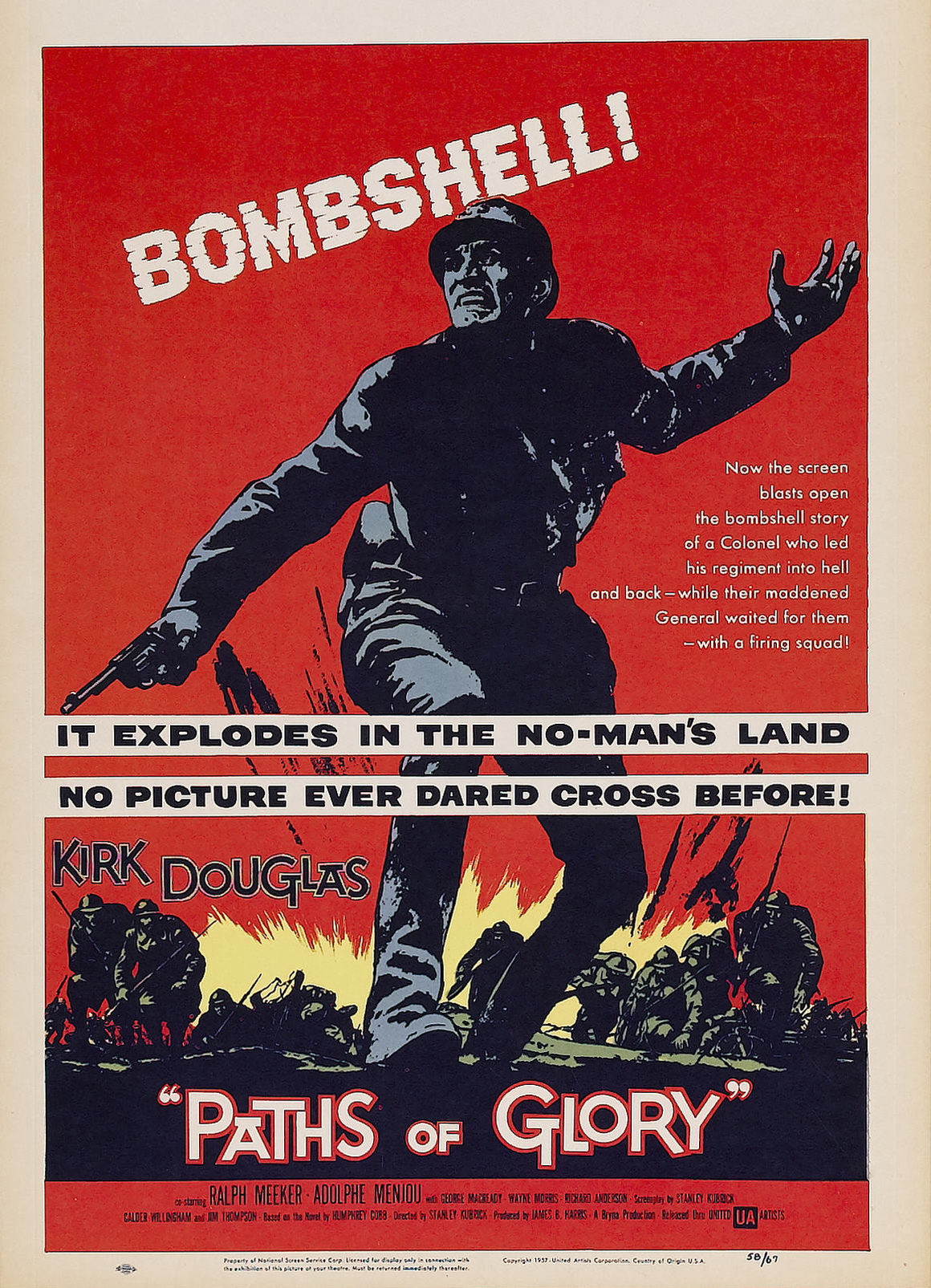
My attempt to go through Stanley Kubrick’s filmography continues… well not apace, certainly, but it continues. I was able to watch his fourth film, Paths of Glory, Sunday evening, after a fair amount of postponement and anticipation, and ooooh big surprise: I liked it.
After the critical, if not box office, success of The Killing, Kubrick and producer Jack Harris decided they wanted to do a war movie; Kubrick apparently read the novel by Humphrey Cobb when he was a teenager, and the two men began work. Once again Jim Thompson worked on the screenplay, a chore eventually taken over by another novelist, Calder Willingham (who would later turn in screenplays for The Graduate and Little Big Man). This was while they were under contract to MGM. After a major shake-up in the studio (in which Dory Schary and our boys got the boot), the project seemed to be in limbo, except another star with a reputation for being a maverick was interested in the script: Kirk Douglas. Douglas’ own production company, Bryna (named after his mother) helped ramrod the project through United Artists.
Douglas plays Colonel Dax, a WWI French officer commanded to do the impossible: take his regiment across No Man’s Land and capture The Anthill, a fortified German position that has repelled all comers for months. When the attack inevitably fails, three men from the regiment are picked, supposedly at random, to be tried and executed for cowardice. Dax insists on defending the men himself, only to find himself up against a wall of confustication; the outcome of the trial is never in doubt, and three men are executed by firing squad.
There is no denying that Paths of Glory is an anti-war movie, but there is also little denying it is a pro-soldier movie. The villains in this piece are not the Germans – we never see a German soldier – but the commanding officers, themselves lodged in a magnificent mansion far away from the dismal trenches populated by men they seem to hardly regard as human beings, more as chess pieces. Even then, that road isn’t an easy one to navigate. General Mireau (George MacReady), who will become our major heavy, starts out well enough. When his superior Broulard (Adolphe Menjou) asks him to take The Anthill, Mireau at first demurs, citing the impossibility of the goal, that the toll on his men would be too high. But then Broulard mentions that there may be a promotion for the man who takes The Anthill.
Mireau’s concern for his men evaporates at that point, even ordering his artillery to shell his own trenches when company B fails to leave its protection for the second wave of the assault. The artillery officer refuses, and Mireau immediately orders him to place himself under arrest. Afterwards, still stung at his loss of face and seeking to deflect blame, Mireau wants a hundred of the men executed for cowardice. Broulard manages to talk him down to the three men, later opining that the execution will be “good for morale”.
The unfeeling mechanics of the trial are made even more stark by the assault on the Anthill, lead by Dax himself. Noisy, messy and grueling, it’s well made and shot and seems to go on far longer than it actually does – and in another of those pieces of genius staging, when Dax and his company pauses after this long, tortuous push, for the first time in the sequence, the camera flicks toward their objective, the Anthill… and it still seems impossibly far away. After numerous casualties, they have still only reached the edge of the French wire.
If the court-martial scenes are an exercise in frustrating futility, the mood switches to grim naturalism in the stockade where the condemned men await the sunrise and their death. Ralph Meeker, a couple of years after Kiss Me Deadly, gets to show his range as Paris, a corporal chosen for the trial because he witnessed a drunken superior accidentally kill one of his own men during a night patrol; Timothy Carey brings his usual off-kilter performance to Ferol, picked because he is a “social undesirable”; and as Arnaud, a man chosen by lot for the trial, even though he has two decorations for bravery under fire, is another familiar face I was racking my brain to recognize – it’s Joe Turkel, a quarter-century removed from Blade Runner and The Shining.
The film falls back to seemingly impersonal and mechanical for the firing squad scene, which is another masterpiece of staging and pacing, monstrous in the dissonance between what can only be called the pomp and circumstance of the event versus its actual callousness, most typified by the treatment of Arnaud, who sustained a serious skull fracture when he assaulted a priest in their cell. Unconscious and not expected to live in any case, his stretcher is tied to the stake in the killing field, and the sergeant pinches his cheeks to try to awaken him – General Mireau wants him conscious for his execution.
Mireau will find himself under investigation for ordering the shelling of his own troops, and Boulard will offer Dax Mireau’s post. Upon finding that Boulard thinks Dax has done all this in order to be promoted to Mireau’s position, we get the patented Kirk Douglas tantrum, somewhere between a shout and a sob, as the colonel finally tells the general what he thinks of the whole affair and the general in specific. Boulard realizes that Dax is an idealist and tells the colonel he pities him “like one pities the village idiot.”
According to James Harris on the Criterion Blu-Ray, there was, at one point, a happy ending, doubtless because it was felt that maybe it would be best for the box office. When it was switched back to the original ending, with the soldiers unsaved from the firing squad, he concealed it from the suits by sending them an entire script, rather than just the changed pages (when the suits saw the completed movie, they apparently didn’t mind). The ending we do get is all the more moving for its bittersweet qualities, even more so because it is an addition by Willingham that Kubrick at first hated, then accepted as he realized how to stage it. The remaining members of the regiment are crowded into a bar, noisy, boisterous. The MC of the club hauls a… prisoner? We’re never quite sure of her status, except she is young, pretty and German, “A pearl cast adrift on the tides of war.” She is, in fact, the only German we see in the picture. Urged on by the host, she sings a song, and the jeers and catcalls of the regiment slowly die down as they listen to her, singing in German. Quietly, the men, sit, rapt. One by one, they begin to hum along with the tune, since they don’t know the words. A few brush tears from their eyes. I do the same.
Outside the club, Dax stands, listening. His sergeant arrives with the news that regiment had been ordered back to the front, at once, an order no doubt prompted by his earlier tantrum. Dax tells the sergeant to let the men have a few more minutes, then walks grimly to his office.
It is quite a remarkable picture, and once again a resounding critical success, if not a financial one. It was banned from several European countries for quite some time, which verified United Artist’s worries about putting up the money for it. But many people point to this as their favorite Kubrick movie, or their favorite anti-war movie. It’s not quite flawless, but it is damned good, and the fact that it still resonates over a half-century later certainly confirms its status as a Great Film.
It also meant that when Kirk Douglas was having problems with Anthony Mann on the set of Spartacus, he would fire the director and ask for Kubrick to replace him. We’ll see how good an idea that was when I somehow manage to carve three hours out of my schedule to watch it next.
I guess that was a pretty good Spring Break -y’know, outside of the unpaid vacation premise – in that it was pretty low impact. I watched a movie a day, wrote about them. That’s about as close to Nirvana as I’m likely to currently get. Well, all good things, etc, as my family returned from their vacation, I lost my sovereign status over the TV, and found myself trying to care for a wife that had, as usual, pushed herself too far for too long. Shooting video in a thunderstorm system that had spawned three tornadoes the night before. Getting soaked to the skin and wondering if my current sniffling is due to something more pernicious than my usual rampant allergies.
You know, Life’s Rich Pageant.
I’ve managed to get two movies in so far this week, mainly because the Super Soaker day was so long, I was in danger of logging too many hours in my work week, and had to take Thursday off. Though I’m fairly itching to get on with the Stanley Kubrick Project – next up is Paths of Glory – it turned out to be neither of the movies.
First up was Vigilante, the 1983 William Lustig flick, watched for an upcoming Daily Grindhouse podcast. (And knowing that, I placed it on The Other List. I am gaming my own system) It would be pretty easy to dismiss this movie as a Death Wish rip-off, but since Death Wish was made in ’74, that doesn’t wash – you don’t do rip-offs ten years after the fact (you wait twenty, apparently, and call it a remake – but that’s a rant for another time). It’s been pointed out that Vigilante is more like an homage to the Italian revenge flicks that proliferated after the success of Death Wish, making it, at best, an homage to an homage. Or something.
The tragically under-used Robert Forster is a New York mechanic whose working buddies (including Fred Williamson) have gotten tired of the situation on the streets and have formed a sort of vigilante hit squad. For the most part, they seem to satisfy themselves with beating the living crap out of rapists and drug dealers, but it’s obvious they are soon going to be taking it to the next level. Forster isn’t having any of that, even after his wife is stabbed multiple times and his son shotgunned to death by a street gang – he still believes in the courts. Of course, that faith is quashed when a corrupt judge gives the leader of the gang a suspended sentence, and Forster himself winds up going to the pen for a month for contempt of court when he tries to assault said judge. Once out, Forster tells Williamson he is totally down with this vigilante stuff.
Vigilante is way too episodic for its own good; once Forster goes to prison, the movie splits into two movies, one about Forster, the other about Williamson. The two movies intersect when the new Vigilante Squad plus One busts into an apartment so Forster can personally plug the gang leader. After that, Forster splits from the Squad, which leaves Williamson’s movie unfinished. Forster’s movie does come to a literally explosive end, but I am still left wondering about some plot threads left over from Williamson’s flick.
There’s no denying that the movie is well cast and well made; some of the photography, in fact, is damn well gorgeous – it’s not every day you see an exploitation flick shot in Panavision. I’m always down with watching Forster, and this is one of the best things I’ve seen Williamson do; he still gets to be quite the badass, but he’s a conflicted badass. You can see he doesn’t really like what he’s doing, but he finds it necessary, and soldiers on.
Can’t really recommend it, unless you’re a Forster, Hammer, or Italian Revenge fan. In that case, go for it.
I watched Vigilante on Netflix Streaming, and as a side project to that, remembered that there were various websites that laid out when movies were expiring on that service. Found to my shock (or something like it) that two Luis Bunuel movies were going offline on April 1, and as they were a part of my goal to get better educated about film, they got pushed waaaaay up the queue. First up: The Discreet Charm of the Bourgeoisie.
This was my first full-length Bunuel; I had seen Un Chien Andelou years before, his short in collaboration with Salvador Dali, but none of his long-form stuff, so I wasn’t quite sure of what I was getting into. Bunuel is best known as a surrealist, but Charm is, I think, more appropriately absurdist rather than surrealist. I am down with the absurd, as the kids say, I get it, and, as such, I really enjoyed it.
A marvelous cast is led by Fernando Ray, who plays an Ambassador from the fictional Latin American country of Miranda, who is smuggling cocaine in his diplomatic pouch. He and his two French friends (and their spouses and one sister) will keep trying to sit down to a meal, but never quite get to it due to a series of increasingly bizarre and chaotic events.
And that is about the most concise and sensate synopsis I can manage. Going into too much detail would take longer than watching the movie and serve no real purpose; I’m kind of a lunkhead when it comes to these things, and have to have any symbolism that prances by explained to me. I’ll try to just point out some of my favorite bits:
In the scene where Ray starts pulling bags of coke out of his pouch, one of his compatriots points out there’s a pretty girl on the sidewalk in front of his office, selling mechanical cat and dog toys. Ray’s response is to take a sniper rifle out of a nearby cabinet and shoot one of the dogs. (He explains that she is a terrorist from Miranda spying on him, but still…)
The ladies are at a stylish restaurant (complete with string quartet) for what appears to be brunch. They order tea and switch places because the young sister cannot stand the sight of cellists. After being told that the restaurant is out of tea, they order coffee, and a young army lieutenant joins them. He tells them the tale of how he poisoned his stepfather while young. The ladies accept this without batting an eyelash, all smiles. Then they are told the restaurant is out of coffee.
Later, in a similar scene, their dinner party is interrupted by a squad of soldiers who will be using the estate for war games. Of course, they are invited to join in for dinner, but just as they are starting their meal, a messenger arrives and advises the colonel that the opposing army has started the war early. Before they leave however, they all sit to hear the messenger relate a dream he had the night before. Afterwards, everyone is captivated. One soldier says, “Now tell the train dream!” “Oh, yes, yes!” cry the ladies, but the Colonel demurs, “No, no, we must get to the war.”
Dreams play an increasingly important part in the proceedings, as the more outrageous and violent incidents are terminated by a character awakening from a dream. In fact, one states that he was having a dream about another character having a dream – that’s the complexity with which Bunuel layers his imagery. It’s not as confrontational or frantic as the cascading imagery in Head, but it is so much more, well, bourgeois. As one can tell from the sarcastic title, these are terrible people being terrible because it is their right to be terrible, even to the point where being terrible is blase. So much of this movie is striking and haunting, I feel I must recommend it highly, even knowing that it is not for all markets.
I’m going to have to find time this week for the other Bunuel movie in danger of expiring, That Obscure Object of Desire. And possibly carve out some time to break into Paths of Glory. These are good problems to have.
So each year everybody on staff at Channel 16 submits what they feel is their best story of the year to the Telly Awards, which ” honors the very best film & video productions, groundbreaking online video content, and outstanding local, regional, & cable TV commercials and programs, ” unquote.
Don, our Station Manager, played it perfectly yesterday. We were all in a small office, while the TV Production students were working on their show out in Master Control. Don said, sadly, “Well, we heard from the Telly folks today, and unfortunately, none of us got anything.” Then he brightened and pointed to me. “Except for you. You got a Bronze Telly. Congratulations!”
Okay, Don, you got me.
This was special to me for two reasons: the most obvious is, this was my third year submitting, and secondly, this year I ignored all suggestions and went with my gut on which story I should submit:
Calling this state of affairs unreal is almost an understatement; outside of the accolades of my peers, there has been no notable impact on my life. My oatmeal tastes the same this morning, I did a video shoot for one of our staffers who came down with bronchitis, and I’ll still grumble my way to the Mystery Cafe show tonight: all as usual. I did, at least, sleep very well last night, which is uncommon enough.
And when you get right down to it, that “accolades from your peers” stuff is pretty darned nice.
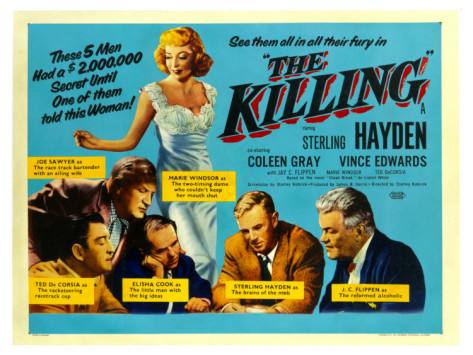
One of the very positive things to come out of Killer’s Kiss is Kubrick’s meeting with Jack B. Harris, a young TV producer looking to break into movie production. The result of that partnership was what both men felt would be their calling card in Hollywood, The Killing.
Please note – this scene does not appear in the movie. Sorry to disappoint.
Based on a paperback Harris found one evening, it’s a story about a well-planned robbery at a horse track, and how it still goes wrong. Having a bit of a budget to work with – admittedly, a small one, but much more than he ever had to work with before – Kubrick starts assembling a dream crew. A crime writer he’s always admired, Jim Thompson, works on the screenplay. Once Sterling Hayden signs on, Kubrick calls on his encyclopedic knowledge of film and pulls together a gang of interesting, reliable character actors – Elisha Cook, Jr., Marie Windsor, Timothy Carey. He gets a real Hollywood cinematographer, Lucien Ballard, though that was largely a result of film union rules. Predictably, the two did not get along very well.
The result: a quantum leap forward.
Sterling Hayden is Johnny Clay, a small-time hood just out of the pen. He’s spent the time planning out a way to rob a horse racing track and get away with two million dollars. He puts together a group of “not exactly criminals” but guys in the right positions to make his plan work, and moreover, reasons to make it work: a ticket clerk with a greedy wife, a bartender caring for a sickly spouse, a cop who owes a loan shark big time. There are also two actual criminals, who will handle the distractions necessary for the plan. Clay pays them a flat fee, knowing they’re professionals and will carry out their part without many questions and aren’t likely to give the cops the time of day.
Clay’s plan is complex, but not so complicated there’s room for things to go wrong. Part of the draw of the movie is that time becomes more fractured as we get closer to the heist, going back in the day over and over again to see the disparate parts come together. Of course, there’s one big kink in the plan, and of course, it’s a dame. This is noir we’re talkin’, after all. The ticket clerk (Elisha Cook Jr. at his Elisa Cook-iest) makes the mistake of mouthing off about upcoming big money to his feckless wife (Marie Windsor), who in turn tells her boyfriend, small-time hood wannabe Vince Edwards.
I still think of Vince Edwards as Ben Casey. Seeing him in roles like this always disorients me.
Crime fiction lives and dies on its character work; the very best employs unique takes on this end of human potential and the shapes it takes. I’m a very bad completist, I didn’t seek out a copy of Lionel White’s novel to find out how much of the final product is him and how much is Thompson; the extras on the Criterion disc indicate that the framework is mainly White, but things like the relationship between Cook and Windsor gained greater prominence under Thompson. The guy who Clay hires to start a one-man riot in the racetrack bar, a nigh-incomprehensible Kola Kwariani, is practically a movie in himself, a thoughtful bruiser Clay tracks down at his job in an “Academy of Chess and Checkers”.
I do think, however, the weirdness of the sniper character Timothy Carey brought with him.
The ability to actually build sets gives Kubrick the freedom to move the camera in ways he never could before, when he was trapped in actual apartments or forests where he couldn’t lay track, even if he could have afforded it. A long dolly shot the length of an apartment, through several rooms, the camera apparently passing through walls, is so damned good it gets used twice, once in daytime, once at night. There is one pretty obvious rear projection shot, but it’s 1956, and those were the norm.
It was the non-linear quality of the heist that the suits did not much care for and that animosity was likely the reason it didn’t open well, without much of an ad campaign or chance to build word of mouth. It wouldn’t be the last time that the powers that be not only didn’t get Kubrick, but were openly dismissive. Critically, the film was a success, though, and got Kubrick and Harris the calling card they needed. The next stop would be Paths of Glory, and a legend would begin to unfold.

 There are some books it is simply insane to try to adapt to film, and chances are, someone has gone ahead and done it anyway. David Cronenberg did Naked Lunch, Joseph Strick did Ulysses. Lolita, with its extremely volatile subject matter and Unreliable Narrator, certainly fits in that category. Is it even possible to emulate the Unreliable Narrator in a movie setting? The best I can think of is Rashomon, but that’s an ill fit at best. I suppose That Obscure Object of Desire comes closest.
 Humbert Humbert in this version is identified only as “divorced”, the death of his boyhood sweetheart and subsequent attempts to rekindle that relationship with girls her age, his obsession with “nymphets” is scrubbed away; Humbert sees Lolita in her two-piece bathing suit, and that is it. All that is missing is a cartoon BO-I-I-I-NG sound effect. “Lolita”, as I recall, is Humbert’s pet name for the girl, who is actually named Dolores. This too, is pitched by the wayside, perhaps to avoid confusion. I can easily see moviegoers scratching their heads and saying, “What? I thought her name was Lolita?”
 If we are talking about the major changes made, it becomes necessary to talk about the greatly expanded role of the writer, Clare Quilty, played by Peter Sellers. Though his presence is apparent in the book, he becomes a definite mover and shaker of the events in the movie, and though I never thought I would say this, Sellers actually becomes quite tiresome in this, effecting disguises to generally mess with Humbert until, as in the book, he receives his comeuppance. Annoyingly.
 It is to be expected that even our favorite artists have an off-day, or, to put a finer point on it, do something that doesn’t particularly resonate with us. Hell, I actually find the concept of someone turning out something I consistently love to be somehow frightening, inhuman. I think I have finally found that lead slug in my Kubrick experience. It was the first time I found myself glancing at the time repeatedly, counting the minutes left, thinking “Two and a half hours? Really?“.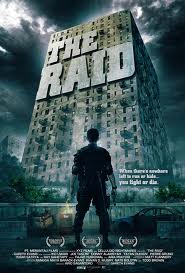












 drfreex.com