It’s strange to see Carnival of Souls so venerated now – it’s even out on the Criterion Collection. A quickly-produced low-budget movie meant as a calling card to the movie industry, now acknowledged as a classic. Well, okay, there are more than a few of those in the Collection, but it’s rare that we get to watch one during Hubrisween.
Just in case you recently switched living arrangements from underneath a rock, Carnival opens with a drag race gone wrong, as a car carrying three women plunges off an old bridge into a river and sinks immediately. While the river is being dredged for the car and the bodies, one of the women – Mary Henry (Candace Hilligoss) stumbles from the muddy river, unable to remember anything since the crash.
Mary’s a skilled organist taking a position at a church in Utah, though she denies being particularly religious. On the way to this new life, she is stricken by the sight of an abandoned pleasure palace on the shore of a lake. Her increasing obsession with the place becomes a problem, though not as much as the ghoulish, silent white-faced man who seems to be stalking her.
Since we’re dealing with a movie half a century old, I think we can stop being so precious and just say that Mary died in that car wreck, and she’s only been pretending to be alive all this time. It’s something that anyone who’s read “An Occurrence at Owl Creek Bridge” or seen an episode of Twilight Zone has already figured out by the first half hour mark, if not ten minutes in. The difference is in the delivery of that revelation, which is where Carnival manages to edge itself into the realm of actual art.
There are two times in the movie when Mary finds herself in a silent world, unable to interact with any of the people bustling around her, as if she’s ceased to exist. It’s amazing how affecting something like killing the ambient sound in a sequence can truly be. These segments, and the scenes taking place in the decaying Saltair Amusement Park (an amazing setting that was only waiting to be discovered), its downbeat denouemant, are what give the movie its power to chill.
Producer/director Herk Harvey (who also plays the ubiquitous dead-faced man) was a veteran of numerous “mental hygiene” and industrial shorts, and went into his two-week shoot with a budget of $17,000 and a five man crew. Years of quick production put him in good stead as the shoot proceeded guerilla-style in Salt Lake City (offering a man in a van twenty-five bucks to “nearly” run over Hilligoss, for instance). Much of the movie was shot in Lawrence, Kansas, where Hervey and his cohorts were well-known and respected (“You need to shoot in my church? Sure!”).
The oddest note in the movie is struck by Hilligoss’ portrayal of Mary; judging from interviews with her and Harvey, the cold, non-social aspect of the character is a choice by the director, which Hilligoss struggled with. It may be good for the story – Mary is a character that never truly lived, and now desperately wishes to, but doesn’t know how. It does, however (and as Hilligoss feared) limit viewer sympathy for the protagonist.
Faring better is Sidney Berger as the only other occupant of Mary’s boarding house, John. John is a realistic, horny working guy, equal parts good humor, sexual bluntness and desperation. Mary acquiesces to his constant efforts to get close to her simply because her fear of the Man and the call of the abandoned park are beginning to terrify her. Even the horndog, though, is unwilling to expose himself to her increasing instability. Berger went on to a sterling career as head of the drama department at the University of Houston, and had to put up with some frequent razzing about the role, but honestly, he is, in many ways, the best actor in the movie.
Carnival did not fare well on its initial release, and was, as is so often the case, screwed over by a con man masquerading as a distribution company. It was also cut by as much as eight minutes, and since I saw the original, uncut version, that might have actually been an improvement – it does drag in parts. But when it was sold to TV, frequent airings allowed its strengths to be appreciated, and a cult grew. And this is why, even knowing the Twilight Zone properties of the script, it is possible to still watch this small, well-organized picture and still be able to pick up a chill or two.
Here’s a movie that kept cropping up on late night horror movie slots, causing some consternation amongst fans expecting crepe hair werewolves or cardboard robots going berserk – a reasoned, almost stately historical drama. The station’s programmers couldn’t really be blamed – this was produced by Val Lewton, who similarly produced Cat People, Curse of the Cat People, I Walked With A Zombie, you know. It starred Boris Karloff, for pete’s sake. Similar reasoning/excuses held for Tower of London (though Camp on Blood Island was a little less forgivable).
This was the last of Lewton’s movies produced at RKO, the most expensive, and the first one to ever show a loss at the Box Office. In 1945, as Bedlam was being filmed, America was dropping atomic bombs on Japan. Small wonder that horror movies were on the wane; there’d been enough horror to go around in the real world, no need to visit it in our entertainment. Lewton would only produce three more movies in his life, and when you look at what he accomplished with remarkably small budgets, you wonder how the heck that ever happened.
It’s probably Lewton’s intellectual bent, as Bedlam is pretty much derived from an engraving by William Hogarth in his Rake’s Progress series. Quick views of other satiric Hogarth art is used for scene dissolves, and I can just imagine studio execs scratching their heads over that. The artwork was, in fact, excised for the TV version.
Bedlam is short for St. Mary of Bethlehem’s Hospital, an insane asylum in 1761 London. Our story concerns the Apothecary General of the hospital, George Sims (Karloff) and his increasing clashes with the protege of the Tory Lord Mortimer (Billy Law), the quick-witted Nell Bowen (Anna Lee). Horrified by the conditions in Bedlam – especially during Bedlam‘s most famous scene when an inmate, gilded to portray Reason in a show to honor Mortimer, suffocates (two decades before Goldfinger!) – Nell becomes a crusader for reform, eventually losing all her standing with the politically queasy Mortimer, and finally committed by Sims and a kangaroo court to become an inmate herself at the very asylum she is attempting to reform.
Nell still manages to reform Bedlam from the inside out, turning the huge common room into a much safer, healthier place. A Quaker stonemason (Richard Fraser), who had inspired her, is meanwhile working with the Whig reformist John Wilkes to get her another trial. Seeing that this new trial would be disastrous to him, Sims decides to give Nell the 18th century equivalent of a lobotomy, but the inmates rise against him, and while Nell escapes, hold a trial for their abusive warden, with surprising (but ultimately horrifying) results.
The Breen office hacked the script to pieces before it ever started filming, and it is still surprising what got through. Director Mark Robson recreates several of Hogarth’s prints in real space, often on hastily improvised sets (in fact, that enormous commons room in Bedlam is the church set from The Bells of St. Mary’s!). If Lewton could get this much period accuracy out of a tiny budget and some painted flats, it’s incredible he had to fight to get any work afterwards. Robson often said that he wouldn’t have been able to make movies like Earthquake if not for the lessons he learned under Lewton.
Karloff’s three movies with Lewton were probably the last of the classy horror movies he would make until he teamed with Richard Gordon in the late 50s. He always rankled when Bedlam was termed a horror movie, claiming it was historic drama. So it is… but nonetheless, here we are, talking about it during Hubrisween, because honestly – sometimes there is nothing so horrible as truth and history.
Now, a lot of people whose opinion I respect like Jess Franco. I have yet to find that movie that will win me over to his camp, however. It may actually happen someday, but in the meantime, I ain’t holdin’ my breath. The Awful Dr. Orlofis described by some as “Franco’s masterpiece”, which means in a career spanning around 200 movies, he hit his high point on his fifth movie. Contemplate that upon the Tree of Woe, and let us begin.
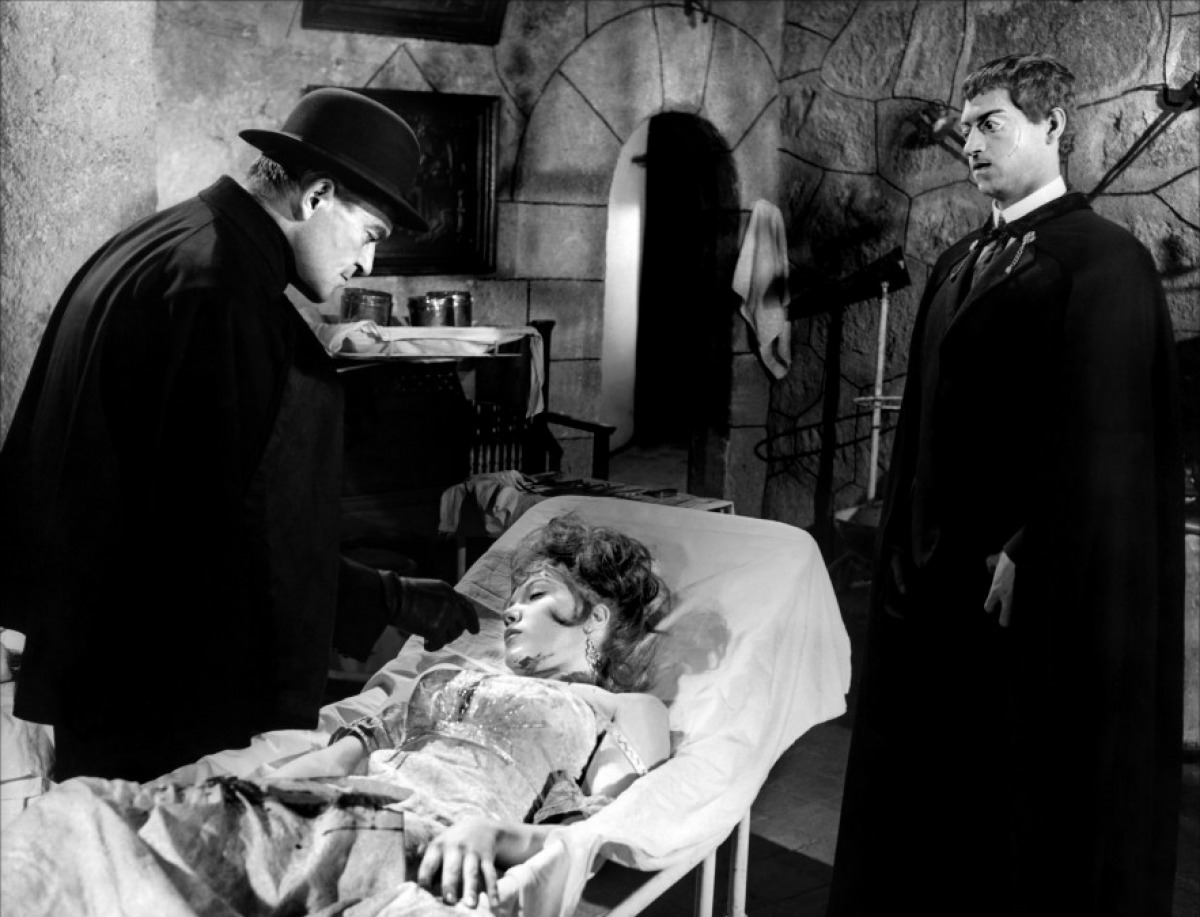
France, 1912: Four beautiful women have already disappeared, and as the movie starts, number five is killed by a disfigured, caped man, who then carries her body out, guided by the tapping of a cane. The man doing the tapping is our awful title character (Howard Vernon, here beginning a lifelong friendship and collaboration with Franco), clad in opera cape and top hat. The killer is Morpho (Ricardo Valle), whose scarred face and bulging, unblinking eyes are the classic stuff of monster movies.
We are quickly introduced to Inspector Tanner (Conrado San Martin) and his ballerina fiancee, Wanda (Diana Lorys). Tanner is put in charge of the missing woman epidemic and will prove mostly ineffective (it is, in fact only due to a comic relief drunk played by Faustino Cornejo that Tanner solves anything). Orlof is trying to restore his daughter’s face, scarred in a laboratory fire years before – after his most recent failure (an unfortunate drunken woman trapped with Morpho in an empty house, a very effective scene), he determines that his next victim must be living when he attempts the skin grafts. Then he notices that Wanda and his daughter are played by the same actress…
Okay, we can stop right now and examine the obvious, that this is the same plot as Eyes Without A Face, released only two years previous. In this instance, Franco has an excuse: he was denied a permit to film his intended fifth movie by the Spanish State Censor, and he already had a cast and crew ready to go. He wrote Orlof in a week, figuring – as is often the case – that a horror movie would be perceived as having no particular political message. This doesn’t necessarily excuse his return to this particular trough over and over again through the years, however.
Franco was a cinematic omnivore, and this really shows in this version of Les Yeux Sans Visage through the filter of a 1930s Universal monster movie (it’s a possibility that Orlof is a tribute to Bela Lugosi and his blind henchmen in The Human Monster), or one of the more contemporaneous Hammer gothic horrors. It’s certainly lacking the poetry of Franju’s film – the tormented nature of the daughter, the recipient of her father’s increasingly horrific attempts to restore her face (Lorys as the daughter is called upon to do little more than loll her head about on a uncomfortable-looking bed). There is some tribute paid to Orlof’s agony over what he’s doing, but it feels more like filler here. I’m sure the dreadful English dub is not helping out there, either.
The character of Wanda the ballerina is a new addition to the story, using herself as bait when she realizes Orloff is becoming obsessed with her. The final twenty minutes of the movie, with Wanda in the clutches of the mad scientist and her worthless boyfriend the Inspector finding every excuse possible to not read her hastily-written note, is pretty compelling, though the viewer finds himself wondering why she thinks taking such a hazardous course without notifying her policeman boyfriend in advance is going to turn out alright.
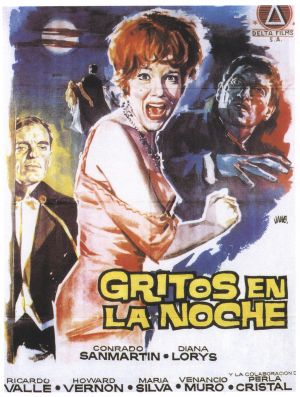
If nothing else, you have to admit that the original title, Gritos en la noche, or Screams in the Night, is a great title for a horror movie. Exactly when it became The Awful Dr. Orlof is opaque to me; I had assumed the change was made so it could occupy the lower half of a double bill with Ricardo Freda’s The Horrible Dr. Hichcock, but my Image DVD bears the french title L’horrible Docteur Orlof. I need more coffee before I can begin to untangle this, and I’m inclined to believe it’s just not worth it.
For some – like, for instance, me – it’s an okay way to kill an hour and thirty minutes. For others it’s going to be an unforgivable slog, though a couple of instances of shocking (for 1962, anyway) female nudity employing an obvious body double might wake them up.
That banner at the top of each review will take you to Hubrisween Central, a collection of links to each review as they post. And yes, there will be a 2015 version of last year’s Letterboxd page. Here’s a preview:
I haven’t been exactly idle while I’ve been gone. Though I haven’t been posting here, I’m still watching movies for that 100 Films Challenge I suckered myself into. The need to comment on movies I watch runs deep, it seems, because I’ve still been reviewing them, but on the Letterboxd site, where I feel a little better about engaging in what Warren Ellis calls “first draft writing”. I don’t know why that is, but it’s enabled me to get them off my brain and still leave time to bank Hubrisween reviews and take care of my other writing projects. Almost. (but it was a good plan)
Here’s what you’ve missed (yes, yes, this is all on my List 2015 page, but we’re all here now):
Which is where I am, right now. I’ll try to send you a postcard.
Later.
Yeah, it’s a real place. Go There, it’s fun.
My Day Job – well, Day as far as 19.5 hours a week go, because after that, you know, I’d be eligible for benefits – is, as usual, short-handed (gosh, I wonder why), so scramble is the operative word. Three shoots this week, somehow found time to edit one and a half stories. Fortunately, I do love this job. Just wish there were more of it.
I still work the other two part-time jobs.
I have a writing contract that is in the final stretch, and it still has a lot of work to be done.
I promised I would watch 100 specific movies this year.
Something has to give.
What that something is… is regular updates on this blog.
We’ve been here before. We’ll probably be here again. Until, against all odds, I become independently wealthy, this will probably be an occurrence frequently revisited.
I’ve tried to avoid writing about these 100 movies, but find I can’t, so I’m doing shorter reviews over at Letterboxd. Those reviews are linked on this page, so if you suddenly find you have a burning need to find out what I thought about Boss Nigger, that will be over there.
Regretfully, that means my in-depth article contrasting 8 1/2 with Lost Soul: The Doomed Journey of Richard Stanley’s Island of Souls will never be written. Do yourself a favor and program that double feature for yourself. There is a delightful amount of synergy there.
Things won’t be quiet here for long. Next month is October, and you know what that means:
Yes, that means you are going to get sick of me next month. And this time, there are more blogs taking part than last year, so you aren’t going to lack for horror movie reviews.
And speaking of blogathons, you have this to look forward to in November:
Yep, there’s a lot of blogs writing about the Criterion Collection and its movies on the Collection’s 30th anniversary, and honestly, I wasn’t going to take part, because as I mentioned earlier: my plate is very full and I really don’t need another run to the buffet table. Then I saw what movies had already been claimed, and it was a long list, and my eye wandered down it, and I discovered that no one had staked out my favorite movie of all time. Dammit.
So in November I am going to be writing about The Seven Samurai. This is in equal part awesome and terrifying. Writing about movies I like is always more difficult than heaping scorn on a movie that disappointed me; I want people to watch the movies that make me happy, so I don’t like to give away too much.
But this is an important movie to me. I’ve never written about it at length before. I haven’t had my yearly re-watch of it yet. So I’m going to try to forget the increased audience this event is going to bring in, and try to do it honor. And that will take time.
I’ve been binging on a lot of quality movies lately, trying to make the deadline for this 100 Movie Challenge I managed to get myself into (the number of ways I find to make watching movies feel like work is utterly astounding to me). That’s not my favored way of doing things. I like to sit back and ponder what I have just seen for a day or so. Okay, to be honest, if I don’t like what I’ve seen, I like to take a couple of days to figure out just how mean I’ll be to it. But my general covenant with movies – You entertain me, and I agree to be entertained – works and works well. I rarely have to be mean.
Didn’t totally understand. Doesn’t matter.
But sometimes I have to admit I’ve just not entertained as much as I am bumfuzzled. I’ve been going through a lot of movies with extraordinary imagery lately, and the processing on those takes longer. Some, like Alejandro Jodorowsky’s “magical autobiography” The Dance of Reality are lush but fairly accessible – I had to satisfy myself with a briefer-than-usual review on Letterboxd just to get it out of my system so I could work on the more difficult tasks, all the while aware that the clock was ticking and I’ve got to cram in ten of these movies a month to make my quota, and win the challenge. Which has no prize other than finally watching movies I’ve been telling myself I really need to watch.
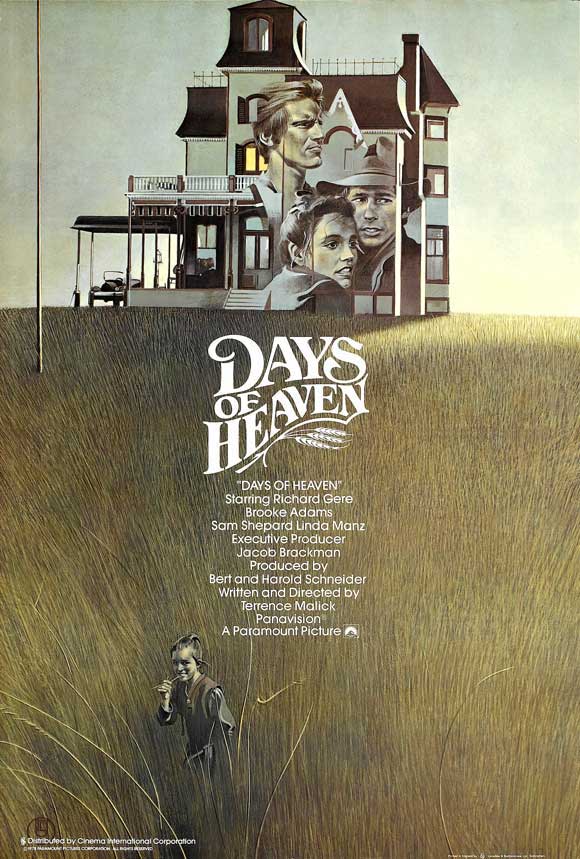
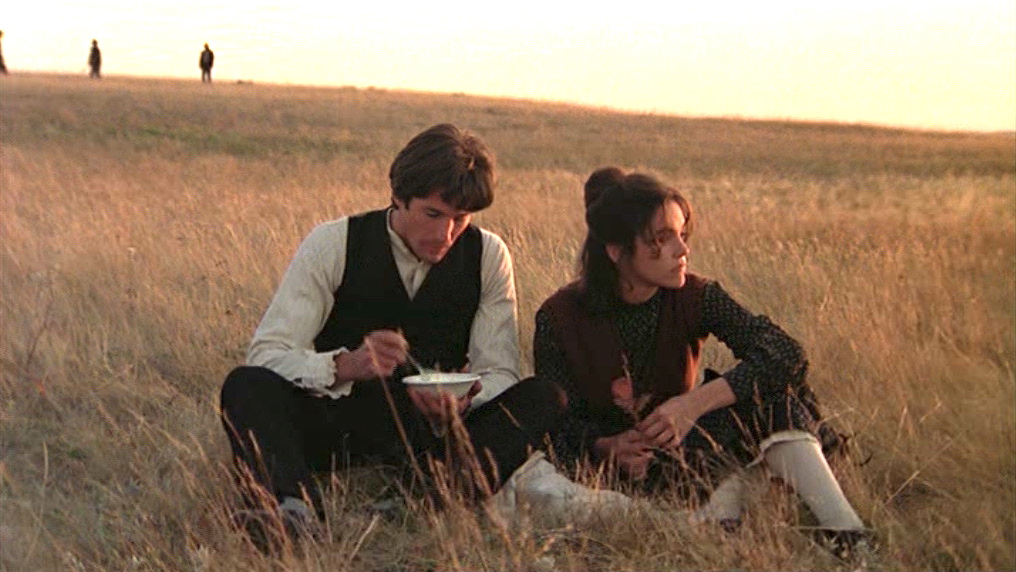
Now first up on that list is Terrence Malick’s Days of Heaven, which I grant you isn’t as jam-packed with symbolism or hidden meanings as something like 8 1/2 (which is one of the movies I’m still processing), but it is, unmistakably, all about the imagery. There is a well-deserved Academy Award for Cinematography given to Nestor Almendros (though Haskell Wexler will point out to you that he shot at least half of the movie, if you give him half a chance).
Now for a personal digression: I recall reading an article sometime in the 80s about the difficulties of being a film’s producer, and one of the passages that really stuck in my memory talked about the wonderful director the project was lucky enough to score, but who demanded that the movie only be shot during “golden time”, the hour before and after sunset and sunrise, increasing the budget by drastically limiting the shooting time available. It is only now that I realize this somewhat bitter and bemused paragraph was about Terrence Malick.
Days of Heaven is beautiful, have no doubts on that front. When a movie evokes Wyeth’s Christina’s World (and I had a print of that on my wall for years), and does it well, that’s art. Where it falls down for me is the story.
The time is 1916. Richard Gere is Bill, a hot-tempered sort who flees Chicago when, in a fit of rage, he accidentally kills a foreman in the steel mill where he’s working (the foreman is Stuart Margolin, and who among us has not desired to murder him at one time or another?). Bill hops a train with his young sister, Linda (Linda Manz), and his lover Abby (Brooke Adams). They wind up working on an enormous wheat farm in the Texas panhandle owned by Sam Shepard (The Farmer isn’t even given a name).
One problem for our peripatetic trio – besides Bill’s temper – is that they’re living under the lie that Abby is also Bill’s sister, but they don’t bother hiding their feelings for one another. The other problem is The Farmer becomes enamored of Abby (it’s Brooke Adams, who wouldn’t be enamored?). Bill overhears a conversation that indicates that The Farmer has only a year to live, and convinces Abby to marry the smitten Farmer, so their fortunes will be made. The last problem is that The Farmer is a genuinely good man, and Abby falls in love with him, too.
No, wait, the last problem is that plague of locusts. And the fire that burns the entire farm. And Bill, once again, accidentally killing the Farmer (who was, to be sure, trying to kill Bill). And then the law on their heels. And…
The cult around this movie perplexes me. It is beautiful to look at, I cannot stress that enough. These are all fine actors. That story though… that’s only one step removed from a TV miniseries from the same era, and one of those would have been better scripted, to boot (apparently Malick just let the actors improvise for a good while to “find the story”). I find I don’t have a problem with overwhelming imagery, as in 8 1/2 or Dances of Reality, as long as those images are backed up with ideas. So much of the two Malick films I have seen thus far – this and The Thin Red Line – seem to be about the beauty of nature providing a contrast for man fucking up. I get that. I got that with Easy Rider. Can we move on?
There are more Malick movies, these are just the two that were on The List. I will watch more; my resistance against these two have not been enough to turn me against Malick (though I know plenty of people who have not only walked away, but are driven to screech on social media whenever I mention him). What has been presented has been presented so well that I feel there must be something I am missing. And I am not sure which may be the true failing here – my missing whatever it is or thinking that there is something I am missing.
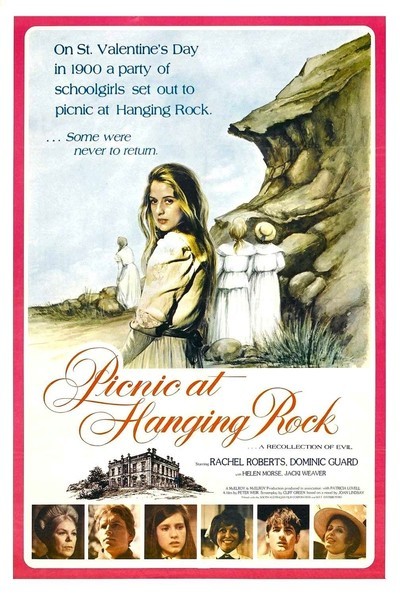
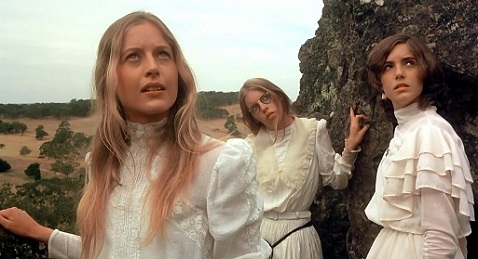
I am much more kindly disposed toward Picnic at Hanging Rock. Rather famously, it concerns the class of a girls-only boarding school in Australia who go on a picnic on Valentine’s Day, 1900 to the titular rock, a huge misshapen piece of volcanic stone jutting out of the forest. Four girls, against the prior orders of the school’s headmistress, climb the rock. Only one comes back, in a panic. One teacher goes in search of them, and she vanishes.
Picnic at Hanging Rock is mainly about the wear and tear on the people left behind by that singular event. The school and its personnel; the townspeople; the roommate of the ringleader of the missing girls, who was desperately in love with her; the son of a visiting English family who saw the girls wander off and becomes so obsessed with them that he spends the night on the Rock, hoping to find a clue as to what happened.
There is an underlying feeling of the supernatural at work, but never so overt or clear that one can say, “Aha! This is what happened!” Which has always presented a problem for the movie, especially in America, where we like our mysteries solved (That last sentence really needs a font that implies sarcasm). Even knowing that this is going to be the case, the pining in your soul for an answer, any answer, is going to be extreme. Although the story is entirely from the imagination of novelist Joan Lindsey, many have tried to research the incident, only to be stymied when they can find no corroboration. It’s rumored the production company started a rumor that it was true story, just so people might not come to the film expecting any sort of closure.
Lacking an explanation, then, Picnic at Hanging Rock, while telling a period piece in a time and a place almost none of us have experienced, still manages the magic quality of veracity; though the images are pretty and often poetic, it feels real, as we are forced to ponder similar incidents which have no explanation, no end, no matter where or when we may be. This was Peter Weir’s third crack at a feature film, and he demonstrates a remarkably sure hand at a tricky subject, ably aided by his actresses and one of the more remarkable physical locations that was just waiting to be discovered.
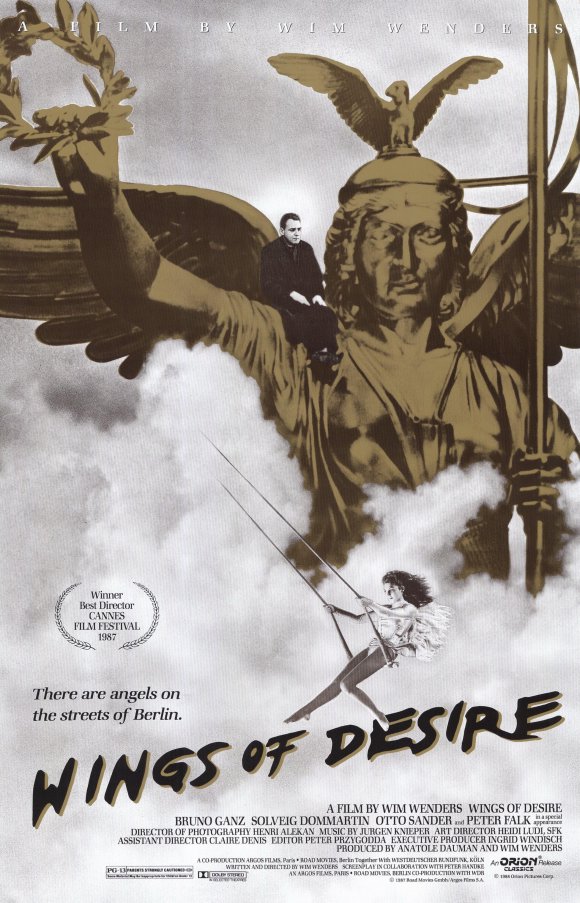
I said last week that I like to leave things on an upbeat note when possible, so I’ll finish up with another movie also packed with remarkable imagery, but one that I could understand and appreciate: Wings of Desire.
Wim Wenders, after the success of Paris, Texas had wanted to make a movie about Berlin, which was, at the time, still a city divided by the Wall. In trying to find a hook on which to rest this movie, he at one point hit upon the idea of guardian angels. And here it begins.
Bruno Ganz and Otto Sander are Damiel and Cassiel, two angels who watch and observe the people of Berlin. They can hear the thoughts of these people, but it is their lot to watch but not interfere. The most they can do is, with a touch, impart a bit of grace, a calm, a peace. It sometimes helps; sometimes it does not. The two are part of an apparent flight of angels in the city; one of the best sequences is Cassiel slowly walking through a library, luxuriating in the chorus of thoughts, nodding to his fellow angels, each at a person’s shoulder, observing. Wandering through the story is Homer (Curt Bois), an elderly writer, who may or may not be the original Homer, immortal and eternally pursuing and preserving the story of Man.
The thrust of the story concerns Damiel’s growing disenchantment with his angelic lot and a desire to become active, to, in short, become mortal. There are two things that drive this desire: a female trapeze artist (Solveig Dommartin) in a failing circus, whom Damiel first encounters complaining about the angel wings the Ringmaster wants her to wear; and an American actor (Peter Falk, playing Peter Falk), who can sense the angel’s presence, and tells him how good it can be on this side of existence.
The thematic touches are simple and glorious throughout; the angels’ world is black and white, only humans see in color. And perhaps the most striking scenery is provided by that Wall, which seemed so damned eternal in 1987. It is a frequent backdrop, covered in graffitti. When the angels walk through it to the Soviet side, the sight of those closely guarded walls so white and clean is shocking.
Hollywood, of course, sought to remake Wings of Desire after its success, and as usual sought to “improve” it. I’m not sure about the “improvement” part. City of Angels has much more of a three-act structure and solid through-line to it, but Wings of Desire, slipping in and out of Damiel’s quest, follow other threads, other people, manages to take an extraordinary, truly supernatural story, and make it feel more real that any number of movies built on carefully-studied Syd Field script models.
I really liked it, is what I’m saying. Am I missing anything Wim Wenders was trying to say? Does that matter? I liked the movie. I’m likely to tell other people to see the movie.
War is a given. Yes, let’s not beat around the bush, let’s not pontificate about the necessity of man stumbling while working toward his higher being blah blah blah. I wish you were right. I really do. But all the evidence points toward Man being a brutal, twitchy animal that needs only the slightest of motivations to get very violent, very quickly. In Wings of Desire, an apparently immortal Homer leafs through books in a library, wondering why there are no epic poems about peacetime. “What is wrong with peace that its inspiration doesn’t endure?”
We seem to be made of meat and conflict. As a writer, I am told again and again that the engine of story is conflict. Without conflict, there is no story. So, alright, we are made of meat, conflict, and stories. So I arranged my viewing in a certain way to embrace one of the biggest of those stories – World War II, for many the defining event of the last century – and it took me weeks to unpack what I had seen.
Overlord is a movie I was turned onto by the redoubtable Chad Plambeck. It was originally planned as a documentary about the Overlord Tapestry, a sort of modern-day Bayeaux Tapestry commemorating the 30th anniversary of D-Day (Overlord being the code name for the massive amphibious invasion). Director Stuart Cooper, an American expatriate, sat through three thousand hours of war footage housed at the Imperial War Museum, and he and producer James Quinn developed instead the idea of a feature film about a young Englishman called up for service in the latter part of the War.
The movie starts with a flash-forward – the first of many – of a young soldier running on a beach, his life suddenly cut short by a gunshot. This shot is mirrored by our first sight of Tom (Brian Stirner) running home to collect his luggage, so he can meet the train to report for duty. He misses his connection, and is delayed overnight while Nazi planes rain bombs down upon London. This is also the first major use of the motif Cooper will use throughout, as firemen battle the blazes and collapsing buildings in just one night of The Blitz. Tom and his story is shot in black-and-white, and the marriage of the film of two different eras is handled almost seamlessly (the skilled sound work goes a long way toward making the older footage seem more alive and current, part of the world the actors move through).
Tom will go through basic training (not without a bit of trouble), forge new friendships, and start an almost-romance with a girl which is cut short by the secretive moving about of troops, seemingly at random, in the run-up to the landing. It is to the credit of Cooper, Stirner and Julie Neesam playing The Girl (literally) that the audience feels the pain of this termination, with no time to say goodbye or even explain, as keenly as the characters.
Throughout, Tom has visions of his death on the battlefield, and it doesn’t matter where the eventual battle will be fought, he has a vision for every terrain. As Overlord approaches, he becomes convinced that he will, indeed, be one of many who will be felled on that day, and says so in a letter to his parents – which on the eve of invasion, is burned with all his personal papers, as it no longer seems to matter.
Overlord feels as gray as its cinematography, yet feels so utterly human that we never doubt the truth of what is being presented onscreen. Its major failing, perhaps, was in its timing -1975 wasn’t a good year for war. America was still smarting over the loss of Vietnam; the last completely successful war movies were probably four years in the past, movies like Patton and M*A*S*H*, neither of which could really be called typical war movies. And, at the time, if you didn’t open well in America, you simply disappeared. Which was the case with Overlord, until it was re-discovered and championed by Xan Cassavetes for her documentary Z Channel: A Magnificent Obsession, for which we may all be thankful.
As big a story as D-Day was – big enough to support many, many movies – it was not the entirety of the war. Hell, it wasn’t even the only continent or hemisphere in which it was fought. So it was time to journey to the Pacific Theater with The Thin Red Line.
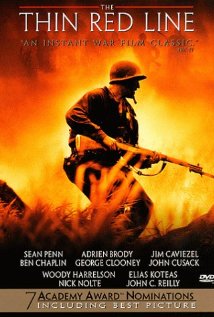
It was 20 years since Badlands and Days of Heaven, and it is really odd to consider Terrence Malick coming back with a war movie. The Thin Red Line is the second book in James Jones’ war trilogy – the first is From Here to Eternity – and since Jones served in the battles portrayed, I tend to expect some truth from him. More on that later.
The movie The Thin Red Line is first and foremost an ensemble piece, and holy moley what an ensemble. Off the top of my head: James Caviezel, Nick Nolte, Sean Penn, Adrien Brody, Elias Koteas, John C. Reilly, Ben Chaplin, John Cusack, Woody Harrelson, John Travolta, Jared Leto, John Savage, George Clooney I mean holy crap. That sounds like the cast of a late 20th century version of The Longest Day, except that it’s a Malick film.
That means there’s a lot of internal monologue laid out over the movie, by various characters, and sometimes you’re not really sure who’s talking. Like the girl’s musings in Days of Heaven, it feels like a Beat poetry fest suddenly overlaying the movie proper. In this case, most of them seem to be pulled from Jones’ text (and a few from From Here to Eternity, just to be sure), cementing Malick’s reputation as a philosopher-filmmaker, for better or worse. Many people think that’s for the worse.
What cannot be denied, though, is the quality of the Oscar-nominated cinematography by John Toll. The contrast of the beauty of the countryside with the absolute terror and bloodshed and random death of the Battle of Mount Austen is hypnotic and engrossing. One image that will stick in my mind forever: a young soldier, cowering against the earth as Japanese bullets whiz over his head, noticing a fragile leaf that closes as his fingers brush against it, fascinated even as death flies and comrades die all around him. It’s an image cribbed from Picnic at Hanging Rock, but it’s a memorable one.
This portion of The Thin Red Line does handle the truth of the situation pretty well: this was the first combat experience for many of these soldiers, and that panic and havoc are well-conveyed. The booklet in the Criterion blu-ray reprints an article by James Jones from the 1963 Saturday Evening Post, shortly after Thin Red Line‘s publication. It’s entitled “Phony War Films”, and it contains this passage:
“…the true test of a true antiwar film is whether or not it shows that modern war destroys human character. None of these films does. Instead, they show that (for our side, if not for the enemy) war develops and enlarges human character.”
There is some of this in Malick’s Thin Red Line. Ben Chaplin, in a truly excellent portrayal as Private Bell, is a soldier who finds himself doing brave things not because he’s a hero, but because this is where he is, and if he does these things, maybe things will be better tomorrow, maybe more of his buddies will be alive. This means he winds up on the front line, taking out a hardened machine gun bunker in the only firefight shown in the movie, hectic and terrifying. Bell writes to his wife often throughout the movie, his memories of them together a source of strength, After this battle, his letters tell of his struggle to not change, to come back to her the same man as when he left. His reward is a letter telling him she has fallen in love with an Air Force captain, and asking for a divorce.
The balance to this is Caviezel’s Private Witt, a former AWOL who sees a bright light in everyone, even the enemy. Sean Penn’s Sergeant Welsh, slowly being eaten alive by the war, regards him as a “magician” for that. One of them will survive the movie. I’ll bet you know which.
I find myself on the fence about Malick. I don’t hate what I’ve seen, but I’m not sure if I like it or not. That means I’ll watch more of his movies to figure that out, which puts him in the win column for now.
But for the sheer embodiment of Jones’ earlier statement about war grinding out all character in a person, we have to move back north again, for Elem Klimov’s Come and See.
I owe Mark Cousins’ The Story of Film: An Odyssey for my even knowing about Come and See. The few scenes referenced therein, a few episodes of the Hardcore History podcast, and the constant threats of “The Russian Front!” in Hogan’s Heroes was about all the prep I had for this one.
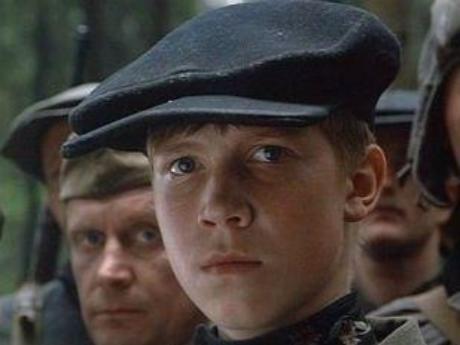
We start with Flor (Aleksey Kravchenko), a young Belorussian boy (Kravchenko was 14 at the time), digging in a WWI battlefield, much against his father’s wishes. Flor finds an old rifle, cleans it up, and joins the partisans in the surrounding woods fighting the invading Nazis. His dreams of glory are crushed when the commander leaves him behind to help establish a secondary camp. He’s not allowed to nurse his hurt feelings for long, though, as German bombs destroy the camp and troops begin filtering through the woods. He and a girl from the camp (Olga Miranova) escape to Flor’s village, only to find that the Nazis have already been there, and the bodies are stacked like cordwood behind a barn.
Flor… before.
Flor finds the remnants of his village – vice versa really, he is shell-shocked, half-deaf, and almost gets himself and the girl killed in a bog – and he eventually heads out with a small guerilla force to find food for the refugees. The war is not going to be kind to this venture, and attrition will eventually leave Flor on his own. He attempts to steal a cart, only to be taken in by his attempted victim as a new wave of Nazi troops flood over the region. Flor’s rifle and partisan uniform are hidden in a haystack and he is hastily given a peasant tunic and the quick biographies of his new family, in case the Nazis ask.
The Nazis do not ask. They round up the entire village into a central building, lock the doors, and set the building on fire. Flor escapes this fate only through a whim of the commanding officer, who needs a victim for the photo op quoted on the video box. He is left in the middle of the burning village, devastated and ravaged as the landscape itself. He reclaims his rifle and uniform, and follows the Nazi’s tracks to where they have been ambushed by the very partisans Flor had joined a seeming lifetime ago.
Flor… after.
Klimov filmed Come and See in chronological order, and we see the progression of Flor’s descent into the madness of war, how the events wear upon him. Klimov had sought to have Kravchenko hypnotized, so the filming would not cause him any lasting damage; but the boy was resistant to hypnosis. So filming proceeded, and by the time we reach the end of the movie, some of the 14 year-old’s hair had gone gray. That is not entirely acting and makeup at the end.
This truly is one of the great antiwar movies, by simply telling the truth. The slaughter of the village – which the closing credits tell us was the fate of 628 Belorussian villages and their occupants – is only one atrocity in a vast sea of them.
I’d like to end this with something calming, something soothing, but I fear I cannot. Every day someone new is beating the drum for war somewhere, and moreover, there is always war somewhere, not even for intelligible reasons beyond our apparent need for these stories, this fiction of war that is disproven over and over again, yet we seem to continually pitch headlong toward it. Perhaps our thirst for such stories really is that great, even though we have many, many sad stories to relate already.
I’ve been reading through my old stuff lately, and I discovered this actually is something of a tradition. Every year about this time, some of the people in the Show I do each weekend decide they need to have a life or something (Civilians! Bah!). I could mourn the loss of income for that weekend, or I could try to assemble a Crapfest on that Saturday. Thankfully, the response was good, and we gathered for the biggest convocation of self-flagellation since the Black Plague.
The good thing about a Saturday Crapfest is we don’t have that artificial curfew that comes with workaday Monday mornings, and we can get in more movies over a longer period. The bad thing about a Saturday Crapfest is we don’t have that artificial curfew that comes with workaday Monday mornings, and we can get in more movies over a longer period,
It was Paul’s birthday, so I proclaimed that it being such, Paul should get to watch a Dogville short. These make Paul happy, but other Crapfest attendees don’t like them, because they have hateful, shriveled souls. Paul chose “The Big Dog House”, so off we went. (Dave even admitted he was interested in this one, as he was likely hoping for a Sid Haig dog to crop up and then possibly a Pam Grier dog so that oh my God I just creeped myself right the hell out)
In this epic, dogs drive cars, work in department stores, light cigarettes, commit cold blooded murder and frame other dogs for the crime, so they get sent to the hot seat in their stead. They break rocks and have prison riots. They even have machine guns to quell those riots. They also make deathbed confessions in the nick of time, so there can be a hairsbreadth rescue! Why do you monsters hate Dogville so?
Happy Birthday, Paul!
There was still some time needed to prep the dinner fixins, so I dropped Paul’s other birthday present: the 1967 NBC special, Movin’ With Nancy, starring Nancy Sinatra at the exact stage that would elicit throaty growls from her Crapfest audience.
There is no plot here, no comedy sketches, just Nancy in music video after music video, in a time before music videos. Obeying Rat Pack Law, Dean Martin sings a couple of songs and Sammy Davis Jr. comes in for a quickly-shot dance number that ends with an interracial kiss a full year before Star Trek‘s. Daddy eventually shows up and sings, and the Chairman of the Board is still in great voice, baby, lit cigarette in hand. This DVD was released in 2000, which means I’ve been sitting on it for 15 years.
Happy Birthday, Paul!
Whenever I break this out, I always find myself wondering what the hell happened to Lee Hazlewood. He wrote this song and several others on the special, not to mention Nancy’s big hit, Boots. (There was disappointment that Boots wasn’t in the special, but Nancy, in the commentary track, said she had wanted to focus on her other songs. And break our hearts in 2015, also) Hazlewood decided to retire from the music biz in the 70s, came back in the 90s, and passed away just 8 years ago. Man, I loved his voice.
The 5.1 remix on the music is superb, and we really enjoyed ourselves. We even liked the commercials, which were included. Royal Crown Cola had bought the whole hour, and they were going to use it.
Yes, I am old enough to have seen this when it was first broadcast. Yes, I drank a lot of RC Cola, and that is all Nancy’s fault. Come on, it was the Mad, Mad, Mad Mad Cola.
“And now,” I said ominously, “Fun time’s over.”
I guess it depends on how you define fun, as we started with my entry for the evening, Roar. Which may not have been fun, but it was certainly not dull.
Roar is currently making the rounds of the Alamo Drafthouse, who were at the forefront of resurrecting this cinematic freakshow. It is also possible to buy it on DVD from their website. But whichever method you take, you should make sure you see it with an audience. An audience that is not afraid to bellow “Holy shit!” and “What the actual fuck?!?!” at the events unspooling before them.
Do yourself a favor and after you finish reading this, go Google Roar 1981. You are going to find a lot of interesting reading. In the meantime, let’s see if I can boil this down: this is a passion project for Tippi Hedren and her then-husband, Noel Marshall. It comes from the best intentions – they were both animal activists, and had founded a preserve in Southern California (it’s still in operation, but right now I can’t get their website to work). The movie was shot there, though it supposedly takes place in Africa.
“Bad kitty! BAD KITTY!!! You love me TOO MUCH!”
Noel plays an insane man who lives with a bunch of lions, tigers, and other big cats. I think he’s supposed to be a zoologist or game warden, but you honestly lose track of such things while you’re watching a lion gnaw on his obviously bleeding hand while he tells his terrified friend that it’s just demonstrating its love for him. If this is not sufficient proof of his insanity, he regularly breaks up lion fights by throwing his body between them. It’s like somebody decided Grizzly Man didn’t go far enough and went back in time to solve that problem.
“Cut! CUUUUTTTTTTT!!!”
Some game officials or something motorboat up to his compound to complain that he’s exceeding the number of big cats for his deed restrictions, or – hell, for all I know they’re a bunch of Jehovah’s Witnesses, we were still drowning out the soundtrack with our screams of dismay. (A particular favorite was yelling “Cut!” whenever someone disappeared under a ball of fur and claws, because the director sure as hell wasn’t interested in doing it) While Noel is in the house bandaging his bleeding hand, some of the cats get frisky and start gnawing on the Witnesses’ heads, causing more screams from us.
The plot, such as it is, is that Noel’s family (and that really is his family, including Tippi and Melanie Griffith. It’s not like he could have convinced anyone else to be in this demented deathtrap) is coming to join him in this toothy paradise, but they got the arrival time wrong, meaning they hitch a ride to the compound while Dad is coming to get them, two ships passing in the night, as it were. And they come to a house full of animals wondering why these new arrivals are acting like prey, running around, screaming, hiding, that sort of thing.
Perhaps the lion was a fan of the original The Haunting.
You see, this is supposed to be a family movie, and this section is supposed to be funny. This is like filming a slapstick comedy on a set made of razor wire and broken glass. The cats are rambunctious because there’s a rogue lion named Togar messing with them, so they’re acting out. In real life, the family knew some of these cats, but not all, and everybody wound up getting stitches at one point or another in its ten-year process. Melanie Griffith had to have facial reconstruction surgery. Jan de Bont, then merely a cameraman, had 120 stitches when a curious lion tore the scalp off the back of his head with one swipe.
Two of the vengeful Witnesses come back to shoot the lions, and supposedly manage to bag a few until Togar has enough of their shit and puts a massive hurt on them. I try not to think about how badly those guys were actually hurt. I’m sure at least some of that blood was fake, at least. Maybe. Hopefully. Anyway, it’s a pretty unnecessary addition to the movie, except that they needed to get some “Hunting is evil!” action in there. Animal activists, remember?
The family manages to survive their night of terror, and it turns out all everybody needed was a good night’s sleep! Even Togar is okay now that he’s had a Snickers and a hunter’s face! Yay, big cats! Yay, we no longer need cringe in terror for these poor fools getting mauled for a questionable idea of entertainment! Yay!
Happy Birthday, Paul!
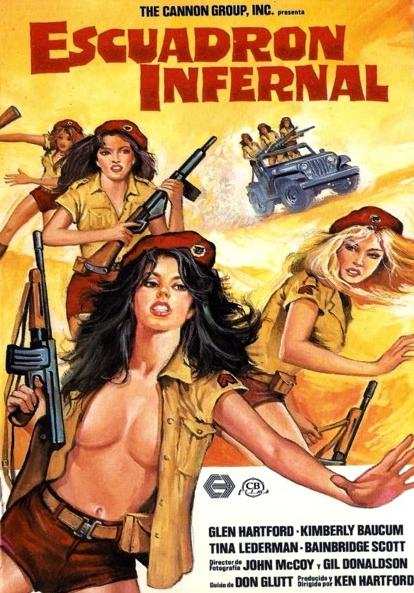
So after this we were really through being nice, this time we meant it. Dave was being mysterious, as usual, as he put on something called Hell Squad. Judging from the Tweets I was getting back, I am the only person in the world who had never heard of Hell Squad. Well, and all the other people in the room with me. There is no information on this thing, anywhere.
The first thing you have to realize is there is something called an Ultra Neutron Bomb. Ay-rabs kidnap the son of an ambassador (after a chase scene that sets new levels for unexcitement) in order to force the ambassador to give them the formula for the Ultra Neutron Bomb!!! Should he call the cops? The Army? The CIA? No, his assistant has a better idea.
And hops on the next flight to Las Vegas.
There he meets with Jan (Bainbridge Scott), a showgirl who likes to beat the crap out of mashers. She calls a meeting of her bored showgirl troupe and they all board a bus to the desert, where a guy in a drill sergeant hat tells them, “We have ten days to turn you from Las Vegas showgirls to trained commandos.”
There is magic in that statement. Magic that will go largely unfulfilled, but welcome to the world of crap movies. After a training montage (while the ambassador’s son molders in the dungeon for ten days – these are remarkably patient terrorists) Hell Squad is ready to go, journeying to Fake-istan under the guise of a traveling troupe of showgirls.
Okay, that’s Act One. In Act Two, Hell Squad will check into their luxury hotel suite, discover a large bathtub, and because “I read there’s a water shortage,” will take group baths. There isn’t a bubble bath shortage, though. It seems only Bainbridge Scott got the extra nudity money. Their mysterious contact always calls with instructions right after Bainbridge gets in the tub. (I suspected Paul of being the contact.)
The contact sends them on mission after mission in which they easily kill lots of Ay-rabs (why are we spending trillions on bombers when all we need is Las Vegas showgirls with ten day’s training?), and then return for a group bath. Literally: lather, rinse, repeat. Phone call, boobies. They commandeer a tank and drive it fifty feet. Mission accomplished! Bath time!
They finally run out of money for extras so two of the missions are just driving around in the desert. First at night, then during the day. I don’t think they got to take a bath between those two, because we were too busy bitching about the one-note-off-from-the-actual-A-Team-theme-song music that accompanied each. And every. Outing.
All of this doesn’t turn up the Ambassador’s son, and their extraction plane is going to leave with or without them. Luckily, they are captured by a Sheikh (Marvin Miller in his last screen appearance), who, in keeping with the evening’s festivities, gets chewed on by a tiger until he reveals where the son is being held. So it’s time to go take a bath.
CUE THAT A-TEAM MUSIC as the girls drive to a lake and swim thirty feet to the opposite shore where a castle from somebody’s aquarium awaits (thus rendering the bikinis they’re wearing totally justified). They rescue the son, kill some more guys (“Tee hee! Murder is fun!”), and somehow blow up the castle with a trail of gasoline. Lit by an ordinary book of matches that somehow stayed dry in her bathing suit (see below). Then they have to make it home to reveal there’s a mole in the organization.
Who’s the mole? I need to leave you something to find out for yourself. (PROTIP: it ain’t worth the effort) (However, it totally should have been the Boom Mike Operator. That boom mike appears in so many scenes it probably had to get a SAG card.)
Dave presented this in apology for the May Fest’s Galaxy Destroyer, which had neither galaxies or destruction or entertainment. Hell Squad was entertaining, give it that. Dave also provided the one piece of trivia related on the IMDb: Donald F. Glut wrote the script, but held off giving the director the final third until he was paid. So the director, Kenneth Hartford, came up with his own third act, and Glut never got paid anyway. Which explains the lack of dramatic tension and logic and stuff.
Did you know Kenneth Hartford directed three other movies?
HAPPY BIRTHDAY, PAUL!
Erik spotted a great line in the end credits, “Special thanks to the PLO members who played themselves as terrorists.” Uh….
Well spotted, dude.
And that, alas, is the last time I will be able to say anything nice about Erik.
Because he brought the next movie.
And without even a “You remember when we said we were through being nice? This time we absolutely mean it, hand to God.”
“It’s love on wheels” she said. “You’ve got to watch it” she said.
It was a year ago that, in a similar Crapfest, we partook of and enjoyed Skatetown USA. It was bizarre and madcap, and while most of the humor was, um, not that funny, if you didn’t like what was going on at any point, you could be sure it would switch to something else in a minute or so.
Roller Boogie does not do this.
Linda Blair is Terry Barkley, a rich kid we are told is a musical genius and about to go to Julliard. But since she is rich, she does not possess the Life Force, and must seek it among the poors of the local Roller Disco. Luckily, Jim Bray, winner of 275 roller skating trophies, is there to provide such for her.
Oh, but it’s not just a love story, you know. Some gangster types (led by Mark Goddard, who Dave pointed out is still pissed off about not getting to kill Dr. Smith) want to take over the Roller Disco, causing the owner to shut it down the night before the all-important Roller Boogie Competition, rather than endanger the kids. Thanks to roller skater “Phones” (Stoney Jackson), there is an accidental tape recording of the gangsters threatening the owner, and somehow the gangsters find out about it. I’m not really sure how, because I was being amused by Paul’s soul-rattling sighs from the back of the room, frequently punctuated by painful groans.
The closest analog I can come up with is when we finally decided to watch Can’t Stop the Music, and discovered that, rather than a non-stop parade of fabulousness, what we had was a fairly tepid update of Mickey Rooney and Judy Garland putting on a show at the old barn. Roller Boogie is much the same thing, an old story dressed up in garish new clothes, hoping against hope that this new craze would last long enough for the movie to get out the door. It’s entertaining enough, it’s just not particularly interesting. Especially not after the madness of Skatetown USA, and it’s probably a very good thing that we put a year between those two movies, or Paul’s sighs might have been louder.
There are some good things about the movie. Uhhhhh… like the club’s DJ wasn’t Jeff Altman, as we had feared. The ending is sort of refreshingly downbeat, since Terry quits the Roller Life to go to Julliard, enjoy your 276th trophy, Jim Bray. And really, no one can deny that a certain Earth Wind & Fire song was very welcome.
Erik claimed the disc had been lent to him by someone named “Anita”, and that “Anita” was checking on our progress throughout the night via text. I’m not even sure there really was an “Anita”, that this wasn’t some sort of clever subterfuge. You see, Crapfest isn’t a democracy; you can’t even say it’s a benevolent dictatorship. We run it like a gulag, really, and somehow “Anita”, as Rick aptly put it, “acting as an external agent… managed to completely circumvent all council protocols and infiltrate the agenda with a highly weaponized Roller Disco device, leaving in its wake incomprehensible catatonic agony.”
This “Anita”, if she indeed exists, is highly dangerous. We should alert Matt Helm, Derek Flint, and see if that Bond dude is doing anything at the moment.
I could really go for a “Bike Cop” movie, though.
As it stands, Erik was banned from suggesting movies for a year. This punishment has only been doled out once before, to Rick for the whole Garbage Pail Kids thing. Which happened after he got out of parole for Evilspeak, come to think of it. In any case, we shall mention Roller Boogie no more. If we must mention it, it shall be known instead as “Erik’s Shame“.
Which is complete bullshit because the next thing we put on was Supersoul Brother, a selection from both Rick and myself. I have written about this earlier, so I’ll be brief here: Rudy Ray Moore wannabe Wildman Steve (we are informed it is pronounced Wi-i-i-i-ldman Steve) is a wino who is cleaned up and injected with a formula that will give him super strength, so he can steal a cardboard safe. Trouble is, the formula will kill him in seven days. Hilarity ensues.
No, it doesn’t, this is a terrible, terrible movie, made for one one-thousandth, if not one-millionth, the budget of Erik’sShame, and at least as entertaining, if not more. It is also almost a half-hour shorter. Just enough enough time to realize that no, that wasn’t surround sound, that was Paul’s moans and sighs echoing every one of the put-upon Wi-i-i-i-ldman Steve’s.
HAPPY BIRTHDAY, PAUL. WE HAVE SUCH SIGHTS TO SHOW YOU.
At this point, it was midnight. Paul, feeling his birthday was over, took his leave. Happy birthday, Paul, thanks for spending it with us. Your judgement is questionable.
But we were not finished.
“No, children, it isn’t over yet.”
Hell Squad had not been Dave’s first choice for the evening. And now that we were heading into what we knew was going to be the last movie of the fest, he revived that choice. And although I had seen the American dub again around a year ago, I had never seen the original, Danish version of Reptilicus.
This version had no subtitles, causing Dave to run into his computer room while we provided Ingmar Bergmanesque translations of our own. The plucky oil prospectors at the beginning were plenty concerned about the silence of God in an uncaring universe, you bet you.
Dave returned with some fan subtitles and we got down to business. If you didn’t know, Denmark’s only daikaiju movie discovers the frozen tail of a previously unknown dinosaur while drilling for oil. Like an earthworm, the accidentally thawed tail starts growing a whole new dinosaur, which escapes and proceeds to spread puppet terror across the countryside.
There’s a bunch of stuff that got cut from this for the American dub, and it’s mainly character-driven romance stuff, but there are two really infamous cuts: the first concerns the Odious Comic Relief janitor, played by Dirch Passer, who was a incredibly successful Danish comedian. AIP, for some reason, felt the need to cut a song he sings with some children about Reptilicus:
The other concerns the monster’s bat wings, which in the American dub are never referenced. Not so in the Danish version. I tweeted, “You’ll believe a puppet can fly.”
You won’t, really. I was just being nice.
So all this was excised, most in the cause of getting to the monster scenes sooner. Counterintuitively, this resulted in the travelogue segment in the American version leading up to “Tivoli Nights” to make up for lost time, and the addition of the monster’s acid spit.
Also missing from the Danish cut, which makes me sad.
“Tivoli Nights” does bring up something else. The fan subtitles did a wonderful job of translating the Reptilicus Song, even making it rhyme in English, but had little patience with “Tivoli Nights”, interjecting pleas that someone shoot the translator to stop the pain. Then, when Reptilicus makes his first appearance, his roar is translated as “Rar! I’m a monsta!” which made me so happy.
It still ends the same, though.
At 2am, we wearily went back out into The World, satisfied that there was nothing out there that could possibly hurt us as much as what we had just done to ourselves. Five movies! Five movies and a TV special. Five movies, a TV special, and Dogville.
Let’s see if I can bang this out in the brief time allotted me.
Luchino Visconti’s The Leopard is based on the best-selling novel of the same name by Giuseppe Tomasi di Lampedusa. It is the tale, stretching over decades, of the fall of a royal Sicilian family after the Risorgimento revolution of 1860 and the subsequent Unification of Italy. Visconti narrows the focus down to a scant couple of years.
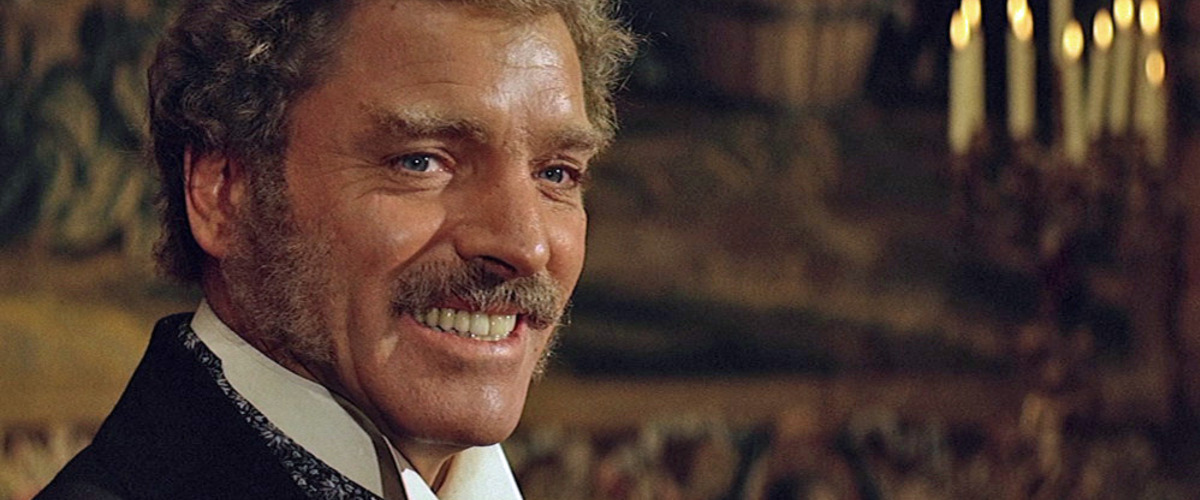
Burt Lancaster is the Prince Don Fabrizio Salina, who will spend a fair portion of the movie trying to insure his family’s well-being in a time of a rising middle class while at the same time see to the future of Italy. Never abusing his power, he urges his subjects to vote for Unification, even though he realizes that it will give increased power to people like the boorish nouveau riche Mayor (Paolo Stoppa) of the town where his family vacations. Fabrizio’s favorite nephew, Tancredo (Alain Delon) falls in love with the Mayor’s beautiful daughter, Angelica (Claudia Cardinale), and Fabrizio does his best to move the relationship along, even though it means breaking the heart of his poor daughter, Concetta (Lucilla Morlacchi).
Tancredo’s arc is particularly telling. At the movie’s opening, he joins the forces of the rebel Garibaldi, seeking to overthrow the Bourbon government. Shortly afterward, he joins the Royal Army, seeing no irony in this. By the end of the movie, he is a civilian preparing for a career in politics, and applauding the dawn execution of rebels still faithful to the defeated Garibaldi.
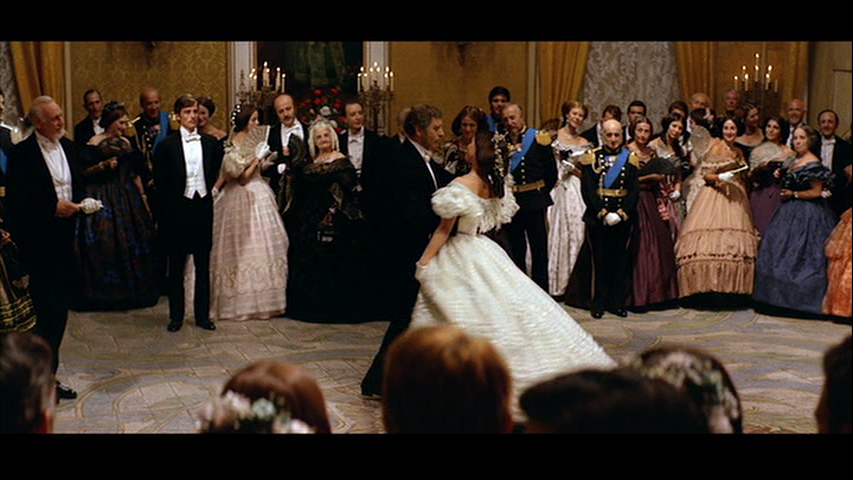
The height of the movie is the dress ball that introduces Angelica to high society before her marriage to Tancredo. Fabrizio walks through the ball with a shroud of melancholy about him; he knows that this will not last, and he finds the company of the Mayor and manufactured war heroes to be tedious and upsetting. He even realizes, in one affecting scene, that he is dying, but he still must last out the night for Tancredo and Angelica, and the future they represent.
That ball scene, about 45 minutes long, is one of the most gorgeous I have ever seen, with beautiful, accurate costumes that dazzle and beguile. I was constantly reminded of the similar scene that ends Sokurov’s Russian Ark, so handsome is it. It is small wonder that this movie bankrupted its studio, but the result is so gorgeous, it really deserves to be seen in its original Technicolor, restored beautifully in the Criterion blu-ray.
Titanus Films knew they were going to need outside money to even begin to film The Leopard, and there were probably more than a few heart attacks when Visconti first decided he wanted Nikolai Cherkasov (Ivan the Terrible) to play Fabrizio. Cherkasov, though, was on a bender in Siberia or something, Laurence Olivier was too busy, and Fox was willing to pony up three million dollars if Visconti would use one of its stars. Visconti despised this, only knowing Lancaster from Westerns, but after an on-set confrontation, the two made up and became lifelong friends; Lancaster truly is superb in the role.
The American box office for The Leopard, however, was dismal, and the movie vanished. Hell, I wouldn’t have even known it existed if it were not for the documentary Z Channel: A Magnificent Obsession and a reminder from Mark Cousins’ The Story of Film. Fox cut twenty minutes, used the cheaper DeLuxe color process for their prints, and, of course, dubbed it into English. This is the only way to hear Lancaster’s real voice in the role, and I have to admit that it was distracting for a while to hear another man’s voice, speaking Italian while Lancaster moved about. But the story is so Italian – so Sicilian, specifically – that hearing it in English robs it of so much identity, the heft of history. I admit that I am a snob about such things, and will always prefer the original language with subtitles, but this is, I think, an instance where is provably true. Most of Fabrizio’s commentary in the ball scene is silent, in any case; it is Lancaster’s attitude and body language that tells the tale of that evening.
Quck! Tell me what kind of movie this is!
The American poster is also the ugliest damn piece of advertising I have ever seen. =>
The week after I watched The Leopard held the first of the Republican Presidential Candidate Debates, and the exit of Jon Stewart from The Daily Show. There was a whole lot of political claptrap and noise being thrown around, and I was haunted by a speech Fabrizio makes to the Chavalier Chevally (Leslie French), an actual historical character:
“We were the leopards, the lions, those who take our place will be jackals and sheep, and the whole lot of us – leopards, lions, jackals and sheep – will continue to think ourselves the salt of the earth.“
And that is the best way to describe The Leopard: haunting, beautiful, and unfortunately, terribly true.
Hey, remember when I said I was extremely busy? That hasn’t changed. Allow me to get on with the dispatches from the Movie Odyssey:
Rififi (1955)
The Hollywood Blacklist keeps showing up in the backstory of movies I watch, with Jules Dassin one of the egregious examples. Like a lot of people in the Depression, he joined the Communist Party and its promise of a brighter future, but quit the party after the Soviet Union signed a pact with Nazi Germany in 1939, an unforgivable betrayal for a Jew. Dassin was sent packing in 1950 after completing the shooting for Night and the City and didn’t direct another movie for four years. Practically penniless in Paris, he shot Rififi on a very low budget, with no stars and production personnel willing to work for lower wages just to observe a well-regarded director at work. The result is one of the first heist movies, and one of the best.
Rififi (we are informed this is French gangster slang for “trouble”) is largely the story of jewel thief Tony “le Stephanois” (Jean Servais) freshly out of jail after five years, having taken the rap for his younger protege, Jo the Swede (Carl Möhner), whose wife was pregnant at the time. Jo wants his old mentor to join him in a smash-and-grab job at a high-profile jewelry store. Tony’s response is they are instead going to burgle the jewelry store itself, considered a near-impossible job.
The four man gang then proceed to meticulously map out the store, and the ebb and flow of its neighborhood. The heist, when finally enacted, is the centerpiece of the movie, a half-hour sequence without dialogue or music, incredibly tense and exhilarating. It is almost the perfect crime, but the romantic inclinations of the imported Italian safecracker (director Dassin himself) will doom the entire group.
Dassin’s location shooting on The Naked City (inspired by the legendary New York photographer Weegee) stands him in good stead; the streets around the jewelry store become a character in themself. The loving attention to detail is apparent in the depiction of the seedier side of Paris and the criminal demimonde. Our merry band of thieves is likable, the opposing gang that sniffs out a chance for a big payday is vile, right down to kidnapping Jo the Swede’s young son, turning even Tony’s abused former moll against them.
In many ways, this is the proto-Thief, and well worth watching.
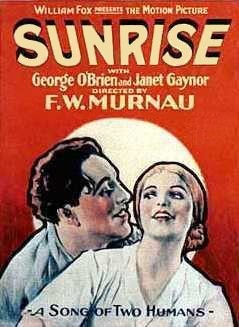
Sunrise: A Song of Two Humans (1927)
Doing something like proclaiming you are going to watch a certain 100 movies doesn’t give you the sort of leeway you normally employ in your movie watching, like the time I watched Head to observe Davy Jones’ passing, or The Ruling Class for Peter O’Toole’s. But when somebody stole F.W. Murnau’s skull, I knew it was time to finally watch Sunrise.
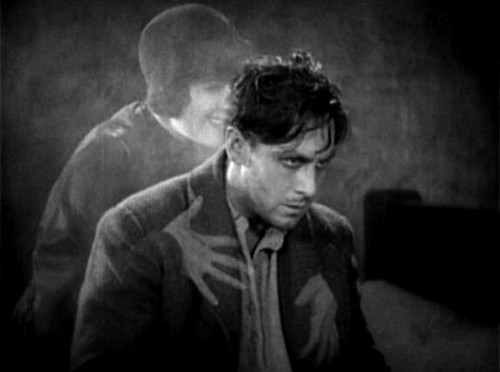
This is Murnau’s first American movie, made directly after Faust. The “Two Humans” of the title are a farmer (George O’Brien) and his wife (Janet Gaynor, wearing a bad blonde wig, but not as bad as the one Barbara Stanwyck was forced to wear in Double Indemnity), whose marital bliss is undone when a vacationing Woman From The City (Margaret Livingstone), sweeps the Man off his feet with her sophistication. She convinces him to sell his farm and come to the City with her – after he murders his wife by staging an accidental drowning.
The Man can’t go through with the plan, and winds up pursuing his fearful wife into that City, where they rediscover their love on one adventurous, eventful day – but on the return home, their boat capsizes in a sudden storm, and the wife is swept away.
Like an earlier, highly-regarded silent, The Phantom Carriage, this is some heavy melodrama, but it’s good melodrama. The extremeness of the melodrama in Sunrise is more than matched and countered by the beautifully well-observed humanity of the middle of the movie, where we see the love of the Man and Woman rekindle itself. We can’t help but be swept along their journey, falling in love with them a little ourselves, which only turns the screws tighter in the storm sequence and its aftermath.
This was the first movie to be released with Fox’s new Movietone process, which makes it the first movie with a prerecorded sync score and sound effects, extremely progressive while it was being made. There are two things that are going to lodge in your mind’s eye when you think over the experience, and both are in the City – not location shooting, but an actual, enormous set built by Murnau, and a huge entertainment complex with an equally huge music hall and restaurant attached. Again, a gigantic set built with all the trickery Murnau had mastered in the German cinema, employing forced perspective, midgets in the background to suggest scope, and a ton of extras.
Sunrise has risen in critical estimation in recent years, moving into Top 100 Movie lists and even cracking a few Top Tens. Why haven’t more people heard of it, then? A month before Sunrise opened, another movie – The Jazz Singer – opened, and suddenly nobody wanted to watch a silent movie. It was talkies or nothing, and Sunrise was a financial disaster.
Murnau would never again be offered the creative and financial freedom he experienced here, and this is a story we will encounter over and over again. He would only direct three movies before his untimely death in an auto accident in 1931, and cinema is much lessened for that.
Dreadful picture quality on this trailer, but it does give you some idea of the technical artistry Murnau brought to this picture, which, despite its box office failure, won three Academy Awards, including Best Picture:
Then I watched a couple more movies you won’t hear about until October. Don’t worry, there’s still plenty left. Life is trying to crush me with deadlines (This month – July – is in fact going out with an increasingly grinding bang), so the only thing left to do was to go over to Rick’s and watch movies.
Watership Down (1978)
Rick had been curious about this movie for some time, having only heard about it. That’s not too surprising; although incredibly popular in England, it sank like a stone in its American release. I had only seen it because it had a midnight showing in my college town. I guess it wasn’t Disney, so it wasn’t worth seeing.
Yeah, it’s not Disney.
Based on the novel by Richard Adams, Watership Downis the tale of a group of rabbits fleeing the destruction of their warren, foretold by the Cassandra-like prophet bunny, Fiver (voiced by Richard Briers). Their leader, Hazel (John Hurt) turns out to be quite adept in his new role, and they eventually, after many adventures, take up residence on a high hill, content until they realize that they have no women, and the new warren will eventually vanish.
Thus begins another thread of the tale where the largest of the fugitive rabbits, Bigwig (Michael Graham Cox) infiltrates the warren of General Woundwort (Harry Andrews). If their former warren was a bit of a fascist outfit. Woundwort and his minions are absolute Nazis. Their captive population cannot reproduce because it is too crowded. Bigwig seeks out a feisty doe who has helped other rabbits escape, and a daring nighttime breakout ensues, aided by the errant gull Kehaar (Zero Mostel, in his final film role), and a boat, a man-made object that Hazel’s clever warren has learned to employ.
The story’s not over yet, but that’s for you to experience yourself. As you probably noticed, this is an adventure story where the characters all just happen to be rabbits. Watership Down is held up as a sterling example of how to adapt a novel to screen, rearranging events and deleting others for the sake of the movie’s general flow, while remaining largely faithful. It is also known as the most violent PG movie ever released – there is never any doubts as to the stakes being played for in the rabbits’ quest, and, well, there will be blood. I’m okay with that, a lot of parents with crying children were not. The British Board of Film Classification apparently was still receiving flak every year for giving it a “U” for “Universal” rating, the equivalent of a G.
This begs the question as to how much about the brutal nature of life should children be shielded from, and for how long. My own childhood is still bright and terrifying with images of animals being slaughtered for the rural dinner table. That’s not an experience a lot of children went through, even in my childhood. In our increasingly urbanized existence, that number is likely even lower.
But we’re here to talk about movies, aren’t we?
It ain’t Disney. Though it may look like it, with its multi-plane animation and watercolor backgrounds, it ain’t, and really, it’s much better for that. I’m going to go further, and grumble about the misconception that if it’s animated, it must be for kids, and kids alone, a misconception that endures despite all the boobies Ralph Bakshi and the Heavy Metal movies have plastered across movie screens.
Research also dug up this, which again makes the above mistake: the follow-up to Watership Down, also based on a novel by Richard Adams, The Plague Dogs, is a cartoon for children like Salo is a movie for high school history classes.
There was a second movie Rick and I watched, but you’re going to have to wait until October for that one. So we’ll just go on to:
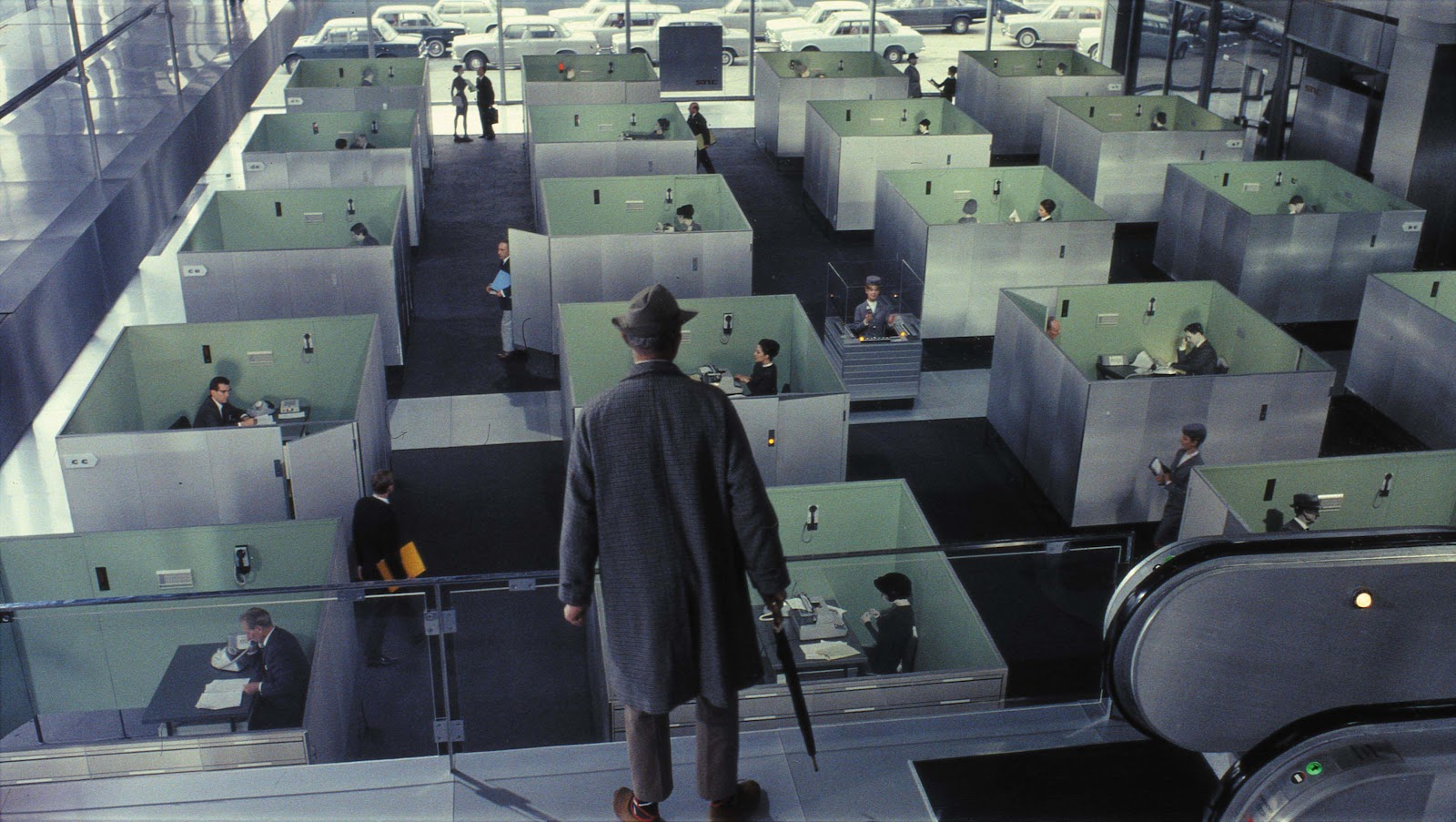
Playtime (1967)
Our journey through Jacques Tati‘s oeuvre continued with this, generally acknowledged as his masterpiece. After the international success of Mon Oncle (my personal favorite), Tati used his resulting clout to make what would become the most expensive French film to date, about 2.5 million blooming to over 15 million – in 60s currency – over the course of a three-year shoot. This is the sort of movie-making legend where it is tempting to obsess over the production of the movie rather than the film itself.
Tiring of his M. Hulot character, Tati sought to de-emphasize him with more of an ensemble, a tapestry of characters we follow throughout. Hulot spends the first part of the movie trying to have a meeting with an elusive man in an ultra-modern labyrinth of an office building, eventually becoming swept up with a group of businessmen in an international product expo in another building entirely. His fate is shared by Barbara (Barbara Dennek), a pretty young American who wants to see the true Paris, but is swept along with her group of tourists into the same shopping expo.
Tati’s usual bemusement with problematic modern technology and consumerism is given full play here, leading up to one of his most complex and lengthy setpieces ever, possibly even in cinema as a whole: a pretentious restaurant called The Royal Garden, which opens even as the workmen are putting the finishing touches on, well, everything. The evening becomes ever more crowded and chaotic – practically every character introduced in the opening scenes shows up – even as the hastily-finished building begins to collapse around its patrons. It is only when the restaurant begins to fall apart, when the pretensions disintegrate, that the space becomes more perversely human, and the people inside begin to genuinely enjoy themselves.
This argument against overly-structured modern life is echoed in Hulot’s perambulations, where he finally meets the man he never managed to at the beginning, but only when that man is out walking his dog in the evening. That we later see the two part jovially at the beginning of the restaurant sequence, their business apparently concluded, is a rare moment of accomplishment for the perpetually unlucky Hulot.
Tati set out to make a movie where it was impossible to catch all the jokes at one viewing, that the wandering eye would see something in every nook and cranny of the scenes. It’s like those crowded panels of Mad, drawn by Bill Elder when it was still a comic book. You could fill a book with observations on Playtime, and still not be sure you got it all. As ever, the sound effects are practically half the movie: Tati’s soundscape renders every object onscreen alive.
Jacques LeGrange, Tati’s longtime collaborator, had advised Tati to build his own ultramodern office building for the filming, and then sell it afterwards for a profit. Tati did this, but rather than following his friend’s advice, built an entire complex on leased land that ensured his buildings would eventually be razed – before filming was completed. Besides two other natural disasters that stopped filming and required rebuilding, the process of filming was made laboriously slow by Tati himself, who proved to be such a control freak that Stanley Kubrick would have said, “Dude, chill out!”
Structurally – and trying to append a structure to Playtime is a mug’s game – it is most similar to Jour de Fete, a lengthy, multi-charactered lead-up to a frantic, hilarious third act, then a cooling-down sequence leading to a melancholy, but touching conclusion. It’s the lack of conventional structure – and probably the comparative lack of Hulot – that made the movie tank horrendously on its release, and Tati – in considerable, ruinous debt – saw his life’s work auctioned away. Like Murnau, he would only make two more movies in his life, and both of those were commissioned work for television. Never again would he have the free rein and freedom given him here, and whether or not that is a good or fair thing is not for me to judge.
With Playtime, Tati attempted to take his game to the next level, and produced a movie that is undeniably ahead of its time. The thing is, I don’t think that, even now, the world has yet caught up with Tati.

 Click ^^ for Hubrisween Central, here for our Letterboxd page.
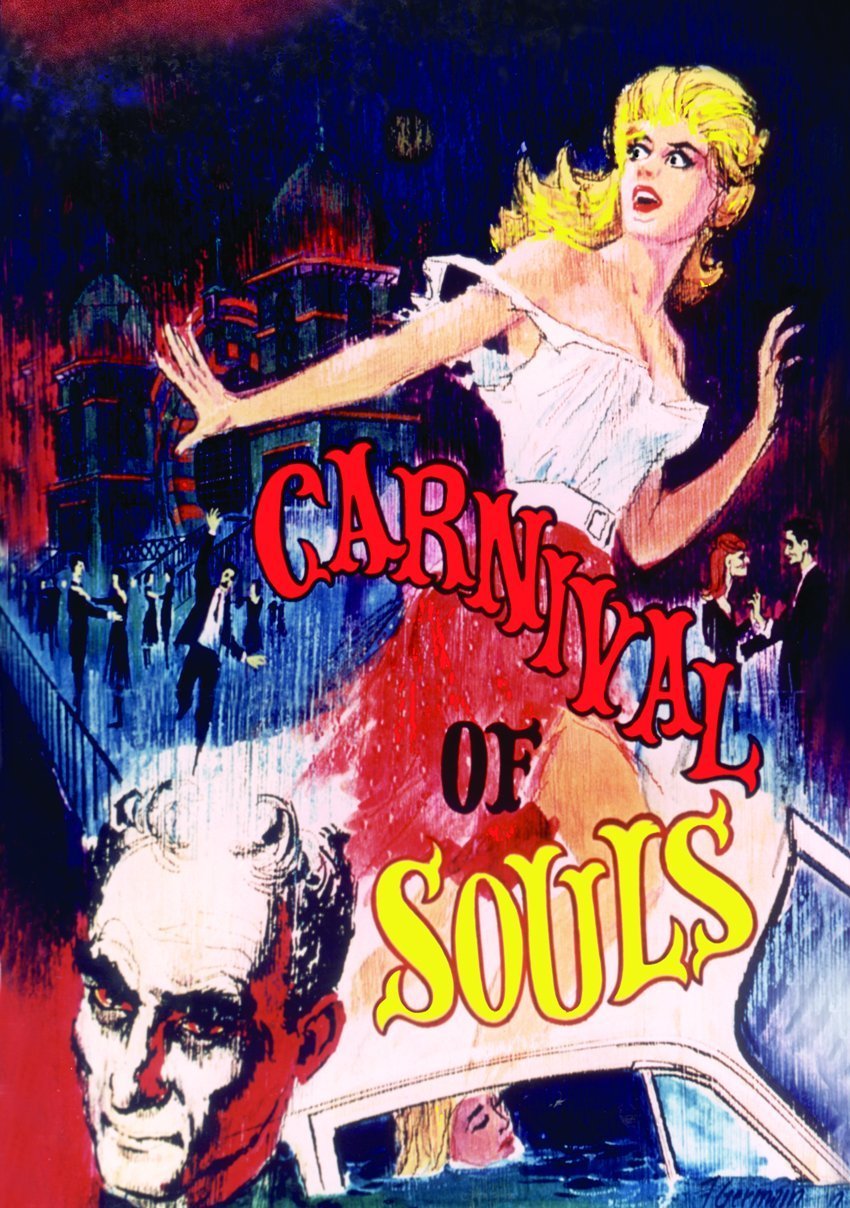 It’s strange to see Carnival of Souls so venerated now – it’s even out on the Criterion Collection. A quickly-produced low-budget movie meant as a calling card to the movie industry, now acknowledged as a classic. Well, okay, there are more than a few of those in the Collection, but it’s rare that we get to watch one during Hubrisween.
 Mary’s a skilled organist taking a position at a church in Utah, though she denies being particularly religious. On the way to this new life, she is stricken by the sight of an abandoned pleasure palace on the shore of a lake. Her increasing obsession with the place becomes a problem, though not as much as the ghoulish, silent white-faced man who seems to be stalking her.
 There are two times in the movie when Mary finds herself in a silent world, unable to interact with any of the people bustling around her, as if she’s ceased to exist. It’s amazing how affecting something like killing the ambient sound in a sequence can truly be. These segments, and the scenes taking place in the decaying Saltair Amusement Park (an amazing setting that was only waiting to be discovered), its downbeat denouemant, are what give the movie its power to chill.
 Producer/director Herk Harvey (who also plays the ubiquitous dead-faced man) was a veteran of numerous “mental hygiene” and industrial shorts, and went into his two-week shoot with a budget of $17,000 and a five man crew. Years of quick production put him in good stead as the shoot proceeded guerilla-style in Salt Lake City (offering a man in a van twenty-five bucks to “nearly” run over Hilligoss, for instance). Much of the movie was shot in Lawrence, Kansas, where Hervey and his cohorts were well-known and respected (“You need to shoot in my church? Sure!”).
 Faring better is Sidney Berger as the only other occupant of Mary’s boarding house, John. John is a realistic, horny working guy, equal parts good humor, sexual bluntness and desperation. Mary acquiesces to his constant efforts to get close to her simply because her fear of the Man and the call of the abandoned park are beginning to terrify her. Even the horndog, though, is unwilling to expose himself to her increasing instability. Berger went on to a sterling career as head of the drama department at the University of Houston, and had to put up with some frequent razzing about the role, but honestly, he is, in many ways, the best actor in the movie.

































 drfreex.com