Comin’ On Like A… MEGA POST!

100June 16, 2015

So if you watch TV at all, you might be aware that, as I write this, Tropical Storm Bill has made landfall somewhere south of me in Texas, an event that the local media has been trumpeting as if it were the vengeful return of Hurricane Ike, attended by flesh-eating zombies, who were themselves on fire. Grocery stores were emptied out, schools were closed, and I couldn’t go to work. Couldn’t even work on this blog, because my Verizon DSL craps out when it rains. Even the infinitesimal amount of precipitation I’ve gotten so far.

Well, this is what word processors are for, yes? Eventually my Internet has to come back. Eventually my teenage son has to stop barging into my office, demanding I reset “the router” “just in case that might help.” I’ve stopped correcting him that the router and the modem are separate creatures. I just grumble and do it.

In the course of all this madness, as I fall farther and farther behind in everything else, I might as well say, hey, I watched some movies.

THE-INNOCENTS-1961For instance, I watched The Innocents for the first time in, ooooh, maybe 50 years? I didn’t like it back then, but, you know, I was just a kid and all that. I bring entirely new sensibilities to the table. Surely now I will experience it as the classic it truly is!

Nope. I’m going to have to admit that most ghost stories simply do not do it for me, no matter how well made they are, and make no mistake – The Innocents is a well-made movie. Deborah Kerr, as a first-time governess who finds herself in a battle for her charges’ souls against the ghosts of two former servants, felt this was her best role. That’s quite possible. As a child I did not care for the downbeat ending. As an adult I appreciate that Kerr and director Jack Clayton leave the possibility open that this ghost business may all be in the governess’ troubled mind.

Or, if you're Amurrican, you saw this movie.

Or, if you’re Amurrican, you saw this movie.

Well, on then to stuff I appreciated more. Last week we lost a bunch of cool people, the biggest splash belonging to Sir Christopher Lee. I’ve said many times I found him to be an actor of limited range, but he had more presence and gravitas than ten normal actors, and when you put him in the right role, damn but he was unstoppable. One of those right roles was the Duc de Richelieu in The Devil Rides Out, Hammer’s movie version of the Dennis Wheatley novel of the same name (the credits remind us it is a “classic novel”).

Richelieu, along with his two-fisted pal Rex (Leon Green) are determined to free the son of their deceased comrade, Simon (Patrick Mower) from the insidious control of Mocata (Charles Gray at his villainous best), a Satanist of incredible power. Fortunately for the good guys, de Richelieu is himself knowledgeable in the ways of magic, and is  able to protect his friends – if just barely – from the black magic onslaught that comes. The story meanders a bit, but there’s hypnotism, spirit mediums, giant spiders, the Angel of Death and Satan Himself (a guy with a goat’s head. It’s 1968, after all, and for that, it’s not bad).

There’s a fair amount of action and derring-do – I seem to remember the novel having a lot more, but then, I read it uhhhh forty-something years ago. A lot of movies about Satanism are pretty dull, but this is not one of them. It really needs a quality video release in the U.S., but I say that about most Hammer movies.

vlcsnap-2015-04-06-15h33m46s97

70s, you have so much to answer for.

Then I went to Rick’s for our monthly watching of movies. We had our three movies all picked out, and our pattern of late was two acknowledged classics and one lamentable piece of crap, usually sandwiched between the two classics as a palette cleanser. This time we decided to forego the “shit sandwich” model and start with the non-classic: in this case, the recently-revived Supersoul Brother, which goes by an *ahem* much vulgar title in actuality.

This is the star vehicle for Wildman Steve, a minor league Rudy Ray Moore (who was himself in Petey Wheatstraw as a character named Steve), who plays a wino -named Steve – picked by two thugs to be the guinea pig for a super-strength potion they’ve bankrolled to the tune of six thousand dollars (geddit? Geddit?). The plan is for Steve to carry out a safe from a jewelry store, then the hoods will plug him and make off with the diamonds. They figure this will be a mercy because, unknown to Steve, the formula will kill him in six days. Well, the formula also makes him bulletproof, so he makes off with the diamonds and tries to find an antidote.
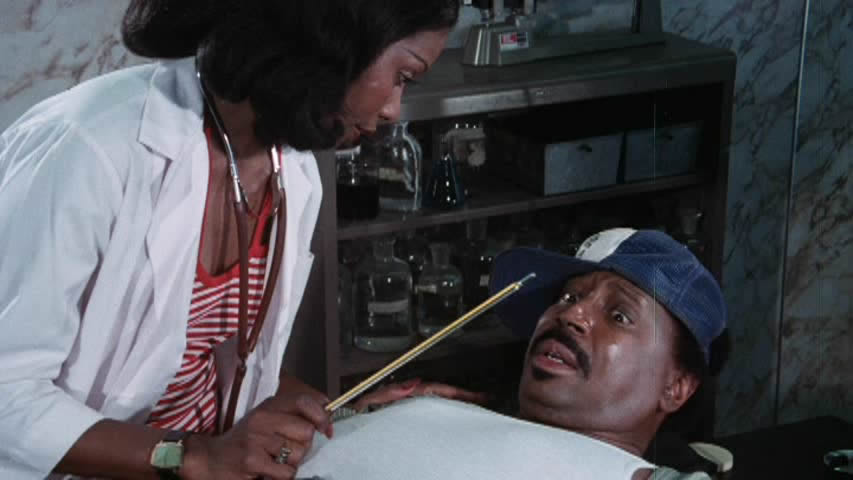
supersoul6bigNow that is almost the plot to a decent movie. Unfortunately, this is a Wildman Steve movie, which means it’s a Dolemite movie without the budget, wit or charm.

I’m going let that statement sink in on you for a while. As Rick so very succinctly put it, “This movie makes you re-calibrate your opinion of the Dolemite movies.”

I managed one intentional laugh during the movie. There is also one point during which we said, “You know, this was an okay movie until these white women showed up,” so there are degrees of bad. Predictably, although a derelict wino, Steve has no problem getting women into bed. The mad scientist, Doctor Dippy (Peter Conrad) has a girlfriend played by the magically named Wild Savage, who seemingly took acting lessons from Dolores Fuller, but again, without the budget, wit or charm of an Ed Wood movie.

vlcsnap-2015-04-15-19h33m18s228This was directed by Miami filmmaker Rene Martinez, Jr., whose other big claim to fame is The Guy From Harlem, which, dammit, I own, so someday I have to watch it. At one point we spotted a triple-beam scale in Dr. Dippy’s office and Rick said, “That’s how they measured out the payroll every week.”

Vinegar Syndrome’s DVD is mainly clear and deceptively beautiful, but it has enough missing frames and streaking to really bring home the seedy grindhouse experience. I can’t recommend it, but I also cannot wait to force it on my friends.

Well, I see Everything is Terrible has edited it down to two minutes. Be aware this only gives you the smallest inkling of it’s… uh… quality:

So to soothe our bruised sensibilities, we slipped in Charlie Chaplin’s The Great Dictator.
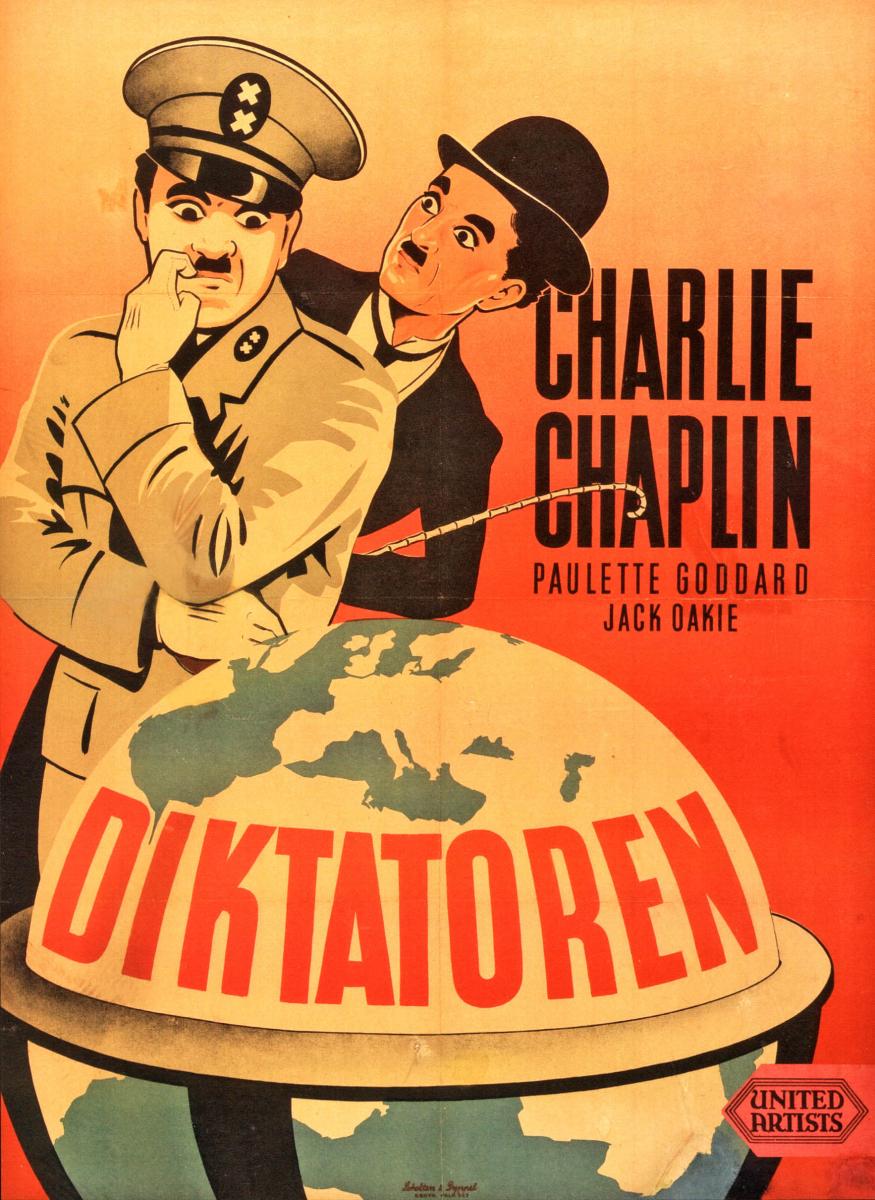
The_Great_Dictator-335887708-largeChaplin’s first all-sound movie still has stretches of silent comedy (or scenes that would play as well silently), but suffers from some tonal problems. It’s the tale of a Jewish barber who spends years in a hospital, suffering amnesia from injuries in a World War I-style war between the countries of Tomania and Bacteria. Thus he misses the rise of dictator Adenoid Hynkel, his Double Cross party, and his anti-Jewish agenda. Both men are played by Chaplin.

Chaplin’s Hitler manque is justly famous – he spent hours watching footage of Hitler and knows exactly how to puncture the dictator, right down to his adjutants, rechristened Herring (Billy Gilbert) and Garbitsch (Henry Daniell). The Hynkel scenes are so exacting, so precise, that the parallel storyline with the barber seem scattered and happenstance – the Barber isn’t even given a name – until the two switch places, more by accident than anything.

Charlie-Chaplin-in-The-Gr-004It was, in fact, a matter of some curiosity to me that nobody notices the two men are identical. In retrospect, that is absolutely the right way to approach it; as one of the Juden, the Barber is considered by the stormtroopers to be subhuman, and therefore no notice is given to him as a person; it isn’t until the Barber escapes from a concentration camp and is found in a stolen uniform that it is assumed he is Hynkel, just as Der Fooey, taking a pre-invasion vacation in an Alpine costume, is mistaken for a common man.

This is all leading up to the Barber giving a speech when everyone assumes he is Hynkel, to celebrate his conquering of another fictional country; the speech is, instead, one advocating peace and brotherhood, and you have no doubt had it posted to your various timelines more than once, captioned as “The Greatest Speech Ever Made” (and here it is with some Hans Zimmer music, for  extra chills):

Please note that this speech is also one of the pieces of evidence given for branding Chaplin a Communist. Why? Because fuck the world, that’s why.

As I said, I don’t feel the two storylines mesh ideally, but who cares when the two resulting movies are this good? Chaplin was very nervous about his first talkie, so much so that the movie pretty much ruined his relationship with Paulette Goddard, radiant as always as the Barber’s girlfriend, Hannah. He needed not have worried so much, even if in later years he had misgivings about taking a relatively lighthearted approach when the true horrors of Nazi Germany began to come to light. But The Great Dictator had such value as a propaganda tool in the early days of World War II, it cannot be discarded as misguided. Hell, it’s even recorded that Hitler himself had a copy smuggled in so he could watch it. Apparently he did so twice.
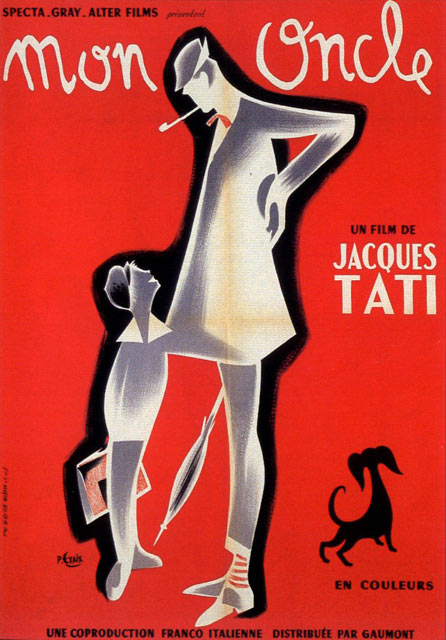
mononcle-posterSo, excellent movie, even though I could not, in all conscience, give it the full five stars. Unlike the movie which ended our evening, Jacques Tati’s Mon Oncle.

Several years back, when I decided that I wasn’t getting any younger and needed to start experiencing a higher quality of film, this is precisely the sort of movie I suspected I was missing out on. I don’t even know how to begin to talk about it, as the examination of even one of the many wonderful bits of imagery that run throughout the movie leads to the temptation to talk about all of them.

But let’s try. In the introduction to Tati’s Monsieur Hulot character, Monsieur Hulot’s Holiday, one of the many plot threads concerned a young boy, whose businessman father was too occupied with important phone calls to pay attention to his son (much less enjoy his own vacation), who began to emulate Hulot. In Mon Oncle, Tati makes that connection a familial one.

Mononcle houseGerard (Alain Becourt) is the son of the Arpels; Mr. Arpel (Jean-Pierre Zola) is the manager of a successful plastic hose company; Mrs. Arpel (Adrienne Servantie) busies herself with caring for their ultra-modern and extremely ugly house. Hulot (Tati, as always) is Madame Arpel’s brother, living in a strange apartment building requiring an almost Escher-like path to get to his room, at the very top. Hulot lives in a older, rundown suburb that might as well be the rustic village in Jour de Fête; the heartbeat of life there is much slower and more erratic than in the contained and regimented world of the Arpels.

hqdefaultThus, Gerard looks forward to his outings with his uncle – they promise and provide more adventure and actual living than in his nightmare Tex Avery Home of the Future (at one point the Arpels quite literally become prisoners of their own technology). The Arpels, of course, keep trying to cram Hulot into the pegboard of their lives – Arpel gets him a job in the plastics factory (which goes about as well as you’d expect), while his sister attempts to set him up with their next-door neighbor, a bizarre scarecrow given to wearing Andean rugs as a cape.
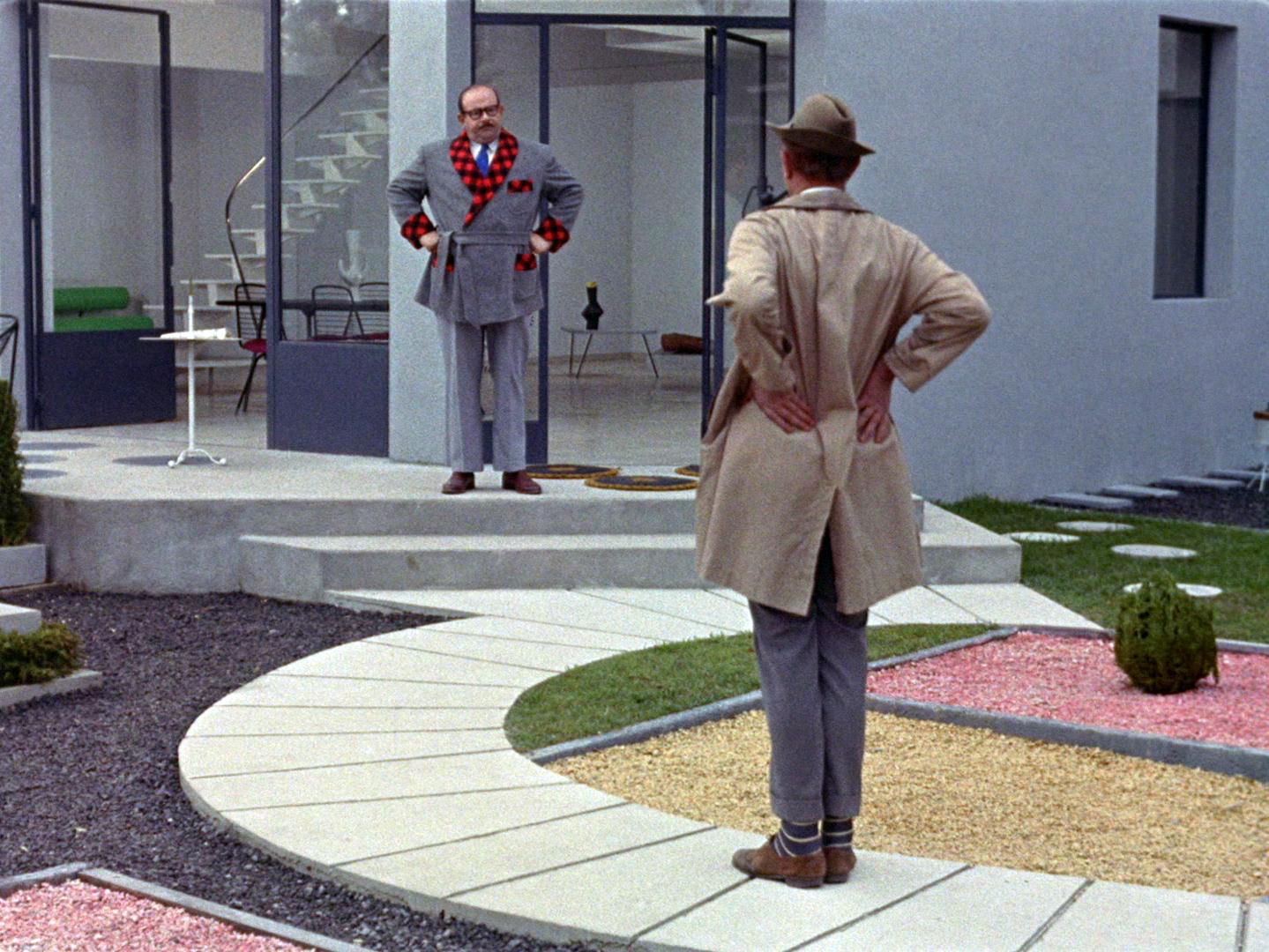
Mon_Oncle_Hulot_Arpel-Large1Tati isn’t really against the modernity of the Arpel’s house, he’s more against the fact that it’s a house to be shown, not a house to be lived in – there is not a single comfortable chair in the joint, they are all plastic monstrosities that theoretically double as pieces of art. Even then, Tati is never truly vicious in his portrayal of the nouveau riche couple. Even when the father, tired of his son’s admiration for Hulot, packs him off to the provinces – a rather downbeat ending, in my estimation – Tati manages to wring a bit of sweetness from the proceedings, a reconciliation between father and son that shows the father may not have been totally despising his brother-in-law all this time.

Wow, we just hit 2000 words on this, but I managed to be kind of brief about Mon Oncle, so let’s try to get one more movie in here, continuing the comedy vein with Ingmar Bergman’s Smiles of a Summer Night.

smiles-of-a-summer-night-movie-poster-1955-1020235556This was the movie that made Bergman’s bones, make no mistake. He was terribly depressed, and his producer telling him if his next picture didn’t make some money, they wouldn’t be letting him make any more probably didn’t help. Then they entered Smiles into Cannes without telling him, it was a major hit, and suddenly they had to let him make his dream project, The Seventh Seal, which cemented the whole “genius” thing for him. Smiles also inspired Sondheim’s A Little Night Music, but that’s not as much fun as imagining he based Sweeney Todd on Bloodthirsty Butchers.

Smiles is one of those mannered comedies about relationships concerning six couples, most of whom are entangled with the wrong people, and the conniving actress who gathers them all at a country estate so that everybody can get with the right person. Bergman regular Gunnar Björnstrad is Egermann, a middle-aged lawyer married to a 20 year old girl, who is still a virgin (also, his depressive adult son, the same age as the bride, is in love with her). The conniving actress is Egermann’s former mistress, who may have had his illegitimate son (which is a surprise to Egermann). She is currently the mistress of Count Carl Magnus Malcolm, a martinet who would allow his own wife to have affairs, if that just didn’t make him so jealous.

smileshaAnd just to add a little spice to the proceedings, there’s the child bride’s saucy maid, played by Harriet Andersson (who blew me away so completely in Through a Glass Darkly), who is herself looking for love. Bergman had apparently been having a love affair with Andersson prior to this movie, but it was over by this point – another reason for his profound depression during shooting.

It’s a complex plot, but Bergman keeps a bunch of balls in the air and brings it all to a satisfying conclusion. The main thrust of the story is that men are are a bunch of idiots and women can make them do anything they want, and I’d argue with that if I could. I was confused through the opening half of Smiles, because Egermann’s relation with his second wife – who he finally admits loves him more like a father than a mate – bears more than a slight resemblance to the life of Moliere, the French playwright who lends much inspiration to this script.

charlottefredrik360Moliere was similarly married to a much younger woman, even more unhappily than Egermann. Back when I was an actor, I played Moliere in a repertory project that alternated Mikail Bulgakov’s biographical The Cabal of Hypocrites with The Imaginary Invalid. In preparation, I read Bulgakov’s excellent biography of Moliere, along with the playwright’s works, and the most revelatory experience was reading The School for Wives, which is about… an older man married to a much younger woman. The final scene is basically a duel of romantic pronouncements between Moliere’s character and his wife’s younger lover. Contemporary reviews of the play mention Moliere’s hilarious puncturing of overwrought romantic plays and their actors in that scene, but knowing the man’s life, you are struck by how easily it could be played as bleakest tragedy, without changing a single word.

There’s quite a bit of that vibe in the opening act of Smiles of a Summer Night. By the third act, I was pretty certain it was a comedy, though, largely thanks to Andersson’s maid and her earthy major domo boyfriend, played by another repertory company member , Åke Fridell. And if nothing else, I liked it a whole lot more than the similarly-themed Rules of the Game.

It’s now June 22, and I have written 2725 words. Good God, I have work to do. Here, take this.

Iconoclash!

100In the pattern we’ve established, about every six weeks I go over to Rick’s and we just sit and watch movies on his finely-calibrated plasma set (this time I got to drive through a monsoon, which is about as much fun as you’d expect). We’re both cinematic omnivores, but Rick’s a better omnivore than me, by which I mean he’s more open to new experiences, which I sometimes approach with a sense of dread.

51MNM0KJHVLThis time, we had lucked upon a theme for our choices: Cinematic icons at war with each other (that two of the movies were on my 100 list for this year was certainly a bonus). To set the groundwork for this, we began with Werner Herzog’s sublime documentary on his fractious relationship with Klaus Kinski, My Best Fiend.

Kinski’s on-set tantrums were the stuff of legend, and Herzog was frequently the focus of those screaming fits; somehow they still managed to make five movies together that stand as classics of modern cinema. Herzog reveals that he met Kinski while the director was still a child; they both lived for a time in a boarding house, and found Kinski  absolutely terrifying (but admittedly memorable). He then leads us through their movies and times together, revisiting locations and interviewing people years after the fact. Eva Mattes, his co-star in Woyzeck, and Claudia Cardinale, ditto for Fitzcarraldo, seem to be the only people who have nice things to say about Kinski. Apparently this is the sort of thing that happens when one fires a rifle into a hut full of extras.

cobra-verde-1987-007-werner-herzog-and-klaus-kinski-hug-on-location-1000x750Herzog, I think, has the proper range to gauge the truth about Kinski – a self-aggrandizing egomaniac who used his rages to make sure he was the center of attention at all times. Even then, Herzog continues, once his rage was spent, Kinski was capable of genius, and his hair-trigger temper kept everyone very professional, lest they trigger another outburst. Other footage, at festivals and behind the scenes, confirm Mattes and Cardinale’s tales that he was capable of great charm and warmth. My Best Fiend is an amazing odyssey, and if nothing else, it makes you want to watch these movies all over again.

Uh, about that "Tobe Hooper"...

Uh, about that “Tobe Hooper”…

The thing is, this was actually homework. Rick had been doing one of those falling-down-the-wikipedia rabbit hole affairs, checking for details on his new favorite actor, Oliver Reed, when he discovered that Reed had made a movie with Kinski in 1981 – Venom – and the idea of trying to keep those two in control during production led to us seeking it out. At the very least, I thought, Reed would eventually drink himself into unconsciousness…

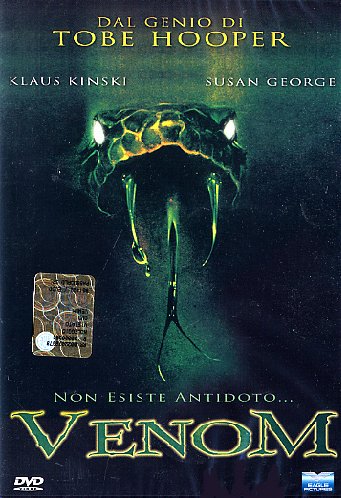
Venom is one of those movies where you suspect the making would have made a better movie than what wound up onscreen. Based on a fairly successful suspense novel by South African writer Alan Scholefield, it was originally going to be directed by Tobe Hooper, who left over “creative differences” (by some reports, a nervous breakdown). Kinski apparently later crowed at a premiere party that he and the other actors ganged up on the Texan to make him quit. Director Piers Haggard replaced him (best known in these parts for Blood on Satan’s Claw and The Quatermass Conclusion), who later opined that the nicest person on the set was the black mamba snake.

venom6The story concerns the kidnapping of a motel magnate’s son which goes rapidly south when one of the conspirators, the family’s chauffeur (Reed), panics and shoots a police officer, killing him. The officer was there to alert the family that the son – who has quite the menagerie in his room – accidentally picked up the black mamba from the pet store instead of a harmless African house snake. Now the snake is loose in the house, which is surrounded by the Police, and it’s in a nastier mood than the kidnappers.

0_109542_bf120f53_origKinski plays Jaclen, the mastermind behind the crime. Susan George is his girlfriend, who’s worked in the household for eight weeks as a maid. Sterling Hayden, in his penultimate role, looks incredibly out-of-place as the boy’s grandfather, a retired big game hunter. Sarah Miles is a herpetologist whose major jobs are to A) tell us how deadly black mambas are, and how they can do everything except teleport through walls (and the jury is out on that one) and B) get taken hostage by Jaclen. All good actors (each with their own varying reputations for being difficult) that put in acceptable jobs, but the one I enjoyed was Nicol Williamson as the Police Inspector who gets saddled with this mess.

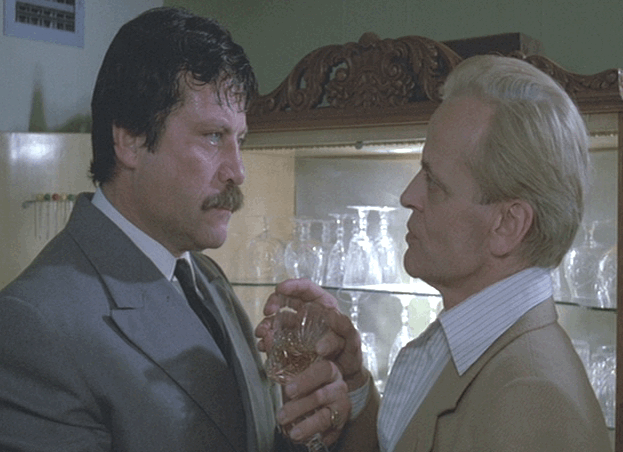
But Rick and I were there to watch the fireworks between Kinski and Reed. There aren’t many visible, which is remarkable considering that Reed basically spent the entire shoot annoying Kinski to make him blow. What shows up in the movie belies that, with Reed playing an increasingly desperate everyman who is in way, way over his head, and Kinski playing the calmest man in the house. There is one scene, when Reed makes one of his many trips to the liquor cabinet, and Kinski grabs his hand, stopping him – there is a true flash of hatred, and it looks like the split second before a massive bar brawl starts.

"You are about to lose that f*cking Nazi hand."

“You are about to lose that f*cking Nazi hand.”

“Acceptable” is a fair adjective to use on Venom. You won’t begrudge its 90 minutes, but you probably won’t care to revisit it, either. The best illustration for its problems is the scene where Kinski forces Hayden to search a room for the snake (since he has experience with the nasty things), and as constructed, it should be very suspenseful – or it would be if it hadn’t been established in the previous scene that the snake has already slithered into the ventilating system. We know it’s not in that room. Still, Haggard should be commended for producing a movie that’s at least watchable, given that he had absolutely no prep time, a script that was already locked down, and a cast that wanted to murder each other on the good days.

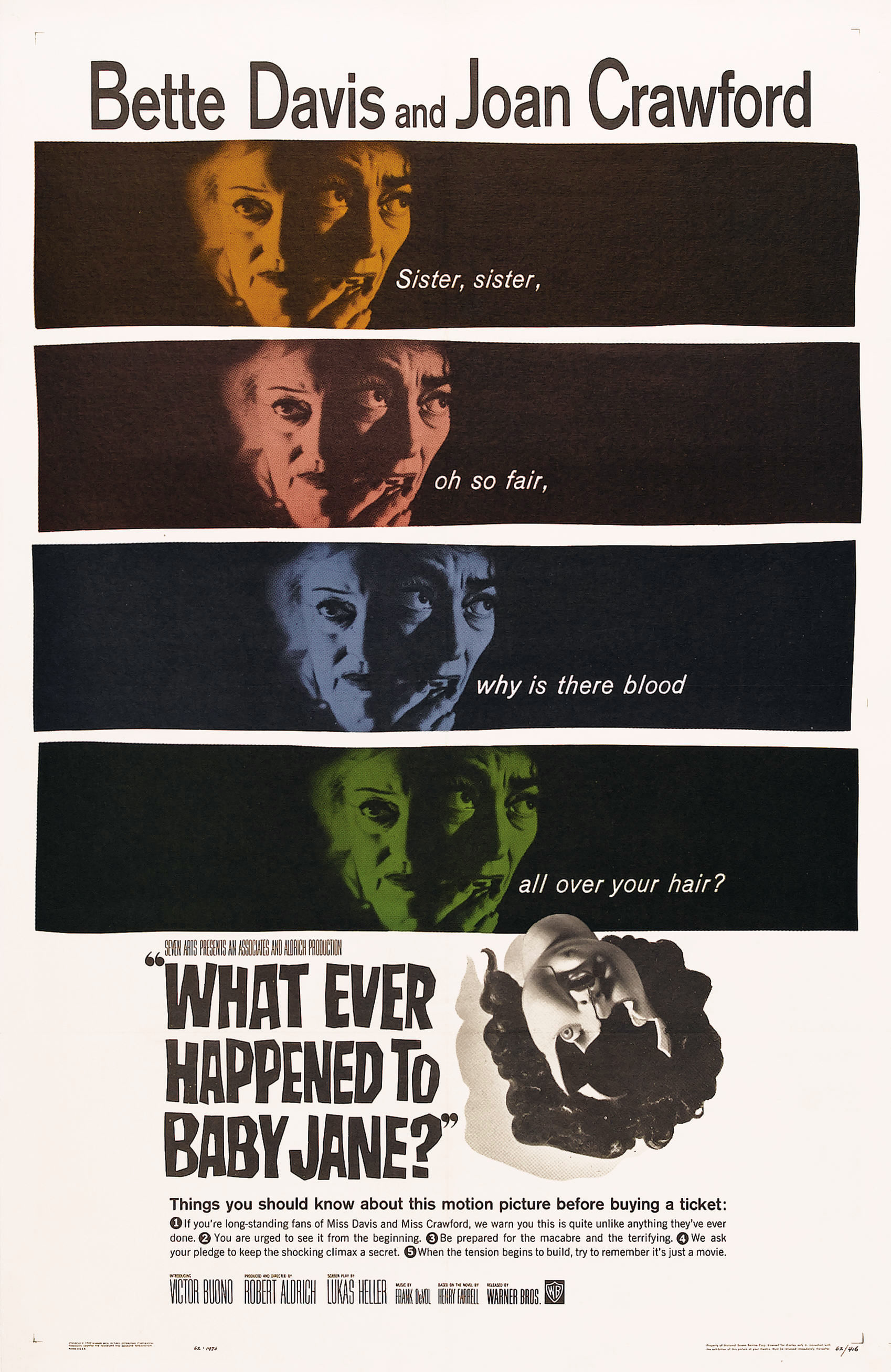
Poster - Whatever Happened to Baby Jane_01All this was mere preparation, though, for the main event. A movie which Rick and I had managed to get through our entire lives without seeing, setting two screens icons against each other: What Ever Happened to Baby Jane?

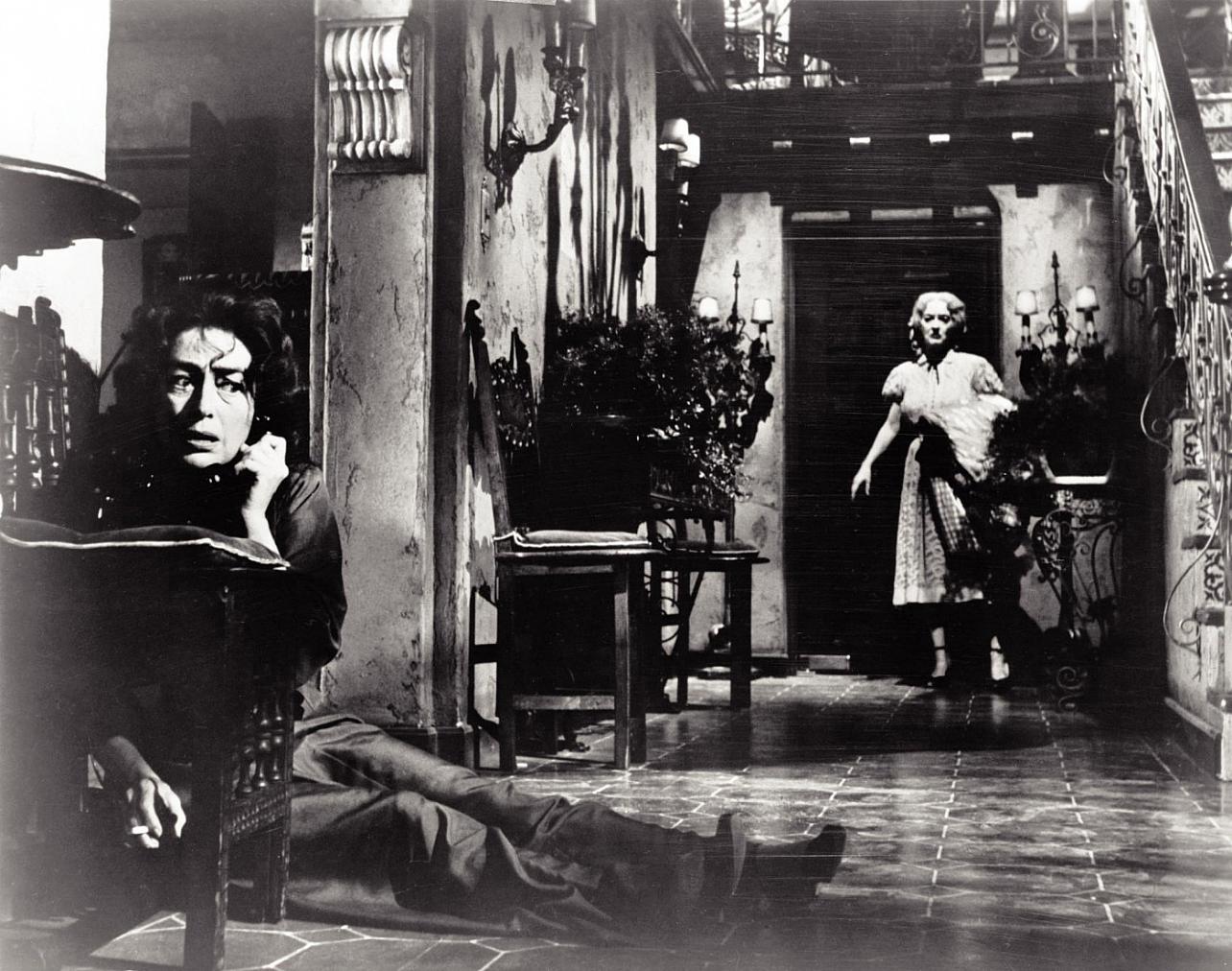
If, like Rick, you’re familiar with the title but have no idea what the movie’s about: Baby Jane is a vaudeville singing sensation whose ignored sister Blanche becomes a beloved movie star in the 30s while Jane’s movies are… struggling. One night, there is an auto accident involving the two, resulting in Blanche confined to a wheelchair. Fast forward to the 60s, where Jane and Blanche have aged into Bette Davis and Joan Crawford. Jane is taking care of Blanche, but is becoming increasingly unstable and abusive. Emphasis on the abusive, as during the course of the picture, Jane will cut Blanche off from the outside world and proceed to torment her.

b050cf939aca4acd88a502737100efa2Movies like this – psychological horror/hostage dramas -have never been my cup of tea, which is why I’ve avoided the movie all this time, but now I’ve seen it. And I can say I’ve seen it. It is a well-made movie, and it broke box office records at the time. Director Robert Aldrich (who has quite the varied and interesting filmography) uses the open enmity between Davis and Crawford for all its worth, but this isn’t just a carnival gladiator match, like Reed and Kinski; there is some real depth and acting here using all that hate.

bette-baby-janeCrawford does a marvelous job – audience sympathy obviously goes out to her, but she never quite makes Blanche likable, a choice that pays off on repeat viewings – but there is never any doubt that Davis owns this picture. She takes possession of the character of Jane and positively nails every single frame she is in to a wall. Davis had a great degree of leeway from Aldrich in designing Jane’s appearance, reasoning, among other things, that Jane never washed her face, just applied more makeup. Roger Ebert once wrote that the canniest career move Bette Davis ever made was growing older. He was talking about All About Eve, but the same reasoning holds here, The incredible grotesquerie that Davis breathes life and malevolence into is not to be missed (even if this type of movie is not your cup of tea). This is what total commitment looks like. Davis was nominated for the Best Actress Oscar that year, but it went to Anne Bancroft for The Miracle Worker.

whatever-aldrich-directingIf more motivation to watch is needed, you can also toss in Victor Buono’s debut role as an unemployed musician desperate for the gig playing for Baby Jane’s fantasy comeback; their first scene together is like a miniature acting school, sidewise glances that tell us everything we need to know about what is going on in the characters’ minds.

This rather marks a high point for both actresses at this stage in their careers; the shelf life for Hollywood actresses is depressingly, frustratingly short, and for them the future held more of the same, but lesser. Davis in Hush Hush Sweet Charlotte (which I prefer quite a bit over Jane) and The Nanny, Crawford in Straitjacket and Trog. This was a high point, as sad as that might seem.


The Memorial Crapfest

It had been six months since the last Crapfest. There are many reasons for that. The holidays, certainly. There was also the fact that I was really tired of the cat-herding involved with setting a date that everyone was available. It was just much easier to find a day to meet with Rick, or Dave, or both, and just quietly watch some movies.

Life, though, has a way of forcing our hands.

A couple of weeks ago, in my semi-annual bitching about my life post, I mentioned that I skipped out on the memorial service of an acquaintance because that evening was the only chance I had to rest, recoup and heal in a physically grueling week. The deceased was Mark, who was responsible for such Crapfest entries as Skyscraper, The Black 6, and Evil Town. It wasn’t a memorial service, but a Celebration of Life (Mark would not have appreciated a moribund memorial service, not at all) and it was apparently crowded, which is to the good.

I’m a simple man, and I memorialized Mark the best way I knew: by inflicting terrible movies upon my fellow man, as he would.

The evening began with host Dave testing out his new AV setup with the first 20 minutes of Pacific Rim. Now, Pacific Rim is not crap. It is, however, quite loud. I sat and stewed that every time I tried to start things out nicely with some vintage Rolling Stones or Tom Jones, I get castigated for daring to put some “quality” into everybody’s precious crap. No one understands that this only makes the scalpel cut deeper. Yet here is Dave, receiving no such complaints while he projects giant robots punching kaiju.

maxresdefault

NOT. CRAP.

When you’re the host, you get to do stuff like this.

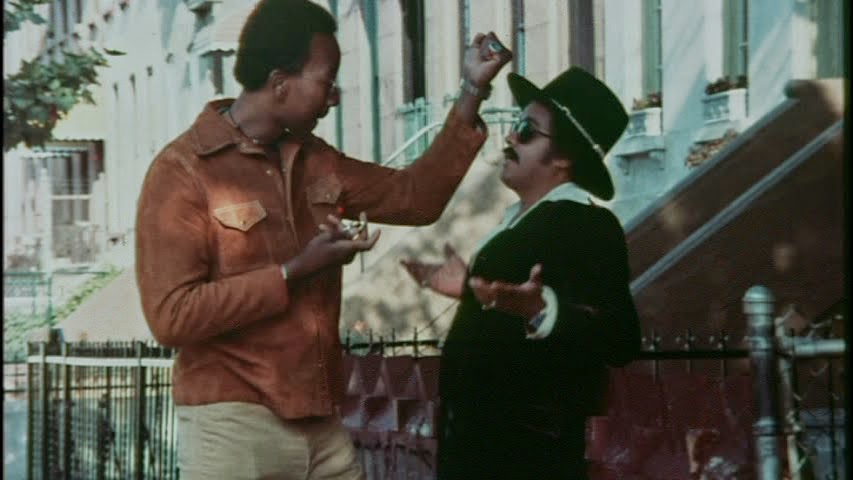
But you know when nobody complains about “quality” in a Crapfest? When that quality is in the form of cartoons. I curated another set of cartoons, if only because Mark had really enjoyed the Halloween set at the last Crapfest. We start off easy with Feed the Kitty, one of Chuck Jones’ best, followed by Tex Avery’s Bad Luck Blackie, which is its polar opposite: in the first, a bulldog adores a little kitten; in the other, a bulldog continually tries to kill a little kitten.

Tom & Jerry were actually the worst about this.
Tom & Jerry were actually the worst about this.

The next section grew out of a discussion that Dave, Rick and I had after watching Diplomaniacs, about what Dave termed “blackface dynamite” (a scholarly term, to be sure) in cartoons, where an explosion turns everyone onscreen into minstrel show participants. The one instance he could recall with certainty was in Droopy’s Good Deed, which I surprisingly had in its uncensored form… but I still started off with Chew Chew Baby, a 1958 Harveytoon that played semi-regularly in the weekday morning cartoon slot, alongside the Bugs Bunny and Sylvester the Cat cartoons. It terrified me, and in short screwed me up for some time. It was a horrible thing to show a 5 year-old, and once again it is temporarily on YouTube, so look quick:

Oh, all right, here’s the censored Droopy scene in Japanese, which doesn’t make it any better:

Surprisingly, there are some (pretty awful quality) examples of the Betty Boop cartoon I’ll Be Glad When You’re Dead You Rascal You, featuring Bimbo and Koko being chased by the giant flying head of Louis Armstrong:

Again, I fully expect all of these to be purged from YouTube in the next week.

I laid out my usual four movies to be voted on. Dave was having none of this voting crap, however (the fascist), and snatched up the recently-released Sorceress DVD. I have gone into Sorceress in far too much detail elsewhere, so let me be brief, and you can visit me twenty years ago at your leisure.

Sorceress is yet another Roger Corman-produced New World Pictures attempt to cash in on the sword and sorcery fad. It was directed by Jack Hill, who has a bunch of good, influential cinema under his belt, like Coffy and Switchblade Sisters. He asked that his name be removed from the movie. It is an intriguing script, full of amazing effects that Corman was not willing to pay for, so what you’re actually watching is a cheap piece of junk. It does feature the Harris twins (Playboy Playmates) and their nudity, Frampton the Barbarian, and for some reason, a Viking and his traveling companion, a satyr. I’m usually pretty forgiving about the acting in these things, but in this one it gets pretty dire.

Viking

“And my axe! …except I don’t have one.”

The major heartbreak in all this: Jack Hill wanted Sid Haig to play Pando, the satyr, but Corman wouldn’t pay for that, either. I weep over the loss of this portrayal. And you know what else is not in Sorceress? A sorceress! None. Zip. Zero. Corman apparently took a list of possible titles to a local high school and asked them which movie they’d go see. “Why, the one that gives me a chance to see boobies,” they replied, and so it was.

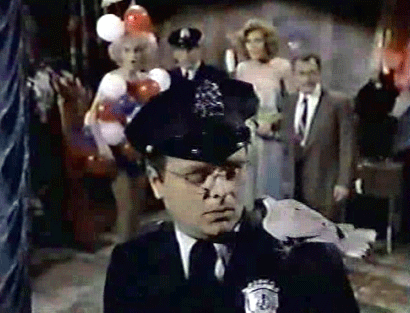
After this, Alan had brought something. When Alan brings something, it is always horrific. This time, it was, at least, horrific and short. It was the premiere episode of the shortest-lived M*A*S*H* spin-off ever, W*A*L*T*E*R*. Yes, Gary Burghoff’s shot at a show featuring his Radar O’Reilly character.

There are a few points of interest: using one of the best episodes of M*A*S*H* as a springboard – the one featuring a TV crew filming a documentary of the 4077th – a “Where are they now?” special catches us up on what happened to Radar – excuse me, Walter – in the intervening years. He lost the family farm and got abandoned on his wedding day, among other things. So now he is a beat cop in St. Louis.

walter2Now, Walter using his Radar O’Reilly powers to solve crimes is the series I would have tuned in to every week. Instead, what we have here is some gently uplifting comedy about how being a nice guy and having an affinity for animals makes Walter a good cop. Any warm feelings toward the show engendered by having Dick Miller crop up as the manager of a burlesque house besieged by warring strippers is wasted by the fact that Walter’s eventual love interest is played by Victoria Jackson. Possibly before she went insane, but still.

You know what? Screw you. Why should I be the only one to suffer?

There needed to be some filler while dinner was grilled (We were too wrapped up in W*A*L*T*E*R* to attend to such things, it seems), and this fell to me. I had two trailer compilations, labeled “Adventure” and “Satanism” “Satan!” chose Paul, enthusiastically. He would regret that.

There are a lot of movies with “Satan” and “The Devil” in their titles, and the most amazing thing about this is that most of these movies are boring. How is this even possible? They don’t even have enough good stuff in them to make a good trailer, and this is sad.

fitnessRick had prepared a ton of hamburger patties. Dave imperiously strode through the kitchen, proclaiming, “You will have double cheeseburgers! This is the LAW!!!” In a rare gesture of restraint, I only had two double cheeseburgers. I miss those double cheeseburgers. They were good double cheeseburgers.

(Why yes, I did just have my semi-annual visit to my doctor, during which we discussed my weight gain. I told her it was all Rick’s fault. She sighed and scribbled something in the TO BE KILLED column.)

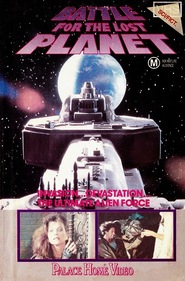
lost planetThen Dave put on his choice. It was a choice that would make us miss boring old Satan. Like many of Dave’s choices, it had more names than a petition against closing a local community center. The name it had chosen for the evening was Galaxy Destroyer, but it is apparently better known as simply Galaxy or Battle for the Lost Planet (“uncensored TV version of Kampf um den verlorenen Planeten”) or “Do you even watch these fucking things before you show them?”

SO there’s this thief named Harry Trent (Matt Mitler) who has stolen a very valuable data tape, and hijacks a space shuttle to escape the security guards chasing him. First problem: he damaged the shuttle and can’t maneuver it, so he has to take a comet’s route back to Earth, which will take five years. Luckily (if not realistically) , there is sufficient fuel and food for this. Second problem: he passed a fleet of wannabe Vogons who reduce the Earth to a scorched black ball.

So after five years of komedy, like discovering he also broke the ship’s stove so that the food is crap and drawing a naked woman on a pillow to seduce, Trent returns to an Earth that has regrown into a bunch of B-movie communes, and discovers he has become a legend, because the data tape he stole will operate a mega-weapon that will destroy the pig-faced aliens. He picks up a feisty liberated woman (Denise Coward), runs into space crabs, has to deal with Mad Dog Kelly, the Maddest Mad Man on the Q Morning Zoo… no I’m sorry, he’s Joe Genitissi in a role that should have gone to Frank Stallone, a Mad Max wannabe who thinks all women should willingly be in his harem and Trent fights him to the death AND OH MY GOD WILL YOU JUST END I REALLY MISS BORING SATAN.

semistalloneSemi-Stallone gets Trent into the Mega-weapon complex and finds out it can kill anybody or anything just as long as the particulars can be programmed into it. Even with the data tape, the surviving scientist (Bill MacGlaughlin) can’t figure out how to program it to kill the aliens. Semi-Stallone says that’s because he’s “too cordial” and he just has to program in human beings and tell the machine to kill everything else. Congratulations, asshole, you just destroyed the biosphere, animals, insects, bacteria and all.

But no, this works, and the aliens dissolve like the demons at the end of the original Evil Dead, but this is deemed so cool that they show many, many instances of it until even that becomes boring. Gaaaah.

This is the work of Brett Piper, who some of you will know from A Nymphoid Barbarian in Dinosaur Hell, and you are nodding sagely right now.  Some fair stop-motion animation, almost nudity (“MY movie had boobies,” I once again entoned from the back), komedy, and some tiresome social commentary.

Dave sneered that we had lost our “bad movie legs”. See for yourself, the three minutes where the movie almost got exciting:

And lest that make you think you might actually want to watch this, here’s the actual trailer:

The only comment on YouTube:

Screen Shot 2015-05-07 at 12.31.32 PM

And you know what else wasn’t in Galaxy Destroyer, besides entertainment value? A galaxy, being destroyed or not.

Sometime during this Paul scapered off into the night, claiming work the next morning (he was lying, he wanted to watch the Rockets game in peace. Incidentally, they lost that night.) and also Erik, claiming a hangover (the veracity of this is unknown). This left Dave, Rick, Alan and myself. “What else you got?” asked Dave. I presented two discs which I knew to be around an hour long. “What else you got?” he asked again, and I realized I was the only person in the room who had to get up for work the next day.

Short sleep rations are a fact of my life. You don’t scare me.

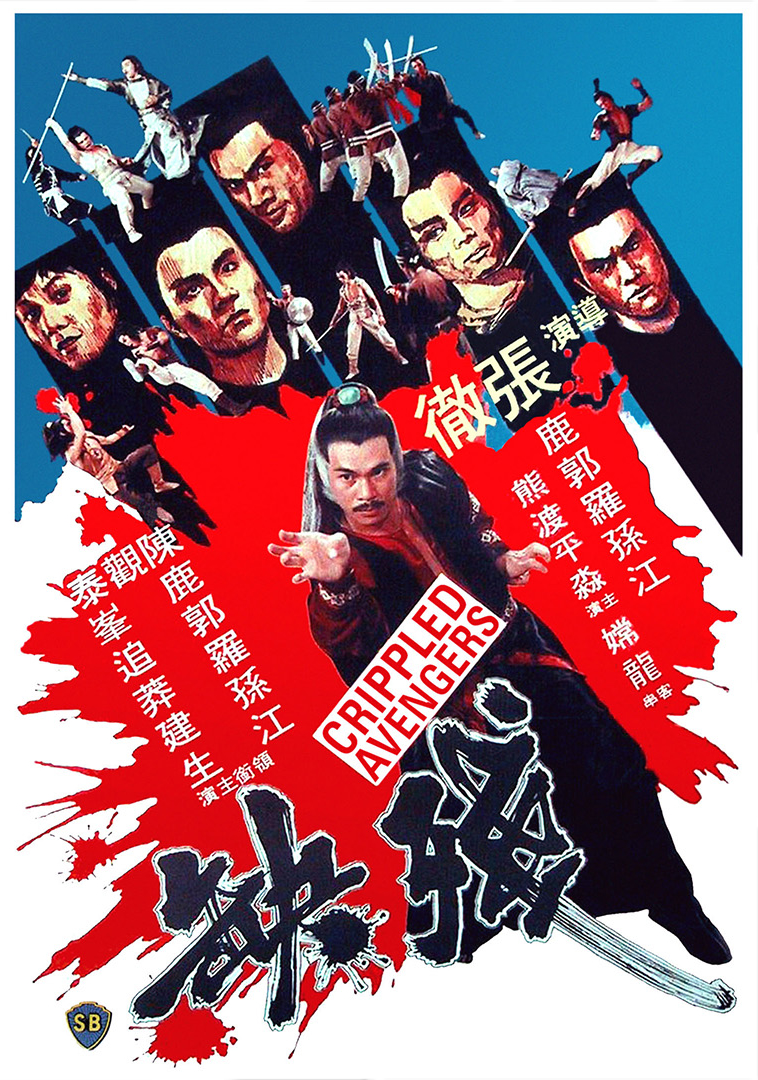
Can-que_e39fe8ffI presented two more movies. And with some sort of hell-spawned wisdom, Dave chose the movie that would be of a fit with the rest of the evening: The Return of the Five Deadly Venoms, which has nothing to do with the earlier movie, Five Deadly Venoms. It is, in fact, a re-titling of Crippled Avengers, because people are idiots.

Chan Kuan-Tai plays To, a famous kung fu hero, whose wife and child are hideously mangled by enemies (To then kills the scumbags with one tiger blow each). His son survives, though his arms have been cut off, and To raises him to be a great fighter with iron arms that have some proto-Tony Stark weaponry in them. They also become colossal jerks, ruling the local village with an iron (ha!) fist, and crippling most of the cast of Five Deadly Venoms for various minor infractions, like talking back or bumping into them on the street.

So, a newly blind man, a deaf-mute, a legless guy, and a brain-damaged hero who tried to help them (but still has excellent kung fu skills in his muscle memory), learn kung fu and come back to rid the world of To and his iron-fisted son. If you need more details, once again you can commune with my younger self.

Chang Cheh’s Venom movies (as they are known) tend to end in spectacular fight scenes that rely more on acrobatic skills than martial artistry, but the fights are so dizzying, like a gymnastic tournament gone ballistic, that it is damned near impossible not be sucked in. Another special shout out goes to Wang Lung Wei as To’s second-in-command, whose battle cry of “Let’s go!” whenever his men were losing, became the quote of the evening.

It washed away the Boring Satan and Boring-er Galaxy Destroyers and ended the night on an up-beat. Nyah nyah on Erik and Paul who have to nurse their delicate psyches through horrid memories of Galaxy Destroyer when they think of this night, and not the exhausting final fight of Crippled Avengers or the ta-tas of the Harris Twins (“My movie had boobies!”)

And rest assured that Mark is laughing at us all, and probably making a joke about an obscure Richard Burton movie.

Looks like I’m back to my cat-herding duties.


Three Movies That Don’t Belong Together

100April is shaping up to be a killer month, as in next week (known throughout the land as “@#$!ing Tax Week”) will not only damage me financially but physically, a week of non-stop labor that will (at least) end with a Crapfest, but it’s a Crapfest that largely exists because one of our number passed away recently. More on that later. If I survive.

So at least I watched some movies at Rick’s before this horrible month started. We tend to put together three movies that have some sort of connection, but this time we decided to get all eclectic and see what happened. 1308402322One of the things that this “Watch These 100 Movies” Challenge is doing is, at least, getting me off my ass as far as Charlie Chaplin goes, and it turns out Rick hadn’t really watched any of his stuff either. One I had on hand was Modern Times, so off we went.

The major memory I carry with me from my first feature-length Chaplin, The Gold Rush, is that in the opening shot I was immediately introduced to Charlie Chaplin, Serious Filmmaker. I’m not kidding about that. That proto-Herzog shot involving hundreds of people made me reconsider my opinion of Chaplin instantly. So what, then, are we to make of Modern Times, an almost entirely silent movie released in 1936, almost ten years after The Jazz Singer ushered in the era of talkies?

modern_timesIn the extended riff on Metropolis that opens Modern Times, the only time human speech is heard is through machinery: the head of the steel mill commanding his foreman to speed things up through a TV screen (science fiction in 1936!) and a sales pitch recorded on a Victrola record. Everything else? as if it were filmed fifteen, twenty years earlier: silent, with only the occasional sound effect. It’s hard arguing with the result: a master working within a format with which he is intimately familiar and comfortable.

As the story progresses and the title character (and modern times is a character in this movie) frustrates and blockades the Little Tramp at every turn, in the final sequence, even he must give himself over to synchronized sound, with – just as The Jazz Singer did – a song. Even then, losing the lyrics written on his cuffs, he has to resort to pantomime and nonsense.

Modern Times was made after Chaplin had spent a year and a half traveling the world, and talking with people as diverse as Henry Ford and Mahatma Gandhi. He returned to an America still deeply mired in the Great Depression, probably not a little politicized – and it shows. The opening section in the factory is based on Chaplin’s visit to Henry Ford’s famous assembly line, where young men were abandoning farm work for better money and, after a few years working that line, suffering nervous breakdowns. After the Little Tramp suffers a similar breakdown, he proceeds to drift from one attempted job to another, where any whiff of unionizing is visited by police wielding batons. This movie was Exhibit A when the House Un-American Activities Committee decided Chaplin was a Commie. chaplin-modern-times-1936-granger

A breath of fresh air is Chaplin’s then-lover, Paulette Goddard, as The Gamin, a young lady down on her luck, who manages to escape the juvenile authorities when the rest of her family is packed off to an orphanage. On the waterfront, the Gamin is like Tarzan (right down to wearing what appears to be one of Jane’s tossed-off dresses), and her and the Tramp’s run-ins with the Law leads to a partnership alternately heartbreaking and uplifting (and hilarious, needless to say). Once they finally seem to have found their ideal place, it’s those same forces of the Law that rousts them (all other problems solved, they still want to bust The Gamin for vagrancy), and they find themselves on the road again. That isn’t a new sensation for the Little Tramp, but he has a companion. Again, not new, but this time we have the feeling that companion is an equal, and that’s nice. And if Chaplin had to put a coda to The Little Tramp character, the silent era in general, and a last word (ha!) to an America in distress – “Buck up! Never say die! We’ll get along!” ain’t a bad one, at all.

I don’t give out five-star ratings easily. Modern Times got one instantly, and without a second thought. bloodthirsty

We had decided to place a “palette cleanser” in the second position, acting like a raspberry sorbet between courses of a meal. No sorbet this, however, what we had was a blu-ray of Andy Milligan’s Bloodthirsty Butchers. (Andy Milligan on blu. This is an age of wonders.)

Bloodthirsty Butchers is Milligan’s screen version of “Sweeney Todd, The Demon Barber of Fleet Street”, a piece of penny dreadful literature that dates back to 1846. Lots of folks have taken a crack at the story, including Tod Slaughter – there’s even a ballet, for pete’s sake. This is one of two movies Milligan actually shot in England in 1970. (The other one, The Body Beneath, gets my vote as the almost watchable of his films), instead of trying to make Staten Island look like period Europe. Tim Lucas put it best: Andy Milligan’s movies play out like filmed community theater productions. There are one or two good actors, many mediocre ones, and some oy-god-get-off-the-stage actors. And somebody’s mom (in this case, Milligan himself) sewed the costumes out of whatever was available.

The heartbreak of nailess Milligan hand.

The heartbreak of nailess Milligan hand.

The most fun was finding modern devices in the background, and how every room has the curtains drawn to avoid the 1970 neighborhoods outside; the modern hairstyles and makeup. And yelling “WHO ARE YOU??” every time a new character suddenly cropped up. (Actually, the most fun I had was fantasizing a 40-ish Stephen Sondheim, chilling out from the intense workshopping of Company and catching this crap at a 42nd St. theater. Thinking, “Hey, I bet I could get a musical out of this!”)

Watching Milligan movies is perversely fascinating, but draining. I really can only manage one a year. And I still have these other two blu-rays…

This part, at least, did have us screaming in horror.

This part, at least, did have us screaming in horror.

How was the blu, you might ask? Well, it’s quite clear, but so obviously a 16mm print that was blown up to 35mm the grain should get a screen credit. That’s not the fault of Code Red, who put out the blu – that was standard operating procedure for Milligan and William Mishkin. How else do you think he made movies for only $12,000? Milligan always had his framing too tight, so if you’re watching this on a modern 16:9 TV, reset your aspect ratio to 4:3. Andy had enough shortcomings on his own without adding to them by cropping off what little frame he had.

And I couldn’t find a trailer online. Lucky you. IF

So what were we cleansing our palettes between? Well, Rick has been having a bit of a problem with the entertainment he enjoyed as a youth. Most recently, a few months ago, we watched an episode of Space 1999 which murdered that particular sector of his childhood (the episode had an implied-nude Sarah Douglas, and endless scenes of a slow-motion bouncing ball). Then, a month or so ago, he watched an old cable favorite, Foxes ,with terrible results. So his next attempt to capture the cable glory of his childhood was approached with not a little fear. The movie was Thief, and as I put it, “This is a Criterion blu-ray. How bad can it be?”

Thief was Michael Mann’s first theatrical feature, after a very well-received TV movie, The Jericho Mile, gave him enough clout to convince James Caan to take the title role. Caan plays Frank, who is, you might guess, a thief, and an awfully good one. His two-man crew (one of which is Jim Belushi) and he plan and perform heists that specialize only in cash or diamonds locked inside seemingly invulnerable vaults. This eventually garners the attention of Leo (Robert Prosky, a TV actor also making the jump to movies), a godfather type who wants Frank to work for him exclusively.

caan weldFrank carries in his wallet a photo collage of the ideal life he wants: house, kids, wife. He convinces a waitress he’s attracted to, Jessie (Tuesday Weld) to be the wife and mother in the collage, and once she agrees, Frank also agrees to Leo deal: a couple of big jobs to sweeten his retirement pot, and then he will retire to his carefully-managed secret identity as the owner of a car lot. And that, as they say, is when the trouble starts.

Mann insisted on authenticity, not only from his actors (and the diner scene between Jessie and Frank is still taught in method acting classes), but from his story: there are several actual high-profile thieves in the cast, who were consultants, and lent the movie their tools of the trade (like that huge drill Caan uses in the opening scene). Apparently Caan learned so much under their tutelage he actually cracked a safe in his sister’s house when the mechanism fouled up. burn bar

Rick was gratified: the movie was actually better than he remembered it. For my part, I had owned the soundtrack for something like mumble mumble years, oh, all right, I bought it when it came out in 81. This was only Tangerine Dream’s second American theatrical score, but I had been buying their albums since about 77 or so. So it was nice to finally see the images that inspired some of the music.

But how did I like the movie? Thief is very good, primarily for the reason Rick put forth: its balance between character and technique, Frank’s life and his trade, is almost perfect. Mann is stretching visual muscles here that are eventually going to coalesce into Miami Vice and shape fashion and entertainment for a good portion of the 80s. And the choice of Tangerine Dream is perfect for the neon-lit vistas and brutal technology Frank employs – sometimes the score is almost indistinguishable from the  roar of the drill.

It’s also fun to see other members of the Mann Repertory Company crop up – William Peterson as a bouncer in a bar, Dennis Farina as a gunsel. Good stuff.

Now I need to finish this up, post it, and gird my loins for the next two weeks. I may get to slide in a movie or two, but I won’t get to write about them, until the latter part of the month. Enjoy what’s left of your Easter baskets, kiddies, and be excellent to each other. I should be back.

Punching: The Forty Year Difference

Coming off two weeks where real life and two of my three jobs were determined to kill me (had number three pitched in, I’d be writing this from a hospital bed at least), I suddenly realized I had turned a corner and had the next 48 hours free. What to do? I should probably watch a movie. I haven’t watched a movie in two weeks. I have that stupid thing where I am going to, for sure, watch a certain 100 movies I’ve been putting off within the next year.

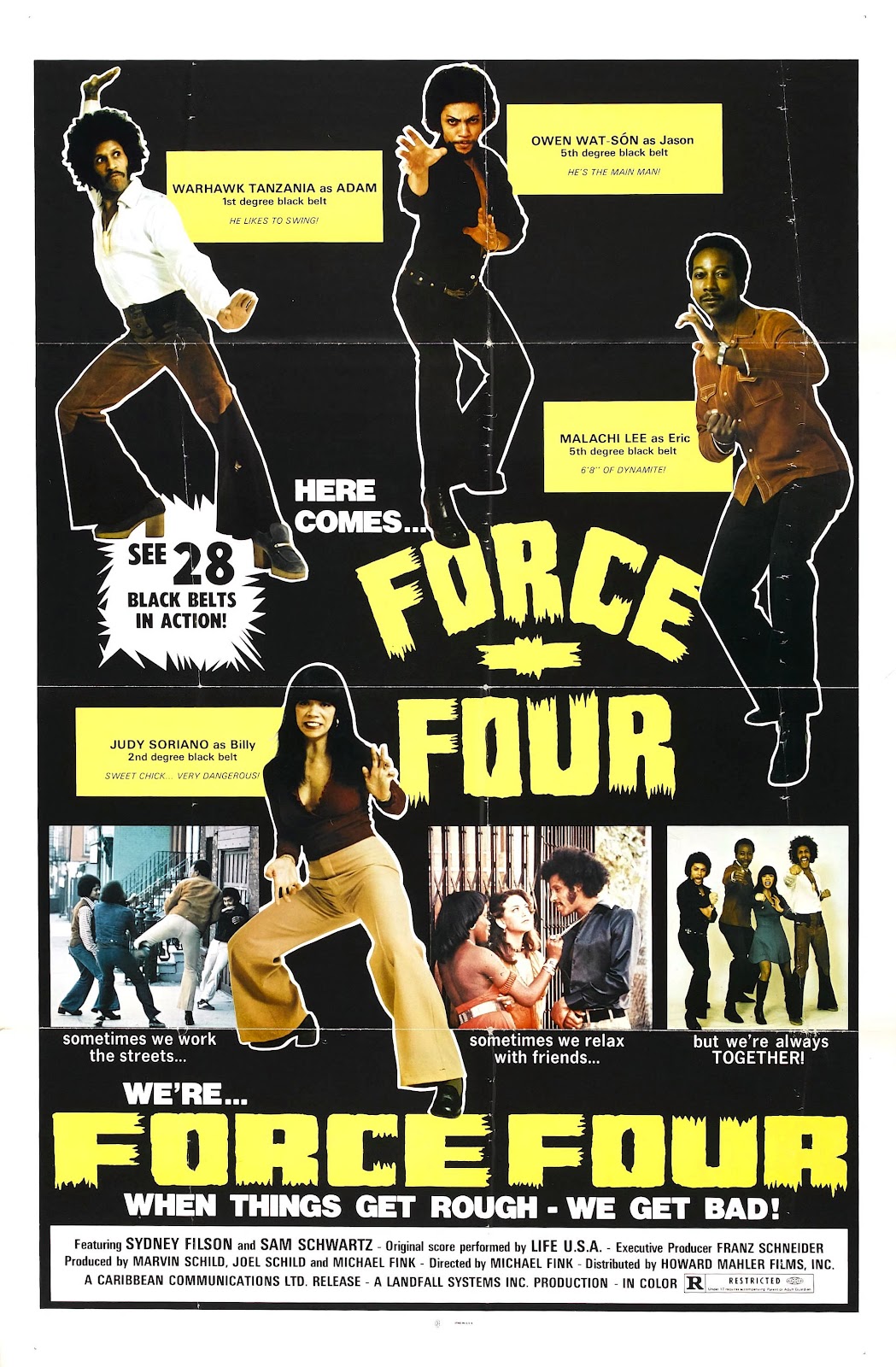
force_four_poster_012So what do I watch? Force Four. Or as the IMDb knows it, Black Force.

It is damned hard to find information about Force Four. It’s a scrappy little mongrel of a movie, and I wager the script was written on a cocktail napkin. The Black Force of the title is four martial artists (Owen Wat-son, Warhawk Tanzania, Malichi Lee, and Judie Soriano), who are all real-life black belts, They apparently have some sort of mercenary/troubleshooter thing going on, because they receive a phone call on the special phone in their panelled Black Force pad, hiring them to find and recover a African artifact that was stolen before the opening credits.

By way of introduction, each of the members of Force Four do their individual katas, which eats up some time. Then they Hit The Streets to dig up some information on the theft. This takes the form of an endless montage with the same ten shots of New York City repeated over and over played under improvised dialogue from our four stars, leavened with the occasional quick fight scene or the sight of Warhawk playing basketball in platform heels. The dialogue occasionally tries to sync up with what’s going on onscreen, and the one sudden instance of sync sound is jarring. But man, does it eat up time.

Meanwhile, in the Black Force Cave...

Meanwhile, in the Black Force Cave…

That one prostitute who rates sync sound, it turns out, works for Z (Sam Schwartz) the doughy mobster who runs things, see? Z sends out his thugs to get Force Four while they’re separated and Hitting The Streets. There are four quick fight scenes. Our plucky Black Force re-convenes at The Pad, and Owen has gotten one thug to talk (off-camera), so they go to the thug’s place and beat them up. No artifact or Z, though, so they drive upstate to Z’s house. This drive is pretty much accomplished in real-time.

DuskZ is having a house party, so the movie will also stop dead for an entire song by an outfit I dubbed Tony Borlando and Dusk, but was likely Live USA, who provided the soundtrack. And you know what? That soundtrack is pretty good. I’m gonna let Dusk/Live USA skate, even if Tony is wearing a tuxedo that left me blind for a few minutes.

Force Four beat up some more thugs on the grounds, then confront Z (who is soaking his buyer for another 100 grand, the rat). Z barely gets away, and many are the screaming extras and kung fu fights around the pool.  Owen plants a tracer on Z’s car (but drops it and then has to hide behind a tree for fifteen minutes while Z’s head thug tries very hard not to see him). This enables Force Four to follow Z the next day – and his buyer lives out even further than him – beat up everybody, and find out that the case has a false bottom with tons of uncut heroin.

Malachi Lee gone SMACK YOU!

Malachi Lee gone SMACK YOU!

The movie is still not much over an hour long. So we have the extended dance re-mix of all the fight scenes in the movie, followed by a five minute end credit sequence, with individual shots of each and every black belt in the movie (the poster promises 28, and I believe the poster). We finally hit 82 minutes, and it’s over.

Force Four starts with some title cards stating that the martial arts contained therein are presented as realistically as possible, with no camera tricks or gimmicks. This is pretty much true, and the fights are as realistic as you can get in a world where opponents attack you one at a time and there are no guns. Each fight is over with very quickly, and our heroes don’t have a lick of trouble until the very last battle, and even then, they are never outmatched. Kind of boring. Which is a fair assessment of Force Four. Frustrating amount of padding, no real tension.

It’s also odd to consider that the breakout star from this was Warhawk Tanzania, who would make The Devil’s Express (aka Gang Wars) the next year. (Owen Wat-son had made Velvet Smooth the year before, so I guess he was the opposite of a breakout. He actually has the best acting chops of any of the Force, though Malachi Lee has a nice, quiet charisma.)

FIN02_JWick_BusShltr_SWPNow let’s compare this with the movie I saw the next day, John Wick.

In case you didn’t watch any movie trailers last year, Keanu Reeves is the title character, a very recent widow, whose wife’s parting gesture is the gift of a beagle puppy, delivered on the evening of her funeral, to ensure that John continues to have “something to love”. John also has a beautiful 1969 Mustang that catches the eye of Iosef (Alfie Allen), the lowlife son of a Russian mobster. When John refuses to sell, Iosef and his buddies stage a nighttime home invasion, beat up John, steal his car, and kill the puppy.

Puppykillers. We all hate them.

Iosef then proceeds to have a very bad couple of days as he finds out he tugged on Superman’s cape, he spat into the wind, he pulled the mask off that ol’ Lone Ranger and he just reactivated one of the most feared assassins in the history of the world. Wick met his wife, retired from The World, and the only thing that was keeping him a nice, quiet, normal nobody was the dog. And it is quite probable that not even Iosef’s daddy, kingpin Viggo Tarasov (Michael Nyqvist), and his army of hoodlums, will be able to save him.

john-wick-is-keanu-reeves-best-movie-since-the-matrixJohn Wick is, needless to say, a very violent movie; when all is said and done, Keanu has killed 76 people, but hey – dog owners understand. What keeps this from becoming Commando is the odd alternate world we find ourselves in this time: The world of the assassins, where everything – everything – is paid for in gold coins, there is a five-star safe house hotel in the Flatiron Building, and a phone call for “dinner reservations” gets you quick, discreet and complete body disposal and cleanup – one gold coin per corpse.

The movie really owes a lot to Donald Westlake’s Parker novels and Point Blank in particular, with its driven protagonist and fascinating glimpses into a hidden world with its own rules and codes. It’s also a hell of a rumination on revenge and the fact that dominos keep on falling once they’re nudged.

downloadJohn Wick was hyped to me as being the equal of The Raid 2, and for once I bought into the hype, and as usual, regretted it. I liked the movie, and unlike a lot of people, I really like Keanu, who shows some impressive acting chops in the beginning, and whatever else you may say about the man, he is not afraid to train and train hard. But living up to Raid 2 is a tough road to follow. Now, like Raid 2, we are presented with a series of fight scenes in which I can follow every motion and action. Movies that do this automatically get another star, letter grade, or whatever bogus scoring system you’re using.

I really liked it. But I wasn’t blown away.

But it’s this methodology that shows how far the action film has come in 40 years:  The black belts of Force Four did their own choreography, and Michael Fink filmed that choreography. Wick’s directors, Chad Stahelski and David Leitch, were stunt coordinators, choreographers and then second unit directors before lobbying hard for their post here: pre-viz and plotting out how fights look to the camera are second nature to them. It has become an industry, and the sooner this aesthetic takes hold of action filmmaking, that it becomes the standard again, the better. I’m thinking that it’s this clarity of motion and intent in the action scenes that had people putting it on even footing with Raid 2, it’s really that much of a breath of fresh air in an American-made film.

And then I watch the Making-of supplements and see all these scenes before the teal and orange color ramping and I start being tempted to take away that extra star. That, at least is definitely one thing The Raid 2 has over John Wick.

I watched John Wick with Rick and Dave, and Dave made the comment – likely true – “This script was only 15 pages long. I guarantee it.” I held that he was likely right, but at least it wasn’t half a page, spread out to 82 minutes. I don’t think the point was quite made because I haven’t made them watch Force Four.

Yet.

John Wick on Amazon


Going Dark for the Holidays

Today is the last day of the Thanksgiving Holiday, the second weekend in a row I’ve had off. I have done nothing except cook. eat, sleep and play stupid puzzle games. It has been remarkably renewing. The opposite of profitable, but renewing. Which brings me to this entry.

December begins tomorrow. That is usually a busy month for me; hopefully the last two weeks are not an indicator of how busy I’ll be this year. I need to wrap up phase one of a writing project by the end of the month, and there is a personal writing project I’ve been putting off far too long.

So what I’m saying is, I’m going to stop pretending and simply announce that, likely, this space is going dark for the rest of the year. This downtime has been nice, but I need more. I haven’t watched a movie in more than a week, because – and I find this hilarious – if I watched any more, I’d have to write about them, and this entry was getting ungainly long already. That’s the epitome of putting the cart before the horse. So, before I close this tab on my browser, here’s a shorter version of that ever-growing blog post:

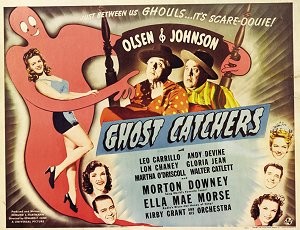
ghost-catchers-1Ghost Catchers (1944) is Olsen and Johnson’s third movie for Universal, the first being Hellzapoppin’, which I raved about last time. Fortunately, it’s up on Vimeo in its entirety, as is their second movie, Crazy House.

Studio execs had ground them way down by this time (it is probably telling that their last picture is titled See My Lawyer, and reportedly has very little Olsen and Johnson in it), to the point that once more we have two movies occupying the same space, but there isn’t even the uneasy truce between them that made Hellzapoppin’ great. Olsen and Johnson find themselves in an Abbott & Costello knockoff (typically, they make a meta joke about it), and the best sequence involves a jitterbug exorcism to cast out the one actual ghost in the whole thing. Mel Torme is supposedly in that, and so is Morton Downey Sr., providing far more entertainment value in five minutes than his son did in an entire career. Chic Johnson seems to be on nitrous, so constant is his giggling. I should have watched Hellzapoppin’ again.

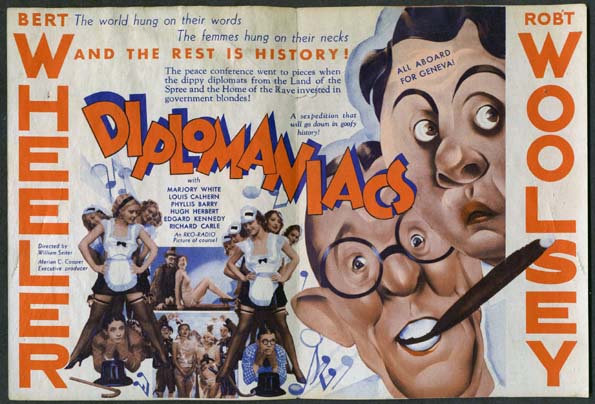
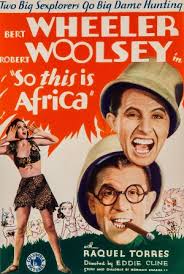
downloadI went over to Rick’s to watch more movies; now, normally, Rick and I, during these outings, watch a better quality of film. During the last sojourn at Dave’s, however, when I showed Wheeler and Woolsey’s Diplomaniacs, Rick became a hardcore convert to the cause of W&W. We had been interested in So This Is Africa, their sole movie for Columbia (during a contract dispute with RKO), and reportedly one of their most heavily censored. Alas, my suspicions were correct, as not only does this movie suffer from the lack of Joe Mankiewicz’s lunatic scripting, but the print is pretty heavily and obviously cut, so much so that Rick and I took to marking each instant with scissor motions in the hour while hissing, “Filth!”

The best bit is an out-of-left-field riff on Eugene O’Neill’s Strange Interlude, which would have been brilliant had the Marx Brothers not done it three years before in Animal Crackers.

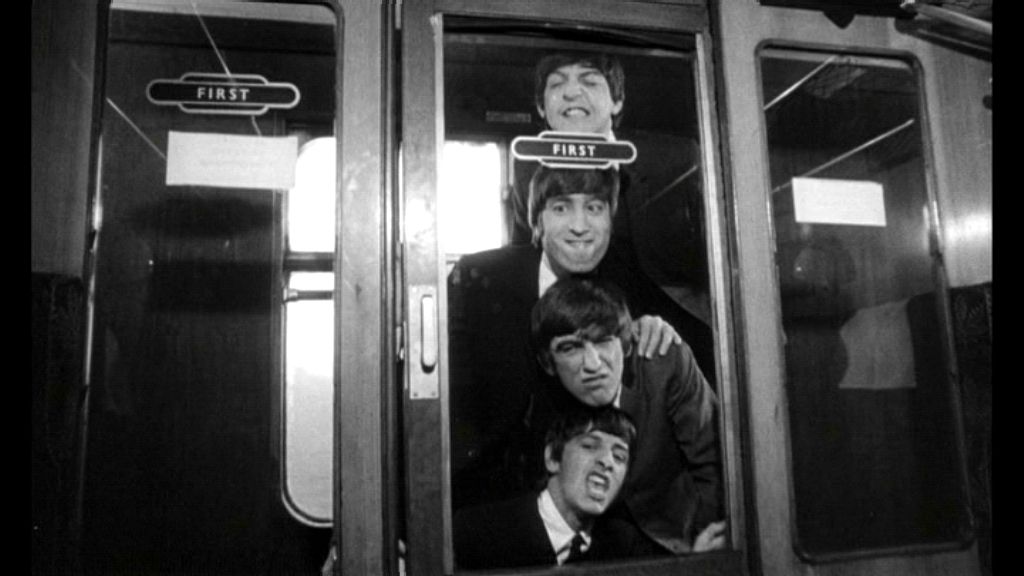
CTA1113_originalWe next watched what is the best thing I’ve seen all week, which is the recent Criterion blu-ray of A Hard Day’s Night. The image is a crisp, clean black-and-white and the sound features a lovely 5.1 remix that serves the songs well. The movie stands as a milestone for any number of reasons, but mainly as a testament to letting creative types have their head, and how important is good timing. The Beatles occupied one of those rare intersections where talent and desire were in the right place at the right time, and it was amazing that Richard Lester and writer Alun Owen could break the precedent of other rock musicals to actually allow their stars to show their differing personalities, to be themselves by playing larger versions of themselves.

I hadn’t seen this movie since 1975, when a local theater ran a midnight movie marathon of this, Help!, Yellow Submarine, and Let It Be. Some of the ladies in the college crowd were game enough to scream during the appropriate parts. But what I had forgotten was how claustrophobic this picture was, that it showed how trapped the Beatles were inside their own success. There’s always a smile or a joke, sure, but their faces do not truly light up until they’re playing their music.

Hard2For some reason I truly appreciate that in the final concert segment of the movie, you are able to see that the Beatles are sweating under the stage lights. People tend to forget how much actual work is involved in performing, and it is good to see that paid tribute.

It took me two more nights to get through all the supplements. That’s a great disc, is what I’m saying.

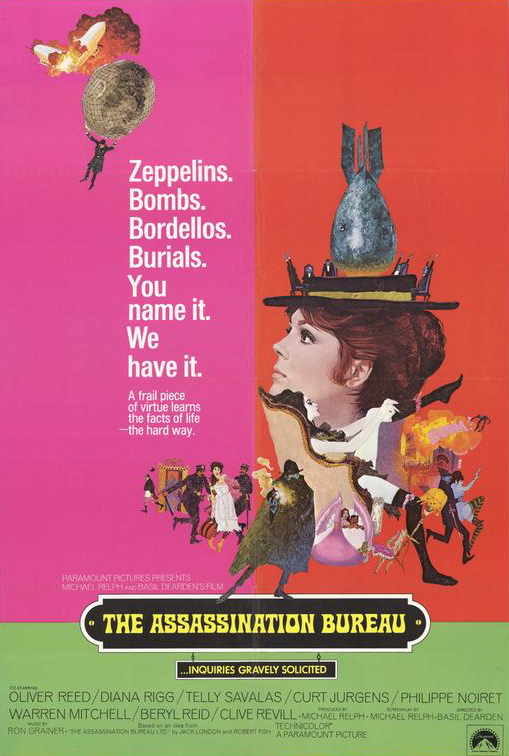
I1Ww9Rick is a recent convert to the cult of Oliver Reed; he arrived there by watching Terry Gilliam’s Baron Munchausen, followed by my insistence that he watch Richard Lester’s (there he is again) Three Musketeers, where Reed rather steals the show as Athos. So I brought my old disc of The Assassination Bureau (1969) (Warner Archive recently re-issued it).

This movie is what we used to call a “romp”. In pre-World War I England, a young suffragette journalist (played by Diana Rigg) discovers the existence of the title organization, run by the son of its founder, Ivan Dragamiloff (Oliver Reed). She contracts the Bureau to kill Dragamiloff himself, which the young idealist accepts – he feels the organization has grown too complacent and greedy, accepting hits for their monetary value, not the moral killing of deserving targets his father had insisted upon. Thus begins a cat-and-mouse chase throughout Europe, with Rigg unknowingly reporting to the Vice Chairman of the Bureau (Telly Savalas), who wants that World War, because all his money is tied up in munitions factories.

Oliver Reed & Diana RiggThis is light (despite the subject matter), frequently silly comedy-adventure, with a final fight scene aboard a zeppelin loaded down with a prototype blockbuster bomb bearing down on a castle housing a peace conference between all the crowned heads of Europe and Russia. I wanted Rick to see it because I think it proves that Reed could have been a credible James Bond… were it not for, you know, all the drinking and punching people.

For our follow-up, we’ll be watching The Devils, as soon as I figure how to play my Region 2 DVD on his system (really, Warner Brothers, what the hell).

I should close by mentioning that Rick, in retribution for my constant bad-mouthing of and cock-blocking a re-showing of Evilspeak at Crapfest, had re-named his wi-fi router so this was showing on my phone and iPad:

ClintBut this scheme, twisted genius that it is, has backfired upon him, as my phone now displays this comforting message:

No Clint

Nyeah, nyeah.

If I don’t have a chance to see you before then, have a Merry Christmas, or whatever your inclination is this time of year. Be safe, and watch good movies. It won’t kill ya.


Arabian Hellzamaniacs

So I went to Dave’s. So did Rick. We watched some movies.

Hellzapoppin’ (1941)

From the Broadway Revue, not the movie. Do you care?

From the Broadway Revue, not the movie. Do you care?

Now this is what you call your basic bucket list movie. It actually got mentioned in Famous Monsters, once upon a time, and I’ve wanted to see it ever since. The fact that it’s known as a milestone in anarchic filmmaking is also a definite plus. So when Dave managed to conjure up a copy, I was, as they say, there.

The movie opens with an incredible production number in Hell (the reason the movie ever cropped up in Famous Monsters), but the director charged with making the movie version of Olsen & Johnson’s successful New York stage show (in 1941, the longest-running show on Broadway!) wants to make an entirely different sort of movie altogether. Aided by a pre-Gunsel Elisha Cook, Jr. reading and re-working the script, Olsen & Johnson watch the dailies of this new movie, supplying voices for the characters, until one of them asks, “Doesn’t this movie have any sound?” “Sure, listen!” the other replies, and BAM, we are into that movie.

hellzapoppin1These bits leading up to our more normal picture are fast-paced and brilliant, and there was no way Olsen & Johnson could have kept that up – not without their stock-in-trade, interacting with a live audience. Still, you give out a heavy sigh when we slip into the usual screwball romantic comedy that forms the core of Hellzapoppin‘ the Movie. The romantic lead is staging a charity show at the mansion of his lady love, but he doesn’t want to butt in on his pal, who is at least as wealthy as the girl; he doesn’t want to look like he’s a gold digger. The boys are running tech for the show, and brought along their kid sister to help lug props: an incredibly young Martha Raye (only 25 at the time), playing a man-hungry wench who sets her sights on a fake European Count. There are mistaken identities, crosses and double-crosses, and thank God Olsen & Johnson not only tear down the fourth wall repeatedly, they dance on the rubble of the wall and then sell it for scrap.

HellzapoppinWe had some conversation about what the original stage show must have been like, because Olsen & Johnson use the medium of film for all its worth, having shouted conversations with the projectionist (Shemp Howard, no less), and doing any number of things that would be impossible on stage. One thing that could be done on stage, and is so amazing that we played it twice (and if I’m not mistaken, was excerpted in one of the That’s Entertainments): during a check of the instruments, every black servant on the estate wanders onto the stage conveniently built in the backyard, and they have an impromptu, amazing Lindy Hop number that is physically exhausting just to watch:

“Man, I wish they were in the show!” says one of the boys afterwards. You ain’t the only one, Jackson. The dancers, known as The Harlem Congaroos, are the only personnel from the Broadway show to make the leap to the movie version.

The effort to superimpose a plotline over what was apparently a vaudeville show writ large should have damaged it, but instead Olsen & Johnson grabbed the opportunity and made a movie so profoundly postmodern that every hipster should carry a copy of it in their pocket; yet, for some reason, home video currently eludes it, or vice versa. The best known of Olsen & Johnson’s movies, that’s a shame: it should stand as an example of how studio meddling can’t quite bring the creative spirit down.

Diplomaniacs (1933)

10091Yeah, it was me who wanted to glory in the Old Stuff that night, and that desire was sparked by this movie. The comedy team of Wheeler and Woolsey have, much like Olsen & Johnson, descended into obscurity, but thanks to Warner Archive, have had a bit of a renaissance. Diplomaniacs was an impulse buy – I needed one more disc for one of their “5 for $50” sales – but oboy, what a stroke of luck.

Wheeler and Woolsey have opened a barber shop on an Indian reservation, figuring there would be no competition – but there’s no custom, either. But hearing Woolsey making barbershop talk about international debts, the oil-rich tribe decides the barbers are their best bet for signing a peace treaty with the rest of the world. So our doofuses – the musically named Willy Nilly and Hercules Glub – are given a million dollars each and sent to Geneva.

maxresdefaultThis opening bit is little more than your typical Three Stooges opening gambit, though the Stooges didn’t have production numbers with scantily-clad pre-Code Indian maidens. But once they get on the ocean liner to Geneva, the movie really takes off, and what I mean by that is writer Joseph L. Mankiewicz’ opium shipment arrived. The remainder of the movie is so fast-paced and anarchic, so downright silly, that it is hard to imagine some manner of narcotic not being involved. Hugh Herbert (who was in Hellzapoppin’ as the detective with a bewildering array of bad disguises) is the villainous Chinaman Chow Chow, who begins every line with “It is written…” He’s the henchman of Louis Calhern, whom Dave immediately recognized as Trentino in Duck Soup. Calhern is, himself. working for a war munitions manufacturing combine run by Schmerzenpuppen, Puppenschmerzen, Schmerzenschmerzen and Puppenpuppen.

As I said, it’s a very silly movie, and I loved it. Sure, the casual racism of Chow Chow can be off-putting, but then Wheeler and Woolsey double down on the racism – hell, triple, quadruple down – with a final production number at the Peace Talks. Tex Avery cartoons had a long tradition of what Dave terms “blackface dynamite”, where characters getting a faceful of TNT were instantly transformed into minstrel show performers. Here is the precursor to that, a surprisingly effective bomb labeled “BOMB – For medicinal purposes only” (I kind of hate that the image is so soft here you can’t read that):

Oh, Holy Mother of God

Oh, Holy Mother of God

Is this offensive? Well, duh. But I also think that extending the bomb’s effect to the observation gallery, and reversing Woolsey’s black glasses frames to white, points to a certain amount of piss-taking going on. It is a silly part of a very silly movie, and I look forward to seeing more of these madmen at work. Pity Mankiewicz isn’t credited as writer on any other Wheeler and Woolsey movies. Hopefully there was more opium floating around Hollywood.

Diplomaniacs on Amazon

Arabian Adventure (1979)

arabianadventureosI had brought the 1937 Sh! The Octopus, which would have provided us with a Hugh Herbert Film Festival, but this was deemed too Mantlerian so we watched Arabian Adventure, which I had never seen. It was a fairly obvious attempt to produce a Star Wars rip-off without being obvious about it, and its success pretty much depends on how you feel about Kevin Connor movies. Connor had previously directed fare like At the Earth’s Core, The Land That Time Forgot and Warlords of Atlantis. Genre adventures made with special effects that were dated, even for their time, also known to me as The Movies You Take A Nap During At B-Fest.

Arabian Adventure isn’t too bad, especially if you approach it as a children’s movie. It has all the standard Arabian Nights claptrap: an evil, wizardly Caliph (Christopher Lee!), a sniveling toadie (Milo O’Shea), a prince in disguise (Oliver Tobias) and a princess to rescue (Emma Samms). Also a plucky young orphan and his trained monkey, and an imprisoned good Vizier (Peter Cushing, who graces the movie far too little).

Can't touch this!

Can’t touch this!

The big scene here for the Star Wars crowd is a climactic dogfight on magical flying carpets, which manages to squeeze out a bit of excitement, but overall could have been much more impressive. Our big moments of groaning horror had to do with the appearance of Mickey Rooney as a clumsy, trollish blacksmith in charge of the giant fire-belching Kevin Connor puppets, and John Ratzenberger as the head of a group of thieves. Many were the Cliff Clavin imitations that punctuated our Arabian Adventure.
Like I said, entertaining enough, but curiously of a piece with how we began our evening: an episode of Space: 1999 that Rick credits with totally destroying his cherished memories of childhood. I’m in no rush to revisit either.

Arabian Adventure on Amazon


Raquel & Some Rats

There’s always a hangover after challenges like Hubrisween, where no matter how much you may like movies, you have to avoid them for a while. Listen to some music, read a book. Clean your bathroom. Then one night you finally watch a movie again, and you discover why you liked them all along.

Let’s see if I can be brief. This is a busy week, and time is at a premium, especially since I’m watching movies again.

The Biggest Bundle of Them All (1968)

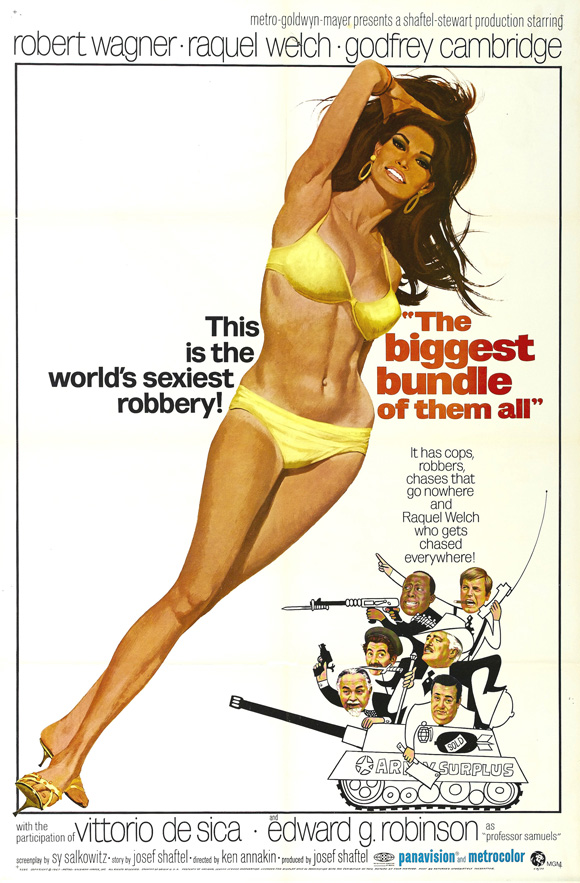
biggest-bundle-of-them-all-movie-poster-1968-1020427760I figured to start out with some cinematic comfort food. This one I remembered playing on CBS back in the day, say ’69 or ’70, and though it didn’t introduce me to Raquel Welch (that was probably Fantastic Voyage or Fathom), she was certainly the reason I watched it. Well, it was also a caper comedy, very popular at the time, and I also loved their complex plots.

(Slight digression: when the soundtrack album cropped up in my local Woolworth’s for 99 cents in the early 70s, I grabbed it quickly. Not only did it have a reproduction of that gorgeous poster art, but the score by Riz Ortolani – unknown to me at the time – and songs by Johnny Mathis and Eric Burdon & The Animals was really good)

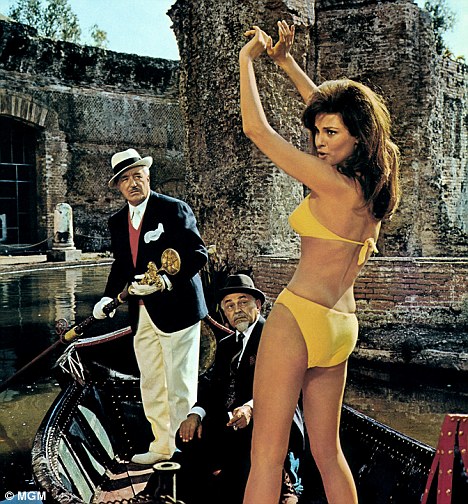
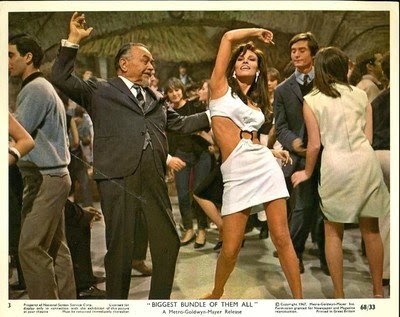
article-0-016F2E8B000004B0-989_468x504The movie takes place in Italy, opening at the funeral of a respected mafioso. His old compatriot, played by Vittorio De Sica, is kidnapped by a gang headed up by Robert Wagner and including Godfrey Cambridge, Davey Kaye and Francisco Mulé, representing England and Italy, respectively. (Raquel is Wagner’s girlfriend, looking forward to all the dancing she’ll be doing in exotic climes once Wagner’s schemes pay off)

This scheme doesn’t, though: they find out De Sica’s gangland star has diminished so thoroughly that no one will pay his ransom. De Sica has a plan, however: a heist of a platinum ingot shipment plotted out by his old friend, Professor Samuels (Edward G. Robinson). The catch: to buy the equipment necessary to pull it off, they have to raise $3000 within a week, and so begins a twisting tale of amateurs attempting to become master criminals.

The movie definitely has its good points. De Sica, interviewing each member of the gang, is despondent to find out they are just common joes with money problems – a musician, a chef and a mechanic. When he turns to Wagner and asks, “And what do you do for a living?” Wagner’s response is an indignant, “Nothing!” “At last! “says De Sica. “A professional!”

Oddly, most of the photos you find feature Raquel...

Oddly, most of the photos you find feature Raquel…

Where the movie begins to wear on me is the tortured trail of trying to steal the three grand; if you thought cringe comedy was a modern invention, this will disavail you of that notion. The final heist is pretty good, though ($3000 went a long way in late 60s Italy, it seems). The one failing here is common to most, if not all, caper comedies – crime cannot be allowed to pay, and something stupid has to happen so our heroes get away with nothing. Expected, but still…

And what of Raquel, who was so popular at the time that the Spanish title translates to Raquel and Some Knaves? Story-wise, Raquel’s purpose is to vixen out the identity of the mysterious fence in Morocco who will buy all that platinum, to the tune of five million dollars. She will also become the unexpected moral compass at the movie’s climax, when Wagner finally makes good on his long-promised double cross of De Sica.

Who am I kidding? Raquel’s purpose in this movie is to make the El Kabong sound go off in my head whenever she makes an entrance. And since we are led to believe that in her very first scene, she is dancing naked on a rooftop, that sound got deafening.

No trailer, but here’s Raquel in a bikini. KA-BONNNNG!!!

The Biggest Bundle of Them All on Amazon

 Deadly Eyes (1982)

deadly_eyesSometimes the only way to follow up Raquel Welch in a bikini is with dachshunds in rat suits.

I think I caught the very end of Deadly Eyes on HBO back in the day, and that was the end of my involvement with it until Scream Factory put it out on blu-ray recently. Even when it was playing in theaters, it was fairly infamous for that central conceit. The plot involves some rats that have been feasting on poorly-stored grain that’s been treated with steroids, When a health inspector (Sara Botsford) condemns the grain and has it burned, the now king-sized rats have to find a new home and food source, and the city of Toronto is on the menu. The close-ups are of puppets, of course, but group scenes involving big-ass rats running around and chasing people: the aforementioned dachshunds, and an occasional terrier when they needed the rats to jump on something. (Dachshunds are not the greatest leapers of the canine world).

rathunds

“No amount of tasty treats is worth this humiliation.”

Outside of the occasional rat attack, the movie is largely concerned with divorced high school teacher Sam Groom, who meets cute with Botsford and they bond and have R-rated sex. This gets him involved with the whole rat thing, and allows him to play hero when Botsford and his son from the previous marriage wind up in the subways that the rats have decided to make their new burrow (I will give the filmmakers credit for not going for the obvious “We can’t close the subways! It’s the Fourth of July!” route). The balance of the story is rather off, in that respect, taking time to build up the relationship and then put it in jeopardy while the average audience member wistfully recalls when the movie had big-ass rats running around and biting people.

rats15Robert Clouse directs, which explains why the annoying high school students wind up at a Bruce Lee retrospective, where they all die, in a sequence that has some of the most brazen grab-the-monster-and-pull-it-to-you action I have seen since Bride of the Monster. The direction and acting are professional, at least. Though based on a James Herbert novel – well, actually, based on a screenplay that was based on the novel – everybody in the supplemental interviews are pretty upfront about having never read that novel. Writer and co-producer Charles H. Eglee, in fact points out that he based the movie on Joe Dante’s Piranha by and large, and once he makes that admission, everything clicks into place.

deadlyeyes2I’ve read James Herbert. This was probably wise. Fun, but not a milestone or anything. Still, if you only see one movie with dachshunds dressed as rats swarming over Scatman Crothers, it should be this one.

Deadly Eyes on Amazon

Well, I wasn’t brief enough. Time to go to press, and I still have more movies to talk about. Maybe next time.


The Halloween Crapfest

furniture-fascinating-orange-rubber-halloween-pumpkin-carving-ideas-with-orange-rubber-teeth-and-orange-plastic-tongue-for-dinning-room-halloween-pumpkin-carving-ideas-decor-magnificent-halloween-pumpWhile all that Hubrisween stuff was going on, I suddenly felt the craving for a movie experience much less solitary. A need to inflict suffering on others. I felt the need for an all-horror Crapfest (well, Crapfests are sort of predicated on horror, but that’s a larger issue). By and large, the call was answered.

Except on the day, Paul and the Other David begged off, citing Ebola, because that will never not be hilarious. Alan had a matinee performance  -O, cursed work ethic! – which left it down to me, Dave, Rick, Erik and Mark. We brought enough food for the original horde, so there were plenty of leftovers.

We began with a collection of Halloween cartoons curated by yours truly. I’ll make a perfunctory pass through YouTube, but I don’t hold much hope for finding any of them (and if I did, they’d be taken down within a month), so here’s a list:

  1. Bimbo’s Initiation (1931) – a sort of proto-Betty Boop short
  2. Scaredy Cat (1948) – Porky & Sylvester vs murder mice, and not for the last time
  3. The Mad Doctor (1933) – Mickey Mouse. Disney was scarring young minds way before Snow White
  4. Water Water Every Hare (1952) – Mad doctors again, this time with Bugs Bunny
  5. Snow White (1933) – but this time with Betty Boop and Cab Calloway
  6. Have You Got Any Castles (1938) – Musical earworm involving books, included for an appearance by Mr. Hyde, Fu Manchu, the Phantom of the Opera, and Frankenstein’s Monster. And dammit, because I love this cartoon.
  7. The Haunted House (1929) – Mickey Mouse again, and some skeletons who just want to party.
  8. Broomstick Bunny (1956) – Bugs Bunny, obviously, and the debut of Witch Hazel.

Okay, color me corrected (and hopefully these won’t disappear in a few weeks):

(I think I really love Have You Got Any Castles because it assumes a certain amount of cultural awareness on the part of its audience.)

This was before the switch off Daylight Savings Time, so we were still waiting for the sun to go down that the true horror could begin. It was best to go with something short, I thought, so Dwain Esper’s 1934 Maniac got the nod. Here’s the clip everyone recognizes, quoted in It Came From Hollywood:

Now here is something about Crapfest that really, I get my nose rubbed in repeatedly: subtlety is wasted, and this is the first and last time you are going to hear Maniac accused of subtlety. But so much of its charm and outrageousness is dependent on declamatory acting better suited to an 1890 stage, florid dialogue ditto, and shocking 1934 nudity excused on the flimsiest educational intertitles possible – that gets lost in the raucous atmosphere. This always happens, except for Bugs Bunny, who gets reverent silence.

It was now dark enough for the true nastiness to begin, so I trotted out Night Train to Terror. We’ve been here before, you and I,  and we know that this movie is a cheapjack Dr. Terror’s House of Horrors made of cut-up versions of two previously released movies and one that was unfinished, so the usual Crapfest cry of “What’s happening?” was totally justified. But outside of the double-casting of Richard Moll giving Rick purchase for a desperate attempt to show Evilspeak again as part of a “Richard Moll Film Festival”, the best part was… well, what I did find on YouTube was an edited version that incorporates all the parts of Night Train to Terror that had Rick shrieking like a little girl:

But God is All-Merciful, except toward haters, so He resurrects the band for one more round of “Dance With Me” for the closing credits. The screams of outrage  in the room were incredible.

Dave then put something up on the screen for “the break”. Speaking of lessons never learned during Crapfests, nobody ever takes a break during “the break”. The psychology of this is beyond me, except in this case: I was held spellbound by this; I had no previous idea it existed, and it is absolutely delightful. It’s Music Box With A Secret, a piece of Soviet animation heavily influenced by Yellow Submarine – itself a heavy influence on yours truly as a child – and…

…well, just hit full screen on this. You will not regret it.

Dave, you never get to look at one of my entries and sneer, “This is quality, it has no place here” again, because this is top-notch stuff.

He followed it up with Prisencolinensinainciusol, which I love. If you’ve been under a rock for the last few years (as were, apparently, many of our attendees) this was a song written by Italian performer Adriano Celentano, to demonstrate what a popular English song would sound like to a non-English speaker.

Didn’t get that? Fine. So we watched it again.

(I was nice and advanced it past the Italian introduction. I assure you Dave was not that merciful.) (Videos of this song keep being taken down and put back up. Maybe these two versions will survive more than five minutes)

Then, since no one took “the break”, Dave unspooled his entry, a movie which has as many names as Legion: Dark Eyes, Fury of the Succubus, Demon Rage, Demon Seed, but in this case, Satan’s Mistress, starring Natalie Wood’s sister, Lana Wood, and her Moonpie-sized areola.

smiss1 smiss2 smiss3

This was a case when I was one of the people yelling “What’s going on?”, and it wasn’t because of the vodka, either. It was mainly because there is no there there. Lana is at her beach house with her husband, who does… something for a living. She moves into her own bedroom because she “needs room” and “needs time”, mainly because a dark figure keeps visiting her in the night for salacious purposes. So you’ve got your Satan, and you’ve got a lot of mistress-ing going on, and some dime store divorce drama. And Britt Ekland as a concerned friend who Satan nearly roasts in a hot tub.

Did I mention the beach house has a basement, which for some reason, contains suits of armor and a guillotine? Do beach houses even have basements? In any case, Britt’s hubby winds up afoul of the guillotine, and at his funeral John Carradine jobs in for a day as a priest who urges Britt and Lana’s husband to fight the evil in the beach house but not to “fall prey to their illusions”. Britt falls prey to their illusions and burns for it, but hubby stands strong, and apparently making your saving roll to disbelieve is all it takes to conquer Old Scratch. That’s worth remembering, write it down.

There’s not much video to be found from this flick (which sort of tells the story, right there), but leave it to Mr. Skin to post a NSFW clip of Ms. Wood in the altogether. It did pretty much sum up the production, which is probably why, like Prisencolinensinainciusol, it did not hang around long. So here’s the opening two minutes, complete with public domain scream sound effects…

So I didn’t feel at all bad about concluding the evening with a movie that had been asked for ever since its trailer showed up in a compilation: The Super Inframan. Mark complained that I was really stretching the definition of horror here, but dammit, it’s wall-to-wall monsters. What’s more Halloween than that? The fact that the monsters know kung fu just illustrates why this is known as the finest movie ever made.

“Six million light years beyond believability!” also sort of tells the tale, there.

Well. the holidays beckon. Chances that we will get in another Crapfest this year are pretty slim (even if my venerable VHS of The Magic Christmas Tree keeps trying to claw its way out of the storage box), so this may just have to carry us into the New Year. So long, fellow voyagers on the good ship Crap. It’s been fun.

Next time I’ll bring more Bugs Bunny.

Future Freex Weighs In: Turns out it wasn’t in a storage box at all. It was hiding:

magic xmas tree

Z: Zombies on Broadway (1945)

Click here for Roundtable Central!Click the banner for Hubrisween Central. Or visit Hubrisween on Letterboxd


zombies_on_broadway_poster_03I believe it was Hubrisween Host Tim Lehnerer who pointed out that if you’re doing an A-Z challenge of horror movies, you are inevitably going to end up in zombie territory (especially if you’ve sworn to never watch Zaat! again). So it’s a good thing I recently came off my ten-year moratorium against zombie movies. I guess.

There is no denying there has been an absolute glut of zombie movies over the past decade and more, and though I expected everyone to get sick and tired of them, nooooooooo, they just got more insanely popular. The recent Walking Dead season premiere broke records. We’ve had a $200 million dollar zombie flick starring Brad Pitt, for God’s sake. George Romero had no idea what the hell he was starting when he was prepping a calling card to the motion picture industry back in 1968.

Poster_-_White_Zombie_01_Crisco_restorationBut what all this misses is that there was another zombie craze, back in the 1930s and extending into the 40s. Back before zombies started munching guts. Though nowhere near as prolific as their modern cousins, zombie movies were kicked off by the 1932 White Zombie, which four years later spawned a loose sequel, Revolt of the Zombies. The high point of this cycle is undeniably Jacques Tourneurs I Walked With a Zombie, and by 1945, it was high time for the zombie to be returned to his grave with a comedy, Zombies on Broadway, three years before Abbott & Costello would similarly put paid to the Universal Monsters.

wDPu1

“You do know you guys aren’t funny, don’t ya?”

 Zombies on Broadway introduces us to the comedy team of Wally Brown and Alan Carney, who are pretty much in the mold of Abbott and Costello, though Brown’s Jerry Miles is more sympathetic than most of Bud Abbott’s screen characters (Brown and Carney were, in fact, known as “RKO’s answer to Abbott and Costello”). The two have been hired as press agents for Ace Miller (Sheldon Leonard), a gangster who’s gone semi-legit and is opening a voodoo-themed night club called The Zombie Hut. Brown and Carney have been doing a bang-up job on the PR, but they’ve made two mistakes…

…the first was the brilliant idea to advertise that a “real zombie” would appear at the club’s opening. The second is basing their radio campaign on a broadcaster who turns out to be Ace’s bete noir, Douglas Walker (Louis Jean Heydt) a weisenheimer crusader type who delights in needling the mobster on the air. This is like asking Jon Stewart to publicize Bill O’Reilly’s new country club. And worse yet, Walker knows the washed-up prize-fighter the boys intended to pass off as a zombie.

BELA-ZOMBIESWhen Walker promises to bring some professor types to vet Ace’s zombie, things get heavy for Brown and Carney, who are forced to board a ship bound for the mythical island of Saint Sebastian, to return with a real zombie or face Ace’s rather drastic consequences. You’ll recognize Saint Sebastian from the aforementioned I Walked With a Zombie. Those seem to be the same sets, too, and oh look, there’s Sir Lancelot, King of the Calypso, acting as a Greek chorus when the boys get off the ship.

zombies on broadway (5)That’s not the only holdover from that infinitely superior movie. I’m not talking about Bela Lugosi, who is playing Dr. Paul Renault, mad scientist who is attempting to create a zombie scientifically, I’m talking about the genuine zombie in his employ, Darby Jones, who was the eerie Carrefour in the earlier film. Here, he’s a zombie named Kalaga, and gets lots more screen time, which rather cuts down on the eerieness.

Brown and Carney also pick up a spunky knife-throwing singer (Anne Jeffries) who promises to help them find a zombie if they’ll get her off the island. She’s also going to wind up on Lugosi’s list of potential subjects, but it’s Carney who will wind up with the bulging eyeballs of the zombie, and the boys’ potential savior back in New York, until the sight of a pretty cigarette girl causes him to shake off the effects of Lugosi’s experimental serum, and hilarity supposedly ensues.

zombie

Find the funny guys in this scene. HINT: They’re all on the left.

Zombies on Broadway is reasonably well-made, and took in enough at the box office to ensure a sequel, Genius at Work, once again involving Lugosi. Sadly, Brown and Carney lack the charisma and chemistry of other comedy duos, and have thus faded into obscurity. The voodoo rituals which seemed fairly authentic in I Walked With a Zombie degenerate into a jungle hoodoo hugger-mugger more in keeping with the jungle sets from the Tarzan movies (which were used). It tries earnestly be a horror comedy in the vein of The Ghost Breakers but never manages to hit the heights of the movies it imitates. Brown and Carney simply can’t carry an extended vehicle, and when your two comedy stars are effortlessly upstaged by the then-obligatory Comical Superstitious Negro Janitor (Nick Stewart), you have a definite problem.

It would have been nice to end Hubrisween on a more positive note, but then: there was a reason I swore off zombie movies for a decade. That reason just went back further than I suspected.

Zombies on Broadway on Amazon