If you remember last year, while reviewing The Quatermass Xperiment, I referred to it as a “ground zero movie”, the direct ancestor of movies like this one. A mere two years later, once more a guy goes into space and comes back changed, and people die and popcorn gets bought.
Dan Prescott (Bill Edwards) is your stereotypical go-for-broke hot dog hardcore test pilot in the Navy. How much of a hardcore is he? In the plentiful stock footage, he is always represented by Chuck Yeager, that’s how hardcore he is.
Dan keeps pushing his rocket planes to go farther and farther, much to the chagrin of his more strait-laced brother Chuck (the ever-reliable Marshall Thompson). Dan, in fact, pushes his new plane past radio contact, 250 miles into space itself (title fulfillment: 100%!), encounters a weird cloud of meteor dust, and crashes back to Earth. Chuck and his crew find a strangely changed rocket plane: the dust has coated the entire vehicle, including the interior, with a hard, armor-like coating.
It’s not too long before the murders start happening. Starting with cattle on the ranch where the rocket crashed, to a nurse at a blood bank, then a truck driver. Whatever it is that’s killing people and drinking blood, it can drive a car.
Whatever it is, of course, is Dan, also coated with the meteor dust, causing his hands to become bludgeons coated with the equivalent of diamond dust. His body has somehow adapted to live in space, and he is suffocating in Earth’s thick atmosphere. He’s been lashing out in survival mode, trying to get to his trusted mentor, Dr. Von Essen (Carl Jaffe) at the base, and the high altitude simulation chamber where he can breathe and deliver necessary exposition.
Man, talk about needing a spoiler alert on a lobby card
First Man Into Space, like the previous year’s Fiend Without a Face (also starring Thompson) is a fairly intelligent sci-fi monster movie produced by Richard Gordon, who was trying to establish a British movie company much like AIP in America. The original script, Satellite of Blood by Wyott Ordung, was in fact offered to AIP and turned down. Probably the most remarkable thing about the movie is that it is set in New Mexico, but was, in fact, filmed in Hampstead Heath, England, which explains some of the uncharacteristically wet exterior shots.
First Man Into Space is almost always going to wind up compared to the thematically similar Quatermass Xperiment, and suffer in that comparison. We perversely see too much and yet not enough of the monster – that actually is Edwards in that suit, and he could only wear it safely a few minutes at a time. There is precious little mystery and no pathos until the very end – there is just a bulletproof monsta on the loose. Eek! The development of the story feels a bit extended – the movie opens with another test flight that Dan pushes too far and crashes even before the flight that transforms him. But once that flight occurs, the movie steps forward at a steady pace, and was a fine waste of an afternoon in my youth. It doesn’t have the more bizarre aspects of Gordon’s other sci-fi flicks, like the aforementioned Fiend or The Atomic Submarine, but it has its own monster movie charms.
After an impressive (low-budget) opening sequence of trains, planes and automobiles crashing because their drivers are apparently dead at the wheel, we meet Jeff Nolan (Willard Parker) driving about the English countryside, which is littered with corpses. After appropriating a shortwave radio from an empty shop, he sets up in a small inn. Two more survivors, Taggart (Dennis Price) and Peggy (Virginia Field) show up, then a couple assumed dead but just drunk, Edgar and Violet (Thorley Walters and Vanda Goodsell).
Jeff theorizes that there’s been some sort of gas attack – he’s a test pilot who was on a high-altitude flight with oxygen assist, Peggy was in a hospital in an oxygen tent, Edgar and Violet were at an office party and sleeping it off in a sealed bio lab. The question of who would have done such a thing is answered – kind of – when two robots walk through the village, seemingly unconcerned about the survivors. Until Violet, assuming they’re Air Force personnel, interrupts their stroll and we find out the robots can kill with a touch.
Publicity photo? Or community theater production of The Mousetrap?
Two more people show up, Mel and Lorna (David Spenser and Anna Palk), a young couple trying to get to Liverpool so Lorna can have her baby. Taggart bitches about the burden of adding a pregnant woman to their group, but Nolan answers “They may have just become the most important people on the planet.”
That’s your setup, and there really isn’t much more to it. There is a lot of theorizing and planning, until it’s revealed that the robots can resurrect any dead bodies they wish as shambling slave units. This induces our survivors to abandon their cozy little inn and start on their planned exodus, only to have the birth of Lorna’s baby bring everything to a halt. Nolan finally figures out that the strange transmission that’s on all frequencies is somehow guiding the robots, and he and Mel have to track down the local radio station that’s being used for transmission, and blow it up (just in the nick of time, of course).
The photo you always saw in Famous Monsters and thought, “Wow, this movie looks cool!”
The Earth Dies Screaming runs a typical b-picture 62 minutes, but still has trouble filling that time. Almost all the fantastic elements – the walking, white-eyed corpses, the robots suddenly deciding to do something about the survivors – are in the last quarter of the movie. A more even distribution of these elements would have resulted in at least a halfway decent Outer Limits episode.
A lot of that is typical of low-budget filmmaking. Talk is cheap, action costs money. There are a lot of unanswered questions in The Earth Dies Screaming – not the least of which is who is still manning the power generation plants of Britain – and some of those points actually do improve the movie, giving the viewer’s brain something to fasten on. Who are the invaders? Are the robots merely the troops, or are these aliens truly a race of robots? Who the hell is Taggart, how did he survive (“That’s not important.”), and why is he so good with a gun and picking locks? (I think he’s James Bond gone feral, but that’s just me)
Director Terence Fisher is one of my favorites in the Brit horror field; besides numerous iconic Hammer films, he’s also responsible for underappreciated indies like Island of Terror and Island of the Burning Damned. It’s largely due to his talent that this over-talkative under-active movie has any hope of keeping our interest at all; a mostly painless way to waste an hour, and not much more.
Ah, yes. Another of those movies I knew I was going to have to deal with some day. That list used to include Salo and The Last House on the Left, and it’s shrinking by the year.
You know, back in the 80s, when I was trying to get a movie made, I called myself a gorehound and like a lot of others, read Fangoria and Deep Red, and this movie was one of the Big Dogs, the ne plus ultra of nastiness. Speaking of Deep Red magazine, its editor, the late Chas Balun was one of Holocaust‘s most ardent American supporters; to him we owe the term “Italian Gut Muncher”. The box for the Grindhouse Releasing Ultimate Platinum Super Collector’s Restored Version proclaims it to be THE ONE THAT GOES ALL THE WAY!!!
Yet… I had never seen it. My interest was minimal. I don’t much care for jungle movies, or movies that simply serve as a catalog of atrocities. I had watched some tape – maybe it was one of those short-lived video magazines – that was a compendium of scenes from various flicks, and it had all the money shots from Cannibal Ferox under its American video name, Make Them Die Slowly, and that was enough for me, for years. But in those years, I was assured that there was more substance than that going on in Holocaust, and when Grindhouse Releasing did their thing, I figured this was going to be my shot at seeing it under the best conditions possible.
I suckered frequent movie-watching partner Rick into sharing the burden with me. That was easy, because Rick has a long-standing grudge against The Gates of Hell. Rick can be a bit gullible when it comes to movie ballyhoo, and when he was told that Gates was banned in 92 countries because it was the ultimate experience in gut-wrenching terror, he was at the theater opening day, money in hand, guts ready to be wrenched. I like Gates more than Rick did, shall we say. For instance, I do not rant and rave for an hour about it when the subject comes up. So I said to Rick, “I have a movie that was actually banned in three countries I can verify. It says it goes all the way.” And he was in.
Unfortunately for me, Rick scoffed at Grindhouse’s generous offer of an “Animal Cruelty-Free Version”, saying, “We’re going all the way!” I guessed if Grindhouse put this much trouble into restoring it, I should at least watch the whole thing. Yyyyyyyyyyyeah, no. I could have easily done without that part of it.
If you live on some planet where this sort of thing hasn’t reached you yet: A documentary crew of four young people (Carl Gabriel Yorke, Francesca Ciardi, Perry Pirkanen and Luca Barbereschi) set out into the Amazonia (a region we are constantly reminded is called “The Green Inferno”), seeking to make a movie about people still “living in the stone age”. After they’ve been missing for two months, Professor Monroe (Robert Kerman), an anthropologist, goes into the Green Inferno to search for them.
This part of the movie is pretty standard jungle adventure. The indigenous tribes are especially wary about white men, and Monroe realizes that the four missing people are the cause. He eventually tracks them to a remote tribe called The Tree People, where he finds the bones and smashed equipment of the four; slowly gaining the Tree People’s respect (with a tape recorder, and by joining in on the ritual eating of enemy guts), he is given the fifteen cans of film the group had shot.
Back in New York City (really, they never miss an opportunity to drop in a landmark), the network who backed the four’s other documentaries wants to show the returned footage. Munroe is against it. This second part of Holocaust involves the restoration of the recovered film, and Monroe interviewing people who knew the crew. The most cogent thing learned is that the leader of the group, Alan (Yorke) was “a real son of a bitch” according to even his father and his employers. Monroe is shown their previous movie, Last Road to Hell, which looks like execution footage lifted from Africa Addio. He is told that the footage is faked. That’s what Alan did – he incited or he faked. (Note: that shit wasn’t faked).
The last third of the movie is Monroe realizing these executive idiots haven’t watched all the footage, and insisting they do. And here is where the money shots start afresh. The fifth member of the party, the guide, is bitten by a snake, and the venom is so potent that that a quick amputation of the leg doesn’t help. The four decide to continue on, anyway.
(There are what we call Idiot Plots, which depend on the stupidity of the characters to advance. These guys take the cake. They take a whole bakery full of cakes.)
They shoot a member of the first tribe they encounter in the leg, so he’ll be slow enough for them to follow to his village. Then, awing the villagers with their boomsticks, they round them up and torch the huts. Then Alan and Faye (Ciardi) make love in front of the cowed villagers. Going further, they find an errant woman from the Tree People and gang rape her. (They are also mean idiots) . This means eventually they are going to run into a large group of Tree People – too many to shoot – and find themselves rather messily on the menu – and that on camera, to boot. Alan’s the last to go, and I guess hoping that the God of Whiteness will protect him and his film, he keeps rolling.
I’m not going to go into detail on the deaths here, except that they are very well faked – director Ruggero Deodato was actually accused of murder because he somehow managed to convince the four actors to disappear for a year to lend the story credence. There are other man-on-man horrors, but the animals are going to hit you the worst, because those deaths are real and graphic. There are two (very) small saving graces; one is that everything is on the menu in the Amazonia, and after the scenes were shot, the animals were given to the natives to eat, for which they were grateful. That’s a coatamundi, a turtle (that scene is infamously heinous), a snake, a couple of monkeys, a pig. They also list a spider, but that one looked fake, and nobody eats spiders. The other silver lining to clutch at is that the filmmakers now say they regret those scenes, and specifically asked Grindhouse Releasing to excise them. They did, via the branching capabilities of the technology – the Animal Cruelty-Free version runs a good six minutes shorter.
This isn’t even Deodato’s first cannibal movie – he and Umberto Lenzi kept trying to one-up each other on the gore-meter (“The Gore Score”, as Chas Balun would say). The thing is, in that contest, I give Deodato the clear edge. He apprenticed under Roberto Rosselini and Sergio Corbucci. As Eli Roth points out, from Rosselini he gets the power of low-key neo-realism, from Corbucci the canny use of violence to make a political point. Our documentary crew are walking examples of white privilege who push it too far, and pay the price rather nastily.
So does Cannibal Holocaust go “All The Way”? Yeah, it does. Yet somehow Deodato’s framework and execution keeps it from feeling like totally sleazy exploitation. It’s definitely exploitation, but you feel like a point is trying to be made, somewhere in there, amidst all the screaming, rape and gore.
Way back when, when I was writing about The Blair Witch Project, I was asked why I hadn’t included Cannibal Holocaust in my brief history of found footage movies. Well, it was, um… mainly because I hadn’t seen it. But this really is the first one, right down to the “based on a true story” hook. That’s a coin that has been counterfeited so many times as to make any use of it suspect, but legend (ha!) has it that there was a similar party lost to cannibal tribes, there was footage, an Italian network was going to show it, but decided not to and ordered the footage destroyed. The footage still leaked, though, and a projectionist was fined for stealing it – this is mentioned in the text at the end.
Aaaah, who knows. Now I’ve seen it. I don’t have to shuffle my feet shamefully at movie nerd meetings anymore when the subject comes up. Here’s the NSFW trailer:
Let’s get the Hong Kong horror for this year out of the way early, shall we?
The Boxer’s Omen starts with a boxing match, sure enough, an MMA style bout between a Chinese boxer and a Thai, played by Bolo Yeung. Predictably, Bolo cheats, breaking the neck of his opponent with a cheap attack. This leads his brother Chan (Philip Ko) on the road to vengeance, but first he has to be rescued from a gang of thugs (who I guess were also Thai?) by a ghostly Abbot, who then proceeds to haunt Chan until he goes to Thailand to challenge Bolo to another bout. This trip also, nearly by accident, takes Chan to the Abbot’s temple, where he finds out that he is involved in a much weirder movie than he originally thought.
Evil Wizards have the BEST decor.
The Abbot, you see, is now deceased after a battle with a black magician. This battle includes massive exploding sores, driving a magic dagger through the heart of an evil bat puppet, the skeleton of that bat puppet trying to walk out of the temple, and the black magician creating some fuzzy spider puppets so he can crawl up the ceiling of the monk’s bedroom and drop the spiders on him, so they can drive poisonous needles into his eyes, killing him.
Not my favorite cookie jar.
Whew. Is that weird enough for you? How about the fact that Thai magicians keep pots of disgusting things around to eat and then spit up, creating nasty potions? And they have the most amazing decor for their warehouses full of nauseating things in jars?
If not, trust me, this movie gets weirder.
Chan and the monk were brothers in a previous life, it seems, and now their fates are linked; once the Abbot’s body decomposes, Chan will die. So Chan becomes a monk and trains up for a battle with the black magician, all in the space of three months (cuz he still needs to make it back to HK to fight Bolo).
The battle is a tough (and weird) one, full of bat puppets, animated crocodile skulls, and the black magician ultimately pulling his own head off to attack Chan, Penanggalan-style. It looks bad for Chan until the sun comes up, so burn, black magician, burn!
Ai-yaaaaah!
Well, that’s taken care of, so Chan goes back to HK and immediately breaks monk protocol by sleeping with his girlfriend. Meantime, the black magician’s disciples are doing all sorts of disgusting things, like sewing up his corpse in a crocodile carcass and chewing each other’s spit-up to resurrect him as a super-naked woman with metal nails, which also resurrects the golden needle curse just in time to rob Chan of his eyesight during his match.
Chan doubles down on his screwing up by lying about his falling off the sex wagon, robbing himself of his monkish powers and necessitating a trip to Kathmandu to find the holy ashes of his Abbot brother from yet another former life. This leads to one of the most delirious, demented magical fights ever put on screen, and it’s almost all practical effects. The final assault by the three disciples is now very high on my list of “Oh-What-The-Living-Hell?” moments in cinema.
The Boxer’s Omen was a response by Shaw Brothers to a bunch of smaller studios eating into their market share with tales of extreme horror. It’s best to leave your gag reflex at home while watching this, and don’t even think about absently enjoying a snack while watching. I’m still amused by the prospect of Thailand being the Transylvania of HK movies, but this movie’s dependence on evil wizards running everything through their salivary glands prior to use is going to be a bridge too far for some viewers. The movie’s also about ten minutes too long, but it’s a really crowded hour and forty minutes, and there’s not that much fat that could be trimmed.
But if you have a room full of people that need to be freaked out, boy, do I have a movie for you. Or parts of one, anyway.
Here, have some weirdness, including the fact that whenever the black magician appears, he always plays the audio for the last five seconds of Phantasm.
You should check out cesardg13’s movie posters on Deviant Art.
Juan López Moctezuma is an interesting side-trip in the world of genre filmmaking. A compatriot of Alejandro Jodorowsky in his Mexico City days, he was a producer on Fando y Lys as well as El Topo. Moctezuma is most widely known for three movies made in the 70s – The Mansion of Madness (73) which is loosely based on Poe’s “The Method of Dr. Tarr and Prof. Feather” and was indeed re-titled Dr. Tarr’s Torture Dungeon in the US,’cuz them Poe movies always made serious coin (though audiences expecting gothic horror were not prepared for what is actually pretty dark farce); 1975’s Mary, Mary, Bloody Mary which we’ll be visiting eventually; and this remarkably straightforward, though still weird, occult thriller.
The teenaged, recently orphaned Justine (Susana Kamini) is remanded to the care of the sisters at a convent, where she meets the similarly orphaned Alucarda (Tina Romero), who you know is going to be trouble because she’s the only one who dresses in black. We also know she’s going to be trouble because immediately after her birth, her mother (also played by Romero) was claimed by something dark and scary before the opening titles.
Oh no! It’s Satan!
The friendship between the two girls deepens quickly to a nearly sexual intensity. One day while capering in the woods, they run into a sinister hunchbacked gypsy (Claudio Brook) who offers them enlightenment, even as one of the other gypsies reads Justine’s palm and blanches. Soon after, Justine falls ill and the hunchback appears in the girl’s chamber, making their clothes vanish and signing their souls over to Satan, as one does.
The girls start doing disruptive things like hailing Satan during classes, and things continue to deteriorate until Justine is hanging nude from a St. Andrew’s Cross, being stabbed to find her Witch’s Mark while being exorcised. This scene is interrupted by the local Dr. Oszek (also Claudio Brook), who has no time for such superstitious rubbish. He’s too late to save Justine’s life, but he carries the sobbing Alucarda away to his home, where his blind daughter Daniela (Lili Garza) will keep her company.
A brief pause for my favorite detail – the learned doctor keeps a book in his library entitled Satan so he can sneer at it whenever he pleases.
Oszek returns to the convent to find it in a panic – the nun tending to Justine’s body has mysteriously burned to death and Justine’s body is missing. Soon after Oszek is lead to the chapel by screams, because Father Lázaro (David Silva) is hacking off the head of the dead nun, returned to demonic life. This where the horror movie really kicks into high gear, as Oszek realizes that his book learning is useless against the forces of darkness, and what’s more, he’s put his daughter in mortal danger, because both she and Alucarda have vanished.
The first order of business is to find all these missing girls, of course, and Sister Angélica (Tina French) leads them to the ruins where Alucarda’s mom had her opening scene and the girls liked to hang out and get hallucinations. Angélica also lends another forgetful sister her crucifix, which means when she discovers the naked Justine in a coffin filled with bubbling blood, she’s pretty much doomed.
This leads to a major confrontation in the convent, where all Alucarda has to do is say the name of a devil and somebody else bursts into flames. It all looks pretty bad for anybody not named Alucarda, until the girl’s humanity kicks in when she sees Daniela, who was nice to her, injured by all her wild devil-calling and destruction. The end.
Alucarda has a reputation for being a bit of an undiscovered gem, and that holds true, by and large.There is some wild imagery left over from His Jodo days – the convent’s chapel looks like it grew organically out of the walls of a deep cave grotto, and the nuns’ habits are the farthest you can find from the traditional black-and-white – they’re dressed in odd white fabric with a red wash that is not uniform, making the sisters look like they’re dressed in bloody bandages. Quite striking, and in my experience, unique. This being the Internet, someone will let me know if I’m wrong.
It’s definitely a 70s, movie, though, which means some time spent before you get to the truly weird stuff, though quite a bit of nudity livens up the wait. Should you seek it out? Well, Guillermo del Toro is an admirer of Moctezuma and his films, so let how you feel about one director’s work be your guide as to how you’ll feel about another.
In a dramatic departure for covers, this is actually pretty close to what happens in the movie
Next month, in our annual Hubrisween marathon, I’ll be revisiting the very first movie I ever reviewed. In my usual demented brain-damaged crab fashion, I will now re-visit the second movie I ever reviewed, which is Slugs, a 1988 horror movie directed by Spanish director Juan Piquer Simón, whose biggest hit stateside was probably 1982’s Pieces (“It’s Exactly What You Think It Is”).
I didn’t care for Slugs back in ’88 or ’89, whenever it was. My entire review consisted of a list of each and every horror movie cliche which you will encounter during its runtime, up to and including, “Hey (Hero), if anything happens to me, take care of my wife.” The only one I couldn’t complain about was the alcoholic hermit saying, “Whut’s thet dawg a-barkin’ at?” and that’s only because the dog doesn’t bark, it just refuses to go into the abandoned house infested with killer slugs.
Killer. Slugs.
You two are so frickin’ doomed, I didn’t even look up your character names.
And that’s not one of the reasons I hated the movie (it is right there in the title, after all); I have watched movies about giant mollusks, murderous tires, bloodthirsty pianos and meteorological events made of man-eating fish; I am not going to balk at a movie about killer slugs, even if as a predator, they only slightly more mobile than the monster in Death Bed: The Bed That Eats. It was the rote nature of the thriller that grated on me.
So here I am, 27 years later, and Arrow Video has put Slugs out on blu-ray. A number of my friends are very excited about this. I’m talking about being as excited as me hearing a pristine 35mm print of Chimes at Midnight had been found. So here is another chance for an older, wiser version of myself to give a movie another chance.
BAD SLUG! BAD! BAD!
As you know (or could have surmised by my above rambling), this movie is about a small town being invaded by a horde of large, carnivorous black slugs (in the most famous shot, we find that the slugs have a toothy maw) traveling through the sewer system, having been spawned by some toxic waste dump in the town’s past. Their mucus is toxic, and can paralyze their victims. Also, as we find out in a particularly Cronenbergian sequence, if your alcoholic wife cuts one up in a salad and you eat it, blood flukes will proliferate in your body and make your head explode. Oops!
Pretty impressive in 1080p.
So it’s up to a heroic Health Inspector (Michael Garfield) a doesn’t-want-to-be-a-hero sanitation engineer (Philip MacHale) and a dubbed high school biology teacher (Santiago Alvarez) to combat the menace. There is a lot of time spent trying to get the local bureaucrats to do something about the bloody bodies piling up, but they can’t close the beaches on the 4th of July jeopardize a sweet business deal already in trouble because the guy negotiating it had his head explode at a ritzy restaurant. So our heroes come up with a formula that makes the slugs explode instead (I guess they were immune to salt), and dump it in the slugs’ breeding ground, which also blows up half the damn town, and serves them right.
The problems with the movie are largely structural: it never really allows itself to build any momentum to its final scene. Two men in hazmat suits blundering around a sewer system with outdated maps, trying not to get eaten should be claustrophobic and terrifying. Instead we’re told to be afraid of motionless rubber slugs and flowing water and I’m constantly checking to see how much time is left. There are times I admit I’m distracted by wondering how slugs can pull people off boats or drag dead bodies along the ground…
“We hate each other a lot, right?” “Right.”
As to the much-reviled cliches: They’re there, but I’ve mellowed about them. These are what Simón thought would make for a commercially successful movie (along with some unrepentant 1980s gore), and apparently, he was right. The special effects are quite good; the exteriors were all shot in New York, while the interiors and almost all the effects were filmed in Madrid, Simón’s home turf. This means there is an awful lot of dubbing in evidence, some of it lamentable, but really that’s part of the charm for its fans.
Those fans are going to be ecstatic about this blu-ray, too. Arrow Video are the guys who brought us a flawless Blood and Black Lace and the quality on Slugs is equally breathtaking. A 1080p presentation from the original film elements, and those elements must have been blessed by the Pope because they are amazing and show not the slightest wear.
Arrow also has their usual bonanza of supplements, but the best for my money is an audio commentary track with Shaun Hutson, who wrote the original novel. Hutson is refreshingly level-headed and entertaining about what became of this, his first book; he speaks disarmingly about his first viewing at a film festival, and the differences between the two (mainly, his book takes place in London, not small town America). The conversation, having 92 minutes to breathe, ranges over horror movies in general and Hutson’s hatred for Stephanie Meyers in specific: “You ruined vampires!”
I like Shaun Hutson.
This is an amazing time to be a genre fan with an HDTV. Are there movies I wished Arrow Video had concentrated on other than Slugs? Of course I do. But I still have to admit this is a wonderful package, beautifully presented, and I commend Arrow for taking such care with a long-neglected stepchild of the horror movie world.
There is sort of sad nostalgia about my relationship with the drive-in theaters of the 70s, especially when it was married to my recent acquisition of a driver’s license. This was the beginning of personal freedom, my friends and I piling into the family station wagon and heading out to the Skyway Twin on the weeknight where an entire carload could get in for one low price. This is where I saw Texas Chainsaw and Torso on a double bill, but it was also where we were sure to see those other magical R-rated movies with titles like Student Teachers and Night Call Nurses. I should say especially sure, because these were important to my budding, frustrated and often confused sexuality.
I was reasonably confident I had seen The Swinging Cheerleaders at some point during this, when my life was full of possibilities and my own innate superiority.
Did you know these sonsabitches were still being made? I did not!
When I found out that Arrow Video was prepping a 2K restoration and blu-ray, I knew I would have to try and re-capture that brief window of time – although this time I would be doing it without hollow sound blaring from a metal speaker hanging on the driver’s side window, without the humidity of a hot Texas night, and without the smell of a burning coil of Pic® Mosquito Repellent. All of these are highly overrated.
It turned out I actually hadn’t seen The Swinging Cheerleaders. I probably would have remembered it better if I had, because director Jack Hill delivers an actual movie.
Mesa University is having a great football year, thanks to star quarterback Buck (Ron Hajak). The cheerleader squad, though, is down one girl, and who should show up to try-outs but Kate (Jo Johnston), who wants into the squad to research her term paper on “Female exploitation in contemporary society”, which her boyfriend The Campus Radical Ron (Ian Sander) also wants to run in his underground newspaper. Kate is going to find out that Buck is, under his swaggering front, actually a nice guy, and Ron, under his progressive front, is a sniveling weasel. That’s not much to hang a movie on, so the Coach (Jack Denton), Dean Putnam (George Wallace) and math instructor Professor Thorpe (Jason Sommers) are rigging the games to make a fortune in gambling, which makes a much better exposé for Kate, since she’s also found out even cheerleaders can be worthwhile people.
Well, except for Mary Ann (Colleen Camp), the leader of the squad who hates Kate, because Buck is her boyfriend. Oh, and also she’s the daughter of Dean Putnam. And we haven’t yet mentioned Lisa (Roseanne Katon), our token black cheerleader, who is dating the very-married Prof. Thorpe. And then there’s Andrea (Cheryl Rainbeaux Smith), who is dating running back Ross (Ric Carrott), but can’t bring herself to lose her virginity to him. She’s advised by Kate and Lisa to do it with a stranger, and she winds up settling on Ron, who invites some friends over for a gang bang, which leads to Ross beating the crap out of him, and Ron’s subsequent reprisal against cheerleaders in general and Kate in specific.
The Other Cheapest Special Effect: 70s wallpaper.
Now, you are thinking, this is an exceptional amount of plot for a T&A drive-in flick and you are absolutely correct. In the third act, the trio of faculty gamblers decide Mesa have to lose the big game to State to really clean up, and the uncooperative Buck has to be kidnapped – at this point all those subplots go away in favor of low-budget slapstick action. There is a certain amount of grousing online about this movie, and that is at its core: there’s some nudity from our three main cheerleaders (sorry, Colleen Camp fans, villains don’t get nude scenes), and a whole lot of interpersonal relationships. Like I said, Hill delivered an actual movie, not an excuse for my teenaged self to ogle nekkid women. My middle-aged self is reasonably okay with this.
That cravat deserves its own credit.
What I tend to be more interested in this Internet age (where it is ridiculously easy to see nekkid women) is the nuts and bolts of filmmaking, and watching The Swinging Cheerleaders allows you see a man who was a master at artful efficiency at work. Arrow Video has Jack Hill on the commentary track, and it is a beautiful thing to hear him talk about directing. He points out which scenes were achieved by simply dressing up a corner of the soundstage (it’s quite a few, including one where they didn’t even bother to throw up some flats), why pacing is so important to a movie, his history with the crew and actors. The Swinging Cheerleaders was shot in twelve days, which is extraordinary – even AIP generally went to eighteen. The sharpness of the new transfer allows you to note that the teams’ practice uniforms are turned inside-out to obscure a real team’s logo, and follow background props as they magically move from location to location. That was a really popular brand of hot plate in 1974, it seems.
Where’d you go, Jo?
Our heroes and heroines are all young and personable – it’s surprising to note that this is Jo Johnston’s sole credit. Colleen Camp is still acting (last seen in Aquarius), Roseanne Katon went on to become a Playmate of the Month and was acting up through the 80s. Rainbeaux Smith, so winning and vulnerable as Andrea, we lost to heroin and hepatitis. The bad guys – all adults, and outsiders to the intended audience, are cartoonish at best, but in the Nixon years, that is what we urgently desired: bad guys that could easily be defeated by good clean Americans.
I mean, look at that. That is GORGEOUS.
There’s also a new interview with Jack Hill in the extras, 83 years old and sharp as a tack. I sincerely hope he’s writing his memoirs. The Swinging Cheerleaders was made after his back-to-back successes with Coffy and Foxy Brown; this was his shot at avoiding being typecast as The Blaxploitation Director. He hasn’t made a movie since 1983’s Sorceress – from which he removed his name. And that is a shame. Hill could have made it as a director of “A” movies easily, though I suspect he didn’t want to give up the creative freedom small-budgeted fare allowed him. The Swinging Cheerleaders isn’t his best movie, but it’s a solid one. The blu-ray is deserved, if only to hear a legend talk about his craft.
The most amazing thing for me about that Arrow Disc (past the Hill commentary)? As ever, the cover art is reversible, so you can have the movie poster on front, which is my usual preference. This time, though, that cover art by Graham Humphreys is so good, I’m leaving it as is.
Whenever I attempt to do something even remotely handy around my house, I really feel like if I succeed, the Vatican should recognize it as a miracle. I am the least handy of primates; there is a reason I earn my living by pressing buttons.
This is the blueprint Dave was working from
So how amazing is it to me that Host Dave took it upon himself to create the ever-popular mancave in his garage, moving our questionable movie-watching activities out of his living room (and not incidentally, a house away from his long-suffering wife, Ann?). I’m lucky I can keep my toilet running. He air-conditions and re-purposes a damn recreation room.
There are still tweaks to be made, yes (probably until doomsday, knowing Dave), but it was fully functional for our Memorial Day weekend get-together (though our host was upset that the Disco Ball wasn’t working – yes- the disco ball.). He wasn’t content with lording that over us either, he was determined to make three pizzas from scratch, dough and all. While that process was ongoing, he had some youtube playlist of music videos going (in the mancave and the living room), and the major thing learned was Rick absolutely cannot stand Adam and the Ants, and especially not “Antmusic”. So here it is for him again:
From this you can assume I owned a lot of Adam Ant albums. Okay, two. But that was on one of them.
After seeming hours of pizza prep (I didn’t actually mind – I enjoy watching other people cook so I can steal any useful techniques for my own use), we were finally eating and settling down to watch some horrible, horrible stuff.
“CURSE THESE CHEAP CHINESE CARDBOARD GLASSES!”
We started out with the 3-D sequences of The Mask, which were available in red-blue anaglyph as an extra on the recent Kino-Lorber blu-ray. I had ordered 3-D glasses from Amazon (shipped from far-away, exotic China) for pennies and distributed them. For those who missed me rhapsodizing about it before – The Mask is an ancient Aztec ritual mask that, when you put it on, produces bad acid trips, and eventually homicidal episodes. The gimmick was when the soundtrack started entoning “Put the mask on – NOW!!!!” the audience was supposed to put on their 3-D glasses and be wowed by the bad acid trip. Kino-Lorber is to be complimented for allowing our group to enjoy these bizarre segments without having to sit through the rest of the fairly static thriller.
The experience also pointed up the reason why 3-D was a flash in the pan in the 50s: red-blue (or in the 50s, red-green) anaglyph demands a lot of light when projected. Exhibitors weren’t inclined to shorten the life of their projector bulbs by cranking them up, resulting in dark images and headaches. We didn’t even have that option on Dave’s projector, but the results were still good enough to provoke good-natured screams and ducking of heads. It had to be admitted that was a first for Crapfest.
This was followed by another first: local filmmaker Joe Grisaffi had offered one of his movies for viewing. I imagine the conversation involved Dave saying, “You do know this is called Crapfest, right?” and “You’re aware of how we treat these movies, right?” And yet, here we are, watching a movie called Conjoined.
This is the tale of the traditionally reclusive schlub Stanley (Tom Long), who has met the love of his life, Alina (Michelle Ellen Jones) on the Internet and plans to marry her. Stanley has only two other friends: Jerry (Jake Byrd), a co-worker at a slaughterhouse, and Courtney (Deidre Stephens), a cam girl whom Stanley pays just to have a conversation. On the eve of their wedding, Alina reveals a big secret: she has a sister, who will have to live with her and Stanley. As the title would suggest, the sister, Alisa (Keefer Barlow) is conjoined. Also, because this is Crapfest, the twins look nothing alike and we surmised that they were joined at the dress. (also, welcome to low-budget filmmaking)
Now the mood in the room was pretty tentative during the opening scenes. Would this be mere cringe comedy (not my favorite flavor to be sure)? I had sneaked a peek at the basic plot, but we were unsure what tone the movie was trying to set. Alisa starts fomenting for a boyfriend of her own, and when Jerry walks out on a suddenly abusive dinner, Stanley turns to the video dating service where he met Alisa, and the first date seems to be going pretty well – until the guy says something wrong, and Alisa smashes his head into the floor a couple hundred times until there’s blood and brains everywhere.
Yep. Those are twins, alright. Yessir.
The mood in the mancave shifted appreciatively. This wasn’t splatstick on the level of Raimi or Jackson – not yet anyway – but it was something we could tune in to. Turns out this isn’t Alisa’s first kill, either, nor will it be the last, and as the body count rises, Stanley desperately turns to Jerry for help, with a plan to separate the two women in a plastic-sheet shrouded attic, using household appliances instead of surgical instruments. If this weren’t low-budget black comedy, both women would have bled to death, but as it is, several gallons of stage blood don’t mean much. The operation is a success, at least until Jerry, supposed to ditch Alisa’s body, makes a poor decision (bad in intent and taste) and suddenly there’s a homicidal twin more on the loose than ever.
The closest comparison I can make is to another semi-obscure regional flick, Blood Car, that I saw at another festival of questionable films. Extreme subject matter taken only semi-seriously enough to be engaging, and backed up by better acting than you’re used to seeing in such low-budget affairs. It’s not going to be for everybody, but good grief what is?!?! And never forget – This! IS! CRAPFEEEEEEEST!
INTO THE PIT, MOVIE WITH A BUDGET!
(Didn’t even mention how Joe came to the Fest about 20 minutes after we started the flick and was a tad uncomfortable, thinking we would have watched it by that time. He failed to reckon on pizza prep time. I think we were fairly kind. Fairly.)
Note this scene does not occur anywhere in the vicinity of this movie.
Now, although I said I wasn’t going to do this anymore, I had presented a list of possible movies. To be plain, I’ve spent so long trying to catch up on the world of quality cinema, I kind of felt like I’d lost the thread of what constitutes a good crap cinema viewing experience. To be even more plain, I found out quickly why I had sworn I was going to stop being so democratic because that is how we wound up watching Deathstalker.
Deathstalker (Rick Hill) is a blonde pile of muscle indiscernible from other blonde pile of muscles like Ator, Blernbag, or Botox the Barbarian (he only needs a white horse and a forest of fake trees and Nazis would be stealing his footage for propaganda). He does not engage in any Death stalking throughout the movie, but he does engage in a lot of attempted rape. We were of the opinion that Deathstalker was a family name, like Baker or Cooper.
Has it already been five minutes since the last attempted rape?
His quest (of course he has to have a friggin’ quest to link together all the instances of attempted rape) involves gathering a sword, a chalice and an amulet for Ultimate Magical Power. The villain Munkar (Bernard Erhard) already has the chalice and the amulet. The sword Deathstalker gets from a Muppet claiming to be a wizard (who then falls into a river and becomes an Odious Comic Relief person). Along the way he picks up the warrior Chachi (oh who bloody cares) and poor doomed Lana Clarkson as a female warrior who is on a quest to find the top of her costume.
You see Munkar is having a tournament of warriors that is completely unripped-off from Enter the Dragon. Barbi Benton is also there as a captured Princess because Lana Clarkson has a sword, so somebody has to be around for rape to be attempted upon. We are assured that Munkar is evil because he keeps feeding childrens’ eyeballs to Muppets and his facial tattoo keeps switching sides (we were rooting for a subplot involving twins, but no, it was just bad continuity).
(Also I need to stop calling bad special effects Muppets because the worst Muppet in the stable has more personality than any character in this flick.)
You may have noticed a certain reliance on attempted rape in this review; that is also a fair assessment of the plot of Deathstalker. While the photography is okay, the movie itself is ugly in imagery and tone. This was the flick that convinced me it was okay to not check out every sword-and-sorcery movie that came out after Conan the Barbarian. Being the forgiving sort, I’d bought the disc cheap years later. Maybe I was in a bad mood the day I saw it? Turns out I wasn’t.
The lady in question. Not a scene from this movie, however.
Next up, we were held hostage to Dave’s newfound love for Edwige Fenech, an almost transcendentally lovely lady who made a lot of Eurotrash epics in the 1970s. She’s known mostly for sex comedies and a handful of gialli. Pretty, a good actress, and not that particularly shy, shall we say – an ideal subject for Crapfest.
Dave, though, doesn’t like to watch movies over again, and so put on one he hadn’t seen – All the Colors of the Dark. Edwige is a young lady suffering from nightmares (“Put the Mask on—-NOW!!!!), stemming from a miscarriage she had after an automobile accident. Her sister and her shrink think she needs psychotherapy, her boyfriend (no, they’re not married) is a jerk and thinks she doesn’t. So is it any wonder Edwige joins a cult of devil worshippers (in between showers, of course)?
All the Colors of the Dark goes into some pretty decent mindfuck territory, as Edwige is forced to sacrifice the friend who recruited her into the cult (it turns out that, like Amway, the only way you can leave a devil cult is get your own replacement), there’s a guy with weird contact lens following her with a knife, her jerk boyfriend is doing unhelpful things like bringing home books about witchcraft. Edwige’s grip on reality is getting really slippery, and she stopped taking showers at the halfway mark, meaning there was a lot of boredom and loud conversations in the room.
(If there is one failing of the mancave, it’s that these conversations used to take place in the kitchen, where they were more easily ignored. Note to self: next time ask Dave which remote controls the sound)
“But I don’t WANT to put The Mask on NOW!!!!”
Anyway, like Scooby-Doo, there is eventually a logical explanation for everything, except that it’s not that logical and it’s certainly not reasonable. (I had to track down a copy later to confirm that. The conversation-unfettered-by-boobies had gotten particularly loud, and possibly resentful) It does however, give Luciano Pigozzi, the Italian Peter Lorre, a chance to drop by and pick up a paycheck.
Too talky, and I’m not just talking about the audience. Dave promises us much better results next time, with the more provocatively-titled Strip Nude for Your Killer, also known as Why the Hell Weren’t We Watching A Movie With A Title Like That?
Erik then attempted to elevate the evening with Death Bed: The Bed That Eats.
First, realize you are looking at the saddest beast in the D&D Monster Manual: a monster bed that sits in a room and hopes that someone lies down in it. Then realize you are watching one king-hell bizarre horror movie and sit back and enjoy.
There is a Narrator (Dave Marsh) who may or may not be Aubrey Beardsley, trapped behind a portrait he drew of the monstrous bed – the Bed tried to eat him, but “my disease” prevented his complete digestion and somehow bound him to the Bed. He offers at least two origin stories for the Bed, but the one that sticks has something to do with a demon-infested tree whose wood was used to build the Bed. Most of our menu will be provided by a young runaway, her friends, and her brother who’s pursuing them (William Russ, who went on to a pretty decent career). There are a couple of instances of oddball but effective horror – when an injured victim crawls tortuously toward the one door in the Death Bed room (which takes at least as long as the interminable fist fight in They Live), only to be drawn back by a tentacle-like bedsheet just as she crosses the threshold; and when the Brother tries to cut the Bed apart with a knife, only to have his hands reduced to skeletons by the hungry mattress meanie.
According to the IMDb, Death Bed was filmed in 1972, an answer print struck in 1977, and then… nothing. Apparently bootlegs were circulating, and when writer/director George Barry found out he had – without trying – actually worked up a fair amount of word of mouth, finally released it in 2003. I think I would have really liked it even if it hadn’t been preceded by several hours of pretty stultifying material. When I get through my current fiscal crisis, I am picking up that blu-ray… this is a flick that deserves more than one look.
We had cleared out the wusses for the night, but as this was a rare Saturday night off for me, I slipped in one last movie at midnight for the hardcore. That other standard of the Crapfest, Kung Fu Treachery – this time, with Iron Monkey.
Now, quick and fast came the cries from Twitter (when doesn’t it?) that Iron Monkey is not a crap film – that it is, in fact, a pretty good one. This is true. My response then, is two-fold: 1) This was our reward for sitting through some lame-ass shit that night, and 2) There are some lines I will not cross, and showing bad kung fu flicks is one of those lines.
Iron Monkey is sort of a Chinese Robin Hood, stealing gold from the local corrupt governor and distributing it to the downtrodden poor, using his superior kung fu. The governor is getting pretty hot about it, too, arresting people who own monkeys, look like monkeys, or seem to possess more than the standard fighting prowess. Enter Donnie Yen as Wong Kei-Ying, in town to pick up herbs for his medical practice, with his young son, Wong Fei-Hung. Astute viewers will note this boy will grow into the character played by Jet Li in the Once Upon A Time In China movies and Jackie Chan in the Drunken Master flicks (and Kwan Tak-Hing in about a hundred movies, but that’s a digression for another time). (Also Wong Fei-Hung is being played by Tsang Sze-Man, a girl, but we need to get back to the plot)
Kei-Ying, in defending himself from some local hoodlums, is immediately suspect, but once the Iron Monkey himself shows up to disrupt the kangaroo court, Kei-Ying is blackmailed into capturing the outlaw, with Fei-Hung held as ransom. Iron Monkey is, naturally, the sympathetic Dr. Yang (Yu Rongguang). Then the new governor finally shows up, and who should it be but the Shaolin Traitor (Yen Shi-Kwan) and his two hard-hitting disciples, and then things start to get really kinetic.
Iron Monkey sadly has a little too much of the typical Donnie Yen undercranking the camera so he looks faster than he already is, but that’s in the service of some truly splendid Yuen Woo Ping choreography (he also directed). Quentin Tarantino promoted the movie in its first American release (doing us all a big favor), which also resulted in some very good English dubbing. I circumvented this by using my import all-region DVD, which had poorly translated English subtitles. It still has my favorite line to attempt to work into everyday conversation:
Now all I need is the right situation. This may, I admit, take some time.
We awoke Rick (who later complained of sleeping through the best movie of the night) and headed wearily home. We will meet again, mancave. We will meet again.
If you’ve been with me for any length of time, you know that I like to champion physical media. You may say that’s due to my not being able to afford robust broadband from any of the Great Satans currently controlling Big Cable, but the truth is it’s because we are living in an amazing age for boutique labels.
This week, I’m going to exclaim all over Arrow Films, who’ve been in operation in the UK since 1991, and recently branched out to America. There was a bit of a bobble in the distribution of their superb blu-ray of Mario Bava’s Blood and Black Lace, resulting in the dusting off of my Amazon UK account and importing it myself. That is an extra mile I did not mind walking… except that after watching that gorgeous, candy-coated transfer, I immediately wanted more with a capital M.
A year later, I have finally gotten my more and it is as remarkable and complete as it is improbable: A box set of four films that quite literally share the same cinematic DNA, marketed under the best-known of its many identities: Blood Bath. Tim Lucas, one of the best genre film historians and critics around today, bears the likely blame for this: in the earliest issues of his essential magazine, Video Watchdog, there was a three-part article tracing the history of these odd, stitched-together movies. Lucas points to these articles as the probable genesis of his magazine, since no other publication would have considered devoting that many pages to such obscurities. Speaking personally, I read those articles and thought, I’m not alone in obsessing over junk food movies.
I’ll try to keep this brief, as the set covers a lot of ground. Roger Corman, wheeling and dealing internationally after the box office failure of The Intruder (and not incidentally trying to get out from under the thumb of AIP), makes a stop in Yugoslavia and agrees to help fund a crime movie, filmed in English, and provide two stars for the American market. That movie, directed by Rados Novakovic, is Operation Titian. Don’t bother looking for it on the IMDb under that name, you’ll give yourself a headache. It’s there under Operacija Ticijan.
Operation Titian feels a lot like the krimi movies so popular in Germany at the time, but suffers from not having a script based on a Edgar Wallace novel. The macguffin is a Renaissance painting by Titian, supposedly lost during WWII. A certain Dr. Zaroni (Patrick Magee) arrives, meeting with a shadowy someone who passes him a key to the villa in which the painting is now hidden. Zaroni kills the old man living there and steals the painting, only to discover that it is a copy. That shadowy someone is the old man’s nephew (William Campbell), who has his own plotline about his old fiancee who is marrying a reporter. Said fiancee is also the sister of the policeman who is tracking down Zaroni.
“Where are you headed after this, Patrick?” “Yugoslavia. You?” “What a coincidence!”
There are several more complications and twists, in true krimi fashion. The local actors, performing in English, are quite good; the photography tends toward the pedestrian, but at times produces some exceptional nighttime sequences that benefit not only from the old world architecture of Dubrovnik, but also an obvious reverence for Orson Welles’ Touch of Evil and Carol Reed’s The Third Man. Corman, for his end of the deal, provided two actors who had been working in Ireland with some young turk named Francis Coppola on a horror movie called Dementia 13. Magee does his usual excellent job of playing alternately charming and quietly menacing, often in the same line. Campbell always does best when he is allowed to be a bit hammy, and he does eventually get that chance.
The pertinent point here, though, is that, after having read Lucas’ articles and knowing what eventually became of Operation Titian, I was pretty confident that I would never actually get to see it. And now I have.
How sad is it that I can recognize an Alpha Video box by sight alone?
Corman had some problems with Novakovic’s finished movie, and had it reworked for the American TV market into Portrait in Terror, the second movie in the box set. Portrait rearranges the sequence of events in Titian, and excises some pretty blatant travelogue footage (think Reptilicus without that time-wasting tour of Denmark). Titian introduced its characters in a lengthy scene at an airport, and it still didn’t do a very good job of it. Portrait almost starts in media res in comparison, and the viewer clicks with the cast much more quickly.
There are some puzzling additions, however. The murder of an extorting dancer, handled obliquely in Titian is now replaced by a bizarre stabbing scene in which only the slightest of efforts was made to match the actors – the costumes are close, but that’s about it (nice work is done finding similar architecture in Venice, California, though). The stabbing is followed by the murderer laboriously carrying the body down long stretches of stairs – in broad daylight – while the camera shows blood dripping on the steps. As the killer is supposedly wearing Magee’s white linen suit – which remains spotless – this becomes egregious rather quickly. He then loads the body into a rowboat and dumps the body in the middle of a crowded bay. It is still daylight.
In Titian, that scene ends with the dancer gasping as the white-suited figure approaches; a few seconds only. In Portrait, it’s closer to five minutes. In Titian, her corpse is discovered during a sports fishing competition; we find she was impaled with a fishing spear. In Portrait, it is much the same, except the scuba diving takes much longer, and as we all know, if a movie is moving slowly, there’s nothing like a scuba diving scene to bring it to a dead stop.
What is unusual is that Portrait runs 15 minutes shorter than Titian, but it’s not an improvement. Operation Titian has a very deliberate pace, it is true, but it has a definite rhythm. That rhythm is chopped up to jarring effect in Portrait in Terror and those strange ill-considered inserts scrub the proceedings of any tension that might have been built up.
Then you get to the next evolution of Operation Titian, and things start to get really weird, as we get into the movie whose name the box set bears: Blood Bath.
SPOILER: This is all you’re going to see of Magee in BLOOD BATH.
Roger Corman, who should have been named Patron Saint of Film Recycling some time ago, tells Jack Hill that it’s his turn to make a movie; he doesn’t so much care what kind of movie, so long as he uses 30 minutes of Operation Titian footage (this is the same MO that resulted in Peter Bogdanovich’s Targets). William Campbell balks, but is eventually brought back on to flesh out his character in Titian: this time his Antonio Sordi is a painter obsessed with his equally artistic ancestor, who was burned at the stake (along with his disturbing paintings) based on the testimony of his mistress. Sordi is also quite insane, believes he is being haunted by the ghost of that mistress, and keeps killing women at her behest, using their corpses as the models for his successful series of paintings called Dead Red Nudes, and then dipping them in a huge wax vat.
Please note that there is no blood bathing in the movie, except on the poster.
Now this is a fairly solid concept for a thriller; consult The Psychotronic Encyclopedia of Film and you’ll find half a dozen movies with a similar plot. Jack Hill does some interesting stuff, not the least of which is a surreal nightmare scene where the ghostly mistress torments Sordi. Hill also archly revives the satiric beatnik art milieu of Corman’s Bucket of Blood, with Sid Haig and Jonathan Haze drunkenly searching for the next “art thing” with skills that would make a third grader sneer.
Oh no! Beatniks!
Corman returns from shooting in Europe (Yugoslavia, again!) and once more has problems with the movie, but while Corman was wrapping his movie and Blood Bath was in limbo, Jack Hill has moved on to Spider Baby. Another Corman protege, Stephanie Rothman, gets the nod to “improve” the movie yet again. She does this by inserting a storyline that Sordi is actually a shape-shifting vampire – shape-shifting probably because Campbell rightly wanted more money to come back yet again, so hell, just turn him into another actor entirely. Rothman also manages to get another actor from Hill’s version, Karl Schanzer, as the guru of the art beatniks, Max. Schanzer is saddled by one of the worst fake moustaches in film history, but he also becomes one of the most improbable heroes in that same history.
Oh no! A vampire who looks nothing like William Campbell!
Blood Bath is a surreal experience, to say the least; my main source of confusion is exactly where the hell this movie is taking place. I was quite comfortable assuming it was in California, given the Venice locations, and then Campbell starts talking about living in a clock tower active since the 11th century, so I guess we’re still in Dubrovnik? Really, the worst thing that can be said about Blood Bath is that it plays out as exactly what it is: three movies stitched together, and at least one feels like a deliberate intrusion on the others. Still, at a slim b-picture 62 minutes, it has little time to wear out its welcome.
62 minutes? That works for a double feature (it played on a double bill with Curtis Harrington’s Queen of Blood), but won’t do for TV syndication, where most movies are slotted in a two hour block. So, like the villain in a video game, Operation Titian mutates into its final form, Track of the Vampire.
Oh no! Another vampire who looks nothing like William Campbell!
The name of the game here is padding, so yet another actor becomes the black-clad vampire to chase yet another woman through California scenery to the tune of nearly ten minutes. There is, apropos of next-to-nothing, a lengthy dance scene on a beach, but most remarkable of all is the return of that extorting dancer from Titian and Portrait, and Patrick Magee – absent except for a freeze frame in Blood Bath. Campbell and Magee have been re-dubbed in these scenes to manufacture an entirely new subplot about cheating wives and avenging husbands. All this manages to bring Track up to the requisite 82 minutes, but it does the overall movie no favors whatsoever.
“If we use this fancy lens effect, no one will notice that it’s padding!”
Track of the Vampire is, sadly, the version I was most familiar with all these years, from several viewings on local horror movie slots – and the story never got any more comprehensible with repetition, let me tell you. That’s also where Lucas first picked up the thread, as he explains in the real jewel of the collection, a video essay titled “The Trouble with Titian – Revisited”, With all respect to Xan Cassavetes, it could have also been titled “Operation Titian: A Less-Than-Magnificent Obsession”.
If you’ve never watched a movie with a Tim Lucas commentary track, you’re in for a treat, and probably going to develop a bit of an obsession for them yourself. Track down any number of Mario Bava blu-rays (like the aforementioned Blood and Black Lace) with his work on them – Lucas literally wrote the book on Bava movies – and you will be amazed by the amount of information he can pack into less than 90 minutes. “The Trouble with Titian” represents such a magnificent visual expansion of that three-part article, along with new information he has gleaned over the years – it makes you wish every article he has written could be realized in such a form. Side-by-side comparisons of the different versions, freeze frames – a lot of time and care went into this supplement, and it shows.
Yay, garish blood-dripping version!
That disc also holds video interviews with Jack Hill and Sid Haig, and a gallery of around 30 pictures. A pack-in booklet has compact but fairly complete bios on Campbell, Magee and Haig, and there is a poster of the box cover art and the much more lurid theatrical poster for Blood Bath. It’s a nice bonus that labels like Arrow care enough to make reversible covers for the disc box itself, allowing me to indulge my more vulgar urges and swap that cover around for the garish, blood-dripping version.
As I said before, I never thought I would see Operation Titian in this lifetime, much less in the company of its strange, Frankensteinian descendants, and I certainly never thought I’d see them in such immaculate condition in 2K restorations! There is no reason for this box set to exist, and yet it does, and for that we should all be grateful. It traces, in great detail, the events in a very small but vibrant corner of the independent film industry, the creative arc of what were thought to be a series of disposable movies. But are any movies truly disposable?
Tim Lucas and I were not the only people struck by the strangeness of Track of the Vampire; chance cinematic encounters like this are just as likely to engender curiosity and passion as stumbling onto a viewing of an acclaimed art film. Arrow Films once again has my respect for approaching movies that have long been the subject of fuzzy public domain discs, and treating them with the same reverence and respect as their much more hoity-toity, supposedly more “respectable” contemporaries.
Getting people together for anything not required by law is, as the cliché says, like herding cats. Ornery cats. Cats with agendas. Cats with agendas and thumbs. So it took a month of wrangling to get people together in order to punish them, and this all took place before that ultimate injustice, an extra Monday foisted upon us by Leap Year.
Artist’s Representation
In attendance: Rick, Paul, Alan (intermittently) Erik, Host Dave and myself. Rick had brought some pork tenderloins for dinner, and the grill was set up and flames climbed into the sky, while doubters predicted fiery disaster, burnt meat, horrible diseases and, for some reason, a sequel to Mortdecai. In an attempt to get things started, I put on Futuropolis, and it was roundly ignored in favor of fiery disaster, burnt meat, and etc.
Futuroplis is a short by Steve Segal (no relation) and Phil Trumbo (also no relation), started in the late 1970s and expanded to 30 minutes in 1984, when it was released on VHS by Expanded Entertainment, which is where I discovered it. I understand they expanded it once more in the 90s, but I’ve never seen that version. As far as I know, the only official release was that VHS, currently being sold on Amazon for as much as $150. Both men went on to careers in animation and design.
Futuropolis itself is a weird blend of traditional animation and what we used to call pixelation – stop-motion animation using real people. It features four Space Patrol members who eventually find themselves in conflict with the villainous Lord Egghead (Mike Cody) and his Mutation Ray. It all ends up in a Battle of the Minds between Egghead and ship’s Engineer Cosmo (Tom Campagnoli), which switches from locale to locale, time frame to time frame, eventually winding up as a Popeye cartoon. It’s silly and creative, and has the best starship-captain-playing-for-time-with-the-captain-of-an-alien-warship dialogue since “The Corbomite Maneuver”. The best because both captains are idiots.
As I said, roundly ignored by the attendees, usually dropping in to watch minute or two, then going back outside to insult Dave’s grill skills. I, at least, sat there and enjoyed it all over again.
Fucking kids.
After Futuropolis wrapped, Dave put on a 1983 oddity he had discovered, Battle of the Video Games. Because it involved Ms. Pac-Man, Burger Time and Frogger, naturally everybody sat down and gave it their undivided attention.
Fucking kids.
Around this time, prime time shows like Battle of the Network Stars were quite popular, so producing one of those involving the video game craze was logical, but only KTLA in Los Angeles was up to the challenge, it seems. The template’s the same: stars compete in feats of skill to earn money for their favorite charities, and plug their current shows. KTLA managed a mixed bag there: the biggest names are Lou Ferrigno and Lynn Redgrave, both probably wondering what the hell they’re doing there, Heather Locklear (shilling for both TJ Hooker and Dynasty) and Scott Baio (he says reluctantly). After that you’re dredging through the ranks of young actors in sitcoms, like Mindy Cohn and Philip McKeon. Each stultifying round of other people playing video games is broken up by interview segments with the stars.
The most hilarious thing about the whole enterprise is the perceived necessity of “color commentary” by future game show host Marty Cohen trying to keep our interest up (also his breathless explanations of how each game is played, so parents and grandparents being forced to watch this won’t be totally lost). Actually, the most hilarious thing was the screams from our personal home audience trying to figure out the scoring methodology; it actually seemed that longevity was the key, the winner of each round being the one still playing on his or her quarter. And poor Lou, who really sucked at Burger Time. No, no, wait, the most hilarious thing was Rick recognizing the incidental music from an industrial film break about the manufacture of an arcade table as being from the “Pac-Man Fever” album, and his resultant shunning by the rest of us.
I will amend myself further that the truly most hilarious thing was that the final competition at a Pac-Man table chased us all out of the room. Every single one of us was in the kitchen, hiding from Battle of the Video Games, a situation which had not happened since Strange Beings.
Stallone plays the Cobra (actually Marion Cobretti), a cop in the Loose Cannon Division of the LAPD (okay, he’s on something called “The Zombie Squad” but you get the picture). There’s a serial killer called the Night Slasher terrorizing the city, but what the cops and media don’t know is the Slasher is actually a doomsday cult trying to bring about “The New Tomorrow”. When they’re not standing around in an abandoned factory banging axes together, that is.
Cobra’s the guy you call in on tough cases, like when one of the cultists takes to shooting up a supermarket with a shotgun, providing us with many product placement opportunities for Pepsi and Coors, not to mention giving Cobra a chance to say his catchphrases, “You’re a disease, and I’m the cure” and “Hey, dirtbag.” It’s an opening sequence virtually indistinguishable from many other Stallone flicks. Cobra does, however, put away his pearl-handled Colt .45 so he can throw a knife at the psycho, then pulls it again to shoot him several times. It’s not the multiple gun modes from Judge Dredd, but I guess it’s kinda unique. A little.
Stallone’s then-current squeeze, Brigitte Nielsen, witnesses a Night Slasher murder and gets a good look at the face of the head cultist (Brian Thompson), and thanks to one of the cultists in the police department (Lee Garlington, and that ain’t no spoiler), they’re tracking her down. Cobra ain’t having none of that crap, resulting in a hospital murder spree, a highway chase, and a final showdown in a small California town whose population gets whittled down very damned quickly. As it must in all Cannon Films, the final showdown is in a factory, though not abandoned because there has to be a bunch of moving machinery and molten steel to kill off the bad guy.
“With this disguise, no one will ever suspect I am an evil cultist.”
That chase scene does have one of the most remarkably insane and ridiculous bits: when Cobra gets tired of the cultists behind him taking potshots at his ’50 Mercury, he pulls a bootlegger turn and continues barrelling down the freeway in reverse, shooting the offending truck until it explodes. Then he bootlegs again and continues chasing the Head Cultist’s car (the cultist driving that car, who I assume to be an expert in such matters, says “He’s crazy!”)
Another bit which could be interpreted as groundbreaking, is the intercutting of Cobra, his partner and Nielsen holed up in a motel in the aforementioned small California town, intercut with cultists on motorcycles racing through the night, obviously moving toward a nighttime siege and gun battle. Then it’s morning and Stallone’s asking his partner “Howdya sleep?” What a violation of audience expectations! Actually, the mosquitoes were just so miserable at night, they decided to shoot the climactic battle during the day.
“Put out an APB on Mick Jagger.”
You know, I actually do like Stallone; but this was made at the height of his power in Hollywood, and also the height of his ego, apparently. Though it didn’t make the money that Rambo or Rocky IV did, possibly due to some last-minute misgivings on the part of Cannon. Violence was cut to avoid an X rating, and then the two-hour run time was cut down to 84 minutes. There is a reason I thought the movie was a tremendously stupid cliche-o-rama when I saw it back in the day; it doesn’t have time to be anything else.
Stallone had also decided the signature quirk for Cobra would be the matchstick permanently stuck in his mouth. This does his already murky diction absolutely no favors, and in every dialogue scene between him and Nielsen, we felt very sorry for the sound recording guy on this flick. No matter how good a job he managed to do, everybody was going to assume he sucked at his chosen profession. I have to admit, though, the Stallone impressions that filled those 84 minutes was one of the best things since the Burton impression marathon during Exorcist II: The Heretic.
My blood lust being sated, it was time for Dave to make people suffer. Still, in this, I will admit come complicity: Dave had found out about something from 1970 called The Phynx and was gung ho about showing it. I looked at a few screengrabs from his copy and realized it was taken from an old videotape. “You know, I have this on DVD, and I haven’t watched it yet,” I said. So, you know: conspiracy.
After numerous unsuccessful attempts to sneak into Albania (why they didn’t come up with an imaginary country, who knows), the Super Secret Agency desperately consults its supercomputer MOTHA (Mechanical Oracle That Helps Americans), whose solution is to form a successful rock group, because “Beatles don’t need passports” (I’m pretty sure they did, but never mind). The computer then picks four lads who are kidnapped and forced to become musicians in a rigorous three-month training session. Then they become mega-successful and are invited to play a concert in Albania.
Why the desperation to infiltrate Albania? It seems that someone has been abducting American “World Leaders”. The movie’s definition of “world leaders” runs to aging stars like Georgie Jessel, Xavier Cugat, Maureen O’Sullivan, Colonel Sanders and Johnnie Weismuller. Yes this bizarre rip-off of The Monkees’ main reason for existing is the numerous cameos of formerly beloved personalities. Good God, just take a look at the IMDb entry and be amazed. Most of the cameos are for one line, and they’re all playing themselves, or claim to be. Richard Pryor is there to teach them about “soul”. Trini Lopez demonstrates proper fingering on a guitar. James Brown makes an appearance as “The Ambassador of the Record Industry”.
So none of these people get to show much about what made them famous. Martha Raye does have a few lines that lets her shine a bit, but most of the movie’s “story” is fairly tedious. There is a major detour into a subplot about a map into the bad guy’s stronghold that is split into three pieces, each piece tattooed on the belly of one of Martha Raye’s daughters. The three photos that allow the Phynx to track them down have no faces, leading the group to perform concerts “For Redheads Only!” and the use of X-Ray Glasses (relax, horndogs, this is a family film and the specs stop at underwear). This helps the under-developed story reach feature-length.
Information about the making of this movie is deucedly hard to find, so we have to put on our deerstalker hats (like the head of the SSA when he’s in disguise in London) and start deducing. The fact that it’s an ironic attempt to cash-in on The Monkees is obvious. The main perps, director Lee Katzin, and producers/story writers Bob Booker and George Foster all have numerous TV credits (Booker and Foster, incidentally, were responsible for one of Dave’s favorite Crapfest entries, The Paul Lynde Halloween Special). Most of the larger roles are taken by TV actors – look at Lou Antonio, who gets billing just under The Phynx themselves, as the hapless SSA Agent Corrigan. Antonio’s mug shot on the IMDb is as Lokai in the classic Trek episode, Let That be Your Last Battlefield, but he has an even more impressive filmography as an episodic TV director.
So we can blame this all on TV.
But – and here’s the thing – it’s easy to dismiss this as a clueless attempt by Hollywood oldsters trying to cash in on the lucrative Youth Culture market, but The Phynx actually has some genuinely subversive elements. The SSA meeting at the beginning has its various departments in attendance, from fake guerillas in “Castro’s Counterfeits” to riot cops in the “Education Division”. The head of the SSA, “Number One” is introduced, and he is in disguise, a box over his head with a face drawn on it – but the voice is Richard Nixon’s (the film debut of Rich Little). (Number One will later visit the Phynx in disguise, a beard being drawn on the box) The Phynx are debuted on The Ed Sullivan Show, just like The Beatles, except with Ed at gunpoint, and the reason the Phynx get their gold record is agents of the SSA (led by Corrigan), wearing gangster outfits from the 30s, attack record stores and smash all the other albums. This is a nasty satire on how the record industry was/is run – now consider that this movie is the sole screenplay credit of one Stan Cornyn, an editor and director at Warner Brothers Records. He won two Grammys for Best Liner Notes.
“I am Number One… and I am not a crook.”
So there’s something under all the bumbling, latching onto youth trends and sad nostalgia. Not enough to save The Phynx from obscurity and derision, but enough to make it my favorite movie of the night. Rick was surprised early on when he recognized one scene: this was a movie that he had seen on TV in his youth in Hong Kong. He had wondered ever since what the hell that was he had watched, unable to get an answer… until Crapfest. “God, that I had to come here to find out,” he moaned. “And took the rest of us down with you,” was the reply.
The other sweetness was the opening animated credits lulling everyone into a sense of false security, especially when the music buffs saw the credit, “Songs by Jerry Leiber and Mike Stoller”. Now, Leiber and Stoller are in the Songwriter Hall of Fame for songs like “Hound Dog”, “Jailhouse Rock” and “Stand By Me”. Then the songs came out in the movie, one by one, and the music buffs moaned in disappointment. There is one thing I have found about my compatriots in Crap – they have no appreciation for psych-tinged pop from the late 60s- early 70s. The songs are actually okay, but not at all memorable.
Fucking kids.
That’s Simon Yuen on the cover. Simon Yuen does not appear anywhere in this movie.
Erik had brought a copy of The World of Drunken Master, and it had been a while since we’d played a kung fu flick. This wouldn’t have been my choice, but as London Correspondent Dave Thomas put it, “It’s not the worst of the not-Drunken Master movies”.
Two scalawags have been stealing grapes from a vineyard to sell in the market, and this is a major mistake, as these are the grapes that go into making “sweet premium” wine, the favored brand of drunken masters everywhere. The two are apprehended by the Manager of the Vineyard, who forces them to work off their larcenous debt. They try to intercede when the usual villainous Tartars start grinding the faces of the poor in the marketplace, and get their butts handed to them, Eagle Claw style. The manager, seeing there is some righteousness in them, teaches them Drunken Boxing, which involves chaining bowling balls to your wrists. Eagle Claw steps up the grinding and eventually everybody fights everyone else, and most of them wind up dead.
Ah, but this is all a flashback, as the two students – now aged Drunken Boxing masters themselves – reminisce about old times. The movie’s still only 70 minutes long at this point, though, so a surprise adversary shows up, and when he doesn’t last long enough, another surprise adversary shows up – his motivation is “I’m gonna kill you!” “Wait, you’re not my enemy…” “I’m gonna kill you! LET’S FIGHT!” So they fight. Then the movie ends.
“Ow! My liver!”
All the credits indicate that this is a Hong Kong production, but it’s directed by Joseph Kuo, so it feels Taiwanese. My basic problem with Taiwanese martial arts films is what should be a strength – they really are almost non-stop fighting, but there is a resulting lack in the story area. Shaw Brothers movies might be ridiculously rococo in the plotting department, but there is a story and usually a generous helping of different styles to give the fights an individual feel. We get a lot of Eagle Claw vs Drunken Style here, and as British Dave promised, some of it is pretty good. And then the story ends and the movie goes on for another twenty minutes.
But you know, it’s an okay way to breeze through 90 minutes.
Last call.
Dave started up The Love Butcher, which someone online had assured him was a terrible movie.
People online lie.
There have been a series of murders committed with “uncommon weapons”, and what the audience realizes much more quickly than the cops or even the crusading young reporter is that they’re all gardening implements, like the pitchfork that opens the movie. The audience is also cheating, as we have been watching the neighborhood gardener, the simple-minded and disabled Caleb (Erik Stern), who, in his hovel, has conversations with his brother Lester. Except Lester doesn’t really exist until Caleb takes off his glasses, puts on a wig, and straightens out his withered left arm. Then he becomes Lester, a handsome ladykiller in every sense of that word.
Lester…
We watch Lester ply his murderous trade, and Stern employ a number of different wigs and foreign accents to get into homes, have his way with the women who don’t give him a second glance as Caleb, and kill them. If you’re rubbing your head and thinking this all sounds rather familiar, it’s essentially the plot of 1968’s No Way to Treat a Lady with Rod Steiger, except now it has more naked breasts, blood and bad 70s wallpaper.
…and Caleb
Erik Stern had an okay career in TV, and he rarely embarrasses himself as Caleb/Lester. Really, the most fascinating thing about The Love Butcher is the evidence that the filmmakers (who between them have credits for movies like Sweater Girls, Schoolgirls in Chains, The Black 6 and The Forest on their resumés) were trying for a prestige product. The opening credits are done by the same house who did the titles for numerous TV movies. The script goes out of its way for character moments that would be expected in a much more serious movie. In fact, I would almost bet money that this is a TV movie that tossed in enough blood and nudity to get an R rating and theatrical release.
Not terrible, but not particularly good, either: just more evidence that most people who declare a movie “beyond bad” simply have not seen enough movies.
Fucking kids.
I’d had another surprise for the attendees, but it was close to Midnight, and high time to head home. Next time, suckers… next time.
And lest we suspect that these outings are harmless fun, and no damage is done to anybody, here is my Letterboxd “Recently Viewed” before Crapfest…

 Hubrisween Central ♠ Letterboxd Page
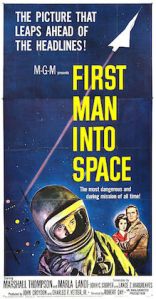 If you remember last year, while reviewing The Quatermass Xperiment, I referred to it as a “ground zero movie”, the direct ancestor of movies like this one. A mere two years later, once more a guy goes into space and comes back changed, and people die and popcorn gets bought.
 It’s not too long before the murders start happening. Starting with cattle on the ranch where the rocket crashed, to a nurse at a blood bank, then a truck driver. Whatever it is that’s killing people and drinking blood, it can drive a car.




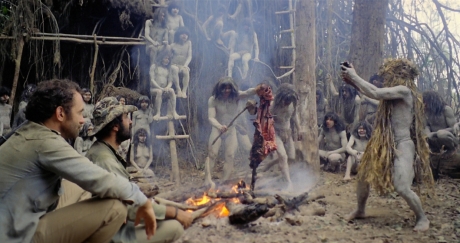
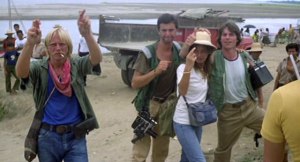

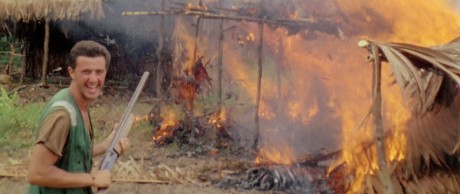


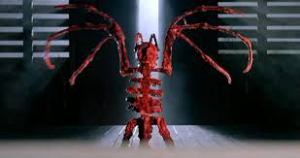

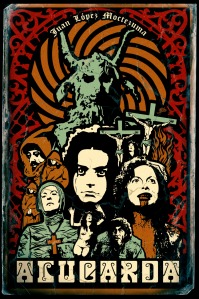
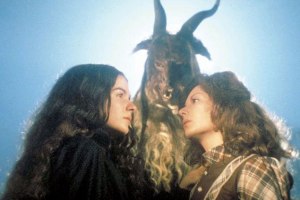





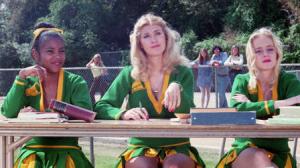
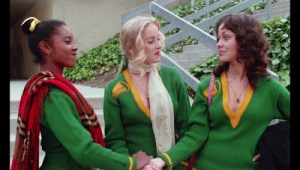

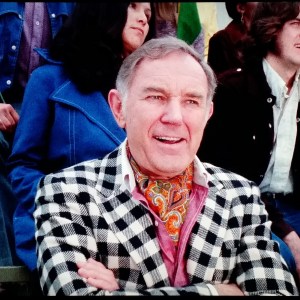








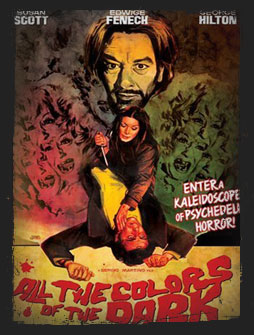


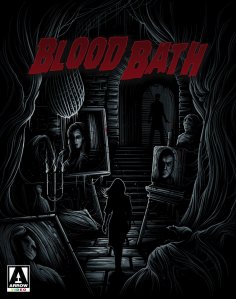



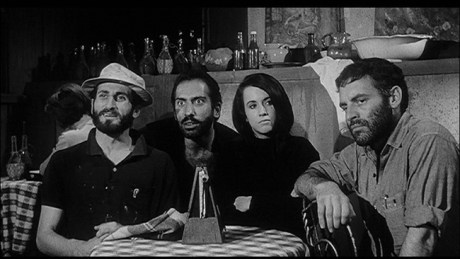


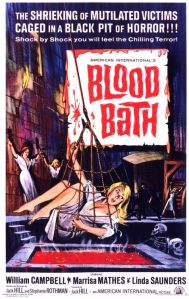





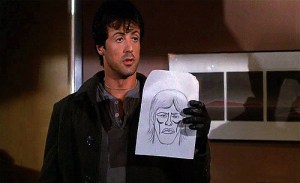

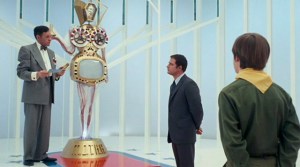



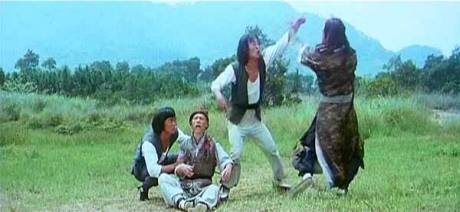





 drfreex.com