Singing Spies in a Stormy French Field (featuring James Brown)

Les Visiteurs du Soir (1942)

220px-VisiteursdusoirMarcel Carné is a French film director best known for his acknowledged masterpiece, Children of Paradise, which I will get to eventually this year, but I had long been intrigued by his previous movie, Les Visiteurs du Soir (English title The Devil’s Envoys), not only because of my interest in the fantasy genre but because somehow I had never frickin’ heard of it. Given how much film text I had read over the years, how was this even possible?

Towards the end of the 15th century, two minstrels ride into the castle of the recently-widowed Baron Hugues (Fernand Ledeux), who is celebrating the upcoming wedding of his daughter Anne (Marie Déa) to the rather brutish Baron Renaud (Marcel Herrand). The minstrels, Gilles (Alain Cuny) and Dominique (Arletty) are the envoys of the title, whose mission is to spread despair throughout the world. To this end they will use magic and their own beauty and wit to seduce the members of the wedding, and then suddenly leave their victims, bereft and heartbroken. This plan runs aground when the flawed Gilles – who doesn’t mind using his powers for an occasional good deed – confronted with Anne’s immaculately pure heart, falls in love with her and forsakes his mission.

06-alain-cuny-theredlistDominique works overtime seducing both the Barons, and the Devil himself (Jules Berry) arrives on the scene, disguised as a traveller seeking shelter from a sudden storm. By asking seemingly innocent questions, he sees to it that Gilles is imprisoned and the two Barons will duel to the death over Dominique – but then he, too, becomes infatuated with Anne’s incorruptible heart and love for Gilles, and must find a way to undermine it and make Anne his own.

visiteurs-du-soir-1942-03-gThis is a bit of a departure for Carné, who along with Jean Renoir and Jean Vigo were the main proponents of the somewhat nebulous Poetic Realism movement in French cinema. The major reason for this, though, is unmistakeable: the Nazi occupation of France in 1940. Declining to work for the German-controlled Continental Films, Carné, after several abortive projects, teamed with independent producer André Paulve. To avoid censorship, they decided on a purely escapist feature, set in the past, with no political content. The production shuttled between studios in Paris to the Free Zone in the South for the exteriors, which must have been difficult for the several Jewish crew members, working under aliases.
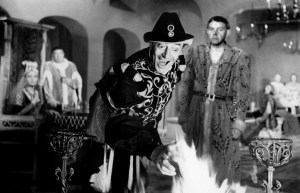
les-visiteurs-du-soirThe result was that Les Visiteurs du Soir was a rousing success in France, who really needed their escapist fare (and though Carné denied it, there were still whispers of political allegory). There would be several more medieval fantasies released to French screens in the coming years, arguably leading up to that form’s ne plus ultra, Jean Cocteau’s Beauty and the Beast in 1946.

Les Visiteurs is a charming distraction in this day and age, well-acted and shot, with Jules Berry a definite standout as the chatty, fun-loving Devil. Not a bad way to spend an evening, at all.

Break out your dictionaires:

Buy Le Visiteurs du Soir on Amazon

A Field in England (2013)

A FIELD IN ENGLAND POSTER A3-1So why not then journey to another black-and-white fantasia of a time long gone, where mysterious forces play out against hapless human subjects?

During the 17th century English Civil War, three deserters from the battlefield (Julian Barratt, Peter Ferdinando and Richard Glover) fall in with another seeming deserter named Cutler (Ryan Pope), who, under the guise of taking them to a nearby alehouse, feeds them soup heavy with psilocybin mushrooms. This is a means of taking them hostage for his master, O’Neil (Michael Smiley), an alchemist who feels there is a treasure in this Field, and he needs people to find it and dig it up. Complicating matters is one of the deserters, Trower (Barratt) is seeking out O’Neil for stealing papers from their master – and Trower refused to eat the mushrooms.

A072_C001_1001IEThat’s the basic plot there. Now, what actually happens in A Field in England is open to interpretation. This is the work of prolific director Ben Wheatley, whose Kill List I found unique, daring and quite striking. He is challenging without being obscure; I find his work genuinely refreshing, and sometimes a little annoying. There is a lot of bizarre stuff to parse in A Field in England, some of it I’m not quite certain we’re ever supposed to understand, like the tendency of Glover’s character, Friend, to die and come back to life suddenly and unexpectedly. How much of the bizarre action in the film is due to the characters’ ingestion of hallucinogens, and how much is due to strange magicks that are unleashed? If Trower hasn’t indulged in the mushrooms, why does he keep having visions of a “bad planet” set to unleash its wrath upon them? It begs for an immediate second viewing, if not a third.

A_Field_In_England_review_featured_photo_galleryBorn of an idea (while Wheatley was travelling by train) to make a movie using a single field as a setting, and shot in only 12 days, Field is one of those technical exercises that bears unexpected dividends, and makes one look forward to whatever the director comes up with next (spoiler: it’s High Rise, and he has the chops to actually do J.G. Ballard justice).

Buy A Field in England on Amazon

Spies (1928)

poster1I continue to work my way through Fritz Lang’s silent days in the Weimar Republic. His previous film, the legendary Metropolis, nearly bankrupted the studio UFA (current estimates place the cost, adjusted for inflation, at 200 million dollars!), and for a time they considered releasing Lang from his contract. Instead, they placed severe budgetary restrictions on his next production, which yielded Spies.

I guess I don’t have to tell you that the movie is about spies, huh? The German secret service is having a bad time of it, with assassinations and stolen secret papers aplenty. This is the work of one mastermind running an efficient and widespread organization: Haghi (the ever-reliable Rudolf Klein-Rogge, once more playing a supervillain with a penchant for disguises). The good guys put their best man on the job, Agent 326 (Willie Fritsch), countered by one of Haghi’s best, Sonya Baranilkova (Gerda Marus). The major problem: 326 and Sonya fall in love.

haghiSpies‘ storyline is much more complicated with that, with additional plots concerning a secret treaty with the Japanese and the duplicity of an army Colonel; but the main thrust of the movie is that star-crossed romance and the increasingly jealous Haghi’s attempts to kill 326.

The climax of the movie, with cops and 326’s organization raiding the bank that houses Haghi’s organization, desperately seeking the secret entrance while the kidnapped Sonya and 326’s assistant Franz (Paul Höbiger) are fighting for their lives, is suitably suspenseful and exciting. The rest… not so much, though there are high points. My personal favorite is one of Sonya and 326’s dates, people in black tie formal at dinner tables arrayed around a boxing ring. Once one pugilist is knocked out, an orchestra strikes up and the patrons rise to dance around the ring. Weimar Germany, everybody!

No, the real problem isn’t that Haghi is a brilliant strategist – which he is – but that his opponents are such ninnies. Even the worst threat, Agent 326, is reduced to an idiot by love. Jerry Lewis would have had a better chance against Haghi. CONTROL, on its Maxwell Smart-est day, would at least have been trying. It’s just infuriating. The fact that is likely an accurate portrait of government bureaucracy is even more infuriating.

fritschStill, Spies was a resounding financial success. Willie Fritsch was an inspired bit of casting, being mainly known for playboy roles in light comedy. His against-type leading man turns in this, and Lang’s next movie, Woman in the Moon, ensured a long career for him. Making her film debut was Gerda Marus (also in Woman in the Moon), a stage actress.  Her casting is notable for her eventual placement in Lang’s heart, ending his troubled marriage with Thea von Harbou, who had written Lang’s most ambitious movies. (Admittedly, the fact that von Harbou would become an ardent supporter of the Nazi Party didn’t help. Lang was, after all, Jewish) Our three main actors are all quite remarkable in a pretty scattered film – the American version cut out all extraneous plotlines and got it down to a runtime of a little over 70 minutes – from two and half hours!

IMG_20160405_232926It should also be mentioned that the financial success of Spies ultimately worked against UFA, as Woman in Space saw Lang, flush with popular success, back to his old budget-busting ways. But that’s a movie for another time.

Now witness some divine overacting and great editing in the first two minutes:

Buy Spies on Amazon

Singin’ in the Rain (1952)

singin-in-the-rainIt is no secret that I generally despise musicals. Don’t hate the music per se, I just have my doubts about inserting it into a story. This has been pointed out – with some truth, no doubt – that this is due to my absolute lack of talent in the singing and dancing arts. I will wrestle you two falls out of three in the realm of Shakespeare, motherfucker, but ask me to carry a tune or do more than the simplest dance step, and I’m out of the running.

(Yet I will admit no small amount of fondness for 1776. I am a mass of controversies.)

But if I am going to continue my self-education in the ways of cinema, I am going to have to face up to this genre. Singin’ in the Rain is held up as sheer perfection by many musical fans, so I marked it as a gateway into such things, and the fact that I found the DVD for 99 cents in a Library Sale helped, too. Then my frequent partner in cinema exploration, Rick, mentioned he had picked up the restored blu-ray, and if you are going to watch a Technicolor movie, you should make sure your eyes are taking in all the angstroms they possibly can.

001-Singin-in-the-Rain-1952-Don-Lina-and-Cosmo-at-Movie-PremiereThe movie starts out with a recap of the career of matinee idol Don Lockwood (Gene Kelly), who with his partner Cosmo Brown (Donald O’Connor) journey from vaudeville entertainers to silent pictures. Lockwood manages to parlay a stand-in for stunt work to leading man roles while Cosmo plays mood music during filming. Running from a pack of pre-Beatlemania clothes-ripping fans, Lockwood encounters Kathy Seldon (Debbie Reynolds), who is so unimpressed with him that he has to immediately fall in love with her. The Big Twist is this is all in 1927, and a little movie called The Jazz Singer is about to change movies for good.

singin-in-the-rain-movie-still-660x330A lot of our plot, such as it is, is going to involve Lockwood’s co-star Lina Lamont (a pretty amazing Jean Hagen), hyped by the press to be a Burton-Taylor pair, except that Lockwood can’t stand her. Another problem is that Lamont has a voice like chalk squealing across a Brooklyn blackboard. An advance screening of their new romantic epic, The Dueling Cavalier, is a laughable disaster, at least partially due to the horrific on-set sound recording (“They need to invent ADR,” I muttered).

That evening, Brown and Seldon cheer up Lockwood by brainstorming that the actor should return to his roots and The Dueling Cavalier should become The Dancing Cavalier. After singing “Good Morning” to celebrate, Cosmo also invents ADR by figuring out that Kathy could dub in Lamont’s lines and songs in the new footage.
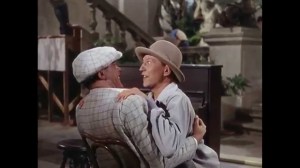
aieeeeThis will be the plot major thereon, trying to keep the secret of her new voice from Lamont and the repercussions when the plan is blown by a treacherous (and lamentably under-used) Rita Moreno (as “Zelda Zanders, The Zip Girl”). My major problem, as usual, is the damned musical numbers. I expect the number when Lockwood confesses his love to Kathy, no problem. “Good Morning” is a little harder to accept, as its impetus is the discovery that our three heroes have talked until after midnight. And worst of all is “Make ‘Em Laugh”, a number everybody loves but I always refer to as “Try Too Hard”. It’s there because Kelly rightfully thought that O’Connor deserved a solo number, but it feels incredibly shoe-horned in. Then you feel bad because you discover that O’Connor was smoking 4 packs of cigarettes a day, and filming the number put him in bed for three days. And then when he came, back, he found out somebody hadn’t checked the gate after his last take and he had to do it all over again.
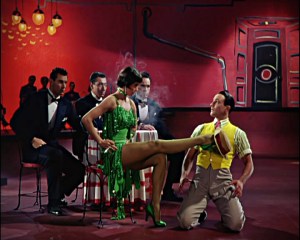
singing-in-the-rain-5Even fans seem to have a problem with the big “Broadway Ballet” number (better known to us heathens as “Gotta Dance!”), because it has literally nothing to do with the movie’s story. It’s not a problem I share, because it has no reason to be there – it is so obviously something that Kelly wanted to do, they just stopped pretending and let him do it. Though at the end of the sequence – which is supposedly Lockwood describing it to the studio’s head (Millard Mitchell) – I did get to say, “Okay, Cosmo, now you’d better invent Technicolor, too.” It’s a great, dazzling number, costing almost $600,000 to produce, but my God! What is it doing there?

singin-in-the-rain-blu-rayNow “Singin’ in the Rain” is itself the direct opposite, the song and dance growing naturally out of the preceding scene. It’s become Kelly’s iconic number, all the more amazing because he did it while sick as a dog, with a fever somewhere south of 101 degrees. This movie really tried to kill its stars – Debbie Reynolds tap-danced until her feet bled. Literally. And Kelly still insulted her dance skills and re-dubbed all her taps himself.
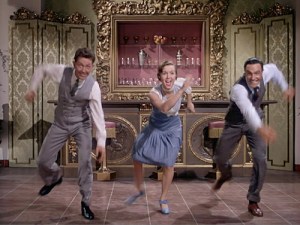
O-Conner-Reynolds-and-Kelly-in-Singin-in-the-RainFor a movie with a lot of meta-textual jokes about Hollywood – when Kathy rescues Lockwood from his fans, she’s driving Andy Hardy’s jalopy – the most incredibly meta-textual stuff comes from behind the scenes. The best one involves Kathy’s re-dubbing of Lina Lamont’s lines in The Dancing Cavalier. The lines are actually being delivered by Jean Hagen herself in her natural voice, so it’s Jean Hagen dubbing Debbie Reynolds dubbing Jean Hagen. Then you find out that all of Debbie’s songs were actually sung by Betty Noyes, and you start wondering who Incepted you while you were sleeping.

Buy Singin’ in the Rain on Amazon

There are only two songs written specifically for this movie – the aforementioned “Make ‘Em Laugh” and “Moses Supposes” (“Singin’ in the Rain”? Written in 1929), causing some to point to it as the first of the jukebox musicals, which rather ignores the next movie I was going to watch.

Stormy Weather (1943)
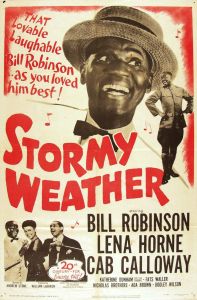
Stormy_weather_xlg“Stormy Weather”, the song, was written in 1933, before you ask. The movie is loosely based on the life of Bill “Bojangles” Robinson, who actually did lead a pretty interesting one. Only the broadest brush strokes are used in the first 45 minutes or so, as Robinson reads the current Theatre World  magazine, a “Special Edition Celebrating the Magnificent Contribution of the Colored Race to the Entertainment of the World During the Past Twenty-Five Years”, and telling the neighborhood children all the following flashbacks.

…Starting with his return from service in World War I, and his meeting with the fictitious singer Selina Rogers (Lena Horne) at a dance for the returning troops. The following bits with Robinson working as a waiter at a bar run by Ada Brown with a band led by Fats Waller is necessary story folderol, as Robinson had a good career in vaudeville before joining the Army, but it provides a re-meet cute with Selina, who follows him after he’s fired for being too good in one show to another show on Broadway (in the 20s, there a brief vogue for all-black revues there). Their romance deepens, but Robinson wants a marriage and children, and Selina does not. She heads off to Paris to become a big star, and Robinson heads to Hollywood. They don’t mention for what, but we’ll get to that later.

horne-robinson-stormy-weather-1943Then who should drive up in his convertible than Cab Calloway, inviting Robinson to attend a show he’s throwing that night “for the troops.” “For the troops? I’ll be there!” And who should be at that show than Selina Rogers, singing the title song and having totally changed her mind about married life. She and Robinson have one more number, and then Cab takes us out with “Jumpin’ Jive” and an appearance by the Nicolas Brothers that will make all your joints and muscles ache just watching it.

lena and cabJukebox musical it is; Fats Waller – of course – does “Ain’t Misbehavin'” and Cab does another standard, “Geechy Joe”. There are, in fact, something like 20 musical numbers in a movie that is barely 70 minutes long. And this is not a B-movie rushed out by 20th Century Fox, either, this has prime talent behind the lens as well as in front, and a fair amount of money invested in big production numbers (though certainly not to the dizzying heights of MGM nearly a decade later for Singin’ in the Rain – the Broadway Ballet alone probably cost as much as five Stormy Weathers). That is amazing considering that in most of his other movies, Robinson is in standalone scenes so they could easily be edited out in the South. Hell, his best-known roles – in four Shirley Temple movies, where he served not only as Temple’s friend but her dance instructor – were similarly cut. Fox knew this wasn’t going to play in half of the country.

Screen-shot-2010-10-15-at-6.57.30-PMA major reason for its existence is in evidence from the first and last sequences – Robinson’s service and the proud introduction of “Cab Calloway Jr.” (actually Robert Felder), in uniform and ready to ship out for WWII. “I wish I had a son like him!” exclaims Robinson. As sure as the seal on the closing title urges you to Buy Liberty Bonds on your way out, this was telling the African-Americans in the audience that they were needed for the War Effort, and for the length of this movie, at least, Hollywood was behind them.

In 2001, Stormy Weather was enrolled in the National Film Registry, for a number of good reasons. It’s one of the few (only three I can think of right now) studio movies of the period with an all-black cast, and certainly the only one where the characters seem like actual human beings, with real desires, goals, and foibles.

stormy-weather-bill-robinson-lena-horne-1943You can’t say that race doesn’t exist in Stormy Weather, as it doesn’t shy from the minstrel show realities of Robinson’s early career. It’s pretty significant, and not a little subversive, that when a blackface comedy routine in that Broadway show is presented (and you should be wincing at the sight of two black men smearing burnt cork on their faces), there is no reaction from the audience until the curtain closes on it. It’s a pretty clever routine, too, lightning fast lines delivered at a staggering pace, and their disintegrating car deserved some applause – but nope. Silence. That’s a pretty sharp commentary right there.

fatsThis is Fats Waller’s final film appearance – he died too young of pneumonia just five months later. There’s also some typical Hollywood jiggery-pokery with the Robinson /Horne romance, too, since he’s 40 years her elder here. Doesn’t matter that much, though – once the man starts dancing, he’s ageless. This movie serves as a tribute to so much happy, seemingly effortless, pure talent that we should all be thankful it has survived so we can enjoy it today.

Buy Stormy Weather on Amazon

That should have been my last movie for this round (this has gone on long enough, hasn’t it?), but then an impromptu Internet poll determined I should watch one more, and it was a fairly fortuitous choice:

The T.A.M.I. Show (1964)

"First Annual". Right.

“First Annual”. Right.

Now this is a literal jukebox movie. Who the hell needs a story, anyway?

But the story is pretty interesting: After The Beatles’ landmark appearances on The Ed Sullivan Show in 1964, this concert and film was put together by Bill Sargent, who had developed a technology he called Electronovision. An early bid to develop high-definition TV, the cameras sent a then-walloping 800 lines of video at 25 fps to tape, creating an image that could yield a reasonably good picture when transferred to 35mm and projected; it had been used once before for a Broadway production of Hamlet starring Richard Burton, that made the rounds of non-New York theaters. It was used to record this concert, and then only a handful of times, the most notable being a production of Harlow starring Carol Lynley.

Oh, but what a concert. Opening with Chuck Berry and “Johnny B. Goode” (I’m going to digress here to point out that another media landmark, the supposed Country Music icon Hee-Haw, also opened with “Johnny B. Goode”, though performed by Buck Owens), and then Berry and Gerry and the Pacemakers alternate for a while, then the Miracles (hi, Smokey!), Marvin Gaye, Lesley Gore, Jan and Dean (who also play hosts), The Beach Boys, Billy J. Kramer and the Dakotas, The Supremes (hi Diana!), The Barbarians, James Brown and His Famous Flames, and The Rolling Stones.
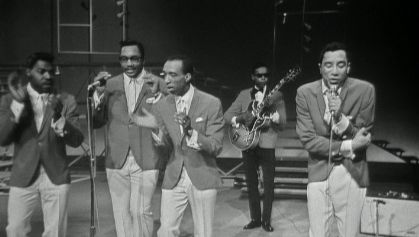
Hai, Smokey

Hai, Smokey

That is two hours of incredible music, recorded and mixed live on the fly, apparently cut down from a five hour event (we are spared equipment moving and the like). This is pretty much the soundtrack of my youth, and I sat there with a dopey look on my face.
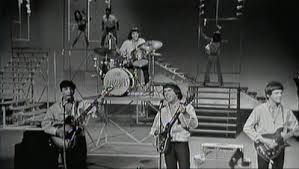
The Barbarians sing a medley of their hit.

The Barbarians sing a medley of their hit.

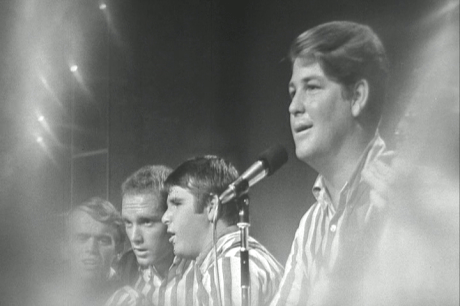
I had only thought I had seen The T.A.M.I. Show before; what I had actually seen was a mashup with a later, similar event called The Big TNT Show that had some of The T.A.M.I. Show cut in to be released as This Was Rock. It turned out that Burton had all the Electronovision versions of Hamlet pulled, and somebody in The Beach Boys organization decided that their performance needed to be pulled from all prints. That didn’t quite happen, fortunately, which is why these days we can watch Brian Wilson singing with The Beach Boys, something that would not happen again for 19 years; this was only a few months before his nervous breakdown.
vlcsnap-2016-05-02-14h39m35s495There’s other little festive things, too: the pack-in book for the DVD infers that assistant choreographer Toni Basil only appears in the opening credit montage, but I’m pretty sure I spotted her among the dancers (who are doing some OMG get-me-some-oxygen gyrations that would have impressed The Nicolas Brothers with their freneticism) but truthfully, I was looking for another dancer in the lineup, and I finally got a good look at her during the Supremes’ number: hai, Teri Garr!

Ladies & gentlemen - The Supremes! (and Teri Garr)

Ladies & gentlemen – The Supremes! (and Teri Garr)
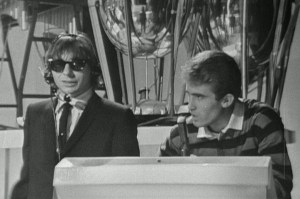
And the legendary Jack Nitzsche on the left!

And the legendary Jack Nitzsche on the left!

If I have time to watch it again, I need to try to get a better look at that backup band, too: that is the legendary Wrecking Crew, which at the time included future stars like Glenn Campbell and Leon Russell.

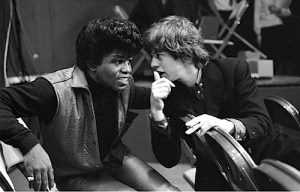
Another telling bit concerns the last two acts: James Brown and The Rolling Stones. Sargent wanted The Stones to close the show, probably because they were the closest thing to The Beatles he could afford. The Stones didn’t want to follow Brown, and Brown wanted to close the show. Hell, everybody realized that Brown tamishow-2should have closed, except Sargent. So Brown proceeds to make The Stones wish they had never come to America with a set that threatens to melt your TV set. The Stones rise to the challenge, throwing in a bit more footwork than usual in their first song, “Around and Around”, but it doesn’t matter to the screaming teens; the two acts are really for different audiences, and in that one night, both audiences are there, and they are enjoying the hell out of each others’ music.
1315169718That’s the other big cultural landmark that happened in 1964: The Civil Rights Act, signed into law on July 2, outlawing discrimination and segregation. The thing is, The T.A.M.I. Show is an accurate depiction of the radio of my youth; we didn’t care about the color of the music, we cared about its quality, and I heard an astounding variety of music on my little transistor. Modern radio, categorized and pre-boxed and yes, segregated cannot compare, and we are honestly less for that.

Which makes me more glad than ever that Shout Factory has finally managed to put it out on home video, Beach Boys and all.

Please be advised I will not be held responsible for this video melting your computer monitor. Please! Please!

Buy The T.A.M.I. Show on Amazon – it’s currently dirt cheap

Hopefully you’ve now have enough of me for a while. I’m going to be spending the next couple of weeks on my Villain Blogathon entry, and as usual, I rue my choice and the work I have cut out for myself. See you in a couple.

A Festival of Music, Death, and Ants

It has been an odd combination of emotions the last couple of days; if you watch the news at all, you know there was some flooding in Houston Sunday night through Monday. I picked the right part of that city to settle in, it seems. I’ve been nervous several times, but never terrified by events like this. Everything has been shut down and cancelled, leaving me with two days doing little more than sleeping (which, frankly, I needed), but it means the next three days will have five days worth of work crammed into them, so I should play catch-up right now. This will likely be rushed and graceless, for which I apologize.

Woodstock (1970)

woodstock-movie-posterThis is one of those movies I saw piecemeal over the years, but never as a whole. I kept getting tempted by a blu-ray package that promised the original Director’s Cut along with a ton of extras, and I successfully urged this digital Satan to get behind me until I found it in a Wal-Mart $5 bin.

Well, I ah… I still can’t say I’ve seen it as a whole. That’s not because of the movie itself, it’s because of me.

The music festival itself and the movie chronicling it are both cultural milestones: at their best, they show a possibility, a moment in time when we thought that things could get better through wishful thinking. That the entire event spun out of control and still managed to be an overwhelmingly positive experience is nothing short of miraculous. All it takes is watching the Maysle Brothers’ Gimme Shelter to know that this is true.

Woodstock_music_festival_redmond_stageIt’s also true that what was felt to be a wasteful, ridiculous venture by Warner Brothers – filming the festival – would be what saved the studio from bankruptcy, becoming tremendously successful and pulling it out of a financial hole. It won the Oscar that year for Best Documentary and was up for Best Film Editing, which almost never happens with documentaries. The editing is, indeed, brilliant and frequently adventurous, making use of multiple panels in the widescreen, allowing maximum usage of the tons of recorded footage. This was an innovation reportedly created by one of the film editors, a young feller named Martin Scorsese, and it is something you would see repeatedly in movies for the next few years.

The original movie was a little over three hours long, and the Director’s Cut adds over 40 minutes to that. And that’s still not the reason I stretched it out over two nights (though it is admittedly a contributing factor). It’s the interviews. That is an essential part of documentary filmmaking, and the interviews cast a suitably wide net, not only attendees but local townspeople who have a variety of opinions on the festival.

It was the non-stop parade of idealism and optimism that punched me somewhere that hurt. I’m familiar with such feelings, I had them myself aplenty, back in the day. And miserable old bastard that I am, I kept thinking, “I wonder how he feels about that now” or “I wonder if she’s voting for Trump”. And circumstances such as this make me wonder how I got to this state.

woodstock-1969-photo-2There was a time back in… well, it must have been 1989 or so, when my pal Diane and I were the movies, and there was a trailer for the Sean Penn/Michael J. Fox vehicle Casualties of War. A man seated behind us had brought his young son, and the boy asked, after the trailer, “What’s war?” Diane thought that was wonderful and refreshing. I thought it was depressing, because that innocence wasn’t going to last.

How did I get to this state?

Anyway. Woodstock is a marvelous cultural document, deserving that Academy Award, and likely more aside. The trick is, apparently, not to be a miserable old bastard when you watch it.

Buy Woodstock on Amazon

Macbeth (1971)

macbethEven this has an infamous connection to my youth. Accelerated courses for gifted students began to be a thing in my high school days, and I pretty easily qualified for that (only to find that accelerated classes in anything concerning math were doing me no real favors). I was a junior that first year of what was called Alternative School, but the real fun was to be had on the senior level, where the not-surprising innovation was to combine the English and World History curriculums into a sort of mega-humanity study. The Shakespeare studied that year was Macbeth, and they rented the 1971 Polanski version of that play to show the seniors.

They did not repeat that the next year.

They probably realized that mistake in the opening credits, which proclaims it to be a Playboy Production. The snickering that accompanies that is the sound of people forgetting that yes, there actually was a time when you could “read Playboy for the articles”. Part of the so-called Playboy lifestyle was intellectualism. The most in-depth interviews of notable people, along with new fiction by Norman Mailer, Kurt Vonnegut, Margaret Atwood, Ray Bradbury. Gabriel Garcia Marquez. As the Playboy Empire branched out, it was almost inevitable they would eventually attempt film production.

They would probably regret that, as Macbeth went over budget and its premiere was a massive bomb. But all this obscures what is one of the best versions of the play I have ever seen.

The Macbeths

Macbeth is one of the Bard’s most straightforward scripts; even for a tragedy, it moves forward with admirable economy. Macbeth (Jon Finch), a minor Scots nobleman, distinguishes himself in battle in an uprising against King Duncan (Nicholas Selby). Three witches prophesy he shall be king, and his wife (Francesca Annis), ambitiously sees to it that this will happen, the cost being escalating murder, madness and death.

There is so much done right in this film, it is almost mind-bending that opinion should be against it. Kenneth Tynan, the former dramaturg of The National Theatre, adapted the script, smoothing the edges of the antique language to make it more seemly to the modern ear, without damaging it. Finch and Annis are a marvelous Macbeth and Lady, but were criticized for being too young for the roles (huh). Those that clutched their pearls at the Playboy production logo had their misgivings confirmed when they discovered there was – gasp– N*U*D*I*T*Y* in their precious Shakespeare!

out dmn spotOkay, Annis does the sleepwalking “Out, out damned spot” in the altogether, but that’s pretty minor and artfully shot. If you think that Playboy is going to make Carry On Shakespeare, you are going to get nut-punched in the libido by Polanski when the first instance of nudity – even before Annis – is the witches coven when Macbeth breaks into their sabbat to demand further prophecies. Anybody watching this movie for whacking material is going to spend several years in therapy.

"Ha Haaa They'll thank the gods of photo-cropping this day!!!"

“Ha Haaa They’ll thank the gods of photo-cropping this day!!!”

The most vitriol against Macbeth, though, is because of the violence. Yes, we are quailing at violence in a story about assassination, mass murder and war. Those critics had probably never seen anything past an antiseptic high school production or Classics Illustrated. (If they had ever seen a production of Titus Andronicus, they would have swallowed their tongues) The most surprising, and yes, satisfying, departure from usual productions is when Macbeth is besieged in his castle by the forces of Macduff and Malcolm, which is usually handled with cost-effective efficiency. But no, Tynan and Polanski haven’t forgotten that Macbeth is a warrior know for his prowess on the battlefield, and he takes on attacker after attacker, until finally Malcolm’s footsoldiers are giving him a very wide berth. Until the vengeful Macduff (Terrence Bayler) steps up, as prophesied. The fight scenes, incidentally, are choregraphed by William Hobbs, who literally wrote the book on stage combat.

bloodPolanski doesn’t quail at throwing the red stuff around, certainly, but didn’t deserve criticism that this was the reaction to his wife Sharon Tate’s 1969 murder at the hands of the Manson Family. I mean, jeez, I have my problems with Polanski, but that is below the fucking belt.

Anyway, I am especially happy that this got the Criterion blu-ray treatment, and I finally got to see it.

Buy Macbeth on Amazon

Phase IV (1974)

phase ivSpeaking of movies that somehow managed to elude me all these years…

Phase IV is an odd mixture of science fiction and mystic philosophy. One of those planetary alignments that new age enthusiasts keep babbling about causes not a change in man, but in the ants. Different varieties of ants, previously warring with each other, begin cooperating and organize into a supercolony near an atomic testing site, creating tall, unusual structures. Enter scientist Dr. Hubbs (Nigel Davenport) and graduate Lesko (Michael Murphy), set up in a high tech dome to study the situation. As funding begins to run out, Hubbs decides to push the issue by destroying the structures with a grenade launcher (and I would love to see the line item on the budget that okayed that).

phaseiv4The ant’s reprisal comes that night, not only swarming the dome, but a nearby farm. Fleeing the biting, stinging invasion, the farm’s occupants nearly make it to the dome, but Hubbs unleashes a dense fog of yellow foam pesticide, killing the family, and any ants that didn’t get away by burrowing into the family’s bodies. The daughter, Kendra (Lynne Frederick) survives by hiding in the cellar of one of the mock houses in the test ground.

The face-off between Hubbs and the ants escalates, and Hubbs gets increasingly unstable, lying about radioing to get Kendra airlifted out (it doesn’t help that Hubbs got stung by the ants, and they’re apparently breeding themselves for extreme venom). The ants build mirrored mounds to direct sunlight onto the dome, and then actually sabotage the air conditioner, so all the high-tech gizmos can’t function until the middle of the night. Lesko, meanwhile, is trying to communicate with the supercolony, and may be actually succeeding – it’s going to be a race between the sun, Lesko, and Hubbs’ increasingly Ahabian desire to tackle the main mound and kill the queen.

phaseiv09This is the first and only feature directed by Saul Bass, the graphic designer who created the iconic credits of so many prominent movies, it would be ridiculous to try and list the here – just go to the IMDb page. It doesn’t have the feel of a first-time director – Bass had been working in the industry for far too long to not have something rub off on him – but it does feel strangely half-formed. The ant footage is amazing, and the storytelling within these sequences is first-rate. The human actors, though, don’t seem to have the same advantage. Hubbs is a cypher, his motivations largely opaque – maybe he read “Leiningen versus the Ants” one time too many. Poor Kendra has to wear a corset to make her look 16 years old, and constantly suppress her English accent. Lesko, at least, shows some humanity and intellectual curiosity, which is what you pay Michael Murphy for.

The movie’s end is pretty abrupt, too, mainly because Paramount cut out a hallucinatory coda that would have made the trip – so to speak – worthwhile. It’s Saul Bass echoing Kubrick’s 2001 in a way. It was rediscovered a couple of years back, and it’s unfortunate it didn’t make it onto this Olive Films blu-ray, even as an extra. Luckily, it can be found on YouTube, even if it is a cam:

Buy Phase IV on Amazon


On The Changing Face of Heroism

I’ve been dealing with some un-fun aspects of Life’s Rich Pageant lately. That means that in a duel between Watching Movies To Relieve Stress & Also Believe Once Again Life Is Capable Of Good Things, or Writing Something Worth Reading About Those Movies, stress relief won. I don’t think you’d blame me for that.

So let’s get started.

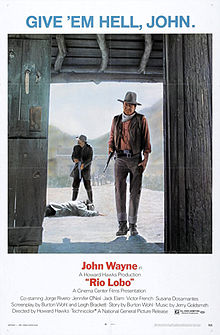
Rio_Lobo_1970Rio Lobo (1970) is not regarded as a very good movie, and sadly, it really isn’t. The final film of the legendary Howard Hawks, it’s yet another retread of 1959’s Rio Bravo (one of the best westerns ever made), the other being 1966’s El Dorado (which is, I will admit, another of my favorites). El Dorado, at least, had script problems and Hawks elected, mid-production, to pirate from himself, to good result. I’m not sure of the reasons for returning to that particular trough four years later, but reportedly John Wayne asked, “Do I get to play the drunk this time?”

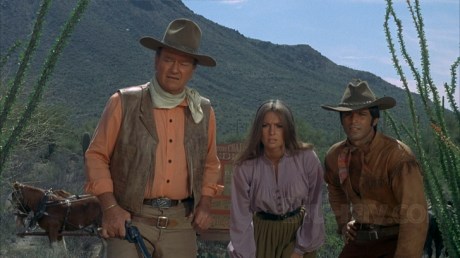
No, this time Wayne will be playing Cord McNally, a Union colonel still seeking the traitors who sold the secret schedules of trains carrying Union payrolls. McNally pursued the Confederate squad responsible for the robberies, and was even their prisoner for a time, but he turned the tables on them and captured their leaders, Cardona (Jorge Rivero) and Tuscarora (Christopher Mitchum). The three actually wind up respecting each other, and Cord buys the rebels a drink when they’re released after the War ends a few months later. They tell Cord what they know about the traitor and his men, and promise to get in touch if they find out anything else.

4370_5As luck would have it, the traitor and his men, under new names, have taken over the Texas town of Rio Lobo, where Tuscarora’s father Phillips (Jack Elam) has a horse ranch. Phillips is one of the few landowners resisting the new robber baron, and Cordona has journeyed to Texas to help his old friend – when he sees a familiar face, and telegraphs Cord. Mayhem will ensue. G-rated mayhem.

For all the bobbles, this is still identifiably a Howard Hawks movie, mainly for the rapid-fire, witty banter. There are some trademark Hawks women, too, though Shasta (Jennifer O’Neill) isn’t given much to do outside of using a derringer that’s apparently loaded with elephant rounds, and to be a somewhat reluctant love interest for Cardona. Really, the ballsiest female character is a Latina named Amelita (Sherry Lansing), who Cordona surprises while she’s changing (in a G-rated movie, remember. 1970 was amazingly open about such things), and manages to help our heroes on a couple more occasions. Why the hell Cardona is gaga over the rather more vanilla Shasta is puzzling to me.

amelita

Cardona, you idiot.

(Then again, I was puzzled by her in more ways than one, as I was going “Sherry Lansing, Sherry Lansing, why do I know that name? Not much of a filmography, but I’m sure…

(Oh yeah. She gave up on acting, then ran Columbia, then 20th Century Fox, then Paramount in the period from 1977-2005. Cardona, you idiot. Also, she’s married to William Friedkin, who knows talent when he sees it.)

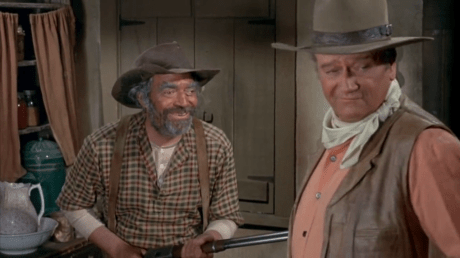
Eventually we get to the mandatory siege-in-the-jailhouse, but that’s rather short-lived as Cord is outmaneuvered by the bad guys, and we head to the other standard that El Dorado managed to forego, a big shootout, this time with the townsmen helping to repel their oppressors. Jack Elam enters the picture at roughly the two-thirds mark, and proceeds to steal the movie right out from underneath its star. Wayne didn’t much care for that, and never worked with him again.

elamRio Lobo did pretty dismal box office, and Hawks felt it was largely due to Wayne’s age – 63, at the time. Rio Bravo had been the first movie to really deal with an aging Duke, and this is the movie where Shasta cuddles up to him for warmth in the desert night because he’s “more comfortable” than the hot-blooded Cardona. This leads to Cord bitching about being “comfortable” for the rest of the movie. Wayne wasn’t doing well health-wise during filming, and apparently had some difficulty getting on and off his horse due to some torn ligaments.

"COMFORTABLE?"

“COMFORTABLE?”

But there is one moment when the Wayne of old shines through. The crooked Sheriff and his deputies accuse Tuscarora of horse stealing, beat him up and slap his girlfriend across the street when she tries to intervene. As they prepare to take Tuscarora to the jailhouse, the Sheriff (being evil) says, “Bring the girl, too.” And Cord McNally, standing tall over the sobbing girl, says one word, loudly: “Why?” It is the single most righteous moment in the movie, Cord willing to throw away his entire mission and possibly his life to protect one person, and it is everything such a moment in a movie should be.

It’s an entertaining enough movie, but light. It’s not going to knock anything else off your playlist when you suddenly remember you have a copy of it, but it’s a harmless way to spend a couple of hours. It mainly looms large in my legend because George Plimpton has a bit part in it, and the resulting TV special held thirteen year-old me rapt:

Buy Rio Lobo on Amazon

I tried to relate that fading 50s-60s concept of heroism to my next couple of movies, which were Kingsman: The Secret Service and Deadpool. Good luck to that, though, since Deadpool is satire, and Kingsman is satire that wants to subvert its subject while still glorying in it.

posterWhen you play the “#NowWatching” hashtag game on Twitter, you find out pretty damned fast what movies people downright hate, and Kingsman fits that bill. It’s the story of a super secret organization of highly-trained troubleshooters with fancy gizmos; they’re all basically 007 without the government oversight.

This seems to be the prime area of peoples’ ire: it is a lovely copy of a fun spy flick from the 60s up to a point. Most people who hate Kingsman weren’t properly prepared by being aware that it is based on a comic written by Mark Millar, and I think Millar’s middle name may be “Piss-taking”. Using the major plot’s opening gambit – as sure a parody of a James Bond opener that ever was – of killing who we think the hero is going to be, and the resulting drive to find his replacement from a hand-picked group of young people, Millar gets to deconstruct the spy novel the same way he deconstructed superheroes in Kickass.

The Kickass movie was quite successful, and after its director, Matthew Vaughn, helmed the pleasantly surprising X-Men: First Class, he dedicated himself to taming another Millar book. I’ll be honest with you: I didn’t bother with the Kickass movie because I despised the book, but seeing how Vaughn has rearranged this particular graphic novel for the better, I’m thinking it’s time to get over myself and watch it.

Firth. Colin FirthThe Kingsman we’re most concerned with here is code-named Galahad, played by Colin Firth – and who knew Mr. Firth had such a butt-kicker hiding inside? Galahad recruits the son of another trainee who died years earlier protecting Galahad and two other Kingsmen. The kid is Eggsy (Taron Egerton), who has potential, but much of it has been short-circuited by a bad home life scarred by his father’s death. Much of the movie is spent turning a chav into a gentleman, and Eggsy proves he has the right stuff, up to a point: in his final exam he refuses to kill a dog (the dog is a pug, so good on you, Eggsy). Still, everything goes pear-shaped and Eggsy is going to wind up in a tailored suit in the bad guy’s secret lair, hoping to stop doomsday.

Kingsman-ValentineThe bad guy is another of the facets of Kingsman that draws ire. He’s Valentine, a billionaire tech wizard played by Samuel L. Jackson, and, like most twisted geniuses, he wants to save the world by killing four-fifths of the world’s population. He will do this by first providing everyone with free cell phones, then broadcasting a low-frequency wave that turns everyone in the vicinity of a cell phone into a homicidal maniac. He tests it out in a Mississippi church full of a hate group meeting – and, not very coincidentally, Galahad in a field investigation. The ensuing bloodbath in the church is another thing that I recall people not liking, because it was too shocking. People need to watch more kung fu movies.

"It's a bulldog, right? It'll get bigger, right?"

“It’s a bulldog, right? It’ll get bigger, right?”

What bugs people about Valentine is that Jackson chose to play him with a lisp. Matthew Vaughn, in the disc’s bonus features, talks about Jackson bringing this up, and saying that he thought this would be a prime motivation in Valentine’s actions, and Vaughn basically said, “What the hell, you’re Samuel L. Jackson, let’s do it.” It was another absurd thing in a movie full of absurd things, and I didn’t mind it. There was something about that year… I think a bunch of actors got together and said, “This year, let’s do all our funny voices. That’ll mess with them.” So you’ve got Jackson in this, Jeff Bridges in Seventh Son and RIPD

It’s a romp. Not sure why people hate it so.

Buy Kingsman: The Secret Service on Amazon

But going from John Wayne standing in a sun-baked Texas street saying “Why?” to Colin Firth being so well-trained he can be the sole survivor of a room packed with 200 maniacs is saying a very ugly thing about what our heroes have become, and moreover, what have we become. In the current world of blockbuster entertainment, heroism tends to be measured by who can punch who through the tallest building, or who has access to the most endless supply of ammunition.

If you will forgive my saying so, that is a very jock-centric way of looking at things.

So I, ladies and gentlemen, am now going to head into the nerd direction.

interstellarLet’s start with Interstellar.

Christopher Nolan likes to be all mysterious in the run-up to his movies’ releases, and Interstellar was not an exception; all we knew was that it was about corn and rocketships and Matthew McConaughey. And it turns out, that is it: in a near-future America, climate change is slowly shutting down farms. McConaughey is Cooper, a former astronaut turned farmer. We find that current textbooks claim that the Moon landings were faked to bankrupt the Soviet Union, so now we need to concentrate all our attention on Earth – not that it’s doing much good. This is all propaganda, as mysterious messages left by a “ghost” haunting his daughter lead him to a secret facility, run not by a shadowy secret cabal, but what is left of NASA (being run by Michael Caine, of course), operating in secret, trying to save the human race.

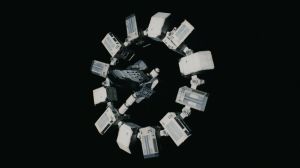
There is a wormhole near the orbit of Saturn that leads to another part of the galaxy (if not another galaxy altogether). Three expeditions have gone through this anomaly to find other planets suitable for us to move to, because the current one is dying. NASA wants Cooper to fly a new mission, the Endurance, to confirm the prior expeditions’ findings, and hopefully by the time a new planet is found, Caine will have solved “the riddle of gravity” and we can all play Oklahoma Land Rush on another world.

Here’s the problem: physics and relativity is a tricky thing, and Cooper will be leaving his son and daughter for years. There seems little choice, though, and Cooper agrees.

interstellar-movie-still-20The desire to stay consistent with current science runs throughout Interstellar, with helpful bursts of information along the way. Accompanied by Caine’s daughter, Dr. Brand (Anne Hathaway) and two others (David Gyasi and Wes Bentley), they first must take two years to get to Saturn, then have to deal with the hazards of alien planets and a black hole. This is scary, frontier stuff – the crew is on their own, and when bad choices are made, somebody can and will die. Even the sole survivor of one of the prior expeditions, Dr. Mann (Matt Damon) presents unfortunate complications of his own.

"We've made this spacecraft out of TARDISes - that may help."

“We’ve made this spacecraft out of TARDISes – that may help.”

Dealing with time dilation as a plot device hasn’t been used much in cinema; the only one I can really think of is the anime Gunbuster. I’m sure there’s more, but it’s a difficult concept to visualize in a way that doesn’t confuse or make viewers turn away in annoyance. Cooper watching archived video messages from his children, growing older without him, is very affecting.

Articulated machine to the rescue!

Articulated machine to the rescue!

You may ask, yes, but it’s science fiction, are there robots? Um, not really, what there is is two “articulated machines”, CASE and TARS, which have a fair range of artificial intelligence. They look like slabs of metal with a TV screen inserted, but can unfold in a variety of utilitarian forms. I was ready to hate them but quickly warmed to the concept. The fact that puppeteer Bill Irwin is behind them, doing his damndest to make simple geometric forms personable, probably helped.

interstellar-film-cooper-station-cylindrical-spinning-space-colonyThen the moment you’ve all been waiting for: to make it to the third planet, the damaged Endurance has to slingshot around that black hole, and Cooper sacrifices himself so Brand and the cargo of seed and frozen embryos can make it, and we finally come to our IMAX-mastered “trip” portion of Interstellar. Now, I know that this is Nolan doing Kubrick, and I was expecting to have my mind blown – and then it was blown in an entirely unexpected direction. I wasn’t entirely satisfied, but it did wrap up everything much more neatly than the climax of 2001 so there’s that.

Buy Interstellar on Amazon

martian posterThen I guess we have to forgive Matt Damon for all the trouble he caused in Interstellar so we can root for him in The Martian. This time around, he’s Mark Watney, an astronaut on a manned mission to Mars. A habitat has been set up, experiments are being conducted, when bad luck rears its ugly head: a freak windstorm far beyond the safety protocols aborts the mission and the astronauts struggle through a hurricane made of dirt clods and rocks to get to their launch vehicle. Watney is hit by debris from a communications tower, skewering him and his biometer. Receiving no life readings, he is presumed dead and left behind. The launch vehicle nearly doesn’t make it as it is.

Watney survives, though, and finds himself alone on Mars. After performing emergency surgery on himself, he sets to finding a way to survive. He does have the rations for a full six man crew, but that won’t last forever. Luckily, he’s a botanist, and he sets out to find a way to make potatoes grow in Martian soil.

damonnautSharp eyes on Earth eventually note that the Rover vehicle is moving about the surface of Mars on their satellite feeds, and various pieces of the survival story start arranging themselves; Watney’s potatoes start to grow. He finds ways to maximize the battery life on the Rover, and salvages a Pathfinder probe to set up communications with Earth. All the steps that are taken are so nerdy and so, as Watney puts it, “Sciencing the shit out of it,” that you cannot help but be swept along in the story, thrilled by the sheer ingenuity. The frantic work being done at NASA and the JPL, Watney’s own efforts, all these are beautiful examples of what heroism should be, along with the people who accidentally abandoned Watney, who have not been informed of his survival so as to keep their minds free from regret and second-guessing themselves on the trip back.

martian-gallery13-botanistA radical plan is hatched to rescue Watney, but it would mean that the returning astronauts would have to basically pull a U-turn around the Earth, capture a resupply vessel, and then head back to Mars, essentially spending another two years in space. And it is only with the slightest of hesitations that they agree.

Of course, nothing will go as planned, and some extreme measures have to be taken. This is probably why NASA couldn’t endorse The Martian, even though it is basically a love letter to the organization; there are too many bad ideas acted upon that put everybody in danger just to – once again – rescue Matt Damon.

the-martian-1024x1024-best-movies-of-2015-movie-matt-damon-6528I remember back during Blade Runner when director Ridley Scott said he wanted to become the John Ford of science fiction movies. What became of that, I wonder? Well, Prometheus aside – and I didn’t hate that quite as much as a lot of people did – it’s fine by me that he seems to be back on that track.

Having not read the source novel by Andy Weir, I can’t really say if the callbacks to earlier science fiction movies are actually there, or simple tricks of my nerd perception, even beyond the obvious comparisons with Robinson Crusoe on Mars. Watney manages to survive the breaching of his suit at the beginning by way of the very harshness of the environment, out of Journey to the Seventh Planet. Of course, his eventual escape vehicle must be lightened a la Destination Moon, and there is a bit of jiggery-pokery with improvised thrust in the vacuum of space also reminiscent of that old warhorse.  I was really beginning to expect It! The Terror from Beyond Space or at least a ratbatspider. But noooo, they had to keep on being realistic and rational.

Don’t care. Good movie. Hell of a cast. I understand people don’t like it. Don’t care. Go watch Expendables 19 or something. These guys – all of them, right here – these are my heroes. Simple solutions like guns and super punches are quick and satisfying, but largely inadequate for increasingly complicated problems in a world that is itself complexifying by the moment. We have more than enough heroes that can blow stuff up, we need to recognize the heroes we already have that can build and rebuild stuff, and do so, over and over.

We need heroes that can science the shit out of it.

Although, I will tell you one thing: if I am ever on a space mission with Matt Damon, I am not letting him anywhere near the airlocks.

Buy The Martian on Amazon

The Passion of Joan of Arc (1928)

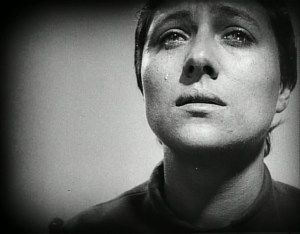
The_Passion_of_Joan_of_Arc_(1928)_English_PosterI must have known on some level that this movie existed, surely. Joan of Arc has been an inspiration for centuries, an inspiration for plays, books, movies, even songs by Leonard Cohen and Orchestral Manoeuvres in the Dark. But this movie by Carl Theodor Dreyer was assumed essentially lost for years, and as a silent movie released after 1927’s The Jazz Singer – a fate it shares with another excellent silent, Murnau’s Sunrise – it’s a movie that seemed shamefully ignored by all but those much-maligned cultural elite, or people who came upon it by accident, like composer Richard Einhorn, whose composition Voices of Light has accompanied the movie on most DVDs of recent vintage. Once again, I will cite Mark Cousin’s The Story of Film: An Odyssey for convincing me this was a unique picture that deserved seeking out. The Criterion Collection seemed to agree, and it was with something approaching religious ecstasy that I found their DVD during a trip to Half-Price Books.

Maria Falconetti

Maria Falconetti in a performance for the ages.

Dreyer’s research, taking over a year, was meticulous, as was his vision; transcripts of Joan’s trial were examined (a scribe is visible in almost all the interrogation scenes), apocryphal stories either merged into the script or discarded (one small detail – when Joan signs the confession disavowing her holy visions, she follows her name with a small cross – a practice she supposedly used for dispatches to tell her soldiers the contents of the message were false, to confuse the enemy. Never referred to in the movie, it demonstrates how deep Dreyer’s study went).

joan2The Passion of Joan of Arc is famously – or infamously, depending on where you are on the timeline – composed almost entirely of close-ups. If, as Ingmar Bergman once said, “The human face is the great subject of cinema,” this movie is Exhibit A: our constant nearness to Joan’s suffering, the intractable remorselessness of the Church inquisitors, the martial brutality of the English occupiers – and then the transcendent serenity of Joan when she recants her confession, insuring her execution for heresy. She is finally allowed the holy sacraments, even if they are the last rites, and then we also made to feel the regret of her Church persecutors, and the fury of the French crowds as they witness her martyrdom.

Oh, and that's Antonin Artaud on the right, creator of The Theatre of Cruelty, said the drama major.

Oh, and that’s Antonin Artaud on the right, creator of The Theatre of Cruelty, said the drama major.

"Excommunicate whoever did those windows!"

“Excommunicate whoever did those windows!”

The riot following her death is instructive on many levels; as befits a sequence pitting a mob against a troop of soldiers, the close-up strategy is largely abandoned for a thrilling sequence that is no less affecting than the preceding hour and forty minutes of close-up emotion. It’s also our first real opportunity to see bits of the massive village set constructed for the movie, the most extensive and expensive in European cinema at the time. Evidence of this set only exists in photos taken at the time, because you certainly don’t get a decent look at it in the course of the movie. And one does desire to see the whole thing, as Dreyer’s insistence on reproducing this period exactly extends to odd design choices, most notably in small things we do get to see, like oddly shaped windows in the background of many shots – replicated from contemporary drawings, when artists had not quite figured out the whole perspective thing.

la-la-ca-1010-joan-of-arc-004-Some silent film directors played music while shooting their movies, to create a proper mood, but Dreyer preferred silence to coax honest emotion from his actors (this extends even to a lack of makeup!), and may indeed have wanted Passion to unspool in silence, in the dark (this never happened, and Dreyer was not particularly impressed by the music that did accompany its first, disastrous showings). To harken back to my first paragraph, Richard Einhorn’s Voice of Light on the Criterion disc provides such an amazing accompaniment for the film that I have to disagree with the director on this point. As I write this, another artist has presented, locally, a new score based on medieval music for Passion. My first thought was, “Why bother? It’s been done,” but that is not a worthy question for any creative endeavor. If that was a question that should ever be asked, we would have no new productions of Shakespeare. Nor would The Passion of Joan of Arc even have been made, as a more traditional version of the story, with the expected military pomp and action, Saint Joan the Maid was being produced at the same time, and that after six other movies and shorts dating back to 1900. As I said, Joan is an extremely inspirational character.

passion_joanAs I also said earlier, The Passion of Joan of Arc was essentially lost. The original version of Passion fell victim to that bane of nitrate film, a fire, and Dreyer had to cobble together a version made of takes he had originally rejected, and that was the version the world knew for years (and that version was further cut by Church and government censors, to boot). Then, remarkably, a print of Dreyer’s original version was found in the janitor’s closet of a mental institution in Oslo in 1981. How that print journeyed to this place in 1928 and how it then survived a half-century of benign neglect is an argument in favor of divine intervention, or at least how fate can look after us, even when we are our own worst enemies.

Here’s a sequence with that Voices of Light goodness:

And here’s a more modern take on a trailer:

Buy The Passion of Joan of Arc on Amazon


So Much for Spring Break

As is apparently The Way of Things, here I am, awake at 4am on a Monday morning. Another Spring Break is over, and good riddance.

I understand that Spring Break is important. Educators and students vitally need it. I am neither, but a lot of my work is intertwined with the two, and during that week, it all goes away – and I am not salaried. No work, no pay. I try to plan for this, but being a good American, I live on the edge, and this month the edge decided to move significantly in the wrong direction, thanks to a pricey car repair. If there is one good piece of news, it’s that my son got into the college he wanted. That, of course has ratcheted up my concerns about money exponentially.

My wife, who also had the week off, noticed my depression and urged me to “stop being a poopy-pants.” Remarkably, this didn’t help.

This is probably what other peoples' Spring Break looks like. Screw them.

This is probably what other peoples’ Spring Break looks like.

There was a much darker version of this post.  I erased it. You’re not here to hear about my problems, or my darker musings about life. We’ll talk about this someday, maybe. Doing so right now wouldn’t be terribly constructive for either of us.

I asked the Universe for money, and it sends me some at an hourly rate. I got an e-mail last night to ask me to work an oddly-scheduled School Board meeting, two weeks out from its usual slot. In a few hours I’ll be back at my desk, editing the stories I shot before the mandatory week off. I watched movies last week, but did no writing – my brain is only now finally starting again to tease out what I want to say about them. One of the most unpleasant things I’ve learned about myself is I require some sort of outside pressure to do what I do. So this week, when I’m earning some actual coin and have commitments aplenty, then I’ll start yearning after writing about movies.

And speaking of that pressure, I got an invitation via Twitter to engage in another blogathon. I thought about the tribulations of my last one, and how other things got shoved to the side while I worked on it, and worked, and worked. And then I realized what my subject on this next blogathon would be, and then, goddammit, I signed up for it. So if it’s anything like The Seven Samurai, be ready for what might be the only thing I post in May:

Print

But that’s a whole two months away. Plenty of time.

*sigh*

Leaping Crap

Getting people together for anything not required by law is, as the cliché says, like herding cats. Ornery cats. Cats with agendas. Cats with agendas and thumbs. So it took a month of wrangling to get people together in order to punish them, and this all took place before that ultimate injustice, an extra Monday foisted upon us by Leap Year.

Artist's Representation

Artist’s Representation

In attendance: Rick, Paul, Alan (intermittently) Erik, Host Dave and myself. Rick had brought some pork tenderloins for dinner, and the grill was set up and flames climbed into the sky, while doubters predicted fiery disaster, burnt meat, horrible diseases and, for some reason, a sequel to Mortdecai. In an attempt to get things started, I put on Futuropolis, and it was roundly ignored in favor of fiery disaster, burnt meat, and etc.

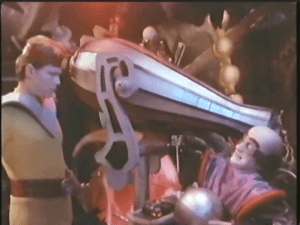
futuropolis2Futuroplis is a short by Steve Segal (no relation) and Phil Trumbo (also no relation), started in the late 1970s and expanded to 30 minutes in 1984, when it was released on VHS by Expanded Entertainment, which is where I discovered it. I understand they expanded it once more in the 90s, but I’ve never seen that version. As far as I know, the only official release was that VHS, currently being sold on Amazon for as much as $150.  Both men went on to careers in animation and design.

vlcsnap-2016-03-09-20h12m22s192Futuropolis itself is a weird blend of traditional animation and what we used to call pixelation – stop-motion animation using real people. It features four Space Patrol members who eventually find themselves in conflict with the villainous Lord Egghead (Mike Cody) and his Mutation Ray. It all ends up in a Battle of the Minds between Egghead and ship’s Engineer Cosmo (Tom Campagnoli), which switches from locale to locale, time frame to time frame, eventually winding up as a Popeye cartoon. It’s silly and creative, and has the best starship-captain-playing-for-time-with-the-captain-of-an-alien-warship dialogue since “The Corbomite Maneuver”. The best because both captains are idiots.

As I said, roundly ignored by the attendees, usually dropping in to watch minute or two, then going back outside to insult Dave’s grill skills. I, at least, sat there and enjoyed it all over again.

Fucking kids.

After Futuropolis wrapped, Dave put on a 1983 oddity he had discovered, Battle of the Video Games. Because it involved Ms. Pac-Man, Burger Time and Frogger, naturally everybody sat down and gave it their undivided attention.

Fucking kids.

Title-Card-e1337350755935Around this time, prime time shows like Battle of the Network Stars were quite popular, so producing one of those involving the video game craze was logical, but only KTLA in Los Angeles was up to the challenge, it seems. The template’s the same: stars compete in feats of skill to earn money for their favorite charities, and plug their current shows. KTLA managed a mixed bag there: the biggest names are Lou Ferrigno and Lynn Redgrave, both probably wondering what the hell they’re doing there, Heather Locklear (shilling for both TJ Hooker and Dynasty) and Scott Baio (he says reluctantly). After that you’re dredging through the ranks of young actors in sitcoms, like Mindy Cohn and Philip McKeon. Each stultifying round of other people playing video games is broken up by interview segments with the stars.

Heather-Pacman-e1337350129288The most hilarious thing about the whole enterprise is the perceived necessity of “color commentary” by future game show host Marty Cohen trying to keep our interest up (also his breathless explanations of how each game is played, so parents and grandparents being forced to watch this won’t be totally lost). Actually, the most hilarious thing was the screams from our personal home audience trying to figure out the scoring methodology; it actually seemed that longevity was the key, the winner of each round being the one still playing on his or her quarter. And poor Lou, who really sucked at Burger Time. No, no, wait, the most hilarious thing was Rick recognizing the incidental music from an industrial film break about the manufacture of an arcade table as being from the “Pac-Man Fever” album, and his resultant shunning by the rest of us.

I will amend myself further that the truly most hilarious thing was that the final competition at a Pac-Man table chased us all out of the room. Every single one of us was in the kitchen, hiding from Battle of the Video Games, a situation which had not happened since Strange Beings.

Fucking kids.

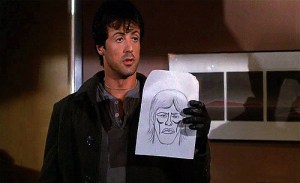
cobraSo I was out for blood at this point, which made me feel better about my choice. Upon watching Electric Boogaloo: The Wild, Untold Story of Cannon Films, I had decided that Cobra was a prime candidate for Crapfest.

Stallone plays the Cobra (actually Marion Cobretti), a cop in the Loose Cannon Division of the LAPD (okay, he’s on something called “The Zombie Squad” but you get the picture).  There’s a serial killer called the Night Slasher terrorizing the city, but what the cops and media don’t know is the Slasher is actually a doomsday cult trying to bring about “The New Tomorrow”. When they’re not standing around in an abandoned factory banging axes together, that is.

Cobra’s the guy you call in on tough cases, like when one of the cultists takes to shooting up a supermarket with a shotgun, providing us with many product placement opportunities for Pepsi and Coors, not to mention giving Cobra a chance to say his catchphrases, “You’re a disease, and I’m the cure” and “Hey, dirtbag.” It’s an opening sequence virtually indistinguishable from many other Stallone flicks. Cobra does, however, put away his pearl-handled Colt .45 so he can throw a knife at the psycho, then pulls it again to shoot him several times. It’s not the multiple gun modes from Judge Dredd, but I guess it’s kinda unique. A little.

"Product placement? Don't know whatcha talkin' bout."

“Product placement? Don’t know whatcha talkin’ bout.”

Stallone’s then-current squeeze, Brigitte Nielsen, witnesses a Night Slasher murder and gets a good look at the face of the head cultist (Brian Thompson), and thanks to one of the cultists in the police department (Lee Garlington, and that ain’t no spoiler), they’re tracking her down. Cobra ain’t having none of that crap, resulting in a hospital murder spree, a highway chase, and a final showdown in a small California town whose population gets whittled down very damned quickly. As it must in all Cannon Films, the final showdown is in a factory, though not abandoned because there has to be a bunch of moving machinery and molten steel to kill off the bad guy.

"With this disguise, no one will ever suspect i am an evil cultist."

“With this disguise, no one will ever suspect I am an evil cultist.”

That chase scene does have one of the most remarkably insane and ridiculous bits: when Cobra gets tired of the cultists behind him taking potshots at his ’50 Mercury, he pulls a bootlegger turn and continues barrelling down the freeway in reverse, shooting the offending truck until it explodes. Then he bootlegs again and continues chasing the Head Cultist’s car (the cultist driving that car, who I assume to be an expert in such matters, says “He’s crazy!”)

Another bit which could be interpreted as groundbreaking, is the intercutting of Cobra, his partner and Nielsen holed up in a motel in the aforementioned small California town, intercut with cultists on motorcycles racing through the night, obviously moving toward a nighttime siege and gun battle. Then it’s morning and Stallone’s asking his partner “Howdya sleep?” What a violation of audience expectations! Actually, the mosquitoes were just so miserable at night, they decided to shoot the climactic battle during the day.
"Put out an APB on Mick Jagger."

“Put out an APB on Mick Jagger.”

You know, I actually do like Stallone; but this was made at the height of his power in Hollywood, and also the height of his ego, apparently. Though it didn’t make the money that Rambo or Rocky IV did, possibly due to some last-minute misgivings on the part of Cannon. Violence was cut to avoid an X rating, and then the two-hour run time was cut down to 84 minutes. There is a reason I thought the movie was a tremendously stupid cliche-o-rama when I saw it back in the day; it doesn’t have time to be anything else.

Stallone had also decided the signature quirk for Cobra would be the matchstick permanently stuck in his mouth. This does his already murky diction absolutely no favors, and in every dialogue scene between him and Nielsen, we felt very sorry for the sound recording guy on this flick. No matter how good a job he managed to do, everybody was going to assume he sucked at his chosen profession. I have to admit, though, the Stallone impressions that filled those 84 minutes was one of the best things since the Burton impression marathon during Exorcist II: The Heretic.

phynxMy blood lust being sated, it was time for Dave to make people suffer. Still, in this, I will admit come complicity: Dave had found out about something from 1970 called The Phynx and was gung ho about showing it. I looked at a few screengrabs from his copy and realized it was taken from an old videotape. “You know, I have this on DVD, and I haven’t watched it yet,” I said. So, you know: conspiracy.

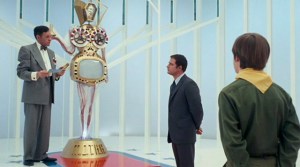
After numerous unsuccessful attempts to sneak into Albania (why they didn’t come up with an imaginary country, who knows), the Super Secret Agency desperately consults its supercomputer MOTHA (Mechanical Oracle That Helps Americans), whose solution is to form a successful rock group, because “Beatles don’t need passports” (I’m pretty sure they did, but never mind). The computer then picks four lads who are kidnapped and forced to become musicians in a rigorous three-month training session. Then they become mega-successful and are invited to play a concert in Albania.

MOTHAWhy the desperation to infiltrate Albania? It seems that someone has been abducting American “World Leaders”. The movie’s definition of “world leaders” runs to aging stars like Georgie Jessel, Xavier Cugat, Maureen O’Sullivan, Colonel Sanders and Johnnie Weismuller. Yes this bizarre rip-off of The Monkees’ main reason for existing is the numerous cameos of formerly beloved personalities. Good God, just take a look at the IMDb entry and be amazed. Most of the cameos are for one line, and they’re all playing themselves, or claim to be. Richard Pryor is there to teach them about “soul”. Trini Lopez demonstrates proper fingering on a guitar. James Brown makes an appearance as “The Ambassador of the Record Industry”.

So none of these people get to show much about what made them famous. Martha Raye does have a few lines that lets her shine a bit, but most of the movie’s “story” is fairly tedious. There is a major detour into a subplot about a map into the bad guy’s stronghold that is split into three pieces, each piece tattooed on the belly of one of Martha Raye’s daughters. The three photos that allow the Phynx to track them down have no faces, leading the group to perform concerts “For Redheads Only!” and the use of X-Ray Glasses (relax, horndogs, this is a family film and the specs stop at underwear). This helps the under-developed story reach feature-length.

colonel sanders noInformation about the making of this movie is deucedly hard to find, so we have to put on our deerstalker hats (like the head of the SSA when he’s in disguise in London) and start deducing. The fact that it’s an ironic attempt to cash-in on The Monkees is obvious. The main perps, director Lee Katzin, and producers/story writers Bob Booker and George Foster all have numerous TV credits (Booker and Foster, incidentally, were responsible for one of Dave’s favorite Crapfest entries, The Paul Lynde Halloween Special). Most of the larger roles are taken by TV actors – look at Lou Antonio, who gets billing just under The Phynx themselves, as the hapless SSA Agent Corrigan. Antonio’s mug shot on the IMDb is as Lokai in the classic Trek episode, Let That be Your Last Battlefield, but he has an even more impressive filmography as an episodic TV director.

So we can blame this all on TV.

But – and here’s the thing – it’s easy to dismiss this as a clueless attempt by Hollywood oldsters trying to cash in on the lucrative Youth Culture market, but The Phynx actually has some genuinely subversive elements. The SSA meeting at the beginning has its various departments in attendance, from fake guerillas in “Castro’s Counterfeits” to riot cops in the “Education Division”. The head of the SSA, “Number One” is introduced, and he is in disguise, a box over his head with a face drawn on it – but the voice is Richard Nixon’s (the film debut of Rich Little). (Number One will later visit the Phynx in disguise, a beard being drawn on the box) The Phynx are debuted on The Ed Sullivan Show, just like The Beatles, except with Ed at gunpoint, and the reason the Phynx get their gold record is agents of the SSA (led by Corrigan), wearing gangster outfits from the 30s, attack record stores and smash all the other albums. This is a nasty satire on how the record industry was/is run – now consider that this movie is the sole screenplay credit of one Stan Cornyn, an editor and director at Warner Brothers Records. He won two Grammys for Best Liner Notes.

the-phynx-leader-guy

“I am Number One… and I am not a crook.”

So there’s something under all the bumbling, latching onto youth trends and sad nostalgia. Not enough to save The Phynx from obscurity and derision, but enough to make it my favorite movie of the night. Rick was surprised early on when he recognized one scene: this was a movie that he had seen on TV in his youth in Hong Kong. He had wondered ever since what the hell that was he had watched, unable to get an answer… until Crapfest. “God, that I had to come here to find out,” he moaned. “And took the rest of us down with you,” was the reply.

The other sweetness was the opening animated credits lulling everyone into a sense of false security, especially when the music buffs saw the credit, “Songs by Jerry Leiber and Mike Stoller”. Now, Leiber and Stoller are in the Songwriter Hall of Fame for songs like “Hound Dog”, “Jailhouse Rock” and “Stand By Me”. Then the songs came out in the movie, one by one, and the music buffs moaned in disappointment. There is one thing I have found about my compatriots in Crap – they have no appreciation for psych-tinged pop from the late 60s- early 70s. The songs are actually okay, but not at all memorable.

Fucking kids.

That's Simon Yuen on the cover. Simon Yuen does not appear anywhere in this movie.

That’s Simon Yuen on the cover. Simon Yuen does not appear anywhere in this movie.

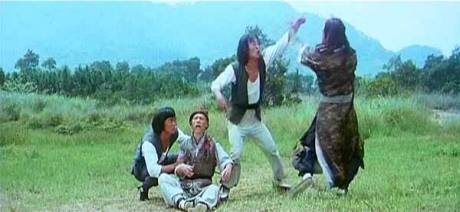
Erik had brought a copy of The World of Drunken Master, and it had been a while since we’d played a kung fu flick. This wouldn’t have been my choice, but as London Correspondent Dave Thomas put it, “It’s not the worst of the not-Drunken Master movies”.

Two scalawags have been stealing grapes from a vineyard to sell in the market, and this is a major mistake, as these are the grapes that go into making “sweet premium” wine, the favored brand of drunken masters everywhere. The two are apprehended by the Manager of the Vineyard, who forces them to work off their larcenous debt. They try to intercede when the usual villainous Tartars start grinding the faces of the poor in the marketplace, and get their butts handed to them, Eagle Claw style. The manager, seeing there is some righteousness in them, teaches them Drunken Boxing, which involves chaining bowling balls to your wrists. Eagle Claw steps up the grinding and eventually everybody fights everyone else, and most of them wind up dead.

Ah, but this is all a flashback, as the two students – now aged Drunken Boxing masters themselves – reminisce about old times. The movie’s still only 70 minutes long at this point, though, so a surprise adversary shows up, and when he doesn’t last long enough, another surprise adversary shows up – his motivation is “I’m gonna kill you!” “Wait, you’re not my enemy…” “I’m gonna kill you! LET’S FIGHT!” So they fight. Then the movie ends.

"Ow! My liver!"

“Ow! My liver!”

All the credits indicate that this is a Hong Kong production, but it’s directed by Joseph Kuo, so it feels Taiwanese. My basic problem with Taiwanese martial arts films is what should be a strength – they really are almost non-stop fighting, but there is a resulting lack in the story area. Shaw Brothers movies might be ridiculously rococo in the plotting department, but there is a story and usually a generous helping of different styles to give the fights an individual feel. We get a lot of Eagle Claw vs Drunken Style here, and as British Dave promised, some of it is pretty good. And then the story ends and the movie goes on for another twenty minutes.

But you know, it’s an okay way to breeze through 90 minutes.

Last call.

LOVE BUTCHER 1Dave started up The Love Butcher, which someone online had assured him was a terrible movie.

People online lie.

There have been a series of murders committed with “uncommon weapons”, and what the audience realizes much more quickly than the cops or even the crusading young reporter is that they’re all gardening implements, like the pitchfork that opens the movie. The audience is also cheating, as we have been watching the neighborhood gardener, the simple-minded and disabled Caleb (Erik Stern), who, in his hovel, has conversations with his brother Lester. Except Lester doesn’t really exist until Caleb takes off his glasses, puts on a wig, and straightens out his withered left arm. Then he becomes Lester, a handsome ladykiller in every sense of that word.

Lester...

Lester…

We watch Lester ply his murderous trade, and Stern employ a number of different wigs and foreign accents to get into homes, have his way with the women who don’t give him a second glance as Caleb, and kill them. If you’re rubbing your head and thinking this all sounds rather familiar, it’s essentially the plot of 1968’s No Way to Treat a Lady with Rod Steiger, except now it has more naked breasts, blood and bad 70s wallpaper.

...and Caleb

…and Caleb

Erik Stern had an okay career in TV, and he rarely embarrasses himself as Caleb/Lester. Really, the most fascinating thing about The Love Butcher is the evidence that the filmmakers (who between them have credits for movies like Sweater Girls, Schoolgirls in Chains, The Black 6 and The Forest on their resumés) were trying for a prestige product. The opening credits are done by the same house who did the titles for numerous TV movies. The script goes out of its way for character moments that would be expected in a much more serious movie. In fact, I would almost bet money that this is a TV movie that tossed in enough blood and nudity to get an R rating and theatrical release.

Not terrible, but not particularly good, either: just more evidence that most people who declare a movie “beyond bad” simply have not seen enough movies.

Fucking kids.

I’d had another surprise for the attendees, but it was close to Midnight, and high time to head home. Next time, suckers… next time.

And lest we suspect that these outings are harmless fun, and no damage is done to anybody, here is my Letterboxd “Recently Viewed” before Crapfest…

before

…and after:

After

Fucking kids.


Russians, Germans, and A Certain Amount of Doom

I Am Cuba (1964)

51dkKQ4LeYL._SY445_There are two things – Mark Cousins’ The Story of Film: An Odyssey and Xan Cassavetes’ Z Channel: A Magnificent Obsession, that should both ditch their existing subtitles and substitute Why Haven’t You Watched These Movies Yet, You Asshole. I’m not kidding about this; I honestly think my late-in-life drive to catch up with essential cinema was jumpstarted by Cassavetes, and Cousins just widened my horizons exponentially.

Cousins is the one who convinced me to seek out Russian Ark, both a good and a bad thing – but I think the only scene quoted in his series that dropped my jaw as hard as Ark‘s final scene was a sequence from a movie I had never even heard of – I Am Cuba.

Any section of that scene would be pointed to with pride by any filmmaker, but as you can see, it just. Keeps. Going. It’s a sequence designed to astonish the viewer and make them wonder just how the hell that was accomplished. It is toward the end of the movie, certainly (and in fact should probably be the end), but I am here to tell you that I Am Cuba is full of such wonders.

tumblr_n62lwpBWdy1qcoaf4o1_500After the Cuban Revolution of 1959 and the subsequent break-off of relations with the US, aid began pouring into the country from Soviet Russia, and one of those pieces of aid took the form of Russian director Mikhail Kalatozov, cinematographer Sergey Urusevsky, and poet Yevgeny Yevtushenko, to make a movie about the Revolution with the nascent Cuban film ministry. Developed and shot over an astonishing 14 months – during the Cuban Missile Crisis, even – the result was I Am Cuba. Kalatazov was given a tremendous amount of leeway and support from both governments. At one point he requested 1000 soldiers for a scene, and he got them (even though radio announcements and speakers from trucks had to be employed to reassure the citizens that the sudden mobilization was not another revolution).

Untitled1One scene involves student revolutionaries throwing molotov cocktails at a drive-in movie screen showing footage of Batista giving a speech; not only is the image of the dictator giving his speech wreathed in flames particularly potent, but the following footage, with the students escaping in the chaos, is done in a long shot and we still see the burning screen in the background – that is a real structure in real flames with a ton of people. Urushevsky requisitioned infrared movie stock from the military, resulting in eerily beautiful footage of white and silver palm trees and sugar cane against a black sky.

The movie takes an anthology approach to the build-up to the Revolution; a girl eking out a living as a prostitute to the venal Western tourists has her life shattered when one of her customers insists on coming home with her, because he thinks finding out how “these women” live would be interesting; a sugar cane sharecropper has his life similarly destroyed when his landlord sells his farm out from under him – the farmer gives his son and daughter his last peso to go to town, then torches his fields and house and literally lies down and dies; a student revolutionary plots to kill a corrupt Police Chief but can’t pull the trigger when he sees the man eating breakfast with his loving children – the same Chief will kill both his friends and the revolutionary himself, resulting in the above funeral scene; and finally, a simple farmer who just wants to be left alone is radicalized when the government indiscriminately bombs his farm in search of rebels, destroying his home and killing his son.

iamcuba-splsh2I Am Cuba begins with a continuous shot every bit as startling as that funeral scene, and continues to dazzle with its camerawork. I had thought there was no way it could possibly keep that up, and to my surprise and delight, it did. I even find that these bravura shots (easily found on YouTube) are not my favorite. That falls to the opening of the second story, as the farmer, while his children sleep, prays for rain to save his crop. Rain it does, and as water flows down the camera lens, the image blurs, and successive waves down the camera reveal the farmer’s life, the birth of his children, the death of his wife – his life on that little farm. It is a remarkable sequence, purely visual, and as close to poetry as anything I have ever seen onscreen.

Well, we all know how this goes, as we have seen it repeatedly in the life of great films: the premiere of I Am Cuba in 1964 was a disaster; the Soviets declared that Kalatozov had made an art film, not the propaganda that was intended, and Cubans found it far too Slavic in its portrayal of its people, going so far as to call it I Am Not Cuba. And thus it was quietly stored away, a copy in the USSR, a copy in Cuba, forgotten, ignored out of existence.

Until the USSR dissolved in the early 90s, anyway. Blurry VHS copies began to circulate, and filmmakers like Martin Scorsese and Francis Ford Coppola discovered it and sang its praises. I Am Cuba was rescued from the dustbin of history, and we are all the richer for it.

There is a documentary in Milestone Film’s Ultimate Edition, The Siberian Mammoth, which fails on the front I wanted – there is no revelation how Urushevsky accomplished those remarkable shots, where tales persist of special vests that served as Steadicam prototypes, with eyes and carabiniers that allowed the camera operator to be hooked into systems of pulleys and wires. There is instead a lot of reminiscing, and the most significant thing, for me, is that all the Cubans who participated in the production had, over the years, allowed themselves to believe what they were told: that the movie is a massive failure, something to be ashamed of. The change that comes over them when they are given newly-minted tapes of the movie, and read the praise that is now lavished on it, is telling, and very, very satisfying.

37020_2Honestly, highest possible recommendation.

Buy I Am Cuba on Amazon.

Letter Never Sent (1960)

letterneverNow, on the shelf of Criterion blu-rays I have amassed over the last couple of years in my travels through used movie and book stores, I discovered I had another, earlier collaboration between Kalatazov and Urushevsky, Letter Never Sent. It’s the second of their three movies together, the first being The Cranes Are Flying (as usual, I seem to be accessing filmographies in reverse).

Letter Never Sent is much simpler in concept than I Am Cuba, if not in execution. The very first shot lets us know that these are the same filmmakers, as four geologists (Vasiliy Livanov, Innokentiy Smoktunovskiy, Evgeniy Urbanskiy and Cranes’ Tatyana Samoylova) are dropped by a river in Siberia, the camera holding on them as their helicopter flies away, and they become part of the environment.

It has been theorized that the geology of Siberia is similar to the parts of Africa where the richest deposits of diamonds have been found. Ergo, the geologist’s mission is to find those diamonds. The leader is on his seventh such mission; the guide, his tenth. There are two lovers fresh from university. They dig and analyze, moving deeper into the interior, through the summer and into the fall – and they finally find diamonds.

fireThe sequence showing their efforts is going to be familiar if you’ve seen I Am Cuba: swirling and magical, artistic and amazing, it truly feels like months of exhausting labor packed into a few minutes. The four finish off a bottle of cognac they had reserved for celebration; then, in the morning, they are completely screwed.

Well, you expected this in a movie titled Letter Never Sent. They awaken to find themselves in a massive forest fire, losing the guide almost immediately, giving up his life to rescue supplies so the others have a chance. Then, having lost their guide, the other three try to find their way back to “The River”. Their radio is broken, and they can receive but not transmit; the heavy smoke prevents them from being seen from above. The geologist injured during the fire slowly weakens, eventually wandering off in the night so his comrades don’t have to carry him anymore. Then winter comes with its snow and ice, and The River is still nowhere in sight.

Russians really, really love their doomed characters, don’t they?

current_800_086_largeKalatozov’s long, choreographed takes are an obvious influence on Andrei Tarkovsky; Urushevsky’s camera is much more restless, but it’s quite possible to see the influence from this through Andrei Rublev. and with Kalatozov’s insistence on using real environments whenever possible. God only knows where he shot the forest fire scenes, or how dangerous it was, because that shit is real. You can tell when the filming switched to Mosfilm’s studios because the camera stands still.
Letter Never Sent was a large hit in Russia and in fact led to a boom in the number of students studying geology. It’s a great examination of the human will to survive – as the last survivor continues to write his wife with frozen fingers, he says, “My life is no longer my own.” He has to survive, to get that map to civilization, or his friends will have died in vain. This movie is doubtless the reason Kalatozov got the nod to direct I Am Cuba, and the only other movie he got to direct after its disastrous premiere: the Soviet/Italian co-production The Red Tent (1969), about the failed 1928 Arctic expedition of the airship Italia. I’ve not seen it, but I remember asking friends who had what they thought of it, and they just got a strange, faraway look in their eyes and moaned, “They all died…”

You know. Doomed.

Buy Letter Never Sent on Amazon

 Die Nibelungen (1925)

nibelungenliedHey, speaking of doomed…

I am finding that I have a deep abiding affection for Weimar Republic cinema. Much magic produced in such a troubled time. Kino-Lorber has been doing a great job of putting out, on blu-ray, the wonderful restoration work of the F.W. Murnau Foundation, not only the work of its namesake (which I have come to love) but of the prolific Fritz Lang, who supplanted Murnau as a guiding force of world cinema, for better or worse. Lang made 16 movies from 1919 to 1933, while Murnau made 17.  But Lang undeniably had his finger on the pulse of his audience –  he knew where what they wanted intersected with what he wanted to make, and he was able to deliver that with unmistakable artistry.

After the success of Dr. Mabuse the Gambler, Lang undertook the massive project of making a film version of the Nibelungenlied or The Song of the Nibelungen, an epic poem dating back to the 12th or 13th century. That’s going to be familiar to opera fans, because Richard Wagner used it as an inspiration for the Ring Cycle of operas, adding about a thousand times more gods and magic. Lang broke the poem down into two lengthy movies, Sigfried (2 hours 30 minutes) and Kriemhild’s Revenge (2 hours 12 minutes). If you come to these movies expecting the opera or even What’s Opera, Doc?, you are going to be severely confused and disappointed.

What does that matter, though? It’s an epic poem, and those inevitably end in tragedy. In short, everybody you’re about to meet is doomed.

A rough knowledge of the operas or, at least, Germanic legend is going to keep you in good stead, however, because the first movie depends on such familiarity to get things moving.  Siegfried (Paul Richter) finishes his apprenticeship to the swordmaker Mime (Georg John) and hearing of the court of Burgundy, decides to journey there and woo the beautiful Kriemhild (Margarete Schön), sight unseen. On the way, he encounters a dragon. Now the dragon is just minding his own business, getting a drink of water, and then this blonde asshole with a sword comes along and kills him. As there is no justice, a drop of the dragon’s blood falls on Siegfried, allowing him to understand the language of birds. A nearby bird tells him to bathe in the blood of the dragon, so he’ll be invulnerable. However, a leaf from “the mischievous Linden tree” falls on him, so he has the required vulnerable spot.

Yep, this photo.

Yep, this photo.

We’ve all seen at least one picture of that dragon; whenever Siegfried is ever mentioned in print, there is almost inevitably a picture of Siegfried bathing in its blood. It’s pretty amazing to see the thing actually moving – it’s a life-sized puppet that required six men to operate and even more to move its body back and forth.

After that despicable act, Siegfried gets a magic helmet (it looks like a piece of net to me, but whatever) from the murderous Albrecht (still Georg John), who still tries to kill Siegfried again, gets murdered back, and curses his treasure just to make sure we know Siegfried is doomed. Siegfried then conquers twelve kingdoms on his way to Burgundy, so he has quite the entourage when he finally presents himself at court. Kriemhild’s brother, King Gunther (Theodor Loos) is reluctant to let his sister see this sudden Adonis, until his right hand man Hagen Tronje (Hans Edelbart Schettlow) points out that Siegfried can help Gunther conquer the women he loves – the barbarian queen Brunhild (Hanna Ralph), who has a tendency to kill suitors who can’t beat her in three competitions.

You know instinctively that Hagen is going to be trouble, He has a beard, after all. And he never takes off his chainmail suit. Though he does sometimes take off his outrageous winged helmet.

siegfrieddeathOne look at Kriemhild, and Siegfried agrees. Using the magic helmet’s power of invisibility, he helps Gunther beat the three trials of Brunhild, and later has to use the same helmet’s power of illusion to beat the uncowed Brunhild in the bedchamber while pretending to be Gunther. Things like this never turn out well, as Brunhild will eventually find out, and insist that Siegfried be killed, even lying to Gunther that Siegfried raped her that fateful night. Hagen, who has been spoiling for just such a chance, volunteers to do the deed and tricks Kriemhild into revealing Siegfried’s vulnerable spot, killing him with a javelin in the back during a hunting trip.

Kriemhild, distraught, demands justice but Gunther and the rest of the royal family closes ranks around Hagen, denying her this. Brunhild, wracked by guilt, kills herself at Siegfried’s bier, and thus are we set up for movie two, Kriemhild’s Revenge.

kriemhildsrevengeOf course, Kriemhild hasn’t gotten any revenge since the first movie, and Hagen twists the knife by stealing Siegfried’s cursed treasure and dumping it in the Rhine so she can’t use it to raise an army against him. Who should crop up but Rudiger (Rudolf Rittner) an emissary from the court of Attila (the ever-reliable Rudolf Klein-Rogge) “The Lord of the Earth”, who wishes to marry Kriemhild (what is with these kings falling in love with women they have never seen?). Kriemhild agrees, and begins her revenge plot in earnest, giving Attila a son and supplanting the Huns loyalty from him to herself. She convinces Attila to invite Gunther and his court to the Huns’ Great Hall to celebrate the child’s birth, only to discover Attila’s Code of the Desert will not allow him to attack a guest. Her loyal Huns attack, and in this first attack, the ever-predictable Hagen kills the child in reprisal, removing Attila’s protection from the Burgundians, who will hole up in the Great Hall, repelling attack after attack, until Kriemhild orders the Hall torched.

attilaSpoiler alert: damn near everybody dies. In fact, each movie is composed of Seven Cantos, each with its own title card, and each Canto should really be called a Spoiler Alert, especially in the first movies, which has titles like “How Siegfried Slayed the Dragon” “How Siegfried Beat Brunhild” and “How Siegfried Got Killed By A Putz in Chainmail Stabbing Him In The Back While He Got A Drink of Water”. It always seems to me when studying these old epics/tragedies that we’re not so much dealing with the Age of Legends or the Age of Heroes as The Age of Jerks. What’s impressive about Die Nibelungenlied is that the women get to be just as big jerks as the menfolk.

There is no denying that Die Nibelungen is a technical triumph. Siegfried was a worldwide hit, and Kriemhild less so, perhaps because the second film is much more Greek tragedy than the first. Schön is icily magnificent in her role, magnetic and powerful – one can actually believe that she can inspire and control the Hordes, exhorting them to suicidal attack after attack, only to be repeatedly beaten, of course, by the exceedingly white Burgundians.

The restoration must have been a very hard row to hoe; the movies had been shortened many times through the years, most notoriously for use as Nazi propaganda; endless use was made of the blonde Richter, riding his white horse through massive forests that were man-made and fated to be torn down so a Hun village could be built. Like the restored Metropolis, this version is as complete as possible, with scenes dropped in from lesser sources made obvious by the clarity of the negatives the Foundation was able to unearth. Die Nibelungen is definitely a long haul, and your enjoyment is going to be directly linked to how much you enjoy ancient poems, silent cinema, and jerks with swords.

Buy Die Nibelungen on Amazon

Please Help Me, I Am A Fanboy

Well, I think we all knew that, but I don’t think we ever knew exactly how deep that river ran.

We know about me and movies – though there are bigger movie fans out there. I haven’t mentioned comic books much since that one comment about preferring that I talk about movies (I’m quite the sensitive soul, I assure you), but then again, I just don’t read them as much as I used to. The constant mega-events and reboots just wore me down, and I’ve largely turned my back on them.

The Usual Suspects

The Usual Suspects

And then the local comics shop that I visited perhaps once every three months opened up a shop much closer (the bastards) and now I’m an every-three-weeks-or-so guy. I don’t leave with many books. The titles I have hung onto are because of the writers more than anything. It’s the usual suspects – Kurt Busiek, Gail Simone and – especially – Warren Ellis. Well, there’s also The Unbeatable Squirrel Girl, but that’s mainly because for years nobody believed me there actually was such a character.

If we’re going to drill down into the fanboy thing, the author we have to concentrate on is Ellis, whose work I was turned onto in that selfsame comic shop so many years ago. If you’re a comics fan, you’re familiar with his work: Stormfront, The Authority and multiple Marvel titles (including the amazing NEXTwave: Agents of H.A.T.E.) in the superhero genre, and more wide-ranging genre work like Transmetropolitan, Global Frequency and Planetary. He branched out into prose novels and TV projects, but keeps returning to comics. The weekly Web serial FreakAngels has wrapped, but his current series, still being published in floppy form, are Trees, Injection (which is my current obsession) and a new James Bond series aiming to take the character back to his Ian Fleming roots.

injection3The thing about serialized storytelling (which is the state of modern comics – the one-off single issue stories have seemed to all but vanish, though Global Frequency showed Ellis can also work very well at that form) is that each chapter has to find a way to stand on its own, while still serving the greater story. FreakAngels was good at that, publishing its tale in six-page gouts. Lately, Ellis really has gotten this down to a science, as each issue – I almost called them episodes – leads up to a final image that is almost always satisfying, but still causes the reader to say “Nooooooo! I want more!” I once snottily said that every issue of Injection was too short, but each issue is so densely packed with imagery that it takes time to unpack. Ellis (and his artistic collaborators, Declan Shalvey and Jordie Bellaire) give us tiny glimpses at a vast tapestry of a story, and like FreakAngels before it, Injection is going to provide an even better experience when it is all of a piece.

(A few years ago I went back and re-read Neil Gaimin’s Sandman from stem to stern, and was delighted at the many pieces I had not picked up on a monthly basis, but now revealed themselves when considered as a whole.)

Ellis is a writer intensely interested in futurism, and he lived his life pretty openly in the digital realm, back in the days when most of us were piddling around with an AOL account. Mailing lists, Twitter, Instagram, he was there, finding the possibilities, experiencing and recording a vast new world. He’s slowed down on that as responsibilities multiply (especially to his own health – take care of yourself, dammit! We need you!), but he still has a weekly newsletter I look forward to each Sunday.

Squad Goals

Squad Goals

Now if all that wasn’t fanboy enough for you, Ellis also updates us about his work habits, what he takes with him on his travels for work purposes. And every now and then he will sing the praises of something that works really well for him and suddenly I have to have that thing because Warren Ellis uses it and thinks it’s cool.

20160218_113154Before I go any further, let me introduce you to this =>

I am the guy pushing 60 who’s still wearing cargo pants. The reason why is the right thigh pocket always has this kit in it. It’s an idea I saw on a Boing Boing post once, about a designer who always carried a pouch like this that had everything he might need on a typical day. Markers, measuring tape, small flashlight, the like. I thought, that is absolutely something I should do. Immediately went over to Amazon and bought the very same zipper pouch, the Maxpedition Micro Pocket Organizer. What you see poking out of the mesh pocket is one of Ellis’ gewgaws, the Nightcore Tube flashlight, which is rechargeable and insanely bright. The only drawback is also its strength: it is small, and once I lent it to my son, who immediately lost it. I lost no time in ordering its replacement, it is so handy. There’s also a lens cleaning cloth and a Swiss-Tech flat multi-tool, which is fairly useless but it was a gift from my flashlight-losing son. It’s meant to be carried in a wallet, but I already have too much crap in my wallet.

And in case you were wondering, this is the interior:

2016-02-18 12.56.25From left-to-right: 4-in-1 screwdriver, pencil, Leatherman 831207 multi-tool, 4-inch adjustable wrench, marker, Streamlight LED flashlight, and a clasp knife from my collection (which means at any given time I’m carrying three knives. Come at me, bro.) In the back pockets are yet another lens cloth and some braided paracord. I do like being prepared. The wrench and paracord are the only items I’ve never had cause to use. Yet.

Big deal, you’re thinking, you’ve found a kit that works for you, and it has a thing one of your favorite writers once said was cool. Yeah, you’re some fanboy.

We haven’t gotten to the Pebble yet.

SteelI was one of those people who wasn’t interested in the idea of a smartwatch. They seemed like expensive toys, way out of the reach of my pocketbook, like a sports car or a curved TV set. I had stopped even wearing a watch, because I had a smartphone and I’m almost always in the presence of one computer or another with a clock in the corner.

Then Ellis waxes rhapsodical about his Pebble Steel. Not once, but twice. And suddenly, ridiculously, I feverishly desired a Pebble. My life would simply be hellishly incomplete without one.

Fortunately – or unfortunately, depending on how you approach the story – the original version of the Pebble, only slightly removed from a successful Kickstarter campaign – is pretty affordable, especially if you buy it used. I thought $35 was a fair price to find out if it was actually as good as Ellis said, and I could actually afford that.

Baby steps, my friend. Baby steps.

Baby steps, my friend. Baby steps.

The screen is not very bright – it’s a grayscale LCD e-paper display. It has an accelerometer so if you flick your wrist, a backlight comes on for a few seconds, so it’s usable in dark environments. It has various downloadable apps and watchfaces. It vibrates whenever you get a call, text message, or alert from any number of smartphone apps you choose.

Ellis likes it because it allows him to judge if he should engage immediately with an alert or if it is something he can deal with later without physically checking his phone. He claims it’s improved his phone’s battery life by one-half or more. And the Pebble itself, with that e-paper display, can go five days without a charge. It’s also waterproof, which starts getting into the realm of James Bond shit, unless you also have to wash dishes and it’s kind of refreshing to not have to take the expensive gizmo off when you do so. I even wore it into the shower once, just to prove I could. But that felt so freaky I never did it again.

After just a couple of days, I was sold on the damned thing. It turns out that pulling out your phone and turning it on just to see the time is actually a lot of wasted motion. It also appealed to me that I could see the weather and temperature outside if I chose the right watchface (that sort of functionality quickly supplanted the geeky novelty of the one that duplicated the Star Trek LCARS display). Yeah, yeah, I could just look outside but the Day Job is inside a server farm and I might as well be in Hitler’s bunker for all the windows I have access to.

Well, crap.

Well, crap.

The one fly in the ointment was that the e-paper display could get famously buggy, and I’d have to switch back and forth between watchface and an app to clear it out, sometimes several times. Well, I thought, that’s what you get for buying a used one. So I saved up my birthday and Christmas gift cards and ordered a new version of the one my hero wore, the Pebble Steel. The original Pebble felt and kind of looked like that first digital watch I bought back in the late 70s, all black plastic and rubberized watchband.

Here’s the thing, though: like I said, the e-paper display was notorious for its instability. The first Steel I got wouldn’t even charge (and the charger is a different configuration between various generations of the device, so I couldn’t even determine if it was the cable or the Steel itself). The replacement charged up, but the display was even worse than my original Pebble. After trying various remedies found on Pebble’s forums, I finally went straight to them, and they very kindly sent me a new Pebble Time, which was their current iteration. They also offered to send me another Steel if I preferred, but when you’re offered a First Class Upgrade, you take it.

The Time has a color e-paper display, and though the body is still plastic, it looks classier. There’s yet another charger, but this time the port is positioned to also accept something called smartstraps, which I think is putting me back in the expensive toy category. The Time already does everything I want it to, and more.

Pebble is my co-pilot. All you other co-pilots, out of the boat.

Pebble is my co-pilot. All you other co-pilots, out of the boat.

A major major advantage is that I mute my phone whenever I am shooting video, or performing in a show. I don’t always remember to turn it back on. I might have missed calls from my wife or my mother if it weren’t for the Time alerting me (I also take unseemly delight in looking at a phone number on the watch and pressing a button to sent it straight to Voice Mail). Sometimes I can’t respond to my phone’s reminder for me to take my evening meds, and I wound up forgetting to take them entirely. The Time allows me to set another alarm for every day to remind me to take my damned old man pills. The accelerometer tracks my steps in a day, so I can try to take more. I’m never going to worry about leaving my phone somewhere again because the Time buzzes whenever I pass out of Bluetooth range. It has a countdown timer and a stopwatch, both things I used to haul out my phone to access.

So yes, Warren Ellis was right about that one, too. It’s a terrific tool. I just hope the next time he finds something wonderful and useful, it’s back in the ten buck range again.

injection-3---review-142716We now return you to your regularly scheduled incoherent ramblings about cinema.

POSTSCRIPT: Judging from his Twitter feed, Richard Kadrey is now wearing a Pebble. I was doomed to this course of action in any case.


The Human Monster (1939)

Hey, that’s how you get back to doing single movie reviews – become outlandishly busy in all other aspects of your life!

220px-The_Human_MonsterNormal movie-watching and writing time has gotten usurped by the Numerous Jobs and the utterly bizarre circumstance of having a son who is preparing to go to college (pause for look of shocked incomprehension). This has meant, oddly enough, forsaking my usual practice of delaying income tax preparation until the last possible day so I can do it all in a rush while shooting the finger at the government (“I hope they can see this because I’m doing it really hard“). This is because the paperwork is needed for financial aid. While I can’t say doing it without the ongoing reek of desperation and looming deadline was exactly pleasant, it wasn’t all that horrible. It was made much more tolerable by the gift of new music by pal Tim Lehnerer, in fact.

Taking two days to do it rather than one ugly bloc was good, too. But that was two days gone.

Anyway, after finishing them, I wanted something  as freaking far away from 2015 and taxes as was possible, and something reasonably short, as it was late in the evening, and the shorter work week after President’s Day (the Day Job is at a state college, after all) means longer hours than usual.

...or not.

…or not.

So, hello to Dark Eyes of London, which I guess is far too fanciful and poetic for us Yanks, so we call it The Human Monster.

Inspector Holt (Hugh Williams) of Scotland Yard is dealing with a spate of apparently accidental drownings in the river Thames. Meantime, the philanthropic Doctor Orloff (Bela Lugosi) is lending money to Stuart, a down-on-his luck inventor, until his new invention is picked up by the government. Orloff sings the praises of philanthropy, especially his work with the Home for the Blind run by the Reverend Dearborn, who is himself blind.

It should be noted that Orloff’s philanthropy extends to paying for Stuart’s life insurance policy, as security for the loan. After Stuart promises to visit Dearborn’s Home to do some philanthropy of his own, Orloff does other odd things, like type out a message in braille to throw at the blind violinist playing outside his office.

JakeAt Dearborn’s center, one of the blind men is a brutish fellow named Jake, and if we’ve learned anything from the movies, it’s that doctors named Orloff with brutish blind henchmen cannot be trusted. Orloff is, in fact, insuring men and luring them into the Home for the Blind, where Jake drowns them in a iron tub and then throws them out a window into the Thames.

humanmonster6Holt is going to slowly grow wise to this scheme, even if he is saddled with O’Reilly, a wise-cracking cop from Chicago (Edmon Ryan), who escorted comedy-relief forger Grogan (Alexander Field) back into custody. As there is only one evil scheme afoot in England at any one time, Grogan is naturally involved in Orloff’s, forging dead men’s signatures. Balancing out O’Reilly’s involvement is Stuart’s daughter Diana (Gloria Gynt), a plucky lass who goes undercover as Dearborn’s secretary to aid Holt in his investigation.

This is based on popular novelist Edgar Wallace’s The Dark Eyes of London, and it is, at its heart, a cracking good pulp story. Wallace was one of the first crime novelists to use policemen as protagonists instead of amateur sleuths, and watching Holt piece clues together (aided by the proficient specialists of the Yard) is great fun. The comic relief is actually pretty amusing, and the crimes suitably horrific.

8x10_human_monster_keybook_JC03207_L_2In 1939, Lugosi’s star was beginning to wane, but he was still capable of powerful performances. Orloff should be ranked among his best, a character equally as cold-blooded as Murder Legendre, but also convincing in his portrayal as a concerned champion of the downtrodden. Lugosi is really chilling as he goes about his murderous business – that title is well fulfilled by the movie’s end.

I guessed the big twist of the mystery only about a minute before the reveal, but I have to admit that the story relied so much on my understanding of Lugosi and his career that I have to admire the trickery here. I don’t mind playing the sap when I’m played so well.

Man, the publicity photos really liked Gloria Gynt in that straitjacket.

Man, the publicity photos really liked Gloria Gynt in that straitjacket.

The Human Monster was a nice distraction after a weekend of pain, both physical and emotional. I went in expecting old school claptrap and was actually rewarded with a nice little thriller that is a bit repetitious, but also pretty chilling. It’s the first movie that Britain released with the “H” rating – for “Horror” – and it actually earned that. Not just in ’39, but here in the  more brutal 21st century, it still has moments with the power to make you shiver.

Buy The Human Monster on Amazon

Gangsters, Masks and Trogylodytes

I can say that I’m going to stop doing multiple movies in each post, and I will have to admit that I am lying. To accomplish this I would have to A) Write more often; or B) Watch fewer movies. Neither is likely. My berserk schedule does not allow that much flexibility, and February has turned into a month of burdensome obligations. But never mind that:

Once Upon A Time in America (1984)

once_upon_a_time_in_americaFor instance: I’m not sure how long the average post takes me to write; six to eight hours sounds about right, unless I’m talking about my favorite movie, and then it takes more like two weeks. Now consider that in the time it took to watch Once Upon a Time in America, I could have written two-thirds of this column. Of course, watching the movie is what this is all about, so that’s a specious comparison, but I am here to say that at four hours and eleven minutes, this is not a short movie.

Nor should long movies frighten us; in the right hands, they yield amazing dividends. The only slightly shorter Andrei Rublev is an incredible experience, but it also has the allure of the exotic going for it, being set in medieval Russia, whereas Once Upon a Time rests in somewhat more familiar territory, with the early 20th century providing a taste of antiquity, but only a taste. It’s the story of four Jewish kids growing up in New York and working their way into the Underworld, eventually becoming big time bootleggers during Prohibition. By that time the kids have grown up into Robert DeNiro, James Woods, William Forsythe and James Hayden. Elizabeth McGovern, Tuesday Weld, Larry Rapp and Darlanne Fluegel round out the core cast.

Once Upon a Time in America 10The movie starts with DeNiro’s character, Noodles, on the run for snitching on Woods’ character Max (and its consequent bloodbath), and finding that a million dollars he had stashed away is mysteriously missing. The movie is going to flash forward to 1968 and then back to the 1900s, throughout Noodles’ life as he attempts to put together exactly what happened, and taking the audience along with him. Somebody tracked him down in his new life and is leaving clues for him to pick up. If the biographical parts don’t interest you – and they will – the central mystery will certainly keep you hooked as the movie progresses.

There are a lot of people that are going to argue that Sergio Leone’s The Good, The Bad and The Ugly is his crowning achievement, and I would have held out for Once Upon a Time in the West, but that was before I saw Once Upon a Time in America. It’s quite possible that anyone who lobbies actively for the first two had only seen the truncated theatrical cut, slashed down to two hours and twenty minutes – almost half its running time! – a cut that Treat Williams (playing an idealistic Union boss who turns to the dark side) claimed couldn’t possibly make any sense. The version I saw had footage spliced in that was obviously from the cutting room floor, lacking the shine and gloss of finished product, and at least one lengthy scene has such an essential plot point that I was amazed it was cut. A filmgoer who had paid attention up to that point could have filled in the details later… but I’m finding more and more that filmgoers that pay attention are rare animals.

abixwBht_zps96e04c74.png~originalLeone had reportedly been offered The Godfather and turned it down, to his regret. There is a lot of the epic flashback stuff in Godfather 2 that is an obvious influence here, but Leone’s recreations of early 20th century New York are breathtaking. This is a four hour movie that only felt like three hours. It’s the longest movie on this year’s List, and I glad it’s out of the way, but I’m also very, very glad I saw it.

Buy Once Upon a Time in America on Amazon

Little Caesar (1931)

220px-LittleCaesarPYeah, it was with a little sarcasm that I followed up with Little Caesar, going so much in the opposite direction that it was absurd. The movie gives us the rise and fall of a crime kingpin in a slim 80 minutes. It may go by faster, but it also seems much slighter, certainly far less dense.

Edward G. Robinson delivers a star-making performance as Rico, who starts out the movie sticking up a gas station, but deciding to head to the Big City because he’s made for bigger stuff, see? Going along with him is his partner, Joe (Douglas Fairbanks Jr.) who sees the City as his big chance to become a dancer. Rico signs onto a mob easy enough, even though the boss (Stanley Fields) is a little concerned about Rico’s willingness to use his gun.

105659-004-3271C8DCJoe does get a job as a dancer at a night club (it was a different time, I tells ya), and slowly removes himself from Rico’s sphere. Rico does stage a hold-up at the nightclub, and winds up shooting a local Commissioner. After that, his rise to the top of the Underworld begins, and it is as meteoric as his fall, precipitated when he tries to force Joe back into his gang, and Joe’s lover convinces him to turn state’s evidence against Rico. His loyalty to Rico is, shall we say, bruised when Rico tries to kill him, but can’t bring himself to pull the trigger.

Rico will end up hiding out in a flophouse, but is roused to action by the head cop who’s been dogging him all movie long starts insulting him in the papers, leading up to a shootout and those famous words, “Mother of mercy, is this the end of Rico?”

vlcsnap-2016-01-31-01h13m17s081It all feels very 1931, if you catch my drift. Stilted and somewhat mannered, even given the subject matter. Sources are conflicted as to whether or not Rico is based on Al Capone or Salvatore “Sam” Cardinella, another violent Chicago mobster, but that doesn’t really matter. From this comes The Public Enemy, Scarface and any number of other gangster movies – but the real reason to watch is Edward G. Robinson. Robinson was a serious student of drama, and watching him act is always an unalloyed pleasure. He’s probably one of the finest character actors of the 20th century, and that he’s unrealized as such, and is instead relegated to the ranks of cartoon characters, ending every sentence with a “nyah!” is the true crime here.

Buy Little Caesar on Amazon

The Mask (1961)

CR3Ynk2VAAAzh77In the spirit of due diligence, I should reveal that I entered in a contest in December, sponsored by Classic Movie Hub and Kino-Lorber. I won the first week, and the prize was my choice of eight Kino-Lorber blu-ray titles. They were all tempting (and more than a few I have purchased in the meantime) but the only one I had never seen was The Mask, though it had haunted most of my adult life when it was the cover for RESearch magazine’s Incredibly Strange Films issue.

The Mask is notable for several reasons. First, a somewhat novel use of 3-D, especially considering that cinematic craze was over by 1955 and The Revenge of the Creature. It is also the second film by Julian Roffman, who almost single-handedly jump-started the Canadian feature film industry. It was felt that a horror movie like The Mask would be more successful commercially than his first effort, a crime film called The Bloody Brood, starring Peter Falk.

Psychiatrist Allan Barnes (Paul Stevens) has a particularly distraught patient in Michael Radin (Martin Lavut), a young archaeologist who’s been having nightmares and blackouts. Radin feels it is somehow the fault of a strange South American ritual mask he discovered recently; he claims it is exerting an unholy, murderous power over him.

The Mask 2Barnes dismisses Radin’s fears, because unlike us, he did not watch the beginning of the movie where Radin pursued and strangled a young lady. Even more distraught, Radin leaves the office, mails the mask to Barnes, and blows his brains out.

So Barnes finds himself in possession of what his deceased patient claimed had taken over and ruined his life, and like any curious person in the same room with the Necronomicon, he just has to have a look. The ominous voice in the soundtrack intoning “Put the mask on… NOW!!!” probably wasn’t helping, either.

post-269895-0-10112400-1446578737This is the point at which theater-goers were supposed to put on their own mask, ie., the red/green glasses that made 3D work in those days. Barnes finds out that wearing the mask immediately results in a bad LSD trip, full of horrifying and bizarre imagery. He also feels himself compelled to wear the mask over and over, as he slowly succumbs to the same paranoia and murderous delusions as his patient.

Now the first thing one is going to ask (particularly if “one” is me) is – so how are the bad acid trip images? And the answer is pretty darn good, actually. Roffman had gone so far as to consult avant-garde artists in the design of these sequences (ironically, he abandoned their concepts as too unrealistic, especially on his budget) and employ groundbreaking electronic music. These parts are refreshingly forward-thinking. The images are strange and actually unnerving, aided immeasurably by the fact that Roffman uses his 3D very constructively, even when things aren’t flying out or reaching toward you from the screen. Objects in the foreground and the background provide nice parallax scrolling, for instance. The Kino-Lorber blu-ray, in association with the 3-D Film Archive, is sharp and flawless and produced for people with 3-D players and TVs, neither of which apply to me. The trip sequences are supplied in red/blue anaglyph as an extra, but, alas, not as a part of the 2-D presentation. The anaglyph presentation is really strong, as well – but you’ll need to provide your own glasses.

lobby-card-the-mask-1961

Sad as this is, it does force the poorer viewers among us (like me) to judge The Mask on its own merits. It has a reputation as being slow-moving, but hey, welcome to low-budget genre films in the 50s and 60s. Most people watching The Mask came to see the 3D sequences, and under those circumstances, anything not mask-related is doing to be greeted with impatience. Bereft of that gimmick, we can see The Mask as it really is: sightly clunky, repetitious and padded, but no less so than a lot of its contemporaries. And those mask sequences, appearing at roughly a half hour, 45 minutes, and then ten minutes before the end – are really something. I’m unsure of the disc authoring voodoo necessary to make such things happen, but I really wish they could have used the branching capabilities of the technology to make a 2-D/anaglyph viewing of the movie possible, just like in the theaters.

Buy The Mask on Amazon

Bone Tomahawk (2015)

BtomahawkThis was getting quite a bit of buzz at the end of the year, and the premise is pretty unique, so I knew I was going to have to watch it, even if just for the cast. And man, what a cast; I am going to single out casting director Matthew Maisto right here for some lavish praise.

Because right at the beginning, we meet two cut-throat western bandits (literally – the very first image of the movie is a man getting his throat cut) played by Sid Haig and David Arquette. And dammit, any movie that starts out with Sid Haig is okay in my book. Not that these guys are going to last long – while vamoosing because they hear horses approaching, they blunder through what is obviously an Indian burial ground of some sort, and before you know it, Sid is festooned with arrows.

BONE TOMAHAWKBut having had our nerves jangled, let’s go over to the little frontier town of Bright Hope several days later, where cattle boss Arthur (Patrick Wilson!) is recovering from a broken leg. His wife Samantha (Lili Simmons) is the backup for the local drunken doctor (luckily for Arthur) and she is called to the jail one night to tend a drifter who got into an altercation with Sheriff Hunt (Kurt Russell!), and got shot in the leg. That drifter is David Arquette, so we’re pretty sure something bad is in the offing.

The next morning a local stable boy is dead and disemboweled, the horses he was tending are missing, and so is the drifter, the Deputy, and Samantha. The local educated Indian, the Professor (Zahn McClarnon) identifies the unique bone-tipped arrow left behind as belonging to “The Trogylodytes”, a tribe the other tribes leave strictly alone because they don’t want to die. He points the way to a series of canyons where the Trogs make their home, and a sadly small party of Hunt, Arthur, a dandified Indian fighter named Brooder (Matthew Fox!) and the “backup deputy” Chicory (Richard Jenkins!) set out to rescue their townsfolk.

bone_7This core ensemble works so incredibly well together that I yearned for more adventures with them. Matthew Fox’s appropriately-named Brooder is a fun departure for him, but the real revelation is Richard Jenkins as Bone Tomahawk‘s Walter Brennan character. Unrecognizable in the role, Jenkins very easily steals the show from the other three, and that is no small accomplishment. It wasn’t until almost halfway through the movie I realized who he was!

bonetomaPatrick Wilson’s Arthur has been given an interesting obstacle for his character to overcome: that broken leg. No devil from hell is going to stop him from rescuing his wife, but the constant re-injuring and threat of gangrene puts a particular edge to his struggle.

Oh, and the Trogylodytes, it turns out, are cannibals, so in the last half-hour it turns into an Ruggero Deodato movie. There’s a reason I can’t expect to see more movies with those four characters.

(To return to the cast once more, I should mention that among the citizens of Bright Hope can be seen – briefly – James Tolkan, Sean Young and Michael Parê. Good work, Mr. Maisto!)

bone-tomahawkThis is S. Craig Zahler’s first movie as a director (and his second as screenwriter) and it does nothing but make you hungry for the next one. The dialogue is so damned good, the characters so well-delineated, that the movie was a genuine pleasure to discover.

Also, if the Universe could continue to cough up two new westerns a year starring Kurt Russell (and maybe Sid Haig, too), I would be very appreciative.

Buy Bone Tomahawk on Amazon

Zéro de conduite (1933)

Zero_de_conduiteSo why not finish up with another story of savages? Or more appropriately, I started with the longest movie on the list, I might as well finish up with the shortest, at only 44 minutes.

Zero for Conduct is about four boys in a repressive boarding school, their lives little better than that of prisoners, who cook up an act of rebellion during the school’s annual celebration of its very existence. This is Jean Vigo’s third film – he only made four – and it was thought so scandalous and subversive that the French censor banned it until 1947. Vigo himself was quite the anarchist, and it shows in his movies to this point, a mixture of irreverence and surrealism. The new schoolteacher, Hugeut (Jean Dasté), little more than a boy himself, draws a caricature of a fellow teacher that animates itself; the dominating headmaster is a bearded midget (Delphin), and in the annual celebration, the grandstand full of dignitaries is quite obviously a bunch of literal dummies.

Zero_de_conduiteZero is tagged as influential, with many descendants like The 400 Blows quoting it. There is at least one sequence of thrilling, otherworldly beauty; possibly the first “shit” ever uttered in a French film (twice), and, sadly, the feeling that this might be a longer project trimmed down due to time and money. In any case, certainly worth a watch, definitely since I’ll soon be watching Vigo’s final film, L’Atalante.

Buy The Complete Jean Vigo on Amazon