I: If Footmen Tire You, What Will Horses Do? (1971)

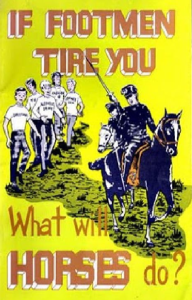
It may not be the classic definition of a Hubrisween movie, but If Footmen Tire You, What Will Horses Do? is a prime example of a conservative horror story. Of course, Stephen King has already posited that all horror stories are ultimately conservative, but this is a horror movie designed to strike fear in a certain demographic.

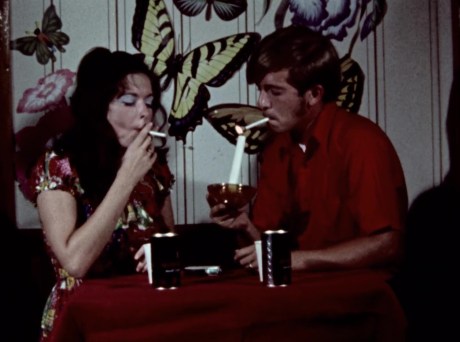
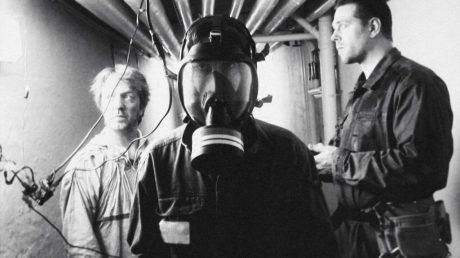
This is the title of a sermon delivered by Mississippi Baptist minister Estus Pirkle, and it’s all about how evil Commies will take over the US of A unless its thoughtless sex-education-class-attending masses come to Jesus. This takes the form of vignettes gleefully showing the atrocities that will take place after such a takeover, including massacres, drunken soldiers invading homes, and in a crowning moment, puncturing the eardrums of children who were attending a clandestine prayer meeting. That is punctuated by the child actor vomiting, which rumor has it was not supposed to happen.

My God, they pithed him like a frog.

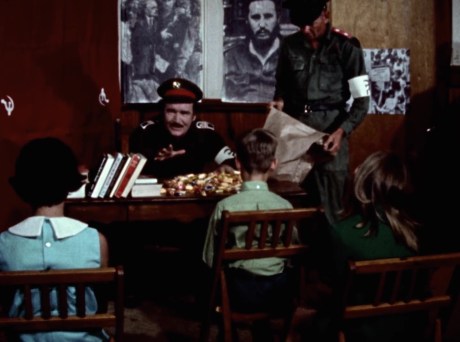
Probably the worst thing to its Baptist audiences is the scene where Comrade Teacher (Wes Saunders) demonstrates to a class of inexpressive children that prayer to God will not get them candy, but Comrade Castro is happy to give them all the candy they want.

“Comrade Castro will give you all the crap Halloween candy you wish!”

The atrocity footage is brought to us courtesy of exploitation legend Ron Ormond, who had earlier brought us such worthy entertainment as Mesa of Lost Women, Please Don’t Touch Me, and Girl from Tobacco Road. Ormond crashed his single-engine plane into a field and survived, though seriously injured. This was what could be termed a come-to-Jesus moment, and from that day forth, Ormond was a Christian, eventually teaming up with Pirkle for a trilogy of films – following was The Burning Hell (which also deserves a Hubrisween slot) and The Believer’s Heaven.

Also in the mix is Judy (Judy Greer), a young lady who is attending church just to keep up appearances (we know Judy is a unbeliever because she’s dating the Sex Education teacher). Pirkle’s tale of forthcoming doom and getting covered with red paint provides Judy with her own Ron Ormond moment, and Pirkle brings her down to the altar of save her soul.

SINFUL!

Footmen was meant to be shown at prayer meetings and revivals, and this is the moment when the lights went up and people would march up to their own altars and accept Jesus. It never played actual theaters, so there are no end credits; in fact this why Pirkle never released it on video or DVD – he felt that there should always be someone at the altar after the movie’s end, waiting to receive the lost lambs for their salvation.

All good, I suppose. Pirkle is especially good in the scenes with Judy, projecting care and empathy. What gives me pause is the statistics he claims with absolute authority are true, such as the exact number of Americans the Commies intend to kill when they take over, which is a tactic used by far too many pundits and idiots in the present day.

Pirkle’s message of salvation is undercut by pronouncements like that, and by members of his non-acting flock, all things that have made it fodder for latter-day sampling and bad movie watchers. But there is a rawness to Ormond’s conservative nightmare passages that give it some power even in these Pirkle-less times.

H: House by the Cemetery (1981)

I have questions.

It’s tempting to just let that be the review, but where’s the fun in that? And that’s what we’re here for, right? Fun.

About that.

I saw House by the Cemetery back when it was released on VHS. Didn’t think much of it. Years later, I would find out that transfer had the reels out of order. Ah. No wonder. Though I assigned re-watching it in its intended order a very low priority, I finally found time, and did.

About that.

I have questions.

So Dr. Norman Boyle (Paolo Marco) takes on his former mentor’s research. uprooting his child and wife to move to New England, to the very same house the mentor bloodily murdered his mistress and then hanged himself.

To his growing dismay, Boyle finds out the deceased had totally forsaken his original research to instead look into the history of the house’s former owner, a Dr. Freudstein, who was infamous for insane, illegal surgeries, and OH FOR GOD’S SAKE, HE’S IN THE CELLAR WE ALL KNOW HE’S IN THE CELLAR Y’ALL JUST GO TO THE CELLAR ALREADY

Ahem.

That part I can manage. That part I understand. There are three people credited with the screenplay, and even with the reels in the right order, the movie feels like three different scripts were shuffled like playing cards, and then handed to the film crew.

It is a creepy movie. I must give it that. There’s some genuinely unsettling stuff in here, and that’s not necessarily the gore scenes. There is a wonderfully eerie ghost story embedded in House by the Cemetery, but it feels like, as I said, pages from another script

But I have questions. A lot of my questions are perfectly encapsulated in a quote from the movie’s page at Imdb:

What is with the rapidly vanishing blood in this movie? Why is Boyle looking for Freudstein’s tomb miles away when he already knows it’s in his living room? What the hell is up with Ann, anyway?

This movie is the Picnic at Hanging Rock of gore movies.

So no, I didn’t find myself suddenly liking it.

G: The Great Buddha Arrival (2015)

This is a curious movie. It is based on a 1934 movie of the same name, which is presumed lost in the bombings of World War II. It featured a giant Buddha statue standing up and walking around Japan. Yoshiro Edamasa, the director, used trick photography to get the images, and produced not the first kaiju flick, but almost certainly the first tokusatsu movie.

A video editor working on a program finds out about the possibility of a walking Buddha in pre-War Japan, which the video host claims the government hushed up. He manages to find photos of the incident (actually the only surviving pictures of the original movie) and starts investigating. He finds out that the movie was made by Edamasa to retell his experiences during the incident, but more troubling, the event was preceded by a wave of suicides and then the name “Hiroshima” crops up…

And so does something else.

Yep a Giant Buddha statue has stood up and is walking across the city. Needless to say, a lot of people turn out to watch this. The Buddha stops before a tower; a great chanting is heard, and the crowds begin to walk toward the statue, as if in a trance. And then the  horror starts.

As I said, it’s a curious beast. Partially a documentary, partially cosmic horror story. At a trim 50 minutes, it has no time to wear out its welcome. If fact, the only annoying thing was having to watch it on FreeVee, which only served to remind me how much I hate commercials during movies.

Overall, the hardest part was convincing myself that yes, there was an actual lost movie involved. Not some Larry Blamire/Blair Witch jiggery-pokery.

F: Feed the Light (2014)

Sara (Lina Sundén) is a desperate woman who breaks into the Malmö Institute armed only with a knife and a set of lockpicks. She’s looking for her daughter, whom her recently-divorced husband has taken into the nondescript building. When the Chief (Jenny Lampa) mistakes her for a new hire, Sara finds that Malmo is much weirder than she thought; her job is to sweep up the sparkling dust that drops from the facility’s lights, because the dust “attracts vermin”. She also witnesses one of the other workers get covered with the dust, and the vermin – a swath of darkness – enters the worker’s body and he dies in an explosion of blood.

She enters into an uneasy alliance with the head janitor (Martin Jirhamn), who reveals that things can get even worse: the reason her cell phone was confiscated by the Chief is not because it would interfere with Malmö’s machines, but because the phones can be used to unlock the seemingly nonexistent door to Level Two. Sara has found her husband (Patrik Karlson), now significantly older, because he got lost in Level Two, where time can move… oddly. Level Two is where their daughter is now trapped.

And you do not want to go to Level Three. That’s where the Light lives.

Feed the Light is a fascinatingly low-fi tale of cosmic horror. The black-and-white presentation (except for the occasional burst of color, see the bloody demise above) is going to immediately make most cineastes think of David Lynch, and that’s an association that’s not far wrong, with demented behavior, existential dread and a trove of unanswered questions. It’s not as ultimately incomprehensible as Lynch, but it is as accomplished.

And it’s always good to find a movie that can turn a lack of a multi-million dollar budget into an asset, rather than a disadvantage.

E: Eerie Tales (1919)

Richard Oswald’s Eerie Tales is that most venerable of horror movie formats, the anthology, made long before Amicus claimed it as their territory. The original negative is considered lost, and what we are watching today is a restoration performed by the Cinémathéque Francais, which, according to the credits, is some 100 meters shorter than the original.

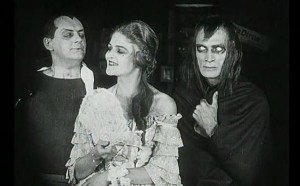
Our framing device takes place in a rare book store, run by an especially antic owner. After he shoos out his customers and closes down, life-sized portraits of the Devil (Reinhold Schünzel) a prostitute (Anita Berber) and Death (Conrad Veidt) come to life and amuse themselves by reading some of the books littering the place, and as they do, the three take the place of characters in the stories. So you see, Screams of a Winter Night totally ripped off this movie.

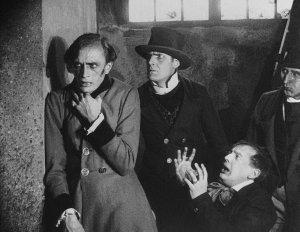
The first story is “The Apparition” by Anselma Heine, the tale of a woman rescued from her murderous husband, who then mystifies her rescuer by simply disappearing, with even the hotel staff testifying that the man arrived alone the previous night. (so add Kiss of the Vampire to the list of rip-offs) I am making the leap that any missing footage might be from this section, because that is more comforting than thinking that I’m too stupid to get the part when a drunken Veidt discovers the lady is missing and rushes from the room in horror.

Next up is “The Hand” by Robert Leibmann, a tale of ghostly retribution. You might feel a little more at home with the next two stories, which are Poe’s “The Black Cat” (a particularly good adaptation, too) and Robert Louis Stevenson’s “The Suicide Club”. The movie wraps up with “The Spectre” by Richard Oswald (yes, the director), where a nobleman gets the best of a literal Scaramouche character who is attempting to seduce his wife.

At this point in cinema history, all the tricks of visual storytelling had been worked out, so Eerie Tales is a fine example of silent filmmaking, easily accessible to the modern viewer. The actors are all up to the task of multiple characterizations, with Veidt as a standout, here a year before his star-making turn as Cesare in The Cabinet of Dr. Caligari. Reinhold Schünzel is in charge of all the scenery-chewing (at which he excels), and Anita Berber is sadly under-utilized, functioning mainly as someone to be fought over, or murdered.

Silent movies are good for you. You should watch one today.

D: Dracula, Prisoner of Frankenstein (1972)

Dracula is doing Dracula stuff so Dr. Seward stakes him in his vampire basement lair, turning the Count into a dead bat. Soon after, Frankenstein moves in, finds the bat, and revives Dracula with blood. Frankenstein seems to hope to somehow parlay his new vampire toys into his ultimate goal, a perfect being, which probably thrills the Monster to no end. After the Monster tries to kill Seward, the injured doctor is nursed back to health by gypsies. Complicating matters is the fact that Seward and Frankenstein are both idiots and didn’t check any of the other coffins in the basement so there is a rogue vampire lady running around.

The gypsy fortuneteller tells Seward that he will be the one to conquer the bad guys right after the wolfman comes to help. The wolfman is actually of little help, but Frankenstein decides fuck this noise and stakes Dracula again (this time reducing him to a skeleton, which just shows you can’t trust Seward with anything), kills the Monster with electricity (is this even possible?), and then vanishes from the movie so Seward can come in with his torchbearing gypsies to find that all the work has been done the end.

The Wolfman sees the synopsis above and wonders “Who writes this crap?”

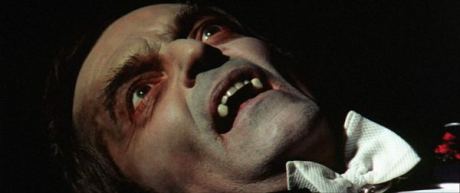
It would be tempting to call Dracula, Prisoner of Frankenstein a fever dream of a movie, but in fact it feels like a movie of a fever dream experienced by a sick child after watching a Halloween marathon of classic Universal horror movies. It has that nonsensical flow – especially the inclusion of a werewolf just because. Howard Vernon’s Dracula always has the same expression, which is as unnerving as it is absurd. Count Dracula as Halloween mask.

I have spent my adult life simply waving off Jess Franco movies, and welp, here I am, trying to deal with his work in a more accepting manner. There is no denying that he knows where to put his camera and how to use stuff like camera dollies and the like. It has been put forward that the first act of the movie is largely dialogue-free and could have easily been a tribute to silent horror movies. Then Franco gets his hand on the zoom lens and all my good intentions get enraged all over again.

I’m going to try Franco again in a few letters, and maybe I’ll finally see what other critics I respect seem to see in the guy. This time, I do have to say I was never tempted to just shut it off, which is progress of a sort.

C: Count Dracula’s Great Love (1973)

Dracula (Paul Naschy) moves into a deserted castle and immediately starts making vampires. He is aided in this by by a carriage-load of young hotties suddenly stranded by an accident and the death of their driver. Vampire stuff ensues.

Count Dracula’s Great Love is a quite unusual vampire story; although the setup above points toward a typical Hammer-style gothic tale, it quickly unwinds into novel territory. Great Love‘s central conceit is that Dracula’s immortality is not based on eternal life, but instead on a cycle of reincarnation, with the Count living and dying over and over again until a virgin falls in love with him for himself.

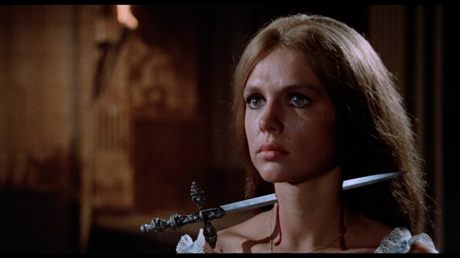
Also, she gotta take a knife to the neck.

One of our hotties falls for him but, alas, she is no virgin. There is another, however, who fits the bill, and that is where things start getting really weird. There is a subplot about reviving Dracula’s daughter, even to the point of kidnapping a local girl and sacrificing her to revive said daughter, but his Great Love doesn’t like that, so he abandons it. Sorry, local virgin!

Eventually, Dracula has killed all the other vampires in his employ and the virgin still won’t give in, so Dracula stakes himself to start the cycle all over again and the virgin is sorry, boo hoo hoo.

“Your coffins are right this way. ROOMS! Rooms. I meant rooms.”

Snarky recaps aside, this is held up as a high point for Naschy as an actor and Spanish horror in particular. Those are both true, and it has to be admitted, this most unusual twist on the mythology was refreshing, and certainly worthwhile.

B: Blair Witch (2016)

Which reminds me, one of these days I’ve got to watch Blair Witch 2: Book of Shadows before the DVD rots in its case.

So it’s 15 years since those three intrepid student filmmakers went into the woods and disappeared, but now a memory card has been found in those woods and the hectic surviving footage seems to take place in that strange deserted house in the end of that movie. Heather’s brother James (James Allen McCune) thinks he caught a glimpse of Heather in that footage, so off we go to the woods again, with James’ friend Lisa (Callie Hernandez), who is making a documentary about James’ search, and two cannon fodder friends (Corbin Reid and Brandon Scott)

Perhaps you thought “Now wait a minute” about James’ hope of finding Heather after fifteen years. Hold that thought, you’re going to be needing it again.

I hope you got it laminated so it doesn’t wear out.

They meet with the couple who found the memory card (Wes Robinson and Valerie Curry), who insist on going with them. Say goodbye, everybody!

“Goodbye, everybody!”

James’ main objective is to find this mysterious house, which has eluded search parties and other investigators. It is fifteen years later, so we have new tech, like trail cameras and a drone to help.

None of these are going to help (as you surmised).

Now, I like found footage movies – when they work, I find them very involving. Director Adam Wingard works the new tech angle for all its worth, and even adds a bit to the lore by having the Witch fuck around with time as well as space. This also seems to be the year for filmmakers punching my claustrophobia in the head and taking its lunch money, the bastards. But still, Blair Witch is going to make you use that phrase “Now wait a minute” so many times that honestly, that should have been the subtitle.

Though I admit Blair Witch: Now Wait a Minute would have been a hard sell.

A: All Eyes (2022)

Allen (Jasper Hammer) has a top rated radio show/podcast called “UN/Sane” which seems to be mainly exploiting people with paranormal experiences, sort of a combination of Art Bell and Alex Jones. A returning video caller who in a previous episode claimed to be followed by “shadow people” now claims to have caught one. When he points his phone at a locked door, we hear the voice of a woman pleading to be let out. At his point, the caller starts brandishing a gun, and if you’ve seen The Fisher King, you know where this goes.

The ensuing tragedy loses Allen his show and his job, but his producer, Kim (Danielle Evon Ploeger) retrieves his box of story leads (labeled “Box of Freaks”) and visits him with it. She thinks she can get Allen back on the air, but she needs a redemption story. In the Box of Freaks is a letter that stands out: a farmer in Oklahoma claims to have a monster living in the woods behind his house, and if Allen does a show about the monster, well, there’s an unsigned check for $25,000.

So Allen finds himself in the almost literal middle of nowhere in the company of Bob (Ben Hall), a farmer who despises him and his show, but Bob’s deceased wife loved it, so he seemed the logical choice to tell the story of Bob and his monster, which he claims has already eaten all the livestock on the farm. His one remaining goal is to kill the monster (which he calls “Eye” because it is covered in eyes), which is why Allen also finds himself on a farm in the middle of nowhere which is festooned with booby traps. “Just try to walk where I walk!”

Bob’s drawing of the monster.

If you’re familiar at all with movies, you know that Allen and Bob will eventually reach some level of accord, especially when it turns out that somebody else is hunting Eye in the woods, and they’re calling it “Number 878“.

It seems that this movie is going to be all talk and no action, until there is a hell of a tone shift in the third act, and the less you know about this, the better. But All Eyes proves itself to be a rather unique horror movie in that it demonstrates it has a heart, covered with a bunch of monster stuff, and that gives it a lot more staying power. Recommended.


Life’s Rich Pageant (moan, groan)

There is so much I want and need to say and precious little time in which to do it. It’s been quite a summer, yes sir, and I would heartily endorse the idea of everything just slowing the fuck down.

Yeah, it won’t.

There is a bizarre confluence of fate at work here, as somehow it has transpired that I’m the only guy in my part of the organization. Temporary, to be sure, but I’m not comfortable with this much responsibility. I don’t like having to be this careful.

That vague enough? Good. It is late and I am a bit heightened. Next week is going to be a tad brutal, and I’m trying to get stuff done while I can.

This is starting to sound like a suicide note, so here’s some japery, courtesy of The Oatmeal:

I wrote that part four days ago. This week is, indeed, being intense in the most tedious way possible. Municipal budgets. Meetings after meetings after dear sweet god where is that asteroid? Why is it taking so long? (needless to say, I really needed the protracted LOL that Oatmeal animation supplied)

Every time I’ve thought I should sit down and write, there was something else much more important to be taken care of, and the list of movies I wanted to write about here got longer and longer and ungainlier and… whatever the longer version of ungainlier is. Ungainlier – er. Unglaublich.

I meant to be back here with you, I really did. But then, I had an idea. A terrible, grinchy idea. I have been working – on a new project, something that no one but myself would possibly want to read, and I couldn’t be happier. Well, yes I could, but for the consideration of the story being told, I am willing to exaggerate. I felt the need to do something new, and I am fulfilling that need.

I believe I’ve completed the initial research and I’m ready to get started writing (future Freex drops in, wearing science-fiction sunglasses “He’s lying!” and disappears). All I need is, yes, the time. A meeting ended early tonight, giving me a half hour to myself before bed. So here I am, babbling to you like a homesick Civil War soldier writing his wife in hopes that some day it would become the basis of an award-winning series on the devil’s lightning box.

Hm. Reading that, maybe you really shouldn’t want me coming back

And now, here I am, two days later, trying to get this screed into some sort of shape that approaches sharable.

Now, if you really want a laugh, I hope to do Hubrisween this year. If I pull any reviews off, though, they’ll be pretty first draft quality, and not my usual *cough* sterling, polished prose. You’ve been warned YOU’RE ALL GOING TO DIE OUT THERE!!1!