Before I descend into the madness of another Movie Challenge Month, I should probably talk about one of the movies I did manage to watch during my burnout from the last one: Human Lanterns, a piece to 80s horror nastiness from the Shaw Brothers. It is on The List, after all.
When the craze for Asian movies started up again in the 90s, I was right there with it, searching out movies in an age when the Net was just starting out and a person in my position had to make do with books, magazines, and mail order. I still have a ton of VHS tapes in boxes in my garage, most of very iffy quality and downright scurrilous sources. But one of the movies spoken of as a sort of HK video nasty was Human Skin Lanterns, later amended to Human Lanterns. And here it is, in my hands, in a pristine DVD.
A company named Celestial Pictures started putting out remastered, gorgeous DVDs of the Shaw Brothers back catalogue in the early 00s, and again, there I was. The American Dollar was very strong against the HK dollar, and I was importing close to 20 discs a month for under $200. There were movies I thought I would never see in my lifetime, movies familiar only in their cropped, dubbed versions on Saturday afternoon TV, and movies I took a chance on and was rewarded handsomely.
As all good things must, the contract I was working on at the time ended, and I was back to my duller, more financially strapped state. But then domestic American editions of the Celestial discs began appearing, and look, there it is in my hands: Human Lanterns. With the Image Entertainment logo.
So here’s your plot: There are two kung fu bigshots in town, Tan (Chen Kuan Tai) and Lung (Tony Liu). There is the usual rivalry between the two, but the difference here is that both men are real douchebags, and their antics are the sort of things that make their friends look away uncomfortably. Their latest achievement is wrecking a party at Tan’s over a prostitute both men frequent.
The upshot of the evening is that both men swear they are going to win that year’s Lantern Competition, and Lung journeys to the town’s market to find out who has really been making lanterns for Lung in past years – the merchant he actually pays for them doesn’t have the skill. To his surprise, Lung discovers this masterful lantern maker is none other than Fang (Lo Lieh), a man Lung beat in a duel seven years before, leaving him with a facial scar and a brooding hatred.
Lung beseeches Fang to let bygones be bygones, to make him a truly beautiful and unique lantern that will beat Tan’s entry. In return, Lung promises riches and a way out of the hovel in which Fang lives and works. Fang agrees, as this is the spark that will power a vengeance seven years in the building.
Fang begins by kidnapping the aforementioned prostitute and skinning her alive. There are gorier instances of this in genre cinema, but this particular version is low-tech and pretty nasty. Tan and Lung cast suspicions on each other for the woman’s disappearance, and the local policeman (Sun Chien) is pretty ineffective, as in all horror movies.
Fang continues his plan apace, eventually kidnapping Tan’s younger sister, and finally Lung’s wife, who we discover was the cause of that duel seven years before. Things build to a massive kung fu fight and a fiery finish, which only one of the characters will survive.
There are, as I said, gorier movies of this sort, but Human Lanterns manages to be unpleasant in its own, personal ways. Thankfully, we only see two of the women being skinned, but Fang, in the full throes of his villainy, has to rape the woman who caused his defeat and disfigurement. We never see Tan’s younger sister go through this, only Fang’s gleeful playing of cat-and-mouse with her in his hellish underground workshop. We entertain a bit of hope that she might still crop up, unharmed toward the end… but no. This is a horror movie, a slasher film in period garb. Don’t let the accouterments of an action movie fool you.
There is a special kind of chill when Lung finally finds that underground charnel house and sees the completed lanterns, and is held transfixed for a moment by their beauty, not realizing that the one he is admiring features the “beautiful red mole” on his wife’s back that he so treasured.
The cast is quite good. Chen Kuan Tai, a superb martial artist and star of many a Shaw Brothers blockbuster, seems pretty wasted in his role; Tony Liu is given much more screen time and fills it well enough, but neither of these men are given any way to truly gain audience empathy; the only people we feel for are the victims. Poor Sun Chien never got a break – we always see him playing second fiddle to other members of the Venom Gang, and here he has to play the Asian version of Barney Fife.
Lo Lieh was a very versatile performer; he could certainly handle hero roles – witness King Boxer/Five Fingers of Death – but where he really excelled was playing villains, and Human Lanterns gives him more than adequate atrocities to sink his teeth into.While doing his wetwork, Fang wears some sort of hairy ape suit with a skull face ,and watching this figure, swinging through the trees, loose-jointed and cackling, is pretty chilling.
Human Lanterns has its share of fight scenes, but none are dynamic enough to cement the movie as a kung fu flick – and the horror segments are memorable enough, but often seem imported from another movie. It’s an odd creature to be sure, worth a watch from horror fans, but probably not action-packed enough for martial arts mavens.
This movie and I go back a ways. When it first played theaters – and yeah, 1963 sounds right, yeah, fifty years ago – I begged my mother to take me to see it. Those three names were something to conjure with, alright, and I was pretty certain that there would be carnage aplenty. You see, I was pretty certain the title meant there were three musclemen involved. My mother watched a lot of peplum on the afternoon movies (yes, local TV stations showed movies in the afternoon – and mornings! – instead of talk shows full of people shouting at each other. In some respects, it was a Golden Age), so I knew about Hercules and Maciste and some other guys, so three of them had to mean three times the action.
And I have to admit I remember absolutely nothing about the movie – well, I do remember one thing, it turns out – which made it a cinch that when Warner Archive put it out on disc, it was only a matter of time before I had a copy in my hands. Especially when Chad Plambeck started enthusing about it (Chad was also kind enough to inform me that this movie didn’t hit American shores until 1965, which means I saw it only 48 years ago. That put a spring back in my step, let me tell you).
Well, there is one other thing I sort of remembered, or at least the memory came rushing back as the movie started, like a fly ball popped into the stands at an unsuspecting observer: Ulysses is not, in fact, a muscleman with a misappropriated name. We are actually dealing with Odysseus (Ulysses being the Roman version of that name), while still a teenaged Prince of Ithaca, here hanging out with Hercules (Kirk Morris, in this version). Hercules throws a discus, and Ulysses shoots it with an arrow. We are assured that the targets in this primitive skeet shooting won’t be found for days, but big deal, the kid’s royalty. He can afford it.
A group of men come to Ulysses’ father, King Laertes, to complain about a sea monster killing fishermen. This, of course, is catnip to Hercules, who will head up an expedition to kill the dastardly beastie. Ulysses will tag along with a basket full of carrier pigeons, because that is what youthful sidekicks do.
Director Pietro Francisci – to whom we will return later – is annoyingly cagey with the sea monster. Seen only at night, and in tantilizingly brief clips, it seems to be a manatee or an otter with a piped-in roar. In any case, it cuts through the water well, but Hercules harpoons it at the beginning of a terrific storm. In return, the unseen monster pokes a huge hole in the boat’s hull. So Hercules, Ulysses and four other survivors wind up castaway in a strange land.
After Herc punches a bull to death (“I wonder what sort of creature that was,” muses one guy over the ensuing barbecue, leading to the amusing thought that there are either no cows in Ithaca, or the man is an idiot) they wander inland (leaving the fire under the side of beef burning), to find that they are in the land of Judea, where fortunately everyone speaks Greek. Or English, anyway.
In this first village we find Samson (Richard Lloyd – actually Iloosh Koshabi), who is currently in hiding, because the King of the Philistines is looking for him, probably over that whole jawbone-of-an-ass thing. Samson suspects these barely-dressed men are spies. Hercules, on the other hand, is simply looking to hire a boat to get home, and is told his best bet for this is, you guessed it, the King of the Philistines. So Herc plucks some gems from his belt and uses them as collateral for the loan of some horses. On the way to Gaza, the party encounters a lion, so Hercules must wrassle it and strangle it – or so we’re told, the editing in this scene is suspiciously choppy. Their guide, seeing this, assumes that Hercules is actually Samson, and runs on ahead to tell the King.
Meanwhile, a platoon of Philistine soldiers is searching the village for Samson, and finds the carcass of a strangled lion in a pile of furs. This is extremely weird and hilarious, until somebody later mentions this is at the house of the village tanner, which makes a little more sense, but jeez, it is definitely time for Samson, a confirmed serial lion strangler, to admit that he may have a problem. This puts the Philistine leader in a foul mood and he orders the entire village burned and everybody killed (except those he can sell as slaves). Okay, this is the sole image I remembered from my youthful viewing: people being nailed to the sides of their houses while the buildings burned. That left a scar.
The unfortunate prisoners are dragged along until, as is traditional, one passes out, and the leader orders her killed. It is at this point I finally got a good look at a Philistine soldier, and discovered that all their helmets were modified Nazi helmets. That may be putting too fine a point on your symbolism, but then, I am not Pietro Francisci.
As luck would have it, the woman passed out exactly where Samson had set up an ambush, and he proceeds to slaughter the entire regiment with a couple dozen javelins he brought along just for the occasion. Once Samson finds out what happened at the village, he is more convinced than ever that Hercules is a spy.
Meantime, we get to meet Delilah (Liana Orfei), upgraded to the Queen of the Philistines, who is convinced that the King just needs to chill out about this whole Samson business. We will eventually find out that this is because she wants Samson for herself. Delilah has a muscleman fetish and apparently has collected all the muscleman bubblegum cards, because she instantly recognizes Hercules.
The King holds Ulysses and the other four men hostage while commanding Hercules to hunt down Samson and bring him back as a prisoner. Delilah goes along for the ride, and when her attempted seduction of Herc proves fruitless, she resorts to her prowess at scheming to lure Samson out.
It has to be admitted: Francisci puts his money into stuff the audience wants to see, because the initial fight between Hercules and Samson is a corker, in 1963 peplum terms. In a field of Babylonian ruins, they throw each other into walls and columns of huge styrofoam blocks, throw the blocks at each other, bend iron bars around each other – it’s no Neo versus Agent Smith, but it is pretty cool. I’m pretty sure six year-old me enjoyed it immensely. But once the crew has exhausted all their styrofoam and foam rubber tricks, Hercules says, “Hey, you know? We should team up.” and Samson says “I was thinking the same thing,” and then playtime’s over.
Delilah keeps trying to escape and warn the King, but the two muscle men use convenient half-mile long lassos to bring her back. Eventually she will convince Samson to let her try to fool the King into giving Herc’s friends a boat and making it look like Samson is a prisoner, but she’s Delilah and shows up at the rendezvous with the Philistine Army, dressed like Barbarella on Military Ball Night. Ulysses gets to prove he’s clever by finding exactly the right buttress for Herc and Samson to bring the Temple of Dagon down (somewhat ahead of schedule) in a welter of styrofoam and foam rubber. I suspect the peplum industry had been manufacturing and storing these thing up for years, and Francisci called up the full supply.
Not all the Philistines get crushed, though, and things look bleak until King Laertes shows up with the boat builder Argos, whose newest creation is the 007 Astin Martin of the 12th century B.C., festooned with javelin throwers and arrow machines (those carrier pigeons kept Laertes apprised of where Ulysses was shipwrecked, and the wimminfolk got tired of waiting). So with a festive “Beware of Delilah!” Hercules and Ulysses take leave of Samson, though we’re pretty confident he’s going to ignore that advice.
Hercules, Samson and Ulysses is generally regarded as the last gasp of the Peplum movies, and its only appropriate that it should be directed by Pietro Francisci, who started the whole fad with the 1958 Hercules, which put a pulp dimension into the Biblical-era spectacles that were so popular at the box office. By ’63, the genre is pretty much sleepwalking through the plot; I’m pretty sure six year-old me could have written this one, right down to the unmotivated teaming up of the musclemen. “An’ then they fight for a while, and tear stuff up, an’ then they decide they should be friends.” Roger Corman made Atlas in ’61, and rarely was there a more canny judge of what was hot and vice versa.
But as I said, Francisci puts the most effort into the mandatory setpieces, the big battle of oiled musclemen and the final confrontation with the Philistines, and you have to admit that at the end, you’re satisfied. You don’t come to a movie titled Hercules, Samson and Ulysses to have the secrets of the universe unfolded before you, you’re here to have fun. Bring the popcorn, sit back, and relax.
There seems to be an ebb and flow in the Universe around these things: I’d had another stressful and exhausting two weeks, the midpoint of which was the Fort Bend International Festival, a nice 11 hour day with only two minor fifteen minute breaks. I should feel lucky – I was totally expecting 12 hours. This was followed by a holiday on the following Friday, Good Friday, but that only meant everything had to be done a day early. I really didn’t feel rested until a week after the Festival, and a day after Crapfest.
Two could not make it – David and Erik – and we added a newb, Mark, who, like me, works at a college but has a much more elevated position than I (realistically, the janitors have a much more elevated position than I). Paul and Alan arrived after their commitments; I had beaten Rick to Dave’s house by mere minutes, giving us sufficient time to curse each other and the screen, because I had burned another compilation of horrible things from the Everything Is Terrible website. Here is one of the least offensive, in case you were ever wondering what happened to Madness after that “Our House” money ran out:
I’m still trying to figure out how to rip that and make it my ringtone. Apparently some memories of this song gave Rick problems in church Sunday morning.
Dave wanted me to go first, but although I had a stack of discs in front of me, I pointed out that we had been promising Paul we would show Sonny Chiba’s The Bodyguard for months. “What? Is it Be Nice To Paul Day?” “Sure, why not?” So we finally watched The Bodyguard, which is, unfortunately, no Streetfighter, but hey – it is Sonny Chiba.
It is quite literally Sonny Chiba, as Sonny Chiba plays a guy named Sonny Chiba who is a world-famous karate instructor. After a gangster is machine-gunned on the steps of St. Patrick’s, Sonny is hired to be the bodyguard for the dead gangster’s (wouldn’t you know it?) Japanese girlfriend. Yes, it’s Sonny Chiba vs the Mafia, and there are lots of broken bones sticking out of arms before the evening is out. The girlfriend is trying to do one last drug deal in the gangster’s honor, or something, and Sonny comes along for the ride as he goes between slapping the crap out of her and falling for her. Mark’s utterance of , “Boy, I hope this ends like Get Carter” is sort of prescient, but only sort of. And Paul sits there with a big grin on his face for most of it.
Our hopes were, however dashed in that Kevin Costner never showed up so Sonny could punch his lights out. Also: I had no idea that Sonny Chiba is in the Book of Ezekiel, but there it is, right at the beginning. This movie was educational, too.
Well, that clip kind of let you hanging, didn’t it? Here, the trailer picks up where that left off, and gives you a glimpse of the Enno Morricone-wannabe soundtrack, which was pretty hot:
After this, I discovered that it was also “Be Nice To Alan Day”, which is where things began to go horribly wrong. Alan had been doing actual research, tracing filmographies of people like Pamela Jean Bryant (Miss April 1977, says resident Playboytologist Paul), mainly known in these parts from H.O.T.S. and Lunch Wagon. And what does his research uncover but this… thing from 1993 called GetEven, re-titled to Road to Revenge, possibly because the original title was too suggestive of what anybody watching it should consider. (Actually, it seems to be the opposite – GETEVEN seems to be the current title)
Here is your set-up: first, realize there is a lawyer named John De Hart (the emphasis is apparently on the “De”). He is also apparently a very successful lawyer. So naturally he decides to become a movie star. He writes, produces, stars and co-directs in an action movie titled Get Even. He also has a musical number. I am not lying about this:
Yes, that is Pamela Bryant at the bar, proving what a good actress she was by looking like she’s enjoying herself. She also should have won awards for the two sex scenes she had with De Hart. Yes, he gave himself two sex scenes with a Playmate. And before you ask, yes, he sings the two songs under the sex scenes. Really awful flashbacks to The Room surfaced under these conditions.
If you were really sharp, you saw Wings Hauser dancing during the clip. Here’s our plot, such as it is: Rick Bode (De Hart) and the unlikely-named Huck Finney (Hauser) were LAPD cops under William Smith (who packs the even more unlikely name of Normad). Normad frames them for drug charges – and about the worst thing to come from that is they lose their jobs – which somehow then makes him a judge. The passage of time in this is oddly (some might say ineptly) fluid, so I guess he got elected to that position somewhere in there. Now, not only is he William Smith, crooked cop and drug-dealing judge, no, that is insufficient for our needs, he is also a baby-killing Satanist. Bryant witnessed a baby sacrifice years before (or maybe it was minutes before), but Smith doesn’t decide to kill her until De Hart marries her. Which of course leads us to our Road to Revenge, perhaps the shortest Road to Revenge ever. Less than a block, or so.
De Hart’s baggy face rarely ever changes expression, though he is really good at looking directly into the camera. Wings Hauser is obviously improvising his dialogue, and it does serve to pad out the running time to feature-length. There is one speaking role – a nun – who is so mind-blowingly awful, she is in the movie twice, just to make De Hart look good. And yes, our hero is guilty of several counts of murder by the time the movie is over, but that’s okay, right?
You, too, can go to geteventhemovie.com and purchase your own copy for a whopping 10 bucks. I do not personally recommend such a thing – but then, when have you ever listened to me?
Paul takes his position as Designated Wuss very seriously, and left, before we put on Mark’s offering: The Black Six, the tale of a motorcycle gang made of six NFL football players. And if you know me and sports, you know I had no real idea what was going on, cast-wise, even though the opening credits were good enough to tell us what team each guy played on. Anyway, the Black Six are traveling the country after serving in Nam, generally being cool except when they are hastled by the man (ie., rednecks stupid enough to mouth off to six black men over six feet tall and in good shape). Until one of them finds out his kid brother was beaten to death by a white motorcycle gang.
That would be Gene Washington, chosen to be the main actor from our other pro players, who get distracted by such frippery as women on the street until they’re needed for backup.
The actual mechanism of Washington receiving this news by General Delivery at a post office during their wanderings led to a spirited discussion of exactly how much money Washington’s mother spent on postage, to send copies of this letter to every post office in America, just to make sure he got it.
Anyway, the Black Six arrive in town, get called “The New Uncle Toms” by Washington’s Angela Davis-lookalike sister, find out the cops cain’t do nothin’, and wind up in a big nighttime showdown with the murderous motorcycle gang, unaware that the spiteful honkies made a deal with an even larger motorcycle gang run by “Thor” (Ben Davidson, who I was helpfully informed was another football player). This is actually a pretty good final scene, as the six gather all the bikes in a circle and fend off onslaught after onslaught, finally ending in a huge explosion and conflagration, leading us to believe the Six are dead, except the titles assure us that everytime a brother is hassled, the Six will be there.
I’m not sure if the Black Six actually “waste 150 motorcycle dudes” – it gets a little hectic there – but it’s a pretty good finish. Up to that point, it’s obvious the Six aren’t martial artists at all, but they’re game, by golly. Matt Cimber directed a bunch of low-rent action flicks and blaxploitation movies, and his experience shows; it certainly had the most comprehensible plot of the evening.
Mark took his leave, his damage done, leaving myself, Dave, Rick and Alan. And while Alan took a nice nap, Dave started up Mission Stardust.
I had meant to see Mission Stardust for years. It’s the Perry Rhodan movie, and when I was a teenager, I read a bunch of Perry Rhodan when Forry Ackerman started importing them here to the states.
Perry Rhodan is a weekly pulp series started in Germany back in 1961. It is pure space opera pulp – two-fisted astronauts, alien races, hairs-breadth escapes – it was glorious to young teen-aged me. Ackerman’s English versions were successful enough to keep the series running in bi-weekly paperback form until the new head of Ace Books decided it was “too juvenile” and cut it off around issue #120. Ackerman did keep it running in a subscription-only model for another twenty issues, but that was pretty much it for America. In Germany it kept going until 2011, when reportedly it got rebooted for a new audience.
So in 1967 Mission Stardust was made (aka 4…3…2…1…Death!) and the fact that no other Perry Rhodan movies were made should clue you in how successful it was amongst Rhodan fans.
Perry Rhodan (Lang Jeffries) is in charge of Earth’s first Moon landing, where the crew of the rocketship Stardust finds a disabled alien ship with two living occupants from the planet Arkon: the elder scientist Arkin (Pinkas Braun), and the ship’s captain, Thora (Essy Persson). Arkin is looking for younger civilizations to freshen up the Arkon’s genetic pool, which means Perry will be sucking face with Thora by movie’s end (Spoiler: it took like 18 books for that to happen) even though she doesn’t like these primitive screwheads. In the meantime, Arkin is suffering from a mysterious disease that turns out to be leukemia.
The thrust of the movie then becomes getting a doctor who has developed a new treatment for leukemia from Mombassa to the Moon without revealing that there are aliens camping out on said Moon. This is accomplished by landing a smaller spacecraft in the desert and hassling all soldiers that come their way.
Rhodan and his sidekick, Mike Bull (really) (Luis Davila) sneak into Mombassa with a handful of diamonds (of course, worthless to the Arkons. Their money is mercury), unaware that a Blofeld-level bad guy has a mole on their ship and is planning to hijack the spacecraft. In other words, in order to escape our run of bad action movies, we blundered right into the arms of a bad action movie.
But it was at least a bad action movie with spaceships and robots. That was different. Sort of.
Here’s Your Scorecard:
Best Fight Scenes: The Bodyguard (which should tell you something about the quality of the others)
Easiest Plot to Follow: The Black Six
Best Score: The Black Six
Best Playmate: Road to Revenge
Best Space Vehicle That Looked Like A Dildo: Mission Stardust
Best Song: Jesus Is My Friend
Lesson Learned: We will never be nice to Paul and Alan ever a-fucking-gain
I was fearsomely buzzed on caffeine and willing to do another movie. But Alan went home halfway through Mission Stardust and Dave and Rick wanted to have lives, or something. So I went home, logged the movies and sent rambling e-mails for the rest of the evening. And at some point, realized I had horribly disfigured my Letterboxd.com profile page with this rogues gallery:
Meaning Jesus God I gotta watch more movies. Stat.
Finally finishing out Letterboxd.com’s March Movie Madness challenge. It got to be a little wearing there, toward the end.
The Villain (1979)
Dear sweet mercy, is there anything worse than an unfunny comedy? This is stuntman extraordinaire Hal Needham’s third movie, after Smoky and the Bandit and Hooper. It is a Western parody, and if you are expecting Blazing Saddles, you are probably in the same shoes as everyone who paid to see this in theaters, sucked in by an ad campaign and a trailer with far better pacing and editing than the movie itself. Cactus Jack Slade, a down-on-his-luck professional bad guy (Kirk Douglas, of all people) is hired by crooked banker Avery Simpson (Jack Elam) to waylay the somewhat less-than-virginal Charming Jones (Ann-Margaret) on the way back to her pa’s silver mine and steal the money she’s transporting so Simpson can foreclose on the mine. Trouble is, she is being protected by a clueless lunkhead literally named Handsome Stranger (Arnold freaking Schwarzenegger). The other problem is that Cactus Jack is an idiot. No, the real problem is that the decision was made to make this a live action Roadrunner movie, with Kirk Douglas in the Wile E. Coyote role. They even do the painting-a-tunnel-on-the-side-of-the-mountain bit, for God’s sake. The problem is, neither Hal Needham nor his editor are Chuck Jones, and all the bits fall flat, flat flat. Kirk Douglas has good comic timing, and is game as hell, but the Marx Brothers, Monty Python and full frontal nudity could not have saved this movie. I haven’t even gotten into Paul Lynde and Robert Tessier as Indians. Nor will I.
White Vengeance (2011)
This is the second Chinese historical epic I’ve seen in the last couple of years that had the original title The Feast, that has been changed to something more commercial for Western audiences. the first, an Asian “Hamlet”, was re-titled Legend of the Black Scorpion, which is a bit odd for a movie bereft of scorpions of any color. The re-titling of this one makes more sense, at least. White Vengeance tells the tale of Liu Bang (Leon Lai) and Xiang Yu (Feng Shaofeng), two warlords seeking to overthrow the crumbling Qin dynasty and become Emperor themselves; seeking to drive a wedge between the two men, King Huai proclaims that whoever takes over a certain town will become its Lord, a stepping stone to the Imperial Throne. It works, and Liu Bang manages the feat without shedding a single drop of blood; thus begins an internecine war between the two men, fought with armies, yes, but mostly through the machinations of each man’s counselor. The battle of wits seems to come to a head at the Feast of Hong Gate, where Xiang Yu’s elderly, blind mentor Fan Zeng (Anthony Wong) and Liu Bang’s right hand man Zhang Liang (Zhang Hanyu) play five games of chess simultaneously. Well, not chess, but Go, a Chinese version that has subtleties of its own. Though it seems to end with Xiang triumphant, the chess moves continue for months, even beyond Fan’s eventual death. That’s the White Vengeance of the title: the white pieces on the Go board, vying for advantage even when there are no hands to move them. White Vengeance does have massive armies charging at each other, and those scenes are well done; but I do admit I love movies that value strategizing and the movement behind the lines. There’s also a love story almost buried within the cut and thrust of the main storyline, and it seems superfluous – though it does add a bit of sweet and forlorn spice to the otherwise Machiavellian mix.
X-Men: First Class (2011)
Why did it take me so long to see this movie? Well, I guess I knew that some day I would need a movie starting with X that I hadn’t seen before. This is the oddest Franchise reboot in a while; most reboots update the characters, not backdate them. This one places the X-Men at the Cuban Missile Crisis, which wasn’t the fault of the Soviets, but that nasty old Kevin Bacon, here playing Sebastian Shaw, a character that didn’t actually crop up until the late 70s. First Class gets pretty cavalier about which characters it wants to play with, and schizophrenically taking pains to explain why Mystique is so young-looking in the 21st century X-Men movies, while blithely ignoring any other number of continuity problems. In all, this is a pretty necessary move if you want to maintain the backstory of Magneto as a survivor of the Nazi Holocaust. The graying of their mainstay characters is the problem Marvel and DC have been having for years with characters like Nick Fury – most notably not with the Howling Commandos in the Captain America movie. Sgt. Rock was still kicking around the civilian world in the 70s – that’s realistic enough – but DC would like us to forget that Bruce Wayne ran into Rock back during WWII, behind enemy lines. And I guess since they recently slash-and-burned their entire heritage, they can now legitimately say that never happened. Bitter, me? Nah. I have the trade paperbacks. Anyway, fun movie. Not going to be in my top ten, but a good superhero movie.
yellowbrickroad (2010)
I wonder if I would have ever settled down to watch this were it not for March Movie Madness? Possibly not. I found it on Netflix while looking for a movie beginning with Y, and here we are. The setup is this: in 1940, the entire population of Friar, New Hampshire, headed down a mountain trail. Some were found frozen to death. Some had been savagely slaughtered. But most were simply never seen again. One of the few survivors could only keep asking, “Can’t you hear it?” A husband and wife team, hoping to write a book on the subject, have spent years trying to get the official documents so they can retrace the town’s journey. Finally succeeding, they embark with a psychiatrist, a wilderness expert, a husband-and-wife cartography team, an intern, and a girl from present-day Friar, who has to show them where the path begins: a stone marker with the words “yellowbrickroad”. Well, before you can say Blair Witch Project (though this isn’t a found footage movie, I should add), our party is subjected to whirling compasses, a GPS that says they’re in every country in the world except where they are, and music constantly playing in the distance. When even shooting the stars with a sextant proves useless, all they can do is follow the music, while their sanity slowly unravels, and it’s not too long before the first murder happens. The padding’s at a minimum (though still unfortunately there), and you have to admit we know these people before they meet their various ends. The slow burn material makes me think of Ty West. But that doesn’t necessarily mean that we like or identify with them, which may be the movie’s greatest weakness. The other weakness is the ending. A lot of people hate the ending, but I’m not necessarily one of them. It turns out this is a problem I have with a lot of modern horror fiction; there’s a superb amount of dread built up, and there isn’t a satisfactory conclusion, so you go obscure, you go strange, and leave it at that. Though the ending of yellowbrickroad is disappointing as to the reveal of the end of the trail, the imagery it ends with is horrific enough that I was satisfied. Your mileage may vary.
Zodiac (2007)
Been meaning to watch this forever. I was stymied when the used DVD I bought was a full-screen edition (“What is this? Medieval times?“), which I finally replaced, and I needed the Z flick anyway, and I had already watched Z. Zodiac is about the Zodiac Killer, a serial murderer whose identity and exact body count is still a cause for conjecture (though the movie, and the book it’s based on, settles on a fairly good suspect). The actual murders take up a rather small portion of the runtime; most of it is given over to the investigation by police inspectors (Mark Ruffalo and Anthony Edwards) and newspapermen (Robert Downey Jr. and Jake Gyllenhaal). Oh, and I nearly forgot Brian Cox as Melvin Belli. Hope you like procedurals, because there’s a lot of it in the 157 minutes. That’s a damned fine cast, though, and David Fincher and his crew do a spectacular job of re-creating 60s through late 70s San Francisco. The character count does start getting unwieldy as more and more police departments are brought into the investigation, but that really does help the viewer understand the complicated nature of police work, and how frustrated the detectives working the case become, not to mention a public on the verge of hysteria. No wonder Dirty Harry became a hit using the thinly-disguised Scorpio as the villain. I was wondering how they were going to fill out that running time when there is no climactic chase or cathartic capture; the movie instead zeros in on how the pursuit of Zodiac comes close to destroying the lives of these men. There was, at least a cathartic moment for me toward the end, when a rack of paperbacks at a airport revealed that yes, the book that was being written during the movie was the one I read in 1986. Also, if you’re a Donovan fan, be aware that this movie will spoil “Hurdy Gurdy Man” for you forever.
Conclusion
Well, that was fun, but as I mentioned earlier, getting to be a grind toward the end. In the week before the Challenge ended, The Hobbit and Zero Dark Thirty both hit the stores. I would have loved to watch The Hobbit again, but no, I had the end of the alphabet to contend with. Still, I stuck it out, but now I have a bit of a problem getting excited about watching a movie again – this was too much of a good thing. I need to get over this because there’s a Crapfest tomorrow, and maybe that’s just what I need – too much of a bad thing.
There was a big push to get ahead on the letterboxd.comMarch Movie Madness event, because a) it was Spring Break, and b) weeks off always engender a Hell of Work To Catch Up On. This time is certainly no exception, as the Week of Hell is actually growing into a Fortnight of Hell. I have a 12 hour day coming up this Sunday which may kill me. Please tell my mother and my wife that I love them.
I’ve managed to claw a bit of free time out of the schedule, let’s see how far I can get:
Queen of Blood (1966)
One of the stranger cottage industries Roger Corman spawned in the early 60s involved buying the rights to Soviet science-fiction movies – which were pretty high-minded and had some great effects by pre-2001: A Space Odyssey standards – and then harvesting the effects sequences to plug into American-shot movies, since no red-blooded Amurrican would be caught dead watchin’ no Commie movie, anyways. Like a Comanche using every last bit of the buffalo, Corman and his crew got significant bang for the buck out of this strange vivisection – Planet of Storms is the basis for at least three movies, almost all with “Prehistoric Women” in the title, and The Heavens Call yielded Battle Beyond the Sun and this odd little Curtis Harrington movie.
In the far-flung year of 1990, Earth’s Space Institute receives a message from another planet, informing them that the alien race is sending an ambassador. Several weeks later, it is discovered that the visitor’s spaceship has crashed on Mars, and a hasty rescue mission is organized. Only one survivor is found (by accident), and gosh darn it, on the way back to Earth it’s discovered that she’s a vampire.
A color-corrected Florence Marly in this lobby card.
Queen of Blood is an entertaining enough sci-fi programmer. It rarely drags enough to relinquish your attention elsewhere, and even has some nice drama when it’s determined that one member of a two-man rescue ship will have to stay behind on the Martian moon Phobos to allow the surviving alien to take his place on the lifeboat that will connect with the ship already on Mars. The mechanics of the plot are well-considered, even if some of the science is not.
Harrington had worked with Dennis Hopper in 1961’s Night Tide, and brings him along for the ride – it’s actually kind of refreshing to see him in a cardboard sci-fi context. John Saxon is predictably solid, and the other breath of fresh air is Judi Meredith, who has a swell little genre resume along with numerous TV roles – she’s in Jack the Giant Killer,Dark Intruder and The Night Walker. Basil Rathbone is on hand as the urbane head of the Space Institute, probably because John Carradine was shooting six other movies that day.
As mentioned in my grumbling about Prometheus, I’m more sad about the tremendously advanced Moonbase we’re utilizing in 1990 than amused. The most fun to be had is watching the film grain and lighting change from the Soviet material to the American.
The Red Shoes (1948)
The quintessential backstage drama, which just happens to be about ballet. I’ll be frank and say that ballet, along with opera, are the two art forms I care very little about. I don’t hate them the way I loathe, say, most musicals, but I’d much rather spend my time watching something else. But they are still art forms, so I’m happy that both have more than enough fans that they don’t have to depend on me for their survival.
So I approached Red Shoes with a bit of misgiving, but I needn’t have worried. Art is art, performance is performance, and the act of creation is endlessly fascinating. The first section of the movie can get a little wearing, with two of our protagonists starting out at the bottom, and haha, those temperamental artists! But once events start to move, and we become invested in the rise of dancer Victoria Page (Moira Shearer) and composer Julian Craster (Marius Goring) under the direction of ballet impresario Lermontov (Anton Walbrook). This will lead to a triangle that has little to do with love, and everything to do with their arts. It’s a very different kind of passion at work here, and its tragic ending is almost inevitable.
At one point, during rehearsals for the new ballet The Red Shoes, Lermontov says to his set designer, “The audience will applaud in the middle!” He’s likely speaking for director Michael Powell and Emeric Pressburger, as the debut of the ballet, midway through the movie, is played out before us as a fantasia, heavily based on the paintings of scenic artist Alfred Roberts. It’s not meant to be a literal recreation of the ballet, which would require an impossible set on the world’s largest stage; it is more a representation of what is going on in the dancer’s and the audience’s minds, when, as Lermontov constantly proclaims, “The music is everything!”
The melodramatic plot and acting aside – all perfectly keeping with post-WWII standards, and none of it odious – The Red Shoes is an undeniable masterpiece. Which of course means that the Rank Organization thought it was pure rubbish and didn’t even bother to release it in its native England for several years.
And, just in passing, I guess I should mention I was largely on Lermontov’s side on the triangle. Both men are complete assholes at the movie’s end, but Julian’s insistence that Victoria give up her opening night in order to attend his is beyond the fucking pale, even for an artist.
The trailer gives you only an inkling of Jack Cardiff’s magnificent camera work, though the color, even faded, gives you some idea of the Technicolor glory of the restored print:
The Searchers (1956)
Thursday night was a good night; it started with The Red Shoes and ended with The Searchers.
The Searchers may very well be the Perfect Western. It so solidly bridges the gap between the silent starched West of Tom Mix with the gritty, grimy hell of Unforgiven. It still has love for the vast sunny beauty of Monument Valley (filling in for Texas) and the pioneering spirit of the people who live there, but it comes from a much darker place than any previous John Ford/John Wayne collaboration.
Wayne is Ethan Edwards, a man who returns to his brother’s homestead after a three-year absence (some of it due to the Civil War), just in time for the family to be slaughtered by Indians and the two young girls taken hostage. A posse of Ethan, some volunteer Texas Rangers, and Martin Pawley (Jeffrey Hunter in his premiere) take off in pursuit. The posse is eventually winnowed down to Ethan and Martin, which is going to provide most of the conflict for the movie; Martin was rescued by Ethan from a similar Indian raid when Martin was a child. But Martin is also one-eighth Cherokee, and there is one thing Ethan cannot abide, it’s a half-breed. Ethan’s discovery of the older girl, raped and killed, cements his decision to find the younger girl, Debbie, no matter the cost.
As the search drags on for five years, Martin continues to accompany Ethan; the younger man’s role, he has come to realize, is to stop Ethan from killing Debbie once he finds her. By now the girl has been accepted into the tribe, and is in fact one of the wives of the war chief Scar, and as far as Ethan is concerned, that means she is no longer white, and better off dead.
We can all conjure up images of Wayne as the good ol’ righteous western dude – that’s most of his output in the 60s. But in his best roles, there’s an edge to the character, and in The Searchers he gets to be a complete and utter dick. Anyone who thinks Wayne wasn’t a good actor should watch The Searchers; there is one close-up – after Ethan and Martin have checked over the white captives of a tribe massacred by cavalry, only to find neither is Debbie and both are far worse for wear – a close-up of Wayne that combines such strong emotions, loathing, pity, simmering hatred… that it’s shocking.
But the movie is far from being a grim slog-fest. There are lighter moments aplenty, and good support from the Ford repertory company, like the always-welcome Ward Bond, and I was completely unprepared for KEN CURTIS – FRONTIER MACK.
Both movies – The Red Shoes and The Searchers – are highly recommended, especially on Blu-Ray. The Criterion Collection of Red Shoes is beautifully restored, and the VistaVision transfer of The Searchers – an awesomely affordable disc, these days – will knock your eyes out. And the trailer has a ton of fine Duke moments:
The Third Man (1949)
Eventually I was going to find a classic I just didn’t care for.
I think it was about a year back when a former colleague messaged me, saying he has just watched The Third Man, and could not figure out for the life of him what it was that made the movie so revered. What did he miss? Did I have any insights? As I had not seen it at the time, I couldn’t supply any. Well, now I’ve seen it. Still can’t supply any.
This is a well-made movie, make no mistake. It’s obvious writer Graham Greene and director Carol Reed are both in love with Vienna. And it’s the Post-World War II occupation by four separate world powers and the burgeoning black market that make the story possible; it’s interesting to see the International Police Force at work, a cop from each occupying country making each call. The story just never grabbed me, and I’m at a loss to explain why. Perhaps I was poisoned by that year-ago question.
The Third Man is the tale of Western novelist Holly Martins (Joseph Cotten), who arrives in Vienna at the behest of childhood chum Harry Lime (Orson Welles, eventually) promising work. Martins, however, arrives just in time for Lime’s funeral, as he was killed in an odd pedestrian accident across from the building where he lived. Odd because Martins finds conflicting stories about the accident, including a, yes, Third Man at the scene that the police know nothing about. Martins, of course, sets about investigating.
If there is one thing that bewilders me about The Third Man, it is the enduring popularity of Harry Lime. One of the things that Martins finds out, to his dismay, (okay, spoiler alert, even though there a statute of limitations on spoilers for movies that are 64 freakin’ years old) is that Lime was not only a black marketeer, but dealt in adulterated penicillin, resulting in the death and disability of many people, including children. Yet Harry Lime had his own radio show for many years (tales of Lime’s past, given the ultimate outcome of the movie), and by the time there was a Harry Lime TV show (starring Michael Rennie, if I recall correctly) Lime had been completely rehabilitated as a globe-trotting art collector.
I don’t get it. I shrug. I will say that my non-genuflection at The Third Man‘s altar should not be taken as a condemnation; as I said, it is a well-made movie that should be checked out, and if nothing else, has the best denouement of any number of noirs. You can make your own decision.
The Unknown (1946)
Is he really going to do five movies this time? Yes, and five the next, if I survive tomorrow. Then this whole thing will be over, and we can get back to our normal anarchy.
The Unknown is one of three movies based on the I Love A Mystery radio series. To be disarmingly cute about it, I love I Love A Mystery, especially in its later incarnation as a 15-minutes-a-day serial. I think – no time for research this time, mes enfants, sorry – that this hearkens to the older, half-hour incarnation of the show, when our detective agency was only two people, Jack Packard (Jim Bannon) and the laconic Texan, Doc Long (Barton Yarborough), both men repeating their roles from radio.
The Unknown is an old dark house, reading-the-will story, populated with strange characters and tangled sub-plots, so much so that Jack and Doc are practically guest stars in their own movie. There is an accidental death years previous that has completely twisted the family tree, a dead patriarch walled up in a fireplace rather than the family crypt, a will that keeps vanishing, and the ghostly crying of a baby in the night. Also the requisite secret passageways and cloaked killer, whose identity is perfectly obvious at the halfway mark, if not sooner. At a trim 70 minutes, though, it doesn’t have time to get truly tiresome, and does have at least one plot twist that surprised me.
It’s also so obscure there’s no trailer for it online. Instead, have the trailer for Larry Blamire’s parody of Old Dark House Reading of the Will thrillers, Dark and Stormy Night:
A minor cultural artifact that would be languishing in the used VHS bin at Half-Price Books were it not for Drafthouse Films, who managed to turn it into a sort of cause celebré last year. If you like your heroes to be a rock band made up of five orphans who have sworn friendship forever, and who use the proceeds from their club gigs to pay for college, this is the movie for you. If you’d like these five friends to be “black belts in Tae Kwan Do”, this is especially the movie for you. If you want your five black belt rock stars to fight a bunch of motorcycle-riding, drug-dealing ninja (in Orlando, Florida), then you already own the Blu-Ray.
I put “black belts in Tae Kwan Do” in quotes because it becomes pretty obvious that only three of the members of Dragon Sound have any moves (in fact, the diminutive Gino Vanelli-looking lead guitarist is pretty much the girl of the group), and one of those is star/producer/co-director Y.K. Kim, for whom English is a distant second language.
The dialogue is largely improvised, which means I give the movie’s sound man a big thumbs up, because there would be no way to convincingly loop any of the scenes, because everybody talks at once (and not in a good Howard Hawks way). The fight scenes aren’t dreadful, and some are pretty good, though watching the bad guys dutifully line up to attack our heroes one-by-one on a largely empty street is kind of painful.
An interview with Y.K Kim on the DVD reveals that Miami Connection was turned down by every distributor as, quote, “Crap”, unquote, until one guy agreed, but only if they completely re-did the ending, since in the original the bad guy got away and a Dragon Sound member died. With a new bloody showdown and a formerly fatal sword wound downgraded to “Walk it off, wuss” status, Miami Connection went out into the world, to wait 25 years for anyone to appreciate it.
Maybe it’s due to having seenIntercessor only a few days before, but I didn’t find Miami Connection all that bad. Not all that good, either, but a likely candidate for a Crapfest.
The Night of the Hunter (1955)
And for every story where a distributor said that something was “crap” and was right, there seem to be five stories about the same thing, but the movie in question was a masterpiece that the bean-counter could not appreciate. Such is the case with actor Charles Laughton’s sole directorial effort, The Night of the Hunter.
Based on the novel of the same name by Davis Grubb, Hunter is the tale of serial killer Harry Powell, a travelin’ man who professes to be a preacher, finding widows with money, marrying them, killing them, and moving on. While serving time in prison for auto theft (30 days!), he meets up with Peter Graves, due to be hanged for a bank robbery in which he killed two men. Powell manages to find out that Graves hid the ten thousand dollars, but won’t tell where; after his release, Powell goes searching for this newly-created widow, and the ten thousand.
The story is largely told from the point of view of Graves’ ten year-old son, John (Billy Chapin), sworn to protect his younger sister Pearl and the location of that ten thousand dollars. With an ease born of practice, Powell sweeps their windowed mother off her feet (Shelley Winters, very convincingly projecting a brittle, damaged vulnerability) and eventually murders her, tying her body to an old model T and dumping it in the river, producing one of the movie’s indelible images: Winters’ hair drifting lazily in the current, echoing the surrounding weeds.
The kids strike out on their own down the same river, Powell in inexorable pursuit (“Don’t he never sleep?” marvels John), eventually winding up in the care of Lillian Gish (who came out of retirement specifically for this role), playing a woman who has found new meaning in her life caring for orphans the Depression has sent her way. She sees through Powell’s guile immediately, and in a nighttime confrontation, the spurious preacher finds himself no match for a good woman with a shotgun.
Part of the genius of Night of the Hunter is that it slips so subtly into the boy’s point of view, we almost don’t realize we’ve left an adult’s mindset behind. We’re surprised that the adults of the tiny town don’t see through Mitchum’s bullshit as easily as we do, but that’s because we’re sharing John’s experience. Powell is a surprising change for sex symbol Mitchum, who must have leapt at the chance to play a character so different from his usual fare.
In a story that is going to be too familiar, an executive at the first screening called the movie “too arty” and buried it on the second half of a double bill with the now largely forgotten medical potboiler Not As A Stranger, also featuring Mitchum. The posters and advertising materials reveal just how clueless United Artists was as to what approach to take with Night of the Hunter, and it almost vanished from sight, championed only by a very few until its true status as a classic was embraced.
Laughton, never the most confident of artists, took it all very much to heart and never directed another movie. Which is a damned shame.
Orca (1977)
“I know! Let’s remake Jaws, but rig it so that this time you root for the shark!”
“BRILLIANT! Another round!”
Fisherman Nolan (Richard Harris) thinks that capturing a killer whale and selling it to an aquarium or sea park will finally pay off the mortgage on his boat. What he manages to do is harpoon his target’s mate, resulting in a gruesome whale miscarriage on his deck and the unending enmity of a killer whale who, doctor Charlotte Rampling informs us, is capable of feeling grief and unending vengeance.
This is indeed the McGyver of killer whales, causing huge explosions in the seaside town and targeting vulnerable supports of buildings so he can bite off Bo Derek’s leg. Nolan is responsible for four human deaths and millions in property damage by the time we reach the final showdown, and despite attempts to generate sympathy for the character, I never stopped rooting for Orca.
At least I now have seen the movie was that was plastered all over the back of comic books until they invented Megaforce.
Prometheus (2012)
Finding identical star maps in several ancient civilizations, two scientists (Logan Marshall-Green and Noomi Rapace) have figured out that a race of beings called The Engineers created life on Earth and left this calling card as an invitation. The near-ubiquitous Weyland Corporation funds an expedition to the planet to try and make contact. Things do not go well.
First: Jiminy Christmas, what a cast. Beside Rapace, you have Charlize Theron, Idris Elba, Michael Fassbinder, and, eventually, Guy Pearce. That is a hell of a lot of quality acting talent. You have special effects that are often incredible. What you do not have is much of a compelling story. In short, you have a Ridley Scott movie.
Prometheus is at its best when it is functioning as a sense-of-wonder story, a stripped-down-to-the-basics space opera about exploration and first contacts. It veers into horror (and even Cronenbergian medical horror in the movie’s most intense segment) in ways that worked like gangbusters in Alien but seem somehow tacked on here.
Because Prometheus, you see, is a prequel to Alien. What our heroes find is a seemingly abandoned Engineer base full of bioweapons that was going to be shipped to Earth but something went wrong and the Engineers themselves were the ones that got destroyed. Exactly why the Engineers, having created life on Earth, were suddenly so determined to eradicate it is a question left unanswered, and in fact is the entire reason for the movie’s denouement, and possibly a reason for all the bad press and rancor I had heard during the general release. My pal Roger Evans had read an interview with Scott that explained it all, and proceeded, like a kindergartener with a dead rat chasing his classmates all over the playground, to pursue me until I read it. I really don’t need to have everything explained for me. I frequently enjoy the mystery more than the solution. But now I know. And it did kind of bruise my opinion of the movie.
Really, I think Prometheus works better outside the Alien universe. Trying to shoehorn it in is just going to cause headaches. And this is from someone who strenuously pretends the Alien vs Predator moves never happened.
Honestly, the biggest, most jagged pill for me to swallow in the movie is that it takes place in 2094 or so. Which means interstellar flight in 80 years. I suppose that’s possible, but I’m doubtful. When I was a kid, we sent men to the Moon regularly and you could fly from New York to Paris in a few hours. What the hell happened? Whatever it was, it makes a rapid advancement like that, even financed by a voracious corporation, very dubious to my mind.
Then again, my next movie will be Queen of Blood, which takes place in 1990, when a mere 21 years after the Moon landing, we have a fully functioning Moon Base and plans to go to Mars. That didn’t seem too far-fetched in 1966, so I’m hoping I’m wrong and we do, indeed, wind up on that road again.
You know the score by now. Letterboxd dot com, March Movie Madness, a movie a day, A for Day One, B for Day Two. To continue:
Intercessor: Another Rock ‘N’ Roll Nightmare (2005)
People kept waving me off from this, which is like waving a red tablecloth at a bull (sorry, Mythbusters). This is, as the title implies, a sequel to the 1987 Rock ‘N’ Roll Nightmare, which is kind of a reluctant favorite of mine; it starts out as a rock band version of The Evil, veers into Ghoulies territory, then has a gonzo twist at the finale which is actually endearing in its desire to reach awesomeness, if lacking the resources to get there.
Which is about the best way to describe Intercessor. It’s shot on video, has a comic book plot with comic book dialogue that uses fannish comic book art to advance the story – and that last bit is quite literal. The bad guys are Zompira and Mephisto, and there is some sort of plot involving a spindly emo geek and his would-be girlfriend who, never mind, get killed off about a half hour into the story because never mind, the story we really want to tell is Mephisto trying to corrupt a little girl’s pure soul by attacking her in her dreams, and finally, in an empty factory. He is aided in this by four witches representing the four elements, and the Four Horsemen of the Apocalypse: Rather Fey Pestilence, Whiney Famine, Mardi Gras Death, and Bad Acting. Luckily the spindly geek managed to discover the power of METAL and bring back Jon Mikl Thor before being written out of the story.
So Intercessor is Rock ‘N’ Roll Nightmare writ large, with that last ten minutes or so expanded to an entire movie. As in the end of that movie, there is absolutely no way the production has the resources to effectively tell the story they want. Somebody’s pretty damned good with Adobe After Effects, and there are occasionally some nice visuals, but the seams are really, really visible; the chaotic story, the villains who need to go to Evil Laugh School (the good guys and the four witches are fair to pretty good, though), and those fights that really want to be Highlander class stuff, but generally consist of a couple of moves and the witches getting defeated by Thor throwing his cape over them. Incidentally, I was rather surprised to find out that Pestilence and Famine can be killed by zombies. Who knew?
My suspicion is that each and every member of the cast and crew owned a van with Frazetta’s Death Dealer airbrushed on the side. Intercessor has heart, there is no doubt. What it didn’t have was the budget and actors to pull off its grandiose ambitions.
Hm. No trailer, but here’s the first 60 seconds:
John Carter (2012)
…is the polar opposite. Disney’s multi-kabillion dollar film version of Edgar Rice Burroughs’ John Carter of Mars series has the moolah to make the story work, and in astounding, visually impressive ways. Good God, the fact that I never doubted the reality of the four-armed, green Tharks is a testament to the FX department (although I expected them to be more muscular, influenced by the Frank Frazetta covers to versions I read while a teen. Just to drag ol’ Frank into the discussion again).
There were changes made to make the story more palatable to modern audiences, or so the focus groups decreed. Since we no longer cotton to the concept of gentleman swashbucklers, Carter has become a Civil War vet with a dead family to mourn, stopping just short of Josey Wales in Space. Dejah Thoris , the Princess of Mars (hey, he said the name of the book!) has been updated fairly nicely, and the Therns are upgraded to all-purpose, powerful villains who are apparently not even Martian, but an older alien race who are beginning to set their sights on Earth. Past that, John Carter successfully carries on the one-damned-thing-after-another structure of the novels, all on a convincing alien world.
Taylor Kitsch won me over as Carter, and Lynn Collins is fantastic as Dejah Thoris. A friend of mine contends that Hollywood should stop screwing around and cast Collins as Wonder Woman, and he’s right. Everybody I know who’s seen John Carter enjoyed it, if not outright loved it. So why did this movie die at the box office? Why aren’t we already talking about the sequel? For some reason, Disney seemed to pretty much abandon it; the striking of the words of Mars from the title for purely superstitious reasons (“No movie with Mars in the title has ever been successful!”) is pretty emblematic of the corporate lack of trust in the product.
It’s saddening, really. John Carter is pulp entertainment on the same high satisfaction level as The Avengers, but it was just never given a chance.
(And I kind of wonder how much it cost Disney to license “Kashmir”…)
Kagemusha (1980)
Akira Kurosawa begins the twilight portion of his director’s career. He almost didn’t get there; Red Beard put an end to his relationship with Toshiro Mifune, and left the director with a reputation for difficulty and wastefulness. The failure of Dodes’ka-den in 1970 seemed to put an end to that career. Mosfilm had the good sense to hire him to direct Dersu Uzala in ’75, and that movie receiving an Oscar for Best Foreign Film bolstered him a bit, but Toho was on the financial ropes and no one seemed especially anxious to finance Kurosawa’s next project, a return to the medieval samurai film. Enter a couple of Kurosawa fans named Francis Ford Coppola and George Lucas, who convinced Fox to put up the money in return for distribution rights.
Kurosawa spent a lot of that downtime painting, and it is those paintings that form the most beautiful storyboards ever employed. There are times that the lighting in Kagemusha is so lush,so colorful, it is impossible to deny that Kurosawa had successfully transferred his painted image to film.
Kagemusha, literally, “shadow warrior” is supposedly based on a true story of the Warring Nations period preceding the Tokugawa Shogunate, when Japan was constantly in a state of battle between various ambitious warlords, roughly the end of the 16th century. When one of the most powerful of them, Lord Shingen (Tatsuya Nakadai) is wounded fatally by a sniper’s bullet, a common thief with an uncanny resemblance to him must take his place to maintain the clan’s position of strength. The thief excels at the deception, his overconfidence eventually, albeit accidentally, revealing the ruse, and the thief watches in horror as Shingen’s ambitious, unfortunately impetuous son wastes his entire army on one ill-conceived attack.
The story was at first fairly small, concentrating on the thief, his change of heart and demeanor and the growing relationship between him and Shingen’s grandson, a six year-old who is delighted that his grandfather’s “long illness” has rendered him “no longer scary”. But the scope of the story spun out from there, with the various competing lords trying to figure out what exactly is going on so they can plot their next move with assurance. The deliberate unfolding of the plot and the seeming lack of focus on the title character can wear a viewer down, but that’s also part of the genius of Kurosawa; the thief so thoroughly vanishes into Shingen, we never truly know him, and as Shingen’s brother, who had so often played the role of Shingen’s brother, says, “The shadow of a man can never desert that man. I was my brother’s shadow. Now that I have lost him, it is as though I am nothing.” Indeed, once the thief can no longer wield the power of Shingen’s phantom, the entire clan becomes nothing.
Kagemusha is good – it’s really very hard to go wrong with Kurosawa – but so much of it also seems a dress rehearsal for Ran, it can be easy to put it on another shelf, with less respected works from a master.
The Lost Skeleton Returns Again (2009)
So we bookend this entry with shot-on-video sequels. The major difference between Intercessor and The Lost Skeleton Returns Again is, although they likely had similar budgets, Larry Blamire got what he wanted out of his.
This is the sequel to Blamire’s 2001 The Lost Skeleton of Cadavra, a canny parody of low-budget late 50’s sci-fi programmers. It was the best post-Airplane parody movie, because it didn’t lampoon a specific movie – Lost Skeleton is very much its own movie, using every bad movie trope Blamire had ever seen. The Ed Wood-style mangled speech patterns, flying saucers (and skeletons) on wires, a monster wearing workboots under its carpet-remnant costume… it was a project that came from love, and it was damned near perfect. I couldn’t wait to see what Blamire would do next.
I’m actually still waiting. His immediate follow-up, Meet the Mobsters (2005), I literally only found out about five minutes ago. Trail of the Screaming Forehead (2007) ran into that old bugaboo, troubles with the producer, who at one point reportedly took the film away from Blamire, recut it and shot more special effects scenes. That version has shown up on cable channels, and Blamire’s version remains available only on Region 2 PAL DVD.
The same year as Returns Again, Blamire also released Dark and Stormy Night, his “old dark house” parody, replete with wisecracking reporters, ominous, hooded killers and more secret panels than are likely safe for structural integrity. I love Dark and Stormy Night.
“Rowr” indeed.
Returns Again is very much the spiritual brother of Dark and Stormy Night; Blamire still employs some twisted Wood grammar but relies a lot more on twisted wordplay and rapid-fire delivery of non-sequiturs for his humor. In this outing, the surviving cast from Lost Skeleton all converge on the Amazon, journeying to the Valley of Monsters, ruled over by the Cantaloupe People – both of them. Tagging along are the twin brother of two characters that died in the first movie (how handy!) and Blamire, bless him, found a way to bring back Animala, the best character from Lost Skeleton, the woman made of four animals combined by alien technology. Then again, he sort of had to, as she is played by Jennifer Blaire, his wife.
Like 98% of all movie sequels, Returns Again isn’t as good as its predecessor, but the fun far outweighs the blah. It’s still an eminently quotable movie, and hell, that’s a goodly portion of what movie geeks care about when they gather together. In my circle, we still pull out the “Have i the message? Have you the message?” bit from Dark and Stormy Night, amusing ourselves and puzzling others.
I knew one week was going to be hellish, but I had no idea it would effortlessly balloon into two and a half weeks. My endurance was severely tried and probably exceeded, as I’m still feeling the aftereffects. I’ve become acquainted with the cane again because my supposed “good” leg is tired of taking up the slack and is actively mutinying. A walker or forearm crutches is starting to look tempting.
There was one thing that was helping me through all these tribulations, and that was the prospect of a Crapfest in the coming weekend, when I told myself I could relax, and, as we said in the day, “Blow off some steam”. Blow off, indeed, I was so successful in achieving a state of what we in the trade call “blitzed” that I’m probably lucky I can write about it at all.
I feel much better for that.
First we should note that I was beaten to the fest by Erik, the New Guy. I cannot fault his enthusiasm – he had been fomenting for a Crapfest since January. After cursing his youthful vigor I oohed and aahed at Dave’s reincarnation of the Fest Room, dubbed Den 2.0. Den 2.0 was an order of magnitude better than the old configuration, roomier and allowing the projector a slightly longer throw. Magnificent work. Dave had even called our tallest member, Paul, to get his height, so that he could mount the projector two inches above that. SCIENCE!!!!
“Loooook! Is that Dennis Roddddddman?”
People slowly drifted in while exploitation trailers played. Two people did not make it. Wald fell afoul of some traffic spawned by the Houston Livestock Show and Rodeo, gave up, and went home. Having dealt with the traffic in the Galleria area the weekend of the NBA All-Star Game (where tweets alluded various basketball players were shopping, and therefore the entire county descended on the area, and, in fact, the mall and surrounded streets were eventually shut down), and having wished I could have just given up and gone home, I couldn’t blame him. Dave asked me to text him where the sausages he was supposed to be bringing wound up. Wald replied he had been lobbing them at other drivers.
We tried to watch everything that featured exposed breasts before Alan arrived from his acting gig, and we almost succeeded, but then a trailer featured a breast or two (there was an astounding amount of stuff “based on the Marquis deSade” in the 70s). So it was down to the new version of the faithful: myself, Dave, Rick, Paul, Alan and Erik.
I apparently had the opener. I had been scheduled to present Sonny Chiba’s The Bodyguard (Paul had wanted to see it since witnessing the “Viva! Chiba!” trailer), but Dave had discovered a disc in my bag I had literally gotten just the week before, at the WB Shop’s $5 sale: Gymkata.
Some of you moaned when I said Gymkata. Well, screw you.
Gymkata was Robert Clouse’s 1985 attempt to re-capture Enter the Dragon lightning in a bottle (there were many more, and most are reasonably entertaining). This one stars Olympic Gold Medal Gymnast Kurt Thomas, as Olympic Gold Medal Gymnast Jonathan Cabot. Cabot is recruited by the CIA to follow in his father’s footsteps. Pop Cabot went to Parmistan to participate in THE GAME, a sort of organized Most Dangerous Game where participants run through the country and numerous obstacles while pursued by Richard Norton. If they live, they get whatever they want. And what Pop Cabot wanted – or rather, what the CIA wanted – is to place a Star Wars Satellite Station (remember that? Thanks, Reagan!) in the country. Naturally, other countries want that, too. Their own satellite stations, I mean. Not a satellite station for the US.
Yeah, you heard me drop the Richard Norton name. If you’ve watched any HK action flick from the 80s through the 90s, you recognized that name, and you realized he’s the villain. Especially since you saw him put an arrow in Pop Cabot while he was crossing a rope over a ravine. Norton’s the King’s right-hand man, wants to take over the country, marry the princess who Cabot the Younger is in love with, you know, the usual.
The Princess is one of the trainers who helps Cabot get into even better shape, and to, as the poster promises, “Combine the Skill of Gymnastics with the Kill of Karate!” And then we get to Pretendistan, and oh boy, does our story really get underway.
This is one of the beautiful things about Crapfest. Some people had said they had seen Gymkata before, but they hadn’t been paying attention, I guess because they were blindsided by Parmistan. Intensely traditional. Guns are outlawed in Parmistan. Now as to the costumes: wardrobe just called up every costume house and said, “What do you have that’s vaguely middle eastern? Yeah, give us all of it. Got some Asian stuff, too? Sure, send it over. Leftover barbarian crap? Throw that in the truck, too.” Parmistan is like no country that every existed, because it’s like all countries that ever existed. Especially in Movieland.
Paul had thought that there would just be some fighting in a gym or something, but oh no, that’s not good enough for Gymkata. Fight in an alley? That waterpipe would make a swell high bar! Surrounded by homicidal lunatics in an abandoned city where Fakeistan tosses all its insane people (a hell of an obstacle)? Lucky that suspicious structure for tying up your goat in the town square resembles a pommel horse! I’m really sorry they never found a way to work in some parallel bars, but we do get some vaults and backflips in fight scenes. With, of course, the audience shouting, “GYMKATA!!!”
That was an unexpectedly strong opening for Crapfest. During a break, Dave started a copy of The Fantastic Animation Festival playing; I had seen this in the theater back in ’77, and it melted my mind then. I still remembered French Windows, which kickstarted my tardy love for Pink Floyd, but I had forgotten how trippy the rest of the stuff was – though I did get confused where new music had seemingly been laid in for Cosmic Cartoon. The new music was good, but I remembered the Paul Winter Consort and Holst’s “The Planets” being used…
Maybe I had gotten my mind blown back then. But I distinctly finally hearing Paul winters’ “Icarus” album in the 80s and thinking, “Oh yeah! Naked dancer in the surf!” Well, at least Pink Floyd didn’t change… However, that is likely the reason French Windows isn’t on YouTube. So here, have the Cosmic Cartoon:
Dave plays his choice close to the edit, as it were. He picked out the middle position (“the rocking chair” in CB terms), and makes his final decision based on how much the opener hurt him. Since the Gymkata experience was positive, he decided to be what he calls “merciful”, and plugged in Mausoleum.
I’m okay with this. I’ve never seen Mausoleum. And if you want to peek into the heart of the Crapfest experience, you need look no further than the fact that when Marjoe Gortner’s credit rolled across the screen, he got a standing ovation.
This is also the period of the evening when I started getting seriously sloshed, so be aware that from here on I am using Vodka Filter #3, and adjust accordingly.
1983’s Mausoleum kicks off former Playboy Bunny Bobbie Bresee’s too-brief career as a Scream Queen. In the opener, the young version of Bobbie freaks out at her mother’s funeral, and runs into the title character, where she is possessed by the same demon who apparently possessed her mother. After she grows up into Bobbie Bresee and marries Marjoe Gortner, the demon starts cropping up again, killing people for whatever reason is convenient and making Bobbie’s eyes turn green.
This all seems rather similar to the last Crapfest’s Abby, but with a somewhat better budget and no William Marshall – and nudity! And the welcome addition of LaWanda Page as Elsie the maid, the only person with any sense in the movie, as she notices things are getting all demony and immediately skedaddles. (Exit line: “No more grievin’, I’m leavin’!”)
The horrific highpoint and Fangoria photo opp is when the nude Bresee is embracing Marjoe after a tough day of whatever job it is that doesn’t insist you wear a necktie, goes full demon, and her breasts transform into demon heads that chew their way through Marjoe’s ribcage and eat his heart.
I got told about this scene back when it was in theaters and thought it was a nice callback to medieval woodcuts that showed demons with faces on their pecs; finally seeing it was so astonishing we actually rewound the movie and watched it again. It’s all falling action after that, as the psychiatrist who’s been seeing Bobbie since she was a kid finally snaps to the demon thing, gets a wrought iron crown-of-thorns from the Mausoleum that will trap said demon back in said Mausoleum, and then, although the movie has ended, it goes on for ten more minutes as Bobbie and the Psych go to the Mausoleum to load the demon back in its sepulcher. We were hoping for LaWanda to come back with a machine gun or something, but those hopes were unfulfilled.
I mention that Bresee’s career was sadly short-lived because my main takeaway from this was that she was actually very, very good – hell, she went to Mercedes McCambridge for pointers on her demon voice – and she really deserved a lot more work than she got, though she apparently had a decent run on Santa Barbara, I hope so. Especially if the rumors about the producer setting up bleachers so people could watch her sex scene being filmed are true. That’s the sort of thing that requires a karmic balancing.
Dinner break! As we cooked and cut the pizza, I supplied a copy of The Ed Sullivan Show featuring the Rolling Stones. “Why must you always sully our Crapfest with quality?” came the moan. You’d think this is a lesson they would have learned by now: Quality makes the knife cut deeper. Then, there is my rejoinder, “You have no idea what you’re in for.” This was the complete show, with all the other acts, and commercials. And leading off tonight’s really big show: clog dancing.
I first found out about these discs at the Rupert Pupkin Speaks blog, where cinema omnivore @bobfreelander asks bloggers to submit their older movie discoveries over the last year. Within two days I had the Stones disc and a similar one featuring the four appearances of The Beatles. These are endlessly fascinating to me; I remember back in the day – and I would have been about 7 when the first Beatles episode hit – that Ed was what we looked forward to, it was what capped off the weekend. It was the best, the show everyone vied to get an appearance. There’s a reason there’s a song about it in Bye Bye Birdie.
This was actually one of the more normal Sullivans I now have. Petula Clark does two songs, there are long monologues by the very young Flip Wilson and Alan King, an early, trippy Muppets sketch (Jim Henson shakes hands with Ed) and it ends up with the censored version of Let’s Spend the Night Together”, “Let’s Spend Some Time Together”, with Mick rolling his eyes every time the changed words come up.
I don’t know if I’ll ever spring any of the others on future Crapfests, though there is something astounding in each episode. I now realize just how annoying Topo Gigio was, and that Senor Wences wasn’t all that great. But there is one episode where the warmup act for The Beatles is none other than Cab Calloway, and I’m surprised the studio didn’t collapse into a Cool Singularity.
Here, have an ad:
Now, for the third and final movie of the evening. My copy of Exorcist II: The Heretic was a favorite, but we were also burned out on demonic possession. I wanted to see one if the movies Erik had brought: School of the Holy Beast, a Japanese nunsploitation movie. I’d had no idea there was such a thing, until Erik mentioned it, and I said something like “Holy crap, there are Japanese nunsploitation movies?” So there you go. I had to see it.
Now, as a non-believer brought up as a Protestant, I admit I am a hard sell for these things. And once you’ve seen Bruno Mattei’s Guardian of Hell/The Other Hell or Juan Lopez Monteczuma’s Alucarda, or Ken Russell’s The Devils, it’s hard to believe there’s anything in the subgenre you haven’t already experienced. Then, with the Japanese, you know you’re getting the tale from a unique angle. The movie is apparently based on a popular manga, surprise, surprise…
So Maya, an attractive young woman, becomes a nun at the very convent her mother’s death took place. We’re eventually going to find out that her mother was pregnant with Maya when the Abbess tortured her, probably trying to induce an abortion. Her mother hung herself and birthed Maya at the same time, and a sympathetic nun spirited the baby to the outside world, where she was adopted and grew up to be Maya.
There, I saved you a bunch of time. School of the Holy Beast can be very confusing to your typical gaijin (translation: us) when faced with a bunch of asian women of approximately the same age all dressed in the same uniform, which obscures everything the clueless occidental could use to differentiate characters: hair style, figure. We were pretty sure who Maya was, however, because she was the Worst Nun Ever, constantly winding up in the Persecution Room (yes, that’s what it’s called) where half-naked nuns are ordered to whip each other for punishment.
The probable lynchpin scene here – yeah, the one all you pervs are waiting for – is when the naked Maya is tied with briar vines and made to suffer “The 13th Punishment” which is being whipped by bouquets of roses in slow motion. It’s artistic, at least. I guess. I’m still trying to sober up at this point.
Maya finds out the particulars of her mother’s death, but who was the father? The Holy Beast of the title, the priest who oversees the convent and drops by ever so often; a man who survived Nagasaki and mentions Auschwitz. He ‘s slept with the Abbess, too, and already raped Maya. He also brought in his new consort, a sort of Witchfinder General, to find the witch who’s been causing all these troubles in the rank.
Yeah, I forgot to mention that while tossing the nun’s rooms for contraband, the Vice Abbess – appropriately enough – finds some pornography in Maya’s belongings and confiscates them. Supposedly to burn, but she really sticks them in a desk and brings them out when she’s alone to… you know. Maya then obligingly sneaks out and smuggles two men in, disguised as nuns, to rape the Vice Abbess. This is played for laughs, just in case you weren’t offended enough.
Things get downright Shakespearean at the end, with Maya swinging on a rope to knock the murderous Witchfinder out a window and onto the spikes of a wrought iron fence(“The skill of gymnastics! The kill of karate!”); the Abbess falling into an acid pit that, for some reason, she has under her office; and the Holy Beast himself going nuts, declaring Maya God, and then deciding to kill God.
That was a pretty nutty time.
We kept losing Alan through the second half of School and Dave was threatening to go to sleep, too. So we grumbled and pulled together our traps, swearing not to wait so long ’till the next time. Den 2.0 is awesome, and we never came near to testing its full potential. So until our next Crapfest, stay safe, stay sober, and avoid mausoleums, convents, and countries where everybody is dressed like a grade school production of The Arabian Nights. Dormez bien.
It’s not going to surprise anyone when I say I love kung fu movies. That’s a label that covers a wide variety of movies, and while I can’t claim to love them all, I do find almost all of them interesting on some level. One thing that puzzles me – and mainly in a rhetorical sense – is why there has not yet been a Great American Kung Fu movie. Now, kung fu tropes have been a part of American cinema for years; I’m talking here about The Matrix movies or Kill Bill. But there the kung fu is in service to another story – it is not a primary motivator, they do not take place in jianghu, The World of Martial Arts. Their characters are proficient in the martial arts, but those arts do not permeate the very fabric of the world the way they do in Asian movies.
And now, perhaps, The Man With The Iron Fists has answered that question.
Man With the Iron Fists, in case you’re not familiar, is a movie directed by, co-written by, and starring RZA, a man likely best known as a musician, rapper and hip hop producer. His credentials there are exceedingly strong, and there is no doubt that he is also a fanatic about kung fu movies. The monster group he co-founded in the early 90s was The Wu-Tang Clan, and their first album was named The 36 Chambers, for pete’s sake. I can’t judge the music, I’m not the target audience for hip hop, but there’s no doubt RZA knows what he’s talking about, kung fu movie-wise.
That said, Iron Fists didn’t do so well at the box office; reviews have run the gamut from lukewarm to outright hate. The most even-handed one I ran across is Paul Freitag-Fey’s at the Daily Grindhouse site – and even that one is all too aware of the movie’s flaws. But, as always, I have to see these things myself and make up my own mind, and so, after a hellaciously busy two weeks, on the verge of exhaustion, I put the disc into my player and willed everyone to be wrong about it.
My will was weak.
Take THAT, viewer!
Now, the first remarkable thing about Iron Fists is that RZA actually set out to make a wuxia film. It is set in China in the mid-to-late 19th century, and is pretty much concerned with the jianghu as centered in the largely corrupt and extremely violent Jungle Village. Iron Fists shares a Macguffin with my favorite Shaw Brothers flick. The Kid With the Golden Arm: a cart full of government gold, headed for (mumble mumble). In Kid, it’s for the relief of flood victims. In Iron Fists… I’m just not sure.
Because here is the most severe blow against Iron Fists: the first cut reportedly came in at four hours. The same report says that RZA wanted to release it as two movies (which may have worked, we’ll never know), but it was instead cut down to 95 minutes – 107 if, like me, you watched the unrated extended version on disc. That means the first half to two-thirds of the movie is driven by narration, which is always a sign of trouble.
The first thirty minutes are incredibly frenetic and confusing. There’s a huge fight under the opening credits that I’m still not sure has any bearing on the story itself. A patriarch of the Lion Clan, Gold Lion (Chen Kuan Tai, himself an old school kung fu movie star of no small import) is assassinated, which does have a bearing, and the gold is being sent down the road for whatever purpose… it’s either for Jungle Village, or it’s just passing through Jungle Village… in either case, I’m not interested enough to go back and check.
The treacherous lieutenant of the Lion Clan, Silver Lion (Byron Mann) wants the gold, and is aided by a mysterious cloaked figure who will later be named as Poison Dagger (Daniel Wu, eventually). Gold Lion’s son, Zen Yi (Rick Yune) calls off his marriage to look into his father’s death. Zen, I should mention, is supposedly, anachronistically called The X-Blade, but seemingly only in the trailer. He has a “suit of knives”, which pops out porcupine-like quills as needed, though God only knows where they retract to when he’s finished. Not that this is the most outrageous weapon I’ve ever been asked to accept in a kung fu movie.
Meanwhile, at the Pink Blossom bordello (the finest in the region) Madam Blossom (Lucy Liu) welcomes an unusual traveler – a British expatriate with the unlikely sobriquet of Jack Knife (Russell Crowe), who wields a combination pistol dagger that whirls like a drill. Jack books a room with three prostitutes and settles in for his vacation.
Got that? Good. Now realize that none of these characters is the star of the movie, the main character. The title character. That would be the perfectly-named Blacksmith, played by RZA, who is not only a blacksmith, but is also black! Get it? He manufactures the bizarre weapons for all the local clans, like the Lions, the Wolves, and the Rats (we are not allowed Tigers or Bears for the obvious joke).
No wonder Blossom – and nobody else, really – bats an eye when a lone Brit arrives in town. He has no novelty value.
The tale of how Blacksmith came to be in China is a fairly interesting story that will just have to wait until the third act, we still have a lot of narration to get through.
Zen Yi arrives and is promptly waylaid by the villainous Brass Body (David Bautista) who can, yes, turn his body to brass. Zen Yi barely escapes, rescued by Blacksmith and hidden by his girlfriend, Lady Silk (Jamie Chung), one of Blossom’s finest.
The gold arrives, escorted by the Gemini Killers (Grace Huang and Andrew Lin), a matched pair whose fighting styles play off each other and whose weapons, when locked together, form a yin-yang. The worst casualty of the truncated running time is character development, and it is apparent the Gemini Killers were meant to have a much more significant chunk of time. As it is, they arrive, have a quick meal, are set upon by the Lion Clan, and then polished off by Poison Dagger in typical cowardly fashion. In just a little more time than it takes to tell about it.
Also when Poison Dagger finally takes off that cloak, we are obviously supposed to recognize him. We don’t. Or maybe it’s a kung fu joke, because Poison Dagger has the same flowing white hair as Pai Mei, villain of many a Shaw Brothers flick. Wait, I just saw a press photo of him in court garb – so he’s in one of the Imperial Court scenes back in Narration Land. No wonder I didn’t recognize him.
We recently crossed over a 1000 words, so let me try to be brief(er), The bad guys try to make Blacksmith tell where Zen Yi is, and when he refuses, they cut off his arms. He’s rescued by Jack Knife, who turns out to be an undercover agent for the Emperor. Blacksmith has, yes, iron fists made for himself while we are regaled by the Origin of Blacksmith. A) he’s a freed slave B) his mom was Pam Grier C) blamed for a white man’s death, he jumped onto a ship D) which was wrecked off the China shore E) where Blacksmith was found by a bunch of monks out for a stroll.
Not bad. It explains what a black man is doing here, how he learned Chinese. Then, we learn, after being taught by none other than Gordon Liu, he is also a kung fu master of some skill (he just strayed significantly from The Path – to say the least! – which is why karma was such a bitch). Skillful enough to make the iron fists work as if they were actual hands. And skillful enough that, later, he will punch Brass Body so hard he apparently opens a singularity and makes the metal guy explode.
The last third of Iron Fists isn’t that bad; it’s just that the hectic patchwork of the first two acts has used up all the viewer’s patience, and without the necessary time spent developing the characters, there is no empathy for any of them, no sense of tragic loss or ultimate triumph. At least the damned narration vanishes.
We expect a lot from seasoned pros like Lucy Liu and Russell Crowe, and we get it. The movie provides some nice roles for Asian actors, but only Byron Mann and Daniel Wu get to make any impression, with Mann truly outstanding as Silver Lion. Sadly, the weak link is RZA, who possesses a low-key charisma and some personality, but not the presence or intensity necessary for an action star.
He fares a lot better as a director. Iron Fists is well-made and pretty assured when it isn’t trying to patch holes created by slashing the story to ribbons. I can’t fault RZA’s ambition, but I would have loved to see what he might have done with a script without such an epic scope, with a story that could have fit comfortably in 95 minutes. Judging from the final 30 minutes of Iron Fists, it could have been sweet.
The end credits set up the sequel, but that’s likely never going to happen. I do, however, look forward to whatever RZA does next. This had to have been a tremendous learning experience, and I want to see where that education leads.
About a quarter of the way into last year I decided I was going to watch all of Stanley Kubrick’s movie in chronological order – a decision based largely on my purchase of a Blu-ray box set containing nine of his fourteen movies. That led to another idea, a “Why stop there?” sort of thing, where I would give myself a reason to watch some movies I had always intended to watch, but never had. Some of them were essential to my education as a movie buff. Some I had bought (in many instances, years ago) and never watched.
That first attempt was divided into two lists, which made sense at the time. There were Quality Movies and there were Disposable Movies, and there were some that should have been on the other list, blah blah blah. I’m not playing that game this time, but I’m still sticking with the insanely arbitrary 30 for each, with a grand total of 60 for the year. I’ll once more have a master page with links as I review them (and yes, I’m aware there’s some reviews to still be written for 2012).
First off, my shame: Heavenly Creatures got pushed to 2013, so the List is really sixty-one movies long. I tried to watch it during my end-of-year push, but I just couldn’t get into it. I’ll attempt to try again later (and yet I managed to muddle through garbage like Sucker Punch. Go figure).
28 Days Later – got praised to me before it even opened. The problem here is, I was sick of zombie movies as long ago as 2002, and even a “thrilling new interpretation” couldn’t excite me. Needless to say, the zombie market hasn’t gotten any less crowded in the intervening decade, but it’s time to suck it up and watch it.
30 Days of Night– Guess what I was sick of before zombies? What, you don’t remember the Great Vampire Movie Glut? I do. Still, let’s get this done, maybe get it off my shelf.
The American Astronaut– It’s discomfiting to be known as a cult movie specialist and then find out there’s a cult movie you’ve never heard of making the rounds. I picked up the DVD when it was released, and now lookie there, it’s upwards of sixty bucks on Amazon.
American Movie– once more, picked up on release day, May 23, 2000.The buzz for this at that year’s B-Fest was great, everyone was looking forward to it. Me? As you may be aware, I have a low-budget horror movie in my past. Maybe I’m afraid I’m going to see myself in this documentary. Like a lot of movies on this year’s list, it’s time to put aside the personal and just watch the damned thing.
The Arabian Nights – The third movie in Pasolini’s “Trilogy of Life”, recently released in a Blu-Ray set by Criterion, and given to me by my wife, because she rocks.
Around the World in 80 Days– This is the massive Michael Anderson/David Niven version, not the Jackie Chan version. I saw that one, and can only remember that Sammo Hung shows up as Wong Fei-hung.
Attack the Block– yeah, I know, WTF is up with me not waiting ten years to see a movie.
Ben-Hur – Okay, how about 54 years? Is 54 years sufficient? I know I’ve seen the SCTV version, but only bits and pieces of the real thing. Such a massive undertaking – and I mean just to watch it.
Beyond the Valley of the Dolls – I know. Inexcusable.
Black Narcissus – Another in my continuing education series. When Patton Oswalt drops a reference to something, you watch it!
Bloodthirsty Butchers – I have a fever, and the only cure is more Andy Milligan threadbare period thrillers.
Book of Shadows: Blair Witch 2 – Honest to God, I’ve had this DVD for 11 years. I don’t think I can be blamed for letting it go this long, but jeez.
The Bridge on the River Kwai– I’ve seen this one, but like so many other movies, I was very young, and it was on TV. Time to re-watch it without commercial interruption or cuts.
The Canterbury Tales – Second movie in the “Trilogy of Life”. Have I mentioned my wife rocks?
Children of Men – Honestly, I have no idea why this has taken so long. I think it came out during my seven-year obsession with City Of Heroes, which soaked up my evenings and weekends..
Crank 2– It took a podcast to get me interested in the Crank movies. Having now seen the first, I need to see the second.
Cronos – Well, obviously I was waiting for the Criterion Blu-ray to watch this one. Obviously.
Dangerous Seductress– I actually started this piece of Indonesian weirdness once, then put it aside for a time when I could more leisurely drink in the strangeness. That time is now.
The Decameron – First movie in the “Trilogy of Life”. Just checked, and yes, my wife still rocks.
The Descent – Okay, primary reason I’ve been putting this one off? My own severe claustrophobia. This one’s going to be tough, but so many serious horror fans bring it up, I need to finally watch it.
The Devil Commands – Or, on the other hand, I can watch this Boris Karloff thriller instead. Had this around since the early days of DVD.
Diabolique – I remember seeing what I thought was a British remake starring Michael Gough in my youth; since I can’t find any verification of such a thing, maybe I saw an English dub of the original? I’m confused.
Godfather Part III– Yeah, it’s time to tackle this one.
Good Night and Good Luck – Big Murrow fan.
Harry Potter and The Sorcerer’s Stone – and here’s this year’s big project. I have only ever seen this first one. All the rest will be first views.
Harry Potter and The Chamber of Secrets
Harry Potter and The Prisoner of Azkaban
Harry Potter and The Goblet of Fire
Harry Potter and The Order of the Phoenix
Harry Potter and The Half-Blood Prince
Harry Potter and The Deathly Hallows pt. 1
Harry Potter and The Deathly Hallows pt. 2
Heaven’s Gate – Yet another gift from my wife. I begin to suspect she’s giving me three hours-plus movies just to get me out of her hair.
Human Lanterns – I have a bootleg VHS of this in a box somewhere, as it was fairly infamous during the big Asian Discovery phase of the early 90s. Now I have a legitimate domestic DVD release. How times have changed.
Intercessor: Another Rock’n’Roll Nightmare – Yes, we’re back to my old stomping grounds here. I kinda liked the first movie, have heard nothing but bad about this sequel. Not just bad. Pining-for-Andy-Milligan bad. That bad.
The Island of Dr. Moreau – Speaking of bad. This is the Frankenheimer/Brando version. Can it be worse than the Taylor/Lancaster version (which was dreadful)? Guess I’ll find out.
Kagemusha – Hit the theaters in another period where I was perpetually broke (eg., most of my life, but that’s another story). Found the Criterion disc at Half-Price Books. Life can be good.
Lady Terminator – More Indonesian lunacy, bought years ago on the basis of its reputation.
Land of the Dead – Did I mention my decade-and-more moratorium against zombie movies? Even ones directed by George Romero?
The Last Temptation of Christ – Main reason for ambivalence: I’m not a Christian. I’ll try to give out some warning, so Fundamentalists can picket my house while I watch it.
Man Bites Dog – Been wanting to see this for a while, and finally remembered that fact during a recent half-off Criterion sale.
The Most Dangerous Game – See Man Bites Dog, above.
Mulholland Drive – Another victim of the City of Heroes time suck. I miss playing with my friends, but I enjoy having the time to actually watch movies like this again.
Network – Is one of those movies I know I saw, but remember nothing about.
Night of the Hunter – Absolutely no excuse. None.
Point Break – This one, I think, was due to the reverse elitism I developed in high school and have been struggling with ever since. If it’s that popular, it can’t be any good, right?
The Red Shoes – Thank you, Criterion half-off sale.
Road to Perdition – I was all set to ignore this until I found out it was a Lone Wolf & Cub homage.
The Searchers – I’m no longer willing to watch movies on commercial TV (haven’t been for a while, really), and don’t want to pay for cable for two channels. This is out on cheap Blu-ray? It’s time.
The Seventh Seal – rented this on VHS at least once. Not sure why I didn’t watch it then. Another Criterion sale buy.
The Shootist – Came out my first year in college. Hell, I’m not even sure how I ate that year.
Showgirls – I am allergic to Joe Eszterhas. Perhaps Paul Verhoeven will form a sufficient buffer. Still, I’ll take my shots so I can catch up on nearly 20 years of jokes.
Shutter Island – Let’s see how much longer I can avoid spoilers.
The Sting – Remember that reverse elitism I referred to back in Point Break? Here’s Exhibit A.
Synecdoche, New York– Ebert raved about it. So did a bunch of other people. Something like five bucks at a Blockbuster used sale. Sold.
The Third Man – A confused friend asked me why this movie was so revered. My response is I’ll have to watch it before I can tell you. He’s still waiting.
To Kill A Mockingbird – I acted in a theatrical version of this back in ’74, when the only way to see it was on TV (where it never seemed to play in the South. Go figure). Anyway, I now own my very own copy. I played Nathan and Boo Radley, before you ask.
Thriller: A Cruel Picture – This is another exploitation flick with an extreme reputation, and once I finally see it, I’m probably going to be disappointed. But I can’t really talk about it until I’ve seen it, can I?
The Treasure of the Sierra Madre – I know. Shut up.
Vertigo – See Treasure of the Sierra Madre, above. PS. Shut up.
I’ve never felt a lot of pressure to watch Hitchcock, which seems unusual, because I really love Psycho, which is, admittedly, his version of a crappy little B-movie. It’s likely that reverse-elitism at work again, partially. Hitchcock is doing just fine without my accolades, I felt the need to shine the flashlight elsewhere. It’s also emblematic of my relationship with the Beatles – my contemporaries were constantly playing their music, for some reason I felt the need to play other peoples’ music, to champion a less popular sound.
But last year, one of my favorite discoveries was Chris Marker, and his La jetee and Sans soleil are so obsessed with Vertigo, and so many writings use it as a cinematic touchstone, I felt it necessary to put it on the list. For educational purposes, you know.
Now to wrap up the reviews for the End of Year movies so I can start watching movies again.

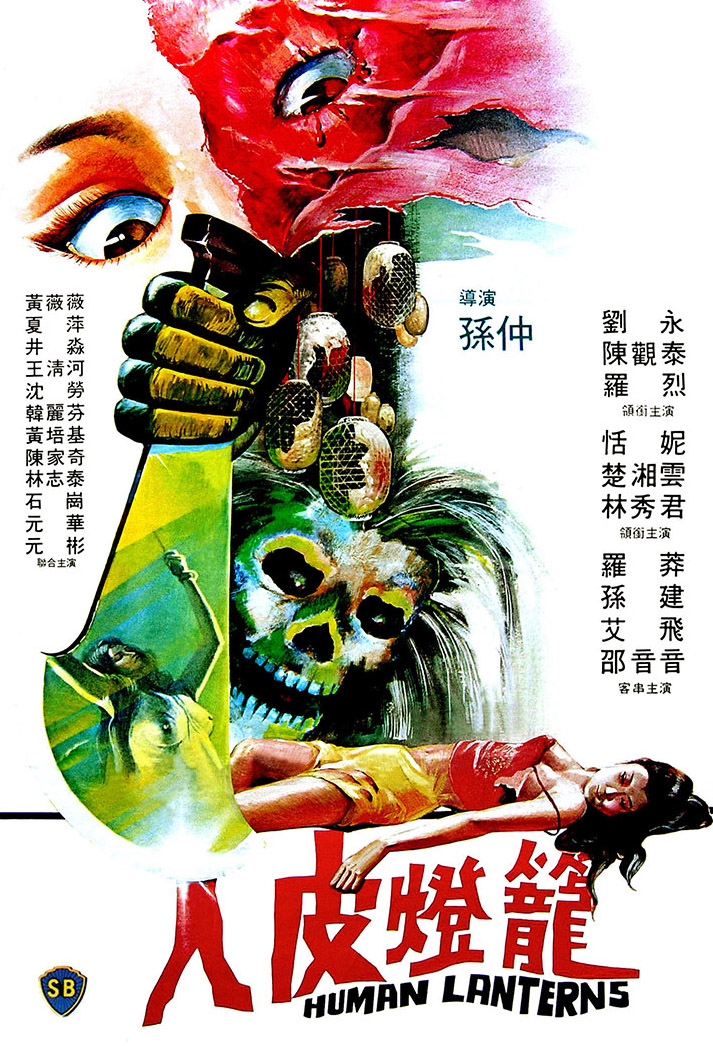 Before I descend into the madness of another Movie Challenge Month, I should probably talk about one of the movies I did manage to watch during my burnout from the last one: Human Lanterns, a piece to 80s horror nastiness from the Shaw Brothers. It is on The List, after all.
 As all good things must, the contract I was working on at the time ended, and I was back to my duller, more financially strapped state. But then domestic American editions of the Celestial discs began appearing, and look, there it is in my hands: Human Lanterns. With the Image Entertainment logo.
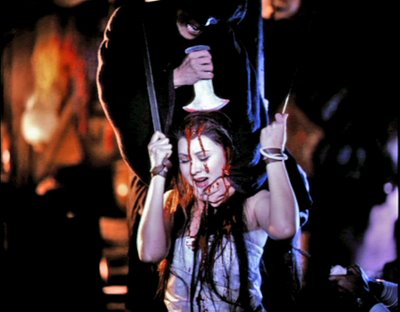 Fang begins by kidnapping the aforementioned prostitute and skinning her alive. There are gorier instances of this in genre cinema, but this particular version is low-tech and pretty nasty. Tan and Lung cast suspicions on each other for the woman’s disappearance, and the local policeman (Sun Chien) is pretty ineffective, as in all horror movies.
 The cast is quite good. Chen Kuan Tai, a superb martial artist and star of many a Shaw Brothers blockbuster, seems pretty wasted in his role; Tony Liu is given much more screen time and fills it well enough, but neither of these men are given any way to truly gain audience empathy; the only people we feel for are the victims. Poor Sun Chien never got a break – we always see him playing second fiddle to other members of the Venom Gang, and here he has to play the Asian version of Barney Fife.
 Human Lanterns has its share of fight scenes, but none are dynamic enough to cement the movie as a kung fu flick – and the horror segments are memorable enough, but often seem imported from another movie. It’s an odd creature to be sure, worth a watch from horror fans, but probably not action-packed enough for martial arts mavens.
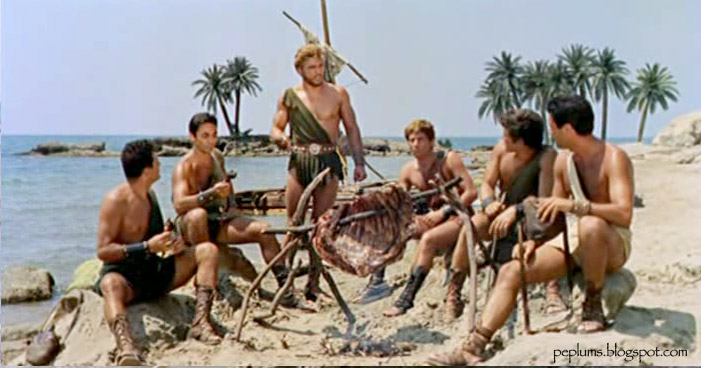
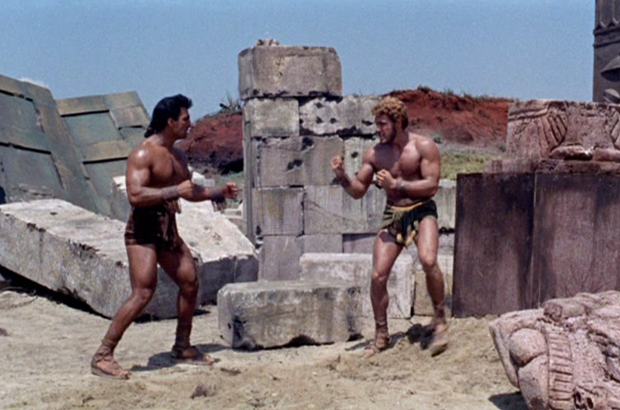
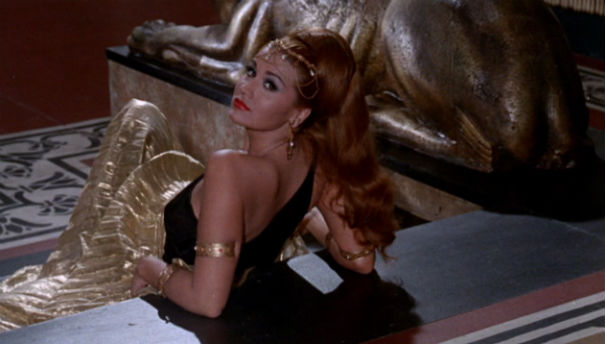
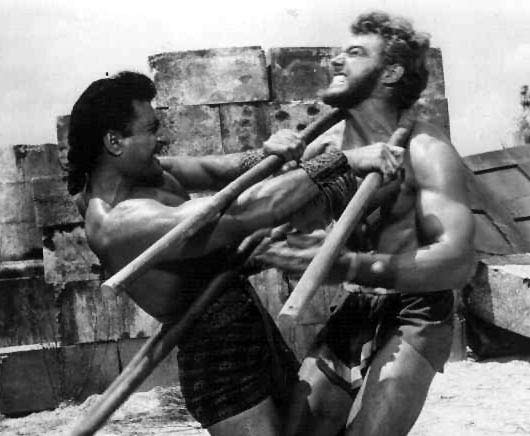



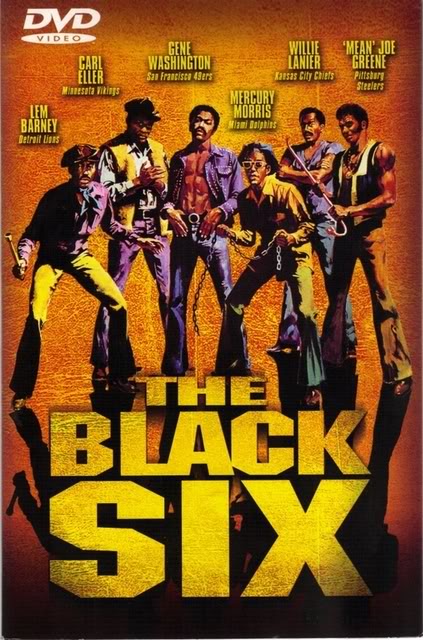


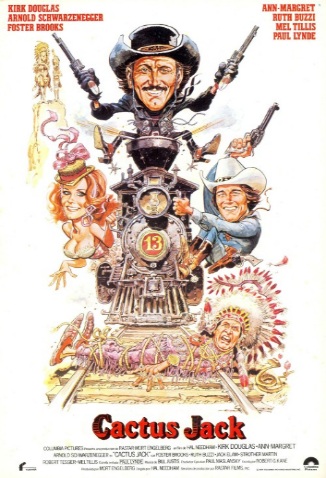

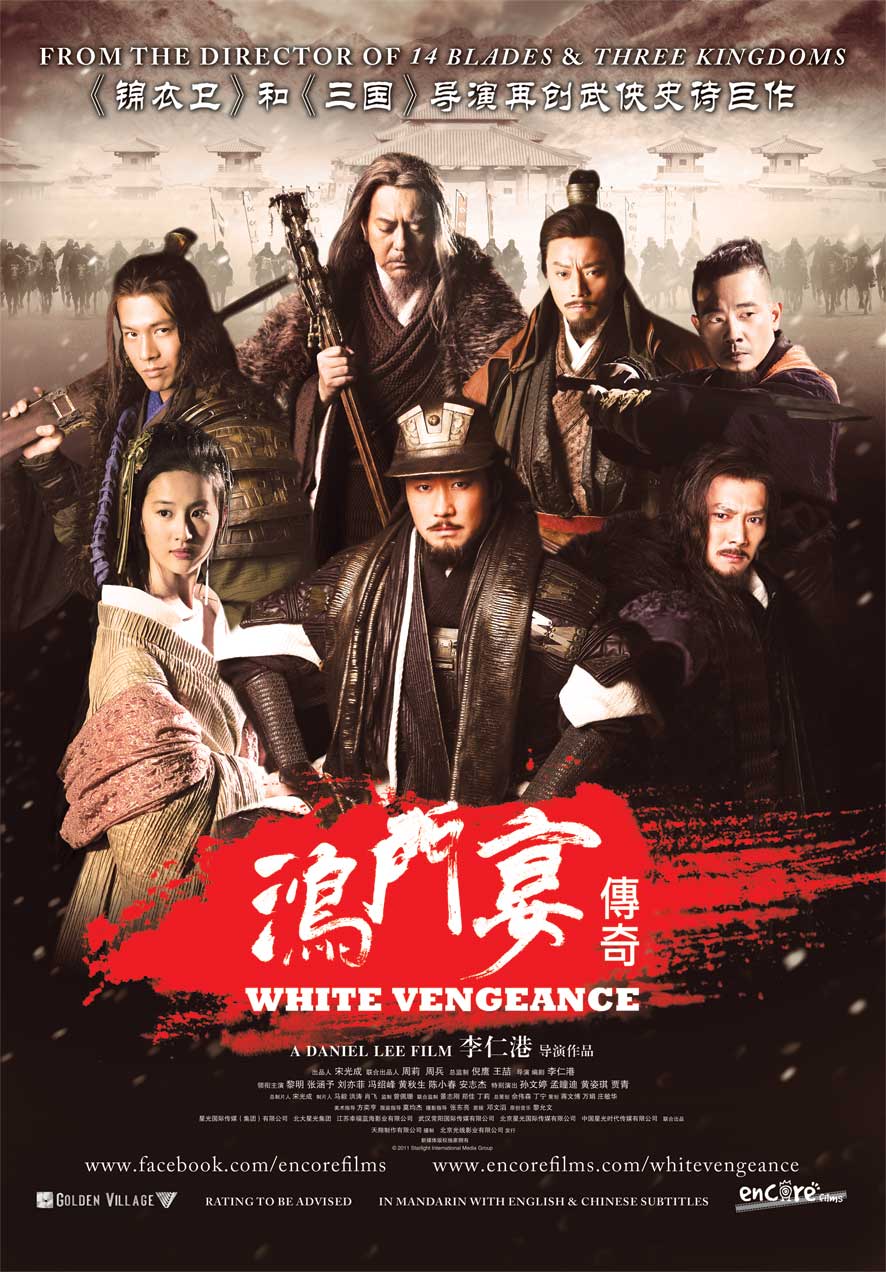
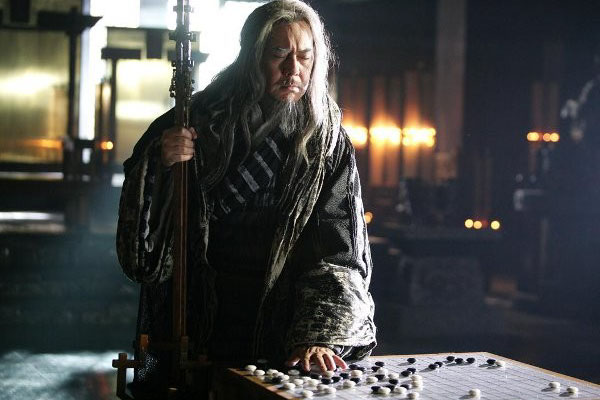





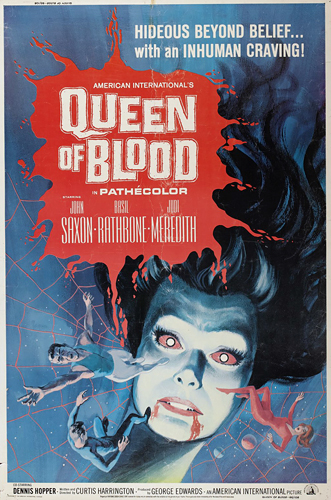
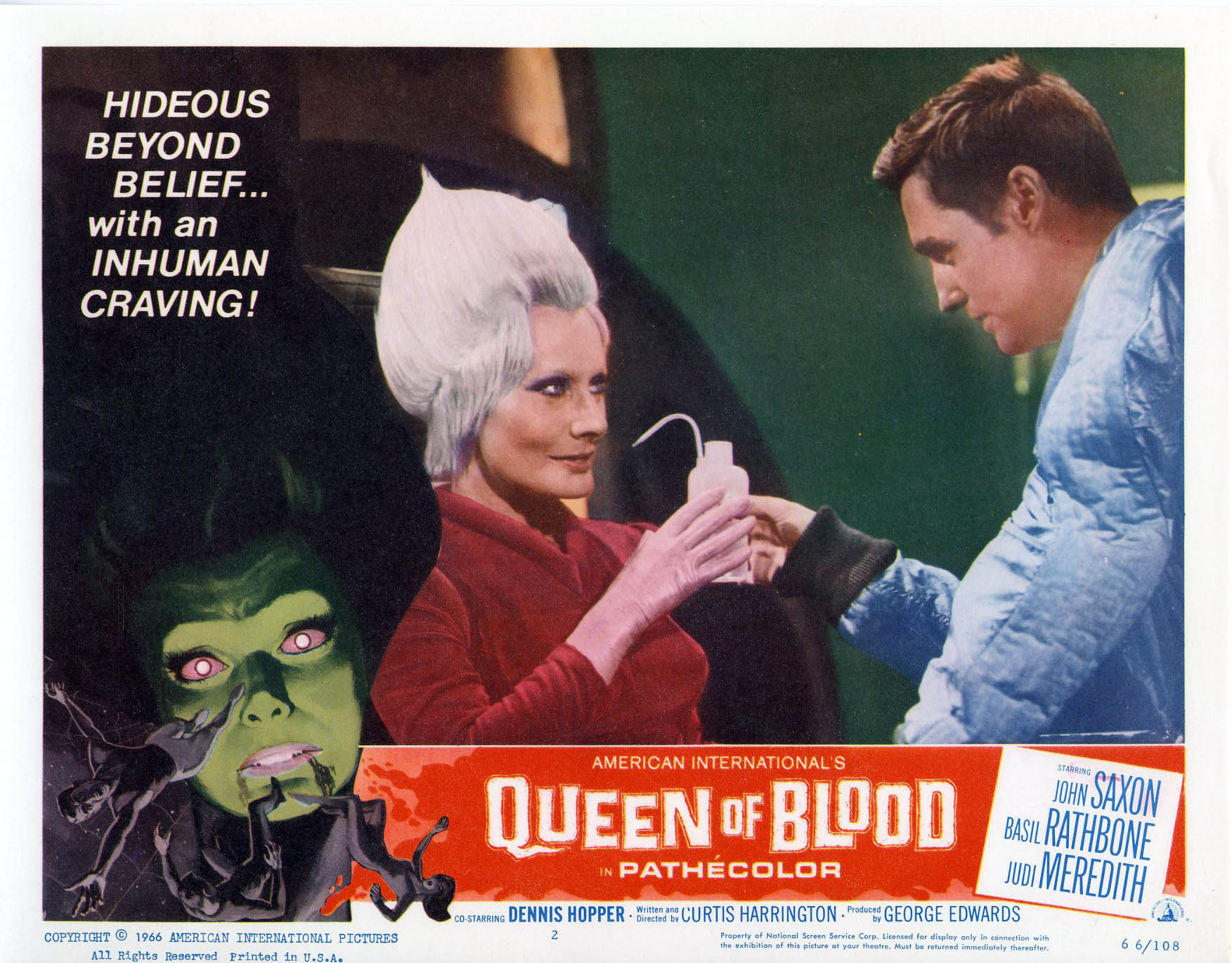


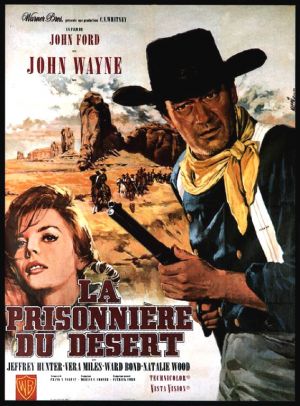
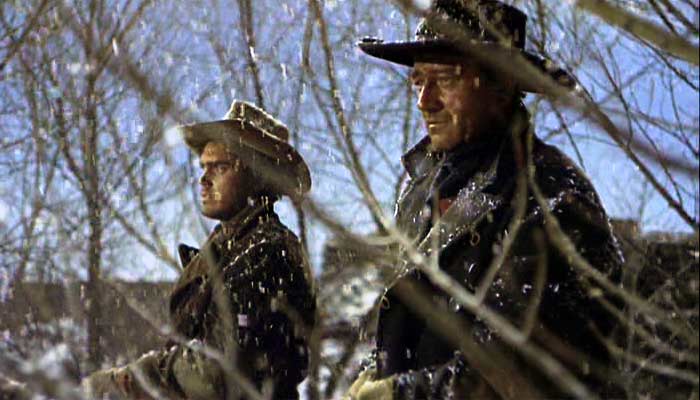


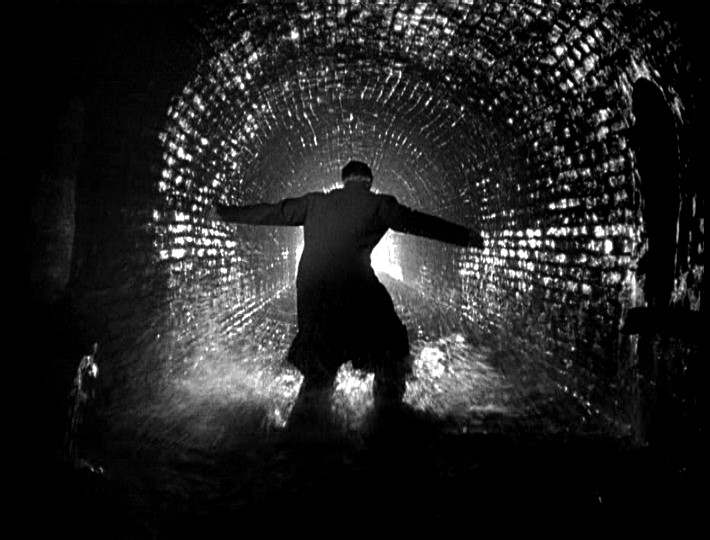




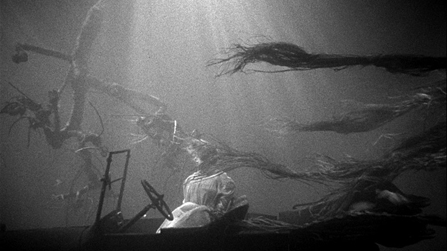
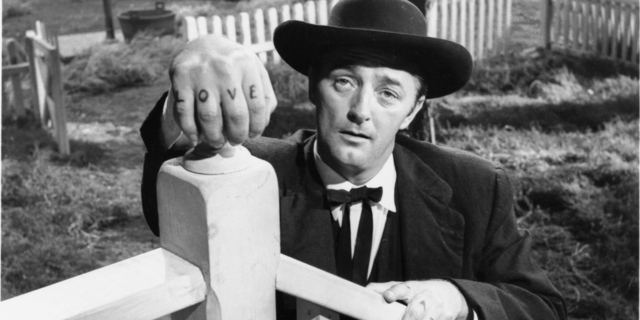
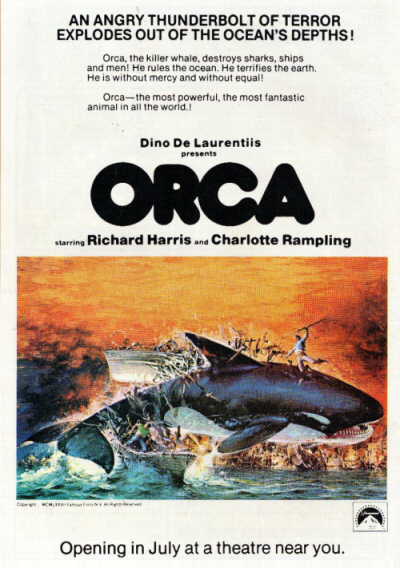

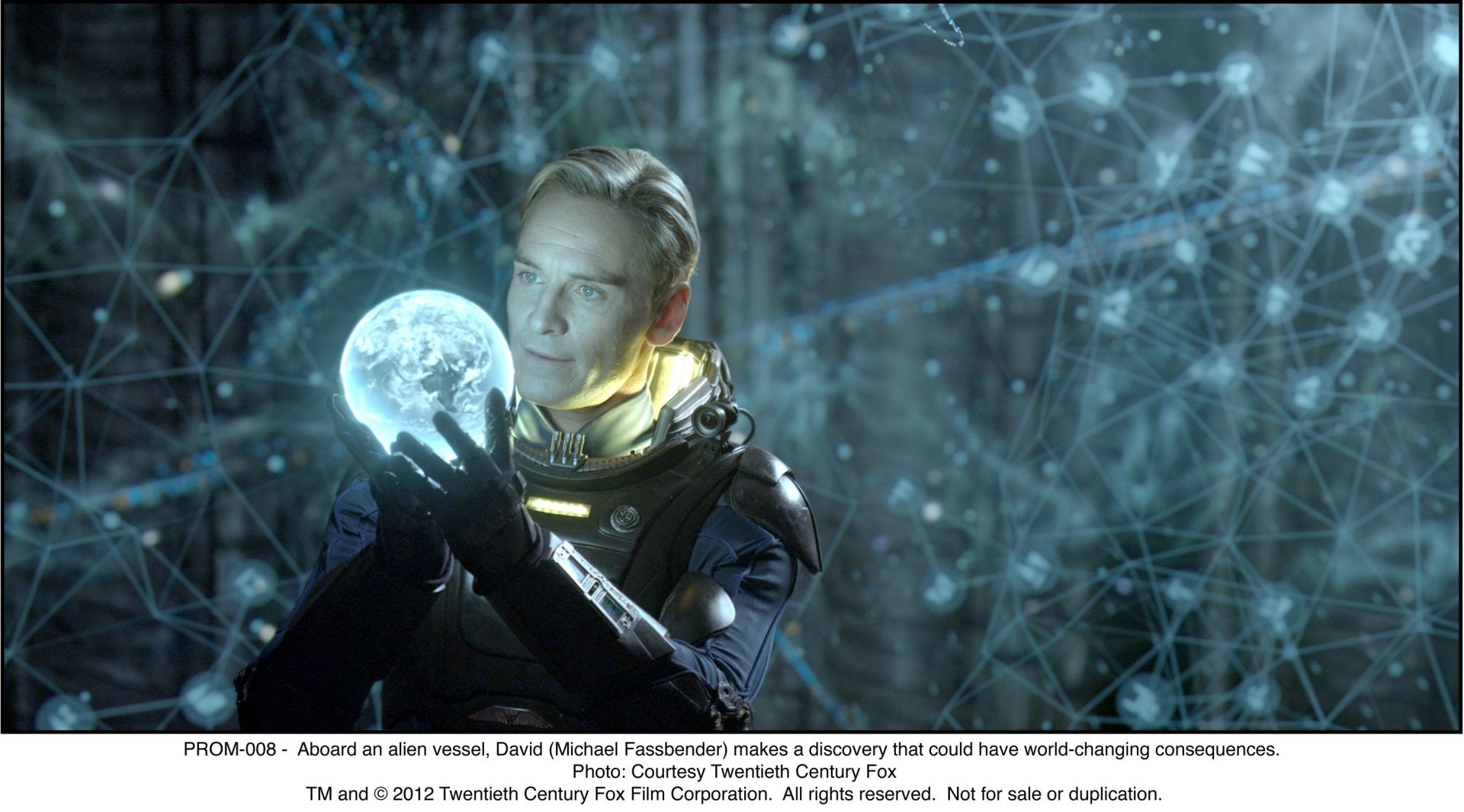


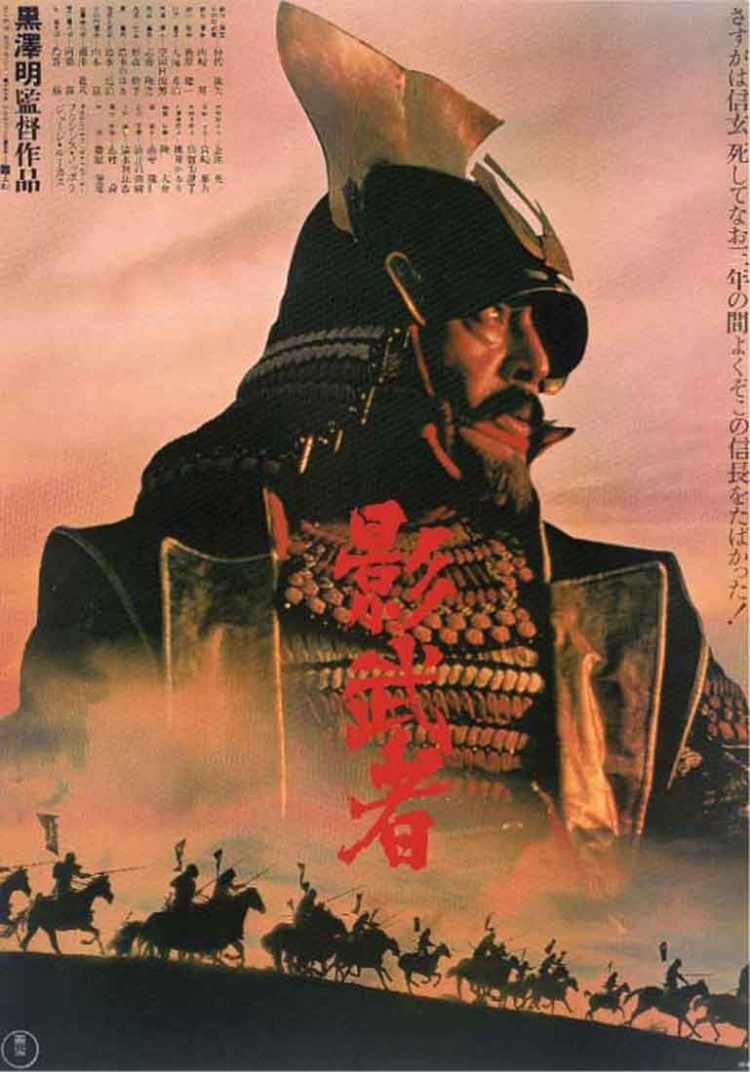

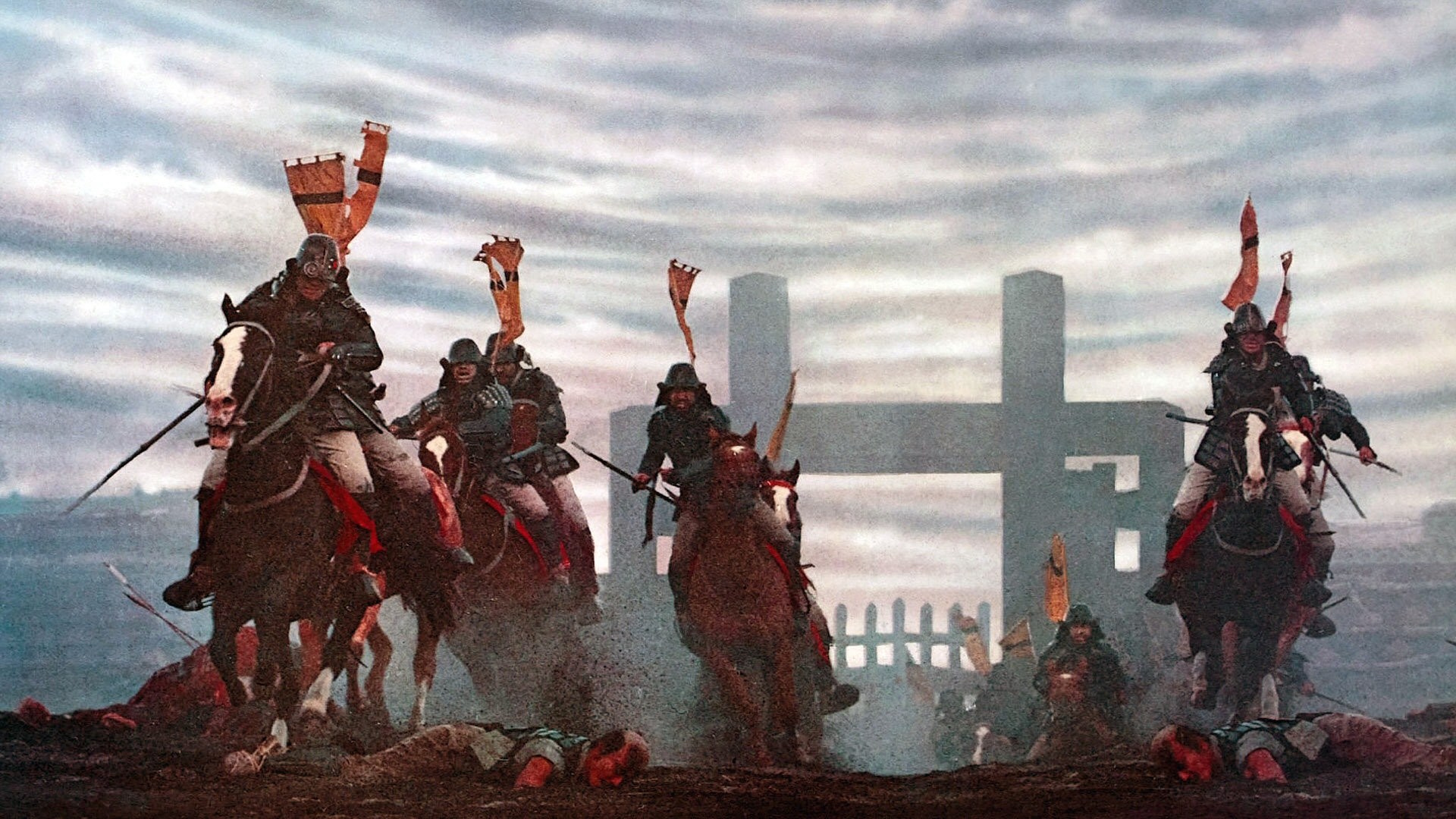
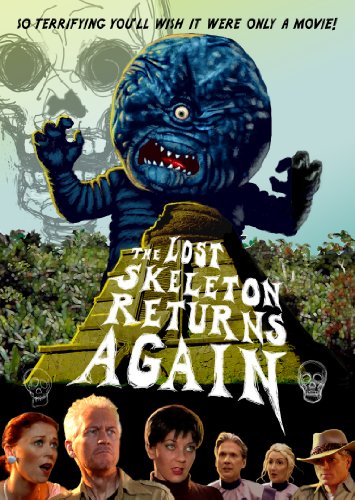
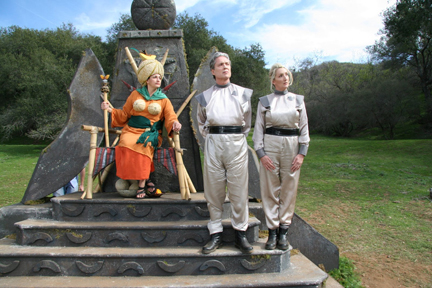


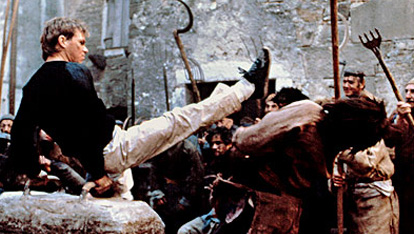


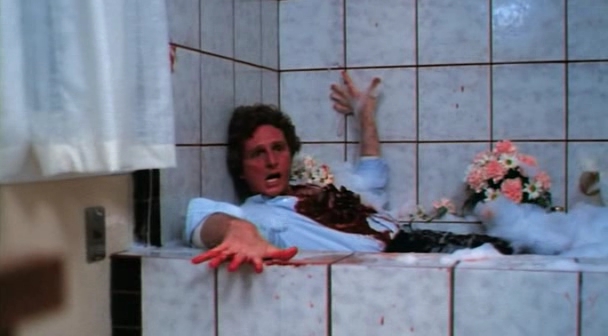






 drfreex.com