Movie Catchup, June Edition

A very busy week, made suddenly very complicated by a sudden call to complete a long-delayed dental procedure. That is why I haven’t been around.

Monday, Tuesday: city meetings, where I run audio. Wednesday: story for June video magazine due. Also work all evening doing slide slow for my wife’s graduating class this Saturday. It was urgent I get the damn thing done because it is now Thursday morning, we just finished shooting the stand-ups for the magazine, and in three hours I’m going to be in a dental chair getting four or five damaged, increasingly worthless teeth extracted and an immediate denture slapped in. This is something I have never experienced, and I have no idea what sort of condition I will be in tonight. Soup is almost certainly on the menu.

I have the freaking order of the slideshow done, but was frustrated from roughly 10pm to midnight last night because I could not get any sort of music file to play in it. I’ve been using Open Office for the last couple of years because I couldn’t afford Microsoft Office. Last year I managed this trick just fine in OpenOff’s version of Power Point, Impress. This year I’m suddenly being told that any file format – even the ones specifically mentioned in the Open File dialog – are “not supported”. Surfing around forums proves no help. Turns out if I just tell it to embed, save it to a Power Point show and then use Microsoft’s free Power Point viewer the music plays just fine. A bulky, cumbersome workaround, which means I’m timing blind, and still not finished, so hopefully I won’t be too wrecked tonight. Graduation is Saturday morning.

But yeah, I still managed to watch some movies, somewhere in there. Mainly because my landline shorted out and I was without the Net for three days.

I saw Avengers again, this time with my family. Still amazing, still flawless entertainment. I’m still embittered that every bit that would have made me go woohoo had been spoiled for me by the time I actually saw it – where are the Internet outages when you really need them? – but I got to see my wife and son react to them, so that was cool. Had to spend most of the end credits explaining to my son who… that guy at the end was (I still tread carefully for you, dear reader), and I wonder how many nerds had to explain that to non-nerd companions. I checked, and in my copy ofThe Marvel Encyclopedia, he only gets one-sixth of a page.

In any case, my wife is the very definition of a non-comics nerd, and she thought the movie was amazing. Which it is.

My other movies were at the other end of the scale, budget and amazing-wise. Saturday morning I was up at a Godforsaken hour because that’s what your body does to you, and I watched While the City Sleeps, a Fritz Lang-directed piece of newspaper noir from 1956. Lang is always worth watching, and the layered story here is pretty good. First off, a news media magnate kicks off after insisting that his various outlets sensationalize a murder where the killer left the message “Ask Mother” scrawled in lipstick on a wall. Then, his son (Vincent Price!) arrives to take over, without much of any experience in the trade. He creates a new position, Executive Director, and tells the heads of the three branches: Wire Service, Newspaper, and Photos – that whoever solves the case of the Lipstick Killer gets the job.

The cast is great: George Sanders as the Wire honcho, Ida Lupino as a conniving society columnist, Dana Andrews starring as a Pulitzer-winning TV news analyst who used to work the crime beat, and slowly finds himself sucked into the investigation. Toss in Howard Duff as the detective in charge of the case, and you got your very solid detective thriller cast. Andrews finally tucks into the case with glee, eventually putting his girlfriend in danger; it’s pretty amazing to see so many of the threads of the unsub-killer genres being used at this early date, as Andrews and Duff begin profiling the killer. And even if detective stories with a dollop of soap opera aren’t your thing, who could possibly pass up a chance to see Vincent Price in Bermuda shorts?

I also have to say that seeing a story involving journalistic integrity made me absolutely wistful. Man, fuck NewsCorp.

My viewing of While the City Sleeps was also movie number 15 on The List, so goal achieved on watching half of them before Summer hit. Huzzah.
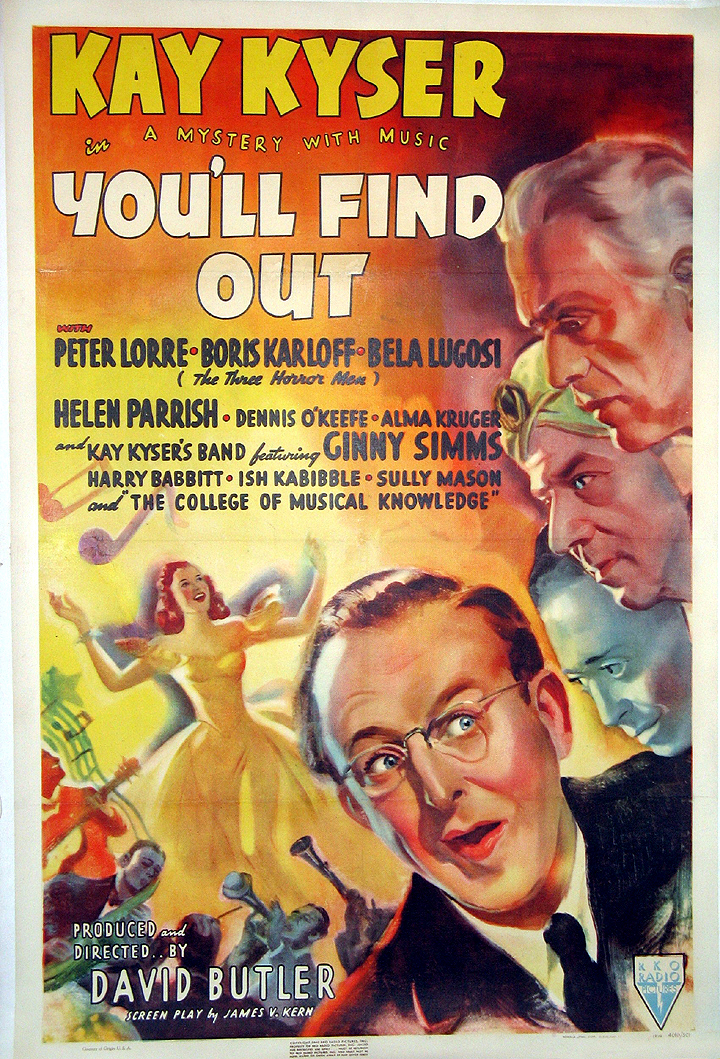
The other movie seen during the outage was chosen at random, something I’d had for a while: You’ll Find Out, which is a parody of Old Dark House movies starring Kay Kyser (and his College of Musical Knowledge), and three guys named Boris Karloff, Bela Lugosi, and Peter Lorre.

Kyser is sort of a blip on the landscape these days, but he was pretty darn successful in his day, famous enough that he and Moe-bedecked comedian Ish Kabibble crop up in Looney Tunes. His radio show, a combination variety and game show, was quite popular. It’s unsurprising that he’d make the crossover to movies. It’s also a little unfortunate.

Admittedly, You’ll Find Out is his first movie. Maybe he got more confident, Ish Kabibble less annoying. But I doubt it.

Okay, so Kyser and his band are playing at the 21st birthday party of his manager’s fiancee. Of course, she lives with her eccentric aunt at a creepy old house accessible only by a single bridge, which will mysteriously blow up in the course of the movie. Somebody’s been trying to kill the fiancee, possibly Boris as the old family friend, Bela as the psychic who’s been getting lots of money from the superstitious aunt, or Lorre as a psychic-busting scientist. Or, given that it’s Karloff, Lugosi and Lorre, it’s probably all three. Oh, sorry. Spoiler.

When I was a kid, I was always pissed off that You”ll Find Out kept getting scheduled in the late night horror movie slot. I thought that perhaps now, as an old-timer, I could better appreciate it. Well, nottttttttt really, it turns out. It’s not dreadful, but it’s not a forgotten gem, either. Our big three bad guys act like they’re in a different picture entirely, and I kinda wish I had been watching that movie. The musical numbers are good, but achingly white. I dearly wished Cab Calloway could have dropped by for at least one number. And as I pointed out on Twitter, the final number employs a device used by Lugosi for ghostly voices to make it appear Kyser’s vocalist is singing through the band’s instruments, making it the first instance of auto-tuning, in the year 1940.

Now, if you’ll excuse me, I have to go get my jaw ripped out.

The Stanley Kubrick Project: A Clockwork Orange (1971)

I’m pretty sure I’ve seen A Clockwork Orange before, but the odd thing is, I can’t recall exactly when. This fuzziness is particularly irritating because I am then also uncertain I had actually seen it, although I was intimately familiar with the visuals, and the script. We’ll see if I can cut through this muddle later, as I try to examine Clockwork and its effect on my life.

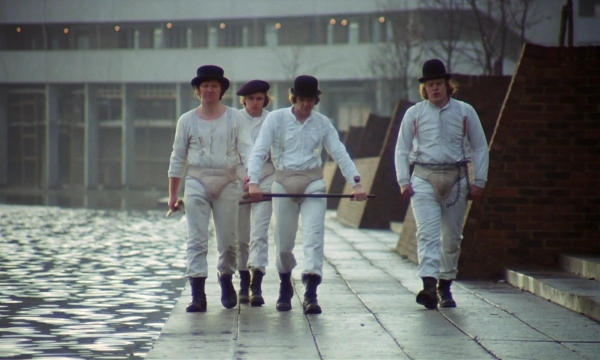
Journalistic integrity out of the way: A Clockwork Orange is the tale of Alex, a young man in a near-future, depressed England, who, with his mates, lives a life of “What’ll it be, then?” Bored, facing no future prospects whatsoever, they spend nights beating up other gangs, beating up tramps, stealing cars, invading homes and raping and beating their occupants. When Alex savagely puts down an uprising in his ranks, the offended gang leave him for the police when their next bout of burglary goes bad. Alex spends the next two years in prison for murder (of a 14 year sentence), and finagles his way into a program that will supposedly cure him of his anti-social tendencies, and get him released from prison in two weeks time.

“The Ludovico Technique” involves shooting Alex full of drugs that -among other things – induce nausea while he is forced to watch movies of violence, rape, and war. This instills in him a Pavlovian response whenever confronted with violence or, shockingly, a nude woman – immediate, immobilizing nausea. The Minister spearheading the project declares him “The Perfect Christian” – always willing to turn the other cheek. What they have produced, however, is The Perfect Victim. Alex is released into a savage world that he once negotiated so effortlessly, and finds himself again and again in the clutches of those he had wronged before: the tramp, his old gangmates now in uniform as police officers, even the now-paralyzed and widowed victim of the home invasion, who uses Alex’s own beloved Beethoven – now rendered an instrument of torture due to its inclusion on the soundtrack of one of the movies shown to him in the clinic – as a means to drive him to attempt suicide.

Alex survives, and somehow, while he is still in a coma, doctors manage to reverse the effect of the Technique. Alex now finds himself back to his normal, depraved state, with one important addition: He now has political clout.

Apparently, after 2001, Kubrick was planning to do a movie on Napoleon. Then Waterloo, starring Rod Steiger and Christopher Plummer hit theaters in 1970 and… well, suffice to say, that movie met its Waterloo at the box office. So Kubrick did what he had often done before: he headed in the opposite direction.

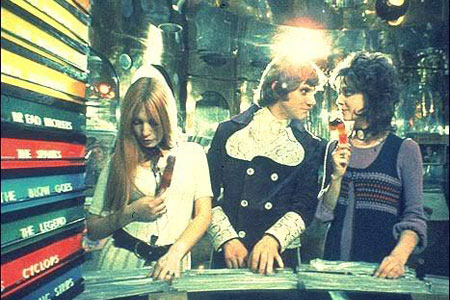
After the mega-expensive and expansive 2001, he decided to prove he could do a low budget movie – much to the dismay of his producer, no doubt. Clockwork is shot using mainly natural light, and a tiny Lowell light kit, which is good for student films but a far cry from most productions. There was only one set built – the Korova Milk Bar. And if the future seems very 70s, with shiny mylar surfaces and bright colors, purple and yellow and blue wigs, a future with Selectric typewriters and vinyl records and very tiny cassettes – well, it was the 70s.

A Clockwork Orange was released in 1971 to an England which was in a state of social turmoil, truthfully, not too terribly far off from the world of the movie. The effect was dramatic; on the one hand, it was a top money-maker for Warner Brothers. On the other, as video games had not yet been invented, Clockwork Orange was identified as the root cause for all evil in the land. ‘Twas ever thus, and continues to this day: People on the docket for hideous crimes claim they did it because they saw it on TV, or in the movies. Kubrick himself received several death threats against himself and his family, and at that point, he requested Warner Brothers remove it from distribution in the UK; it was, in fact, impossible to see it in a theater there until after Kubrick’s death.

I do not think its sudden disappearance made much difference in the level of crime and violence in the country. But that’s rather beside the point, now.

When first released in the US, Orange received an X rating from the MPAA; this was later amended to an R, probably due more to the pornography industry taking over the disastrously un-trademarked X rating than any real loosening of moral standards. In the intervening years, it has to be said that its reputation as a violent movie has been overtaken by broadcast TV. There isn’t even all that much blood in Orange. What is there is quite a bit of female nudity, which in close proximity to the violence is unsettling, and the primary reason the all-out assault of the first half-hour of the movie still packs a punch. But it is still a diminished punch, in this day and age, and it becomes much easier to regard the movie as the jet-black comedy it was always intended to be.

If there is a message in Clockwork Orange, it’s that the removal of free will removes the essence of what it is to be human. The prison chaplain complains that the cure has removed from Alex the ability to consciously make the moral choice between good and evil, and therefore redemption is impossible. It is significant that, back during the filming of Dr. Strangelove, Terry Southern handed Kubrick the American version of Anthony Burgess’  A Clockwork Orange, which for some reason excised the final chapter, in which a more adult Alex, having reformed his gang, nonetheless makes the decision to disband it and attempt to build an actual future for himself. Kubrick’s movie omits that chapter, too, and Burgess never truly forgave him for that.

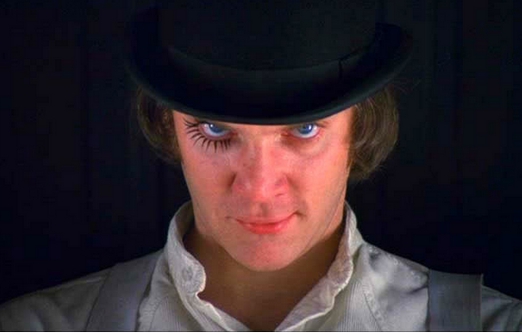
I know I normally scoff at the idea of entertainment being a direct cause of violence in the real world. However. My best friend in high school, as I got to know him better, I discovered was a Clockwork Orange fanatic. Had the whites, the bowler, the false eyelash, everything. He had recently moved to town from a nearby college burg, and his friends back there had a similar bent. Now here is the thing: though he had seen the movie – several times, I must assume – it was only that first half hour he chose to concentrate upon. The other two hours, with Alex suffering the tortures of the damned (and an incredibly game Malcolm MacDowell suffering too, I must say)? Not even on the radar, I fear.

This puzzles me. At the time, I had not seen Orange, and in that period before VCRs (hell, even something called HBO was still a few years away), I wasn’t going to anytime soon. I found one of those books that was an illustrated screenplay, a couple of black-and-white screen shots per page, and that may be why I am so familiar with the imagery. Of course, my friend played the soundtrack constantly, so that may also play into why I feel I had seen it before.

Time passed, we drifted further and further apart, and eventually parted ways in college. But that still troubles me; why did he feel that was something to emulate? What had Kubrick touched on there, what nerve had he plucked? Because I don’t think my friend was alone. Hell, I know he wasn’t alone in that desire to play dress-up, to imitate that swagger, that aggression. I just can’t imagine why, and I think I’m glad that I can’t perceive it.

2010: The Year We Make Contact (1984)

Well, I knew it was going to be a different experience.

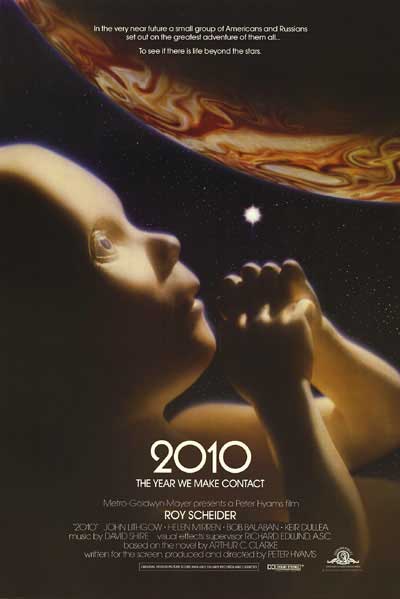
2010 is, of course, a sequel to Stanley Kubrick’s 2001, which was itself a collaboration between Kubrick and science-fiction writer Arthur C. Clarke. 2010 exists as a movie mainly because Clarke wrote a sequel – in fact, he wrote three, two of which have not been made into movies. But apparently it was written with much the same back-and-forth with the director as 2001, made perhaps a bit easier by advances in telecommunications made in the meantime. Seeing director Peter Hyams fire up a Kaypro to communicate with Clarke in the “Making Of” featurette is a nostalgia trip all its own.

That Clarke wrote sequels to his novel doesn’t particularly bother me – both Kubrick and Clarke were pretty realistic in their regard for each others’ work as being different interpretations in different mediums of the same ideas. I do kind of question the necessity of a movie sequel, when 2001 is a fairly well self-contained cinematic experience. But I get really confused when I try to think about that too much, because I really like 2010. Not as much as I like 2001, but I still like it. So, of course, when I watched 2001 as part of the Stanley Kubrick Project, it was almost inevitable that I would wind up revisiting 2010.

2010 is a much more humanistic story. Gone is the substrata of humanity trying to function in a high-tech world, replaced by an increasing desperation as the earth comes closer and closer to nuclear war. Heywood Floyd, magically transformed into Roy Scheider, has to hitch a ride on a Soviet (!) spacecraft to reach the derelict Discovery before its increasingly erratic orbit smashes it into the moon Io. Accompanied by an American engineer (John Lithgow) and the man who created HAL 9000 (Bob Balaban), the idea is to reboot the craft and computer, find out what happened, and maybe figure out what the hell that two kilometer-long monolith is doing, also in orbit around Jupiter. This is made difficult by the worsening political state on Earth and the fact that a post-human Dave Bowman (still Keir Dullea, who looks like he hasn’t aged a day) keeps popping up in impossible places.

If the urgent need to evolve has been replaced by the even more urgent need to avoid a planet-destroying war, the urge to deliver splendid visuals at least remains. Visual effects had come a long way in the fifteen years since 2001‘s debut, though, to the original film’s credit, not that far. It may have been Richard Edlund who mentioned back during Star Wars that they were able to have ships flying across the face of planets, something that had been impossible during 2001; Edlund is the FX supervisor here, and boy howdy do they fly across the face of planets here. A favorite segment is the aerobraking sequence, where the ship does a untried maneuver to save fuel while still putting them in the correct orbit around Jupiter.

This also provides one of the better character moments: Floyd, having no duties during the maneuver, is strapped into his cubicle, stewing because unlike the Russians, he has nothing to distract him from the upcoming danger. Seconds before they start skimming Jupiter’s atmosphere, a similarly off-duty female cosmonaut appears outside his cubicle, obviously freaked out. They crowd together on Floyd’s bunk, riding out the aerobraking, which is a harrowing, noisy experience. When it’s over, they slowly part, but the cosmonaut turns back to give Floyd a quick peck on the cheek. As the woman I was dating at the time pointed out, they didn’t try to make anything of that moment later, and she was glad of that. So was I. It was a good, human moment.
And therein lies the major difference between this and its predecessor: “good human moments”. There is an easy warmth about the movie as the Soviets and Americans learn to work together. It is an almost completely different style of story, though still drawing upon the basics of the 1968 movie. This is the sort of thing that can make you crazy, if you try to think about things like continuity too much. Theoretically, each movie should exist in a vacuum; that is very hard, if not impossible, to do with a sequel. Aliens is a different sort of movie from Alien, but both easily exist within the same universe; 2010 and 2001… not so much.

It is a very solid movie. Peter Hyams is a director I do not enthuse over, but I do really like his work occasionally. The cast is exceptional, from the aforementioned American crew to Helen Mirren as the Russian Captain. Even HAL gets some redemption, this time around. This is a movie that could easily not have existed, and not been missed, but I’m rather glad it does, headaches and all.

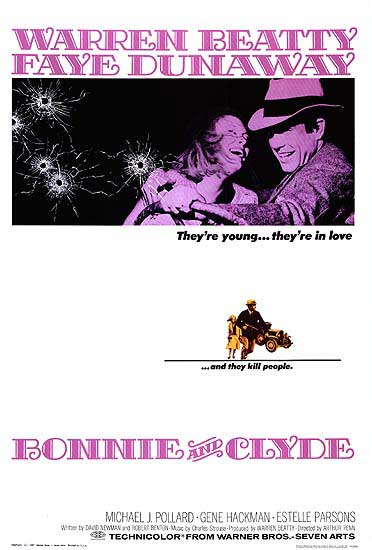
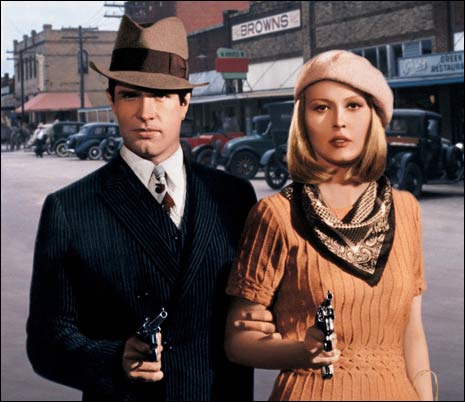
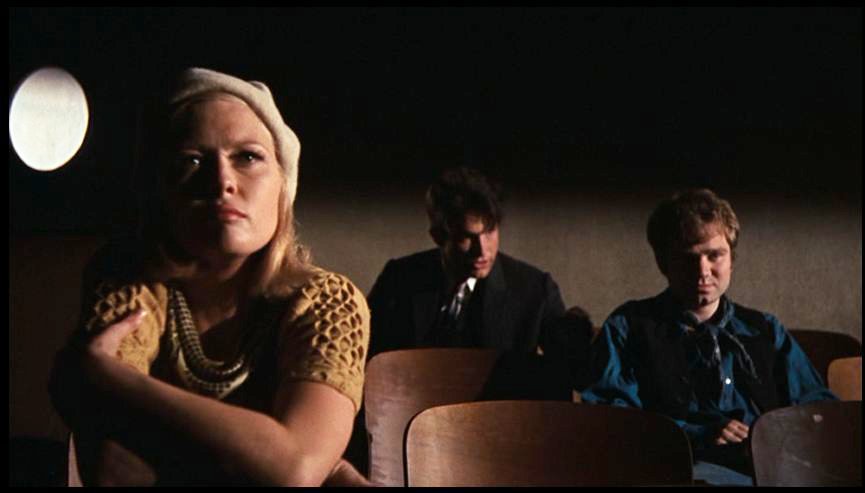
Bonnie and Clyde (1967)

I was only ten years old when the country was gripped by Bonnie and Clyde mania. Okay, that’s overstating it, it was nothing like the previous year’s Bat-mania, but it was pretty significant. Songs were written about them, women were wearing berets,  and Flatt & Scruggs’ “Foggy Mountain Breakdown” became the go-to tune for car chases. As I said, I was ten, and Bonnie and Clyde was rated M, so that was a no-go. This seems peculiar in that it wasn’t long after that I saw The Moonshine War (rated GP, which is what the M rating turned into) at a friggin’ kiddie matinee.

This is the biggest problem with waiting this long to see Bonnie and Clyde: I have seen most of the movies that came after. Corman had St. Valentine’s Day Massacre out almost immediately; Moonshine War and Bloody Mama shortly after. John Milius’ Dillinger, an unjustly ignored movie, came in 73. And these are just the gangster-oriented movies that owe a debt to Bonnie and Clyde. Seeing the Corman-produced flicks is easy, they crop up on cable and even broadcast channels often. The same, unfortunately, cannot be said for Bonnie and Clyde.

The original script was very influenced by the French New Wave, and was, in fact, meant to be directed by Francois Truffaut. The naturalistic acting, the frankness on sexual matters, and the realism of the violence all become inevitable once this is understood- but it is almost impossible, having seen the cinema that descended from it, to comprehend exactly how much of a bellwether this was for American movies, how it starkly signaled a changing of the guard. Jack Warner hated the movie and tried to bury it, perhaps because he didn’t understand it because this wasn’t the sort of gangster movie Warner Brothers had been known for – the criminals were the heroes, for God’s sake! Perhaps possibly because he feared it as a harbinger of a new age he equally could not understand. That’s how I wound up seeing The Moonshine War on a Saturday afternoon – the Rialto just ran the same thing they did in the evening, because the Hayes Code supposedly kept the entertainment toothless, as it had for decades.

Bonnie and Clyde‘s timing was fortuitous, perhaps accidentally so; casting the young outlaws as anti-establishment counter-cultural crusaders as the anti-war movement was getting up to speed in America. But the chipping away at “The Code” was, at least planned and deliberate, fueled by the adult-oriented European movies that were all the rage; Clyde Barrow, in the original script, is bisexual; in the finished product, that is replaced by chronic impotence, at least until he realizes that Bonnie has immortalized him in poem, at which point he successfully, triumphantly makes love to her. That would not have been so overt even a year earlier, if attempted at all, and the resistance against an earlier scene, in which Bonnie attempts to pleasure him orally was severe (admittedly, the angles are so wrong in the scene, it looks impossible anyway, but still). And then there is the blood, quite a bit of it.

It’s a violent movie about a violent subject, and Penn states it was the first time that audiences ever saw a gun fired and result of the bullet hit in the same shot. Sergio Leone likely beat him to that, but it was the first time in an American movie. Hell, it’s even in the theatrical trailer! Quick cutting, slow motion, hundreds of blood squibs: all two years before The Wild Bunch.

The best comparison I can come up with is – unsurprisingly, if you know me – from comic books. Watchmen was fresh and bracing when it first came out in 12 issues. Nobody had ever taken on these superhero tropes in quite that way. It was astonishing, a game changer. When the inevitable movie came out in 2009, a lot of people read it for the first time, and they didn’t see what all the shouting was about; in the twenty-plus years since, everything that was new and radical about it had been appropriated by the mainstream; the rebel had been co-opted. This is the major problem I encountered when I watched Bonnie and Clyde for the first time last night; it was constantly reminding me of other movies, when other movies should be reminding me of Bonnie and Clyde.

But that is not to slight the craft in evidence here – Bonnie and Clyde is still a great movie, and feels like it could have been made last month, it has aged that well. The professional actors on display are all tremendous: Warren Beatty, Faye Dunaway, Gene Hackman, Estelle Parsons, Michael J. Pollard, Denver Pyle, Gene Wilder, Evans Evans, Dub Taylor. It is a movie well worth watching – I just wish I had seen it sooner. Like 40 years sooner.

The Stanley Kubrick Project: Dr. Strangelove & 2001

Work pressures were a bit high last week, so I’m behind with this write-up. Monday was long and complicated, so tiring that I needed a kung fu movie that evening. Wing Chun is on Netflix Instant, and its rather light and breezy tone was a soothing balm (as is Michelle Yeoh). Much editing in a shorter than usual time was required over the next couple of days, and finally, story finished, I had time to write up The Grapes of Death, which was the sort of movie I used to write up on a regular basis. Friday I had camera duty, and in the evening I finally watched Mission Impossible: Ghost Protocol. I gave up on the MI franchise after number two, since even the presence of John Woo did not wash away the bad taste from the first movie. But I really liked Ghost Protocol, so I guess I should check out the J.J. Abrams entry.

I also found myself doing something out of my regular evening routine, perhaps in answer to the work pressures: Ripping and putting music on an MP3 player I bought almost a year ago. Tiny little thing. Put an even tinier 15GB card in it. After several nights, I am close to actually approving it – I’m already tired of the CDs I burned for the car, Houston radio still sucks, and the Slacker app on my phone has a tendency to play three songs and then crash. This will be much better for commutes.

Now, while ripping a lifetime of Yello and Juno Reactor, I was aware that some of the music would not be wife-approved. Well, you just shrug and press “Next Song” or something. So what has she complained about as being “too weird” thus far? Kate Bush and Uriah Heep. Really? “Sweet Lorraine” is weird?

Anyway, Back to movies. Two weekends ago, I entered the patch of Stanley Kubrick’s movies which are most familiar to me: the ten-year stretch that starts with Dr. Strangelove and ends with A Clockwork Orange, what might, in a narrow sense, be called his science fiction years. I didn’t get as far as Orange, but what I did watch filled two evenings very well. I had come to his previous six films with very little, if any, previous experience, so watching Strangelove and 2001 yielded quite different experiences.

I think the last time I had seen Strangelove was back in 2001, when the Special Edition DVD came out. My first exposure to it was back in the late 60s, when it showed up on TV. I’m still trying to recollect how it affected me at that time. I wasn’t culturally aware enough in ’64 to measure its impact then – hell, I was six years old when Kennedy was assassinated, and only remember being pissed off that his funeral pre-empted all the Saturday morning cartoons. The impact of it must have significant, even though its release was pushed back to 1964 from its original November of ’63 date, and some lines hastily re-recorded to remove allusions to Dallas and the like. All you have to do is take a look at the (admittedly bizarre) contemporary nudie -cutie Kiss Me Quick and its main character, Dr. Breedlove, to get an inkling of its cultural significance.

Dr. Strangelove was released to a nation still reeling from the death of its President, and which could still recall, in memory yet green, the Cuban Missile Crisis. That year also saw the release of Fail Safe, which is practically the same story done straight, which has always bemused me. Something in the zeitgeist, or in the water, as Col. Jack D. Ripper would say. Apparently the original intention was for Kubrick to do the movie as a serious thriller, but somewhere a left turn was taken, a light bulb went on, and Kubrick brought in Terry Southern to make the script more overtly satirical. As the world didn’t need two Fail Safes, this was a remarkably cagey move. I want to add here that I really like Sidney Lumet’s Fail Safe, too – it’s a great thriller that hasn’t aged too badly – but Dr. Strangelove, on the other hand, hasn’t aged a bit.

Kubrick’s typically canny casting gets a workout on this flick; casting a cranky naturalistic actor like George C. Scott and then urging him to overact (and speaking as a Scott fan, I love seeing this side of him), convincing Sterling Hayden to come out of retirement, resurrecting Slim Pickens’ career when Peter Sellers couldn’t manage a convincing Texas accent (or was injured, depending on which version you believe). Peter Sellers does what he does best, magnificently underplaying two of his three roles (I found him annoying in Lolita, but I have to admit his German psychiatrist schtick in that is quite good), and providing a truly iconic turn as the title character. Strangelove remains eminently quotable nearly fifty damn years after its premiere; for something that was meant as a satire of a particular slice of time, that is a fine achievement.

2001, on the other hand, I hadn’t seen in much longer. I think my last viewing was when I bought it on laserdisc in the early 90s… and there was damage to the film elements during the “trip” sequence! Oh, it was the best of times, it was the worst of times for the discerning cinephile (I can’t imagine a DVD from a major studio being released in that shape). So, here I am, watching it for the first time on Blu-Ray. And I have to say, it did not disappoint.

A lot of criticism is directed toward 2001 that feels it is slow and boring. I also feel this is where Kubrick gets the lion’s share of his reputation for being “cold” and “cerebral”. I don’t think any of these are true. And while people prepare to tell me how wrong I am, I’ll continue on with my feelings.

It was Kubrick’s desire to create a wholly visual movie. Much is made of the fact that the first spoken dialog doesn’t occur until nearly a half-hour in. The space sequences take their time, to be sure; part of that is due to Kubrick’s choice of score, the grand, majestic “Blue Danube” waltz, but it also serves to impress the vast distances involved in the story once we leave prehistoric times. I expect space travel to be slow and cautious.

The very limited dialog serves another purpose, too. Kubrick always managed to get actors who could make the most odd sentences seem natural. Heywood Floyd’s homey domestic banter as he arrives on the space station seems out of place in the antiseptic pop art corridor; that will continue on, in the moonbus, as the workaday normalcy of packed sandwiches (with what looks to be white bread, of course) struggling to make things typical in a pressurized tube full of air moving through a vacuum. Conversation on the Jupiter mission is sparse; 18 months along in their trip, astronauts Poole and Bowman likely ran out of things to say to each other long, long ago.

The effort to remain human in these high-tech surroundings and vehicles is a continuing theme, and if the audience is starting to feel bored, that should cause some sympathy for Poole and Bowman, killing time by sketching what little they can see of their fellow crew members in the cryosleep pods, perpetually losing chess games to the super-intelligent HAL computer (easily the most talkative member of the team). Like the primitive ape creatures in the prologue, there is a need to advance here, a sense of not truly belonging in the world as it had developed, of being on a dangerously low rung of the food chain. A need to evolve, which will be enabled by the mysterious monolith.

Viewers in the “slow and boring” category will feel a certain amount of fellowship with studio executives who left the premiere feeling it was the biggest pile of trash ever. It was going to be quietly pulled from release after the initial two weeks, but the theaters asked to keep the prints longer; word of mouth had gotten ’round, and that magic demographic “young people” were lining up to see the movie, some many times over. 2001 got the subtitle “The Ultimate Trip”, eventually used on its posters.

I think we know who I side with in that little dichotomy. 2001 punches my sense of wonder in all the right places. Even if you don’t like it, even if you find it slow and boring, it commands respect as the first: a rare instance of adult science-fiction, and a game changer in terms of visual effects. Stunning stuff that would not be attempted again until Silent Running (directed by Douglas Trumbull, 2001‘s effects supervisor), and then not until Star Wars opened the gates. The complex, industrial structures of the spacecraft instead of the smooth rocketships of the 50s, the constant video readouts, the instrumentation lights that are so bright they project their own images onto actors’ faces, the sheer attention to detail to which movies like Alien and Outland owe a terrific debt. All due to Kubrick.

And now I want to see 2010 again, although it is a completely different film experience. And if you know how I feel about Peter Hyams, you’d know that is a tremendous achievement, too.

A Movie Weekend

The buildup to this is semi-complex, but I don’t want to be too specific. Perhaps you will see my dilemma.

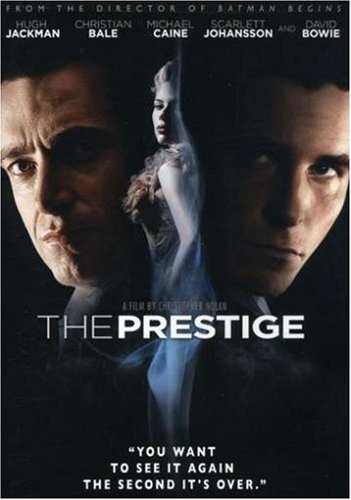
Back during the last Crapfest, pal Dave gave me back a DVD that had been on perma-loan to him, which was The Prestige. He had borrowed it long, long ago, back when he was living in an apartment, in fact. I had dropped in for a visit, and had stopped at a Hollywood Video (to show you approximately how long ago this was) to raid their pre-viewed DVDs. One of them was The Prestige, Dave asked to borrow it, I said sure, why not, knowing full well it would be a long time before I got around to watching it, anyway. This was also back when I was wasting every evening of my life playing City of Heroes, which squandered many a movie watching hour. Don’t regret it, I enjoyed playing it with my friends. But I’ve now walked away from that particular teat.

Anyway, Dave handed me back the DVD, and off-handedly stated, “You know, I never guessed that (EXTREME SPOILER).” There was a brief pause, after which I said, “Well, now I guess I don’t have to watch it.” There was a brief scene after that, but Dave was far more upset than I. There is, as Penny Arcade points out, a statute of limitations on spoilers. That I had managed to successfully avoid that particular spoiler for 6 years is remarkable, but Dave was innocent of wrongdoing. Even so, he felt really badly about the whole thing.

About a week after, I sent him an e-mail suggesting we get together to watch The Prestige, because, after all, he had said he wanted to watch it again, and I wanted to watch it for the first time. Earlier that year, when he found out I still hadn’t seen Inception, he urged me to come over and “watch a good movie for a change.” Well, I spoiled that by watching Inception one lazy Sunday morning. Much as I love my wife, Dave would have been a better movie-watching companion for that particular movie. Lisa enjoyed it, but wasn’t particularly engaged by the multiple layers of the central caper, which is something Dave and I would have chewed over with gusto.

So. We watched The Prestige.

I like Christopher Nolan movies because you have to pay attention. And I like them because he doesn’t make that hard, at all. The Prestige has a very fluid timeline, constantly jumping back and forth through the chronology of the two main characters, but it is never confusing in that respect. The tale of an increasingly destructive rivalry between two stage magicians, there is a lot about setup, artifice, and pay-offs, and when Nicola Tesla is brought into the mix (a nicely strange turn by David Bowie), things take a turn for the downright weird. As Dave rightly pointed out, every scene means something different on a second viewing, and the movie is as meticulously constructed as a stage illusion. The seeds of Dave’s spoiler run throughout the movie, and I flatter myself that I would have spotted them, though as Dave points out, we’ll never know for sure. Ah well.

There are a couple of “oh, come on” moments for me, a couple of minor plot points that don’t affect the story that much, I just get curious. Nolan’s eye for casting remains solid. Hugh Jackman and Christian Bale are both great choices, and the supporting cast includes Andy Serkis, Scarlett Johannson and Piper Perabo. Michael Caine is Michael Caine, which is pretty much what you pay him for these days. I swear to God Nolan cut-and-pasted at least one Caine speech from this script into one of the Batman scripts.

Good movie. Quite recommended.

Dave had, just that day, received a disc from Netflix: Cowboys and Aliens. Neither of us had seen it, so into the player it went.

There’s your setup right there: amnesiac Daniel Craig has a high-tech super-weapon locked onto his wrist, aliens keep flying overhead and lassooing innocent people. Hardass cattle baron Harrison Ford recruits Craig to attack the alien’s main base and rescue the people, which is okay by Craig because it seems to be tied into his missing past. In short, this is Terminator: Salvation in a Western setting.

It is also 20-30 minutes too long and wastes a lot of good actors in insignificant roles, like Clancy Brown and Sam Rockwell. There is quite a bit too much time spent marshaling forces for a final battle that seems scattered and, like the movie, over-extended. Can’t find fault with the visual effects, at all, and the actors are a solid lot. It’s entertaining. but not enough for a whole-hearted recommendation. Netflix, definitely.

Well, that was Friday night. Saturday night, I usually have The Show, but as there were no reservations, that was cancelled. This is usually a cause for moping more than celebrating, because missing out on that small paycheck puts my fragile economic ecology in danger. But, I thought, none of that this week, dammit. Last Christmas, I got my wife her favorite movie in the world, Doctor Zhivago, on Blu-Ray. I had never seen Zhivago, so I figured it was high time.

Well.

What a dreadfully cramped trailer for a Panavision film!

Zhivago is, no surprise, the life story of Yuri Zhivago (Omar Sharif), Russian poet and doctor, and Lara (Julie Christie), the woman whose life keeps intersecting his. The chronology of this relationship passes through World War I and the Bolshevik Revolution, more than enough turmoil for a historical romance. On Twitter I opined that this was the longest chick flick ever, which is the sort of thing you say when you are limited to 140 characters.

To be sure, it’s still shorter than that other over-long chick flick, Gone With the Wind, and it covers two vast conflicts instead of GWTW‘s single Civil War – and that is the larger story I took away from my viewing. My wife prefers to think of Zhivago as a great love story; I think of it as the tale of a man buffeted along by events much larger than he. Make no mistake, this is a gorgeous movie – director David Lean, cinematographer Freddy Young, and Omar Sharif’s dreamy countenance provide a very compelling look at how poets view the world. GWTW is very obviously compacting a whole lot of novel into its last half-hour, and I never got that impression with Zhivago – Lean doesn’t make short movies, but those movies are very full without obvious compression.

I’ve long been a fan of the Arthurian legends, probably dating from the first movie I can recall seeing in a theater: The Sword In The Stone. A good friend through college constantly took me to task on this: “How can you possibly like it? It’s a love story based on betrayal.” (Likely because I didn’t focus on the love story, I was more taken with the idea of armored knights as a force for good, rather than medieval stormtroopers, but that’s neither here nor there) Zhivago‘s love story is also one of betrayal, as Yuri falls in love with Lara during their time in a makeshift hospital at the end of WWI. It is to the credit of the characters that nothing comes of it, Lara telling Yuri, “I don’t want you to lie to your wife because of me.”

Yet, after fleeing the wretched conditions of Moscow after the worker’s revolution, Yuri seeks out Lara, and the inevitable betrayal occurs; though both are married, Lara’s husband has been given up for dead (He has in fact reinvented himself as the terrorist insurgent Strelnikov), but Yuri’s wife, mere miles away, is pregnant with their second child. Zhivago is taken from this personal turmoil to another turmoil, as he is press-ganged into a Red Brigade bringing justice (and a whole lot of death) to White Russian forces. During his servitude, his family escapes to Paris, allowing him to live in sin with Lara and her daughter for a time, until the World steps in again.

As is the case with Gone With The Wind, this is not my cup of tea. I can appreciate the craft that has gone into this, the efforts at authenticity, the sheer awesomeness of the cast – but I still honestly cannot connect with what my wife considers to be a great love story. She loves it, I accept that. I shrug and continue on.

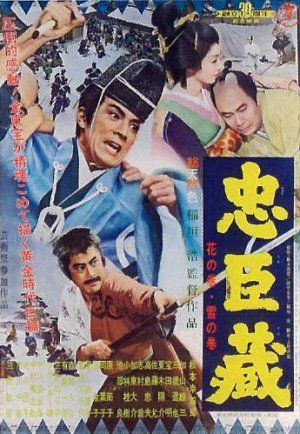
That was also the weekend my landline cratered, and because I have DSL, I was incommunicado through everything but my smartphone. So Sunday morning, while my wife was out at the movies with her friends – I had seen everything at the cinemas I had wanted to see; her friends went to Cabin in the Woods and she went to The Lucky One, that pretty much tells the tale – I finally watched Chushingura.

Chushingura, it seems, is the general term for fictional re-tellings of the tale of The 47 Loyal Ronin, which looms large in the landscape of Japanese culture. In the early 18th century, a corrupt Master of Etiquette is dissatisfied with the bribes offered by one of the younger lords, and goads that lord into attacking him in the Shogun’s palace, a breach so serious the young lord is sentenced to commit seppuku, ritual suicide, and his clan dissolved. His retainers, now all ronin – masterless samurais – bide their time, as retribution against the offended Master is forbidden. Finally, after two years of pretending to be workmen, monks, and in the case of the Chamberlain, a dissolute, drunken womanizer, forgetful of his duty to his dead master – on the second anniversary of the ritual suicide, the remaining 47 gather and attack the household, finally avenging the death of their master.

This is the 1962 version of the story, directed by Hiroshi Inagaki, and I strenuously wished I had been more familiar with the story of the 47 Ronin before I had seen the movie. There are a lot of characters in play throughout, and I’m not just talking about the 47 ronin – wives, hangers-on, courtesans, brothel entertainers, not to mention the crew around the spectacularly corrupt Lord Kira, who feels an existence based entirely on lust and greed will grant him a long life, and that other samurai are fools for their predisposition to die at the slightest provocation. It gets dizzying after a while. Familiar faces like Takashi Shimura helped anchor me, but I still found myself confused as relationships proliferated as the fateful evening approached. Toshiro Mifune, featured prominently on all the advertising materials – especially the ones destined for Western eyes – has only a supporting role, as the lancer Genba Tawaraboshi, who is the hard-drinking badass we always love to see Mifune play.

So curse my blind ignorance, I am unable to make an objective judgment of Chushingura. It is well-made, acted and directed, and on those points alone I rank it highly; though how effective it is as a re-telling of a major legend, I must leave to those more knowledgeable. What it is, I can tell you, is a damned fine snapshot of the layered society in Japan at that time, the grinding rituals of proper etiquette, deference, and station; and the sometimes incredible insanity of the bushido code.

Then that evening, I watched Lolita. The next time I have a weekend like this, I really must find shorter movies.

The Stanley Kubrick Project: Lolita

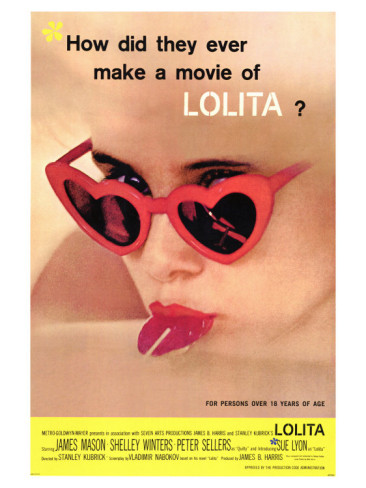
The ad copy for Stanley Kubrick’s 1962 film version of Vladimir Nabokov’s Lolita is pretty incisive: “How did they ever make a movie of Lolita?” The answer seems to be, by changing everything except the broadest strokes of the novel.

There are some books it is simply insane to try to adapt to film, and chances are, someone has gone ahead and done it anyway. David Cronenberg did Naked Lunch, Joseph Strick did Ulysses. Lolita, with its extremely volatile subject matter and Unreliable Narrator, certainly fits in that category. Is it even possible to emulate the Unreliable Narrator in a movie setting? The best I can think of is Rashomon, but that’s an ill fit at best. I suppose That Obscure Object of Desire comes closest.

After the unpleasant difficulties with the making of Spartacus, we can see Kubrick going in the most opposite direction possible. The story is small in scope if not in locations; it is a comedy (a very dark one) as opposed to drama, and it is shot in black and white, which can also be seen as an attempt at distancing the audience from what is happening onscreen. In 1962, even Roger Corman was making movies in color; this was a deliberate stylistic choice. This was the first time a Kubrick production was based in England, perhaps hoping for an easier time with their film censors.

Of course, the most obvious change is increasing the title character’s age from 12 to 14, and having her portrayed by a well-developed 16 year-old, Sue Lyon – all necessary to even attempt the movie, in that pre-MPAA rating period. Even had the possibility of an “R” even been available, I can still remember the furor over Jody Foster’s underage prostitute in Taxi Driver, ditto Brooke Shields in Pretty Baby, both in the much more permissive 70s.

Humbert Humbert in this version is identified only as “divorced”, the death of his boyhood sweetheart and subsequent attempts to rekindle that relationship with girls her age, his obsession with “nymphets” is scrubbed away; Humbert sees Lolita in her two-piece bathing suit, and that is it. All that is missing is a cartoon BO-I-I-I-NG sound effect. “Lolita”, as I recall, is Humbert’s pet name for the girl, who is actually named Dolores. This too, is pitched by the wayside, perhaps to avoid confusion. I can easily see moviegoers scratching their heads and saying, “What? I thought her name was Lolita?”

So, remaining is the novel’s longing, Humbert’s scurrilous use of Lolita’s mother to gain access to the girl, and his subsequent tyrannical attempts to completely control her life, for fear he will lose her; of course, he does, and she resurfaces three years later, married, pregnant, and needing money. As was the case with Paths of Glory, an ersatz happy ending with Humbert actually marrying Lolita was considered – and it makes my head ache to try and figure out the legal and moral maneuvering that would take – but what we are left with is a modified version of the book’s ending. We are told Humbert’s fate, but not Lolita’s. Also remaining are Nabokov’s potshots at American pop culture, which Kubrick probably endorsed.

If we are talking about the major changes made, it becomes necessary to talk about the greatly expanded role of the writer, Clare Quilty, played by Peter Sellers. Though his presence is apparent in the book, he becomes a definite mover and shaker of the events in the movie, and though I never thought I would say this, Sellers actually becomes quite tiresome in this, effecting disguises to generally mess with Humbert until, as in the book, he receives his comeuppance. Annoyingly.

The rest of the cast is marvelous. James Mason as Humbert, Shelley Winters as Charlotte, Lolita’s doomed mother, and Sue Lyon are all superb as unlikable people who are still very familiar and retain some degree of sympathy.

It is to be expected that even our favorite artists have an off-day, or, to put a finer point on it, do something that doesn’t particularly resonate with us. Hell, I actually find the concept of someone turning out something I consistently love to be somehow frightening, inhuman. I think I have finally found that lead slug in my Kubrick experience. It was the first time I found myself glancing at the time repeatedly, counting the minutes left, thinking “Two and a half hours? Really?“.

Well, next up are two of my favorites, Dr. Strangelove and 2001, so I can feel better about Peter Sellers and life in general. Except for the fact that life tends to suck in Kubrick movies.

Indonesian Double Feature

It seems that most of this year I’ve had two movies relentlessly hyped to me, and surprisingly, one of them wasn’t The Avengers. Well, Avengers has been relentlessly hyped, but honestly,  something that high-profile hardly even registers on my admittedly off-kilter radar these days. I’m sure I’ll see it, but… well, it’s odd for me to think of a comic book movie as mainstream, y’know? What strange world is this?

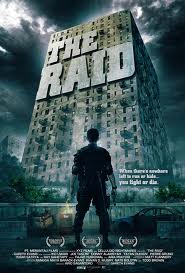
No, there were two movies that were pretty much marketed straight to me, that just burrowed under my skin and stayed there until I could see them. One was The Cabin in The Woods, which I wrote and squeed about earlier this week, and the other was the movie that finally came to be known as The Raid: Redemption.

The setup here, as you can see, is very simple: It’s Die Hard with a SWAT team instead of Bruce Willis and a building full of coked-up crackheads and gangsters instead of a crew of mercenaries.  That’s an efficient delivery system for some of the most brutal, intense hand-to-hand fighting scenes I have seen in any movie. The end credits list something like twelve doctors and paramedics and at least half that many massage therapists. They earned their money on this movie, and so did those stuntmen.

The camera work is frequently stunning, but several times, it’s just as annoying. In the fight scenes it follows the frenetic action perfectly – there’s even a time or two that the camera looks around quickly after an opponent is felled, just as any character in the fight would.  Unfortunately, that carries over into the still scenes, as the shaky cam seems to take over arbitrarily, like a prize fighter bouncing on his heels to keep warmed up. Still, frantic as the violence becomes, the viewer is never in doubt as to what is happening, never puzzled about the geography in which all this is taking place, MICHAEL BAY AND EVERYBODY IN HOLLYWOOD WHO FANCIES THEMSELVES AN ACTION FILMMAKER PLEASE TAKE FUCKING NOTE.

Generally, every time I see a movie that proclaims itself to be wall-to-wall action, it becomes wearisome by the final half-hour. The Raid, however, doesn’t do that. The pacing is skillful, and the fights constantly switch the odds. It never get boring, and at a lean 100 minutes, doesn’t outstay its welcome.

The “Redemption” part of the title was apparently added when it was decided that The Raid would be the first movie of a trilogy. It’s going to be interesting to see where director Gareth Evans and star Iko Uwais take this from here.

Speaking of Evans and Uwais, I had the evening free and remembered that their first movie together, Merantau (2009) was on Netflix Instant. Fully aware there was no way it could be as frantic as The Raid, I fired it up.

Merantau is a more typical martial arts movie, very firmly in the country-martial-artist-comes-to-the-big-city-and-winds-up-fighting-crime mold, along with The Big Boss and Ong Bak, just a lot grimmer. Uwais is the rural fellow hoping to find a job in Jakarta teaching silat, his martial art of choice, but his country morals and chivalry keep getting him involved in stopping a human trafficking ring led by two white devils. Unlike in Ong Bak, Uwais doesn’t pull out any cutesy Jackie Chan physical stunts, he is too concerned with kicking ass. (This is not to denigrate Chan or Jaa in any way. As I said, this is a fairly humorless movie.)

Relentless or not, things still get pretty intense; it’s rare that Uwais is ever up against only one person – in fact, the movie has the class to let him lose his first major fight. But after that, with a damsel in distress, he gets up and proceeds to lay the field to waste.

The major difference you are going to find between Merantau and The Raid is the camerawork. The handheld shakycam is nowhere to be found here, it’s all smooth dollies and Steadicam. A second major difference is the vibrancy of colors; Jakarta is a very colorful city, even (or perhaps especially) in the lower-income and seedy urban areas where Merantau takes place. That is another major difference from The Raid, where the color scheme is drab, drawn from crushed dreams and urban decay.

A unique thing in Merantau‘s favor is the two main bad guys, the white devils (Mads Koudal and Laurent Buson) can not only fight, they can act as well, and you don’t usually get that combination in Asian film (especially in Chinese movies, my usual flavor). That really adds to the quality of the movie, that this much care is put into its construction; those parts aren’t huge, but they are important.

The best part of seeing Merantau almost immediately after The Raid is seeing the repertory company forming; Doni Alamsyah is still playing Uwais’ brother, and the comparatively small Yayan Ruhian is still playing a badass ready to give the hero a run for his money (as Mad Dog in The Raid he’s absolutely a force of nature).

So that was a day well spent. Indonesian action flicks have come a long way from The Stabilizer and Jaka Sembung and The Devil’s Sword. If there’s a major renaissance in their film industry, I welcome it, and I am definitely looking forward to whatever Gareth Evans and Iko Uwais have for us in the future.

Movie Ketchup

It seems to be a corollary of my life that every time I manage to get a long weekend, the week after is going to start at an accelerated rate and just continue to speed up from there.  How I managed to get last week’s entry on the Good Friday Crapfest is beyond me, but it got done.  In this welter of work, the Stanley Kubrick Project may have gone by the wayside, but I did manage to watch five movies, none of which I wrote about here.

I’ll try to not be too wordy.

First off was The Stabilizer, a 1986 Indonesian action flick that pairs boundless enthusiasm with limited skill. New Zealand English teacher-turned-action-star Peter O’Brian, plays Peter Goldson, The Stabilizer. On loan from the FBI, Goldson is that special breed of person who will stabilize the balance between good and evil. He does this by punching and shooting bad guys and driving various vehicles through walls. He’s there to get Greg Rainmaker, international scum, who raped and killed Goldson’s girlfriend by stomping on her with his oversized golf shoes.

If there is one thing The Stabilizer is, it’s action packed, and some of that action is pretty okay.  Slow spots are minimized, and you know you’re never more than a few minutes away from another sloppy fight or heavy machinery crashing through a wall. This is accompanied by near-constant unintentional laughs, making this the perfect Crapfest movie. Unfortunately, they won’t let me show it, no matter how many times I point to the box that says, “The Drunken Master’s Grand Theft Auto!” I’m sure Lloyd Kaufmann took the day off after writing that blurb, it’s so perfect.

Yes, Troma distributed the disc here in America, and a gesund on them for doing it. That’s the main reason I’m not allowed to show it, though. There’s an odd, unofficial No Troma rule, apparently, which extends even to stuff they didn’t make, so I might as well not even bring up movies like Sugar Cookies or even a movie Rick has been agitating for, Mad Dog Morgan.  Ah well:

This was watched for a Daily Grindhouse podcast, still being edited as I write this. My major contribution was confusing Judd Omen with Jon Cypher, as I mentioned his character at the end of Pee-Wee’s Big Adventure, in the prison bus, shouting, “Great movie Pee-Wee! Action-packed!

Which is really all I can say about The Stabilizer.

Late one night I watched American Grindhouse on Netflix Instant. It purports to be a history of the American Exploitation Movie, narrated by Robert Forster. It starts out very strongly, with clips from silent movies that I had no idea had survived, moving through the talkies up until the last decade (it’s a 2010 movie). Sadly it starts getting sketchy in the 70s, as subgenres start proliferating, and a lot seems glossed over. But it’s never boring, and a good primer for the uninitiated; those of us swimming through this stuff all our lives aren’t going to find much new.

Fittingly, the trailer will suck you right in:

Watching Spartacus had left me wanting more Hollywood epics, if only for comparison’s sake, so it was lucky for me that Daily Grindhouse asked me to review one of the new Twilight Time Blu-Rays, Demetrius and the Gladiators. But that meant I needed to watch The Robe first, as one is the sequel to the other.

For all you heathen dogs: The Robe is the tale of the Roman who won Christ’s clothes in a gambling match held at the foot of the cross. That guy is Marcellus Gallio, a debauched Tribune, played by Richard Burton. Travelling with him in his political exile in Jerusalem is his slave, Demetrius, played by Victor Mature. Demetrius becomes a devout Christian and runs off with The Robe while Marcellus is consumed by guilt over what he’s done. The Roman eventually tracks down the wily Greek, only to find himself converted to Christianity, and eventually martyred for his belief by Caligula, Emperor of Overactors, though that means it’s kind of a crock that there is no Saint Marcellus.

The Robe doesn’t feature a whole lot of budget-gobbling crowd scenes, so a lot of the time it feels like the expanded frame of this new-fangled CinemaScope is going unused, though there are great, painterly moments – the scenes on Golgotha, for instance. There are a couple of action scenes, quoted in that trailer, but they are far outnumbered in screen time by proselytizing. There is definitely more reverence on display than rambunctiousness.

Richard Burton’s taciturn portrayal of Marcellus doesn’t truly sell the character’s conversion (frankly, the script doesn’t do him any favors in this regard), and he’s rather overshadowed by Victor Mature. Michael Rennie is marvelous as Peter, and Jay Robinson’s time as Caligula is thankfully short. Jean Simmons is Jean Simmons. In all, I guess it was a pretty good Easter movie.

And then the Extremely Busy Week started. I survived it somehow. In celebration of that fact, I treated myself to lunch at the Star Cinema Grill and The Cabin in The Woods. I had the theater to myself.

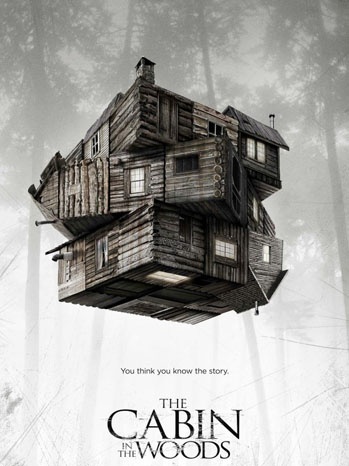
I am going to scrupulously avoid saying anything about this movie except that I loved it. You know how tween girls were about Titanic? That’s me with The Cabin The Woods.

I now see that Lionsgate has scrupulously disabled embedding on all of the YouTube trailers for Cabin. Thanks a lot, guys, I’m not really sure what that accomplishes.

It’s amazing how little that trailer gives away. The Cabin in The Woods has the best blend of horror and comedy that I have seen in ages – since, ironically enough, Evil Dead II – and every serious horror fan who hasn’t seen it already, should see it now.

Yes, I’m aware that there are also people who say it’s stupid and it’s over-hyped and they want that hour and a half of their lives back. These people are big dummy stupidpants.

So then I got to watch Demetrius & the Gladiators, which I found to be one of the few sequels that was better than its predecessor. Better compositions, better balance between sermonizing and sword-slinging, it’s like a mirror image of The Robe. Demetrius’ fall from faith is a lot better handled than Marcellus’ conversion, and you’ve got actors like Ernest Borgnine and William Marshall shoring things up. Susan Hayward deserved a better script, and… oh boy, Jay Robinson gets more screentime.

While I was writing this, I see the review went live, allowing me to see every single mistake I made. Oh, well. Such is life on the Internets.

To top all this off, I finished my story for this week early, and now I’m wrapping this up. So I think it’s time to finally treat myself to The Raid: Redemption. Hi-keeba!

That Obscure Spartacus of Desire

Events have been conspiring against me, as Hamlet would say (in one of those tiresome modern translations my wife purchases for her students).  I did catch That Obscure Object of Desire before Netflix lost the rights to it, then I laid aside three hours to watch Spartacus Friday night. Hey, the IMDb says it’s only two hours, 41 minutes long, that’s plenty of time! Except that, oopsie, what I have is the restored Blu-Ray, which weighs in at three hours, 18 minutes – but it is not a slog by any means.

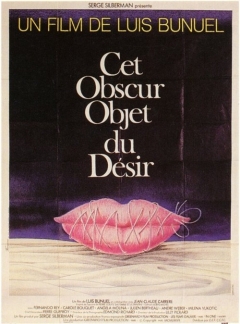
First things first: That Obscure Object of Desire, Luis Bunuel’s last film. I find myself once again stymied by Bunuel. I’m glad I saw Discreet Charm of the Bourgeoisie first, as, in a way, it prepared me. Just as the title characters in that earlier film never quite get their meal, Desire‘s protagonist – once again, the wonderful Fernando Rey – will never commiserate his relationship with Conchita, a pretty Spanish girl easily twenty-five years his junior. The reasons why become increasingly odd, an escalation over the course of months, maybe years, with Rey always trying to use his wealth to close the deal.

The most famous device employed in Desire is that Conchita is played by two actresses – Carole Bouquet and Angela Molina – both beautiful in different ways. A lot of brain time gets spent trying to figure out what each actress represents, and they frequently switch within the same scene. Apparently Maria Schneider was going the play the role, alone, but quit – some say simply announcing that she couldn’t play the role the way Bunuel wanted it, some say after a horrendous fight. Some also say, quoting from Bunuel’s memoirs, that he hired one actress on the spot to re-shoot the footage Schneider had already shot, and the other actress later, which doesn’t make a whole hell of a lot of sense; another quote from his book claims he was getting drunk at a bar and trying to figure out how to salvage his movie when the idea of using two actresses hit him.

In all, this confusion and duality of legends is really of a piece with the movie. Rey is relating the tale of his doomed relationship to his traveling companions on a train, which doubtless makes this the very definition of an Unreliable Narrator. Or possibly not, as it has to be said that Rey never has a clue as to what makes Conchita tick, and therefore, neither do we; she seems as mutable as the status of which actress is to play her at any given moment. In that way, I’m going to say that Bunuel has absolutely nailed the befuddlement of any male who has ever said or done the wrong thing and has no clue why it was the wrong thing.  And, like many a man before and since, he is too busy – or too stupid – keeping his eye on the prize to try to figure anything out. He doesn’t want marriage, he wants a mistress, he wants sex. And he always seems this close

Which is grossly simplifying and glossing over much more. Bunuel doesn’t make popcorn movies. He makes movies that engage on many levels, and you must pay attention, if only to see what will astound and confound you next.

And then there is Spartacus.

Ah, Spartacus. No obscure symbolism here. Well, not on the level of Bunuel, anyway. Straightforward, glorious story of the Third Servile War, with some historic jiggery-pokery by Howard Fast in his novel and Dalton Trumbo in his screenplay. Legend has it that Kirk Douglas was royally peeved by not getting the title role in Ben-Hur, and Spartacus was going to by-God show them, producing the movie himself through his Bryna Productions. That’s a big chip to be carrying on your shoulder, and it wasn’t long before Douglas fired the first director, Anthony Mann – apparently the only footage Mann shot that’s still in the finished picture is at the very beginning, in the salt mines. Douglas remembered that guy who directed him before, and that movie turned out pretty well. Stanley Kubrick, and Paths of Glory.

I suppose that could have been a case of Be Careful What You Wish For for Kubrick; he’s at the helm of a big Hollywood picture, but he has no real control. He’s a hired gun, and he doesn’t like it. There were apparently many fractious discussions between Kubrick and Douglas, with Douglas generally getting his way. And the astounding thing is, none of that is on the screen. This is a good, solid movie, still standing head and shoulders above most of the comparatively turgid movies that came out in the Epic Cycle of the 60s. It’s a testament to both men’s ultimate professionalism that this is the case.

Can we all just agree that Charles Laughton owns any movie he's in and just get on with our lives?

Yet I still can’t get over the feeling that it would have been better had Kubrick had more control; there is a scattered quality throughout the narrative, as if the story gets bored with one set of characters and moves quickly from the gladiators to the senate, and then thinks nah, that was a bad idea, and moves back again. Apparently, the high-power stars were re-writing the script daily, to emphasize their own roles. Again, all hail to Kubrick and editor Robert Lawrence for making the movie as cohesive as it is. And what stars! The sort of actors you could likely leave to their own devices, if need be – Laurence Olivier, Charles Laughton, Peter Ustinov… Olivier and Laughton were said to hate each other, which Kubrick put to good use. The scenes between Spartacus and Varinia (Jean Simmons), once freed of the gladiator school, feel a little too plastic, too self-consciously Hollywood… at least until the last time we see them together, and, just as in their early scenes, some genuine emotions show.

There is a lot of exceptional detail in the settings, which I’m going to mark on the Kubrick side; and probably my favorite scene takes place before the ultimate battle, as Spartacus’ slave army faces the approaching Roman legions, the masses of men changing formations as they approach the line, preparing for battle, the sun shining off shields. That ain’t CGI, baby, that’s a ton of extras, and it is breathtaking. It’s practically in real-time, with only cuts to Spartacus and Olivier as Crassus on their respective rises, watching the battle lines form. I am put in mind of people bitching about how 2001 is boring because it’s so slooow and waaaaah why can’t something blow up. Phooey on them. Like I said, breathtaking, and in this instance, tension-building in the extreme.

I literally hadn’t seen Spartacus since the mid-60s, and then it was on TV. I remembered only two scenes from it: the Gladiator Instructor painting Spartacus’ body to demonstrate the Quick Kill, Cripple, and Slow Kill zones, and the end, which I thought royally sucked because the hero died. Nowadays, of course, I can see and appreciate more than that. I know now that Howard Fast started writing his novel while he was jailed for refusing to give names to the House UnAmerican Activities Commission, and that screenwriter Dalton Trumbo was still on their blacklist when shooting started; when Crassus starts waving around papers that contain “names of all enemies of the state” there’s a certain bitter, dark resonance to it.

There’s a ton of good stuff in Spartacus; there’s a reason the Criterion Collection once put it out on DVD. The fact that at this remove I can detect the lack of the director’s touch should not deter anyone from seeking it out. As I said, tremendous cast, good story, high production values. Like anything thus far in the Stanley Kubrick Project, I feel quite confident recommending it.

Next up: Lolita about which I have heard some… not-encouraging things. Never seen it, but it does have the look of Kubrick going in exactly the opposite direction from Spartacus as far as he could. Whether or not this is a good thing, we shall see.

I do try to keep an open mind.