Apocalypse Now (1979)

It was only logical that if I was going to re-watch Full Metal Jacket for my personal project of watching all 13 of Stanley Kubrick’s features in order, I was also going to have to give Apocalypse Now the same treatment. I had seen both movies in their first theatrical runs, and never again since; and despite Oliver Stone’s Platoon being the one that took a Best Picture Oscar, those were the two Vietnam movies that possessed any stature in my brain, the two that were usually singled out as “masterpieces”.

I really like Full Metal Jacket, but I am unsure as to its masterpiece status. Incredibly well-made, often gorgeous, but still emotionally distancing – which I think was the point. But then what about Francis Ford Coppola’s Apocalypse Now, when, in 1979, I left the theater not sure whether I actually liked the movie or not. Surely now, over 30 years later, I would be able to give the movie a more balanced, assured viewing.

Surely.

…Hm.

Okay, let’s start with the basics. We know that the movie started back in the 60s, as a John Milius script entitled The Psychedelic Soldier, which used the basic structure of Joseph Conrad’s novella Heart of Darkness as an allegory on war. This was going to be American Zoetrope’s first big project, and the plans were big, high concept, as it were: George Lucas would direct cinema verite style, with 16mm cameras, using real soldiers… in Vietnam, with the actual war going on around them. This is the sort of audacious plan enthusiastic young men come up with, full of excitement and possibility. John Milius smilingly remembers friends who were planning to move to Canada and other draft-dodging techniques, who were ready and willing to go to Nam voluntarily to carry lights and camera equipment.

Somewhere in the very early 70s, that plan petered out… I strongly suspect some money man looking at Coppola and saying, “Are you fucking insane?” (and insane is a word we are going to be using a lot in discussing this movie) But, after two incredibly successful Godfather movies, Coppola was finally able to get this dream project, re-titled Apocalypse Now, green-lit. Lucas was working on something that would be called Star Wars, Milius wasn’t interested, so Coppola took up the direction himself, moving himself and his family to the Philippines for a projected five-month shoot.

Therein lies the stuff of legend; Replacing Harvey Keitel with Martin Sheen was the smallest of stumbling blocks that beset the shoot. The Marcos regime would pull out helicopters in mid-shot to pursue rebels (or, it was felt, to milk more bribes from the production). A typhoon destroyed sets and put the already-besieged production back six weeks. Martin Sheen suffered a near-fatal heart attack, sidelining him for another six weeks (apparently there are some scenes where we only see Sheen’s character, Willard, from the back, and that’s Emilio Estevez subbing for his dad). Coppola must be feeling that he is in an arm-wrestling contest with the universe to finish this picture. Then Marlon Brando, receiving an at-the-time record 3.5 million dollar paycheck for three week’s work, shows up without losing weight as he had promised, having neither read the script nor the novella.

At some point in all this, Coppola had taken on the mounting debt of the production using his own resources. He, rather understandably, becomes suicidal more than once.
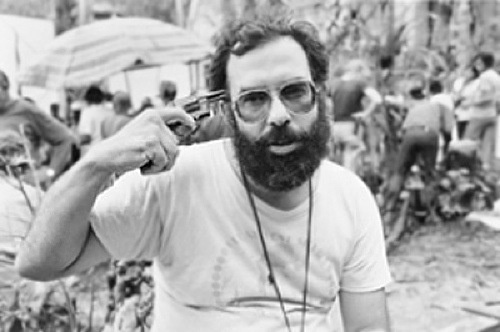
If you’re going to watch Apocalypse Now, I absolutely recommend that you also watch Hearts of Darkness, the 1991 documentary about the making of the movie, which is composed mainly of footage shot by Coppola’s wife Eleanor during the grueling process. In the opening, taken, I think from Cannes, Coppola states that the movie parallels Vietnam in that “There were too many of us, we had access to too much equipment, too much money, and little by little we went insane.”

And what is astonishing – even beyond the fact that the movie ever got finished, that Coppola never truly gave in and just walked away from the whole chaotic mess – is that after two years of editing nearly a million feet of film, the movie is gorgeous and compelling. All that money is on the screen.

I don’t think I’m alone in finding the third act disappointing, as Willard finally finds his target, Kurtz, in the ruins he and his Montagnard minions have turned into a base of operations festooned with decapitated heads and dead bodies. An absorbing story suddenly becomes murky and confusing, and if you watch Hearts of Darkness, you will find yourself infuriated by Brando. You also realize that the third act is in about as coherent form as anybody could have gotten out of that mess.

Also found out I had a non-typical experience on my first viewing, back in ’79. The Lionsgate Blu-Ray preserves the original intention of Coppola, fading to black at the end with a copyright notice. The movie was meant to be toured about, with the credits on programs to be handed out to the audience. When that wasn’t practical, there were simple white credits on black appended to the end. But when I saw it, the credits played over footage of Kurtz’s base being blown to smithereens by an airstrike. The footage basically existed because it was in the contract with the Philippine government that the fake temple be removed at shooting’s end, and if you’re going to destroy something like that, might as well film it, right? And you’ve got such spectacular footage, you might as well use it, right?

Except that the airstrike totally contradicts Coppola’s intended ending, which I have now, thanks to the Lionsgate disc, seen, and it sat better with me. I do believe that final bit of confusion at the end there really killed the movie for me back in ’79. Or at least finally administered the coup de grace after Brando’s segment had mortally wounded it.

One final bit about the insanity of the project and its final form, possessing no title card and no end credits: for a while it was Coppola’s intention, if not to tour it, then to build a special theater for it in the exact geographical center of America, where it would be shown year-round, and you would visit it like you visit Mount Rushmore. Much easier to do the program thing there, but still: insane.

Apocalypse Now isn’t truly Vietnam, isn’t truly Heart of Darkness; it uses a phantasmagorical version of Vietnam as a backdrop to a tale of personal concepts of right and wrong challenged by a world of values shifting so quickly that the word values no longer even has any meaning. The deeper Willard gets into this Vietnam fantasia – a world he volunteers to get back into, that when he cannot get back into it with a long-awaited “mission”, he spends long hours slowly killing himself in a Saigon hotel room – the deeper Willard gets into the jungle, the fewer pieces of the chain of command even exist anymore. It’s the Vietnam war as related by Hunter S. Thompson, hardly realistic but nonetheless engrossing.

And it’s taken me a week and a half to get even this coherent about it. Can I please watch another movie now?
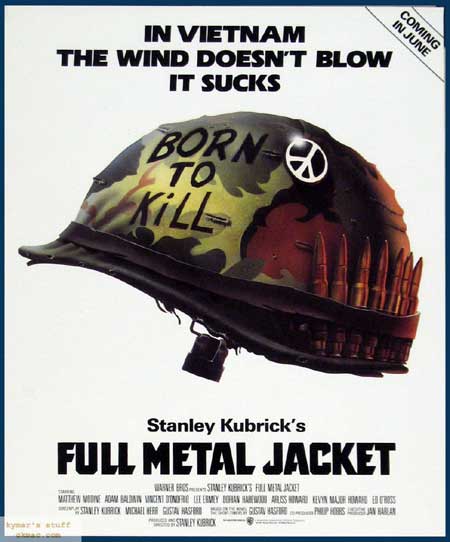
The Stanley Kubrick Project: Full Metal Jacket

When I was a younger man… still-in-college young, God’s Gift To Theater young… word came down the pike that Stanley Kubrick was searching for young men for his next movie.  That news hit the drama department like a rock in a pond, which is to say there was a brief amount of activity, which gradually faded away. You were required to send in a tape, and in a small college in the wilds of Texas, there weren’t a lot of resources for that, not at the dawn of the 80s, anyway. Besides, none of us had an agent, and I had done enough writing at that point to know what a “slush pile” was, and what happened to most of the manuscripts/resumes that wound up in one.

Just as well, knowing what I know about Full Metal Jacket these days.

It seems there were two great spurts of Vietnam movies, first in the late 70s, then another later in the 80s. In the 70s, the country was still a little psycho about the subject, and the result was Coming Home, The Deer Hunter, Apocalypse Now and the relatively restrained Boys in Company C. In the 80s you had First Blood Part Two: Rambo, the Oscar winner for Best Picture Platoon, and once again, apparently arriving late to deliver an appropriate coda, Stanley Kubrick and Full Metal Jacket. I’ve seen all of these, so much so that they all tend to blur into one huge swamp of tropes and setpieces, into one huge movie with a hell of a running time… but I find the scenes that really stick out for me come from Kubrick and Coppola.

There are a lot of similarities between The Boys in Company C and Full Metal Jacket, which doesn’t help my befuddled brain, but at least a scene involving soccer was cut from Full Metal, so I can still clutch at that difference. Both movies start at boot camp, where highly-trained drill instructors wear down, tear down and build soldiers; that which can be broken must be broken tout d’suite so it can be repaired or replaced and units formed that will kill on command. Where Full Metal Jacket forges its own unique identity in the crowded Vietnam movie market is Gunnery Sergeant Hartman, played by R. Lee Ermey in a star-making turn(well, perhaps not star-making, but it resulted in regular work, which I’m sure he’ll take as a consolation prize). Himself a retired Marine (and then only retired due to injuries), not only does Ermey bring life knowledge but an apparently infinite supply of insults, slurs and creative vulgarisms to the role. You fear him almost as much as the recruits, but you cannot take your eyes off him.

The entire first act takes place on Parris Island, as our major characters Joker (Matthew Modine) and Cowboy (Arliss Howard) navigate the grueling eight weeks of basic. The nicknames, of course, are supplied by Hartman, as is the name of  Gomer Pyle (Vincent D’onofrio, in his film debut), the recruit who can get nothing right, and who boot camp finally, truly breaks, with tragic results.

The second act finds us in-country, with Joker assigned to writing for Stars and Stripes, (much to Hartman’s disgust). Joker is pretty much dedicated to staying out of the line of fire and keeping his cameraman, Rafterman (Kevyn Major Howard) the same. The 1968 Tet Offensive brings the war to their doorstep, however, and Joker and Rafterman find themselves embedded in the Lost Dog Squad (including old buddy Cowboy), who are charged with clearing the bombed-out city of Hue.

This is the third act, again establishing a difference with other Nam movies, which tended to put the war in the jungle or villages of thatched huts; Kubrick’s production designer, Anton Furst, takes an abandoned gasworks near London slated for demolition, and working from photos of Hue after Tet, began the demolition with an artist’s eye. It makes for an enveloping, harrowing portrayal of urban warfare. In the next 24 hours, the Lost Dog Squad will go through three squad leaders, eventually finding themselves lost in the wrong part of Hue and trying to get to the right coordinates, only to find the most dreaded obstacle in any theater of war: one determined sniper with uncanny aim and a near-unfindable location amongst the ruined buildings.

Back at the beginning of the movie, Hartman demands to see Joker’s “War Face”, prompting a scream and the usual derision from the sarge, “Bullshit! You don’t scare me!” The War Face is something that the movie returns to, over and over again. It’s the Full Metal Jacket that Pyle references in the horrific end to the First Act, meaning not only the copper sheath surrounding the lead in his M-14’s ammunition, but also, the War Face, the protective armor the soldier puts around his psyche. Joker, separated from Parris Island, returns to the jovial smartass he  tried to retain during basic, wearing a peace button on his body armor and “Born to Kill” painted across his helmet. Still, in their barracks, the journalists match their war faces and full metal jackets against each other, trying to impress with the number of times they’ve seen action. This dick-measuring contest is cut short by Tet, and although fearfully muttering they are not ready for it, the training takes over and the assault on the base is repelled.

Once he’s reunited with Cowboy, Joker’s War Face comes out again in a pissing contest with Animal Mother (Adam Baldwin), a character who is basically Pyle without the breaking part. Bristling with ammo belts, he tries to impress Joker with his alpha maleness, until the two are separated, like opponents in a schoolyard scuffle. Later, under sniper fire, Joker is finally going to have to go to the place the Marines built inside him, and take a life, face-to-face. The Full Metal Jacket will only take you so far; eventually the bullet must be fired.

Kubrick’s approach to Vietnam is fairly documentarian; the steadicam fluidly following the men as they crouch and run through shattered concrete canyons. There are a few things that seem out-of-place in a Kubrick movie – the contemporary rock music, as in any Vietnam flick, and a segment with the soldiers being interviewed by a news crew, which had been done by the TV M*A*S*H* years earlier.

Most of the time, however, Kubrick tries to not manipulate your feelings, except through images. There are a couple of times he can’t resist trotting out the black humor, though: Hartman proudly holding out UT Tower sniper Charles Whitman and Lee Harvey Oswald as prime examples of Marine rifle training, and a Colonel dressing Joker down for his peace symbol, assuring him that “One day, this peace business will blow over.”

But overall, it’s a solid movie with a problematic structure, seemingly split into two different movies: the one set on Parris Island, and the other in Vietnam. The major problem with the second half is that there is no R. Lee Ermey in it, constantly barking and propelling the story forward. He is deeply missed once we’re in country. And frankly, there’s another Nam movie considered a masterpiece that shares the problematic third act: Apocalypse Now, where once Martin Sheen arrives at his destination and Marlon Brando enters the stage, the movie is suddenly struggling through hardening amber. Yeah, I also watched Apocalypse Now again. Sort of had to.

Actor Dorian Harewood, who plays Eightball, says he asked Kubrick if Full Metal Jacket  was his answer to Apocalypse Now. Kubrick replied, “No. It’s my answer to Rambo.” And there you have it. For some reason I never much cared for PlatoonApocalypse Now is more a nightmare set to film than an attempt at historical accuracy. But in my mental lockbox, where I store imagery and experience, Full Metal Jacket remains my Vietnam of note, capturing so well the banality of hours of boredom interrupted by seconds of terror, and the fact that men that were still not much more than boys were given the power of life and death, and set loose on a landscape not their own.

Movies Before the Fr(a)y

Well, that was certainly a week lost to housekeeping and work. Regular work during the day, City Business at night – Economic Development, School Board Budgets, and a Public Hearing on a non-smoking ordinance (no, we still don’t have one). This week won’t be much better, as tomorrow I face the Valley of the Shadow of Death, also know as the Independence Day Parade. Yes, our parade is on July 3rd, not the 4th. On the 4th we’ll be running cameras at the Fort Bend Symphony concert. Patrons will exit the concert to watch fireworks, if the timing works out. We will be inside packing up cameras and cable.

It’s a living.

I still managed to watch a few movies, though I didn’t have time to say anything about them. Here goes:

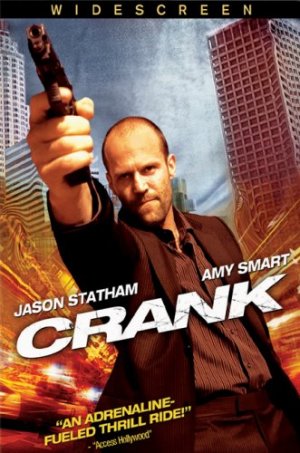
Crank (2006) is a gleefully vulgar action comedy which is mainly famous for its directors, Mark Neveldine and Brian Taylor, convincing Jason Statham that he could do comedy. In truth, the comedy is in the situations, as Statham’s hit man Chev Chelios is poisoned by gangsters after a mob contract goes bad. The poison is a “Beijing Cocktail”, and Chelios discovers that adrenalin will stave off the effects of poison temporarily; in order to save the life of his girlfriend and wreak his revenge, he goes on a thrill-ride tour of the city, becoming a one-man wrecking crew and crime spree. Truthfully, all Statham has to do is play it straight to make this stuff hilarious. Dwight Yoakum, as Chelios’ sympathetic doctor, continues to impress me as an actor; always smooth, natural and believable, in whatever role he’s given.

It’s not likely I’ll ever watch Crank again, but I definitely will be seeing its sequel, Crank 2: High Voltage.

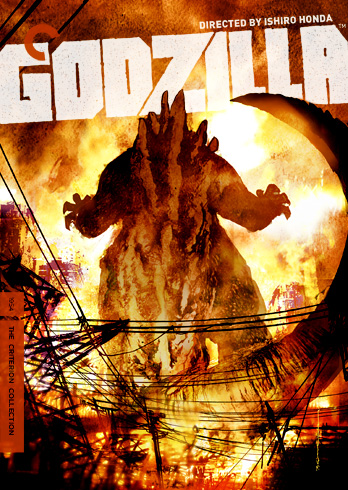
From the ridiculous to the sublime: I watched my Criterion Blu-Ray of Godzilla (1954). Godzilla has become such a part of the cultural landscape – no, wait, I need to scratch that, based on a recent experience.

We had a troop of Cub Scouts come by the station for a tour, and as part of such tours we always let the class or den or klatsch or whatever play around in front of the blue screen while we play something in the background. In a staff meeting I joked that this time it needed to be Godzilla footage. That was judged a great idea, so I trimmed down some of the ending of Ghidorah, the Three Headed Monster involving the monster four-way at the end.

The footage worked very well, except for one thing: the kids – and their chaperones – had no idea who Godzilla or any of the others were. “Wow, a T Rex!” “Look! It’s a dragon!”

This is how far we have fallen as a nation.

Well, as I was trying to say, Godzilla had been such a part of the cultural landscape that we all thought we knew him, a reptilian fire-breathing good guy who saved us from so many aliens that Hanna-Barbera made a cartoon series about him. That’s a perception gained by increasingly absurd sequels over the years, and the hisei, grittier versions of the 90s never truly caught on in America. We aren’t even going to mention Matthew Broderick’s iguana pal.

So it’s always sobering to revisit the original. Grim, black and white, a force of nature made even more terrible by the H-bomb. Hiroshima and Nagasaki are invoked several times in dialogue, a stark reminder that those were not even a decade in the past, at that time. The investigation and subsequent attempts to kill Godzilla follow a very logical course, but it takes a science fiction weapon to kill a science fiction monster, and the doomed Dr. Serizawa dies alongside Godzilla, lest his “Oxygen Destroyer” become as terrible a weapon as the one which awakened the modern dragon. Essentially, Tokyo Bay is nuked to kill Godzilla, the oxygen destroyer killing everything in the water, a final, nasty irony,

I will always highly recommend this movie, but I find myself very disappointed in the print used by Criterion; it really needed some major restoration work done. Some of the Tokyo rampage footage is in especially dire shape. Since I’ve brought that up, there’s something that’s always bugged me: there is a TV crew broadcasting from a tower, and Godzilla is drawn to the tower by the flashbulbs popping on all the other news cameras around. Godzilla gets pissed and knocks over the tower, killing everyone. But my question is: a flash is only good for about 30 feet from the camera, at most. Why the hell were supposedly professional photographers using flashes at all?

Then came the civics, meetings bang bang bang. I didn’t have a show that Saturday, and instead of bemoaning the financial hit, went over to pal Dave’s to watch movies. No Crapfest this time, we’ve re-started an even older tradition of watching movies of (harrumph) quality. And first up was a movie I had wanted to see for quite some time: the Coen brothers’ version of True Grit. My wife had seen it without me in its theatrical incarnation, then when it cropped up on Netflix, my family watched it without me. Again. This left me the sad owner of a DVD among many DVDs, each crying out for viewing. It was on The List, and Dave really loved it, so we watched it.

Naturally, I now have a yen to watch the 1969 Henry Hathaway version again, just to solidify the differences between the two. The main difference is largely one of texture, of approach; both are identifiably from the same source material, but the ’69 version doesn’t go as revisionist-Western. 1969 was the year of The Wild Bunch, which a lot of folks point to as the death of the Western. To be sure, fewer and fewer were made, and those were in the vein of Doc (71) and The Great Northfield Minnesota Raid (72), which are, in a way, the children of True Grit and The Wild Bunch. The West of Gunsmoke was gone, replaced by a more feral, grimy creature. Possibly more realistic, possibly not.

I’m definitely giving True Grit (11) the edge in realism – although movie realism is a tricky thing. Images that undeniably real on a movie screen are often the results of layers of trickery; look at a photo of the real thing, and it will look fake to the eye. The Coen’s version of the West just feels right – not mythic, but certainly rough and worn.

It’s also one of the best damned movies I’ve seen. John Wayne’s version of Rooster Cogburn is the sentimental favorite, but Jeff Bridges really is one of our best actors, and shows it. Matt Damon beats Glen Campbell hands down as Texas Ranger La Boeuf. Hailee Steinfeld edges out Kim Darby – just barely – as Mattie Clark, but the battle between Robert Duvall and Barry Pepper as outlaw Lucky Ned Pepper is a draw – the approach of both men is similar, but Pepper more looks the role.

Don’t be an idiot like me and put off seeing this.

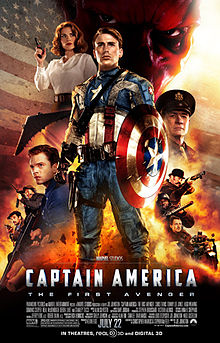
Alan was at the viewing as well, and he hadn’t seen True Grit either – but then, thanks to the previews on the DVD, we discovered he hadn’t seen Thor or Captain America either. Given the forthcoming holiday, we watched Captain America. Well, the holiday and the fact that Dave and I both liked it better than Thor.

Director Joe Johnston’s previous period hero flick, The Rocketeer, had left me cold, but even then I felt the period stuff had been done right, and it continued to be done right in Captain America. It’s a strange World War II flick where you don’t see any swastikas, and the Red Skull’s death ray conveniently disintegrates you, so there’s no danger of slipping into R-rated violence. Very slick.

The casting, special effects and pace are all perfect, leading up to this Summer’s blockbuster, The Avengers. Chris Evans does a terrific job playing up the essential decency of Steve Rogers, without making him too much of a Boy Scout to make tough decisions. The story hews fairly close to Canon, and doesn’t even try to associate the Samuel L. Jackson Nick Fury with the Howling Commandos (and I knew I was going to have to see this movie when I spotted Dum Dum Dugan in the trailer). Okay, there was never a Japanese-American in the Howlers, but I don’t recall the US Army ever going up against Hydra, either.

It’s a good movie, one I don’t mind revisiting, but True Grit definitely took that night.

There, we’re all caught up with each other. I report tomorrow at 12:30pm to start frying eggs on the pavement. I hope to see you on the other side. Have a safe Fourth.

The Stanley Kubrick Project: The Shining (1980)

Of all the Movies That I Haven’t Seen But Probably Should, likely the most surprising is Stanley Kubrick’s version of Stephen King’s multi-kabillion-copy bestseller The Shining. It is, after all, a horror movie, and I have moved through my life adoring the horror genre. If I’ve grown disenchanted with the genre over the years, it is because so much of the product created has little to offer me. I walk through the Halloween Haunted House, and spend all my time recognizing the props, so shopworn and rote has the field become.

When I find a movie that actually scares me, that’s something to cheer about. I suppose it’s some sort of desensitization, because my wife refuses to watch anything having to do with horror. It affects her on a level I can never hope to achieve again.

You see, I recognize all the props.

But we’re here to talk about The Shining, not me.

After the dismal box office on Barry Lyndon killed forever any chance of making his dream Napoleon project, Kubrick, while casting around for his next movie, must have been keenly aware of a need to make a commercial film. I don’t think box office ever truly mattered to him, but he was close to some of the executives at Warner, and making their lives easier might be a good thing. Horror had been a major force in the realm of Major Motion Pictures since The Exorcist blew up in 1973, and its possible, maybe even probable, that Kubrick was enough of an egotist to either a) feel that he was being left behind, or b) that he could show everyone what they were doing wrong.

So, Stephen King’s bestseller The Shining. That is what is referred to as Box Office Gold. Recognized name, recognized property. A Sure Thing.

Except that it wasn’t a sure thing. I remember everybody who saw it hated it, mainly because they’d read the book. Everybody had read the book. I think with international sales and all, The Shining made its money back, but the backlash was severe.

Then, it’s also a pattern with which we should be familiar by now. Derided at its initial run, The Shining is now considered a classic, almost always cropping up in those largely useless “Best Horror Movie” lists. (I hate lists.) Kubrick, as ever, if not ahead of the curve, is the curve.

Most of the ire directed at the movie is the changes wrought on the source novel, though really – how this surprised anyone is beyond me, given the changes made to the paper versions of Lolita, Red Alert, A Clockwork Orange and The Luck of Barry Lyndon. It is easier and far more common to pick up and read a book – (especially one in such plentiful supply as The Shining, which used-bookstores enforced a moratorium upon, they were so common) – than to examine a film director’s body of work. And admittedly, in 1980, it was damned difficult to examine Kubrick’s  oeuvre in a casual manner; you had to be a student at a well set-up university or a millionaire.

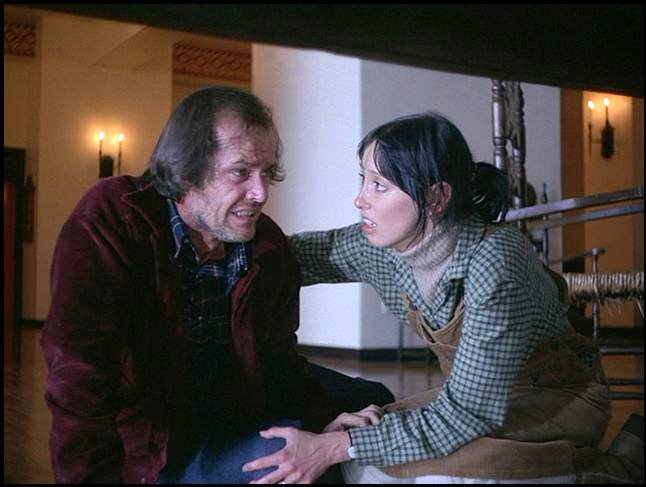
The Shining concerns the Torrances – man, woman, and child – who are going to spend six months in the fancy Overlook Hotel as winter caretakers. Jack (Jack Nicholson) is trying to write a book. The child, Danny (Danny Lloyd) is psychic, his abilities manifested through Tony, “a little boy who lives in my mouth”. The Mom, Wendy (Shelley Duvall) is pretty much the only non-imaginary friend Danny has – the family seems to have moved a lot recently.

Snowed in by one of the worst blizzards in years, The Overlook Hotel (built over an Indian burial ground, of course) begins to make itself known to the three people trapped inside. Danny keeps seeing ghosts – two sisters who were killed by their father, another caretaker, years before in similar circumstances. Jack begins having nightmares about murdering his family. And then he starts seeing the ghosts of Overlook Past.

There is a certain amount of controversy right from the start, with the casting. King wanted someone who could track from normalcy to insanity, suggesting Michael Moriarty or Jon Voight; he wanted a good man to be slowly corrupted by the Hotel. Jack Nicholson – a choice with whom I’m sure none of the executives argued – is twitchy from the get-go. He’s playing an alcoholic who hasn’t had a drink in months, and he’s quite obviously keeping a tight lid on, projecting normalcy; he needs this job.

The choice of Shelley Duvall was similarly a source of dismay. Nicholson, for instance, wanted Jessica Lange; but the choice of the unglamorous Duvall, playing a woman who is at a brittle truce with her marriage, who is trying to make it work, chain-smoking her way through days with an oddball son and a volatile husband, who is similarly trying… it’s just damned canny casting.

Duvall has said the filming wasn’t something she regretted, but likely wouldn’t do, ever again – interviewed by Roger Ebert, she stated that “… my character had to cry 12 hours a day, all day long, the last nine months straight, five or six days a week.” And to facilitate that, Kubrick was infamously mean and short-tempered with her, even instructing his daughter, Vivian, who was shooting a making-of documentary, “Don’t sympathize with Shelley.” Brutal technique, worthy of Eli Cross. I can’t really say that I can sanction it but, but my God, what results!

Kubrick’s movie takes a much less mystical track with the story, though the fantastic elements are still there – casting The Shining  as a movie of pure psychological horror simply doesn’t hold up, especially toward the end when the spirits of the Overlook start manifesting to Wendy. The Hotel finds a not-too-subtle toehold in Jack’s already tormented psyche, resulting finally in the closest thing Kubrick employs to a jump scare: Jack talking to someone who isn’t there in the abandoned bar, all liquor and provisions packed away for the winter – and in the reverse shot, we see Lloyd the Bartender, in a fully stocked bar. It’s a superb “Oh shit!” moment in a slow-burn movie.

A slight digression: In a scene before the snow actually comes in force, Wendy comes into the large lounge area which Jack has chosen for his writing space. What follows is a fairly upsetting scene that shows that Jack is fraying at the edges, as he tells her in no uncertain terms that yes she is interrupting and it takes time to get back to where he was and to never fucking come in there when he is writing. Look, I would like to think I would not be as offensive as Jack, but I swear to you that is a conversation every writer has wanted to have with his spouse.

A truly major change from the novel is the hedge maze, which, of course, replaced the topiary animals coming to life at the novel’s climax. Something like that might look incredible in the theatre of the mind (truthfully, I found it laughable even while reading the book), but in a movie, it is definitely something better left out. The Hedge Maze of the movie turns out to be a logical, satisfying replacement that lends itself to an exciting, fitting conclusion. (Due Diligence: I have not seen the “authorized” TV version of The Shining, but I understand the topiary animals are there – they just don’t move unless you’re not looking at them. That could work, but the Hedge Maze is so much more of an elegant solution)

I also think a good deal of the backlash against The Shining when it was first released was an unconscious feeling that Kubrick would re-invent the horror movie, just as he had re-invented the science-fiction movie with 2001. But truth to tell, Kubrick hadn’t re-invented the genre as much as delivered a good, stately science-fiction movie, a leather-bound version printed on wonderfully smooth paper, that would sit proudly on the shelf, next to its paperback brethren with rough pulp pages and gaudily colored cardboard covers. And that is what he did with The Shining: created a prestige version of a ghost story that has aged in only the best ways, as quality craftsmanship always does.

You see, I still recognized all the props. But they were so skillfully made, so well-presented, that I did not resent them one bit, and instead welcomed them, like old friends ’round a roaring fire.

To tell ghost stories.

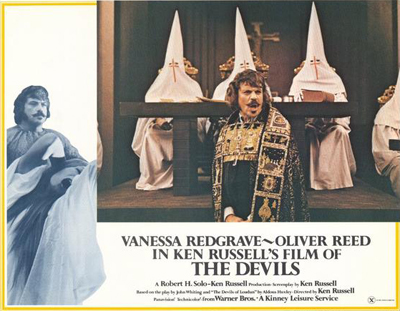
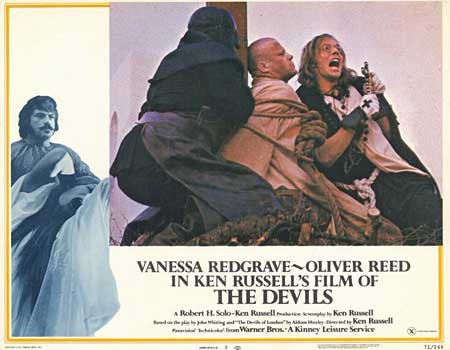
The Devils (1971)

It seems like most of my life… well, from 1971 on, anyway… I had heard a lot about Ken Russell’s The Devils, and yet I had heard very little about it. The major impression I got – probably due to my father’s Playboy magazines – was “Lotsa naked nuns!” (with an understood undercurrent of “Hurr hurr!“) I knew it was based on historic fact, and largely on Aldous Huxley’s book The Devils of Loudon. Past that, I didn’t know very much, because it was almost impossible to see, hidden away by Warner Brothers as something to be ashamed of, or – more to the point – to be feared.

There were a couple of VHS releases over the years, of a reportedly heavily cut “R” version. An occasional festival showing was grudgingly agreed to. Finally, this year, the British Film Institute released a DVD of the “X” Certificate version which originally ran in England (to great controversy) in ’71. Still not a bona fide Director’s Cut – which we may never see – but probably the best we can hope for. Warners denied the BFI permission to press a Blu-Ray, even.

So finally, now, thanks to my region-free DVD player, I can watch this movie. And I found out how “lotsa naked nuns” can be reconciled with “genuine masterpiece”, because holy cow you guys is this movie ever good.

Oliver Reed plays Urban Grandier, a Catholic priest in the fortified French city of Loudon, circa 1634. Loudon is an anomaly in that time period, a place where Catholics and Protestants live and work together in peace. After the death of Loudon’s governor, a workforce arrives to tear down the city walls by order of Cardinal Richelieu, as self-governing, self-contained cities stand in the way of his consolidation of power over Southern France. Also standing in his way is Grandier, who has papers naming him the city’s governor. Lacking a royal decree to tear down the walls, the force must retreat, much to the ire of the Cardinal.

Grandier has been planting the seeds of his own defeat for years, however; he is not a very devout clergyman, and has, in fact, gotten the daughter of a local wealthy merchant pregnant, among other things. Concurrent with his assumption of the role of governor and protector, though, he finds and returns the love of a good woman, even marrying her illegally in a midnight ceremony. In Grandier’s own words, he finds “the Grace of God in a woman,” and this, while working to protect the city he loves, leads him to a higher plane of spirituality… although perhaps too late for him.

For in Loudon’s Ursuline nunnery is Sister Jeanne, a hunchbacked Mother Superior who, like many women in the city, is madly in love from a distance with Grandier, and becomes obsessed with strange, blasphemous sexual fantasies about him.  Once she finds out about the secret marriage – a very poorly kept secret – her frustration decays instantly into bitterness, and she makes accusations that Grandier is a sorcerer, an incubus who visits the nunnery at night and has his way with the nuns.

At first, these accusations are seen as exactly what they are, the fantasies of a frustrated, hysterical nun, but Jeanne makes her accusations more elaborate and bizarre, goaded on by the nobleman charged with bringing Loudon down and the Church’s own Witchfinder General. The other nuns, threatened with execution, basically turn state’s evidence and take part in what becomes a sensational freak show, attended by the bourgeosie and noblemen; three exorcisms a day, with the nuns giving it their all like an improv troupe from Hell. This is where you fulfill all your naked nun picture needs for Playboy and the like.

Grandier returns from a trip to the Palais Royale to secure the future of Loudon only to find the deck stacked against him. Arrested, tortured and condemned to burn at the stake, Grandier exhorts the assembled crowd – which has turned against him as only mobs can – to fight for their city. As he breathes his last, explosive charges bring down the walls of Loudon, completing Richelieu’s victory.

I knew that Ken Russell had described The Devils as “my only political film”, but I was unprepared for just how political it was; the movie is a nightmare about religion turned into a political tool, and I can think of few things more absolutely relevant to the world today than that central concern. Warner can hide behind the supposition that blasphemy is the reason for their reluctance to make The Devils more generally available, but it’s the politics that truly make this a dangerous movie. In a country where people refuse to see Hugo because Scorcese also made The Last Temptation of Christ twenty-five years ago, there would be theaters set afire for showing this movie.

But even the blasphemy charge becomes shaky when one makes the slightest attempt to do any research (which the beautiful 2 disc DVD from the BFI supports). The most infamous scene, which has come to be known as “The Rape of Christ”, which was excised before the movie even premiered, is defended by no less than the theologian Rev. Gene Phillips, SJ, for years a consultant to the Catholic League of Decency, who regards the movie as a depiction of blasphemy, and not actual blasphemy.

The excised scene occurs after one of my favorite scenes, where a nobleman (actually the King in disguise) is brought in to one of the exorcisms on a palanquin; after watching, amused, for several minutes, he offers the Witchfinder a small ornate box from the personal collection of the King, containing a phial of the Blood of Christ. The Witchfinder thrusts it at the assembled mass of naked, cavorting women, and they all fall, writhing, then proclaim themselves gratefully cured. The masked nobleman then opens the box, revealing that it is empty. “What trick have you played on us?” cries the Witchfinder. “What trick have you played on us?” asks the nobleman. He then turns to the nearest naked nun and says cheerfully, “Have fun!” before being carried away on his golden litter.

After this comes the censored segment, where the women go completely over the top, pulling down a lifesized crucifix and ravishing the icon of Christ. This is unquestionably the climax of Russell’s exorcism setpieces, and … this is very important… is intercut with scenes of Grandier on the road back to Loudon, stopping to have a simple Communion in some particularly breath-taking scenery, simply feeling the presence of God in his surroundings and his simple tools of faith. The contrast between the increasing purity of Grandier’s personal faith and the utter corruption of religion taking place in Loudon Is what Rev. Phillips appreciates and endorses, and if an ordained Catholic priest can see past the naked nuns and ballyhoo to perceive what the director is after, the rest of the bloody world has no excuse.

But you’re not going to see that scene, except in snippets in the extras of the BFI disc. The actual footage was thought destroyed until only recently, and timorous Powers That Be still do not wish it to be on display. For many years there was a very real effort to make the R-rated cut of The Devils the only cut.

The removal of that footage does little to reduce the impact of the movie, though Russell doubtless thought it had been hopelessly gutted. His point is still made in spades to anyone not going “Hurr hurr, nekkid nuns”. The movie is a symphony of intensity, and as Grandier is spared no pain after his arrest, neither are we, as he is subjected to torture to find his Witch’s Spot (a bit of tongue mutilation that the makers of Mark of the Devil must have seen and thought, “Ooh, we need to make a movie about that!“), a mock trial, shaving of his head and beard to humiliate him, then even more torture to wring the confession of witchcraft from him (not too explicit thankfully, but no less harrowing) and his subsequent burning at the stake.

The power flows from Russell’s first-rate, committed cast; Oliver Reed in possibly his best performance, Vanessa Redgrave walking a very delicate emotional tightrope as Sister Jeanne, obviously intelligent but trapped in a world and a body she despises. Marvelous supporting work from Dudley Sutton, Murray Melvin (who carved out a niche as the world’s finest portrayer of pinch-faced, cadaverously thin clergymen, see also Barry Lyndon), and Gemma Jones as the woman who turns Grandier’s life around, but alas, too late.

In case I’ve not made it clear: The Devils  is a stunning movie with incredible production design (a young Derek Jarman!), marvelous acting, and a message as sadly eternal as it is necessary to be eternally said.

You might say I liked it. And it is a damned shame I had to jump through so many hoops – import DVD, special equipment – to simply watch such an important piece of – not even merely political- but cinema history.

Movies: Shaolin List of Tears

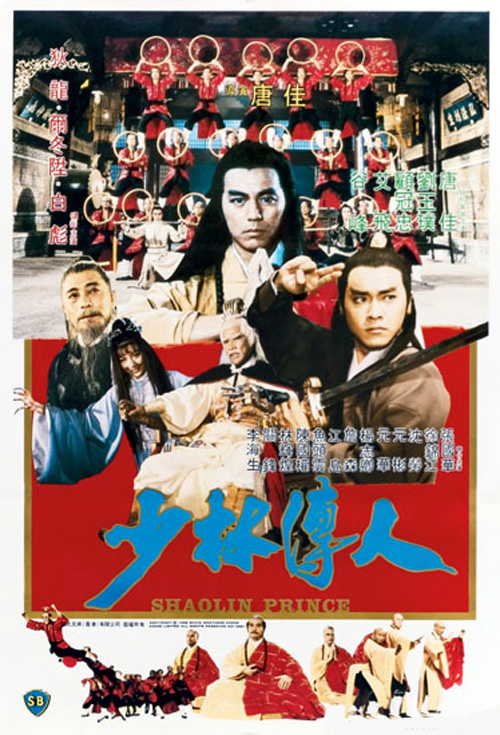
There is typically not a whole lot of organization to my movie watching. Take last Thursday for instance. It hadn’t been a bad week, but it hadn’t been a great one, either. Bored, listless, I decided what I needed was some Kung Fu Treachery. So it was time for a movie I’d owned for years, but never watched: Shaolin Prince (1982).

This is, the box tells me the first of only three movies directed by fight choreographer Tang Chia,and at first glance it looks like pretty typical wuxia fare. Two infant princes manage to escape the slaughter of the rightful Emperor and his family by the villainous Lord Nine. Separated, one is raised by the Prime Minister as his own son, the other by monks at the Shaolin Temple.

You’re given some clue as the bizzareness of the rest of the movie by Lord Nine’s two underlings, who specialize in fire and water attacks. The Fire General’s attacks are especially impressive, blowing stuff up left and right. Then, when the other prince is handed off to the Shaolin Temple, he is adopted by what are basically the Three Stooges of Shaolin, who are living out a lengthy exile in a small building at the back of Temple, in punishment for doing… well, something wacky, I’m guessing. But it turns out that having nothing better to do, they have honed their kung fu to incredible heights, which they spend the next twenty years teaching their new charge. In wacky ways.

The Shaolin Prince grows into the always-wonderful Ti Lung, while the other prince tips his hand by traveling to the Temple to study the one style which can defeat Lord Nine’s Iron Fingers technique. This, of course, sets up a meet cute between the two princes, who have to join forces to survive.

Despite the fairly hoary plot, Shaolin Prince easily kept me entertained. The fights are creative, there’s a side plot with a murderous ghost the Temple monks must exorcise, Lord Nine’s sedan chair has more weapons than 007’s car… hell, the wacky monks, whom I was sure I was going to hate? I wound up warming toward them, too.

And there is lots and lots of Kung Fu Treachery, all the market could bear. The box also claims there were five choreographers at work, and some real difference in the tone of the various (and plentiful) fights bears that out.

The only trailer on youtube is in unsubtitled Mandarin and bears a pretty intrusive watermark, but I guess that’s what you get for not ripping the trailer yourself and uploading it:

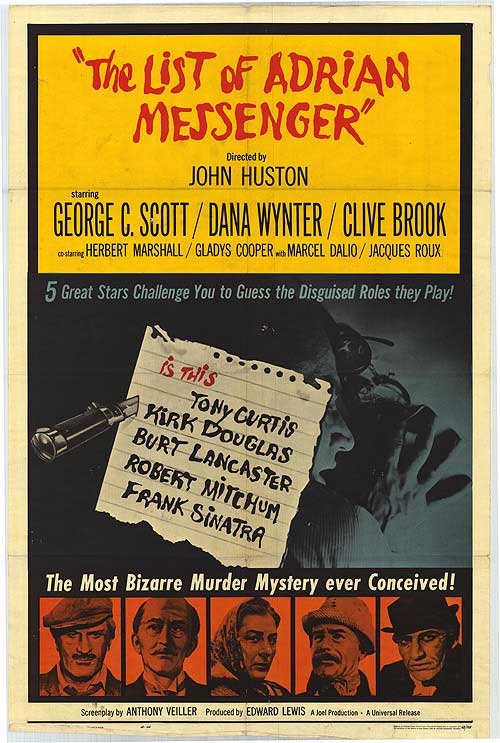
The next night, I was casting aimlessly about (again), and finally decided to re-watch another movie I recalled seeing on TV while very, very young, but remembering almost none of: The List of Adrian Messenger.

List presents us with a British, moustached George C. Scott, a former member of MI-5, who is given a list of names by his writer friend Adrian, who is pretty coy about what the list means. He wants Scott to “see if those men are still living at those addresses,” and is unwilling to voice anymore of his suspicions at that point.

Well, when the plane Adrian is taking to America blows up the next day, Scott begins to realize what we, the audience, have privy to since the picture started – someone has been killing all the men on the list, and making it look like an accident, and Adrian is only the latest victim.

List is very oddly structured; we know the killer is played by Kirk Douglas and that he is a master of disguise; this revealed in a very effective sequence in an airport restroom where he first removes contact lens, revealing his true eyes – icy, steely grey in this black-and-white movie – and peels off the layers of his latex disguise. Though we know who he is, we discover his motive along with Scott, and The List of the title is completed about halfway through the picture; then Douglas reveals himself and begins the second part of his scheme.

The List of Adrian Messenger is going to appeal to a fairly narrow audience these days, I suspect; its story takes place mainly against a backdrop of genteel landed gentry – foxhunts play a major part in the proceedings – and though there is a fair amount of satire in those parts, it seems even more foreign and exotic here in 2012.

I almost forgot the best part – The List of Adrian Messenger is also a “gimmick” movie, though not in the same way as William Castle’s ballyhoo masterpieces. There are three other big name stars in small roles throughout the picture, disguised in Mission Impossible full-face masks, just like Kirk Douglas. Can you spot them? Spotting the make-up is easy, the identity of a couple of them, not so – and having Paul Frees do a substitute voice on one is just cheating.

Couldn’t find a trailer, and what is tagged as atrailer is actually the opening credits, but it does give you at look at these stars in disguise:

Saturday morning, I was the only one up and had unlimited control over the TV and Netflix, so I decided it was time to watch Tears of the Black Tiger, which continued my run of oddball movies.

The briefest way to describe Tears is: it’s a candy-colored Thai spaghetti western about two star-crossed lovers. Going deeper, though, what we find is a sweetly heartfelt romance blended into a parody of sweetly heartfelt romance movies, westerns in general, and even Hong Kong heroic bloodshed movies. Like many great parodies (Black Dynamite, Lethal Force, Lost Skeleton of Cadavra), it doesn’t single out one movie to target, it amasses all the cliches from the genres and incorporates them into a new movie, one that’s its own creature, reminding us of many movies but still establishing its unique identity.

The gunfights positively wallow in hyperviolent bloodshed, echoing Peckinpah and the more extreme HK gun-fu flicks. Director Wisit Sasanatieng manipulates color ruthlessly, creating a world that at its most realistic looks like a hand-painted postcard, at its most extreme, expressionist art. And still, despite all these boundary-pushing techniques, he keeps the love story affecting; you really come to care for the protagonists in this city-girl/country-boy plot, and want them to overcome the odds, to finally be together. The ending is not quite so easily spelled out as that, possibly Sasanatieng’s final nose-thumbing at these movies, but at least we get the impression that everybody’s cards are finally on the table. The girl is in the hero’s arms – what more can we ask?

Well, quite a bit more, but we ain’t getting it.

It’s Sunday morning as I finish this up. While unloading for last night’s show, a door pinned my foot and my leg stayed behind while my body moved forward. In short, I had a hell of a graceless, hard fall. Sleep last night was minimal, but at least I’m not too badly off this morning – the worst is a severe rug burn running the length of my right arm, which looks pretty gruesome. Finding a bed position where it doesn’t rub against anything is difficult, but I hope to give it another try soon. Thank heaven it’s short-sleeve shirt weather.

My wife is out of town this week, leaving me with a fourteen year-old who no longer likes my cooking. (But he does like making himself Ramen, so I guess that’s a win) I have three, count them, three City Meetings to work this week, so I won’t be watching another movie until Thursday night, it seems. Unless I sneak one in tonight, but I don’t know when I’ll be able to talk to you about that one.

So tally ho and all that. And watch out for doors. Those damned things will kill ya.

Movies: A Study in Angry Yellow

If you’ve followed me for any length of time, you know that I love me some Sherlock Holmes. Own a nice set of the original canon, a huge annotated version of same, and am saving up for yet another, more recent annotated set. Lots of videos, of course. I wish I had more of the Grenada version with Jeremy Brett, or the BBC run with Peter Cushing, but I do have some one-shots that bear watching, and Sunday I decided it was time to re-visit one:  A Study in Terror (1965), available these days from one of my current favorite vendors, Warner Archive. I’d seen it on TV back in the day, but had not had a chance since the days of VHS.

The first thing to note is the really unfortunate poster that also forms the front of the box, a brazen attempt by the American marketing team to catch a lift from the Batmania craze. I wonder if it worked; I rather doubt it, but I also recall a slew of dubious offerings at the local cinema at the time (Rat Pfink a Boo Boo was only one of them, let me tell you), so perhaps claiming Sherlock was “The Original Caped Crusader” was the right way to go.

A Study in Terror is one of two Sherlock Holmes vs Jack the Ripper movies out there (Bob Clark’s Murder by Decree being the other), joining a ton of books and a videogame on the same topic. It’s a subject that really seems to bring out the best in all involved; I’ve yet to read or see one of the stories that didn’t entertain or at least offer a unique take.

Sherlock Holmes this time out is played by John Neville, another waypoint in a wide and accomplished career; Watson is essayed by Donald Houston, a character actor who strikes a fair balance between capable assistant and dunderhead. I’m very happy with the revisionist Watson movement that seems to have its roots in the Grenada series and Edward Hardwicke, culminating in the infinitely more able and believable characterizations by Jude Law and Martin Freeman. Both Neville and Houston offer reasonable, very human performances – it’s very possible to believe in the existence of both characters. Robert Morley puts in an extended appearance as Mycroft, but this version hardly grants the character the intellectual superiority Sherlock often mentioned in his older brother.

And if you look smartly, you will see a young Judi Dench in a supporting role.

Study plays pretty loose with the established facts of the Ripper murders, and its solution is a novel one, if also playing coy with its resolution as to explain why the killings are still considered unsolved. The one spoiler I will engage in is that the solution does not involve the Royals in any way, which seems to be de rigeur since publication of Stephen Knight’s Jack the Ripper: The Final Solution, which forms the core of Murder by Decree and Alan Moore & Eddie Campbell’s superb From Hell.

Cor!

The other departure from fact in the movie is that every one of The Ripper’s prostitute victims is a stunning beauty. Necessary for the movies, I suppose, but if you’ve looked at photos in any of a number of books written about the case, very, very far from the truth. But: A Study in Terror is a good Holmes flick. Great costuming, good production design, good performances.

In the interests of contrast (I guess), I then turned to something that had been living on my hard drive a long time: a pretty bad VHS rip of Werner Herzog’s God’s Angry Man, a 1980 documentary about televangelist Dr. Gene Scott, an extraordinary fixture on late night TV whom I would watch, spellbound, not knowing what the hell was going to be coming out of his mouth next. Scott would rant and rave and throw temper tantrums and make occasional interesting points about scripture. He would cover a chalkboard in scribblings and bizarre diagrams years before Glenn Beck. And by God, you did not cross him or he would fire you on the air.

Herzog captures classic Scott as, live and on the air, he first refuses to say anything else until the thousand dollars he needs comes over the phones, and when that oppressive hunk of dead air yields no results, starts yelling at TV land in general:

The on air stuff is spaced out by interviews with Dr. Scott, in which he paints himself as a lonely man tasked to do an impossible job, with no friends and no privacy. All the privacy he has, he claims, is in a black leather bag. He of course refuses to divulge its contents to Herzog. Sadly, this all comes across as just as much shinola as his onscreen exhortations to hand over your money: he is an habitual world builder, and I don’t think he is capable of stopping. Though when he says he would love to ditch all this and just become an anonymous farmer, I do think I see a bit of honesty gleam in his eyes. At 45 minutes, I at first thought God’s Angry Man was too short, but I now think it’s just about the right length: you can’t take the full measure of the man, but you get a pretty good idea as to his character.

The scary thing is, even though Dr. Scott succumbed to cancer in 2005, apparently his tape recordings are still being broadcast by his foundation, Dr. Gene Scott yet haunts the airwaves.

The next day belonged to the Venus Transit. The astronomy mavens of the college where I work pulled out their equipment and made dang sure that anyone who wanted a look at the event had the chance, and I was there to record it all. You know what was really neat? The simple joy of students who had just been walking past, discovering they were able to see it, when they  thought they’d have to make do with YouTube and the like the next day. They got to see it live, and they were delighted with the opportunity. That was cool.

And the next day Ray Bradbury died. That’ll harsh your buzz, let me tell you.

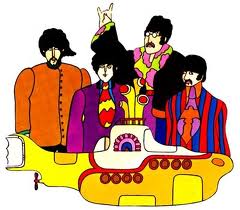
I don’t have any movie versions of Bradbury’s work to hand, though I wish I did. So instead I looked to a recent arrival, a work of whimsy and imagination itself. I pulled out the new Blu-Ray of Yellow Submarine, and hoped that would be close enough.

Yellow Submarine is one of my favorite movies. I don’t know if you could say that your mind was blown at 11 years of age, but it certainly had that effect on me. Stunning use of many different forms of animation, and a kind of music that I was only just beginning to become aware of, something beyond the country classics played by the radio station.  A lot of things changed there, in the dark of the Rialto Theatre. I honestly don’t know what would have happened had I seen 2001 the same year.

I’m going to quote myself, from a review I wrote for the DVD, released in 1999 :

Yellow Submarine was like a present we gave ourselves at the end of the Sixties, preserving as it does the things that were right about the period – optimism, idealism, irreverence, and an innocent faith that Art could make all things right – and none of the negatives. Even past such philosophical frippery, Yellow Submarine was important historically, proving as it did that an animated film did not have to slavishly ape Disney movies to be successful.”

 The audio and video are both steps up from even the DVD, which was pretty doggone good. I had heard some grumbling about Digital Noise Reduction and the like, but I only spotted some glitching in the Sea of Holes segment (a favorite, of course – seeing those limitless planes of holes rushing at you and around you on the big screen was amazing). Past that. the colors are predictably eye-popping, and the music magnificently re-mixed. It looks like they even restored the live-action Beatles clip at the end.

If I have a complaint, it’s that extras on the disc are the same as the DVD’s: they appear to have covered up the animation sequences in the contemporary (1968) making-of, Mod Odyssey, with the restored footage from the movie, but that’s all.

So, um, nice upgrade on the movie itself, I suppose. But nothing else. The more you know, etc.

Thanks, guys, I forgot.

Briefly: Snow White and The Huntsman

So the wife said, “We’re going to see Snow White and The Huntsman. Want to come along?” I’d seen the trailers and it didn’t look horrible. So yeah. I don’t generally do much about current releases here, having less control over the presentation than I do with home video, not being able to rewind and confirm and the like.

I got reminded why I don’t do opening weekends. School is out, and even at a 3:00 showing, the theater is packed. But if there is one good thing about modern theater sound systems, they blare over the idiots in the dark. Until quiet moments. Then the hatred returns.

Like everybody else in the Net, I will start with the movie’s three major mistakes:

1) The worst: it spends its running time reminding you of other movies, instead of establishing its own character. There is a difference between wearing your influences with pride, and shopping for your own clothes.

2) Every fight scene is done with that thrice-damned close-up-shot-through-a-telephoto-lens style that started with Gladiator and has been dutifully aped in every movie with action scenes since. Making it worse: occasional intercutting with wide shots where you can actually tell what is going on. It is not immersive, it does not make the action more immediate, it is just confusing. Stop it.

3) It tries to make me believe that Kristen Stewart is prettier than Charlize Theron.

Past that, I actually enjoyed it.

1) Kristen Stewart is a better actress than I had credited. One of the ladies I was with opined that “she was acting with her teeth,” but hell, I was just glad she was acting. Some starlets don’t bother.

2) Charlize Theron always bothers, and holy cow does she act the hell out of the black queen.

3) Chris Hemsworth, I fear you are already typecast. But that is because you’re so good at this.

I’m kind of startled at the amount of vitriol I’ve seen unleashed at this movie, even given the three major problems I listed above. I was entertained, even at times spellbound by the imagery, and there is some great imagery in this movie.

When I sit down to watch a movie, the covenant I strike is simple: The movie agrees to entertain me, and I agree to be entertained. I’m actually a pretty easy mark. I do not expect every movie to blow me out the back of the theater; I do not expect to be constantly struck speechless by spectacle. I do not expect to have my life changed. It is sufficient to me that I simply go somewhere else for a couple of hours.

There are still movies that fail at hitting even that low mark. Snow White and The Huntsman wasn’t one of those. I went somewhere else for a couple of hours, brought back only briefly by the girl behind me demanding her date explain to her what had just happened.  Och, young people these days. Even have to have fairy tales explained to them.

If nothing else, I got a dwarf fix that will last me until The Hobbit next Christmas. Yes, it does come off as J.R.R. Tolkien’s Snow White, and while that is a curious thing, it is not necessarily a bad one.

The Stanley Kubrick Project: Barry Lyndon

I guess we should start with my confession that I have never read any Thackeray. Which is ridiculous when you consider that William Makepeace Thackeray is a totally bitching name (not “bitchen”, which I am assured is the correct spelling. “Bitching” seems only appropriate in this context). That is likely going to be my regret on my death bed: that I was a voracious reader in my youth, but I read mainly forgettable pulp crap. Sorry, Dr. Savage.

Well, enough of that. I’m still dealing with one of my chief regrets while still on my lifebed, and that is my neglect of significant mainstream movies. Oh, I still truck heavily in my first love, disposable genre movies, but my attempt to educate myself with a better class of entertainment has been educational, if not always… well, entertaining.

A case in point is the latest in my endeavor to watch all of Stanley Kubrick’s films in order, Barry Lyndon, based on the serialized novel of the same name by the aforementioned Thackeray. It’s the tale of Redmond Barry, a member of the landed Irish gentry who winds up in one form of trouble or another, serves in the English and Prussian armies in the Seven Years War, marries a Countess, and eventually loses it all because he’s really pretty much an opportunistic jerk.

It’s tempting to make something of the fact that Ryan O’Neal plays Barry, but the simple truth is that was mandated by Warner Brothers. WB made a whole lot of the creative freedom they gave Kubrick, but they’re weren’t above demanding things like he cast someone in the Top Ten of Moneymaking Faces for such a non-commercial film. The only two in the Ten who were gender and age-appropriate were Robert Redford and O’Neal, and Redford turned the role down. O’Neal is fine as Barry, but his star was already dimming, and he fell off that Top Ten soon after.

As you’ve likely already determined, I don’t feel Barry is a very likable protagonist; his journey is fascinating but not at all edifying, and is a prime tale of someone getting what they wanted and proceeding to completely screw it up. While the performances are not powerhouses, they are uniformly far more than adequate, a solid ensemble that does not overpower the story, but produces a solid patina of workmanship, very much in keeping with the contemporary paintings that Kubrick strives to emulate onscreen. This is history represented as a series of museum pieces, wonderful to gaze upon, absorbing in detail and execution, but – as is all art – untrustworthy as to its truth. Barry is a cipher, continuously re-inventing himself, and though an unseen narrator is constantly informing us of how things turn out before we actually see the mechanics behind his prophecies, so too is he studiously unspecific.

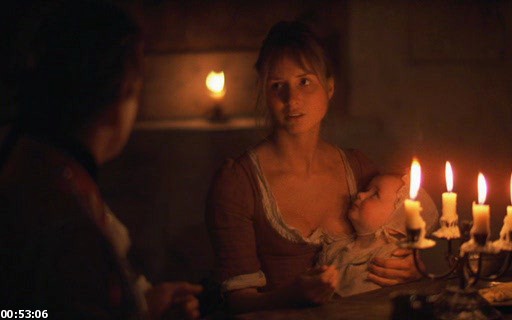
This is a gorgeous movie, if not a happy one. Kubrick had managed to successfully scam two of the older Mitchell rear-projection cameras out of Warner Brothers, who had switched to front-projection and was no longer using them; he then procured a lens made by the German firm Zeiss for NASA, a lens that was designed for satellite photography and had the widest aperture ever created at that time. Kubrick had the lens grafted onto one of the older Mitchell cameras and finally had an instrument that could film nighttime scenes lit only by candlelight. That is one of the most startling things about Barry Lyndon: those wonderful, candle-lit scenes. Technical nightmares to be sure, as the huge lens aperture meant no depth of field, and if an actor leaned back an inch, he might suddenly find himself out of focus – and I don’t even want to think about the continuity problems with the length of candles, given Kubrick’s penchant for multiple takes.

There are a few scenes that almost certainly required artificial light, but Kubrick’s determination to use natural light as much as possible – given a dry run on A Clockwork Orange – yields astounding pictures of great beauty, again echoing the paintings of that era. Where he found such unspoiled vistas for such long, loving shots is beyond me (but not, apparently, beyond Ken Russell, whom Kubrick asked for advice on the subject).

This painstaking period detail and the skill with which the regimental scenes are done in the first part of the story make me pine for the Napoleon movie Kubrick had wanted to make, but abandoned in the face of the disastrous 1970 Waterloo. The scenes of formations marching into battle, while not as extended as a similar scene in Spartacus, are still breathtaking, especially in this day and age, since it’s obviously a ton of extras, with no sweetening by CGI. Seeing a Kubrick-conceived battlefield between Wellington and Napoleon would have been truly astounding.

So this is my take-away from Barry Lyndon. It is a beautiful work of art. Though the story is not ideally compelling, it is intriguing enough to continue watching, to see what new window will open up to a time long gone, what painting is next in our walk through this exhibit. Though I doubt I will ever revisit the movie, I am happy to have seen it, and to have been able to share  this vision.

Movies: Vampire Ronin in Black… 3

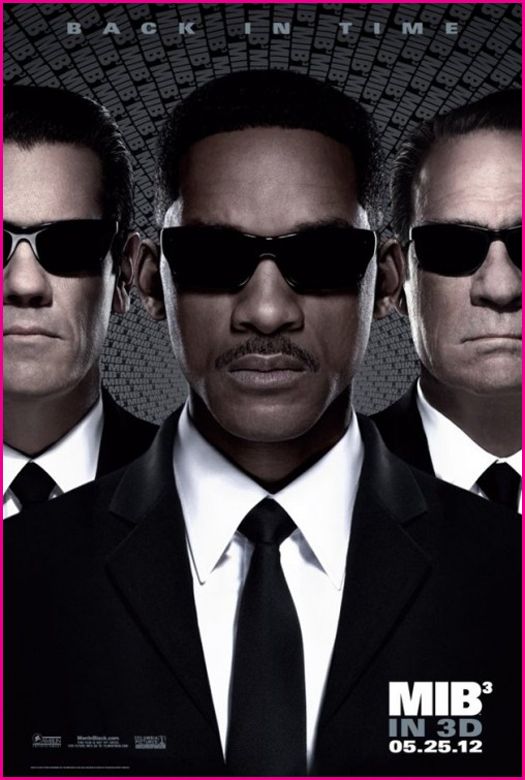
In keeping with my tradition of oblique references to current releases: I saw Men in Black 3 last night. It was entertaining, and that’s pretty much the extent of what I took home from it. Josh Brolin’s Tommy Lee Jones imitation is a gas, and overall, it’s a far better Men in Black II than Men in Black II ever thought of being. Also, I guess Will Smith doesn’t do the rap for his own movies anymore? Huh.

Well, after our Memorial Day Crapfest, I continued with my movie watching, but attempting to switch gears to movies of (harrumph) quality wasn’t quite going to happen, so strong was the hangover from Crapfest. (Admittedly, while waiting to come down from my caffeine high that night, I watched Buster Keaton’s Sherlock Jr. at 2:00am, a definite step up in value) My next Kubrick film is Barry Lyndon. It is sitting patiently by my movie-watching chair. I never got to it.

My wife took off to the beach with a friend and fellow teacher, and I settled in to watch one of those movies I had managed to miss for years (and was therefore on The Other List) John Frankenheimer’s Ronin. Man, John Frankenheimer. You watch The Manchurian Candidate, Seven Days in May and Seconds, then watch, say Prophecy and The Challenge and wonder, “What happened?” (Due diligence: I have not yet seen The Island of Dr. Moreau, and so cannot comment on its quality with any veracity). Ronin proved that Frankenheimer still had it, even in 1998.

The Ronin of the title are mercenaries, specialists for hire in the extra-legal landscape of modern Europe. Robert deNiro is Sam, an ex-CIA strategist on the run, Jean Reno is Vincent, a “tour guide” who… appropriates things. Sean Bean is a Irish thug who gets tossed out of the team for being a jackass, which is startling, because I expected him to be killed, what with being Sean Bean and all. Stellan Skarsgard is Gregor, the electronics dude. That’s a solid core for a good cast, topped off by Jonathan Pryce as the man pulling the strings on the team. Their mission is to steal a metal briefcase from a heavily-guarded courier. They don’t need to know what is in the case, but they do know a lot of people, like “The Russians”, want it.

Ronin has a lot of cool espionage planning, supplanted by double and triple crosses, and a number of high-speed chases through crowded European streets. It’s a pity that Frankenheimer never got the chance to direct a Mission: Impossible movie, since Ronin feels like what the MI movies should have been, but rarely were (the return to a team dynamic in Ghost Protocol was, for me, very welcome).

You would think that after that, I would be more inclined to some Kubrick. But no, I felt I had spent long enough without seeing an actual horror movie, so I put a Blu-Ray of long-ago purchasing into the player, Vampire Circus.

Vampire Circus dates from a very troubled time for Hammer, a period where a lot of the movies felt like wheel-spinning. The gothic horror was feeling pretty tired, the dollop of sex appeal that made the 50-60s Hammers so notorious was now also so commonplace in the market that their movies were beginning to wallow in gore and breasts, upping the quantity in desperation.Vampire Circus has some new personnel at the helm – well, new to Hammer, anyway – and the fresh outlook and propensity for boobs and blood creates a perverse minor gem.

Our jerk vampire count this time is Count Mitterhaus, who is sleeping with the local Schoolmaster’s wife. She does unneighborly things like luring little girls into Mitterhaus’ castle so he can extremely creepy toward them and then bite them. This excites Mrs. Schoolmaster into doffing her clothes and bedding the Count. Into this cozy little scene comes the local villagers, who eventually manage to stake the count and burn down his castle, but not until after he cursed the village and the Mrs has run off.

15 years later, the village is being swept by a plague, and the neighboring villages have enacted roadblocks guarded by riflemen to keep the infected within. Nonetheless, a small gypsy circus manages to make it through and sets up to entertain the trapped villagers. If you paid any attention to the movie’s title, you know who populates this circus. The villagers aren’t so smart, though, even when a pair of acrobats keep turning into bats in mid-air.

The only other time I had attempted to watch Vampire Circus was on TV, and only a few minutes was enough to convince me that it had been cut to ribbons for that medium and I would be better off waiting until I could see it uncut; there are several instances of nudity, including the segment that you always see a photo of when reading about this movie: the tiger dance, featuring a woman who is almost completely naked except for green tiger-striped makeup. Since this is the only time we see the dancers in the movie (except for their dead bodies at the end), I have to assume that this was their act in real life. Um, wow.

Well, why break with tradition.

It’s a fun enough movie, one of the off-Dracula Hammer vampire riffs like Kiss of the Vampire combined with a few elements from 7 Faces of Dr. Lao. There are a few familiar faces: David Prowse as the Strongman, of course, and (shockingly) Lalla Ward as one of the vampire acrobats, and not looking very different from her run on Doctor Who as Lady Romana. A few other familiar character faces, and a Shakespearean body count. All the things one would want from a Hammer horror movie.

Well, my wife was back the next day, and found me watching, not Barry Lyndon, but Deadmau5 in concert. This, I think, puzzled her more than anything else.

That’s good. I don’t puzzle her near often enough. Also, my son: “How do you even know who Deadmau5 is?

Hmph. Punk kids.