So how many years has it been that I’ve not seen El Mariachi? A lot. (mumble) What? I said twenny years. TWENTY YEARS, I SAID TWENTY YEARS, OKAY? Cripes, I remember Roger Ebert recommending it on Sneak Previews, that should tell you something about how long I’d successfully avoided it.
This is, of course, Robert Rodriguez’ first feature, made with borrowed equipment and press-ganged actors, made for an initial cost of somewhere around six to seven thousand dollars. Rodriguez got his seed money by serving as a human lab rat at a research hospital, testing a cholesterol control drug. Apparently the villainous gringo in El Mariachi, Peter Marquardt, was a fellow lab rat, just to show one of the ways Rodriguez got his cast.
Now, Mariachi did get a fair amount of post-production money poured into it when somebody smart determined it was too good to be passed off as a direct-to-video flick, but there’s a difference between polishing a turd and enhancing an already solid base. El Mariachi is an amazingly proficient piece of filmmaking. The tight pacing and snappy editing necessitated by a budget that won’t buy you a used car becomes a plus instead of the lead weight that has sunk many another first feature.
The story has a nicely classical setup: the Title Mariachi (Carlos Gallardo) travels the country looking for work in bars to perfect his craft. He hits town at the same time as Azul (Reinoi Martinez), a minor league drug lord determined to wreak vengeance on his double-crossing partner (the aforementioned Marquardt). Azul likes to dress in black and carry his many weapons around in a guitar case. Marquardt’s character is the only person who’s actually seen Azul. And so the mistaken identity shenanigans and body count begin.
Mariachi has a number of surprises with exciting chase scenes through blissfully unaware crowds, a couple of thrilling stunts, and a willingness to make fun of itself with some sped-up comedy scenes. It’s a wonderfully entertaining flick, and I liked it a lot more than I liked Desperado, Rodriguez’ better-budgeted follow-up with some, you know, actual name stars.
I don’t make New Year’s resolutions (I don’t need a special occasion to lie to myself), but if I did this year I would have sworn to broaden my movie-watching base, and I could have spent most of this post crowing about how I’d accomplished that. It’s exceedingly rare that I watch even one of the Best Movie nominees in any given year, and yet, here on the list, I have two contenders from a few years back. That would be The Hurt Locker, which I hope to get to in the next week or so, and There Will Be Blood.
There Will Be Blood has some strikes against it for me right out the gate because of its unfortunate parentage, by which I mean it is based, however loosely, on a novel by Upton Sinclair, Oil! Mr Sinclair and myself have not spoken since I was forced to read The Jungle back in 11th grade. But the name Paul Thomas Anderson is a balm for many old wounds, so here we go.
The movie is about the progression of Daniel Plainview (Daniel Day-Lewis) from prospector to “oil man” to tycoon though the change from oil field hustler to mansion-dwelling sociopath is achieved by the most severe compression of narrative I’ve seen since Gone With the Wind. Given the Sinclair lineage – and that his book was based on the Teapot Dome scandal – we can be pretty sure that Plainview is not going to turn out to be a very nice person. The fact that Day-Lewis is this generation’s foremost portrayer of complete assholes bears this out. Anderson and Day-Lewis are confident enough to let us see bits of decency shine through Plainview, but these, like anyone who stands in the way of his pursuit of black gold, will eventually be trampled underfoot and buried in shallow graves.
The greatest pleasure for me – beside admiring Day-Lewis’ rock-solid work – is the painstaking re-creation of oil field technology from mudhole in the ground to wooden derrick. The first fifteen minutes of the movie, devoid of dialogue – is mesmerizing. Overall, not a movie I loved, but certainly worth the watch. If nothing else, I’m glad to finally know what all this “milkshake” business the last couple of years was about.
Let’s close this out by proving that I haven’t totally left my roots. I discovered to my great joy that Tsui Hark’s Flying Swords of Dragon Gate was on Netflix Instant. I came this close to seeing this in a theater. It was playing in one theater – one! – about forty minutes drive from me, in its native 3-D, for one damned week. I made plans to make a pilgrimage to see it on Memorial Day, but other events conspired against me, and I didn’t make it.
This is the third version of Dragon Gate Inn I know of, and each version just gets wilder. In its most basic form, the story concerns three factions with good reasons to kill each other instead concealing their various identities while they huddle at the title desert Inn, riding out a massive sandstorm. Most of this intrigue is jettisoned in this latest re-telling, substituting treasure hunting, vicious government agents seeking a pregnant woman (on orders from am ambitious concubine who wants no possibility of an Imperial bloodline but her own) , and Jet Li as a righteous warrior determined to kill all the corrupt government types.
CGI-enhanced wirework is the order of the day here, so get used to the idea and ride with it. I started getting unto wuxia movies back in the 80s when I realized this was best example of a comic book reality translated to film, I had ever found, and Flying Swords, with multiple daggers and swords helicoptering all over the screen to milk the possibilities of 3-D, really does look like the most berserk combination of Jademan comics/manga/Marvel I’ve seen. By the time Jet Li and the chief bad guy Chen Kun elect to continue their duel in the interior of a tornado, it all seems quite logical.
Like Hark’s other big “comeback” movie, Detective Dee and the Mystery of the Phantom Flame, the plentiful CGI is a little too obvious, and I begin to wonder if this isn’t a cultural thing. The tendency in the West is to look at something like this and think, “Man, that looks fake.” Is the Eastern tendency more toward regarding every element onscreen as a part of the picture, and judging the picture as a whole? I don’t actually have the answer to that. I mean, we know the imaginary world on the screen is just that: imaginary. Over the course of my lifetime we’ve gone from painted glass shots to traveling mattes to CGI. We’re aware that the extraordinary stuff we see on screen can’t be real. So as long as the stuff is not patently ridiculous, like the hovering birds in Birdemic, why make such a big deal out of things being too real, too sharp, too well-defined?
Maybe we got spoiled by Blade Runner and its constant rainy mist. Most of the really obvious CGI in this and Detective Dee is stuff that takes place on a clear day. Perhaps there is still some shading that could be done to dull the sharpness of the image, some atmospheric effects; but that’s not done, and you begin to wonder if it ‘s intentional, and then suddenly you’re not talking about the movie anymore. Sorry.
Like I said, rowr.
Anyway. I found Flying Swords of Dragon Gate a little long, but fun. Lots of colorful characters, plenty of fights where you can generally tell what’s going on, and a pleasant return to pre- Chang Cheh days, where women could be expected to kick just as much ass as men, if not more. (PS. Gwei Lun-Mei as the Tartar Princess – rowr!)
Somehow, somewhere in there, I watched Eyes Wide Shut and didn’t write about it. Certainly an ignoble end to one of my more ambitious projects this year: watching all of Stanley Kubrick’s movies, in order. The reasons for this are many, and most do not have anything to do with the movie itself. The ones that do, are, primarily: I hadn’t heard good things about it, and I am not a fan of Tom Cruise.
Well, the first image you’re going to see in Eyes Wide Shut is a nude Nicole Kidman, which should let you know what kind of a movie you are in for. For some reason, a naked woman in the opening shot for Student Teachers signals exploitation; in the opening moments of a Stanley Kubrick movie, it presages art. It probably has something to do with the lighting.
Cruise is successful Manhattan doctor Bill Harford and Kidman his wife, Alice. They’re preparing to go to a Christmas party held by one of Harford’s patients, a fabulously wealthy man played by another film director, Sydney Pollack. Bill and Alice, being young, beautiful people, are hit on by various sexual scavengers during the party. Afterwards, in a marijuana-fueled confrontation (Alice has that strain of pot that makes you aggressive, which I must admit is something I’ve never encountered), Alice is a little too frank about a fantasy she once had about a naval officer. This shakes Harford to his core, and in the next twelve hours, he is accosted by a recently dead patient’s daughter who claims to love him, nearly has an assignation with a prostitute, and finally ends up at a mansion in the middle of nowhere, a masked interloper in a bizarre Hellfire Club-type evening of debauchery, filled with naked women and others all similarly masked.
It’s this gathering that forms the center of our story, and the aftermath provides the remainder of the film. Discovered and ejected from the gathering, his life apparently saved by a woman willing to sacrifice herself in his stead, Harford attempts to piece together what exactly happened. Unable to admit to his wife what he did the night before, he also finds each of the brief, unfulfilled relationships of that evening terminated and unavailable. His paranoia becomes a feverish thing, as he becomes aware of a tough-looking individual following him. Finally, in a scene that is remarkably stolid for a Kubrick film, Sydney Pollack explains everything to him, and it’s not quite as weird or evil as we or Harford suspected.
In a fit of contrition, Harford admits everything to Alice, and the final scenes, in which the Harford take their daughter Christmas shopping, is actually a small masterpiece of acting. There is a lot of room between Bill and Alice, as they follow their child through the hectic store; their minds are obviously anywhere else than where they are, physically, at the moment. There is a note of rapprochement before the final fade, at least.
Eyes Wide Shut is taken from a novella called Traumnovelle by Arthur Schnitzler, basically, dream story. Cruise really does move through the story as if it were a dream, frequently surprised, confused, often trying to extricate himself from events unfolding around him, and when he does initiate a situation, instead of having it thrust upon him – by hurriedly putting together a disguise and catching a cab into the super-wealthy wilderness – he pays a hefty price, suddenly finding himself in the weirdest Hitchcock movie ever made.
In all, it’s intriguing, if not especially fulfilling, watching Eyes Wide Shut unfold. The increasing unreality of Harford’s situation finally washed away in the overly-bright ultra-consumerism of a Christmas Macy’s. Seeing Cruise walk the night streets of a New York which we know – just because we know Kubrick – is really somewhere in England. The sudden, unheralded appearances of Alan Cumming and Fay Masterson. And the fact that I didn’t really mind Tom Cruise in this, at all (even if I find it dismaying that a well-to-do doctor drinks Budweiser, for God’s sake). Also, I like Nicole Kidman in eyeglasses, surprise, surprise.
And the fact that the very last word said in the last Kubrick movie, ever, is “Fuck”… well, dark humorist and cynic that he was, I’m sure that makes Kubrick chuckle occasionally in Movie Maker Heaven.
As I begin to write this out, it is December 5. I’ve managed to winnow The List down to 12 movies that I have 26 days to watch. Gosh, this is sort of exciting. Next year remind me to start this nonsense in January instead of March or April or whenever I began it this year.
So I bumped a few:
The biggest problem I have with watching The Last King of Scotland is reminding myself that what I am watching is not a docudrama, it was never meant to be a docudrama, it is supposed to be a thriller that just happens to feature one of the most infamous dictators of our time, Idi Amin. I’m going to blame Crapfest for this and the fact that for some reason we’ve watched Amin – The Rise and Fall twice and there are even people talking about a third go-round (to which I usually respond “Well then, we’ll have to watch Astrology Songs again, too.”).
In any case, Last King involves a fictitious young doctor (James MacAvoy) who comes to Uganda to help in a rural hospital, and who, through somewhat bizarre circumstance, becomes Amin (Forest Whitaker)’s personal physician and close adviser. Which all seems rather peachy until the man starts getting increasingly unstable and MacAvoy finds out about the massacres and people vanishing. By that time it’s too late, and he’s trapped.
Last King isn’t as tabloid-driven as The Rise and Fall, but there’s plenty of sensationalism to go around, much of it having the ring of truth. Things get very messy toward the end, though, both in terms of violence and plotting, such that it’s a relief when the end credits roll. Love or hate the subject matter, though, it is undeniably a marvelous showcase for Forest Whitaker’s considerable talent, rightfully earning him the 2007 Best Actor Oscar.
And hey, besides his love for Scotland, Amin was a big Man Called Horse fan! Who knew?
It’s small wonder that very same evening I followed up with Vanishing Point, a movie I have been assured for decades that I would love, and yet I had never seen. Well, now I have, and they were right. I could easily lavish 1000 words and more on this movie alone.
Famously, this movie stars Barry Newman as Kowalski, a man who drives cars to their destination for a delivery service. Picking up a white Dodge Challenger in Denver, he makes a bet that he can get it to San Francisco in 15 hours. Police don’t like muscle cars breaking all sorts of speed limits, so there is an effort across three states to stop him, even though the authorities admit that the only reason they’re trying to stop him is to ask him why he’s going so fast. And as the attempts to stop Kowalski escalate, he becomes a counterculture phenomenon, “The Last American Hero.”
The video box proclaims this to be “The Ultimate Car Chase Movie”, but Vanishing Point is as far removed from something like Eat My Dust as Seven Samurai is from Sgt. Kabukiman. It’s an existential mind trip, as you should guess when, at the movie’s beginning (which sets up just a few minutes from the movie’s end), Kowalski races past himself, which leads us into the beginning of the movie. Director Richard Sarafian says he wanted to construct the movie like a Möbius strip (and hoo boy, you can’t get much more of a 1971 sentiment than that).
As Kowalski travels across the desert, ripped on speed, he meets interesting characters, and we are given brief snippets of his past: a Viet Nam vet, decorated for bravery, a disgraced cop, busted for beating up his partner when he tried to rape a hippie girl. Motorcycle racer, car racer, a life full of wrecks. He forms an odd rapport with a blind radio DJ, Super Soul (Cleavon Little), who tries to pass important information to Kowalski, and pays the price for it.
If you have the blu-ray, I recommend the UK version. It has a scene, approximately five minutes long, where Kowalski picks up a hitchhiker – considering it’s Charlotte Rampling, cripes, who wouldn’t? – and tokes up with her. Considering he’s been offered marijuana several times in the course of the movie, this is pretty extraordinary. He also pulls off the road when he starts getting stoned. Rampling has an odd conversation with him, wherein she says “I’ve always waited for you, Every time, Every where. Patiently.” They kiss. Kowalski sleeps, probably for the first time in weeks, and when he wakes… she’s vanished.
It actually sets up the end very well, instead of hitting you between the eyes with it.
Other reactions: “This is a counterculture movie, where the hell is Severn Darden? Oh, wait, there he is.”
Also, the Naked Motorcycle Rider (Gilda Texter) was entirely justified artistically.
I should mention that it is now December 6, and the number of movies is down to 11. I feel like I’m racing toward some vanishing point myself.
The Fountain, on the other hand, is not an existential movie. It’s very layered, and I think it wants to think itself more profound than it actually is.
Hugh Jackman plays three roles, though two are actually the same man. You see, he plays a doctor who is desperately searching for a cure for brain tumors, in particular the type his wife (Rachel Weisz) is dying from, and on the way he accidentally discovers the Fountain of Youth in the form of an old growth tree in Central America. (The third character is a Conquistador searching for that very tree in a novel his wife is writing) Jackman literally finds out his treatment is actually causing tumors in experimental animals to shrink the moment his wife goes into her final seizure and dies.
Most of this is revealed in flashback while the now ageless Jackman travels through space in one of those bubbles that must be science so far advanced as to be magic. His only companion is that same Tree of Life, ancient and dying. Jackman intends to bathe it in the dying sun at the heart of the Orion Nebula, which his wife identified as the Mayan underworld, Xibalba; through what mystic avenues we may not know, he feels this will revive the Tree.
The story switches between these three narratives, which is a device that forces you to be involved or you’re going to get lost. That involvement invests you in the story, though the fact that Jackman and Weisz are both great actors also helps. The movie is gorgeous; director Darren Aronofsky eschewed CGI for the space sequences and used, quote, “micro-photography of chemical reactions on tiny petri dishes” resulting in a totally unique visual palette, which he stitches together with golden light in the other two storylines. It is a gorgeous movie, wonderful to behold; I’m just not sure who its audience might be.
When it was over, my wife said, “That was not a chick flick.” To which my only response could be, “Well, it certainly wasn’t a guy flick either.” I don’t regret watching it, I just have to go, Hm. Art. and let it wash over me.
One of the reasons I came up with The List was to force me to watch some movies I’d had around forever, or at least most of a decade or so. Now one of my favorite movies of the last year or so was Scott Pilgrim vs The World, and over the years I had picked up Edgar Wright’s last two movies, Shaun of the Dead and Hot Fuzz, yet had not watched them. The List has put an end to such nonsense, eh?
So Simon Pegg is Nick Angel, a London cop who is so good at his job that he’s promoted sideways to a peaceful little village so he’ll stop making all the other cops look bad. The usual fish-out-of-water hijinks follow, except for a series of gruesome deaths that only Angel can perceive are murders. Nick Frost is along again as the larger, slightly slower-witted PC Danny, who loves movies like Point Break and Bad Boys II and is ecstatic to find himself serving with a genuine badass.
If there is a problem with Hot Fuzz, it’s that it takes a little too long to get itself moving, and even when it does, there is still a lot to get through until the third act – but by God you feel like you’ve earned that third act, which is spectacular and has one of the best twists I’ve seen. Edgar Wright is a master of the complete mood swing in the third act.
Wright seems to be making one of every genre movie he wants to, and with results like this and his other movies, I’m not about to complain.
There. Now to see if I can get the outstanding movies down to 10 before The Show eats my weekend.
Crap. You know what I watched and never wrote up? Eyes Wide Shut.
Let’s see how many of these I can spit out without going 1000 words for each.
Dark of the Sun (1968) had been getting some good notices at revival screenings around this time last year; it was pointed to as a forgotten gem of manly 60s cinema. Warner Archive put it out as one of their MOD (Made On Demand) discs, and I bit, mainly because The Wild Geese is one of the movies I keep returning to every couple of years.
Rod Taylor, you see, is a mercenary working the Congo Crisis in the late 50s. Along with his partner, Jim Brown (playing an American college-educated native), he is given the task of journeying into unfriendly territory and extracting a bunch of mining employees before the Simbas arrive and slaughter them all – and, oh yeah, also bring along the 50 million or so in diamonds they have in their vault. Things are made more complicated by a wannabe Nazi German merc in charge of the native forces, Yvette Mimieux, who survived a Simba massacre and is gathered up along the way, and the fact that the head of the mining operation set his time release vault way too far in the future, meaning everyone must escape under fire by the Simbas.
That seems complicated, but believe me, the movie itself gets even more complicated. I read through the Wikipedia article on the Congo Crisis, and I’m still pretty much at sea about the backstory. I’m more than a little suspicious of the way the Simbas are portrayed, in their savagery as they overrun the mining outpost; I’m reminded of John Wayne’s The Green Berets, when the Viet Cong overrun the firebase, and are dubbed with war whoops from one of Wayne’s earlier westerns, complete with an Injun motif on the score.
Our main players are solid and professional, and this may be one of Brown’s best roles. I wonder what happened with Peter Carsten’s lines, as Paul Frees winds up overdubbing a lot of them, which gets distracting when you’re a Paul Frees fan. I guess I bought into the hype a little too wholeheartedly, as I rarely felt caught up in the story or the characters. There’s a bit too much “Oh come on” action here, as events spiral out of control, stay out of control, and then proceed to get out of control. I have no idea how Rod Taylor’s merc gets so much work, because he has the worst damned luck.
After that less-than-salutary experience, I decided it was time to swing back to the Quality Portion of The List and watch – finally – Black Orpheus.
I had owned the soundtrack to Black Orpheus for years – overheard it in a back room at a cast party, and I fell immediately in love with it (Same guy also played the score to The Egyptian, and I really hope to have enough bread to buy that Twilight Time blu-ray before it sells out). My Criterion disc tells me this is the movie that “brought the infectious bossa nova beat to the United States.” And infectious it is, there is little wonder that whenever it breaks out, everyone on the screen begins dancing with wild abandon.
It’s hard to know anything about movies and not know the central concept here: director Marcel Camus re-tells the Greek legend of Orpheus and Eurydice, against the backdrop of Rio de Janeiro’s Carnival. It all starts out normally enough, and gets more fantastic as the story progresses. Eurydice is a country girl who comes to visit her cousin in Rio because she’s convinced a man is stalking her with the purpose of killing her; she meets neighbor Orpheus, a singer local children are convinced makes the sun rise with his songs. They fall in love, of course, much to the dismay of Orpheus’ vain and faintly psychotic fiancée. Then this fellow in a Death costume starts following Eurydice through the Carnival…
It’s amusing that the movie likes to mess with your head; when Orpheus and Mira (the aforementioned fiancée) get a marriage license at the beginning of the movie, and the clerk is informed his name is Orpheus, the clerk brightly exclaims, “Then you must be Eurydice!” to the predictably pissed-off Mira. The legend is common knowledge, what must happen as Orpheus finds himself falling in love with Eurydice is inevitable.
Using the modern Bacchanal of Carnival is so logical and perfect it also seems inevitable. The scene of Death in the parade crowd, ensnaring Eurydice with paper streamers is beautiful and memorable, and Eurydice’s death – though we know it is coming – still manages to be almost entirely unexpected, coming at the end of a cat-and-mouse chase worthy of any horror movie or giallo.
I had wondered how Camus was going to handle Orpheus’ descent into the Underworld to find his deceased lover, and once again, I was surprised and amazed. Orpheus, unwilling to believe Eurydice is dead, searches for her in the aftermath of Carnival; he arrives at the chaotic police building and is told to check with Missing Persons, which is a room full of stacks of paper in a labyrinth of halls where sheets of paper blow in an eerie wind. “People are lost in paper,” advises a janitor, filling in for Charon, He takes Orpheus to a voodoo ceremony where the spirit of Eurydice possesses a woman behind Orpheus to speak to him one last time, and despite her cautions, he turns around, losing her forever. Unexpected yet completely logical, given the setting.
As I say, this is a fairy tale wrapped in the trappings of the real world, a trick Camus managed magnificently. I can see now why it was recommended to me for years, if not why I didn’t watch it for years.
It’s a pity that a little of that magic couldn’t have hung around for my next movie, Then Came Bronson.
This is another oddity from my youth: this was the pilot for a TV show on NBC, and it ran a full season. 1969-70. I vaguely recall the series, and I seem to recall really wanting to watch it, but it was always on opposite something else my parents wanted to watch. Ah, the days of single TV sets and three networks! Warner Archive made the pilot available, allowing me to re-discover that Michael Parks was Bronson. I really dig Parks’ work, so I got the disc.
Well, now.
The pilot gives us the set up, Jim Bronson is a reporter who witnesses the suicide of his best friend, a biker named Nick, played by none other than Martin Sheen. When Bronson’s boss at the paper tells him he’s about to lose his job for writing a full story about “some greaser who offed himself”, Bronson tells him to take this job and shove it, buys Nick’s bike, and sets off on the road to find himself, because that is what you did in 1969. Along the way he picks up a literal runaway bride (played by a 21 year-old Bonnie Bedelia) and on the way to New Orleans, they manage to fall in love.
There seems to be a lot of French New Wave in this movie – now, I may be wrong about that, because frankly I’m more than a bit of an idiot about labels like those, and there’s likely a better one for this movie. There’s no plot, perse, Bronson and his passenger – she spends a lot of the movie not telling Bronson her name – ride around and have… well, not adventures, but stuff kinda happens, and… hm. Bonnie eventually winds up realizing that she needs to go back West and pick up her life, and Bronson rides off into the sunset. That was apparently the thing about Bronson in the series: he always changed people through his simple decency and coolness, but he never changed himself. Makes you think, don’t it?
Anyway, the quality of the disc is wonderful. Then Came Bronson apparently had a theatrical release, as the print bears a “GP” rating. It’s also possible that Warner Archive is giving us the European release, as in our first encounter with Bedelia’s character, when she takes off her bridal gown and throws it in the surf, we are given a very good view of 21 year-old Bonnie Bedelia breasts, and we are going to get flashes of this same scene throughout the movie (in that 1969-70 rapid-cuts-to-induce-epilepsy style). Then again, I seem to recall in this period you could get away with a surprising amount in a “GP” – Parental Guidance Suggested – movie.
It’s tempting to paint this as an Easy Rider wannabe, but the two movies are pretty contemporaneous – If anything, Bronson debuted a few months before the more famous movie. Easy Rider is similarly light on plot but has the power of a lot of pretension going for it; it tries to say something, whereas Bronson… just seems to exist.
(As quoted by Mystery Science Theater 3000)
From the sublime to the ridiculous, I suppose, because the next movie – and likely the last I’ll try to cram in this entry, was Snakes on a Plane, the movie the Internet wrote.
Well, to a degree anyway. There are lots of rumors about this: it has its origins in a bunch of suits boozing it up and deciding to see who could come up with the worst movie pitch. That the working title “Snakes On A Plane” was going to be changed to something more generic like “Boiling Point” or something but A) Samuel L. Jackson said hell no, I agreed to do it because of that title, or B) The Internet as a whole said, no, it’s awesome, keep it that way. One thing is certain, however: the Jackson line “I am sick of these motherfuckin’ snakes on this motherfuckin’ plane” came from the Internet. I was also looking forward to hearing Jackson yell into a radio microphone “We got motherfuckin’ SNAKES!” but I suppose cooler heads prevailed and someone decided that “Leaving them wanting more” would be good in this case.
And that is about the last time we can accuse Snakes on a Plane of subtlety. The central concept is goofy enough: Jackson is escorting an eyewitness from Hawaii to LA to testify against a big drug boss. Since the drug boss can’t kill the guy in any traceable fashion, he instead stocks the plane with a staggering variety of venomous snakes – and, for some reason, a python – and sets up a way to release them mid-flight. To cover up the fact that snakes would normally either attack each other or just hide until the plane landed, there is a macguffin about leis that are treated with some pheromone to make them go berserk. And turn into CGI snakes because real snakes don’t take direction worth a damn.
After spending a lot of time establishing our cannon fodder in the seats, once the snakes get loose, I have to admit the movie squeezes every bit of possibility out of the situation. Snake attacks come from all angles – how the hell that one got in an airsick bag is beyond me – and things keep getting worse and worse in a somewhat believable fashion. I totally get why you wouldn’t want all the vital parts of the plane’s systems in the same place, but why the hell they’re also so inaccessible is puzzling. And dammit, the movie proves it has its heart in right place when a desperate flight attendant, encountering a snake in the galley, tosses it in a microwave and hits the SNAKE button.
I respect that sort of gumption.
So yeah, I admit I went into Snakes with expectations extremely low, but I enjoyed it beyond the level the lowered expectations should have granted. Not bad for Venom on a plane, and that python did eventually pay off.
While things moved around and clicked and cackled over the last week or so, I would find myself with some time, but not a lot of time, or if it was a lot of time, it was at the waning end of a long day, So what to do with that time? Watch movies, but not have time to write about them. That’s the cartoon snowball rolling down a mountain and growing into a giant all-devouring globe of hungry ice that is my life.
I’m staring down the barrel of beginning of a new writing project in the next week or so – in fact, the first step of that was what rolled over my Sunday. So pretty soon, my time for staring at a blank piece of virtual paper is going to be spent in the service of another master. Sorry. But this one will be paying me money.
So I better write about that growing list while I still can.
First there was the run-up to Halloween.
In any book or article about Hong Kong movies in general, or Asian horror movies in particular, you’re going to run into Black Magic (1975) a lot. This was an attempt to catch the wave of Western horror that was sweeping the markets in the wake of The Exorcist, a movie that moved HK cinema beyond ghost stories and into the land of the extreme. Black Magic kicks off a cinematic trend that would eventually lead to outrageous stuff like Centipede Horror and Seeding of a Ghost. As I started exploring Asian cinema in the early 90s, I had to take what I could get, so Seeding was one of my first experiences; it’s no wonder that Black Magic seems tame by comparison.
It starts strongly enough, with our Black Magician slicing off pieces of a corpse (handily stored in his hut) and burning them in a ritual to send a death spell at a philandering husband and his lover. Our White Magician shows up at the murder scene, immediately deduces who did this horrible thing, and starts a spell that sends horrible things back at Black Magician, who manages to escape while his hut collapses and burns.
Well, enough of that, though. In the big city, a youthful Ti Lung plays an architect who is being stalked by an incredibly horny (but rich) widow played by Lily Li. Ti wants nothing to do with her though, planning to marry his sweetheart. When a spurned gigolo (played by Lo Lieh, no less) hires the Black Magician to put a love spell on Lilly so he can get his hands on her money, Black accurately sizes up the Gigolo’s character and only applies a one-night spell. Lilly forces the Gigolo to tell her about the Black Magician, and visits him to place the Architect under her spell for a year. The love spell is applied on his wedding day, and Ti leaves his bride at the reception.
When the spurned bride and Ti’s friends try to find out what the hell is going on, Lilly pays the Black Magician to put the Death Hoodoo on the bride; Her landing in the hospital, her body riddled with parasitic worms leads an old retainer to remember the White Magician of his youth. White cures her by ramming a bamboo straw in her back so the worms crawl out (ew), and the battle for Ti Lung begins in earnest.
The trappings of the various spells are intriguing: pieces of corpses, human breast milk, centipedes (White has the best line when Ti Lung is recovering from his first bout of bewitchment: “Feed him these centipedes in the morning. He’ll come to his senses for a while.”). The structure is a bit repetitive, though, with Ti under the spell, then rescued, then put under the spell again, to pad out the running time. The climactic battle between the Black and White Magicians is supposed to wow you, of course, with Black pulling out all sorts of skull mirrors and a rotting head that shoots green laser beams, but all it really does is convince you that William Girdler saw it while working out the ending for The Manitou all cartoon ray blasts and lightning. As the first of its kind, it commands some respect, but make sure you see it before any of its weirder and grosser and more insane progeny.
Next up was Ravenous (1999) yet another movie on my list of Stuff I Hadn’t Seen But It Was High Time I Did. In its heyday, it had lots of Internet buzz, many of my friends positively love it, I’ve had this copy forever. So. Time to watch it.
Ravenous is a deuced odd movie.
Disturbed Mexican-American War veteran Boyd (Guy Pearce) is exiled to Fort Spencer, a remote, ramshackle frontier outpost populated by damaged individuals. He arrives just in time for a horror story from a bedraggled refugee (Robert Carlyle) whose wagon train, trapped in winter storms, turned to cannibalism. The commanding officer (Jeffrey Jones) states, rightly enough, “This is what we’re here for,” and leads most of the fort – five men – to investigate. Things go rather downhill for everyone from there, and half the fun of Ravenous is watching these berserk circumstances develop.
I had a general idea of the subject matter and how the story would develop (and as two of the characters at the Fort are Native Americans, you just know the Wendigo legend is going to pop up); but what I wasn’t prepared for was how it developed. The Wendigo legend states that whenever a man turns to eating the flesh of another man, this is all he ever wants, forever. Another thread of cannibal legend – that by eating another person, you gain their strength and vitality – is also laden all through the movie, and presented as absolutely true – characters are saved from mortal wounds by the rapid healing engendered by a diet of long pig. That kind of caught me unawares.
It was like watching that episode of Chuck Norris Karate Kommandos that presents voodoo black magic, including voodoo dolls and zombies, to be absolutely real, which is not the sort of thing you expect in a children’s cartoon. That sort of disconnect.
(Where else can you find a discussion about cannibalism, Chuck Norris, and cartoons? The Internet, ladies and gentlemen!)
It is amazing Ravenous exists at all, given the oddness of the story, and its troubled history. The original director was sacked two weeks into production and replaced by Antonia Bird, largely a TV director, who rises to the challenge magnificently. I daresay having a woman at the helm helped to punch up the black comedy quotient quite a bit, because this is truly what this is: jet black comedy wrapped in a horror movie masquerading as a Western. I can’t say I love it as much as my friends, but it is a unique movie, well worth seeing.
Saturday morning belonged to Drive Angry (2011), another movie that had gotten good buzz. As I recall, I bought this Blu-Ray at a Black Friday sale last year for $5.00.
And finally, here is a movie I can be enthusiastic about.
Nicolas Cage plays the appropriately named John Milton, a hardass felon who breaks out of Hell because the Satanic cult who murdered his daughter is now planning to sacrifice his infant granddaughter during the next full moon. Milton teams up with Piper (Amber Heard). a similarly hardass ex-waitress who’s not afraid to throw a punch or shoot a gun. Besides the apparently limitless number of murderous cult members standing in his way, there’s also the small matter of a demon named The Accountant (William Fichtner, who is having a grand time) sent to bring Milton back to Hell. Fortunately, Milton also stole an arcane weapon called The Godkiller…
It has been a long time since I’ve seen a movie like this deliver on all its promises. Action-packed, dripping with sardonic humor, gory, loud, profane. Why in the hell this movie was not a bigger hit is beyond me, but then I also have to admit that my tastes are somewhat more rarefied than that of the rest of the movie-going public. The fact that its smart enough to give Tom Atkins an extended cameo only enhances it in my eyes.
If I have two cavils about Drive Angry, it’s these: the movie seems to owe a debt to author Richard Kadrey’s punk-occult-neo-noir Sandman Slim novels; and the sex-during-a-gun-fight scene was done in one of my other favorite stupid over-the-top action movies, Shoot ‘Em Up. Then, Hollywood has always rather been like Ravenous, anyway: constantly eating its dead. So why I should be surprised to find DNA from other movies is a measure of my naiveté, I suppose.
Anyway, yeah, I dug Drive Angry. Much better Ghost Rider movie than either of the flicks bearing that name.
I haven’t even hit Halloween yet, and we’re already over 1500 words. We’ll leave on a high note, and pick this up later.
It must be Fall, although the outside temperatures are still freakishly hot and humid. Honestly, the worst thing about my laziness (and lifelong pursuit of becoming so sedentary I am declared a rock formation) is that I never bothered to move somewhere colder. I like wearing jackets and sweaters, boots. I find gloves bizarrely sexy. All these things are unnecessary 10 months out of the year here in the swamplands of Texas.
So how do I know it’s Fall? Things are getting busier. Much busier. Last week I alluded to squeezing in some movies in between a weeknight show and editing two stories (I didn’t even mention shooting a third, that came up at the last minute). This week, not much better. Edited one story, trying to set up interviews for three more. Not shooting this week but I have two shows this weekend. Monday night my family celebrated my birthday, because my actual birthday night I was working the Economic Development Corporation. This afternoon I journey into town for a preliminary meeting on another educational writing project which will allow me to pay bills in a timely manner for a few months. Such is life.
In the meantime, however, there are movies. Yes, many movies. Let us begin.
Last Tuesday I gave in to an urge I’d been feeling for a while and re-watched Psycho (the original, puh-leeeeeze). This is one of those movies I just have to watch every now and then, just to drink in Hitchcock’s master class in how to do slow-burn tension-ratcheting. The set-ups are so simple, so economical, that you despair why more filmmakers can’t do equally well with so little. The answer, of course, is they’re not Hitchcock.
There are a lot of different stories about the whys and wherefores of why Psycho is in black and white. That Hitchcock thought it would make the gore less offensive, the studio didn’t want to spend a lot of money on such obvious trash that was so obviously destined to fail, that Hitchcock noticed that crappy little B&W B-movies were making money hand over fist so what would happen if we made a good one?… in the final analysis, it doesn’t matter, it just works, and at the time it probably heightened the almost documentary feel of the movie, thanks to TV news every evening in black and white. Hitchcock was using a 50mm lens, the closest to human vision, to really drag out the feeling that the viewer was a voyeur in the whole matter.
Psycho is also interesting to me as the movie that changed the way we watched movies. I remember when I was a kid in the early 60s, you went to a movie whenever you felt like it. If you arrived in the middle, well, fine, you played catch-up with your native wit, stayed through the changeover, then watched until you hit the point you entered; kids, this is where the phrase “This is where I came in” comes from. Hitchcock insisted no one be seated after Psycho began, and though I have no way of determining how well this was enforced, it still ushered in a sea change of how we attended movies. The “exclusive road show engagements” of the 50s-60s helped also, but it’s possible to point to Psycho‘s box office success as a touchstone in the practice of seeing a movie from the beginning.
I also feel the need to point out the stunning work done on my Universal Blu-Ray’s audio tracks – the crew pulled a very nice 5.1 track from the original soundtrack. It doesn’t call attention to oneself, but it beautifully broadens a monophonic track into a true soundscape that I think Hitchcock himself would have appreciated.
Next up was The Woman in Black, one of those movies I intended to see in a theater but didn’t. This is the first movie from the revived Hammer Films, leading me to expect good things. There were strands of the old Hammer DNA in evidence; a good cast, led by Daniel Radcliffe (trying to put Harry Potter behind him and somewhat succeeding) and Ciaran Hinds as the most modern member of a superstitious village; great period detail matched a superb production design. What I didn’t get was the Hammer mastery of all that is Gothic.
Woman in Black relies throughout its first half on cheap jump scares administered far too frequently; there is some good scary stuff in the second half – and more jump scares – but those times that a person suddenly appears WITH A LOUD MUSICAL STING totally squanders any good will the creepy stuff engenders. I’m still looking forward to further Hammer offerings, but this one does not go on the shelf next to the others.
And cripes, wouldn’t it easier on everyone if these superstitious villages would simply come clean with out-of-towners and just tell them why they shouldn’t go to the Old Dark House?
The Show that Saturday was cancelled – actors out-of-town – and that would usually be cause for moping about all morose-like, because that’s disastrous for my fragile economic ecosystem. But you know what? not this time. This time I knew what to do. I dropped Rick a line and asked if he wanted to waste a Saturday watching movies again. Well, by golly he did, and thereby hangs the rest of this post.
The night before this epic meeting, Rick e-mailed myself and another Crapfest pal, Alan, about finding a gray market site that was selling a piece of 70s/80s softcore to which Alan had gotten attached in his teen cable-watching days. I fired back to Rick “Never mind that, Savage Sisters is playing on Channel 11-2 RIGHT NOW.”
You see, back during one of the Crapfests, I had infected Rick with my perverse love for Cheri Caffaro. To this point, I have played the Ginger Trilogy to an appreciative (and more than a little perverted) Crapfest crowd, and I know they’ve watched H.O.T.S., on which she has a producer credit (due diligence: sweet Jesus, but I hate H.O.T.S.). More due diligence: I haven’t seen her first movie, A Place Called Today, in which she has a supporting role. But Savage Sisters is the only remaining movie I would have shown at a Crapfest, such is its quality.
To get back to our narrative: Rick doesn’t get good reception on that particular channel, so he didn’t see it, breaking his heart. Guess what, then, was the first thing we dropped into my player? (And all due glory to Brit Stand-Up Guy Dave Thomas for supplying me a flawless, letterboxed copy)
This starts in pretty typical Filipino territory; Cheri is the girlfriend of the head of the Rebels, who gets double-crossed by the villainous team of Sid Haig and Vic Diaz. Cheri and another hardcore rebel, Rosanna Ortiz (who herself has a killer filmography in the Philippines) wind up in jail under the tender care of Gloria Hendry, who is the Vice President In Charge of Torture at the prison (which I believe I recognize from Women in Cages), and knows Rosanna from their earlier prostitute days. MEANTIME, hustler John Ashley has found out Sid Haig killed the Rebels (including Cheri’s boyfriend) for a “MEELION dollars, US currency!” and recruits old pal Hendry to spring Cheri and Rosanna so they can all chase after the bucks.
PHEW. As you can tell, this isn’t your typical Filipino WiP movie; besides the complicated set-up, it also contains a rich vein of bizarre comedy, especially with the incidental characters. The corrupt General, of course, has a chest full of medals; when he removes his jacket, his dress shirt is equally decorated, so naturally, when he removes that, his undershirt is also festooned with medals. A Punjabi sidekick who speaks in gibberish only Ashley can understand, a failed kamikaze pilot, and Sid Haig doing his best to masticate the entire landscape. Since his character is “a bandit”, he wears a serape and sombrero, and uses the adjective “Stinking” every third word. As his sidekick, Vic Diaz essays an eyepatch and is apparently only invincible when his plumber’s crack is showing, like some slovenly Greek legend.
This really is one of the best Cheri Caffaro movies around, mainly, I think, because hubby Don Schain was nowhere near it.
Afterwards, we were talking about the movie while making queso, and Rick was amazed at the unexpected humor. “Yeah,” I said, “it’s like they gave Eddie Romero this amazing cast and said, Make us a women in prison picture, and what he did was give them the Death Race 2000 of women in prison movies.”
“You know,” said Rick, “I’ve never seen Death Race 2000.”
There was silence for a moment. “Keep stirring that cheese,” I said. “I’ll be right back.”
No friend of mine is going to say he’s never seen Death Race 2000.
The premise of Death Race 2000 is simplicity itself, especially if you’ve ever played the sick game in a car about how many points each pedestrian is worth. In the far-flung future of 2000, in a world devastated by “The Crash of ’79”, Mr. President (from his Summer mansion in Peking), gives the official start to the most popular sporting event evar, the Transcontinental Road Race. Five racers and their navigators, representing various tribal cliques and possessing pro-wrestler-like larger-than-life personas, charge across America, solving the overpopulation problem where they can.
Death Race 2000 is a goofy good time. Early Sly Stallone as a bad guy! Walter Cronkite impersonators! Mary Woronov! Illinois Nazis! Breasts are exposed every so often to remind us that it is, indeed, a drive-in movie. The second unit race footage is pretty good, but it’s Bartel’s sense of the absurd and savage barbs at media culture that edges this one from the ranks of forgettable action fare to actual classic. I had fun with the “remake” starring Jason Statham, but I don’t see anyone, forty years from now, excitedly pulling it from a shelf to share with their friends.
And as many times as I have seen this movie, I had never before realized John Landis had a line in it. Stallone runs him over for it.
(Oh, yeah, that guy on GetGlue who posted “This movie sucks. The remake was 10 times beter (sic).”? Keep looking over your shoulder. One day, I’ll be there.)
It was starting to get dark out. I cooked up some chicken fajitas while we played a bootleg DVD Rick had brought over, of a 1975 KISS concert. I’ve never been a fan, but Rick was exclaiming over how young they were, how energetic was the guitar work. Myself, when I walked through the room, marveled at the black-and-white video, complete with streaks and ghosting and trails whenever the highlights overpowered the tube cameras. Took me back to my days in public access at the local cable company, it did.
As we ate (and damn, I’m a good cook), we tried to get back to the concept that I have a List to watch and we were supposed to be whittling that down, so we slipped in Cleopatra Jones and the Casino of Gold.
This is honestly about the best-looking, if most absurd, blaxploitation movie I have ever seen.
So the 6’2″ Tamara Dobson is back as Cleopatra, and this time she’s come to Hong Kong to track two of her agents who were trying to infiltrate a heroin ring, only to be captured by the Dragon Lady (Stella Stevens, keeping up the tradition of odd female villains in the short series). Cleo immediately disses her boss, Norman Fell (engendering the phrase, “Oooh, Norman Fell burn!”) and decides to go out on her own. In a foreign city. Where she doesn’t even speak the language.
Well, that’s not the only extraordinary thing that’s going to happen in this movie. Cleo falls in with an equally tough HK woman and her gang of motorcycle-riding investigators, and we’re off. Like I said, this is an amazingly well-shot movie. Run Run Shaw is listed as a producer, and money is thrown at the screen in all the right places. Chase scenes through the crowded streets of Hong Kong are thrilling, and there is plenty of pyro and gunfire. What there isn’t, sadly, is much of a compelling story, but it is overall a painless way to spend 90 minutes.
Then, at last, the Final Round. What Rick had been looking forward to all evening, if not all week: Fight For Your Life.
Fight For Your Life carries with it a lot of baggage. What we have here is a bona fide video nasty, put on that daunting list along with such movies as Driller Killer and I Spit On Your Grave. Banned outright in Sweden. Legend is it caused riots in the grindhouses of 42nd Street.
Rick was looking forward to the ultimate in transgressive cinema. What I have learned about Rick is that he can buy seriously into hype. He still curses the day he bought a ticket to Gates of Hell and saw neither gates, nor hell, nor reason it was supposedly banned in 39 countries.
Anyway.
Fight For Your Life concerns three escapees from a prison van: Jessie Lee Kain ( a very early appearance by William Sanderson) , Chino (Daniel Faraldo, who went on to a decent enough TV career) , and Ling (Peter Yoshida, who… well, not so much). After a fairly brutal crime spree as they edge toward the Canadian border, the three take a middle class black family (the Turners) hostage, intending to steal their car and make their run after dark.
This is apparently racist.
As you might imagine with a musical name like Jessie Lee Kain, the leader of the thugs is not just a bigot, he is a unrepentant suuuuuper bigot. A whole lot of the movie is Kain spouting his racist bile at the Turners and generally being a hateful jackass. Rick and I were concerned that he would run out of epithets, and to be sure, at one point he begins referring to Mom Turner as “Deputy Dawg”. This frankly bewildered me, because I remember Deputy Dawg. He was a TerryToon back in the early 60s, and moreover, he was a white dog. I don’t get it. but anyway…
So what we have here is basically a racist version of The Desperate Hours, with some diversions along the way, like young son Turner’s white friend showing up and finding out the family is hostage, but (work with me here) Ling, who was sent out to capture the white girlfriend of the (now deceased) elder Turner son – and winds up accidentally killing her – well Ling finds the white boy running away and kills him with a rock. Not too swift, is Ling.
So there’s a little more going on here than a hostage drama. We also cut away every now and then to the antics of Rulebook Riley, a New York police detective pursuing our ne’er-do-wells. As his name implies, Rulebook has a zero-tolerance policy toward everything. Jaywalkers, drunk drivers, spitting on the sidewalk. If Rulebook catches you breaking the law, you are screwed.
Some actual detective work does bring the police, at last, to the Turner house (not that Kain and company have been particularly stealthy). One policeman finds the white kid’s body in the forest and carries him to the command center, and wouldn’t you know it, he was the Sheriff’s son. One screaming charge at the house later, Kain has put another cop on his kill list. But! The distraction allows our hostages to turn the tables, and now it’s revenge time!
This is what Rick was looking forward to, and so was I and so is every audience member that ever watched this (except for the ones that thought Kain was the hero and that he was exercising some restraint. God help me, I said that as a joke but it occurs to me there are actually are such people). I mean, one of the alternate titles was The Hostage’s Bloody Revenge, for pete’s sake. So let’s see what we get. Spoilers ahoy.
Now first of all, the cops have this parabolic listening device that no one can get to work properly, until Rulebook, in a fit of frustration, bashes it a good one and it suddenly works like a charm. He hears the Turners discussing what to do with their tormentors, and he also finds out all three men raped the daughter. Rulebook suddenly switches to a much older rulebook and orders the cops to wait.
Chino gets shot in the balls. Okay, that’s a start, a fitting end for a rapist. Ling freaks out and jumps through a window, and gets himself impaled on an absurdly long and apparently strong piece of glass. That… was weird. The daughter approaches Kain with an electric carving knife, but she can’t go through with it.
It’s all going to end up with a standoff between Pop Turner (Robert Judd, incidentally) and Kain, with Rulebook tossing Turner his pistol. Kain gives us the final piece of his backstory, that his mother ran off with a black man, and then he gets shot in the throat. The end.
Rick – and the aforementioned masses who bought a ticket – were expecting a climax like The Last House on the Left times ten, but got… well, some blood but not a whole lot of catharsis.
Fight For Your Life is a pretty competently made little thriller that goes a little long in the second act, but then we’re also talking about a video nasty with some actual character beats. The Turner family is well drawn – the filmmakers made damn sure where our sympathies lie – and it all comes just that close to making it to the next level of actually good movie as compared to grindhouse button-pusher. There’s something to be said that all the real violence, save the daughter’s rape, is perpetrated against white people. The cops, a gas station attendant, a liquor store owner, the white kid, the white girlfriend… but now, having made that observation, I have no idea what to do with it.
The Turners themselves have a broad range of racial opinions. Mom doesn’t like honkies and is still pretty pissed off that her elder son had a white girlfriend (this is one of the saddest ignored threads in the movie: had Ling brought the girlfriend to the house instead of chasing her over a cliff, there would have been a whole new dimension of racism and possible character reconciliation… but no, we went with some boobs and a mannequin tossed into a waterfall). Daughter loves the white girl friend and wishes she’d had time to get married into the family.The young son, of course, has not only a white boy as his best friend, but the friend is the son of The Man. Pop Turner is a preacher, who is going to have his faith righteously tested and eventually returned to its Old Testament roots. And Grandma has seen it all and weathered it all, and gets the best lines.
Like I said… this close.
So a sadder but wiser Rick went home that night, denied once again the ultra-violent extravaganza that had been promised him. But, as the mantra of the crap cineaste goes, “now we can say we’ve seen it”, and hopefully, next time, we won’t get fooled again.
Yes, we will. We’re saps, and really, I think there’s a part of us that enjoys being saps, we enjoy making movies in our heads that do not exactly turn out the same on screen… for some of us, that’s the only way we have left to be surprised.
Gadfreys, but I’ve been a lazy fellow lately. Just laid about, watching horror stuff. That’s not really an option this week, as I have to complete two stories, shoot a third, and do two acting gigs, so let me be pretty quick with this:
I used Netflix a lot during this binge. It appealed to my laziness as I didn’t even have to cross the room to put in a disc. First up, there was Nightmares in Red, White & Blue, subtitle “The Evolution of the American Horror Film”. Back in the day, i was going to write a book about how horror movies, and the political context of the times in which they were made. I don’t have to do that, because Joseph Maddrey did, and it is the basis of this documentary.
Nightmares is pretty well done; the experts providing insight include folks like George Romero, Larry Cohen, Joe Dante and John Carpenter, and Lance Henriksen providing some nice narration with the proper gravitas. The points made are very salient and well thought-out; it really is a very good treatment of the subject. Clips are plentiful. If there is a flaw, it’s that the period from the turn of the 21st century up to the doc’s year of release, 2009, seems rushed. Maybe the makers didn’t want to dwell on the era of torture porn, and I don’t blame them. This is a documentary I can recommend without hesitation, but you don’t have to trust me, have the first three minutes:
Followed that up with Celluloid Bloodbath, which is subtitled “More Prevues From Hell”. Yes, this is the follow-up to the well-regarded Mad Ron’s Prevues From Hell, which I will admit I never saw. Now, I will also admit that pretty much anything is going to suffer after a class act like Nightmares in Red, White, and Blue, but Bloodbath proves an exceptionally rough ride. The trailers themselves are great, and represent quite a few movies that haven’t been beaten to death in other comps, including rarities like The Baby, Psycho From Texas, Edgar Allen Poe’s Legend of Horror and a trailer for They Came From Within that makes you wonder how that movie ever got released in America (oh, that’s right – it was the 70’s. Never mind). The most high-profile picture represented here is The Exorcist.
The real problem with Bloodbath is the weakness of the host segments – we’re introduced to three of them, including a largely inanimate puppet, and then every sub-segment seems to have its own host – some of which seem to be taping their bits at convention tables. Some of the hosts handle their intros very well, a lot don’t, and the audio quality is all over the map. If you’re a real trailer goon like myself, you’ll tough it through those (and appreciate the good hosts all the more) for those lovely little mini-movies. Sadly the sheer number of the host segments makes Bloodbath ten minutes too long, outstaying its welcome.
I am keenly aware that there is a list of movies I have to work my way through by years end, so I roused myself from my indolence to put a disc in the machine, and that disc was Shaun of the Dead. No, I hadn’t seen it yet. Kids, this is what happens when you let an online game rule your evenings for seven years.
Anyways, as should be obvious by the name, Shaun is a zombie comedy taking place during a zombie apocalypse in England. Simon Pegg is Shaun, Nick Frost is his childhood pal Edward, and Shaun just lost his girl over an Edward-shaped albatross. Then the zombies come.
There a great deal, in the beginning, of making Shaun squirm in his uselessness, and I don’t care for cringe comedy. But there is also an incredible amount of smarts in the staging (I especially appreciate the cast-off radio newscast at the beginning, about a deep space probe returning, a la Night of the Living Dead… which makes director Edgar Wright’s contention that the later line “We’re coming to get you, Barbara!” was unintentional ring a bit false…) as the preoccupied Shaun manages for quite some screen time to not notice that everyone around him has turned into zombies.
After the rescue of mom, former (and forever) girlfriend and a couple of hangers-on, our heroes retreat to a local pub to wait out the apocalypse. Once we’re in zombie siege territory, though, the movie takes a surprisingly grim turn, causing me to mumble, “This has suddenly turned into Dawn of the Dead.” Well, the lightness does return for our end, It’s not as intense or bloody as, say, Dead Alive – but then, what is? It’s a well-made movie for people who like some yoks but still want to see someone eviscerated at some point.
And that walk-on by Martin Freeman was quite a shock.
The inclusion of that damned mall music from Dawn of the Dead slays me every time.
Now, back to Netflix.
People have been praising Ti West’s movies, and the only thing of his I had actually seen was a segment of V/H/S I didn’t really care for. But, you know, some writers can’t really handle the short story form, but they really shine at novels. There are two Ti West movies on Netflix Instant, The House of the Devil and The Innkeepers. I felt like a ghost story, so I queued up the latter.
West’s reputation is as a purveyor of slow-burn horror stories, and for a good part of The Innkeepers you’re going to have trouble distinguishing it from a slacker comedy. Two twenty-somethings, Claire (Sara Paxton) and Luke (Pat Healy) are the only two staff members at the Yankee Pedlar Inn’s final weekend before it is slated to be torn down. Luke and Claire are trying to prove the Inn is haunted before it closed, though frankly they’re not trying very hard – ha ha, those aimless twenty-somethings, huh?
Quite a bit of the first act is spent humiliating Claire in various ways – the cringe comedy is back, folks, though of a particularly American flavor this time. Things finally start getting spooky enough to justify our continued attention, but it’s not until the third act that we really hit the good haunting stuff. The climax, in particular, is really, really good, it’s just that…
This reminds me of a Movie of the Week. One that really lucked out with its cast – Kelly McGillis is great as a former TV star turned psychic, and Lena Dunham has a nice cameo – and a writer who did the filler very well, but that’s just it – it’s filler. There is about as much true spookiness here as I would get from the typical Movie of the Week.
Nostalgic horror fans, those of us who’d sit through a lot of celluloid to finally get to the scare, will find a lot to like here. I can’t imagine anyone weaned on the modern horror movie, with adrenalin-driven editing and splashy FX, to have much patience with it. Overall, I liked it, but won’t be revisiting it anytime soon.
I should also warn you: this trailer has easily three-quarters of the scares in it. Just sayin’.
Okay, last one.
Prey I stumbled onto quite by accident; the Netflix blurb made it sound quite intriguing. And what do you know: the French are back again!
The opening is especially well-done: a rustic fellow is awakened by a dog barking. He gets dressed and rushes out, searching a cornfield for his father. He finds him, injured, apparently attacked by a deer. Venturing out of the field, the man then finds four dead deer, tangled in an electric fence separating the cornfield from the woods; whatever the deer were running away from, they were more frightened of it than the electric fence.
This is a better look than you ever get in the movie.
This isn’t your typical farm, though it started that way. One of the sons started a factory producing fertilizers and pesticides, and has bought all the surrounding land for the factory and his family; he’s the younger brother of the rustic man in the last paragraph. There’s a complicated bit of intrigue where the factory owner convinces – forcing, by dint of family connections – make his daughter, an accomplished chemist, stay at the facotry for another year, despite the fact she is pregnant. The two sons, their father, and the son-in-law go into the woods to hunt down whatever it was that’s killing deer. The son-in-law hopes to make the factory owner see the light, but that ain’t gonna happen.
In the interests of making this short: what we have here is a French version of John Frankenheimer’s 1979 movie Prophecy, which was based on a novel by David Seltzer, who also wrote the source novel for The Omen. The factory has been dumping its new formula in the estate’s lake, which has caused a massive fish kill and given birth to a pack of mutant boars – not bears, boars, totally different. And our four fellows are about the only things left in the woods to eat.
Prophecy marketed itself as “The Monster Movie”, and this is precisely what we have here. Our hunters don’t suss out exactly what is happening until well after dark, so the entire flick is like one long Jurassic Park in the tall grass scene, all unseen monsters charging around and squealing. The attack scenes are very well staged and quite tense; this is likely the movie Prophecy might have wished it had been. (Due diligence: I read the novel before the movie came out, found it turgid crap, and never bothered with the movie. I am told I made the right choice).
So. Prey. Good monster movie, worth it if that’s all you want. Be aware that, unlike Prophecy, they do not give you a good look at the monsters, and some folks don’t like that. Probably because they don’t remember that giant mutant bear puppet.
In the halcyon days of my doing this regularly – writing about genre movies, specifically – when I was a contributing member of the B-Masters Cabal, there was once going to be a roundtable of movies that we hadn’t gotten around to seeing, you know, stuff that should be essential to our critical works, something like a science-fiction fan having never seen Star Wars, except not that outrageous. In my case, it would have been Georges Franju’s Eyes Without A Face, a fairly seminal horror movie.
Made in 1960, it has a plot that has been lifted several times since: a brilliant doctor doing research in tissue transplants has a terrible secret, hiding away his daughter, horribly disfigured in an auto accident which was apparently his fault. He and his assistant keep kidnapping young women and surgically removing their faces for transplant onto his daughter. Though, as mentioned, this is a plot that keeps being recycled throughout the 60s and into the 90s (witness Jess Franco’s remake Faceless), You get the indelible feeling during Eyes Without A Face that you’re definitely watching the original.
A brilliant, worldess beginning following the doctor’s assistant, Louise (Alida Valli) as she nervously dumps a young girl’s body in a river, is followed by a shrewdly low-key presentation of our basic story. Dr. Genessier (Pierre Brasseur) identifying the body as his missing daughter, then driving to his villa near his hospital, where we meet his unfortunate daughter, Christiane (Edith Scob).
It is in the person of Edith Scob that the movie achieves true transcendence. We see her true face only fleetingly, when one of Genessier’s transplants seem to have worked, but only temporarily. The rest of the time we only see the back of her head, or an amazing, expressionless mask (cast from Scob’s face) which gives her an eerie serenity – at least until you see her eyes. Scob’s figure, dressed in a Givenchy gown, gliding from room to room in her father’s mansion is one of the more haunting images in cinema, that has staying power long after viewing. I am constantly reminded of Mia Farrow, personally, but that’s my 60s upbringing, I think. So striking is Christiane’s appearance that John Carpenter points to it as a direct inspiration for Michael Myers’ mask in Halloween.
The genius of the storytelling is in its unfolding. We have no explanation for Louise’s introductory corpse-dumping, but we are pretty darn certain something untoward is afoot (the bizarre carnivale noir music by Maurice Jarre is another good hint. It reminds me of “Ernie’s Holiday Camp” from Tommy, though what to make of that I am not sure). The story’s setup is teased out over the next fifteen minutes or so with the slow unhurried deliberation of fate itself. For this we can largely thank the writing team of Pierre Boileau and Thomas Narcejac, who had Diabolique and Vertigo to their recent credit.
The role of Louise, the assistant in all this is shady, vague. We know Genessier performed some sort of operation that “saved her face”, and she wears multiple strands of pearls as a choker to hide a scar across her throat. It’s a tantalizing plot thread that is never played out (frankly, I was expecting to find out she was Christiane’s mother, who supposedly died four years before, but that’s how my twisted brain works). She’s necessary to Genessier’s procedures, of course, worming her way into the young girls’ trust before convincing them to step into the villa, where they are unceremoniously chloroformed and strapped to the operating table.
It’s inevitable that we’re going to get at least one surgery scene in a movie about face transplants, and, even employing the comparatively primitive effects of 1960, it’s still squirm-inducing. Apparently at its premiere in the Edinburgh Film Festival, it caused people to faint; subsequently released in the US under the title The Horror Chamber of Dr. Faustus, the scene is abbreviated with an optical zoom, but passed muster with the European censors pretty easily.
There’s another cut in that US version, and it has nothing to do with gore; it’s a scene in Genessier’s hospital, where the doctor is examining a young boy with a severe neurological affliction. He is nothing but gentle and caring in his interactions with the boy and his obviously distraught mother. That’s probably one of the deepest veins of horror tapped in Eyes; Genessier and Louise are decent people, whose love for Christiane drives them to do despicable, terrible things. Apparently the American distributor didn’t want to confuse the audience with such concepts.
Franju et Scob.
Genessier and Louise aren’t working from some meticulously planned villain plot, either, they’re obviously improvising as they go along. The first victim, who dies on the operating table is (as we’ve seen) disposed of by Louise in the opening; the second victim (who supplies the temporarily successful graft) survives, and her two kidnappers are at something of a loss as to what to do with her. She solves that by attempting to escape and either accidentally killing herself or deliberately committing suicide, we’ll never know. But their increasing desperation is becoming obvious, just as Christiane’s depression and desire to be allowed to simply die become more and more vocal.
This how Franju, when his producer (who was determined to prove French cinema could handle the realm of horror just as well as fantasy) advised him to avoid blood to prevent riling up the French censors, animal torture to avoid upsetting the British, and mad doctors to avoid pissing off the Germans… made a movie featuring all three. Franju insisted the movie was not about horror, it was about anguish… not only the anguish of the victims, but the anguish of decent people driven to extremes, and the anguish of the innocent person in whose name atrocities are committed. Eyes Without A Face, so simple on the surface, proves itself increasingly complex the more it is considered, and that is truly the mark of a masterpiece.
It entertains me to find the pattern in things; they’re all around us, once you start finding them. I’m sure there’s some sort of perceptual Event Horizon that one can eventually cross with this sort of thing, where mere observation turns to insanity, but I haven’t quite crossed that threshold. I think.
One of these occurred to me just recently, when looking back over the previous few days, I realized I had just, without planning, taken in a weekend of French cinema. There are worse fates.
This gets kicked off last Thursday night, when I found myself waiting to watch a network TV show. This does not happen often. It was the premiere of CBS’ Elementary, and I have to give anything involving Sherlock Holmes a chance. (Okay, shortly: I liked Lucy Liu’s Watson, because I like it when the Watson character is actively involved in the story. I’m giving it another shot, even if I’m willing to toss the series under a bus for Jonny Lee Miller’s Sherlock talking during a live performance, because fuck people who do that)
I’ve never been able to get involved in Person of Interest, even though I really like Michael Emerson. A quick run around the dial revealed nothing of, um, interest (is it any wonder I don’t have cable?). The answer was upstairs, a Criterion Blu-Ray I had picked up a couple of weeks before at a used disc store, which contained Chris Marker’s La Jetee, which clocks in at a mere 27 minutes.
After a nuclear war, people are reduced to living in a series of tunnels under the city, Desperate scientists begin experimentation on prisoners of war, seeking to unlock a method of time travel which will allow them to acquire aid from either the past or the future. Our protagonist is perhaps the 40th or 50th person to be so experimented upon. He is given a high chance of success because he has an image indelibly burned into his mind: when he was a child, he was standing on an observation deck at an airport – the pier, or jetee of the title – where he saw a beautiful woman’s face seconds before a man in the crowd was shot and killed.
Using a method wisely left unexplained, the man begins to journey back to meet the woman for fleeting moments, visits which last longer and longer, until he is free to move about in the past. She accepts the oddness of his plight, referring to him as “her ghost”. At that point, he is sent into the future, to find if mankind has survived, and if they offer any information to help the struggling survivors of his present to reach their future safe point.
La Jetee is rightfully regarded as a masterpiece. Announcing itself as a “photo-roman“, it is composed almost entirely of black-and-white photos, appropriate for a story whose success depends upon the attachment of the protagonist to a single image. Once the viewer accepts this, the clarity and immediacy of photographs becomes the film’s strength. An associate of mine, looking at some photos I had taken with black-and-white film (which should tell you how long ago this was) remarked that there was something about black-and-white that made the images seem more significant. Whether or not this was because we were used to the regular monochrome of newspaper photography, I do not know – but the colorless worlds of La Jetee suit the doom-laden proceedings very well, and the single instance of a moving image provides a moment so laden with genuine significance and longing that it is perfect.
Yeah, I’m going to be the three millionth person to say La Jetee is brilliant.
You are lucky – you have already made the journey to the future, and La Jetee is available in its entirety on YouTube… in French. There is an English dub or two with iffy picture quality (yes, I have become quite the Blu-Ray snob), so you’ll have to make do with this excerpt:
The next evening it was only logical to follow up with the second movie on the Criterion disc, Sans Soleil, “Sunless” for those of you that flunked French. It’s named after a piece of music by Modest Mussorgsky, which is about the only clue you can hope for from me. Sans Soleil is the exact opposite of La Jetee: everything is movement and color. The female narrator reads letters from a globetrotting filmmaker, who goes unnamed until the final credits reveal him to be Sandor Krasna… who doesn’t exist.
Krasna’s letters obsess over memory and time, and a bunch of other things over a lot of footage of Japan in the late 70s-early 80s, occasionally zipping over to Africa and Iceland. It’s a dizzying kaleidoscope of cultural events, ephemera in odd places, snippets of Rintaro’s Galaxy Express 999, guerilla soldiers. The film opens with three girls on a country road in Iceland – the Narrator says that he will present only this footage bracketed by black frames, so the enduring image will be “happiness”. Only at the end of the movie does he reveal that the next day, a volcano will literally bury the girl’s village in ash.
Our fictitious filmmaker asks and ponders a lot of questions, philosophical eternals that have no real answers. Chris Marker is hard to pin down as an artist, a writer, what? The best suggestion has been to say he is an essayist working in film, and this is the greatest strength of Sans Soleil and its one downfall. It is fascinating in the way good documentaries are, engaging in the manner of late-night drunken philosophical discussions. What is maddening is that it demands multiple viewings to unpack what Marker is saying, if indeed it is possible to truly unpack it at all. Multiple viewings that would have been more possible with La Jetee‘s abbreviated running time, but not Sans Soleil‘s 103 minutes.
Yes, yes, movies should ideally exist in individual vacuums, without other movies brought in for comparison, but Sans Soleil downright invites this by spending some time visiting the shooting locations of Hitchcock’s Vertigo and mentioning the symbolic cross-section of the Sequoia was used in “one other film” – that film being La Jetee. Gah, like I said, this is a movie with ideas wrapped in images wrapped in reportage with a chewy philosophical nougat at its core.
And really, saying that you immediately need to watch a movie again to ponder its contents has to be one of the most specious complaints ever put to electronic paper.
Marker was quite the remarkable artist; I now find that he made a movie about Akira Kurosawa during the making of Ran, and I have moved that picture, AK, to the top of my list of Things To Track Down. His influence is unmistakable; the DNA of Sans Soleil is evident in movies like Koyaanisqatsi and Powaqqatsi, and given his noodling about with computerized solarization of footage in Sans Soleil, I can see his influence on Naqoyqatsi, which is a movie that almost rendered my teeth to flat nubbins, so much did I grind them during my viewing. So thank you, Chris, except for that part.
The last part of my unconscious French triple feature was Saturday morning, when I found myself all alone in the house with a soft rain outside. I finally plugged in my copy of Jean Cocteau’s Beauty and the Beast, and was a bit nonplussed to find myself underwhelmed.
I should quickly establish that this is all on me: I liked it alright, but I wanted to love it. Frankly, this is what happens when you are told for forty years that a movie is an enthralling, magical experience, until after those forty years you finally put out an effort to buy it and watch it, ’cause the only version offered to you most of your life was dire made-for-TV versions or had musical numbers.
I actually do not doubt the quality of the movie. It is well-made, and those scenes within the Beast’s palace are full of marvelous imagery, judicious use of slow motion, and the sort of dream logic that could fall flat in less-capable hands. The Beast’s makeup is superb, and Jean Marais’ eyes beautifully emotive. The one technical problem I have is the overly-bombastic score.
Well, no, I also find the denouement troublesome, as the Beast’s cure left me a severe case of what-the-hell’s, what with Avenant’s death – which I don’t really think was deserved – and Belle’s lack of concern for the death of a fellow she had confessed a fondness for… But by then, I was really ready for it to be over, and not a little cranky.
Again, I can see the movie’s quality, and I can certainly see the influence it has exerted over a half-century and more of fantasy cinema… but whether it was my mood, or alignment of the stars, or if I had been promised the be-all of romantic fantasy movies and what I found was a 1947 black-and-white movie… well, we’ll never know. But I will say all three of these movies are worth watching, and while your mileage may vary, grumpy old me could see their quality and value.
I mean, look at this stuff, it’s beautiful. What is my problem?
There was a period in my youthful life when my family moved to Del Rio, Texas, so my father could be closer to his major construction job and still have a family. Moving around at that age is tough, but there was one good thing about it: TV from San Antonio, and the local CBS affiliate, who had a regular horror movie every Friday night in a slot called Project: Terror. I got a fair amount of early tutelage on that show, and I really, really miss the days when TV station regularly had such niche programming on late night weekends.
I offer that bit of biographical data by way of introducing today’s subject, which is an unusual series of daikaiju (giant monster) movies from 1966, known as The Daimajin Trilogy. The first movie, Daimajin was unfolded before my fourth grade eyes under the title, Majin, Monster of Terror, under the (likely true) assumption that no American would watch something called Daimajin. At least not in 1968.
Let me try to briefly explain what makes the Daimajin movies so unusual: they take place not in the modern day, but possibly during the Sengoku historical period between the late 15th and early 16th century, judging from the backdrop of clashing feudal lords and presence of matchlock rifles. It’s the marriage of jidaigeki period drama and giant monster movies that make them so alluring – that and the monster in question is a rampaging, wrathful god.
This was also one of the things that 10 year-old me did not care for in the first movie – you had to sit through 90 minutes of samurai movie (in Project: Terror‘s two hour slot) to get to 15 minutes of stone god rampage. I’m (quite) a bit older now, and can appreciate things for what they are. If I do things like forgive the Rambo movies for 70 minutes of bad guys proving why they need to be Rambo-ized before I get 20 minutes of Rambo making bad-guy soup out of them, then I can’t very well criticize the Daimajin movies for doing the same thing.
Starting off with Daimajin (you can add the “Monster of Terror” part if you like), a series of earthquakes causes villagers to hold an impromptu festival/dance/ritual to appease the “Majin of the Mountain”. Under the cover of this festival, an evil Chamberlain stages a coup of the nice local lord. The Lord’s son and daughter escape, eventually settling in near the statue of Majin, an area superstitiously forbidden.
Ten years pass for the New Evil Lord to be evil and generally grind the faces of the poor. The son, now 18, tries to go back to the castle, gets captured, and is scheduled for execution. Having had enough of this Majin nonsense, Lord Evil sends some men to break up the stone statue. They get as far as hammering a big spike into its forehead before they stop, because blood is pouring from the statue’s forehead. The fearful men try to escape, but the earth literally opens up and swallows them.
The former lord’s daughter, who had been captured by the doomed demolition crew, sees this as proof of the Majin’s role as an active god, and offers her life to it if Majin will only save her brother. The stone statue comes to life, and there begins one of the better giant monster sequences of the period.
Waaaaay back in the days when we used a medium called “videotape” to enjoy our movies, ADV Films put out a widescreen VHS of this movie, and good gravy, what a difference that made (I am, incidentally, basing this on the recent Mill Creek Blu-Ray of the Trilogy, which is astounding in quality)! I think Daimajin is one of the first Daiei Studio movies made in the Vista Vision format, and that widescreen is used beautifully throughout. The forced perspective and occasional back projection are flawless, and often breathtaking; this is really some stunning stuff. I could babble all day about it, but basically: it has to be seen.
The second movie, Return of Daimajin (there was a weird mix-up in the names of the movies at some point, so I’m using the title Mill Creek employed), follows the usual sequel route by doing everything bigger: the Evil Lord takes over not one, but two peaceful castles, there are two male heirs in play, and Majin – this time on an island in the middle of a lake – is blown up with black powder. Once again, when the chips are down, and the daughter of one of the deceased Lords is about to be burnt at the stake, she offers her life to Majin, who literally parts the lake like the Red Sea to tromp out and proceed to smish all the bad guys.
The third, Daimajin Strikes Back (which I’ve always known as Wrath of Daimajin, but now my head hurts), shakes up the formula. Majin, apparently tired of being rousted by idiot Evil Lords, has taken to the top of a mountain. An Evil General is kidnapping men from surrounding villages and using them as slave labor to build his fortress and munitions factory near a sulfur lake. This time, our heroes are four boys from a village who trek over Majin’s mountain in an effort to save their fathers and brothers. Also, Majin has an “avatar”, a hawk that flies around and observes everything.
Saddling four child actors with the hero role could have been disastrous, but the result isn’t totally terrible (thankfully). They have some fairly good kid’s adventure stuff going on, escaping from three Evil Samurai over and over again. Our lead kid is a fairly decent actor, which is good, because lacking a Lord’s Daughter character, he’s the one who offers to sacrifice himself to Majin if the god will just save all the others.
Majin has his most extended rampage in this outing, and it is one of the most visually arresting, taking place during a snow storm. The General has cannons at his disposal, which turn out to be predictably useless. And we find out that the sword that Majin has been carrying throughout the trilogy is practical and has a steel blade.
As a whole, the Daimajin trilogy is a nice change of pace for giant monster fans. Though the daikaiju formula here is even more heavily-weighted toward the Big Finish than is usual in most of the giant monster movies, the change in venue is intriguing enough to offset that. The special effects are consistently better than other Daiei monster offerings (sorry, I was never a Gamera fan), and, perhaps harkening back to my upbringing as a Southern Baptist, I can really get into the concept of a god who actually does something… like grinding bad guys to a pulp. Reactionary of me, I know, but I do have my fantasies.

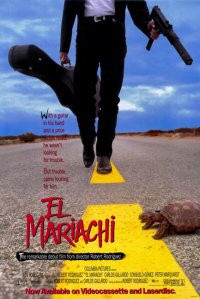 So how many years has it been that I’ve not seen El Mariachi? A lot. (mumble) What? I said twenny years. TWENTY YEARS, I SAID TWENTY YEARS, OKAY? Cripes, I remember Roger Ebert recommending it on Sneak Previews, that should tell you something about how long I’d successfully avoided it.
 The story has a nicely classical setup: the Title Mariachi (Carlos Gallardo) travels the country looking for work in bars to perfect his craft. He hits town at the same time as Azul (Reinoi Martinez), a minor league drug lord determined to wreak vengeance on his double-crossing partner (the aforementioned Marquardt). Azul likes to dress in black and carry his many weapons around in a guitar case. Marquardt’s character is the only person who’s actually seen Azul. And so the mistaken identity shenanigans and body count begin.
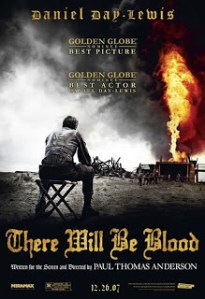 There Will Be Blood has some strikes against it for me right out the gate because of its unfortunate parentage, by which I mean it is based, however loosely, on a novel by Upton Sinclair, Oil! Mr Sinclair and myself have not spoken since I was forced to read The Jungle back in 11th grade. But the name Paul Thomas Anderson is a balm for many old wounds, so here we go.
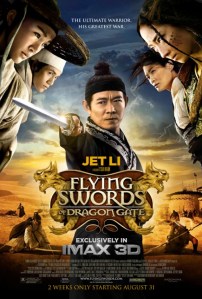 This is the third version of Dragon Gate Inn I know of, and each version just gets wilder. In its most basic form, the story concerns three factions with good reasons to kill each other instead concealing their various identities while they huddle at the title desert Inn, riding out a massive sandstorm. Most of this intrigue is jettisoned in this latest re-telling, substituting treasure hunting, vicious government agents seeking a pregnant woman (on orders from am ambitious concubine who wants no possibility of an Imperial bloodline but her own) , and Jet Li as a righteous warrior determined to kill all the corrupt government types.



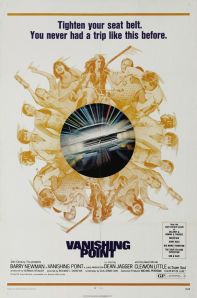
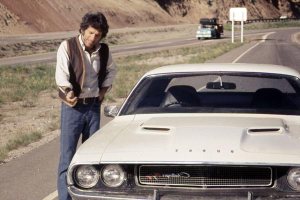
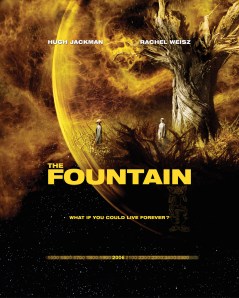
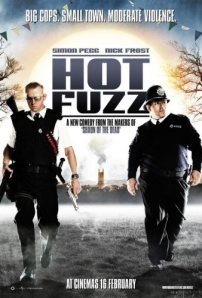
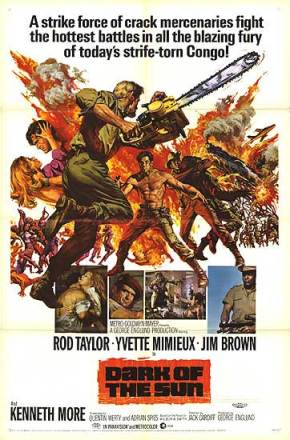


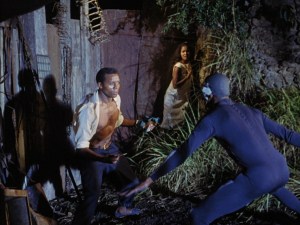



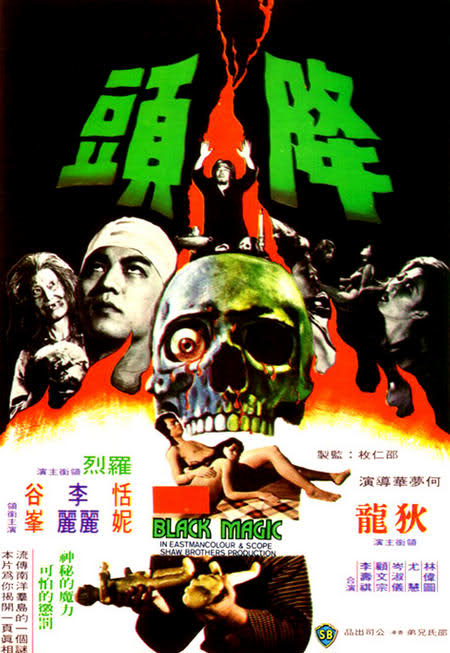



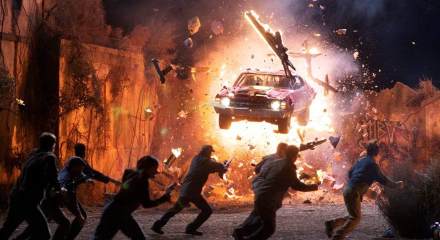
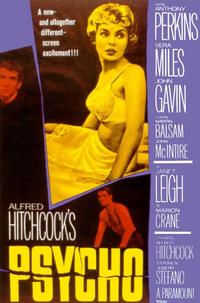
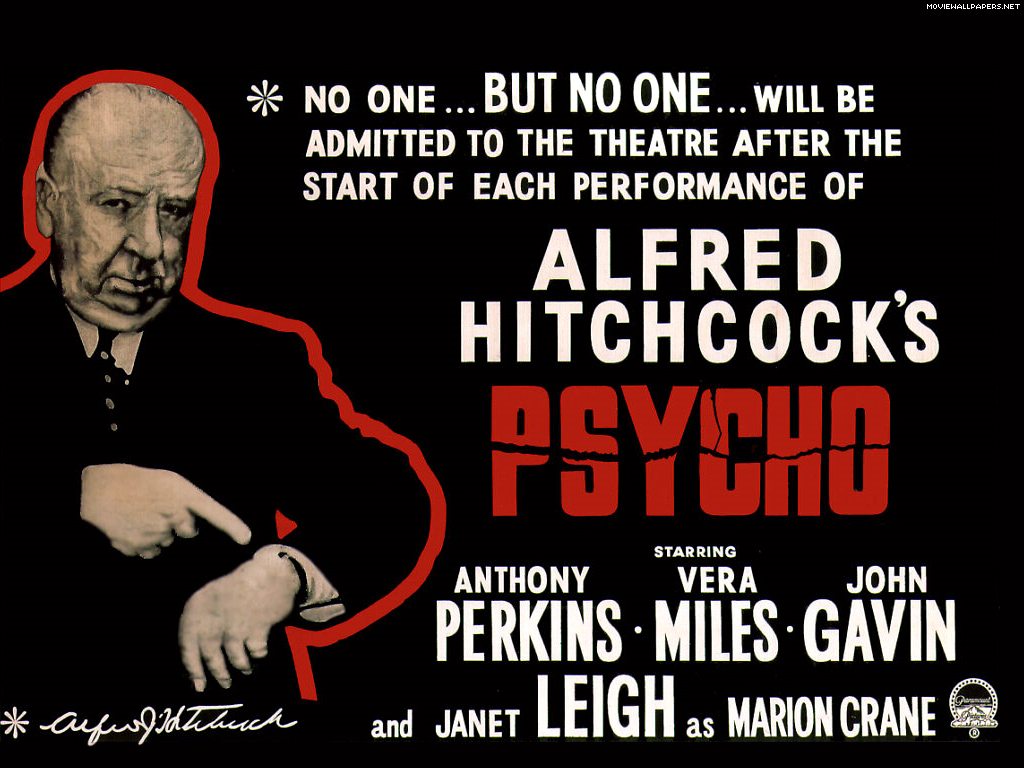
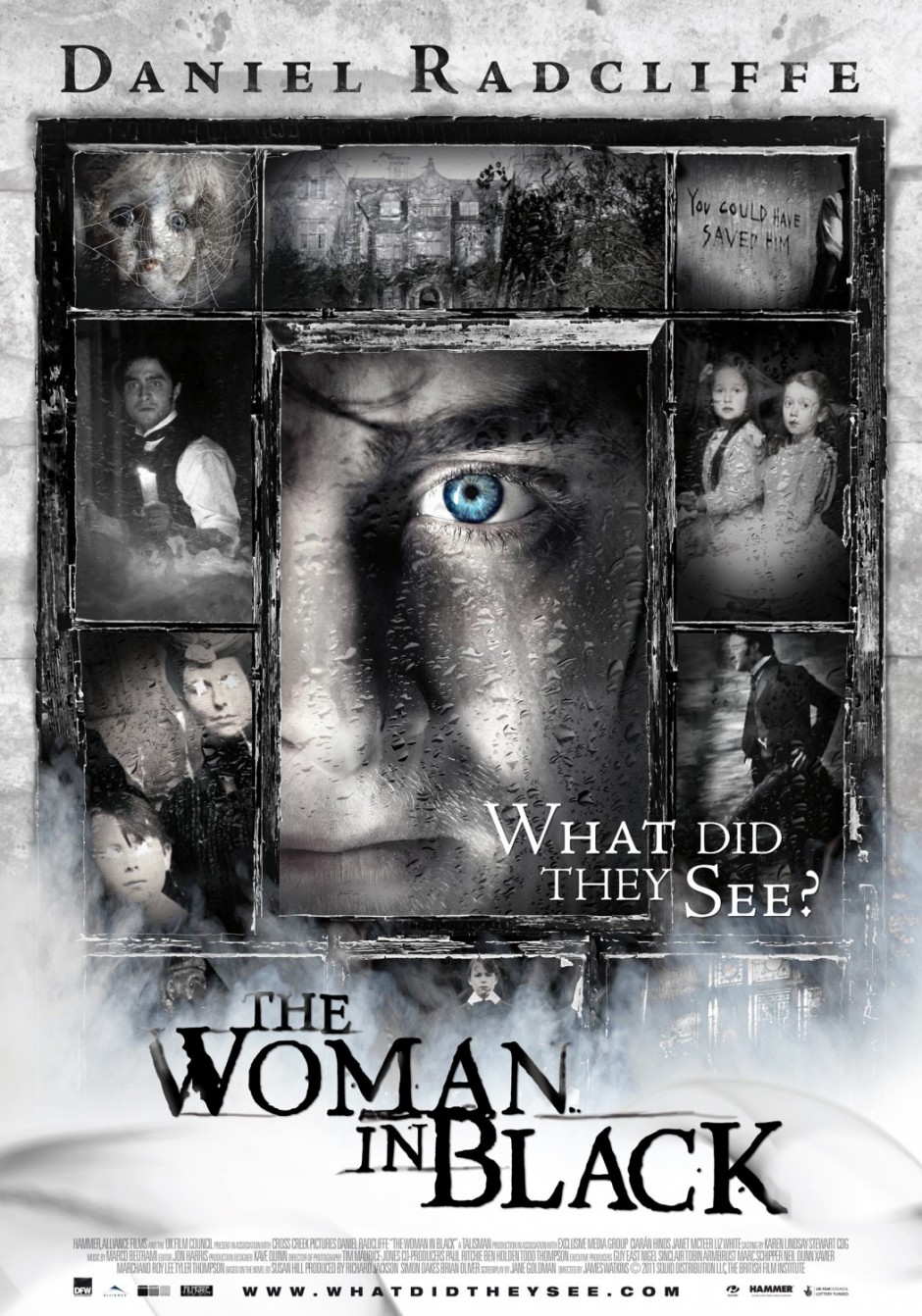


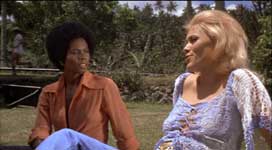
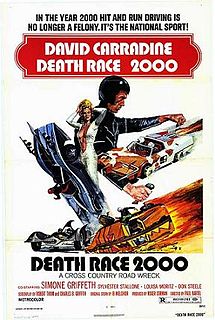

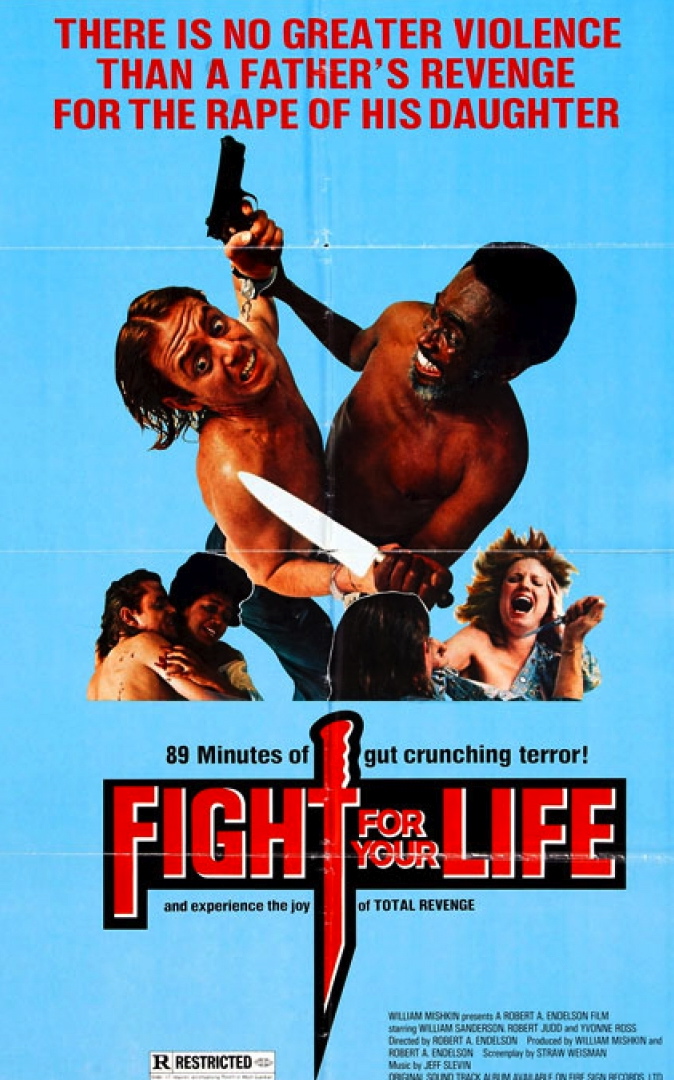


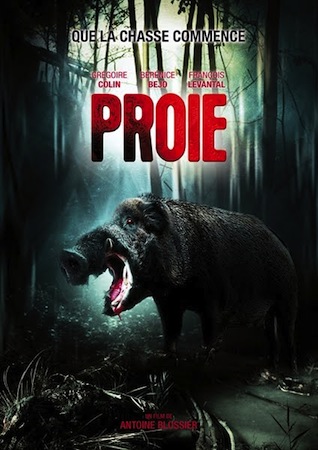
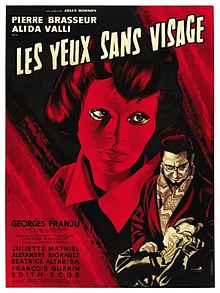





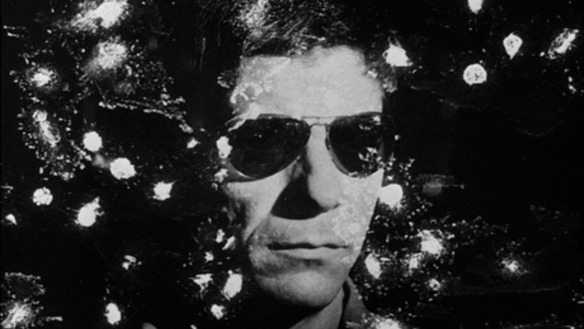
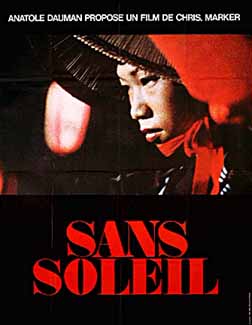


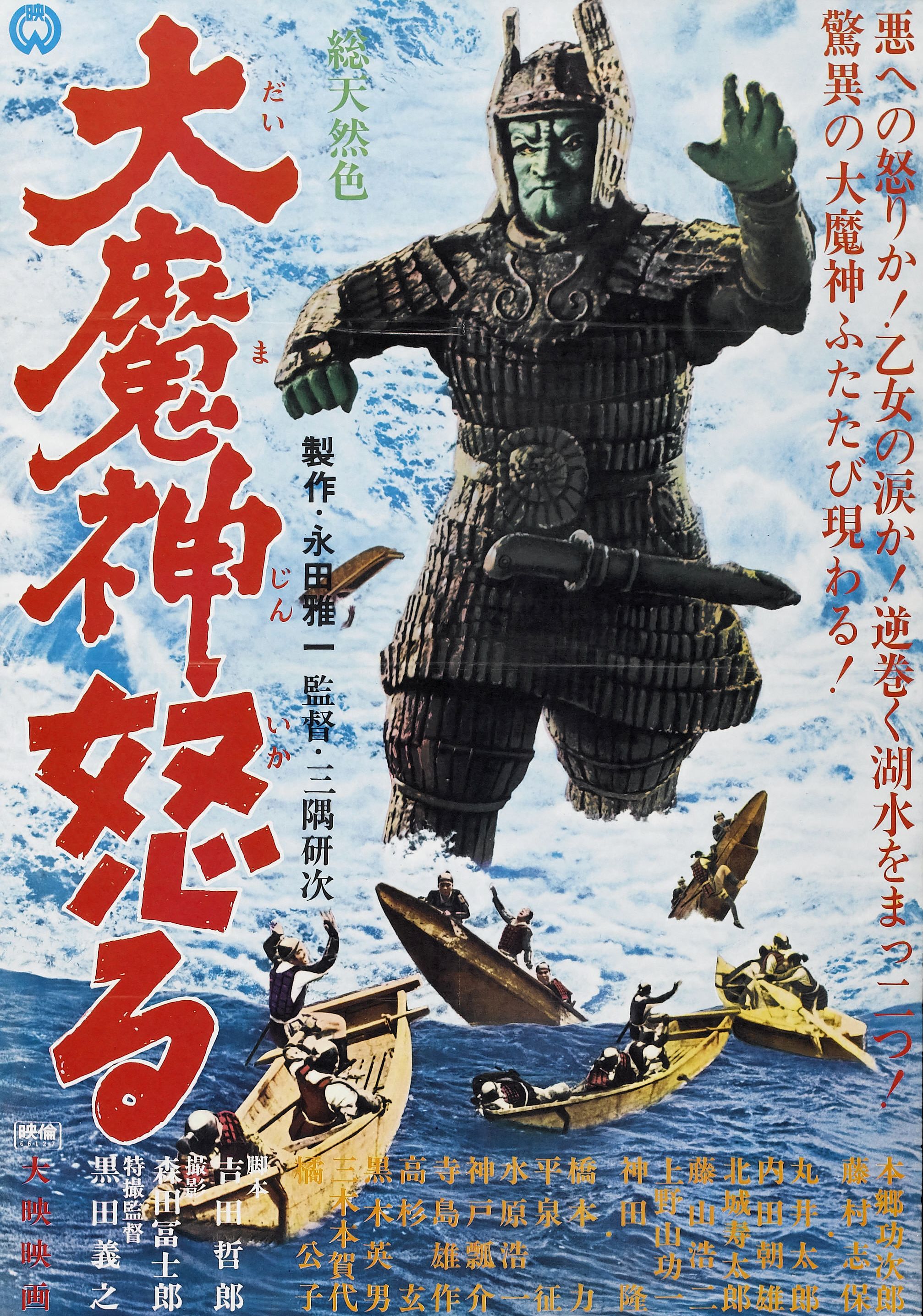


 drfreex.com