Let’s see if I can bang this out in the brief time allotted me.
Luchino Visconti’s The Leopard is based on the best-selling novel of the same name by Giuseppe Tomasi di Lampedusa. It is the tale, stretching over decades, of the fall of a royal Sicilian family after the Risorgimento revolution of 1860 and the subsequent Unification of Italy. Visconti narrows the focus down to a scant couple of years.
Burt Lancaster is the Prince Don Fabrizio Salina, who will spend a fair portion of the movie trying to insure his family’s well-being in a time of a rising middle class while at the same time see to the future of Italy. Never abusing his power, he urges his subjects to vote for Unification, even though he realizes that it will give increased power to people like the boorish nouveau riche Mayor (Paolo Stoppa) of the town where his family vacations. Fabrizio’s favorite nephew, Tancredo (Alain Delon) falls in love with the Mayor’s beautiful daughter, Angelica (Claudia Cardinale), and Fabrizio does his best to move the relationship along, even though it means breaking the heart of his poor daughter, Concetta (Lucilla Morlacchi).
Tancredo’s arc is particularly telling. At the movie’s opening, he joins the forces of the rebel Garibaldi, seeking to overthrow the Bourbon government. Shortly afterward, he joins the Royal Army, seeing no irony in this. By the end of the movie, he is a civilian preparing for a career in politics, and applauding the dawn execution of rebels still faithful to the defeated Garibaldi.
The height of the movie is the dress ball that introduces Angelica to high society before her marriage to Tancredo. Fabrizio walks through the ball with a shroud of melancholy about him; he knows that this will not last, and he finds the company of the Mayor and manufactured war heroes to be tedious and upsetting. He even realizes, in one affecting scene, that he is dying, but he still must last out the night for Tancredo and Angelica, and the future they represent.
That ball scene, about 45 minutes long, is one of the most gorgeous I have ever seen, with beautiful, accurate costumes that dazzle and beguile. I was constantly reminded of the similar scene that ends Sokurov’s Russian Ark, so handsome is it. It is small wonder that this movie bankrupted its studio, but the result is so gorgeous, it really deserves to be seen in its original Technicolor, restored beautifully in the Criterion blu-ray.
Titanus Films knew they were going to need outside money to even begin to film The Leopard, and there were probably more than a few heart attacks when Visconti first decided he wanted Nikolai Cherkasov (Ivan the Terrible) to play Fabrizio. Cherkasov, though, was on a bender in Siberia or something, Laurence Olivier was too busy, and Fox was willing to pony up three million dollars if Visconti would use one of its stars. Visconti despised this, only knowing Lancaster from Westerns, but after an on-set confrontation, the two made up and became lifelong friends; Lancaster truly is superb in the role.
The American box office for The Leopard, however, was dismal, and the movie vanished. Hell, I wouldn’t have even known it existed if it were not for the documentary Z Channel: A Magnificent Obsession and a reminder from Mark Cousins’ The Story of Film. Fox cut twenty minutes, used the cheaper DeLuxe color process for their prints, and, of course, dubbed it into English. This is the only way to hear Lancaster’s real voice in the role, and I have to admit that it was distracting for a while to hear another man’s voice, speaking Italian while Lancaster moved about. But the story is so Italian – so Sicilian, specifically – that hearing it in English robs it of so much identity, the heft of history. I admit that I am a snob about such things, and will always prefer the original language with subtitles, but this is, I think, an instance where is provably true. Most of Fabrizio’s commentary in the ball scene is silent, in any case; it is Lancaster’s attitude and body language that tells the tale of that evening.
Quck! Tell me what kind of movie this is!
The American poster is also the ugliest damn piece of advertising I have ever seen. =>
The week after I watched The Leopard held the first of the Republican Presidential Candidate Debates, and the exit of Jon Stewart from The Daily Show. There was a whole lot of political claptrap and noise being thrown around, and I was haunted by a speech Fabrizio makes to the Chavalier Chevally (Leslie French), an actual historical character:
“We were the leopards, the lions, those who take our place will be jackals and sheep, and the whole lot of us – leopards, lions, jackals and sheep – will continue to think ourselves the salt of the earth.“
And that is the best way to describe The Leopard: haunting, beautiful, and unfortunately, terribly true.
Hey, remember when I said I was extremely busy? That hasn’t changed. Allow me to get on with the dispatches from the Movie Odyssey:
Rififi (1955)
The Hollywood Blacklist keeps showing up in the backstory of movies I watch, with Jules Dassin one of the egregious examples. Like a lot of people in the Depression, he joined the Communist Party and its promise of a brighter future, but quit the party after the Soviet Union signed a pact with Nazi Germany in 1939, an unforgivable betrayal for a Jew. Dassin was sent packing in 1950 after completing the shooting for Night and the City and didn’t direct another movie for four years. Practically penniless in Paris, he shot Rififi on a very low budget, with no stars and production personnel willing to work for lower wages just to observe a well-regarded director at work. The result is one of the first heist movies, and one of the best.
Rififi (we are informed this is French gangster slang for “trouble”) is largely the story of jewel thief Tony “le Stephanois” (Jean Servais) freshly out of jail after five years, having taken the rap for his younger protege, Jo the Swede (Carl Möhner), whose wife was pregnant at the time. Jo wants his old mentor to join him in a smash-and-grab job at a high-profile jewelry store. Tony’s response is they are instead going to burgle the jewelry store itself, considered a near-impossible job.
The four man gang then proceed to meticulously map out the store, and the ebb and flow of its neighborhood. The heist, when finally enacted, is the centerpiece of the movie, a half-hour sequence without dialogue or music, incredibly tense and exhilarating. It is almost the perfect crime, but the romantic inclinations of the imported Italian safecracker (director Dassin himself) will doom the entire group.
Dassin’s location shooting on The Naked City (inspired by the legendary New York photographer Weegee) stands him in good stead; the streets around the jewelry store become a character in themself. The loving attention to detail is apparent in the depiction of the seedier side of Paris and the criminal demimonde. Our merry band of thieves is likable, the opposing gang that sniffs out a chance for a big payday is vile, right down to kidnapping Jo the Swede’s young son, turning even Tony’s abused former moll against them.
In many ways, this is the proto-Thief, and well worth watching.
Sunrise: A Song of Two Humans (1927)
Doing something like proclaiming you are going to watch a certain 100 movies doesn’t give you the sort of leeway you normally employ in your movie watching, like the time I watched Head to observe Davy Jones’ passing, or The Ruling Class for Peter O’Toole’s. But when somebody stole F.W. Murnau’s skull, I knew it was time to finally watch Sunrise.
This is Murnau’s first American movie, made directly after Faust. The “Two Humans” of the title are a farmer (George O’Brien) and his wife (Janet Gaynor, wearing a bad blonde wig, but not as bad as the one Barbara Stanwyck was forced to wear in Double Indemnity), whose marital bliss is undone when a vacationing Woman From The City (Margaret Livingstone), sweeps the Man off his feet with her sophistication. She convinces him to sell his farm and come to the City with her – after he murders his wife by staging an accidental drowning.
The Man can’t go through with the plan, and winds up pursuing his fearful wife into that City, where they rediscover their love on one adventurous, eventful day – but on the return home, their boat capsizes in a sudden storm, and the wife is swept away.
Like an earlier, highly-regarded silent, The Phantom Carriage, this is some heavy melodrama, but it’s good melodrama. The extremeness of the melodrama in Sunrise is more than matched and countered by the beautifully well-observed humanity of the middle of the movie, where we see the love of the Man and Woman rekindle itself. We can’t help but be swept along their journey, falling in love with them a little ourselves, which only turns the screws tighter in the storm sequence and its aftermath.
This was the first movie to be released with Fox’s new Movietone process, which makes it the first movie with a prerecorded sync score and sound effects, extremely progressive while it was being made. There are two things that are going to lodge in your mind’s eye when you think over the experience, and both are in the City – not location shooting, but an actual, enormous set built by Murnau, and a huge entertainment complex with an equally huge music hall and restaurant attached. Again, a gigantic set built with all the trickery Murnau had mastered in the German cinema, employing forced perspective, midgets in the background to suggest scope, and a ton of extras.
Sunrise has risen in critical estimation in recent years, moving into Top 100 Movie lists and even cracking a few Top Tens. Why haven’t more people heard of it, then? A month before Sunrise opened, another movie – The Jazz Singer – opened, and suddenly nobody wanted to watch a silent movie. It was talkies or nothing, and Sunrise was a financial disaster.
Murnau would never again be offered the creative and financial freedom he experienced here, and this is a story we will encounter over and over again. He would only direct three movies before his untimely death in an auto accident in 1931, and cinema is much lessened for that.
Dreadful picture quality on this trailer, but it does give you some idea of the technical artistry Murnau brought to this picture, which, despite its box office failure, won three Academy Awards, including Best Picture:
Then I watched a couple more movies you won’t hear about until October. Don’t worry, there’s still plenty left. Life is trying to crush me with deadlines (This month – July – is in fact going out with an increasingly grinding bang), so the only thing left to do was to go over to Rick’s and watch movies.
Watership Down (1978)
Rick had been curious about this movie for some time, having only heard about it. That’s not too surprising; although incredibly popular in England, it sank like a stone in its American release. I had only seen it because it had a midnight showing in my college town. I guess it wasn’t Disney, so it wasn’t worth seeing.
Yeah, it’s not Disney.
Based on the novel by Richard Adams, Watership Downis the tale of a group of rabbits fleeing the destruction of their warren, foretold by the Cassandra-like prophet bunny, Fiver (voiced by Richard Briers). Their leader, Hazel (John Hurt) turns out to be quite adept in his new role, and they eventually, after many adventures, take up residence on a high hill, content until they realize that they have no women, and the new warren will eventually vanish.
Thus begins another thread of the tale where the largest of the fugitive rabbits, Bigwig (Michael Graham Cox) infiltrates the warren of General Woundwort (Harry Andrews). If their former warren was a bit of a fascist outfit. Woundwort and his minions are absolute Nazis. Their captive population cannot reproduce because it is too crowded. Bigwig seeks out a feisty doe who has helped other rabbits escape, and a daring nighttime breakout ensues, aided by the errant gull Kehaar (Zero Mostel, in his final film role), and a boat, a man-made object that Hazel’s clever warren has learned to employ.
The story’s not over yet, but that’s for you to experience yourself. As you probably noticed, this is an adventure story where the characters all just happen to be rabbits. Watership Down is held up as a sterling example of how to adapt a novel to screen, rearranging events and deleting others for the sake of the movie’s general flow, while remaining largely faithful. It is also known as the most violent PG movie ever released – there is never any doubts as to the stakes being played for in the rabbits’ quest, and, well, there will be blood. I’m okay with that, a lot of parents with crying children were not. The British Board of Film Classification apparently was still receiving flak every year for giving it a “U” for “Universal” rating, the equivalent of a G.
This begs the question as to how much about the brutal nature of life should children be shielded from, and for how long. My own childhood is still bright and terrifying with images of animals being slaughtered for the rural dinner table. That’s not an experience a lot of children went through, even in my childhood. In our increasingly urbanized existence, that number is likely even lower.
But we’re here to talk about movies, aren’t we?
It ain’t Disney. Though it may look like it, with its multi-plane animation and watercolor backgrounds, it ain’t, and really, it’s much better for that. I’m going to go further, and grumble about the misconception that if it’s animated, it must be for kids, and kids alone, a misconception that endures despite all the boobies Ralph Bakshi and the Heavy Metal movies have plastered across movie screens.
Research also dug up this, which again makes the above mistake: the follow-up to Watership Down, also based on a novel by Richard Adams, The Plague Dogs, is a cartoon for children like Salo is a movie for high school history classes.
There was a second movie Rick and I watched, but you’re going to have to wait until October for that one. So we’ll just go on to:
Playtime (1967)
Our journey through Jacques Tati‘s oeuvre continued with this, generally acknowledged as his masterpiece. After the international success of Mon Oncle (my personal favorite), Tati used his resulting clout to make what would become the most expensive French film to date, about 2.5 million blooming to over 15 million – in 60s currency – over the course of a three-year shoot. This is the sort of movie-making legend where it is tempting to obsess over the production of the movie rather than the film itself.
Tiring of his M. Hulot character, Tati sought to de-emphasize him with more of an ensemble, a tapestry of characters we follow throughout. Hulot spends the first part of the movie trying to have a meeting with an elusive man in an ultra-modern labyrinth of an office building, eventually becoming swept up with a group of businessmen in an international product expo in another building entirely. His fate is shared by Barbara (Barbara Dennek), a pretty young American who wants to see the true Paris, but is swept along with her group of tourists into the same shopping expo.
Tati’s usual bemusement with problematic modern technology and consumerism is given full play here, leading up to one of his most complex and lengthy setpieces ever, possibly even in cinema as a whole: a pretentious restaurant called The Royal Garden, which opens even as the workmen are putting the finishing touches on, well, everything. The evening becomes ever more crowded and chaotic – practically every character introduced in the opening scenes shows up – even as the hastily-finished building begins to collapse around its patrons. It is only when the restaurant begins to fall apart, when the pretensions disintegrate, that the space becomes more perversely human, and the people inside begin to genuinely enjoy themselves.
This argument against overly-structured modern life is echoed in Hulot’s perambulations, where he finally meets the man he never managed to at the beginning, but only when that man is out walking his dog in the evening. That we later see the two part jovially at the beginning of the restaurant sequence, their business apparently concluded, is a rare moment of accomplishment for the perpetually unlucky Hulot.
Tati set out to make a movie where it was impossible to catch all the jokes at one viewing, that the wandering eye would see something in every nook and cranny of the scenes. It’s like those crowded panels of Mad, drawn by Bill Elder when it was still a comic book. You could fill a book with observations on Playtime, and still not be sure you got it all. As ever, the sound effects are practically half the movie: Tati’s soundscape renders every object onscreen alive.
Jacques LeGrange, Tati’s longtime collaborator, had advised Tati to build his own ultramodern office building for the filming, and then sell it afterwards for a profit. Tati did this, but rather than following his friend’s advice, built an entire complex on leased land that ensured his buildings would eventually be razed – before filming was completed. Besides two other natural disasters that stopped filming and required rebuilding, the process of filming was made laboriously slow by Tati himself, who proved to be such a control freak that Stanley Kubrick would have said, “Dude, chill out!”
Structurally – and trying to append a structure to Playtime is a mug’s game – it is most similar to Jour de Fete, a lengthy, multi-charactered lead-up to a frantic, hilarious third act, then a cooling-down sequence leading to a melancholy, but touching conclusion. It’s the lack of conventional structure – and probably the comparative lack of Hulot – that made the movie tank horrendously on its release, and Tati – in considerable, ruinous debt – saw his life’s work auctioned away. Like Murnau, he would only make two more movies in his life, and both of those were commissioned work for television. Never again would he have the free rein and freedom given him here, and whether or not that is a good or fair thing is not for me to judge.
With Playtime, Tati attempted to take his game to the next level, and produced a movie that is undeniably ahead of its time. The thing is, I don’t think that, even now, the world has yet caught up with Tati.
As I peck this out, it’s July 1. In two days, I’ll clock in for the most grueling day on my Day Job, covering the City’s July 3 Independence Day parade. Thankfully, this has gotten a little easier over the years, as the move to a location at the Stafford Centre provides better access to a place to get out of the Texas heat (and worse, the murderous humidity hereabouts) than was formerly the case. We used to set up in a field opposite the school complex, where there was a tree or two you could rest under. That field is now a parking lot.
So what I’m saying is I should bang something out before I die of heatstroke on Friday.
Continuing on with Chaplin’s later career, I watched Monsieur Verdoux last week, and I was more struck by the general oddness of tone than the controversial subject matter. This is, of course, the movie based on the career of Henri Landru, a notorious “Bluebeard” guillotined for the murder of ten women and a boy in 1922. Chaplin, as the title character, is a bank clerk who loses his job during a recession, and turns to the much more lucrative trade of wooing elderly women, gaining control of their assets, and then killing them. Oh yes, this is subtitled “A Comedy of Murders”.
Verdoux rationalizes that this is all business, so he is not necessarily a murderer. He has a wife, dating back to his bank clerk days; she is confined to a wheelchair, and some of his ill-gotten loot goes toward caring for her and his son. The rest is invested in the stock market, and as this is set in France in the early 30s, you know that is not going to turn out well at all. Verdoux is an ardent vegetarian, and lectures his son about not being cruel to animals – in fact, like a Buddhist monk, at one point Verdoux gently picks up a caterpillar from a garden path so it won’t be stepped on. You reflect upon the fact that a scene in the later French horror movie, Eyes Without A Face, had a scene excised in America showing its main villain caring for a child in his clinic with great care and empathy; we like our villains in starkest black and white, but this is only one of the reasons Verdoux was a failure in its US release in 1947.
The movie’s episodic nature works for it; its length ultimately works against it. Martha Raye has an extended role as a brassy lottery winner whose amazing luck means that she is the one victim Verdoux never quite manages to kill (as the French critic Andre Bezin points out, this is the one murder we want to succeed). Marilyn Nash similarly has a recurring role as a vagrant girl Verdoux picks up to test a new poison upon, then changes his mind after finding out she, too, once had an invalid spouse. Nash turns up one last time, her fortunes reversed since she has taken up with a munitions manufacturer who is making out like a bandit in Europe’s ramping up to WWII. “That’s the business I should have gone into,” moans a sad, diminished Verdoux.
Therein lies another reason the movie failed for an America coming off the Other Great War: in his trial, Verdoux does not necessarily defend himself, but he points out that his sins pale in comparison to the wholesale slaughter taking place every day in the political arena. “Numbers sanctify,” he tells a reporter seeking a moral to his story.
The ultimate reason for Verdoux‘ box office failure on these shores: Chaplin was not playing the tramp. He had theoretically left the character behind in The Great Dictator, but the Jewish Barber is, essentially the Tramp with an actual profession. A desperate ad campaign with the tagline “Chaplin Changes! Can YOU?” didn’t turn the tide. It was a tide that had been flowing against Chaplin, seemingly orchestrated by J. Edgar Hoover, who was suspicious of Chaplin’s political views. Trials accusing Chaplin of violating the Mann Act (dismissed after two weeks and months of breathless media coverage) and a paternity suit in 1945 had tarnished his image. Honestly, as announcement to the world that there would be no more Little Tramp movies, Monsieur Verdoux is sterling. As a middle finger to that world, it’s even better.
This trailer doesn’t help the cause much, starting with a silhouette of the Tramp – but watch how Verdoux counts money. It’s inhuman, and I wonder how long it took Chaplin to master it – it’s a trick that’s pulled (with comic exactitude) three times during the movie. Also note the interplay between Raye and Chaplin, two old vaudeville pros who know exactly how to play off each other.
Ever since I’d re-watched Targets, I’d had a hankering to see the other movie quoted in it besides The Terror: The Criminal Code. It’s a lovely scene in Byron Orlok (Boris Karloff)’s hotel room, when the drunken director (Peter Bogdanovich) spots The Criminal Code playing on the TV. “That’s The Criminal Code!” says Bogdanovich. “I know,” replies Karloff. “Howard Hawks directed this!” “I know.”
It’s a climactic scene playing out on the TV: the typically gaunt, menacing, knife-wielding Karloff stalking a cowering prison inmate. Good enough to file the title away for later seeking.
Not so easy, these days. Not for a 1931 penitentiary flick, in black and white and actually starring a bunch of people the average joe on the street would identify as “Who?” (The average joe on the street is a moron) Semi-luckily for me, Turner Classic Movies put out a box set of three movies Karloff made on the cusp of his sudden fame for Frankenstein. Luckily because I wanted to see The Criminal Code. Semi because I also had to buy The Guilty Generation and Behind the Mask. Maybe I’ll watch those some day.
Anyway, Criminal Code paints a pretty wide canvas. A young kid (Philips Holmes) kills a man in an incident District Attorney Mark Brady (Walter Huston) points out could easily be dismissed on extenuating circumstances, but he is bound by the Criminal Code (thumps law book) to try the kid for manslaughter. The kid’s lawyer, used to financial cases, is overwhelmed and the kid gets put away for ten years.
After six years of working in the jute mill, the kid is about to break, although his two cellmates (one of whom is Karloff, playing a hardcase named Galloway) are oldtimers trying to help him cope. Brady, having lost an election for Governor, becomes warden of the prison as a consolation prize, and actually sets out to improve things somewhat. The Kid is rescued from the jute mill and made a trustee – Brady’s chauffeur, no less, which puts him in a prime position to fall in love with Brady’s daughter (Constance Cummings) and vice versa. The Kid’s third cellmate is killed in an escape attempt, and the blame for that death falls on the snitch Runch (Clark Marshall), whom Galloway knifes during a riot – the scene excerpted in Targets. The Kid sees Galloway leave the scene, then refuses to tell Brady anything, adhering to the Criminal Code of the inmates (ha! See what they did there?), even though his parole is on Brady’s desk, ready to be signed.
It’s melodrama, but pretty decent melodrama. Hawks keeps thing moving even though the plot threatens to turn back and start eating itself a couple of times. This is Karloff’s first really significant film role, and he got it mainly because it’s based on a play that was having a successful run in Los Angeles when MGM had a surprise hit with The Big House. Columbia, considered a second-rate studio at best, scrambled for something to ride on its coattails, and here was a script already written (Hawks had it re-written at least four times, though). Karloff had played Galloway in that production, and was carried over to the movie. Karloff said in later years if a more prestigious studio had produced the movie, the role would have gone to an actor with a bigger name. It’s a supporting role, but vital.
Should you also seek out Criminal Code? If you’re a Karloff or Hawks completist, sure. Otherwise, you’ll sleep just fine tonight without having watched it. Here’s that scene used in Targets, if that helps you sleep better:
So if you watch TV at all, you might be aware that, as I write this, Tropical Storm Bill has made landfall somewhere south of me in Texas, an event that the local media has been trumpeting as if it were the vengeful return of Hurricane Ike, attended by flesh-eating zombies, who were themselves on fire. Grocery stores were emptied out, schools were closed, and I couldn’t go to work. Couldn’t even work on this blog, because my Verizon DSL craps out when it rains. Even the infinitesimal amount of precipitation I’ve gotten so far.
Well, this is what word processors are for, yes? Eventually my Internet has to come back. Eventually my teenage son has to stop barging into my office, demanding I reset “the router” “just in case that might help.” I’ve stopped correcting him that the router and the modem are separate creatures. I just grumble and do it.
In the course of all this madness, as I fall farther and farther behind in everything else, I might as well say, hey, I watched some movies.
For instance, I watched The Innocents for the first time in, ooooh, maybe 50 years? I didn’t like it back then, but, you know, I was just a kid and all that. I bring entirely new sensibilities to the table. Surely now I will experience it as the classic it truly is!
Nope. I’m going to have to admit that most ghost stories simply do not do it for me, no matter how well made they are, and make no mistake – The Innocents is a well-made movie. Deborah Kerr, as a first-time governess who finds herself in a battle for her charges’ souls against the ghosts of two former servants, felt this was her best role. That’s quite possible. As a child I did not care for the downbeat ending. As an adult I appreciate that Kerr and director Jack Clayton leave the possibility open that this ghost business may all be in the governess’ troubled mind.
Or, if you’re Amurrican, you saw this movie.
Well, on then to stuff I appreciated more. Last week we lost a bunch of cool people, the biggest splash belonging to Sir Christopher Lee. I’ve said many times I found him to be an actor of limited range, but he had more presence and gravitas than ten normal actors, and when you put him in the right role, damn but he was unstoppable. One of those right roles was the Duc de Richelieu in The Devil Rides Out, Hammer’s movie version of the Dennis Wheatley novel of the same name (the credits remind us it is a “classic novel”).
Richelieu, along with his two-fisted pal Rex (Leon Green) are determined to free the son of their deceased comrade, Simon (Patrick Mower) from the insidious control of Mocata (Charles Gray at his villainous best), a Satanist of incredible power. Fortunately for the good guys, de Richelieu is himself knowledgeable in the ways of magic, and is able to protect his friends – if just barely – from the black magic onslaught that comes. The story meanders a bit, but there’s hypnotism, spirit mediums, giant spiders, the Angel of Death and Satan Himself (a guy with a goat’s head. It’s 1968, after all, and for that, it’s not bad).
There’s a fair amount of action and derring-do – I seem to remember the novel having a lot more, but then, I read it uhhhh forty-something years ago. A lot of movies about Satanism are pretty dull, but this is not one of them. It really needs a quality video release in the U.S., but I say that about most Hammer movies.
70s, you have so much to answer for.
Then I went to Rick’s for our monthly watching of movies. We had our three movies all picked out, and our pattern of late was two acknowledged classics and one lamentable piece of crap, usually sandwiched between the two classics as a palette cleanser. This time we decided to forego the “shit sandwich” model and start with the non-classic: in this case, the recently-revived Supersoul Brother, which goes by an *ahem* much vulgar title in actuality.
This is the star vehicle for Wildman Steve, a minor league Rudy Ray Moore (who was himself in Petey Wheatstraw as a character named Steve), who plays a wino -named Steve – picked by two thugs to be the guinea pig for a super-strength potion they’ve bankrolled to the tune of six thousand dollars (geddit? Geddit?). The plan is for Steve to carry out a safe from a jewelry store, then the hoods will plug him and make off with the diamonds. They figure this will be a mercy because, unknown to Steve, the formula will kill him in six days. Well, the formula also makes him bulletproof, so he makes off with the diamonds and tries to find an antidote.
Now that is almost the plot to a decent movie. Unfortunately, this is a Wildman Steve movie, which means it’s a Dolemite movie without the budget, wit or charm.
I’m going let that statement sink in on you for a while. As Rick so very succinctly put it, “This movie makes you re-calibrate your opinion of the Dolemite movies.”
I managed one intentional laugh during the movie. There is also one point during which we said, “You know, this was an okay movie until these white women showed up,” so there are degrees of bad. Predictably, although a derelict wino, Steve has no problem getting women into bed. The mad scientist, Doctor Dippy (Peter Conrad) has a girlfriend played by the magically named Wild Savage, who seemingly took acting lessons from Dolores Fuller, but again, without the budget, wit or charm of an Ed Wood movie.
This was directed by Miami filmmaker Rene Martinez, Jr., whose other big claim to fame is The Guy From Harlem, which, dammit, I own, so someday I have to watch it. At one point we spotted a triple-beam scale in Dr. Dippy’s office and Rick said, “That’s how they measured out the payroll every week.”
Vinegar Syndrome’s DVD is mainly clear and deceptively beautiful, but it has enough missing frames and streaking to really bring home the seedy grindhouse experience. I can’t recommend it, but I also cannot wait to force it on my friends.
Well, I see Everything is Terrible has edited it down to two minutes. Be aware this only gives you the smallest inkling of it’s… uh… quality:
So to soothe our bruised sensibilities, we slipped in Charlie Chaplin’s The Great Dictator.
Chaplin’s first all-sound movie still has stretches of silent comedy (or scenes that would play as well silently), but suffers from some tonal problems. It’s the tale of a Jewish barber who spends years in a hospital, suffering amnesia from injuries in a World War I-style war between the countries of Tomania and Bacteria. Thus he misses the rise of dictator Adenoid Hynkel, his Double Cross party, and his anti-Jewish agenda. Both men are played by Chaplin.
Chaplin’s Hitler manque is justly famous – he spent hours watching footage of Hitler and knows exactly how to puncture the dictator, right down to his adjutants, rechristened Herring (Billy Gilbert) and Garbitsch (Henry Daniell). The Hynkel scenes are so exacting, so precise, that the parallel storyline with the barber seem scattered and happenstance – the Barber isn’t even given a name – until the two switch places, more by accident than anything.
It was, in fact, a matter of some curiosity to me that nobody notices the two men are identical. In retrospect, that is absolutely the right way to approach it; as one of the Juden, the Barber is considered by the stormtroopers to be subhuman, and therefore no notice is given to him as a person; it isn’t until the Barber escapes from a concentration camp and is found in a stolen uniform that it is assumed he is Hynkel, just as Der Fooey, taking a pre-invasion vacation in an Alpine costume, is mistaken for a common man.
This is all leading up to the Barber giving a speech when everyone assumes he is Hynkel, to celebrate his conquering of another fictional country; the speech is, instead, one advocating peace and brotherhood, and you have no doubt had it posted to your various timelines more than once, captioned as “The Greatest Speech Ever Made” (and here it is with some Hans Zimmer music, for extra chills):
Please note that this speech is also one of the pieces of evidence given for branding Chaplin a Communist. Why? Because fuck the world, that’s why.
As I said, I don’t feel the two storylines mesh ideally, but who cares when the two resulting movies are this good? Chaplin was very nervous about his first talkie, so much so that the movie pretty much ruined his relationship with Paulette Goddard, radiant as always as the Barber’s girlfriend, Hannah. He needed not have worried so much, even if in later years he had misgivings about taking a relatively lighthearted approach when the true horrors of Nazi Germany began to come to light. But The Great Dictator had such value as a propaganda tool in the early days of World War II, it cannot be discarded as misguided. Hell, it’s even recorded that Hitler himself had a copy smuggled in so he could watch it. Apparently he did so twice.
So, excellent movie, even though I could not, in all conscience, give it the full five stars. Unlike the movie which ended our evening, Jacques Tati’s Mon Oncle.
Several years back, when I decided that I wasn’t getting any younger and needed to start experiencing a higher quality of film, this is precisely the sort of movie I suspected I was missing out on. I don’t even know how to begin to talk about it, as the examination of even one of the many wonderful bits of imagery that run throughout the movie leads to the temptation to talk about all of them.
But let’s try. In the introduction to Tati’s Monsieur Hulot character, Monsieur Hulot’s Holiday, one of the many plot threads concerned a young boy, whose businessman father was too occupied with important phone calls to pay attention to his son (much less enjoy his own vacation), who began to emulate Hulot. In Mon Oncle, Tati makes that connection a familial one.
Gerard (Alain Becourt) is the son of the Arpels; Mr. Arpel (Jean-Pierre Zola) is the manager of a successful plastic hose company; Mrs. Arpel (Adrienne Servantie) busies herself with caring for their ultra-modern and extremely ugly house. Hulot (Tati, as always) is Madame Arpel’s brother, living in a strange apartment building requiring an almost Escher-like path to get to his room, at the very top. Hulot lives in a older, rundown suburb that might as well be the rustic village in Jour de Fête; the heartbeat of life there is much slower and more erratic than in the contained and regimented world of the Arpels.
Thus, Gerard looks forward to his outings with his uncle – they promise and provide more adventure and actual living than in his nightmare Tex Avery Home of the Future (at one point the Arpels quite literally become prisoners of their own technology). The Arpels, of course, keep trying to cram Hulot into the pegboard of their lives – Arpel gets him a job in the plastics factory (which goes about as well as you’d expect), while his sister attempts to set him up with their next-door neighbor, a bizarre scarecrow given to wearing Andean rugs as a cape.
Tati isn’t really against the modernity of the Arpel’s house, he’s more against the fact that it’s a house to be shown, not a house to be lived in – there is not a single comfortable chair in the joint, they are all plastic monstrosities that theoretically double as pieces of art. Even then, Tati is never truly vicious in his portrayal of the nouveau riche couple. Even when the father, tired of his son’s admiration for Hulot, packs him off to the provinces – a rather downbeat ending, in my estimation – Tati manages to wring a bit of sweetness from the proceedings, a reconciliation between father and son that shows the father may not have been totally despising his brother-in-law all this time.
Wow, we just hit 2000 words on this, but I managed to be kind of brief about Mon Oncle, so let’s try to get one more movie in here, continuing the comedy vein with Ingmar Bergman’s Smiles of a Summer Night.
This was the movie that made Bergman’s bones, make no mistake. He was terribly depressed, and his producer telling him if his next picture didn’t make some money, they wouldn’t be letting him make any more probably didn’t help. Then they entered Smiles into Cannes without telling him, it was a major hit, and suddenly they had to let him make his dream project, The Seventh Seal, which cemented the whole “genius” thing for him. Smiles also inspired Sondheim’s A Little Night Music, but that’s not as much fun as imagining he based Sweeney Todd on Bloodthirsty Butchers.
Smiles is one of those mannered comedies about relationships concerning six couples, most of whom are entangled with the wrong people, and the conniving actress who gathers them all at a country estate so that everybody can get with the right person. Bergman regular Gunnar Björnstrad is Egermann, a middle-aged lawyer married to a 20 year old girl, who is still a virgin (also, his depressive adult son, the same age as the bride, is in love with her). The conniving actress is Egermann’s former mistress, who may have had his illegitimate son (which is a surprise to Egermann). She is currently the mistress of Count Carl Magnus Malcolm, a martinet who would allow his own wife to have affairs, if that just didn’t make him so jealous.
And just to add a little spice to the proceedings, there’s the child bride’s saucy maid, played by Harriet Andersson (who blew me away so completely in Through a Glass Darkly), who is herself looking for love. Bergman had apparently been having a love affair with Andersson prior to this movie, but it was over by this point – another reason for his profound depression during shooting.
It’s a complex plot, but Bergman keeps a bunch of balls in the air and brings it all to a satisfying conclusion. The main thrust of the story is that men are are a bunch of idiots and women can make them do anything they want, and I’d argue with that if I could. I was confused through the opening half of Smiles, because Egermann’s relation with his second wife – who he finally admits loves him more like a father than a mate – bears more than a slight resemblance to the life of Moliere, the French playwright who lends much inspiration to this script.
Moliere was similarly married to a much younger woman, even more unhappily than Egermann. Back when I was an actor, I played Moliere in a repertory project that alternated Mikail Bulgakov’s biographical The Cabal of Hypocrites with The Imaginary Invalid. In preparation, I read Bulgakov’s excellent biography of Moliere, along with the playwright’s works, and the most revelatory experience was reading The School for Wives, which is about… an older man married to a much younger woman. The final scene is basically a duel of romantic pronouncements between Moliere’s character and his wife’s younger lover. Contemporary reviews of the play mention Moliere’s hilarious puncturing of overwrought romantic plays and their actors in that scene, but knowing the man’s life, you are struck by how easily it could be played as bleakest tragedy, without changing a single word.
There’s quite a bit of that vibe in the opening act of Smiles of a Summer Night. By the third act, I was pretty certain it was a comedy, though, largely thanks to Andersson’s maid and her earthy major domo boyfriend, played by another repertory company member , Åke Fridell. And if nothing else, I liked it a whole lot more than the similarly-themed Rules of the Game.
It’s now June 22, and I have written 2725 words. Good God, I have work to do. Here, take this.
I’ve been told all my life how good Ingmar Bergman movies are. It’s practically a joke; no, it’s more than that, his movies were of such a quality that it was expected jokes about Bergman movies would be understood. I don’t think that, culturally, this is quite so true, anymore.
But that’s beside the point. I’ve just watched Through A Glass Darkly and I am blown away all over again.
This is the first movie of a film trilogy which is apparently called, with admirable economy, The Ingmar Bergman Film Trilogy, consisting of this, Winter Light and The Silence. With my usual ass-backwards methodology, I watched Winter Light a year ago, because I was still in the honeymoon phase of my man-crush on Gunnar Björnstrand from The Seventh Seal, and I couldn’t resist the idea of watching him play a priest who had lost his faith. Was this an error? Have I sacrificed an arc that runs through this trilogy? I have no idea, I haven’t watched The Silence yet.
Speaking of admirable economy, Through A Glass Darkly eschews the larger population of most of Bergman’s other films, and rests its story on only four characters: David, a writer (Björnstrand), his adult daughter, Karin (Harriet Andersson) and teenage son, Minus (Lars Passgård), and Karin’s husband, Martin (Max von Sydow). All four are having a bit of a holiday in an old, isolated farmhouse on the coast.
From a very simple beginning, things begins to complexify: David is a very remote father, frequently traveling, ostensibly for his novels, and there is a fair amount of resentment that he’s about to set out again. Minus wishes only that he could speak with his father, but the few opportunities that present themselves fall into the typical, stilted, jokey conversations that any boy growing into manhood will find only too familiar. Martin is a medical doctor, which is a good thing because what will hang over the entire movie is Karin’s “illness”, often alluded to, never named.
Karin is schizophrenic. She has just returned from a lengthy stay in a hospital; she refers lightly to electro-shock therapy. While David and Martin are alone, Martin confides to her father that Karin’s situation is incurable; a cure is not totally unheard of, but the best he can hope for is longer stretches of normalcy between episodes. At the beginning of one such episode, Karin finds and reads her father’s diary. In the honesty writers practice with themselves, by themselves, David talks about her incurable state and his temptation – which he rightly feels is horrific – to write about her condition and deterioration.
The attempt to function as a normal family under this stress is heartbreaking. During a boat trip to get supplies, the two men have it out in civil discourse. Martin feels David has failed as a father, and David agrees – he also admits to a suicide attempt just prior to returning to his family, which failed only because the car he was driving seized up inches from a precipice. This incident has driven him back to Karin and Minus, his love for them now drawn in sharp relief, even if it is a love he has no idea how to demonstrate.
While they are gone, Karin has another episode, and in the lucidity that follows, reconciles with her father somewhat and decides that she should now return to the hospital forever, tired of pretending or even hoping that normalcy is a possibility. “You can’t live in two worlds. You have to choose one.” But the worst is yet to come, and every man in her family can only witness helplessly her madness.
It takes true master storytellers to relate a compelling story that consists largely of people talking in rooms, and Bergman certainly qualifies. Each of the men is excellent in their roles, but there is no doubt that this movie belongs to Harriet Andersson, with her stunning portrayal of Karin. She plays out the entirety of human emotion in her performance, and her schizophrenic episodes, never overplayed, have the terrible ring of truth. The fact that she not only holds her own against von Sydow and Björnstrand, but carries the whole picture with their able support, cannot be overstated.
Additional praise must be given for cinematographer Sven Nykvist, in his second outing with Bergman. The black and white palette of Glass is incredibly varied, and the austere landscape and textures of the farmhouse and other settings are so precise, so gorgeously detailed, it is as if Ansel Adams had decided to take up a movie camera, it is that astonishing. I am told that Bergman was truly impressed by Nykvist’s outdoor photography on The Virgin Spring; I’m scheduled to watch that later in the year, I’ll let you know.
To hear me talk about it, one would think that Through A Glass Darkly is depressing – it’s not. It’s frequently harrowing, but as the movie ends – simply, with no Fin or end credits – the feeling is one of exhilaration. The exhilaration that comes of spending an hour and a half in a room with people who are very good at their jobs, and being privileged to see that work.
In the pattern we’ve established, about every six weeks I go over to Rick’s and we just sit and watch movies on his finely-calibrated plasma set (this time I got to drive through a monsoon, which is about as much fun as you’d expect). We’re both cinematic omnivores, but Rick’s a better omnivore than me, by which I mean he’s more open to new experiences, which I sometimes approach with a sense of dread.
This time, we had lucked upon a theme for our choices: Cinematic icons at war with each other (that two of the movies were on my 100 list for this year was certainly a bonus). To set the groundwork for this, we began with Werner Herzog’s sublime documentary on his fractious relationship with Klaus Kinski, My Best Fiend.
Kinski’s on-set tantrums were the stuff of legend, and Herzog was frequently the focus of those screaming fits; somehow they still managed to make five movies together that stand as classics of modern cinema. Herzog reveals that he met Kinski while the director was still a child; they both lived for a time in a boarding house, and found Kinski absolutely terrifying (but admittedly memorable). He then leads us through their movies and times together, revisiting locations and interviewing people years after the fact. Eva Mattes, his co-star in Woyzeck, and Claudia Cardinale, ditto for Fitzcarraldo, seem to be the only people who have nice things to say about Kinski. Apparently this is the sort of thing that happens when one fires a rifle into a hut full of extras.
Herzog, I think, has the proper range to gauge the truth about Kinski – a self-aggrandizing egomaniac who used his rages to make sure he was the center of attention at all times. Even then, Herzog continues, once his rage was spent, Kinski was capable of genius, and his hair-trigger temper kept everyone very professional, lest they trigger another outburst. Other footage, at festivals and behind the scenes, confirm Mattes and Cardinale’s tales that he was capable of great charm and warmth. My Best Fiend is an amazing odyssey, and if nothing else, it makes you want to watch these movies all over again.
Uh, about that “Tobe Hooper”…
The thing is, this was actually homework. Rick had been doing one of those falling-down-the-wikipedia rabbit hole affairs, checking for details on his new favorite actor, Oliver Reed, when he discovered that Reed had made a movie with Kinski in 1981 – Venom – and the idea of trying to keep those two in control during production led to us seeking it out. At the very least, I thought, Reed would eventually drink himself into unconsciousness…
Venom is one of those movies where you suspect the making would have made a better movie than what wound up onscreen. Based on a fairly successful suspense novel by South African writer Alan Scholefield, it was originally going to be directed by Tobe Hooper, who left over “creative differences” (by some reports, a nervous breakdown). Kinski apparently later crowed at a premiere party that he and the other actors ganged up on the Texan to make him quit. Director Piers Haggard replaced him (best known in these parts for Blood on Satan’s Claw and The Quatermass Conclusion), who later opined that the nicest person on the set was the black mamba snake.
The story concerns the kidnapping of a motel magnate’s son which goes rapidly south when one of the conspirators, the family’s chauffeur (Reed), panics and shoots a police officer, killing him. The officer was there to alert the family that the son – who has quite the menagerie in his room – accidentally picked up the black mamba from the pet store instead of a harmless African house snake. Now the snake is loose in the house, which is surrounded by the Police, and it’s in a nastier mood than the kidnappers.
Kinski plays Jaclen, the mastermind behind the crime. Susan George is his girlfriend, who’s worked in the household for eight weeks as a maid. Sterling Hayden, in his penultimate role, looks incredibly out-of-place as the boy’s grandfather, a retired big game hunter. Sarah Miles is a herpetologist whose major jobs are to A) tell us how deadly black mambas are, and how they can do everything except teleport through walls (and the jury is out on that one) and B) get taken hostage by Jaclen. All good actors (each with their own varying reputations for being difficult) that put in acceptable jobs, but the one I enjoyed was Nicol Williamson as the Police Inspector who gets saddled with this mess.
But Rick and I were there to watch the fireworks between Kinski and Reed. There aren’t many visible, which is remarkable considering that Reed basically spent the entire shoot annoying Kinski to make him blow. What shows up in the movie belies that, with Reed playing an increasingly desperate everyman who is in way, way over his head, and Kinski playing the calmest man in the house. There is one scene, when Reed makes one of his many trips to the liquor cabinet, and Kinski grabs his hand, stopping him – there is a true flash of hatred, and it looks like the split second before a massive bar brawl starts.
“You are about to lose that f*cking Nazi hand.”
“Acceptable” is a fair adjective to use on Venom. You won’t begrudge its 90 minutes, but you probably won’t care to revisit it, either. The best illustration for its problems is the scene where Kinski forces Hayden to search a room for the snake (since he has experience with the nasty things), and as constructed, it should be very suspenseful – or it would be if it hadn’t been established in the previous scene that the snake has already slithered into the ventilating system. We know it’s not in that room. Still, Haggard should be commended for producing a movie that’s at least watchable, given that he had absolutely no prep time, a script that was already locked down, and a cast that wanted to murder each other on the good days.
All this was mere preparation, though, for the main event. A movie which Rick and I had managed to get through our entire lives without seeing, setting two screens icons against each other: What Ever Happened to Baby Jane?
If, like Rick, you’re familiar with the title but have no idea what the movie’s about: Baby Jane is a vaudeville singing sensation whose ignored sister Blanche becomes a beloved movie star in the 30s while Jane’s movies are… struggling. One night, there is an auto accident involving the two, resulting in Blanche confined to a wheelchair. Fast forward to the 60s, where Jane and Blanche have aged into Bette Davis and Joan Crawford. Jane is taking care of Blanche, but is becoming increasingly unstable and abusive. Emphasis on the abusive, as during the course of the picture, Jane will cut Blanche off from the outside world and proceed to torment her.
Movies like this – psychological horror/hostage dramas -have never been my cup of tea, which is why I’ve avoided the movie all this time, but now I’ve seen it. And I can say I’ve seen it. It is a well-made movie, and it broke box office records at the time. Director Robert Aldrich (who has quite the varied and interesting filmography) uses the open enmity between Davis and Crawford for all its worth, but this isn’t just a carnival gladiator match, like Reed and Kinski; there is some real depth and acting here using all that hate.
Crawford does a marvelous job – audience sympathy obviously goes out to her, but she never quite makes Blanche likable, a choice that pays off on repeat viewings – but there is never any doubt that Davis owns this picture. She takes possession of the character of Jane and positively nails every single frame she is in to a wall. Davis had a great degree of leeway from Aldrich in designing Jane’s appearance, reasoning, among other things, that Jane never washed her face, just applied more makeup. Roger Ebert once wrote that the canniest career move Bette Davis ever made was growing older. He was talking about All About Eve, but the same reasoning holds here, The incredible grotesquerie that Davis breathes life and malevolence into is not to be missed (even if this type of movie is not your cup of tea). This is what total commitment looks like. Davis was nominated for the Best Actress Oscar that year, but it went to Anne Bancroft for The Miracle Worker.
If more motivation to watch is needed, you can also toss in Victor Buono’s debut role as an unemployed musician desperate for the gig playing for Baby Jane’s fantasy comeback; their first scene together is like a miniature acting school, sidewise glances that tell us everything we need to know about what is going on in the characters’ minds.
This rather marks a high point for both actresses at this stage in their careers; the shelf life for Hollywood actresses is depressingly, frustratingly short, and for them the future held more of the same, but lesser. Davis in Hush Hush Sweet Charlotte (which I prefer quite a bit over Jane) and The Nanny, Crawford in Straitjacket and Trog. This was a high point, as sad as that might seem.
Tim Lucas starts out his typically excellent audio commentary for the recent Arrow Films restoration of Mario Bava’s Blood and Black Lace with an anecdote about Ernst Lubitsch. Apparently the director told a visitor to the set of Heaven Can Wait that Technicolor worked best with musicals and comedy, and should never be used for drama or mysteries. Lucas presents Blood and Black Lace as the prime exhibit that Lubitsch’s reasoning is incorrect. With the synchronicity that runs my life at this juncture, I watched another movie afterwards that also contested it, only earlier.
Blood and Black Lace has followed me around all my life, it seems. It was released in the US in 1965, which would put me at eight years of age, already a veteran reader of Famous Monsters of Filmland; it made enough of a splash that I determined that this was something I needed to see. A bit of confusion led me, a few years later, to watch a late night TV showing of Blood and Roses (and talk about being even more confused later – I was much too young for Vadim, even edited for TV). So it’s actually taken me something like half a century to see this movie, and watching just the opening credits unfurl, all ravishing color and dark wit, lets me know the wait for this version was worth it. (This sequence was replaced for the American release with one by Filmation, included on the disc as an extra. Macabre, but much less colorful. Much.)
I almost didn’t get to see it. This was supposed to be a high profile release from the new Arrow Video USA branch, but apparently the rights weren’t cleared up before the release was announced, and the title is on the “Indefinitely Delayed” list. Possibly as a cost-saving measure, though, the concurrent British release of the blu-ray was pressed for both Regions A & B, and I have this account with Amazon UK that proves very useful at times like this…
I think the difference in cost was like three bucks. The extra dough and extra wait were proven to be worthwhile in the first five seconds of the menu, which quotes the above-mentioned title sequence.
Blood and Black Lace involves a series of murders decimating the models of a high fashion house in Rome. This may not be the first giallo movie (that title usually goes to director Mario Bava’s earlier, black-and-white The Girl Who Knew Too Much), but it is the one that codifies much of what would become the hallmarks of giallo: a series of sadistic murders, a black-gloved (and in this case, literally faceless) murderer, and innovative and stylish camerawork.
The murders are extremely sadistic, though we don’t see a lot of gore; the victims are models, and the killer always seems to take special care to disfigure his victims. Bava started out as a lighting cameraman, and his ingenuity shines through, especially for such a low-budget movie. Unable to afford an expensive camera dolly and track, his artful, sweeping moves are accomplished with a child’s toy wagon. And the color! The phrase “color you could eat with a spoon” is a silly metaphor, but amazingly apt for this picture. It’s been plagued with substandard video releases to date, and small wonder, as the reds Bava employs would eat its way through any standard VHS tape.
Lest one should think the color is a gimmick, Bava cagily uses the lack of it in his daytime scenes, always involving the police, who (as they must be in any giallo) are of very little help, hidebound in their dull little colorless world of procedures and guesswork. Killers and victims exist in a darker yet brighter world, candy-colored and fluorescent. Color is the province of the flamboyant, be they artists or madmen, and both revel in the night.
Bava’s casting is also magnificent; Cameron Mitchell (who seems unrealistically young, at this far remove!), Eva Bartok, Luciano Pigozzi (whose full name should really be “Luciano Pigozzi, the Italian Peter Lorre”) and a number of remarkable women as the models, like Mary Arden (who had a remarkable life after), and my favorite, Harriet Medin, whose even more remarkable life Lucas expounds upon in the commentary. Here, she plays a housekeeper with some important red herring information. I instantly recognized her as Thomasina Paine in Death Race 2000.
The mystery itself plays fair with the viewer for the most part, although there is one bit when a character does something so inexplicable, it is almost certainly something Bava threw in to muddy the waters for the viewer. It’s not just a red herring (appropriate in this brightly colored milieu), it’s a big slab of what the hell that still leads to one of the most effective scenes, so we’ll just let it lie. Pondering the movie afterwards does provide a rationale for it, but it does require pondering. A very minor quibble to have this movie in such a bewitching presentation.
This is a very good disc, is what I’m saying. I’ve watched it twice so far, once to experience the movie, once to listen to Lucas’ commentary, and I’m trying to find time for a third run, this time with the English dub so I can enjoy Paul Frees being all the male characters. Does he voice Luciano Pigozzi The Italian Peter Lorre with an actual Peter Lorre? I need to know.
So I followed Blood and Black Lace up with another movie about sadistic murders, Peeping Tom, which could not be more different in tone, but no less artistic.
Peeping Tom is largely famous for completely destroying the already sinking career of director Michael Powell, who is justly famous for movies like Black Narcissus, The Red Shoes, and The Life and Death of Colonel Blimp. These are all amazing, well-loved movies (and some would point out, made during his fruitful partnership with Emeric Pressburger). Peeping Tom is such an about-face from this earlier material, it seems almost an act of madness itself; that its initial withering critical reception and failure would, decades later, turn into rediscovery and reverence, is now a familiar, tragic tale.
In a reverse from Blood and Black Lace, we know who the killer is from the start: it’s Mark (Carl Boehm), a camera-obsessed, soft-spoken young man who A) works as a cameraman in a movie studio (giving Powell a chance to lampoon some of his friends/enemies over the years); B) Shoots pornographic photos, or in the parlance of the time, “views”, for a local newsagent; C) Rents out the rooms of his father’s spacious home; D) kills prostitutes while filming their death throes, using a camera tripod leg with a knife at the tip.
There’s one facet of the murders that Powell hides from us until the very end, relying only on the police exclaiming over the look of extreme terror on the victims’ faces; we will see Mark is obsessed with fear, as he shows the nice young girl on the first floor, Helen (Anna Massey), the films his own father made of him when he was a child – his father awakening him in the middle of the night with lizards or bright lights, or forcing him to stand next to the dead body of his mother. This has created the monster he is today, watching the movies of his victims dying late at night, the footage he’s taken surreptitiously of the police investigations.
The repulsion of the public to the movie may zero in on Boehm’s portrayal of Mark – though not wholly sympathetic, it is a quiet acting job, a damaged individual moving through a world that still confuses him on many levels. Anna Massey is quite remarkable as Helen, refreshingly unglamorous and real; her growing relationship with Mark offers an impossible rehabilitation, a normalcy he can hope for, but never truly achieve. When, after spending time with the bubbly Helen, we encounter more typical, idealistically beautiful movie women (and Mark’s chosen victims), they seem alien creatures, rare birds flitting through his world.
One of these is Vivian, the stand-in for the vacuous star of the vapid comedy movie Mark is working on, who stays after hours to do a bit of film with the cameraman that she hopes will finally garner her the attention she needs to progress beyond stand-in work. Vivian is played by Moira Shearer, the star of Powell’s earlier The Red Shoes, and it’s hard not to read into her subsequent death the possibility of Powell murdering his own career. But that’s the sound of a guy putting way too much thought into his movie watching.
Peeping Tom, in keeping with its themes of voyeurism, is also one of the, if not the, first movie to give the audience the killer’s Point Of View during the murder scenes. They are seen, as by Mark, through the viewfinder of a camera, but that is not a fourth wall audiences of the time were expecting to crumble, or even wanted.
Peeping Tom opened in 1960, a few months before Psycho, a similar movie which is no less disturbing (and yes, there are parts of Peeping Tom that are legitimately hard to watch). Hitchcock recieved no such blowback from his seedy little horror movie. Is it because he was Hitchcock, a director who had never made a movie like Tales of Hoffman or A Matter of Life and Death? Or was it because Psycho was in black and white?
Like Blood and Black Lace, Peeping Tom is in Eastmancolor, and though not as lurid as the op-art palette of Bava, this is still the director who manipulated color so brilliantly in Black Narcissus and The Red Shoes. The color here is lush and realistic, giving the world an unmistakable texture; it is no mistake that Mark’s murder movies are shot in black and white. Realistically, it’s a process he can perform in his own home darkroom, but in the world of this disturbed young man, it is also easily managed, stark. It allows him to concentrate on the fear of his victims, undistracted. And as I believe Hitchcock himself once stated about Psycho, black and white can be distancing, a reminder it’s only a movie. Or maybe it was Kubrick, talking about shooting Lolita in monochrome.
I think Lubitsch’s point was Technicolor (or as seen here, Eastmancolor) is actually a hyperreal process; the colors it produces are gorgeous, but unrealistically vibrant, a method put to good use in lighthearted fare, fantasy. That is true for the most part, certainly true for Lubitsch and his works; but it is the role of artists to ignore such strictures. Without that defiance, we would never have any art at all.
The real kicker is neither of these movies is really available (in the forms I viewed) in the US. Blood and Black Lace for the reasons I mentioned above, and Peeping Tom… well, the rights currently belong to Studio/Canal, and all Amazon offers are Marketplace links to a Chinese blu-ray. A sad state of affairs for lovers of the beautiful… and the horrible.
(Bit of a warning here. There are spoilers ahead. Admittedly, one of the movies is from 1929, but the other is from 2014. All warned? Good.)
Professional duties keep interfering with stuff that doesn’t pay, like my mumbling about film. Well, that’s life. So when I found myself with a morning free, I decided it was time to actually climb back on that horse and watch one of those movies I keep telling myself I’m going to watch. I am unsure whether it was because there was bright sunshine outside my home office or because of the movie itself that I felt so ambivalent about what I was watching.
What I was watching was GW Pabst’s Pandora’s Box, which is called things like “classic” and “the greatest silent movie ever made”. I’ve run into this before, movies that smart people positively gush over and yet I find myself unmoved (the ones that quickly come to mind are The Third Man, The Thief of Bagdad and Vertigo). Pandora’s Box is also called “surprisingly modern”, and perhaps that is what is working against it, in my eyes.
This is the story of Lulu, played famously by Louise Brooks, who is held up as sort of the platonic ideal of the flapper. Lulu is a young woman who is uninhibited, sexy and at the same time terribly naive; she lives fully in the moment, with little regard for the past or any apprehension as to where her actions may lead her. As the movie opens, she is the mistress of publishing magnate Dr. Schön (Fritz Kortner), an older man who is trying to end the relationship so he can marry the daughter of the Minister of the Interior. Getting Lulu cast as a lead singer in his son’s (Frances Lederer!) new musical revue doesn’t do the trick, either, when Schön shows up backstage with his fiancée and Lulu refuses to dance “for that woman!” It’s a ruse that allows her to once again get Schön under her sway, and as his engagement is ruined, he marries Lulu, although he assures his son “It will be the death of me.”
Well, it does indeed, when on his wedding day, Schön, in a fit of jealous depression, hands Lulu a gun and commands her to kill herself before he does it himself. In the ensuing struggle, Schön is fatally shot. Lulu is sentenced to five years for manslaughter, but her lowlife friends manage to spring her and smuggle her out of the country. While in hiding, she runs afoul of a white slaver, and manages to get everybody in her entourage murdered or ruined, until she winds up in a drafty garret in London. Desperately turning to prostitution, her first client is Jack the Ripper. And finally, the tale is over.
Now. The movie is based on two extremely popular German plays by Frank Wedekind, Earth Spirit and Pandora’s Box. The story, starting with relationship soap operatics and transforming into melodramatic tragedy, was popular but controversial. Further controversy followed the movie version when Pabst cast American Louise Brooks as Lulu, a character considered to be thoroughly German, replacing Marlene Dietrich at the last moment (this actually freed up Dietrich to make The Blue Angel, so no harm, no foul).
Dietrich, though, would not have been a good fit for Lulu; when one thinks of Dietrich, one thinks of worldliness, and it is essential to the story that Lulu be pretty unaware of the truths of the world she moves through. A world run by men, who attempt to own her in one way or another, often quite literally. The one malicious act Lulu performs (more out of a childish jealousy than any true malice) is the scuttling of Schön’s engagement, from which all her future woes will descend. That once she is rescued from the courtroom by her friends, she returns to Schön’s home and takes an unhurried bath reveals more about the way she feels she moves through this world than anything else. Even at her lowest ebb, she charms Jack the Ripper into throwing away his knife and possibly seeking redemption, however momentary, in her arms. It’s not her fault her old friend, probable first pimp and possible father, Schigolch (Carl Goetz) left a knife on the table.
The title Pandora’s Box comes from the speech the prosecutor makes at Lulu’s trial, who claims that Lulu is the Pandora’s Box that released all sorts of evil into the life of Schön. It’s actually kind of a stupid speech, but it serves to set where Lulu exists in this world: something to be controlled. That’s the thing with all these myths and legends that have been used to rationalize the second-class citizenry of women through the centuries: whether it’s curiosity about what’s inside a box or a taste for apples – either way, presented as forms of seeking knowledge – they unleashed evil into the world, or original sin, or whatever the hell, and that’s why we’re in the mess we’re in, and it’s all their fault.
This ignores the fact that when Pandora opened the box a second time, she unleashed Hope into the world. And that Pandora, Eve, and any number of women whose stories have been lost also had to live in the world with evil, and sin, and general assholery. What the prosecutor doesn’t get is that Schon’s morbid determination that Lulu must equal death is what has unleashed the evils of the world onto Lulu. Of course not. Schön was a man, after all. He’s blameless in the eyes of the court – the world, even.
The character I feel the most sympathy for is the Countess Geschwitz (Alice Roberts), a tuxedo-wearing lesbian who is just as smitten, if not moreso, with Lulu than any of the men, but is cast away towards the end to distract one of the members of Lulu’s increasingly desperate entourage, the trapeze artist Quast (Krafft-Raschig). Geschwitz is probably the best match for Lulu in the entire film, and her character’s eventual fate is particularly tragic.
It may be due to the comparative rarity of Louise Brooks movies that Pandora’s Box owes some of its lustre; Pabst warned Brooks she could end up much like Lulu if she didn’t mend her ways, and by her own admission, he was correct – her career lasted hardly another eight years.
Don’t get me wrong, though, this is a well-made movie. There is a reason it is held up as one of the crown jewels of Weimar-era cinema. The scenes backstage at the musical revue are quite entertaining, featuring comedian Sig Arno as a stage manager so harried he seems likely to explode into quivering pieces at any moment.
The “surprisingly modern” aspect just played against it, in my viewing, and that’s likely on me. Once again, having seen the movies that inspired it through the years renders any innovation fairly moot; but it is still worth seeing, if only for that fact.
I wanted to contrast this with the movie I watched directly afterwards, made 85 years later: A Girl Walks Home Alone At Night. Ana Lily Amirpour’s feature-length version of her earlier short of the same name was getting quite a lot of talk on the festival circuit, and recently made the jump to home video, so I can finally say I’m gratified to find the praise earned.
Seemingly set in Iran (but filmed in California), Girl is the tale of, well, The Girl (Sheila Vand), a vampire who haunts a run-down city called Bad Town. The nature of the place is revealed early on, when our other protagonist, young Arash (Arash Marandi) walks across a bridge, and in the dry ditch below, we see bodies left to rot in the sun. Lots of bodies.
The Girl has a peculiar moral sense in such a messed-up place. Except for an unfortunate wino, we mostly see her kill men who are mistreating women, like the abusive pimp and drug dealer Saeed (Dominic Rains). She terrorizes one poor urchin into being “a good boy… or I’ll feed your eyes to lions!” One of the most haunting images of the story is The Girl riding through the night on her purloined skateboard, her chador flowing behind her like Dracula’s cape, or bat wings.
The Girl will meet Arash in one of the more delicious meet cutes in some time, as her perambulations in the night streets is interrupted by the sight of Arash, who was somewhat unwillingly dosed with Ecstasy at a costume party. He is dressed as Count Dracula, and is staring raptly at a street light. “I’m a vampire,” he informs the vampire. “But don’t worry, I won’t hurt you.” Completely lost in his drugged state, she wheels him to her home on the skateboard.
The growing relationship between The Girl and Arash is gently clumsy, perverse, and erotic in all the right ways, but never explicit; Amirpour manipulates the alternately shrinking and expanding space between the two beautifully. The Girl’s backstory, related by Amirpour in the featurettes and the enclosed graphic novel, is that she is nearly 200 years old, lonely and sad; she went to the desert to kill herself in the searing sun but keeps losing her courage; thus she finds herself in Bad Town. Vand is quite remarkable, standing out from a uniformly excellent cast; she plays well the stillness of a creature who has been so many places, and has been alive for so long, that nothing is worth hurrying or getting excited about. Her large, expressive eyes say a lot.
The parallels with Pandora’s Box are obvious, even beyond the black-and-white format, the dialogue in Farsi so we’re still reading white intertitles. Once again, we have a young man setting out on a journey with the woman who killed his father. This time though, he hesitates, actually pondering the course he is setting… and then continuing on. It’s that moment of reflection that gives the ending a slightly more upbeat feeling, a feeling of hopeful adventure instead of a descent into tragedy.
Whereas Lulu has no real agency in the world, The Girl seemingly has nothing but. If Lulu, as Frank Wedekind said, is constantly surprised by living in a world “riven by the demands of lust and greed”, The Girl long ago realized the parameters of that world and acts upon it, in her small way. Conversely, Lulu seems to expect the attention lavished upon her, but The Girl is surprised that Arash finds something worthwhile in her, something worth developing. They are mirror images in a very dark, very screwed-up world.
April is shaping up to be a killer month, as in next week (known throughout the land as “@#$!ing Tax Week”) will not only damage me financially but physically, a week of non-stop labor that will (at least) end with a Crapfest, but it’s a Crapfest that largely exists because one of our number passed away recently. More on that later. If I survive.
So at least I watched some movies at Rick’s before this horrible month started. We tend to put together three movies that have some sort of connection, but this time we decided to get all eclectic and see what happened. One of the things that this “Watch These 100 Movies” Challenge is doing is, at least, getting me off my ass as far as Charlie Chaplin goes, and it turns out Rick hadn’t really watched any of his stuff either. One I had on hand was Modern Times, so off we went.
The major memory I carry with me from my first feature-length Chaplin, The Gold Rush, is that in the opening shot I was immediately introduced to Charlie Chaplin, Serious Filmmaker. I’m not kidding about that. That proto-Herzog shot involving hundreds of people made me reconsider my opinion of Chaplin instantly. So what, then, are we to make of Modern Times, an almost entirely silent movie released in 1936, almost ten years after The Jazz Singer ushered in the era of talkies?
In the extended riff on Metropolis that opens Modern Times, the only time human speech is heard is through machinery: the head of the steel mill commanding his foreman to speed things up through a TV screen (science fiction in 1936!) and a sales pitch recorded on a Victrola record. Everything else? as if it were filmed fifteen, twenty years earlier: silent, with only the occasional sound effect. It’s hard arguing with the result: a master working within a format with which he is intimately familiar and comfortable.
As the story progresses and the title character (and modern times is a character in this movie) frustrates and blockades the Little Tramp at every turn, in the final sequence, even he must give himself over to synchronized sound, with – just as The Jazz Singer did – a song. Even then, losing the lyrics written on his cuffs, he has to resort to pantomime and nonsense.
Modern Times was made after Chaplin had spent a year and a half traveling the world, and talking with people as diverse as Henry Ford and Mahatma Gandhi. He returned to an America still deeply mired in the Great Depression, probably not a little politicized – and it shows. The opening section in the factory is based on Chaplin’s visit to Henry Ford’s famous assembly line, where young men were abandoning farm work for better money and, after a few years working that line, suffering nervous breakdowns. After the Little Tramp suffers a similar breakdown, he proceeds to drift from one attempted job to another, where any whiff of unionizing is visited by police wielding batons. This movie was Exhibit A when the House Un-American Activities Committee decided Chaplin was a Commie.
A breath of fresh air is Chaplin’s then-lover, Paulette Goddard, as The Gamin, a young lady down on her luck, who manages to escape the juvenile authorities when the rest of her family is packed off to an orphanage. On the waterfront, the Gamin is like Tarzan (right down to wearing what appears to be one of Jane’s tossed-off dresses), and her and the Tramp’s run-ins with the Law leads to a partnership alternately heartbreaking and uplifting (and hilarious, needless to say). Once they finally seem to have found their ideal place, it’s those same forces of the Law that rousts them (all other problems solved, they still want to bust The Gamin for vagrancy), and they find themselves on the road again. That isn’t a new sensation for the Little Tramp, but he has a companion. Again, not new, but this time we have the feeling that companion is an equal, and that’s nice. And if Chaplin had to put a coda to The Little Tramp character, the silent era in general, and a last word (ha!) to an America in distress – “Buck up! Never say die! We’ll get along!” ain’t a bad one, at all.
I don’t give out five-star ratings easily. Modern Times got one instantly, and without a second thought.
We had decided to place a “palette cleanser” in the second position, acting like a raspberry sorbet between courses of a meal. No sorbet this, however, what we had was a blu-ray of Andy Milligan’s Bloodthirsty Butchers. (Andy Milligan on blu. This is an age of wonders.)
Bloodthirsty Butchers is Milligan’s screen version of “Sweeney Todd, The Demon Barber of Fleet Street”, a piece of penny dreadful literature that dates back to 1846. Lots of folks have taken a crack at the story, including Tod Slaughter – there’s even a ballet, for pete’s sake. This is one of two movies Milligan actually shot in England in 1970. (The other one, The Body Beneath, gets my vote as the almost watchable of his films), instead of trying to make Staten Island look like period Europe. Tim Lucas put it best: Andy Milligan’s movies play out like filmed community theater productions. There are one or two good actors, many mediocre ones, and some oy-god-get-off-the-stage actors. And somebody’s mom (in this case, Milligan himself) sewed the costumes out of whatever was available.
The heartbreak of nailess Milligan hand.
The most fun was finding modern devices in the background, and how every room has the curtains drawn to avoid the 1970 neighborhoods outside; the modern hairstyles and makeup. And yelling “WHO ARE YOU??” every time a new character suddenly cropped up. (Actually, the most fun I had was fantasizing a 40-ish Stephen Sondheim, chilling out from the intense workshopping of Company and catching this crap at a 42nd St. theater. Thinking, “Hey, I bet I could get a musical out of this!”)
Watching Milligan movies is perversely fascinating, but draining. I really can only manage one a year. And I still have these other two blu-rays…
This part, at least, did have us screaming in horror.
How was the blu, you might ask? Well, it’s quite clear, but so obviously a 16mm print that was blown up to 35mm the grain should get a screen credit. That’s not the fault of Code Red, who put out the blu – that was standard operating procedure for Milligan and William Mishkin. How else do you think he made movies for only $12,000? Milligan always had his framing too tight, so if you’re watching this on a modern 16:9 TV, reset your aspect ratio to 4:3. Andy had enough shortcomings on his own without adding to them by cropping off what little frame he had.
And I couldn’t find a trailer online. Lucky you.
So what were we cleansing our palettes between? Well, Rick has been having a bit of a problem with the entertainment he enjoyed as a youth. Most recently, a few months ago, we watched an episode of Space 1999 which murdered that particular sector of his childhood (the episode had an implied-nude Sarah Douglas, and endless scenes of a slow-motion bouncing ball). Then, a month or so ago, he watched an old cable favorite, Foxes ,with terrible results. So his next attempt to capture the cable glory of his childhood was approached with not a little fear. The movie was Thief, and as I put it, “This is a Criterion blu-ray. How bad can it be?”
Thief was Michael Mann’s first theatrical feature, after a very well-received TV movie, The Jericho Mile, gave him enough clout to convince James Caan to take the title role. Caan plays Frank, who is, you might guess, a thief, and an awfully good one. His two-man crew (one of which is Jim Belushi) and he plan and perform heists that specialize only in cash or diamonds locked inside seemingly invulnerable vaults. This eventually garners the attention of Leo (Robert Prosky, a TV actor also making the jump to movies), a godfather type who wants Frank to work for him exclusively.
Frank carries in his wallet a photo collage of the ideal life he wants: house, kids, wife. He convinces a waitress he’s attracted to, Jessie (Tuesday Weld) to be the wife and mother in the collage, and once she agrees, Frank also agrees to Leo deal: a couple of big jobs to sweeten his retirement pot, and then he will retire to his carefully-managed secret identity as the owner of a car lot. And that, as they say, is when the trouble starts.
Mann insisted on authenticity, not only from his actors (and the diner scene between Jessie and Frank is still taught in method acting classes), but from his story: there are several actual high-profile thieves in the cast, who were consultants, and lent the movie their tools of the trade (like that huge drill Caan uses in the opening scene). Apparently Caan learned so much under their tutelage he actually cracked a safe in his sister’s house when the mechanism fouled up.
Rick was gratified: the movie was actually better than he remembered it. For my part, I had owned the soundtrack for something like mumble mumble years, oh, all right, I bought it when it came out in 81. This was only Tangerine Dream’s second American theatrical score, but I had been buying their albums since about 77 or so. So it was nice to finally see the images that inspired some of the music.
But how did I like the movie? Thief is very good, primarily for the reason Rick put forth: its balance between character and technique, Frank’s life and his trade, is almost perfect. Mann is stretching visual muscles here that are eventually going to coalesce into Miami Vice and shape fashion and entertainment for a good portion of the 80s. And the choice of Tangerine Dream is perfect for the neon-lit vistas and brutal technology Frank employs – sometimes the score is almost indistinguishable from the roar of the drill.
It’s also fun to see other members of the Mann Repertory Company crop up – William Peterson as a bouncer in a bar, Dennis Farina as a gunsel. Good stuff.
Now I need to finish this up, post it, and gird my loins for the next two weeks. I may get to slide in a movie or two, but I won’t get to write about them, until the latter part of the month. Enjoy what’s left of your Easter baskets, kiddies, and be excellent to each other. I should be back.
And just when I thought I was finished with film noir for the moment, Olive Films goes and puts Lady from Shanghai out on blu-ray. I’d never really had the opportunity to see it before, although I had seen the same three minutes as everybody else: the climax in the hall of mirrors that is justly held up as a masterpiece of cinema.
But there’s a problem with finally seeing a movie when you’ve been exposed to its peak moment for years (nay, decades), which goes hand-in-hand with a very sad realization: when you are watching any of Orson Welles’ studio-backed pictures you are inevitably watching damaged goods.
Studio interference with The Magnificent Ambersons and Touch of Evil is legendary, but it wasn’t until I started digging into Shanghai that I began to be aware of that tale of woe. Welles liked to tell the story of how Lady from Shanghai came to be: The Mercury Theater was opening a musical version of Around the World in Eighty Days and when producer Mike Todd pulled out, the costumes were impounded until Welles came up with the $55,000 owed. He got on the phone to Columbia’s Harry Cohn and offered to write, produce, direct and star in a movie for Columbia, if Cohn would wire him 55 grand immediately. Welles (depending on the telling) either claimed he grabbed a paperback novel off a spinner rack near the phone booth, or a book the girl in the box office was reading: Sherwood King’s If I Die Before I Wake. In either case,Welles had never read it. Cohn bit.
Hey, I’m sold.
Cohn also later stated he would never again hire someone to produce, act and star in a movie because then he couldn’t fire any of them.
It is reported that Welles’ first cut of the movie ran 155 minutes. That means that the version I saw is short by almost an hour and ten minutes. Cohn found the movie incomprehensible. The connection between those two facts is obvious.
Welles plays Mike O’Hara, an itinerant Irish sailor (and such an accent! Sure, and I should have watched it on St. Patrick’s Day, when the blu-ray was released, begorrah!), who falls into the sphere of Elsa Bannister (Rita Hayworth), when he rescues her from some toughs one night in Central Park. Elsa convinces her husband, rich, crippled criminal lawyer Arthur Bannister (Eliott Sloane) to hire O’Hara as bosun on his yacht for a cruise to the West Coast. Coming along for the ride is Bannister’s rather unbalanced partner, Grisby (Glenn Anders).
This being a noir movie, Elsa’s obvious attraction to O’Hara is going to blossom into a love affair. Grisby, obsessed with the certainty of nuclear war, has a harebrained scheme to fake his death at the hands of O’Hara so he can make off with the insurance money and hide out on a South Seas island while the world goes to hell. O’Hara, desperate for the money to finance a new life for himself and Elsa, agrees. This will backfire spectacularly as O’Hara is arrested for Grisby’s very real murder and finds himself on trial with Bannister as his lawyer.
There are many, many ways is which the plot has been sabotaged to this point by the chainsaw editing. O’Hara sensibly resists Elsa for quite some time, but finally succumbs after a Cohn-mandated song. In fact, there is remarkably little chemistry between Welles and Hayworth, surprising since they were husband and wife at the time (perhaps not surprisingly, as that union didn’t last much longer. It’s possible that the movie was a last attempt to save the marriage – but that also casts a dark shadow on Welles’ insistence that Hayworth cut short her trademark long red hair and bleach it platinum blonde.). The camera has no problem making love to Hayworth in numerous close-ups, however (also mandated by Cohn).
Grisby’s plot to fake his own murder is so unconnected to reality that O’Hara’s agreeing to go along with it renders him the densest of all chumps in a genre built on chumps falling for stupid schemes. When the main problem with the plan is brought up by Bannister at the trial – how was the supposedly dead Grisby going to collect on that insurance? – the audience is muttering “I was saying that a half-hour ago.”
And that trial! Oy, such nonsense piled upon nonsense! Surprise subpoenas, the defense attorney called as a prosecution witness, who then cross-examines himself… well, Anatomy of a Murder it ain’t.
O’Hara desperately overdoses on Bannister’s pain pills and uses the chaos to escape (after quite a fight scene in the judge’s chambers. Welles really enjoyed trashing rooms), and this where Lady from Shanghai finally starts developing its own unique character, and the extent of the damage from Cohn’s editors begins to really assert itself.
At the movie’s opening, Elsa tells O’Hara she had worked in Shanghai and Macao. Later, her maid begs O’Hara to take the job, because Elsa is a waif trapped in a nest of vipers; in fact, you can’t find worse traveling companions than Elsa, Arthur and Grisby, all constant passive-aggressive hated and sniping. There is reference to “something” that Bannister has on Elsa, that he used to blackmail her into marriage.
Now, as the movie enters its final stretch, a drug-addled O’Hara stumbles through Chinatown, finally hiding in the audience of a Peking Opera. He is effortlessly stalked by Elsa, gliding though the streets, speaking to passers-by in Mandarin. At the theater, she calls a gangster named Li, who arrives and spirits the now-unconscious O’Hara out under the nose of the Police. O’Hara has picked a perilous moment to black out, as he has just discovered, in Elsa’s purse, the gun that killed Grisby.
Yes, Elsa becomes ten times more interesting and complex in that segment, rendering everything she’s done to this point questionable, yet any explanation of how and why seems to be on the cutting room floor.
This leads to the gang’s hideout in an off-season amusement park, and the legendary Hall of Mirrors shootout as O’Hara finally discovers the depths of his chump-dom and the extent of Elsa’s poison noir dame-ness. Apparently as much as twenty minutes was trimmed from this imaginative sequence, and that is a major fucking crime against cinema in particular and art in general.
Welles’ intention was to film the story in a fairly documentary fashion, with lots of location shooting (including yet another rich man’s transformation of his wife’s wish for a picnic into a massive, ultimately bitter, production number), and no close-ups, which must have driven Cohn, already upset over the “ruining” of his prime star with a haircut, that much closer to apoplexy. The trial scene is meant to be Brechtian parody, but no one in the intended audience had ever even heard of Bertolt Brecht. The resulting movie is the sad, scarred record of two men fighting to tell a story, each his own way, and neither particularly getting his way.
The Lady from Shanghai opened to indifferent box office and scathing reviews (except in Europe, where Welles was always more appreciated), but has come to be revered as a masterpiece, the “greatest weird picture ever made.”
And you look at it and you think, 155 minutes. Jesus. What did I miss?What did wemiss?


 Let’s see if I can bang this out in the brief time allotted me.
 Tancredo’s arc is particularly telling. At the movie’s opening, he joins the forces of the rebel Garibaldi, seeking to overthrow the Bourbon government. Shortly afterward, he joins the Royal Army, seeing no irony in this. By the end of the movie, he is a civilian preparing for a career in politics, and applauding the dawn execution of rebels still faithful to the defeated Garibaldi.
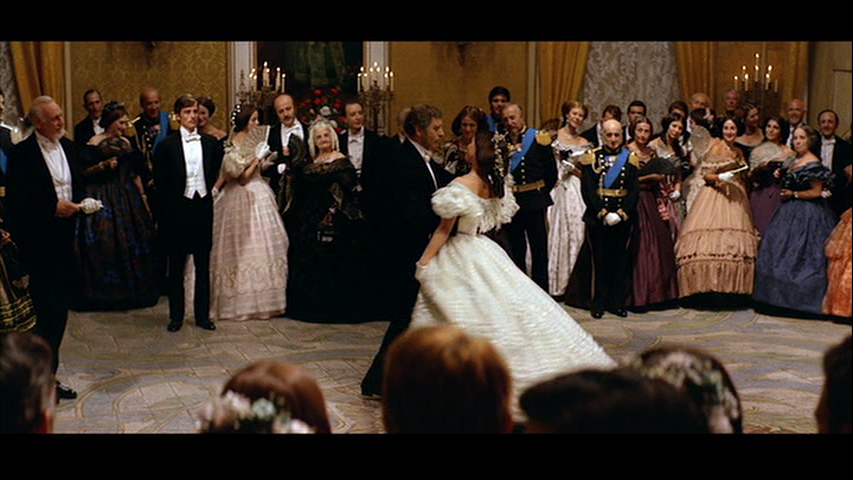 That ball scene, about 45 minutes long, is one of the most gorgeous I have ever seen, with beautiful, accurate costumes that dazzle and beguile. I was constantly reminded of the similar scene that ends Sokurov’s Russian Ark, so handsome is it. It is small wonder that this movie bankrupted its studio, but the result is so gorgeous, it really deserves to be seen in its original Technicolor, restored beautifully in the Criterion blu-ray.
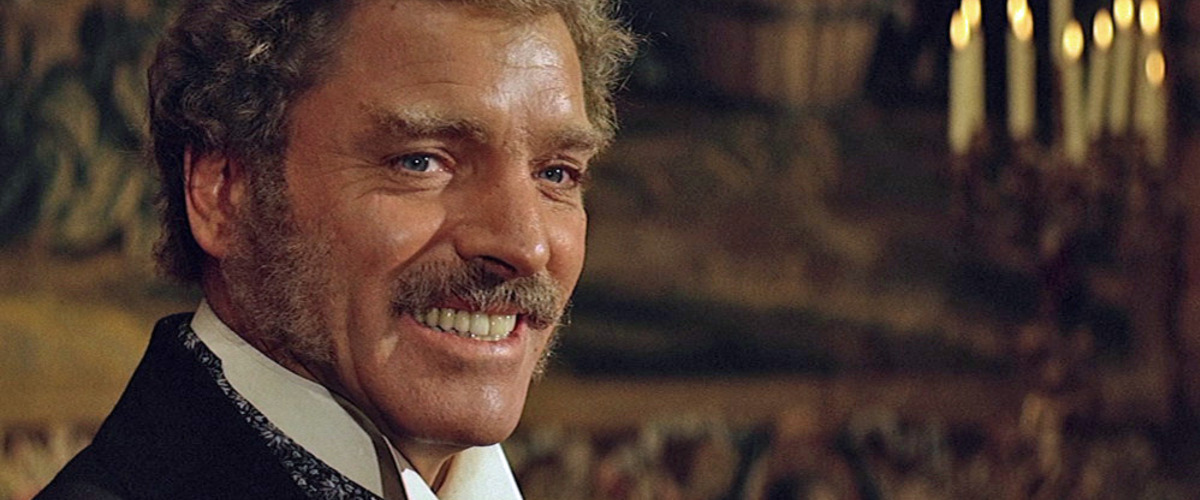 The American box office for The Leopard, however, was dismal, and the movie vanished. Hell, I wouldn’t have even known it existed if it were not for the documentary Z Channel: A Magnificent Obsession and a reminder from Mark Cousins’ The Story of Film. Fox cut twenty minutes, used the cheaper DeLuxe color process for their prints, and, of course, dubbed it into English. This is the only way to hear Lancaster’s real voice in the role, and I have to admit that it was distracting for a while to hear another man’s voice, speaking Italian while Lancaster moved about. But the story is so Italian – so Sicilian, specifically – that hearing it in English robs it of so much identity, the heft of history. I admit that I am a snob about such things, and will always prefer the original language with subtitles, but this is, I think, an instance where is provably true. Most of Fabrizio’s commentary in the ball scene is silent, in any case; it is Lancaster’s attitude and body language that tells the tale of that evening.


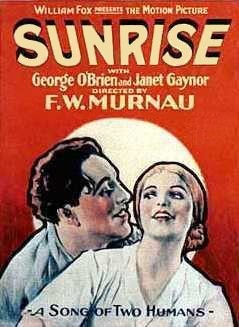
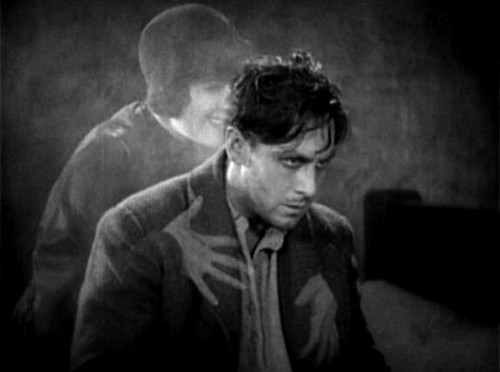


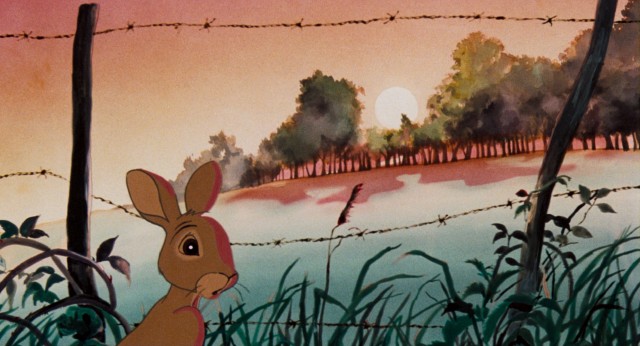
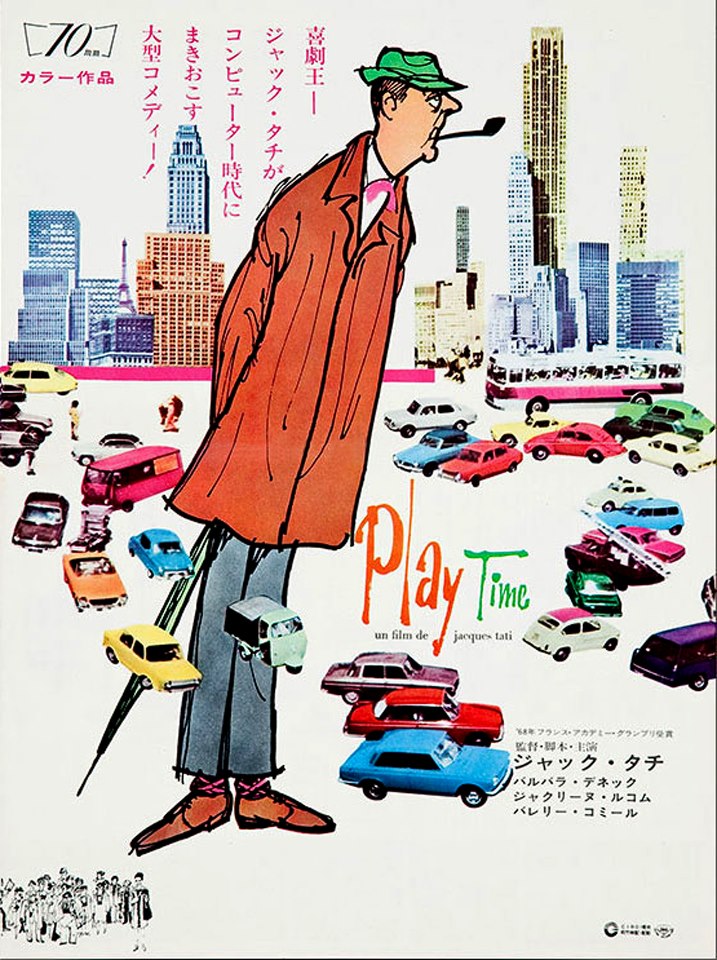
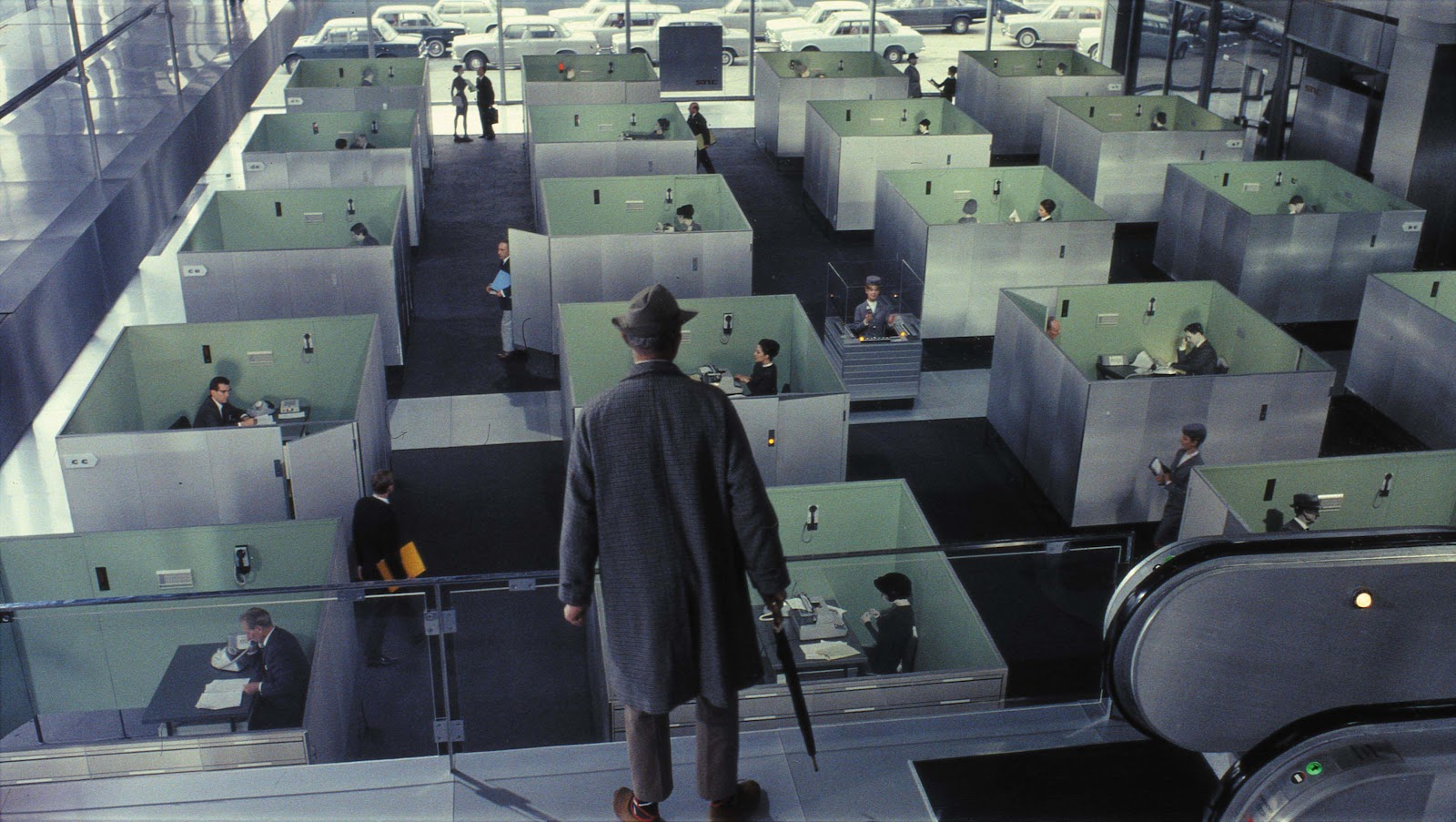


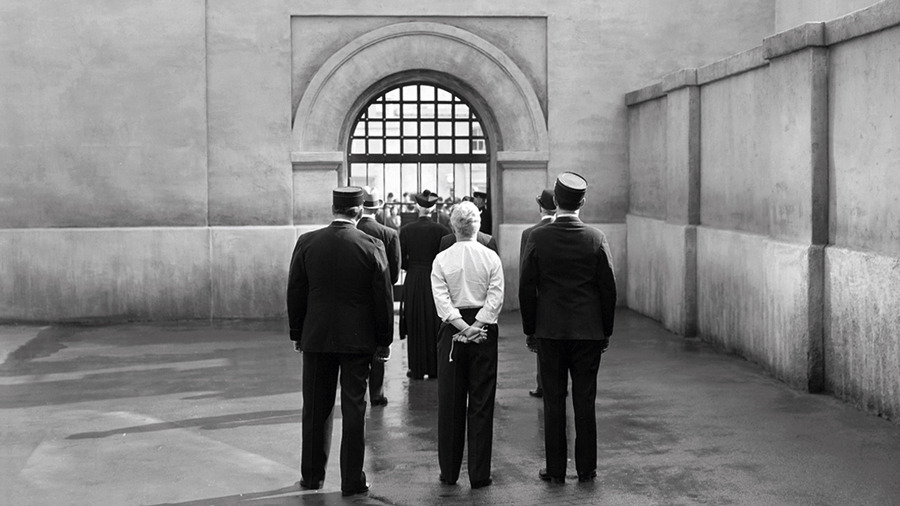
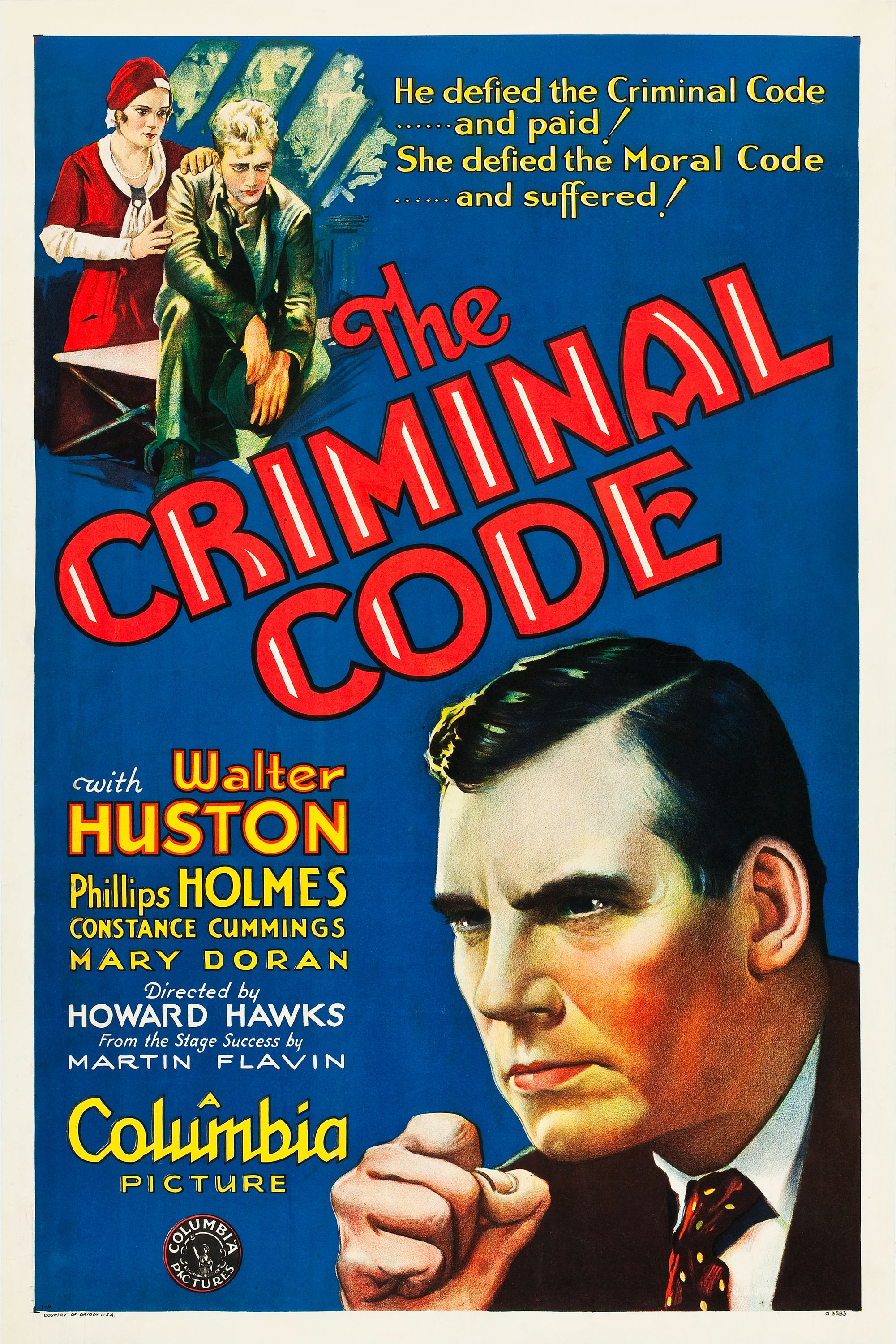
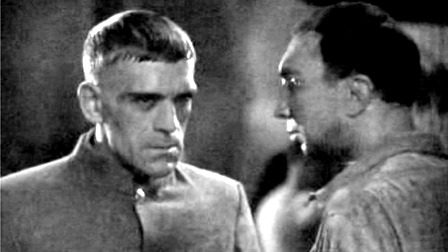



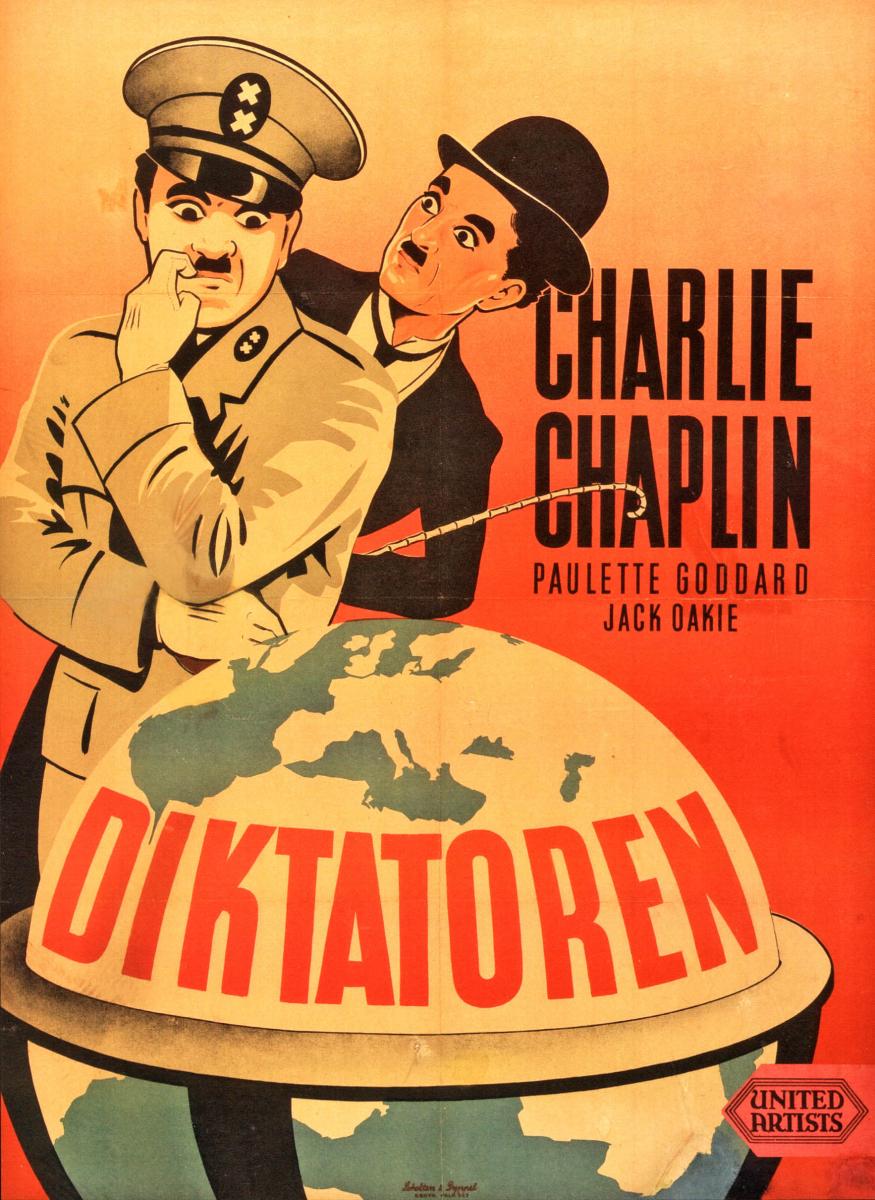

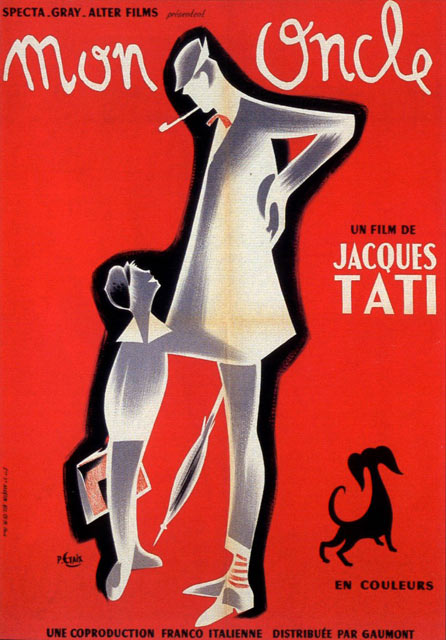


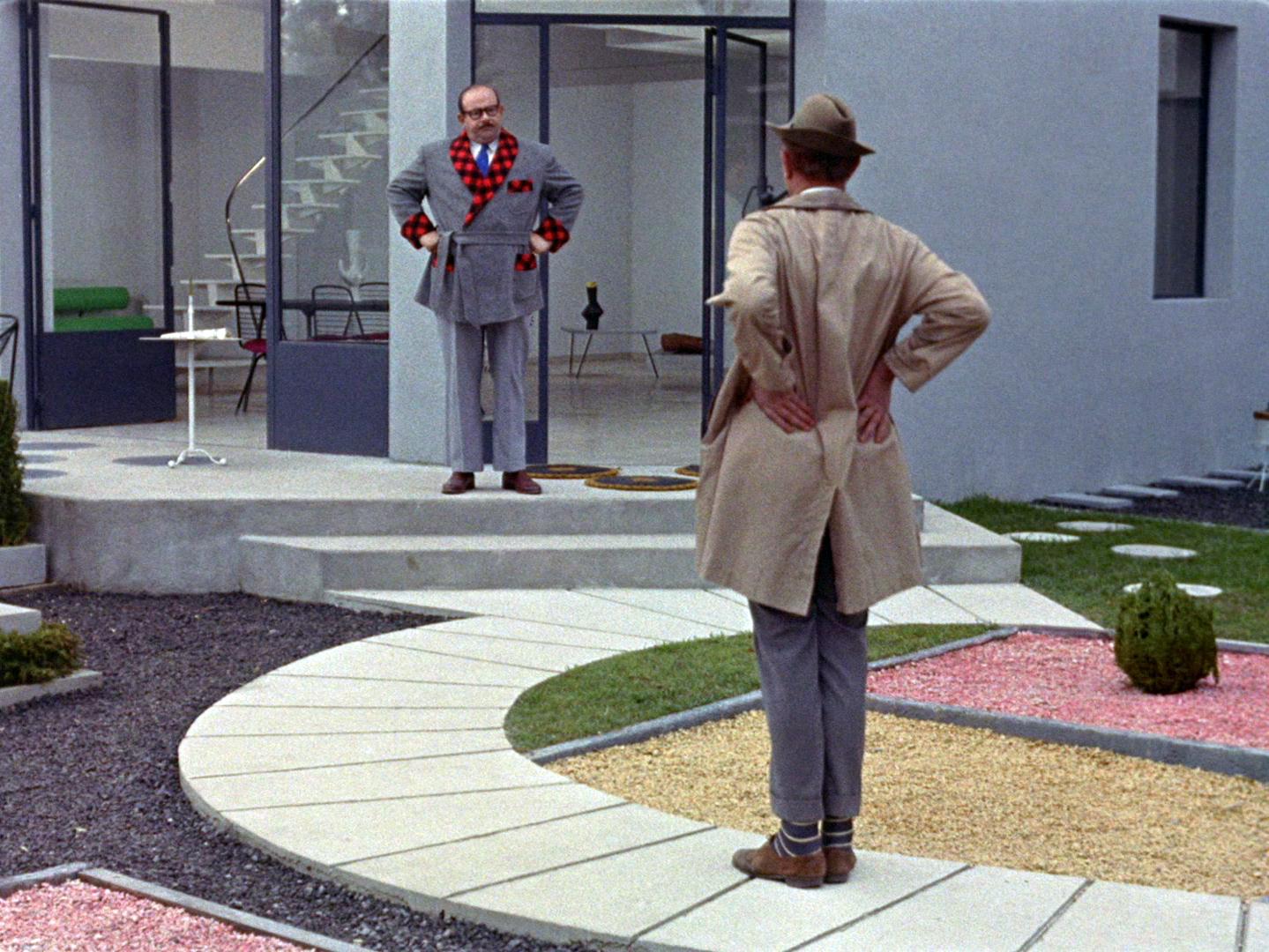


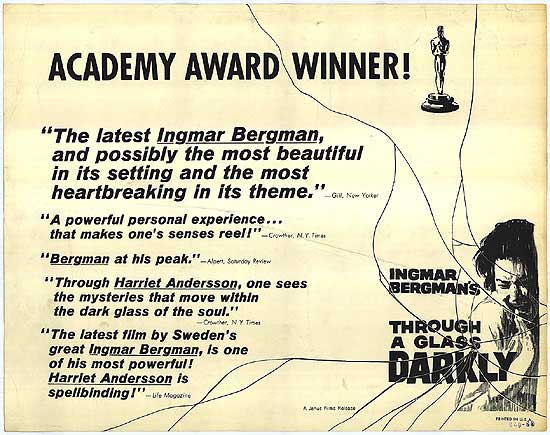



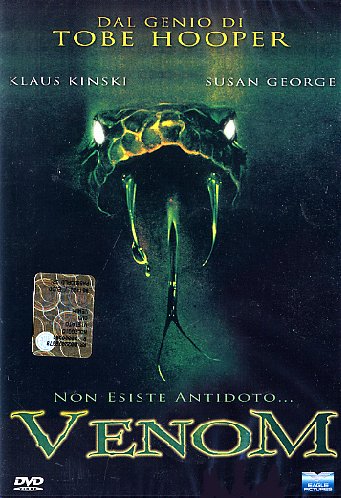


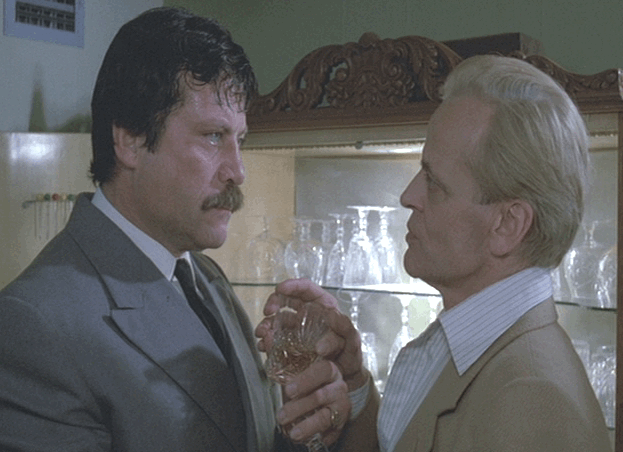
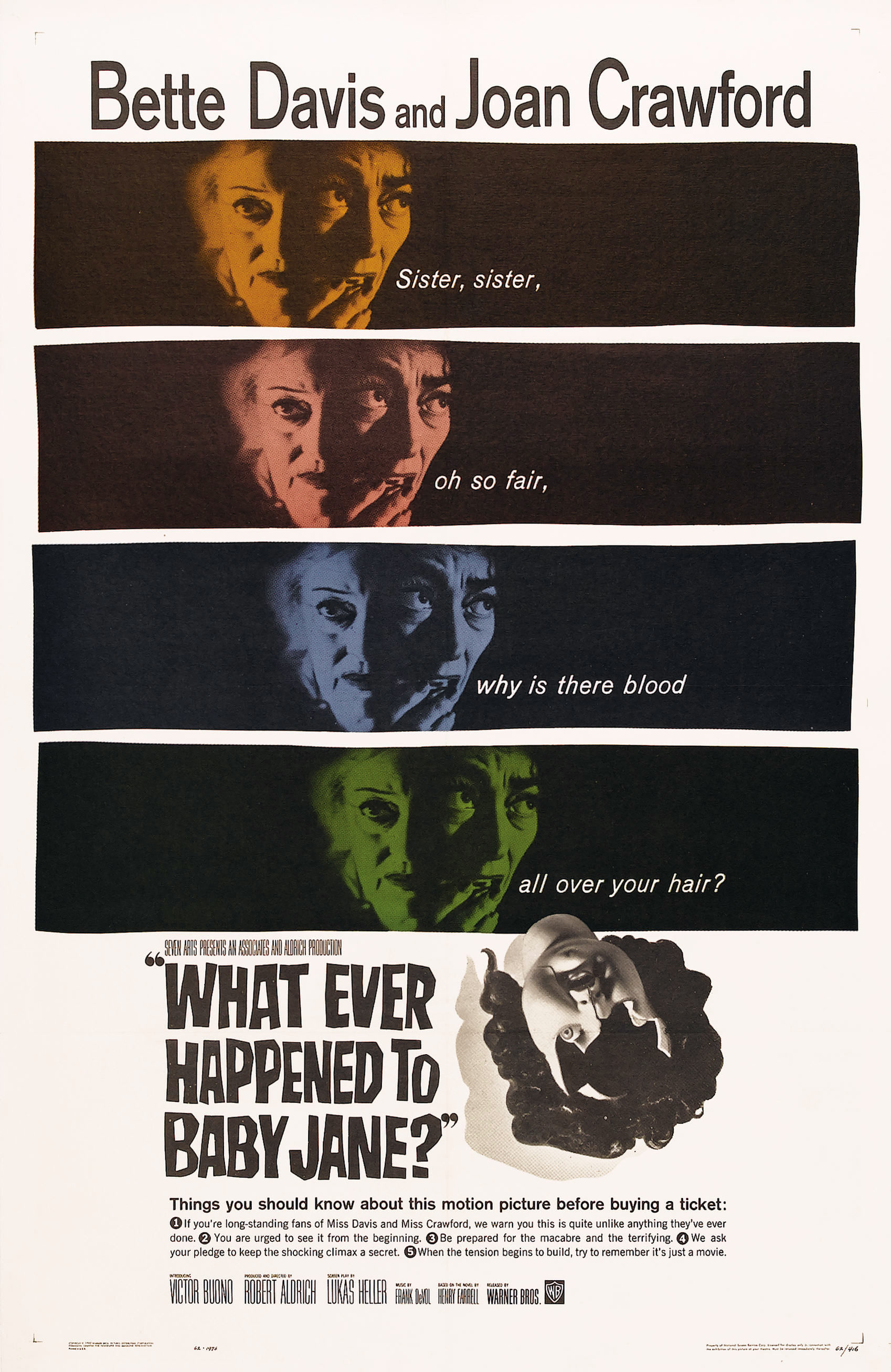
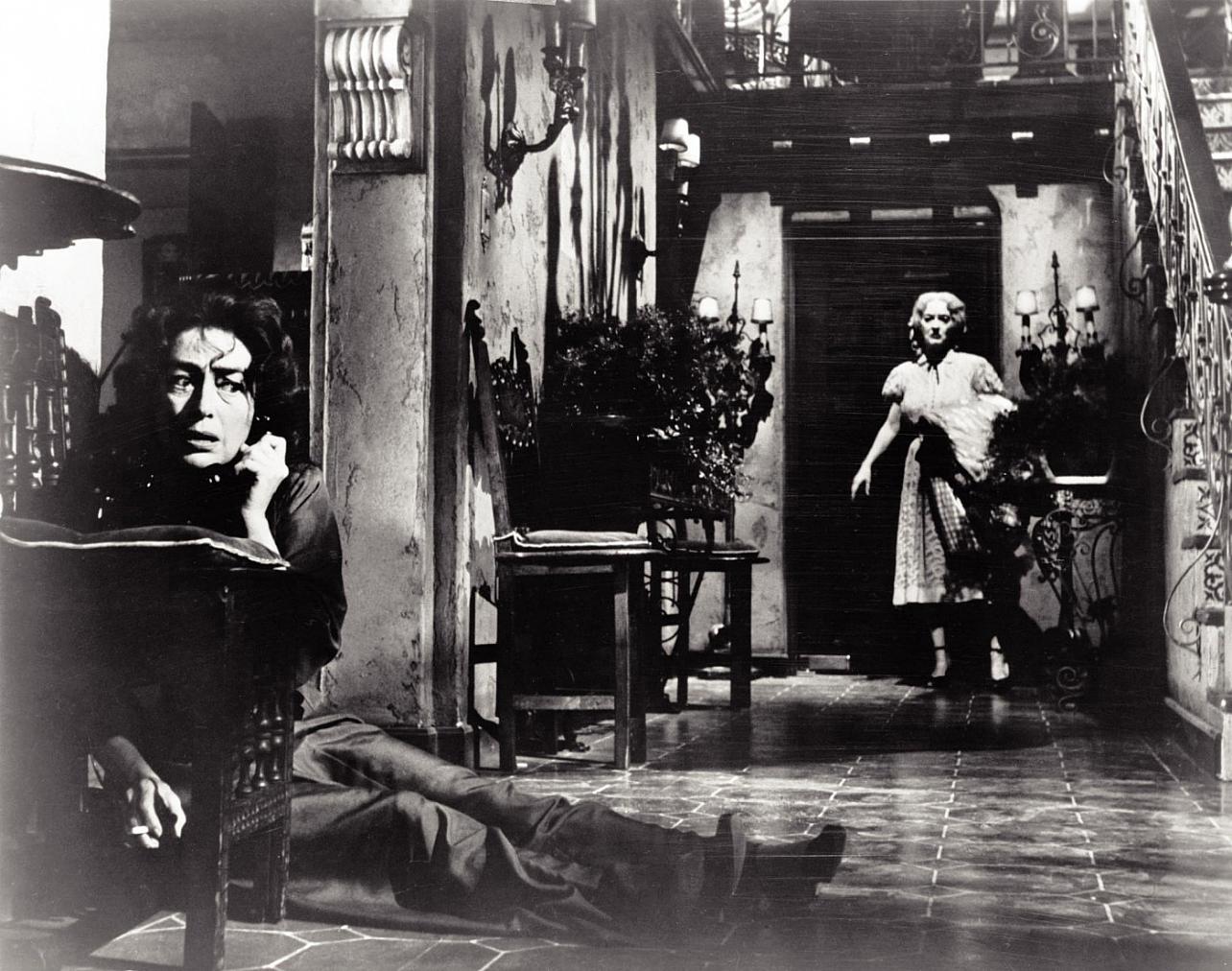
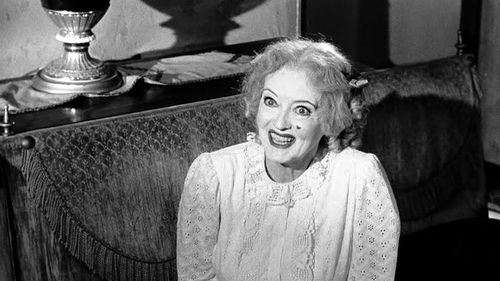


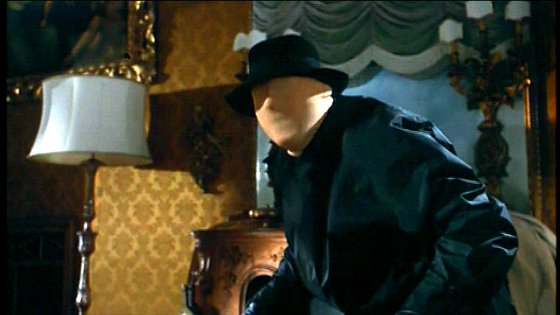


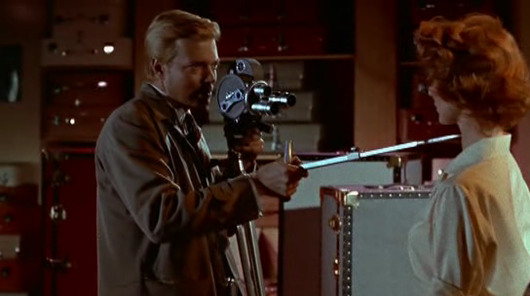

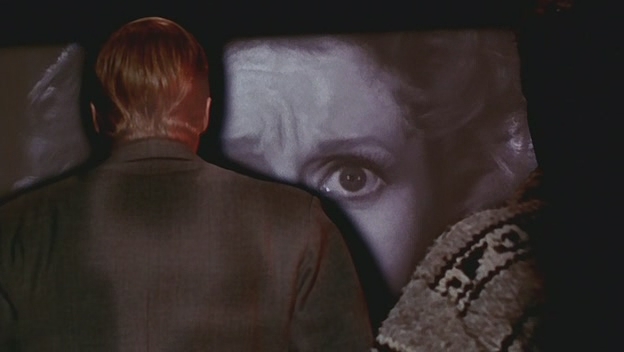
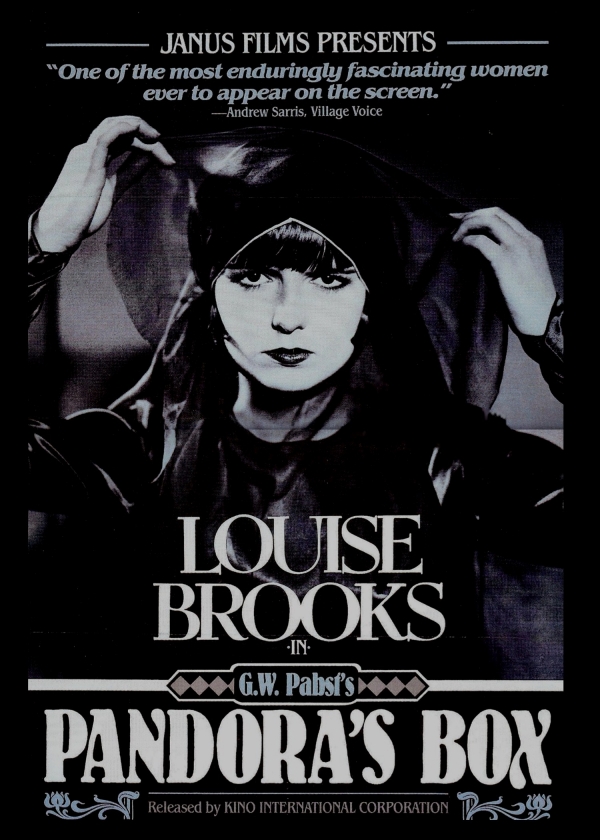
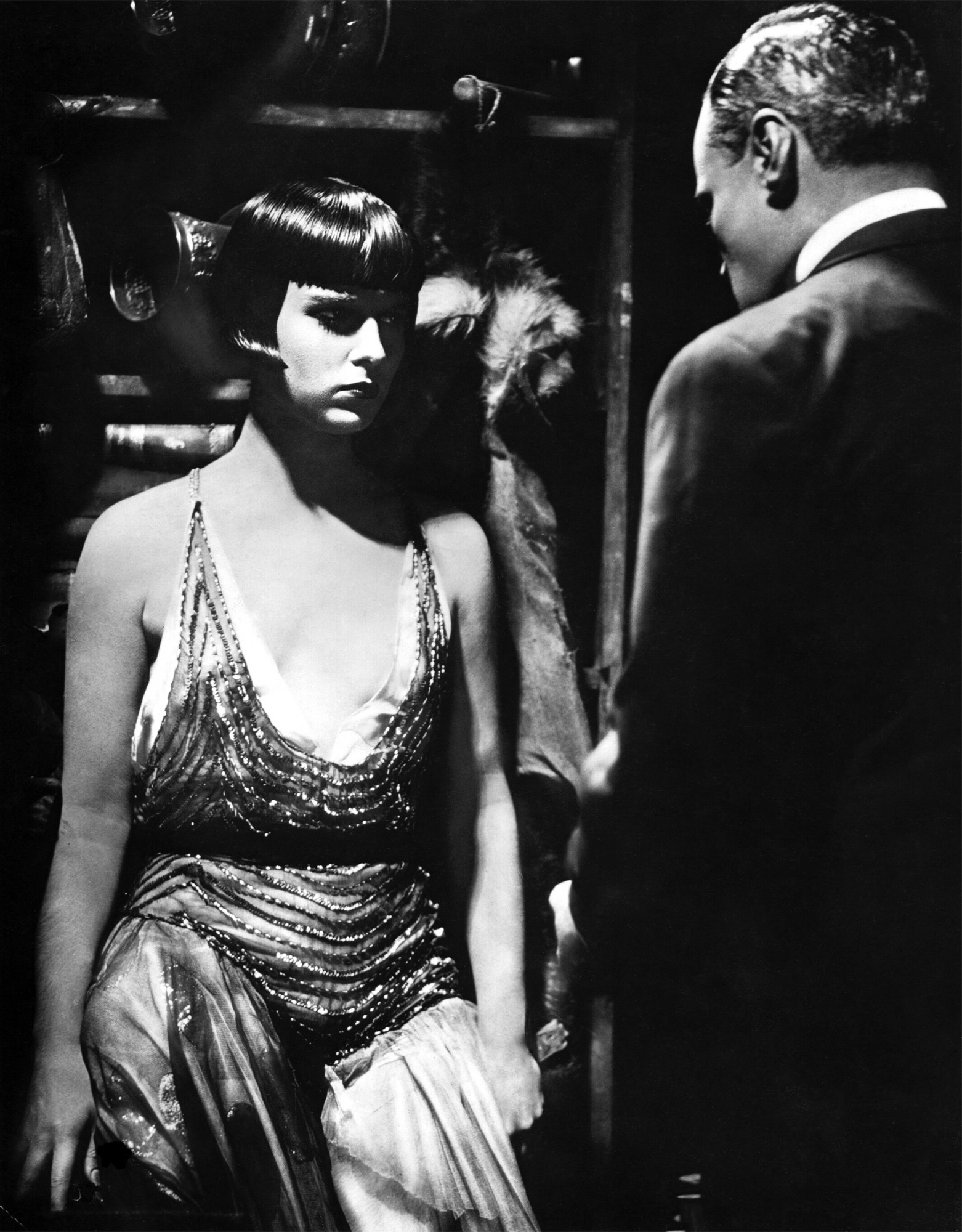

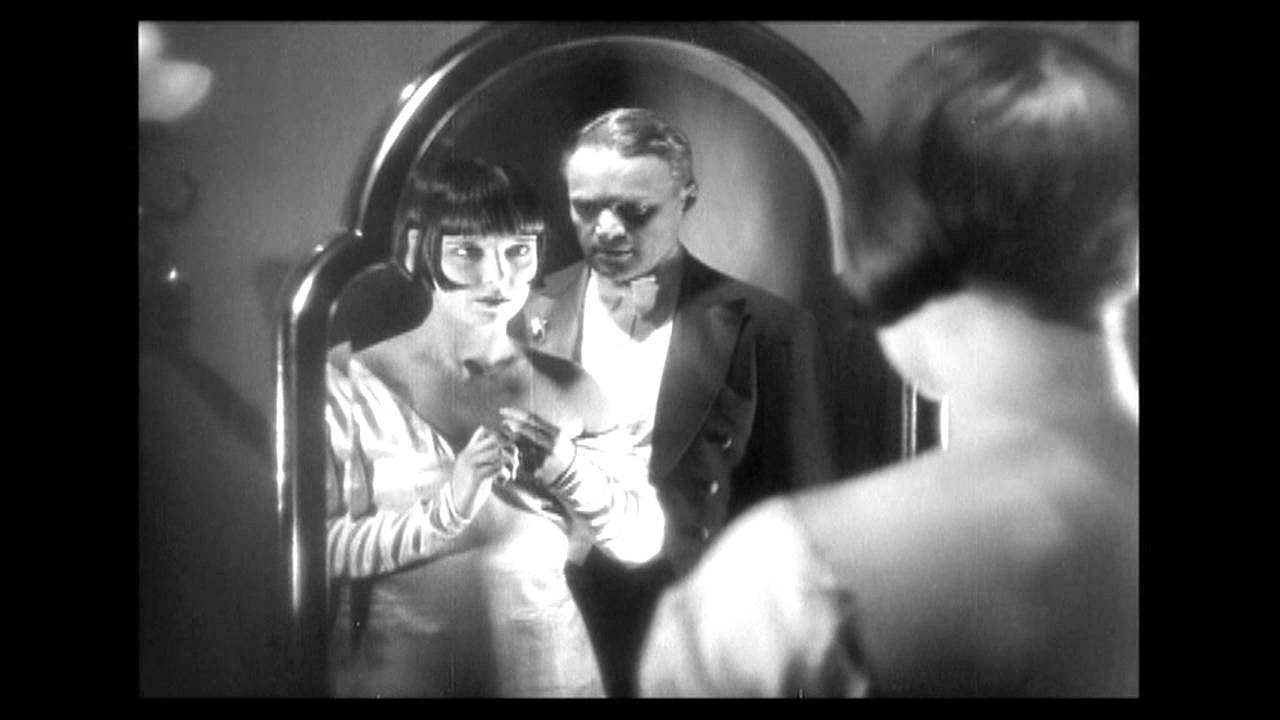
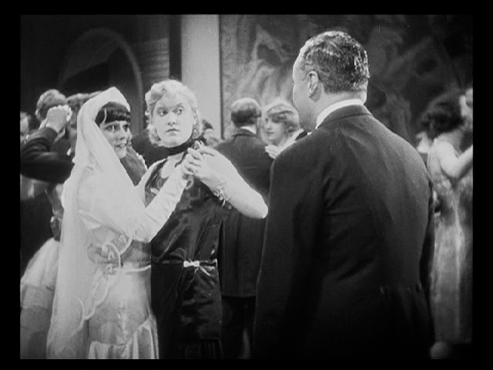


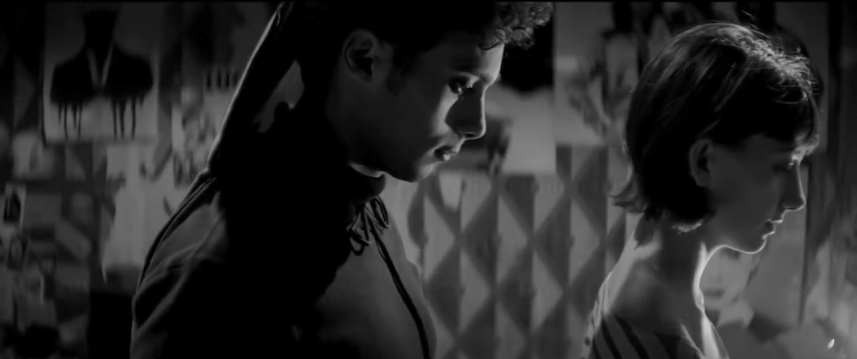
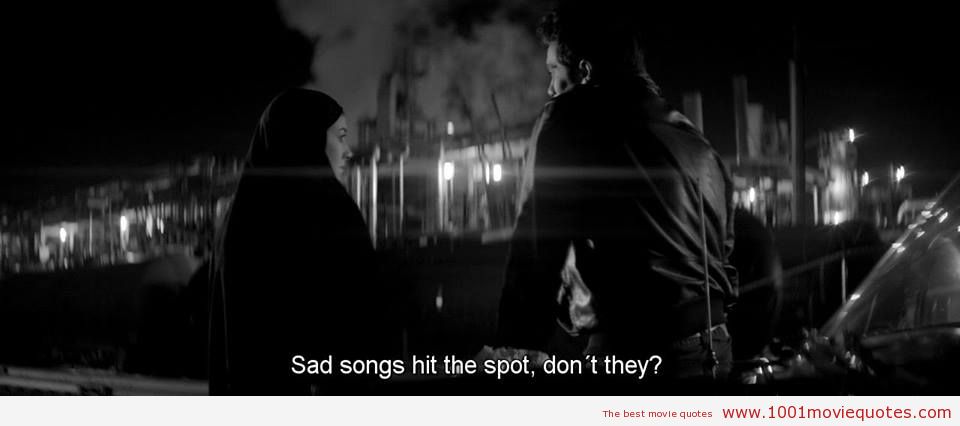


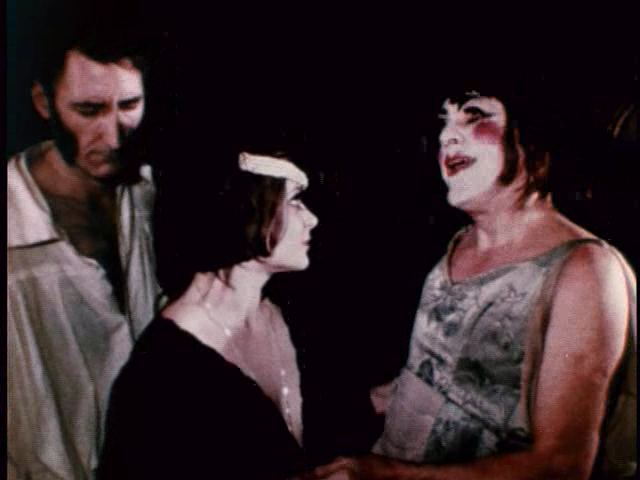


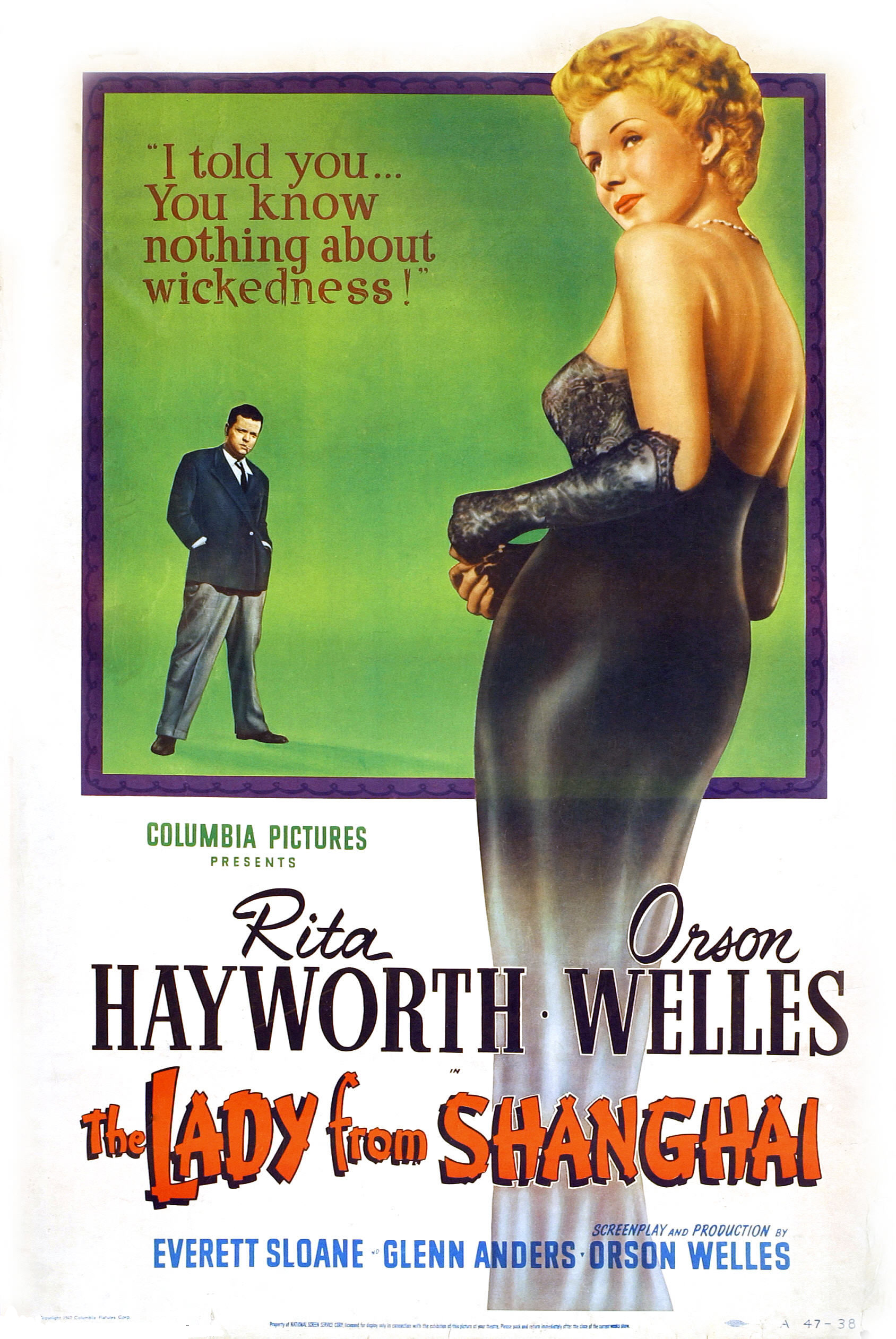




 drfreex.com