P: Plague of the Zombies (1966)

Hubrisween 4
Hubrisween Central  ♠  Letterboxd Page

posterI had seriously meant to watch Andrzej Zulawski’s Possession for this position in the Hubrisween. It’s a movie I’ve been meaning to get to for years. But it has a reputation for being challenging, and between personal setbacks and an ongoing horrorshow of an Election Cycle, I really did not feel the desire to voluntarily challenge myself on another level. Looking over my list of movies, one popped up that was another movie I had meant to see for years, and one which was unlikely to poke any bruised places on my psyche: Hammer’s The Plague of the Zombies.

Then I found out that fellow Hubrisweener Chad Plambeck at Microbrewed Reviews (formerly 3-B Theater, for all my fellow old-timers) had already staked it out weeks before. Well, go over and read his, if for some reason you got here first. (As I type this out, I say a silent prayer that I remember to come back here and link to it) Double-dipping is a time-honored tradition in Alphabet Challenges, and I’m a bit surprised we actually made it three-quarters of the way without doing it.
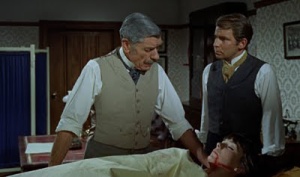
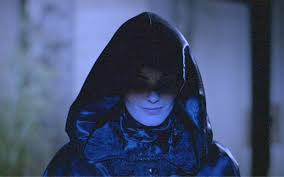
plague_4Circa 1860 or so, posh London medical professor Sir James Forbes (Andre Morell) is convinced by his daughter Sylvia (Diane Clare) and a troubling letter from his former star pupil Peter (Brook Williams) to spend his holiday in the Cornish village where his student has taken up practice. Peter has a problem: a slow-motion epidemic of “marsh fever” has killed a person a month since his arrival, and the superstitious villagers won’t allow him to perform an autopsy.

As there was a funeral for the latest victim during his arrival, Sir James convinces Peter to join him in a bit of resurrectionism in the dead of night (it is amusing to speculate that Sir James had some experience with this in his younger days). They find the freshly-buried coffin empty.
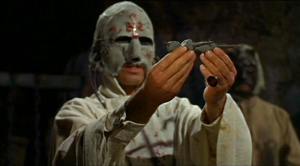
plagueThe Plague of the Zombies is constructed like a mystery, as Sir James puzzles out exactly what is happening, and why the graveyard is full of empty coffins. As an audience, we have an idea of how but not the why. The local Squire Hamilton had a lucrative tin mine that had to be shut down over safety concerns, and when the young Squire (John Carson) returned from lengthy time spent in the Carribean (particularly “Hy-eight-tee”, we are told), he brought with him the power of voodoo. He – and the band of rich young ne’er-do-wells which are a staple in Hammer films – are killing people with curses and then reviving them as zombies to work in the mine.

theplagueofthezombiesThis is a good Evil Plan (I’m sure many capitalists are wishing there was such a thing as Zombie Labor), even though parts of it are quite suspect, such as why Hamilton decides to do away with Peter’s wife Alice (Jacquelin Pierce), and then Sylvia (except, you know, for the whole Being Evil thing). The scene involving Alice’s resurrection, though, is one of the movie’s most chilling sequences, brilliantly evoking one of the best parts in Bram Stoker’s novel Dracula – the confrontation with the undead Lucy in a graveyard. That’s a brilliant piece of writing perfectly transferred here.

Plague of the Zombies was shot back-to-back with The Reptile, another Hammer movie which is unjustly relegated to the second tier in most fans’ estimation. Both, like 1964’s The Gorgon, are attempts to diversify the studio’s output from what had become its stock-in-trade, vampires and mad scientists. Like a comedian attempting to perform a serious, dramatic role: people do not like having to face the unfamiliar in their entertainment. I realize that’s an absurd critique given how I came to be watching Plague instead of Possession, but here I am, Exhibit A.

plaguezombieAlso working against it is its lack of star power: there is no Lee or Cushing here, but the cast is outstanding and solid. Morell has an impressive resume, but his major previous work for Hammer was as Dr. Watson in the 1959 Hound of the Baskervilles, and that detective work aids him greatly in this role. Diane Clare is going to be instantly recognizable from The Haunting, and that most essential Hammer actor, Michael Ripper, is on hand as a constable who is as helpful as he can be under trying circumstances.

The zombies here are genuinely chilling, the story engaging, production values high. This is not second-tier Hammer, at all. It is first-rate entertainment (if entirely suspect in its colonialism and misrepresentation of another culture’s religion) and should be treated as such.

Buy The Plague of the Zombies on Amazon (good luck!)


O: Orochi, The 8-Headed Dragon (1994)

Hubrisween 4Hubrisween Central  ♠  Letterboxd Page

1SheetYamato94AdvOne of the best things about roundtable challenges like this is they can force me to finally, finally watch movies that have been in my possession for years. In this case, since the days of VHS. Luckily, I still have a player that works, because domestic distribution of this movie in this digital age has been rather, shall we say, spotty. And monster movies starting with O are not terribly common.

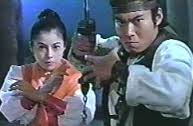
Orochi is the Western name; most Japanese and fans of their movies know this as Yamato Takeru, which is the main character’s name, and is a long-standing legend in the Island Nation. Wikipedia has an easy-to-read breakdown of the legend… but that’s not going to do you a whole lot of good with this movie.

amanoshiratoriTwins are born to first century Emperor Keiko, and the Emperor’s advisor says that the youngest of a set of twins is always bad news, so he throws the baby off a mountain. The baby is rescued by the White Bird of the goddess Amaterasu, and deposited at a nearby temple, where the baby grows up to be our hero, Yamato Takeru.

That poison pill advisor is actually a minion of the exiled god Tsukoyomi, and he knows that Yamato was born to be a Warrior of the Gods, to do battle with Tsukoyomi when he returns from his exile. All this is your standard Chosen One movie plot, but what is uncommon is the White Bird is obviously a robot and Tsukoyomi was exiled (and is returning in) a UFO made of ice.

"Lightning bolt, lightning bolt, lightning bolt!"

“Lightning bolt, lightning bolt, lightning bolt!”

After various misfortunes engineered by the evil advisor, Yamato is sent by his father on a seemingly impossible task to kill a tyrannical warlord; to give us all our standard fantasy tropes, he will be accompanied by his two older mentors, basically a Paladin and a Wizard, and he will pick up his eventual lady love, Oto, a half-elf who is really good with the Magic Missile spell. You may think I am kidding about the standard tropes, but Yamato has to recover “Three Lights” and claim the magic sword of the storm god Susanno’O, which flares into light often enough to remind us it’s a lightsaber. Yamato and Oto fight the returned god and are the verge of victory when Tsukoyomi cheats and turns into the title creature.

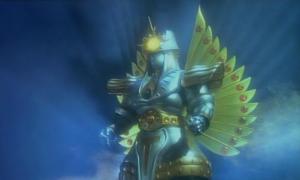
GOD GUNDAM!!!

GOD GUNDAM!!!

Divebombing the enormous hydra on the White Bird of Amaterasu doesn’t work, so Oto pixilates and joins with Yamato, and they turn into a Giant Divine Warrior Robot, a God Gundam if you will, complete with Flaming Sword Action Feature.

I have to admit, I was not expecting that.

You might be saying to yourself, “How is this a Halloween movie?” Pfui. The answer is monsters, my friend, and Orochi has two of them besides the titular dragon. The first, the warlord’s pet beastie, is a not terribly inspiring suit that keeps morphing weapons out of its hands. The second is a be-tentacled sea serpent that the evil advisor sics on our two heroes, and it is magnificent. Orochi himself is no less spectacular. Man does not live by vampires and slashers alone, my friend. Let yourself have some fun.

That is just a damn fine monster.

That is just a damn fine monster.

And that’s what Orochi is – it’s a fun fantasy adventure with only the slightest of connections to its source material. The blending of science-fiction elements with the fantasy gives it a unique enough feel to distinguish it from it’s brethren. If there’s one false note in the whole affair, it’s the effects done in an early stage of computer morphing madness. It’s like Wes Craven’s New Nightmare, every now and then something crops up that just makes you wince.

Okay, okay, you're cool too, Orochi.

Okay, okay, you’re cool too, Orochi.

Orochi was supposed to be the first film of a trilogy, but poor box office put paid to that idea. Whether it was the science fiction elements, the complete bending of a well-known legend into something cosmic, or perhaps the simple fact that there is no possible way to top the God Gundam – I have no idea.

At least try to buy Orochi, the 8-Headed Dragon on Amazon

N: Night of the Seagulls (1975)

Hubrisween 4
Hubrisween Central  ♠  Letterboxd Page

Dude... are those EYES? Come ON!

Dude… are those EYES? Come ON!

So here we are, on the fourth and final entry of Spanish director Amando de Ossorio’s Blind Dead series. Over the course of the series, the Templars have been:

  1. Revenants who emerge from their graves whenever anybody  trespasses in their haunted cathedral
  2. Revenants who emerge from their grave either because of the Village Idiot’s human sacrifice, or because it’s the 500th anniversary of their execution by peasants who had enough
  3. Revenants who got dug up with their treasure and took over a galleon to lure ships into “another dimension” for blood sacrifice to continue their immortal but sucky existence.

In Night of the Seagulls, the Templars are lording over a remote fishing village where every seven years, the villagers must turn over one of their children (preferably pretty girls, apparently) on seven consecutive nights, or the Templars will kill everybody. This happened once before, we are told, though why there’s still a village there is never addressed.

blinddeadseagullsWe don’t even get to find that out until the mid-point of the picture; Most of our time is spent with the new doctor who has been assigned to the village (Victor Petit) and his wife (Maria Kosti), who are told by the departing doctor:

  1. Don’t go out at night
  2. Don’t get involved in anything
  3. Transfer out as soon as possible

They of course ignore all of these good pieces of advice, especially when the orphan girl they’ve hired as a maid (Sandra Mozarowsky) is chosen as one night’s sacrifice. The doctor frees her in the nick of time, which means there is a Templar get-together at his house.

BlockadeAs I said, the backstory (which changes with each successive Blind Dead movie) isn’t revealed until the midpoint, and the appearances by the Templars to that point feel rather rote and uninspired. Some footage is obviously recycled from the first movie, and though there is one instance of the most famous of the Templar’s traits – that they are blind and have to hunt by sound – that remains a factor that also received dwindling attention as the series progressed (I also have a question about the efficacy of hearing-based predators in a locale with constant rolling surf and seagulls, but let’s get on with it).

Once we get into zombie siege territory the movie takes off. The doctor’s ramshackle residence is pretty indefensible (again, the opportunity for the sound of hammering boards over windows being what attracts the zombies is wasted), and those flimsy boards are no match for ghouls wielding broadswords. The Templars slowly make their way in, and it is a pretty effective sequence, even if there are a couple of side-trips into the realm of nonsense. The fact that the heroes discover the Templars are very flammable and do not exploit that knowledge is, amazingly, not the stupidest thing that is done.

"This is surprisingly effective! Let's never do it again!"

“This is surprisingly effective! Let’s never do it again!”

On the even-numbered films in his trademark series, de Ossorio also destroys the Templars at the end (Oooh, spoilers for a 40 year-old movie). The method used here is so obvious that you wonder why the villagers didn’t freaking do it years ago.

"Just wait until Stuart Gordon comes along!"

“Just wait until Stuart Gordon comes along!”

Night of the Seagulls does have its good points – the zombie siege, the fact that the Templars are apparently worshipping Dagon – but it is dragged down by tedium. de Ossorio is a firm believer in the magic of threes, which usually bears some tasty cinematic fruit – but going through the sacrifice ritual three times, without the Templars being portrayed with the same awful decaying majesty of the previous films, and no build in suspense, brings the series to a close in a less than satisfying manner.

Damn near every clip on YouTube is too freaking dark, so be warned:

Buy Night of the Seagulls on Amazon

M: The Man With Two Heads (1972)

Hubrisween 4
Hubrisween Central  ♠  Letterboxd Page

the-man-with-two-heads-movie-poster-1972-1020688733In the annals of exploitation film rarely has there ever been such an obvious, and hence delightful, cheat. It is now widely known that, despite the cartoon in the corner of the poster, there is actually no man with two heads in this movie. It is instead an adaptation of Robert Louis Stevenson’s The Strange Case of Dr. Jekyll and Mr. Hyde directed by Andy Milligan, and producer William Mishkin (perhaps the great villain in Milligan’s career) re-titled it to piggyback on a movie that had an actual advertising budget, AIP’s The Thing With Two Heads.

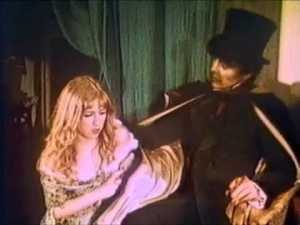
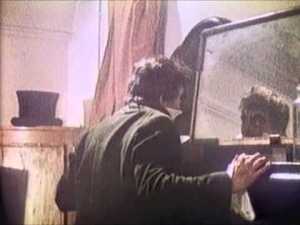
The movie is going to establish its dubious bona fides right off the top when it misspells the author’s name as Stephenson. You know the story by now; Dr. Jekyll is a kind, decent man who is seeking to isolate the source of evil in man and purge it from the world. He has managed to develop a formula that makes the evil section of the brain glow green, but he has run out of animals to experiment upon, so he injects himself with the essence of evil, not realizing his assistant bungled the formula for the antidote.

These are Milligan’s major changes in the story: Jekyll’s version of Ygor, the addition of Jekyll’s medical students to abuse as the formula starts kicking in at inopportune times, and the fact that Mr. Hyde has been rechristened Danny Blood (probably for what Milligan thought would be a very commercial title, Dr. Jekyll and Mr. Blood, not reckoning on the unvarnished hucksterism that would devise The Man With Two Heads). The rest of the story is too simple and well-told to change significantly.

This is one of three movies Milligan actually shot in England in ’71 (The Body Beneath and Bloodthirsty Butchers being the other two), and he had some unusually good luck with actors in these. Denis DeMarne is actually pretty damned good as Jekyll/Blood, Julia Stratton as the doomed prostitute April and Jacqueline Lawrence as Carla Jekyll are much better than they need to be, and Berwick Kaler as Ygor Jack is also a standout (He was in all three of the Brit Milligans, for obvious reasons). DeMarne and Kaler survived this and went on healthy careers.

"My makeup - I didn't go too heavy, did I?"

“My makeup – I didn’t go too heavy, did I?”

And therein lies a confusing thing for me: I can usually only make it through one Milligan movie a year – I need the detox time. But God help me if I didn’t find myself sort of liking this plucky off-model Jekyll and Hyde. There is actually a growing sense of competence in Milligan’s filmmaking. This is not a great movie in any sense of that word, But getting through it was not the endurance contest I usually feel with Milligan. The scenes between Blood and April are grueling, for the right reasons for once: the lines seem lifted from a particularly intense dominance & submission scene, and I would actually bet money that they were.

It’s still a Milligan movie, though. Lengthy, talky scenes that would be fine on a stage are done in one take, camera and actors apparently nailed to the floor. No boom mike, so dialogue in many scenes has all the reverb bouncing off the walls and ceiling (I can hear Mishkin saying “ADR? What’s that? Some new drug?”). When he does a close shot on a dialogue scene, you can hear the whirr of the camera motor bouncing off the actor’s faces. Milligan also likes to repeat himself a lot; too much padding is derived from one character telling another what happened in another scene.

"Argh! Those two caterpillars - they're back on my forehead!"

“Argh! Those two caterpillars – they’re back on my forehead!”

It is a fun game to play when looking at Milligan’s period costumes: “Tablecloth or Upholstery?” Carla Jekyll appears to be wearing Carol Burnett’s dress from her Gone With the Wind sketch, and April appears at one point in a bizarrely medieval gown that must have been left over from Torture Dungeon. Whenever we have one of Milligan’s trademark gore scenes, you can count on the scene ending by having the camera spin around in a circle.

Still. This is a damned period piece shot on a budget of $20,000. Milligan’s theatrical background allowed him to cut corners on things like costuming (he reportedly made a lot of the costumes himself). It’s those same hidebound theatrical sensibilities that often sabotage him, though.

The scariest thing about this is now I’m actually looking forward to watching another Milligan movie. What the hell.

I watched the CodeRed blu-ray which was quite good; though I can’t find a trailer on YouTube, here is a crap quality clip of DeMarne, some unfortunate eyebrow makeup, and, for some reason, a fog machine:

L: Lemora – A Child’s Tale of the Supernatural (1973)

Hubrisween 4Hubrisween Central  ♠  Letterboxd Page 

lemora-posterSo it’s 1972, and two recent graduates from UCLA, Richard Blackburn and Robert Fern, decide to make a feature film. Count Yorga, Vampire had been a hit recently, so they decide a vampire movie makes sense commercially – and then they proceed to make a fairly uncommercial movie.

It’s the Depression, and gangster Alvin Lee (William Whitton), on the run after gunning down his unfaithful wife and her lover, is drawn by mysterious gazing eyes to a house in the middle of nowhere, where he finds his shotgun is useless against the caped figure welcoming him. Then some guys in capes – and hats! – subdue him.

Meanwhile, his daughter Lila Lee (Cheryl “Rainbeaux” Smith in her first billed feature role) is trying to live down her unfortunate parentage at a small church, where she’s been a ward for three years. She has a large role in the services as “The Singin’ Angel”, and as the story progresses, we’ll see there’s not a small amount of sexual tension between herself and the Reverend (played by director Blackburn). Incidentally, Lila is only supposed to be 13 years old, here, though Smith is obviously not. Lila receives a letter from “Fellow Christian” Lemora that her father is on his deathbed, and is calling for her. So Lila does the Christian thing and goes to him, so she can forgive him.

lemoraShe leaves late at night and has to catch a bus seemingly in downtown Gomorrah. It’s a strange, dilapidated bus, the only one that goes to her destination, and it only runs at night. The exceptionally creepy driver (Hy Pyke) says he doesn’t make the run very often. The people there are strange, and too many of them have what is called “the Astaroth look”. Strange man beasts roam the woods, and eventually waylay the bus; Lila is only rescued by the intervention of those mysterious men in capes and hats.

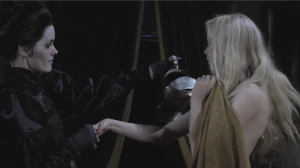
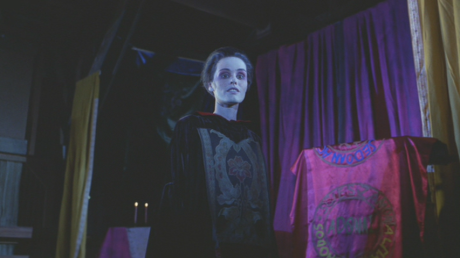
lemora9After a night of captivity in a small cottage, Lila escapes and runs into – finally – Lemora (Lesley Gilb), a striking, pale figure in black Victorian dress. Folks, We knew from that opening sequence that she was a vampire, so there’s not much of a spoiler there. She’s found something in Lila’s innocence that she must possess (and turn her into a vampire). After a lot of bizarre escapades playing with Lila’s unsophisticated, unworldly nature, she finally sees Lemora putting the bite on one of  the children that are constantly hanging around being creepy. Lila finally listens to what we have been shouting at the screen the whole time, and tries to run away, leading to a very lengthy – but good – chase sequence.

lemora_10Here’s what’s going on: Lemora’s bite apparently reveals a person’s true nature, or something like that. Some become the vampires roaming about in capes and hats, others become the man-beasts lurking in the woods. The vampires have been trying to exterminate the man-beasts, but as the story reaches its climax, the man-beasts are getting organized and retaliating, resulting in a final, internecine battle at what was supposed to be Lila’s initiation ceremony. Apparently the footage of this was not satisfactory, so Blackburn and Fern start playing with the timeline and finally end on a note of abstract ambiguity.

The initial reaction to Lemora was, um, not good, and the disappointed Blackburn and Fern sold it off and got on with their lives. A drastically-edited and far too dark print circulated on late night TV for ages, which is where I first (sort-of) saw it. There are reports it was better received in France, where they actually got the literary references.

lemora-bathes-lila-2I don’t know if you got it from my terse description, but the last third of the movie (at least) is obviously Lovecraft’s “The Shadow Over Innsmouth” (that one honks it horn and flashes its brights when “the Astaroth look” crops up), except for the female protagonist and nightgown. This gets strengthened when Lemora tells Lila of the initiation ceremony, which is to be held in a church. “Baptist?” asks the girl. “Much more ancient than that,” answers the amused Lemora. Also name-checked is Machen’s “The White People” and a large dash of LeFanu, though the filmmakers eschew the more overt lesbianism of, say The Vampire Lovers for a more… well, its hard to say innocent vibe, but certainly not as salacious.

Like another unjustly ignored horror movie of the time, Messiah of Evil (which had its own production problems impacting the ending), Lemora often feels like a European movie (Blackburn says that he wished he had made it in Spanish, which makes sense on an artistic level, but then we’d be talking about this movie as a blueprint for Dagon). There is very strong art direction by Sterling Franck and exceptional costume work from Rosanna Norton. There are some odd filmmaking bobbles that can be laid to it being Blackburn’s first directorial gig (there is an over-reliance on freeze-frames, especially when they start improvising with the storyline in the final scenes), but this is overall a handsome movie, especially for its budget (and it’s a period piece, and it’s shot on 35mm!). I also really admire the spots where Blackburn thriftily realized he could save money on sync sound and found ways to have long dialogue scenes with only Smith’s silent reactions.

Something like this is going to live or die on its actors, and Blackburn hit the jackpot. Cheryl Smith’s quiet, vulnerable naturalism actually helps sell all the outrageous stuff happening around her, and Lesley Gilb is quite striking and imposing as Lemora: never a wasted motion, often a impenetrable island of stillness in a scene. I swear she goes minutes without blinking. She really does deserve to be included in the ranks of great cinematic vampires.

vlcsnap-2016-10-02-01h13m15s377Even if it does fall apart narratively in its final minutes, Lemora: A Child’s Tale of the Supernatural is that wonder, an actual undiscovered gem from the early 70s. Well, not undiscovered, Synapse’s Don May knew about it and put out a nice restored DVD for its 30th anniversary. But I only knew of it from Michael Weldon’s first Psychotronic Encyclopedia of Film so I could catch that dark, maimed version at 3:30 in the morning on channel 39. That pretty much counts as “undiscovered” these days.


Buy Lemora on Amazon. But hurry!

K: Kwaidan (1964)

Hubrisween 4Hubrisween Central  ♠  Letterboxd Page

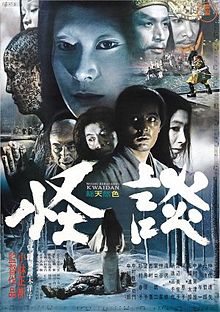
220px-KwaidanposterjapaneseKwaidan is an archaic version of the Japanese word Kaidan which, in its simplest translation, can be understood to mean “ghost stories”, but its meaning is actually more subtly complex than that: and that is a fair metaphor for director Masaki Kobayashi’s film of the same name. The title also derives from Lafcadio Hearne’s 1904 book of folklore, Kwaidan: Stories and Studies of Strange Things, though the four stories translated to cinema are actually from two of his collections.

Each story is presented with no connecting arc, with perhaps the only concession to their prose origins the occasional bit of voice narration (the deeper translation of kaidan alludes to the stories’ origins as oral tradition, anyway).

kwaidan 11In The Black Hair, an impoverished samurai leaves his faithful, patient wife to marry a noblewoman and rise to a profitable post; that marriage is an unhappy one, and the samurai torments himself with memories of the woman he treated so badly. Years later, he returns to his old house, to find it in poor repair, except for the rooms where his wife works her loom. She is radiantly happy to welcome him back into her life. This would be a happy ending, except the samurai wakes up the next morning to discover he has been sleeping next to the rotting corpse of his wife, who died of a broken heart years before.

kwaidan-08c-webThis is followed by The Woman of the Snow, which begins with two woodcutters caught in a blizzard. They seek what shelter they can in the shed of a boatman, but that night a ghost enters the shed, and her breath causes the older woodcutter to immediately freeze to death in his sleep. She spares the younger man, on the promise that he never tell anyone what he has seen, ever. A year later, the surviving woodcutter meets a young woman travelling on the road, alone, and they fall in love. Yes, Tales from the Darkside: The Movie fans, you should be recognizing this tale, though the ending here is much more bittersweet, though no less tragic.

kwaidan-hoichiAfter an Intermission, the movie resumes with probably its most famous sequence, Hoichi the Earless, which is the tale of a young blind biwa player living in a temple. His performance of the song cycle telling of a sea battle that was the death of an entire clan is so good, he is called upon by the spirits of that clan to perform it repeatedly at a nearby graveyard. Being blind, Hoichi thinks he is performing in a grand castle; these nocturnal performances are slowly killing him, and to save his life, the monks paint prayer sutras all over his body to protect him. They neglect, however, to paint them on his ears for some reason, and, well, the title itself is a massive spoiler.

kwaidanThe final story, In a Cup of Tea, was excised for American audiences, to bring the movie under three hours, I suppose. It’s a fragment, an unfinished story in Hearn’s collection, regarding a samurai who keeps seeing a man’s face in a cup of tea, and when he drinks it, finds himself bedevilled by the ghostly man and his equally ghostly retainers. Kobayashi supplies an ending, which is an appropriate button for the movie.

What none of these synopses will prepare you for is the unearthly, fabulous beauty of Kwaidan. This movie was made for blu-ray, as it is an unending buffet of visual delights. The skies of Woman of the Snow seems pulled from a painter’s easels, full of eyes watching the plight of the villagers beneath. Hoichi begins with the song of the sea battle, a massive painting of the event intercut with the actual battle, like figures from the painting come to life. It is a movie unto itself, and it is breathtakingly gorgeous.

Kwaidan-1964Coming off the success of Harakiri, Kobayashi made the most expensive movie in Japanese history, supplanting The Seven Samurai. 350 million Yen is the figure given; the sound stages are massive, and the control this gives Kobayashi over the picture is not wasted. Roger Ebert called it “one of the most beautiful films I have ever seen,” and there is no way I could possibly improve over that simple statement.

eye in the skyAmazing, beautiful, surprisingly humanistic. Revisiting this movie years after my first viewing was one of the smartest things I have done this year.

Buy Kwaidan on Amazon

J: Jesus Christ, Vampire Hunter (2001)

Hubrisween 4Hubrisween Central  ♠  Letterboxd Page

jesus-christ-vampire-hunter-15202Jesus Christ is already among us again, which is something taken for granted in Jesus Christ Vampire Hunter; any further explanation is unnecessary, and that is going to go for the rest of the movie. You hold on, and hopefully enjoy the ride, and how much you’re going to do that will depend on your own sense of charity and willingness to share in the enthusiasm of the filmmakers.

Evil vampires Johnny Golgotha (writer Ian Driscoll) and Maxine Shreck (Murielle Verhelyi) are victimizing and decimating the lesbian population of Ottawa, and it is up to our Lord and Savior (Phil Caracas) to employ his kung fu skills to save the day. In this he will be aided by the cat-suited Mary Magnum (Maria Moulton) and eventually the famous Mexican wrestler El Santo (Jeff Moffet).  That is your story, and it is stretched – sometimes a bit painfully – over 85 minutes.

Production is a familiar story – JCVH was shot on 16mm, on weekends, over the course of two years (which is probably a motivating factor for Jesus cutting his long hair and shaving early on). There’s going to be a certain amount of rough edges in an enterprise like that,  making an action comedy without professional stuntmen and the like. The thing is, you can see director Lee Demarbre getting more skillful in his camera setups and editing as the movie progresses.

jesus-christ-vampire-hunterOne of the early big fight scenes – when Jesus is attacked by a roving band of atheists (which is pretty funny, especially the endless of supply of assailants pouring out of the Atheist Jeep), looks like what it is – basically a home movie made with a bunch of enthusiastic friends. By the time we get to the final battle between our two heroes and the bad guys, Demarbre has gotten really good at tightening up this stuff, and the only thing holding him back is money. As it is, that extended fight scene would stand up well to the finale of any number of direct-to-video action flicks from the 80s made by supposed professionals.

maxresdefaultI’m also going to tip my hat to the pretty inclusive nature of the movie. When the seemingly defeated Jesus asks Golgotha “Why lesbians?” (the evil Dr, Praetorius (Josh Grace) is grafting their skin on the bloodsuckers to provide immunity from sunlight) and the vampire replies “They’re deviants, no one will miss them,” Jesus’ answer: “There is nothing deviant about love” seems wholly in keeping with The Naz’s actual teachings. (Santo’s rejoinder, “Good one, My Lord! Truth is like garlic to them!” proves that Driscoll had the most fun writing him). After an earlier defeat, echoing the Good Samaritan, the only person who will stop to aid a bleeding Jesus on the street is a transvestite. In a final Sermon in the Mount scene, Jesus begs his followers to “pay attention to the message, not the messenger.” There’s a lot the script gets right.

There’s a lot that’s questionable, too, but hey: this is a labor of love that got finished, and then got distributed, and then got broadcast at least once I can think of. All these things are minor miracles in and of themselves. It’s worth watching at least once, but bring along that Christian charity you’ve been saving up.

 Buy Jesus Christ Vampire Hunter on Amazon

I: I Married a Witch (1942)

Hubrisween 4Hubrisween Central  ♠  Letterboxd Page

I_Married_a_Witch_posterYou know, this is sort of the perfect Halloween movie, if you’re not into hardcore scary stuff. Its touch is light, its outlook humorous, it’s well-made and imaginative; it is the very definition of a frothy confection.

So why does it leave me so cold?

There’s a good old-fashioned Puritan witch-burning at the beginning (though yes, I know, the Puritans never burned a witch, they hanged them), interrupted for an intermission so a hawker can sell bags of popcorn with an anti-witch charm in each bag. That’s funny stuff right there. Nathaniel Wooley (Frederic March) reveals that the condemned witch Jennifer (Veronica Lake, eventually) has cursed him and his descendants to rotten marriages for eternity. Thereafter, we have a montage of Wooley’s descendants and the various forms of marital hell, including one who enlists in the Civil War to avoid his vase-throwing wife (“Running off to war – like a coward!”). This is also funny stuff.

I’m still not laughing. This mystifies me.

tumblr_mv0bgajJP71sodq76o1_1280The oak tree planted over the ashes of Jennifer and her sorcerer father Daniel (Cecil Kellaway – again, eventually) is struck by lightning, releasing their spirits to commit mischief once again, though only as two plumes of smoke, for the moment. Daniel absently criticizes Jennifer’s curse, stating, “Marrying the wrong woman is painful – but more painful is falling in love with the right woman he cannot have.” Jennifer then proceeds to incarnate herself again and make sure the current Wooley (March again) falls in love with her. That shouldn’t be too hard, given the implication in the opening scenes that Lake is naked under that mink coat she keeps losing, and Wooley’s current fiancee is harridan-in-training Estelle (Susan Hayward, magnificent as usual). Wooley is a leading gubernatorial candidate, and has lots and lots to lose.

imarriedawitch252852529The plot complicates from there, with spells flying everywhere, Jennifer accidentally drinking the love potion meant for Wooley, and her sudden love for the object of her curse drawing her into conflict with her father, who is still rather peeved about that whole execution thing.

I think my mood was all wrong the night I watched this. It’s well-made, it’s fun. I just couldn’t get into it.

Maybe, like doomed individuals in more serious movies, I know too much. Frederic March and Veronica Lake hated each other, though it never really shows onscreen. Some place the blame for this squarely in March’s court, but Lake arrived on set with her own set of baggage – Joel McCrea was up for the lead, but turned it down because he didn’t want to work with her again after Sullivan’s Travels.

Come on, this is as Halloween as it gets.

Come on, this is as Halloween as it gets.

Maybe the movie is as cursed as it hero – producer Preston Sturges (whose touch is still evident, I feel) quit because of “creative differences” with director Rene Clair. Co-star Robert Benchley, who plays Wooley’s best friend Dudley (who also seems to be in charge of finishing his distracted friend’s drinks) would be dead in three years of cirrhosis of the liver. Lake’s marquee value wouldn’t last much longer than that.

But no, I don’t think it’s any of that. I think the circumstances of life – both my own and the growing garbage fire that is the world at large as I write this in mid-July – I think that is why I couldn’t slip into the comforting, charming world of I Married a Witch. May your experience with it be better.

Buy I Married a Witch on Amazon

H: Horror Rises from the Tomb (1973)

Hubrisween 4Hubrisween Central  ♠  Letterboxd Page

horror-rises-from-the-tomb-1973.6177One of my rules for these challenge things and lists and the like is A) I should never have seen the movies before, or B) If I have, it was twenty years ago or more. This one is kind of a special case: it was thirty years ago, and it was also the first review I ever wrote, for a zine called High Tech Terror (which eventually became European Trash Cinema). So it’s kind of special, in that horrible way usually reserved for misshapen creatures in a Berni Wrightson story. I thought it was behind me, and then it crops up just in time for a horrifying twist ending.

I’ll begin with my usual digression to Bruce Lanier Wright’s Nightwalkers, (too long out of print, c’mon publishers) where he refers to “Italian horror cinema and its idiot brother, Spanish horror cinema”. Well, there’s good and there’s bad, and there’s a whole lot of in-between, and that’s where Horror Rises from the Tomb falls.

We begin in 16th century France, where warlock Alaric de Marnac (Paul Naschy) has a bunch of accusations about him read out by his brother or cousin, who knows, Armand (Paul Naschy), that he is a warlock, a vampire and a lycanthrope (Paul Naschy) and he and his mistress Mabille (not Paul Naschy, but Helga Line) are to executed for same. The execution takes some time, as Alaric and Mabille need that time to curse the descendants of their accusers, like Andre Roland (Victor Alazar). Alaric is beheaded, and Mabille is hung upside-down and whipped, as this is judged the best way to get a naked woman onscreen as soon as possible.

Horror Rises from the Tomb(1973)_003In the present day, Hugo de Marnac (Paul Naschy) poo-poos such things as seances where the head of Alaric puts in an appearance, and his friend Maurice (Victor Alcazar), who is receiving visitations from said disembodied head (because, as you recall, Maurice was cursed back in the beginning, when he was in period costume). Hugo decides to do the ultimate poo-pooing by taking Maurice and their girlfriends (Cristina Suriani and Betsabe Ruiz) to his ancestral chateau, where the body and head of Alaric are supposed to be buried separately.

As the de Marnac estate is believed by the locals to be something like a transplanted place of Transylvania, Hugo can only find a couple of local lowlifes to dig up the grounds, and they find a chest where Maurice suspiciously intuits it will be. That night, the thugs break into the shed where the chest was left until Hugo could find a blowtorch to take to the lock. They bring their own blowtorch, and find not treasure, but the head of Alaric, who immediately possesses one and compels him to kill the other, and the caretaker who discovers their burglary.

horror_rises_from_the_tombNow, fellow monster kids, you are going to realize that this is the Universal B-flick (and TV staple for years) The Thing That Couldn’t Die (1958), right down to the necklace with an ancient symbol that is the warlock’s weakness. What Paul Naschy realized is that the setup needed more gore (Alaric and Mabille like to eat human hearts), more kills, and much more nudity. Mabille, for instance, once she is resurrected, likes to wear a sheer black nightie, and nothing else, much of the time. Oh, yes, Naschy also realized the plot needed zombies for no good reason, except for addition to the running time.

horror rises from the tombI should mention that Hugo takes the opportunity to rekindle his childhood romance with the caretaker’s daughter, Elvira (Emma Cohen), who is quite endearing and makes for a (spoiler spoiler spoiler) splendid Final Girl (end spoiler. Movie’s 40 years old, dude).

Apparently, beside gussying up another movie’s plot and injecting frequent nudity, Naschy also shot the entire movie in and around his country house, which makes makes this movie the sort of thrifty enterprise Roger Corman would give a standing ovation. It’s a pleasurable enough way to spend 90 minutes, and can serve as a decent intro to Spanish horror cinema.

You can try to buy Horror Rises From the Tomb at Amazon. Good luck.

G: The Ghost of Frankenstein (1942)


Hubrisween 4Hubrisween Central  ♠  Letterboxd Page

the-ghost-of-frankenstein-movie-poster-1942-1020143650You probably know that Universal is currently trying to gin up a Marvel-style “shared universe” for all their stock monsters; what’s annoying is that they’re pretending this is something new, when anybody who’s seen any of the 40s Universal monster movies know this was already the case. (Also annoying is that the studio will almost certainly try to make them all moody anti-heroes, but that is a rant for another time)

Ghost follows directly after 1939’s Son of Frankenstein, starring Basil Rathbone and Boris Karloff in his last outing as the Monster. The villagers, as usual, are pissed off and certain that Frankenstein is the cause of all their problems, even though there hasn’t been a Frankenstein in the castle for years. They decide to blow up the castle, mainly because Ygor (Bela Lugosi) managed to survive getting shot in the last movie. The Burgomeister goes, “Fine, fine.” All the explosions manage to do is free the apparently immortal Monster (now Lon Chaney Jr.) from the sulfur pit he fell into back in 1939.

ghost-lobby-cardYgor takes his “friend” to the brother of Frankenstein (a less-intriguing title than Ghost of Frankenstein, to be sure) Ludwig Frankenstein (Sir Cedric Hardwicke), who runs a “Hospital for Diseased Minds”. Along the way the Monster manages to kill a couple of villagers who get in the way of the creature’s attempt to retrieve the ball of a little girl who is totally unfrightened of her “giant”. Ludwig eventually brings the Monster into his hospital with the intention of destroying it, but the appearance of the ghost of his father (title fulfillment – 100%! Though sadly it’s not Colin Clive, who had died five years previous), pointing out that all Ludwig need do is replace the Monster’s defective brain, convinces him to join the family business.

Ludwig’s plan runs aground when Ygor prevails upon his assistant, Bohmer (Lionel Atwill) to transplant his brain into the indestructible creature, with predictably dire results. Those results would even carry into the next movie in the series, Frankenstein Meets the Wolf Man, which would feature Lugosi as the Monster. Sensible because Chaney lip-synching Lugosi’s lines after the transplant isn’t entirely successful, and, of course, Chaney had to play the Wolf Man. But that is yet another rant for yet another time.

ygorGhost bends itself into some interesting shapes to get all its story elements in (the means by which the villagers are made to storm yet another edifice of Frankenstein is especially suspect), but overall it’s an enjoyable way to spend 67 minutes. And that cast! Besides Hardwicke, Chaney and Lugosi, Evelyn Ankers is Elsa Frankenstein, Ralph Bellamy is the local prosecutor (and Elsa’s boyfriend). Atwill had been the one-armed Inspector Krogh in Son, and just so you don’t start deluding yourself that in-joke casting is a modern thing, Dwight Frye, the original hunchback assistant in Frankenstein, in on hand as two different villagers. You have to drill down into what Will McKinley calls “old movie weirdo”-dom to recognize I Love A Mystery‘s Barton Yarborough as the doomed Dr. Kettering. And whatever else, Ygor is pretty much the last of Lugosi’s classic roles, and it deserves some respect.

Ghost isn’t really any sort of a major linchpin in the continuing mythology of Universal Monsters, but it should be watched just for that amazing cast. And especially just for Lugosi.

Buy The Ghost of Frankenstein on Amazon