P: The People Who Own the Dark (1976/80)

HubrisweenBlackRed

Click the banner for Hubrisween Central. Or visit Hubrisween on Letterboxd


Incidentally, Sean S. Cunningham claims he knows nothing about this movie,

Incidentally, Sean S. Cunningham claims he knows nothing about this movie,

Whenever I bring up the subject of The People Who Own the Dark (which is an uncommon occurrence, I grant you), I am generally greeted by blank looks. Admittedly, this shouldn’t surprise me, though I am narcissistic enough to believe that my movie experience is everyone else’s. But my knowledge of this movie is due only to a couple of 15 second movie spots on local TV, and a later admonition to “not bother.” The lack of it in any home entertainment format seemed to bear that out, but as we know, often to my detriment, I have to find out for myself.

Code Red DVD is one of those boutique labels that champions some of the most obscure titles, and God bless them for it. They’ve allowed me to see some absolute garbage, but they’ve also allowed me to see some real gems. And their disc of People Who Own the Dark (with typical dark humor, proclaimed on the box to be a “Brand new telecine from an abused, scratched and beat-up 35mm print that went vinegar!”) manages to edge it’s way into the latter category. (The transfer, incidentally, is all those things, but it is also frequently gorgeous; the disc also has a full-frame 1-inch video transfer, if you need to know what’s missing from that 35mm print)

In an indeterminate area of Europe (oh, okay, it’s Spain) a group of high level statesmen, businessmen and rich doctors gather at a remote villa for what proves to be a weekend of debauchery with some lovely women who are, ahem, in it for the money. There is an opening ceremony name-checking the Marquis de Sade, held in an underground wine cellar, and just when we think we’re going to be treated to a low-budget Salo (hopefully lighter on the coprophagy), there is an earthquake that interrupts the salaciousness.
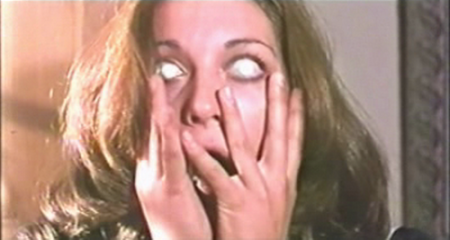
people-dark-32Returning to the mansion upstairs, our group finds out that every living thing above ground is now totally blind. The guy who is going to turn out to be our protagonist, Fulton (Alberto de Mendoza) figures out that there has been a nuclear war, and they have just days before the radiation comes. This is bad science at its baddest, but let’s just roll with it.

The men head into town to steal get supplies for their wine cellar/fall out shelter and the boytoy host of the debaucheries (Tomas Pico) first stabs the blind shopkeeper they’re ripping off, then freaks out and shoots some of the now-blind villagers before he is himself killed by one of the outraged doctors. The others return to the villa, and prepare to hunker down until the fallout passes. Their efforts are interrupted by a mob of vengeful blind people.

tumblr_ltsiu1js241qaun7do1_500What this is, obviously, is another version of Night of the Living Dead, except with blind people instead of zombies. The advantage to that is we are able to skip right over the “they’re learning to use tools!” phase right into cars being used as battering rams to get into the villa. The major disadvantage is the rather problematic conversion of blind people into bloodthirsty monsters.

But as a zombie siege picture, it works; all the necessary notes are hit, and hit well. Though what can be considered another flaw is the adherence to the Night of the Living Dead model, right up to the downbeat ending.
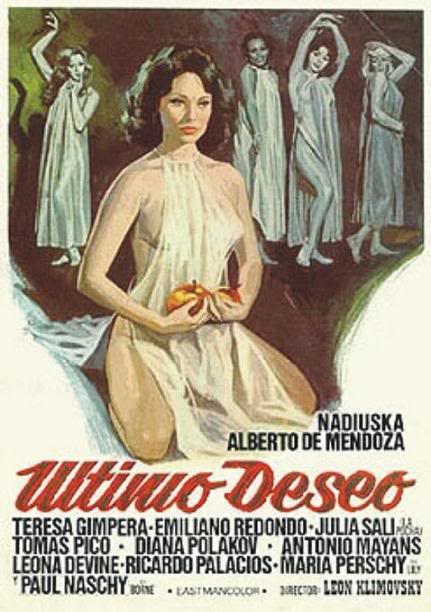
the-people-who-own-the-dark-1975The double year credit in the title of this post is due to the fact that (Surprise! Surprise!) this is actually a Spanish movie, Ultimo deseo. That would likely come as no surprise if I had told you the designated asshole (who is so mean that when he shoots skeet, he uses real pigeons) is Paul Naschy, and the mistress of the villa is the lovely Maria Perschy. Also, the director is Leon Klimovsky, who you’ll recognize from a ton of Naschy werewolf movies.

The original cut is 12 minutes longer than the English version; I suspect I’ll never know what’s in those 12 minutes, and given what I’ve seen, it probably doesn’t much matter. There are some character stories that aren’t fully exploited in this version, but there’s not a whole lot here to make me want to seek those moments out. It’s not a terrible movie by any means, but neither is it a great movie. It’s entertaining enough during its runtime, but alas! Does not cry out for a second viewing.

The People Who Own the Dark on Amazon

O: Orgy of the Dead (1965)

HubrisweenBlackRed

Click the banner for Hubrisween Central. Or visit Hubrisween on Letterboxd


Orgy_of_dead_poster_01In any of these movie marathons, too much of a good thing can get poisonous. Eventually you just have to watch something you know is terrible, just so you can have a larf and reflect how good you have it at other times.

No one had let Ed Wood Jr. near a director’s chair since The Sinister Urge in 1960. I still haven’t seen that, I now realize, but I have seen Night of the Ghouls, which languished at the lab for years because Eddie couldn’t afford the fees, and the sad truth is, the man had learned enough by that time that Night has few of the lunatic  newbie mistakes that riddle his earlier pics, so much so that Wood had, at that time, progressed from manic risibility to mere mediocrity. Surely there is a German word that describes the sadness that causes me.

Night of the Ghouls does have some of the flavorful Ed Wood dialogue, though, and since Orgy of the Dead is an Ed Wood script from an Ed Wood novel, it proudly possesses some, as well.  Producer Stephen Apostolof, making his directorial debut, was a little too smart to let Eddie near the big chair, but he did employ him as a production assistant. Too bad those smarts didn’t extend to the casting, because there are few things worse than bad actors trying to do Ed Wood dialogue. Then, God bless ’em, that is why I am here.

PDVD_354Orgy of the Dead is a nudie-cutie, a subgenre more or less created by Russ Meyer. Most of them are simply loose frameworks to connect burlesque striptease numbers (see also Kiss Me Quick, one of the more watchable examples of the breed, if only for its oddness). This means I am going to have problems finding photos to illustrate this review that do not violate WordPress community standards. (I can still talk about body parts, because nobody reads anymore)

Your norms (and chief bad actors) here are Bob and Shirley (William Bates and Pat Barrington). Bob is a successful horror writer who is looking for an old abandoned graveyard at midnight for inspiration, and dragged his girlfriend along just because. One car wreck later (the squealing brake sounds start a couple of cuts before the actual incident) they regain consciousness and find themselves unwilling spectators to the court of the Emperor of the Night (Criswell), who is judging the dead, or at least the dead who are female and have a propensity for losing their clothing. While dancing.

1032759261_919ff689a4 copyThere are roughly ten dances on the card tonight, with the slightest of story elements to justify them. The sudden lack of clothing never is explained, but I guess we can credit Apostolof for using the near endless cutaways to Criswell and his attendant (Fawn Silver, as either the Black Ghoul, Princess of the Night, or Ghoulita, depending on whether you believe the IMDb, the script, or the video box) to excise the strip part of the striptease, and just go to the near-nudity.

There is an Indian dance, then a quote-unquote “Skeleton Dance”, during which our, ahem, heroes, from their hiding place, say things like “I can’t imagine anything dead is playing that music” and “Nothing alive looks like that,” because Bob is an idiot.

After a Goldfinger-inspired dance where a woman who “loved gold above all else” gets dipped in gold (her picture is under the credits and much of the publicity material), Bob and Shirley get captured by the Emperor’s goons, a not half-bad werewolf and a really terrible mummy. (And yes, the boredom has set in to such a point that I did not realize that Shirley was also the dancer for the Gold Girl number).

OrgyoftheDeadTied to two conveniently-placed obelisks (while Shirley yells, “Fiends! Fiends!”), Bob and Shirley are forced to watch the rest of the evening’s festivities, and I know how they feel.

First Ghoulita informs us “To love the cat is to be the cat.” Now, I have loved and lived with several cat lovers, and the uniform never included assless leopard-print pajamas with a boob window. I feel so deprived. And we are going to ignore Criswell’s “A pussycat is born to be whipped.”

bob and shirleyI shudder to inform you that we are now only four dances into our set. There is a “slave dance” (featuring my favorite Criswell line, “Torture! Torture! It pleasures me!”) which is followed by Bob telling Shirley, who is just standing there, “Panic won’t do us any good!” Then we have a Mexican dance, then a Hawaiian dance (which honestly seems to last an hour), then a comedy sketch with the mummy and wolfman which is every bit as painful as you think it is, and then there is a bride “who murdered her groom on her wedding day, and now she dances with his skeleton.” (“We rented this skeleton prop for the day, and dammit, we’re going to use it!”) Or at least she does until the go-go music starts, and then she starts gyrating her upper torso so her breasts flail about in all directions. This was the same act as the blonde Sex Bomb in Kiss Me Quick, and just looks uncomfortable, if not downright painful. Still, I suppose this is a fetish for someone out there…

Scream, Gingerla, Scream!

Scream, Gingerla, Scream!

Shirley gets to show us she has the worst movie scream ever, and we still have to get through the zombie dance and the streetwalker dance and…

No, I’m not going to tell you how it ends. Suffer as I did.

Orgy is competently shot, if not acted. Some of the ladies have pretty good dance moves, some do not. They’re all attractive, but seem to fall within the same body type. Your main enemy while watching Orgy of the Dead is going to be boredom, pure and simple, unless you are vitally interested in burlesque and third-rate Martin Denny imitations. This has to be the fifth or sixth time I have watched it, and unfortunately, Orgy of the Dead does not improve with age – but my facility with the fast forward button certainly did.

Oh, the hell with community standards, have a NSFW trailer:

Orgy of the Dead on Amazon

N: Nosferatu the Vampyre (1979)

HubrisweenBlackRed

Click the banner for Hubrisween Central. Or visit Hubrisween on Letterboxd


Nosferatu_Phantom_der_NachtI have watched a lot of horror movies in my life, and I really have no idea how many times I’ve seen the story of Dracula play out. In the course of my time on this Earth, I have seen the Count go from Evil Incarnate to Tragic Romantic Hero (a metamorphosis of which I do not approve).  I suppose the ultimate capper was when I finally got to play my dream role, Van Helsing, in a theatrical version that was pretty close to the novel, meaning I actually lived the story for a few months.  Good as the story is – and there are portions of Bram Stoker’s novel that deserve their high place in the annals of horror fiction – man I am tired of this story.

So, I have managed successfully to avoid Dario Argento’s Dracula, although I admit I have never seen the Count turn into a giant praying mantis, but I’m afraid that even that novelty isn’t enough to make me sit through that series of events again. But I am more than willing to make an exception for Werner Herzog’s remake of F.W. Murnau’s Nosferatu.

7723_5The first reason is the storyline of Nosferatu is different enough to seem fresh (not fresh enough for Stoker’s widow Florence, who very nearly succeeded in making Murnau’s version a lost film). Removed from the possibility of litigious widows, Herzog returns the character’s original names, though for some reason possibly only known to himself, he flips the characters of Lucy and Mina. He also combines the characters of Van Helsing and Dr. Seward, but combining characters is par for the course in versions of Dracula.

The other reason, of course is this is Werner freakin’ Herzog. This is the director who made a movie about dragging a steamship over a mountain by dragging a steamship over a mountain. No sets for this man, if Castle Dracula must be a ruined castle atop an inaccessible mountain, he hauls his cast and crew to a ruined castle atop an inaccessible mountain. When the ghost ship Demeter drifts to port, bringing the vampire and his numerous coffins, that is a real damn ship scraping the walls of the canals of Drelft in the Netherlands. Herzog makes no bones about his intentions as the opening credits play out over footage of actual mummified corpses in Guanajuato, Mexico.

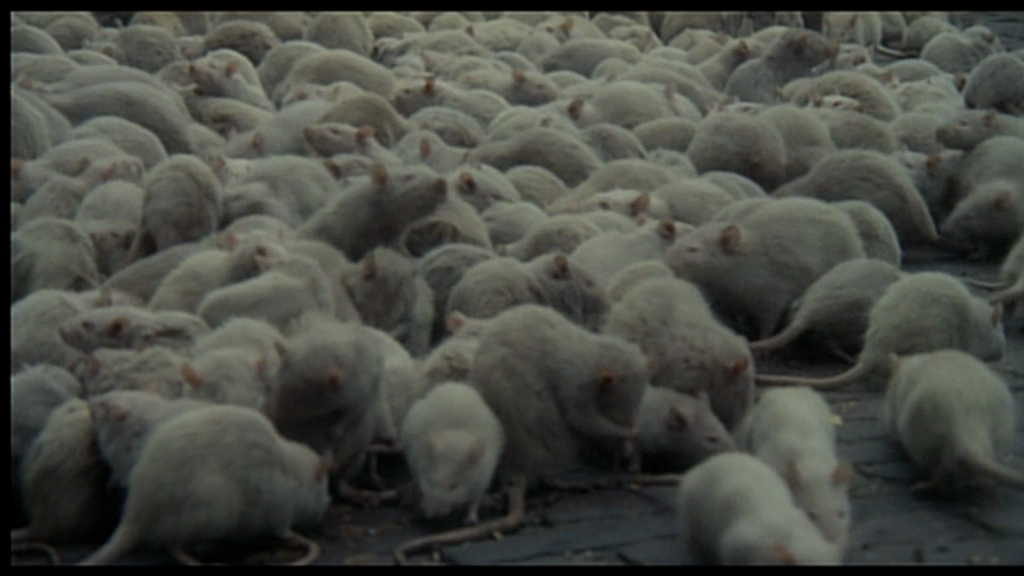
nosferatu ratsAs Herzog’s version of the story progresses, it gets farther and farther from Murnau’s, as Herzog is not going to be satisfied with Gus Van Sant-ing what he considers to be one of the most important movies in German cinema. The most telling embellishment brings to the fore the metaphor of vampire as disease; a lot of treatises and think pieces have been written about vampires representing syphilis or AIDS, and Herzog runs with it. The arrival of the ghost ship also brings an army of rats, and the Plague with a capital P descends on the town. Again, Herzog doesn’t rely on camera angles and trickery to turn a couple of hundred rats into an army, we are talking thousands of the suckers, white rats bought from a scientific research supply and dyed gray for their moment in the limelight.

nosferatu-1979-061The cast is an amazing lot, too: Bruno Ganz as Jonathan Harker, the lovely Isabelle Adjani – looking as if she has just stepped off the silent screen – as Lucy, and, of course, Klaus Kinski as Dracula. Kinski and Herzog’s fractious, often violent relationship yielded some of the most amazing cinema of the 20th century, and Kinski’s Count is so layered, he is almost impenetrable. He would never be mistaken for a romantic hero, but he is unmistakably tragic, sometimes conflicted, but above all, very, very frightening and otherworldly.

Possibly the most satisfying parts of this movie are the times Herzog, ever the intelligent filmmaker, has the reverence to simply restage shots from the original, and they remain just as powerful in this present day as they did nearly a century ago, reminding us why both films are considered masterpieces.

Nosferatu on Amazon


M: Man Bites Dog (1992)

HubrisweenBlackRed

Click the banner for Hubrisween Central. Or visit Hubrisween on Letterboxd


manbitesdogposterThere was a moment watching Man Bites Dog that I had an appropriate moment of deja vu (well, appropriate except that the filmmakers are Belgian, not French). When the small indy film crew following prolific serial killer/hit man Benoit (Benoit Poelvoorde) admit that they’re running out of money and must stop filming, and Benoit offers to take over as producer. That nibbled at me for a few minutes until I realized where I had seen it before: the Adi Shankar/Joe Lynch unofficial Venom short, Truth in Journalism. Substitute Eddie Brock for Benoit.

Reviewing news stories about Truth in Journalism reveal that Shankar was very upfront about the Man Bites Dog influence (and that very few of these reporters had ever seen Man Bites Dog). He describes it as a “super-niche” movie, which may be true, but it shouldn’t be, because it is very, very influential.

man-bites-dog-screenshot-2[1]Benoit is an efficient, ruthless killer who has disposing of bodies down to scientific ratios, and exactly which victims are likely to have money socked away, and where. “I  like to start every month with a postman,” he says, as this allows him to target pensioners. The film crew following Benoit is already complicit in his numerous crimes (you will lose track of how many murders are committed in shock-cut montages), but they also start getting more involved, as when director Remy (Remy Belvaux) drags off the body of a dead watchman – Benoit doesn’t want to touch him, because the murdered man was black and he is afraid of getting AIDS.

So, yes, besides being a thief and murderer, he’s also racist and frequently cruel to what friends he does have, but is also capable of being extremely charming and playing the comic. As the cast is using their real first names, the segments with Benoit’s mother and grandparents are all quite real – they thought the boys were making a movie about Benoit, so of course they are unaware of how “little Ben” is making his way in the world.

mbd3This is a comedy, make no mistake, though it is comedy blacker than the inside of a lump of coal at the center of the earth. Possibly the best example of this is the fact that the film crew keeps losing sound men, by which I mean they keep getting killed in the course of filming, with a tearful Remy delivering the exact same eulogy and dedication of the film to each fallen audio guy – right down to the same pregnant girlfriend. Jeez, Remy, think of a new name.

But the darkness at the heart of the movie is still constant, leading up to a night of  drunken carousing, when the crew actually participates in a particularly repulsive gang rape and double homicide, and all pretensions about being impartial observers and recorders go by the wayside.

The actual, real filmmakers had no idea the movie would be as well-received as it was; shot over the course of a year whenever they had the money, using family and friends, this was supposed to be a “calling card”, proof that they could actually make a feature. That in their desperation to find a hook for a movie to be made with nearly no money, they manage to pretty accurately predict reality TV (along with another excellent “super-niche” movie, Series 7), and provide a template for found footage movies yet to come – and eventually wind up in the Criterion Collection – is pretty amazing.

It’s also sadly predictable for this sort of thing that none of the filmmakers, save Benoit, has gone on to much of a career. Like Leonard Kastle and The Honeymoon Killers, lightning struck once, and we’ve all been waiting for it to strike again.

Man Bites Dog on Amazon

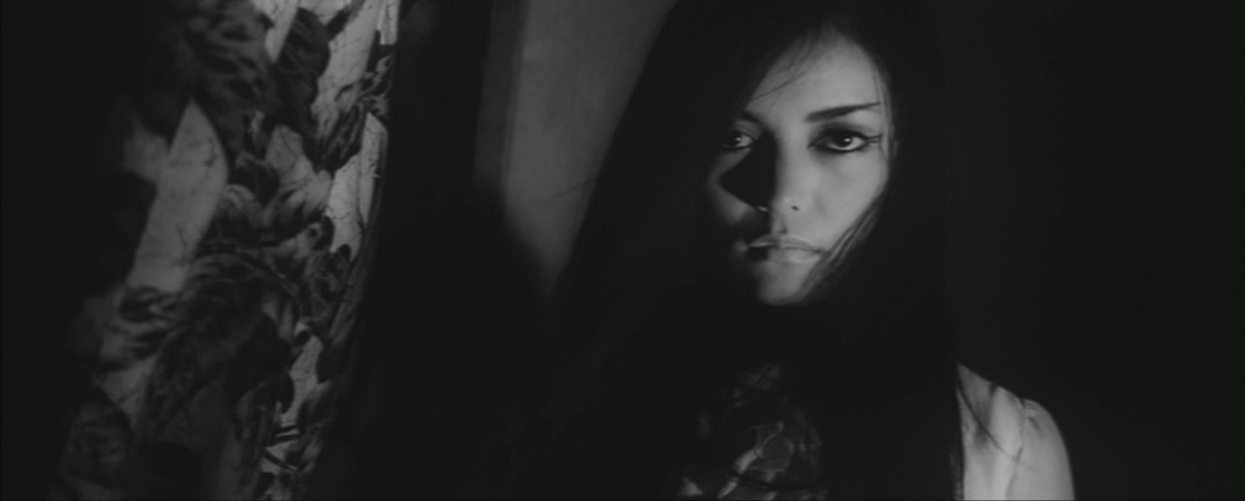
L: The Living Skeleton (1968)

HubrisweenBlackRed

Click the banner for Hubrisween Central. Or visit Hubrisween on Letterboxd


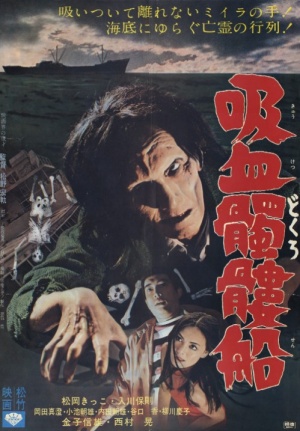
The-living-skeleton-posterNestled firmly in-between its better-known siblings in the Eclipse Collection When Horror Came to ShinchokuThe Living Skeleton at first seems a fairly typical ghost story. It begins with enough blood and thunder: the crew of a freighter shackled together at the ankles, threatened by a gang of machine-gun wielding thugs. The sole woman on board begs for the life of her new husband, the ship’s doctor. They are all gunned down in cold blood.

Switch to three years later. Saeko (Kikko Matsuoka), who we will find is the identical twin of the woman in the first scene, lives at a Catholic church under the care of Father Akashi (Masumi Okada), and is dating a young man, Mochizuki (Yasunori Irakawa). All seems well, until Saeko and Mochizuki go scuba diving and are confronted by a horde of anatomically risible skeletons, all chained together at the legs.

3LS 11Mochizuki jokes later that they were seeing things, but that night a storm rolls in, and on the horizon: a seemingly derelict freighter, blowing its foghorn. Saeko is irresistibly drawn to it, and nearly drowns boating to it. It is the Dragon King, the freighter from the first scene, thought lost at sea. She finds the ship’s log, which tells of suspicious people aboard, and a secret cargo of gold bullion. Then she sees her sister and faints.

Saeko vanishes from the church, much to the Father and Mochizuki’s dismay. Meantime, the members of the gang that slaughtered the crew is either enjoying the fruits of their crime or the dregs of their wasting same; they start seeing that chick they know they killed three years ago, and they start dying one by one.

So it’s pretty obvious that Saeko has been possessed by the spirit of her dead sister – they always seemed to have a psychic bond, she tells the Father – and she’s avenging herself, right?

Not so fast.

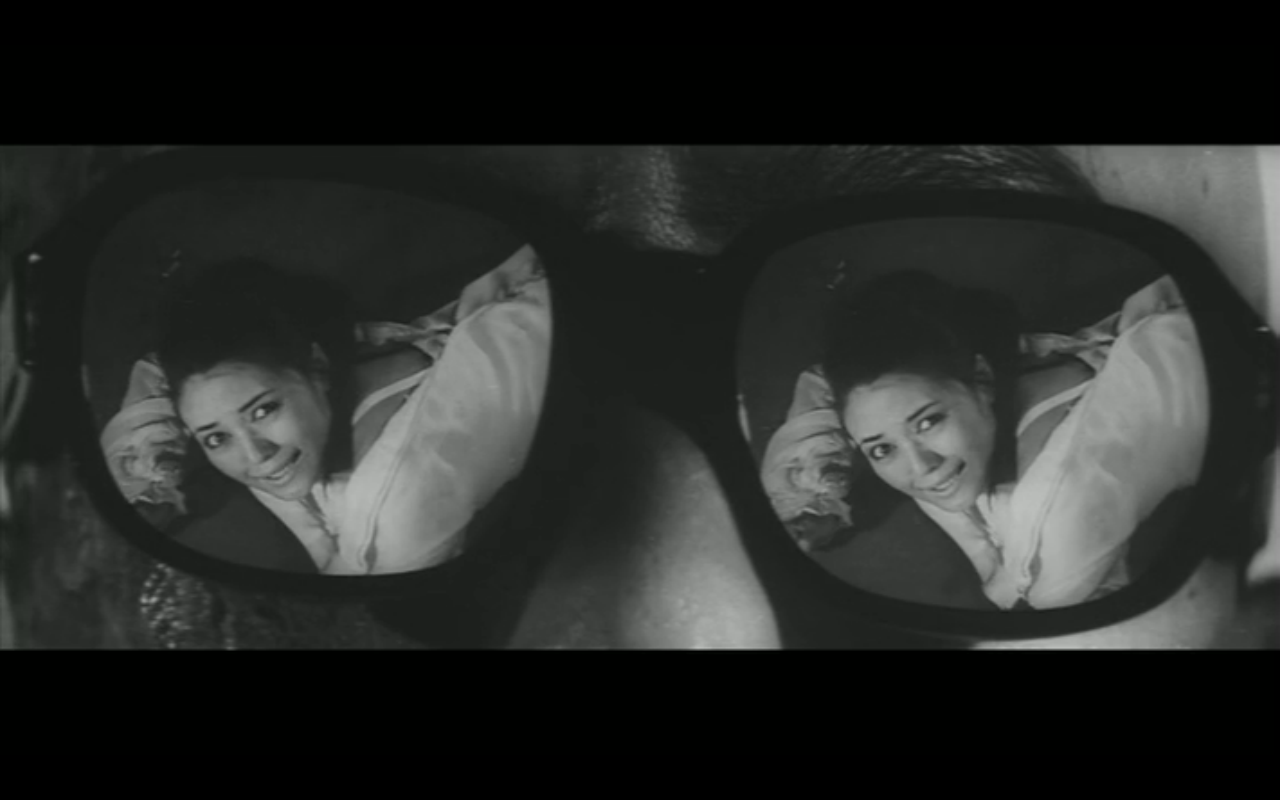
duo lsIt looks like The Living Skeleton is going to give us that tooth-grinding device, the rational explanation that explains away all the supernatural happenings, which it does, but the rational explanation is ten times weirder than a vengeful ghost seeking retribution. The last half hour is so berserk, one mind-croggling revelation stacked upon another, that I’m not even going to try to relate it here. It’s so insane it has to be seen, and I’m not handing out any spoilers.

The Living Skeleton pretty much makes sure it stands apart from its brethren at Shochiku Studios by being shot in black and white, increasingly uncommon in 1968, so much so that it is definitely an artistic choice. There are at least two user reviews on the IMDb pointing to this as “the obvious inspiration for The Fog”, to which I have to ask – which version of  The Fog did they see? Or which version of The Living Skeleton? Both have ghost ships and avenging spirits, but this like saying Citizen Kane is the inspiration for Cool Runnings because both feature sleds. Come on.

saekoLiving Skeleton also led me to ponder if bats actually would nest in derelict freighters. I suppose they could, but then it was made obvious that these are ghoooOOOooost bats, so, you know, educational.

I like when movies can surprise the living hell out of me. That doesn’t happen near often enough.

When Horror Came to Shochiku on Amazon

K: Kiss of the Vampire (1963)

HubrisweenBlackRed

Click the banner for Hubrisween Central. Or visit Hubrisween on Letterboxd


kiss_of_vampire_poster_01

This was a movie I had seen as a child, way back when; I remember it played on NBC in a Prime Time slot, re-titled Kiss of Evil, and I recall being rather confused about the whole thing. Turns out I was seeing a version that had been massively tampered with, and I direct you to this IMDb page for the details. I eventually figured out the true title was Kiss of the Vampire, have now finally watched it again, and was relieved to find out it made a little more sense.

One of the scenes heavily cut for sensitive American viewers is the opening, a funeral in your typical Hammer turn-of-the-century cemetery. One cloaked fellow watches from a distance, and the village gossips whisper that “he’s been drinking again.” This fellow walks to the graveside as the service concludes, takes the shovel and proceeds to smash the shovel down into the coffin. Whatever is in that coffin screams, and impossibly, blood gushes out. The frightened villagers run away, crossing themselves.

Kiss Of The Vampire WelcomeAfter the credits, we are introduced to our – well, not heroes, but our main characters, Gerald and Marianne (Edward de Souza and Jennifer Daniel), who are traipsing about in their motorcar, on their honeymoon. Marianne is a terrible map reader, and they are lost and eventually run out of petrol. This is observed by a telescope in a nearby dilapidated château. They have the car towed to a nearby, nearly deserted hotel, where they find themselves the only other tenant besides the alcoholic Professor Zimmer (Clifford Evans), whom we all recognize as Mr. Shovel Chucker from earlier.

George and Marianne are invited to dinner by the owner of the aforementioned château, Dr. Ravna; they find the interior of the mansion to be quite lovely, and Ravna and his two children very handsome and genial. Of course, given the pre-credit sequence and the title of the movie, we are pretty damned sure they’re vampires, and as the movie progresses, we find they are vampires with a penchant for very elaborate and rococo plots.

kiss12Delivery of the rather exotic petrol will take several days and the Ravnas invite George and Marianne to a lavish masked ball. Make no mistake, the entire purpose of this ball is to get George drunk, and then drug him, while Ravna puts the bite on Marianne. When George awakens, he is told there is no such person as Marianne, and that he is a miserable drunken sot and should leave forever.

Even the innkeepers are telling him he came to the hotel alone, but Professor Zimmer is having none of that, and gives George the index card version of what is going on; Ravna is the head of a cult of vampires – all the other attendees of the ball are members of that cult. The vampire Zimmer skewered with the shovel was his own daughter, and he has been laboring over his ancient texts to find a magic spell that will “turn evil against evil”.

kiss13A whole lot of Kiss of the Vampire seems like a bunch of 60s Hammer films were put in a blender. The same setup would be utilized for Dracula: Prince of Darkness three years later (also written by Anthony Hinds) and Zimmer must cauterize a vampire bite, much like Peter Cushing in Brides of Dracula. The major elements that set this one apart from the others is the treatment of the vampires as a religious cult, right down to the flowing white robes, and that spell woven by Professor Zimmer, which culminates in an attack on the château by a flock of the finest rubber bats available from the local Woolworth’s.

It’s that final attack that impressed me as a kid; it’s unusual enough to make a lasting impression in a childhood spent watching monster movies. Sadly, the movie proper doesn’t live up to the extraordinary scenes bookending it. The actors are a solid lot, but lacking the convincing gravitas of either Cushing or Lee. Once all the subterfuge is put aside, and Zimmer and George go on the offensive, the story becomes much more involving – but by that time, it’s almost over. A diverting enough movie, but definitely not one of the brighter jewels in the Hammer crown.

(The only trailer I could find on YouTube is so dark as to be worthless. Here instead, is a speed-ramped version of the closing sequence set to Chimo Bayo’s 1992 “Bombas”. The Internet. Go figure.)

Kiss of the Vampire on Amazon

J: Jason X (2001)

HubrisweenBlackRed

Click the banner for Hubrisween Central. Or visit Hubrisween on Letterboxd


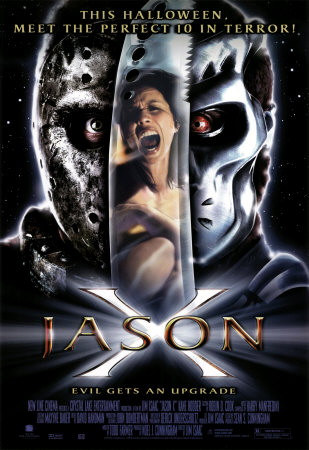
Jason_xHey, you know me: I hate slasher movies.

This is an ancient enmity. I liked Halloween. I despised the first Friday the 13th, which was a monstrous mega-hit, and which spawned something like a hundred copycats in the next two years. This is a continuing pattern in my life; back when I was an avid gamer, I preferred RPGs, and suffered through a wave of side-scrolling shooters, then a wave of fighters. Good thing Zelda and Final Fantasy took a chunk of time, because there was precious little else available for folks like me.

So it was with slashers. A friend of mine hated horror movies until I forced him to return to and watch The Howling to its conclusion (he had left early upon discovering it was a werewolf movie oh jesus don’t get me started), and then found myself dragged by this new convert to every slasher that came out. He was hoping to catch that makeup effect buzz again, you see, but not every movie could afford Rob Bottin or Tom Savini, nor did they try.

gloveMy major problem with slashers is they’re just so mechanical, quite often not even bothering to switch up the proceedings from the last slasher movie you saw. At their very worst, they earned the charge of misogyny directed against the genre as a whole. The fast track to horror is to menace or victimize a woman, which allows first-time directors and hacks to get the response they want, simply and lazily. Do the same to a man and the audience response tends toward “Why isn’t he fighting back? What a wuss!” So when men fall into the victim column, they tend to get killed quickly, suddenly.

I know slashers have their fans. I’m not one of them. Twilight, Glee and Dancing With The Stars also have their fans. I am not one of them. And yet, I have seen all the Nightmare on Elm Street and Friday the 13th movies. Nightmare because I appreciated the fantastic elements, and Friday because… I’m an optimistic idiot. (Didn’t watch any of the Halloween movies past III because I’m not a complete masochistic moron)

I watched Jason Lives because Hollywood finally caught up with me and Forever Evil by realizing that an unstoppable killing machine needed to be a zombie. I was almost charmed by whichever one was Jason vs Carrie. I was pissed off all over again by Jason Takes Manhattan because, finally! A new venue! Jason takes a walk through Central Park at night! Jason versus a New York SWAT Team! Annnnnd then I saw it and it was just another body count flick and a wonderful opportunity squandered.

But say what you will about Jason and Freddy, at least they didn’t discriminate in their activities. Men and women were grist for those gruesome mills. Which brings us to Jason X, the by-now almost inevitable “Jason in Space” movie.

Jason X 14Jason’s been captured, and since multiple attempts to execute him have failed, it is decided to simply cryogenically freeze him. All well and good until David Cronenberg (literally) shows up to study his regenerative abilities instead, just in time for Jason to bust loose and kill everybody except for Dr. Final Girl (Lexa Doig), who despite being mortally wounded, manages to freeze Jason and herself.

Regenerative abilities nothing, they should study how Jason gets that machete so frickin’ sharp, punching right through the reinforced steel door of the cryogenic chamber.

455 years later, a spaceship crew discovers the cryo chamber and take Dr. Final Girl and Jason on board. This is some sort of archeological enterprise with an eye toward profit, manned largely by (horny) students and some cannon fodder soldiers.  Dr. Final Girl is healed by nanotech, and though she’s not ideally profitable, Jason would be, as even in the future he is a notorious killer. So of course they let him thaw out.

This set-up from The Thing isn’t the last movie they’re ripping off here, either, as the soldiers on board quickly shift into Aliens mode and try to track down Jason in this astoundingly cavernous ship. They also sling around an uncomfortable amount of bullets for a pressurized space vessel, but since Jason also dismembers the pilot so they crash through a space station that supposedly represented salvation, I have to say that this particular ship was built to last. At least until the story necessitates it breaking up to move the story along.

jason-x-robotI remember absolutely none of the character names because they’re all going to be dead in a drastically short amount of time – this has the highest body count of any of the Friday the 13th movies – though I do remember the female android Kay-Em 14 (Lisa Ryder), who has a Pinocchio complex (she’s in love with her creator and vice-versa). She has all the good lines, and when she’s upgraded to a well-armed warbot, actually takes Jason out. She is every nerd’s wet dream, and I am a nerd. Then Jason is repaired by malfunctioning nanotech, so we now get to rip off The Terminator.

All this borrowing from other movies actually works in Jason X‘s favor; the filmmaker’s hearts are in the right place, and the borrowings actually feel like homage rather than desperation. It does stray into the realm of the too-cute, though: one of the characters on the chopping list in the Alien segment is named Dallas, the doomed space station is the “Solaris Station”.  My favorite part. though, is going to remain the holodeck replica of Camp Crystal Lake the survivors rig up to distract Jason; it even includes vixens with 80’s hairstyles indulging in the exact actions which always spelled doom in the earlier movies. “Do you want to have pre-marital sex? We looooooove pre-marital sex!”

So Jason X is that oddity for me, a Friday the 13th movie that actually entertained me while still managing to be a slasher movie. Still terminally stupid, but it never thought I was stupid, which gets it a higher grade, in my book.

(I’m trying to remember if “Let the Bodies Hit the Floor” was already a cliche by this point)

Jason X on Amazon


I: I Walked With A Zombie (1943)

HubrisweenBlackRed

Click the banner for Hubrisween Central. Or visit Hubrisween on Letterboxd


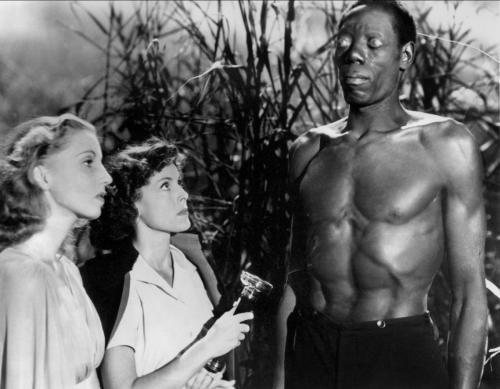
220px-IwalkedwithazombieWhen you combine a youth spent mainly watching disposable cinema with a later life determined to educate oneself on a hundred years of cinema, it’s really nice to find the place on that Venn Diagram those two intersect; in this case, the films of Val Lewton.
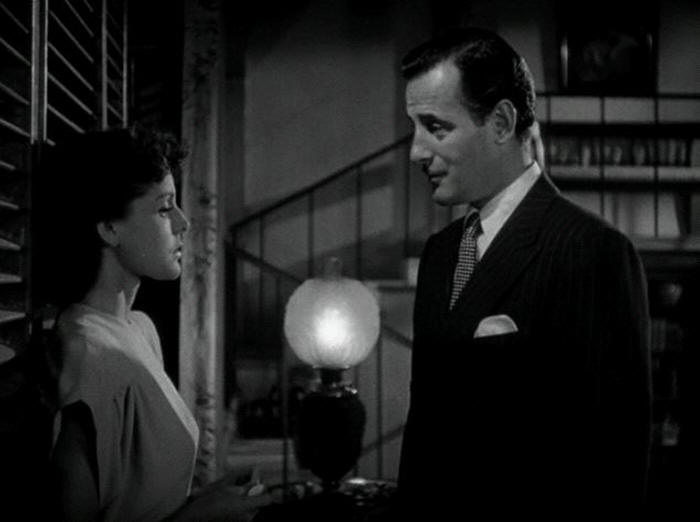
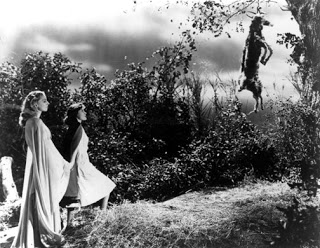
Lewton had some small success as a novelist, then worked as a publicist and assistant to David O. Selznick (it’s a piece of Hollywood apocrypha that Lewton, in the course of writing some scenes for Gone With the Wind, jokingly added a shot that would be ridiculously expensive to produce, and Selznick loved it: the now famous scene slowly revealing the seemingly infinite field of war casualties) . This eventually led to him being named head of RKO’s new horror unit. His job: produce horror movies under 75 minutes in length, developed from titles given him by the home office. None could cost over $150,000.

The first movie he delivered was Cat People, which became RKO’s major money-maker for that year. This allowed Lewton a certain amount of freedom, which resulted in eight more movies, many of which are acknowledged as classics of cinema, not just of the horror genre. This came to an end with a management change at RKO and the death of the horror movie itself after World War II. Lewton would attempt to regain his former stature, despite increasingly poor health, until his death in 1951.

The thing is, to this point I had actually seen only two of his movies. High time for a third.

i-walked-with-a-zombie5 Based on an article (or series of articles, depending on the source) by Inez Wallace in the Saturday Evening Post, Lewton considered the title probably the worst that he had been saddled with, and proceeded to largely ignore the source material, telling his writers to instead distill a story from Charlotte Brontë’s Jane Eyre.

Young nurse Betsy Connell (Frances Dee) is hired to tend to a sugar plantation owner’s wife on the isle of Saint Sebastian in the West Indies. The owner is the handsome but tragic Paul Holland (Tom Conway), whose wife, Jessica (Christine Jordan) suffered a bout of some tropical fever that has left her an active catatonic, a mute robot prone to nocturnal walks and not much else. Betsy is of course going to fall in love with Paul – his half-brother, Wesley (James Ellison), refers to him as “ideally Byronic” – and the feeling is going to be reciprocated. Betsy becomes obsessed with the idea of restoring Jessica to normal, and returning Paul his wife, even if it means her own heartbreak, though that is going to reveal to her the twisted family history that possibly led to Jessica’s condition.

I Walked with a ZombieIt’s Betsy’s desperate resorting to the local voodoo houngan as a possible cure for Jessica that leads to the justification for the title, and the movie’s most famous sequence, when our plucky nurse and her charge, in a flowing gown worthy of the cover of a gothic romance, travel through sugar cane fields to the sound of jungle drums, passing all sorts of grim pathmarks until finally confronted by the movie’s true zombie, the striking Carrefour (Darby Jones). Director Jacques Tourneur, always a master of the use of darkness in his films, is especially masterful here.

Add to this mix of characters Paul and Wesley’s mother, a nurse who runs the island’s dispensary and a lady with a host of secrets herself (Edith Barrett, at the time only 3 years older than her “son”, Tom Conway, and Mrs. Vincent Price!) and James Bell as Dr. Maxwell, the physician who always provides a rational counter to the superstitions running rampant through the rest of the story, and you have a very busy 70 minutes, indeed.

zombiLewton’s penchant for ambiguity is in full display here; the houngan seems to have a certain amount of power over the catatonic Jessica, and Carrefour is an ominous presence, but equal points are made for rational explanations. The point has also been made that Lewton’s movies are obsessed with death, and I Walked with a Zombie is certainly a prime exhibit, with Paul’s morbid, sour observations and Wesley’s growing notion that the only true release for Jessica is death. There is a pall of doom hanging over everything and everyone, exacerbated by Paul’s explanation that Saint Sebastian was populated by slave ships, leading to a culture that cries at the birth of a baby and celebrates death as the only release from a life of sorrow.

Criticism has been leveled at the movie for the now-native population of the island, largely shown to be little more than superstitious children, but compared to a lot of its contemporaries, the portrayal of the non-white characters in the story is damn near enlightened. Hell, the fact that it addresses the horrors of slavery and the massive, lasting scars it leaves on a society, a mere four years after Gone With the Wind, is amazing.

You can probably see Lewton’s whole approach to this movie (and his others) in that somebody probably mentioned that Jessica isn’t really a zombie. So in the opening credits, we see Betsy walking along the beach with Carrefour, apropos of nothing, while her voiceover says, “Yes, I walked with a zombie.” You can almost hear Lewton in the background muttering, “There. You happy? Now shut up and let me make the movie I wanted to make.”

I Walked with a Zombie  on Amazon

H: The Haunted Strangler (1958)

HubrisweenBlackRed

Click the banner for Hubrisween Central. Or visit Hubrisween on Letterboxd


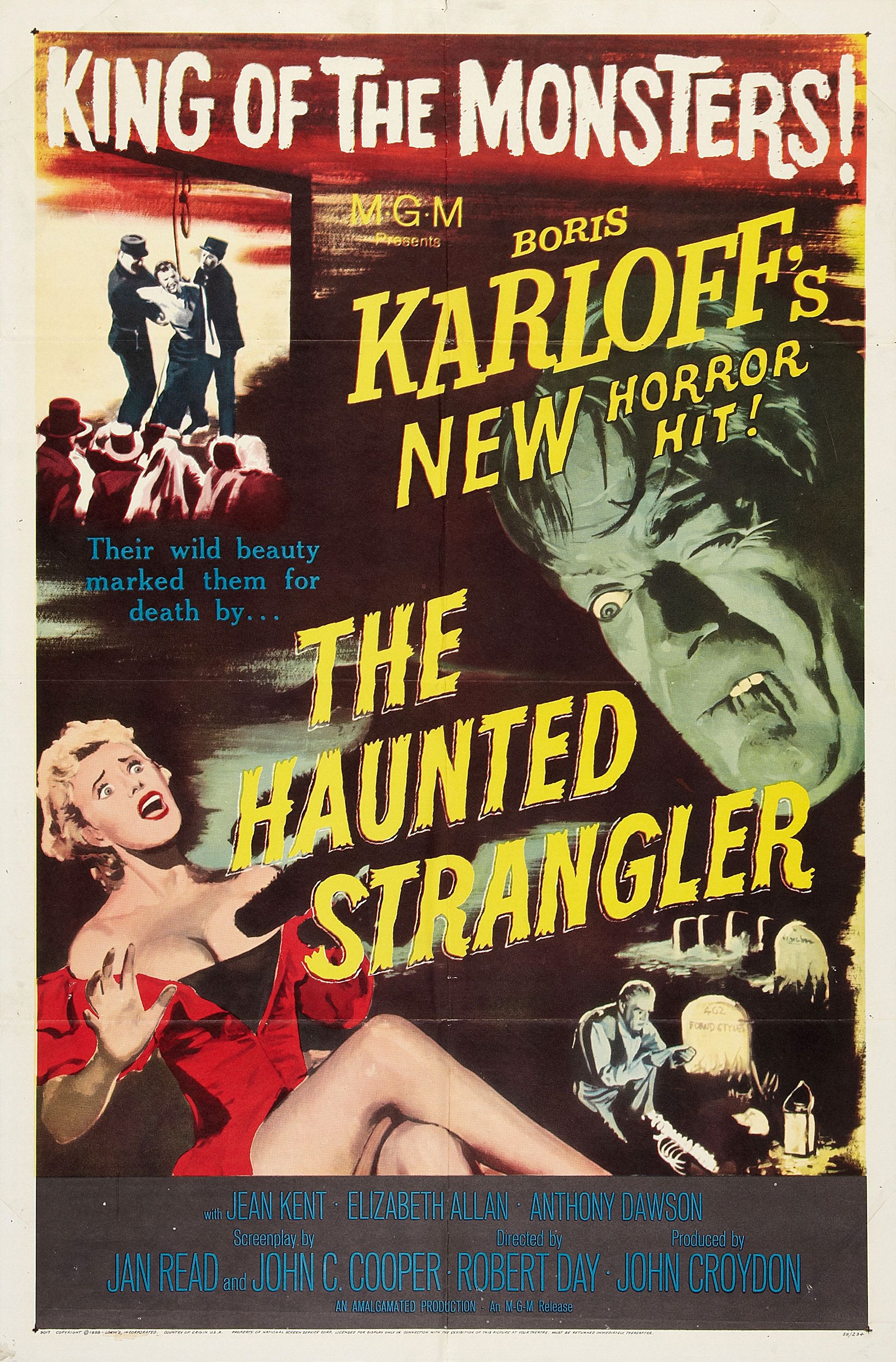
haunted-strangler

If you’ve been reading my babblings for any length of time, you know that my childhood occurred during the Great Monster Revival of the late 50s-early 60s, sparked by that upstart medium, television and its dependence on older movies. Oh, how I recall poring through every issue of TV Guide, seeking out horror movies, especially those gems I read about in Famous Monsters of Filmland, the Universal cycle of the 30s.

I watched them all, but I can’t say I really appreciated them until I was older. The thing I’m reaching for here is Frankenstein, which has become something of a touchstone for me. I didn’t really give it a serious rewatch until Universal put out a deluxe version in 1999, and a lot was suddenly made clear to me, particularly why the Monster had garnered our sympathy all these years, and that is due in no small part to director James Whale and a 44 year-old actor making the most of a long hoped-for and worked-for break: Boris Karloff.

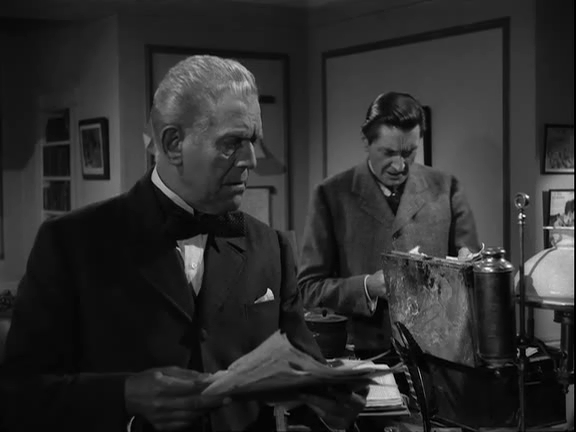
THauntedS1Karloff proved to be an actor of great sensitivity who was immediately typecast; he made his peace with that, referring to it as a trademark he was given for free. He worked steadily through the 30s and 40s, but in the opening years of the 50s, he was seen as less useful, relegated to supporting roles. He moved into television, and his first love, theater. When he did return to movies, it was in drivel like Voodoo Island and Frankenstein 1970 – so it must have seemed a very pleasant change when, in 1957, he agreed to do two movies for producer Richard Gordon which feel like welcome throwbacks to a bygone era: Corridors of Blood and The Haunted Strangler.

Karloff plays James Rankin, a successful novelist and social reformer in 1880 London. His newest project concerns one Edward Styles, a one-armed man hanged twenty years earlier as the Haymarket Strangler (before you ask the very same question I did, his victims were only “half-strangled, then slashed to death”). Rankin feels that Styles was railroaded, and his research puts him on the trail of a Dr. Tennant, who autopsied the Strangler’s victims and seemed to know far too much in his reports. Tennant disappeared soon after Styles’ execution, and Rankin discovers the missing doctor’s kit, which has its scalpel just as obviously missing.

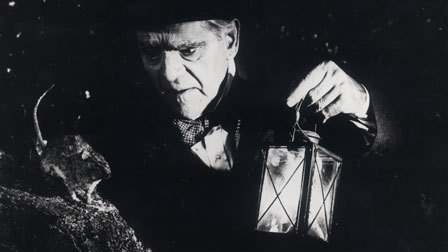
Film_367w_HauntedStrangler_originalRankin suspects what the audience has known since the movie’s opening: the scalpel was placed in the coffin with Styles’ corpse. Since no one will believe his theories, Rankin resorts to bribery to exhume Styles in the prison cemetery in the dead of night. He finds the scalpel, but his triumph turns to horror as his body twists and contorts, and soon he is apparently possessed by the spirit of the Haymarket Strangler, once again preying on dance hall girls after an absence of twenty years.

Despite its low budget, The Haunted Strangler manages the look of a much more expensive picture. The supporting cast is full of solid British performers like Anthony Dawson and Vera Day,  but the movie rests solidly on Karloff’s shoulders, and he once more grasps the opportunity – no pun intended – with both hands. He’s nearly 70 years old during filming, suffering chronic back pain and emphysema, but nonetheless turns in an astoundingly physical performance. Oh, I know that’s not him doing the John Wilkes Booth leap off a balcony onto a stage, or hurling himself through a window, but the later scenes when an increasingly distraught and violent Rankin is committed to an asylum, wrestling with orderlies, you would swear you were watching an actor half his age.

FILM_Wilentz_DVD_MonstersThis also brings up what has become one of my favorite Karloff stories: he and director Robert Day were discussing the transformation scenes, and how they could be accomplished with what little makeup they could afford – it is a plot point that Rankin is unrecognizable while possessed. Karloff’s solution was elegant in its simplicity: he took out his lower dentures and sucked his face into the resulting void. He had done something like this earlier in his career, when he was playing Frankenstein’s Monster, in fact: to get the proper cadaverous look, he removed a dental bridge and sucked his cheek in. Simple, inexpensive, effective.

So consider The Haunted Strangler the Jekyll-and-Hyde story Karloff never got to make. There is a major plot twist three-quarters of the way in that I admit caught me flat-footed, and that happens rarely for me, so familiar am I with the tropes of the horror movie. Karloff had other memorable roles ahead of him, but not many – The Sorcerers and Targets (and arguably The Terror and The Raven), so it is very nice to see him in great form in a tidy little thriller.

Also, there was no place to put it in that last paragraph, but I find him absolutely hilarious in The Comedy of Terrors, but, again: supporting role. And now, as is usual, I find myself fighting the impulse to replace every single movie I’ve planned to watch for this project with Karloff movies.

Monsters & Madmen on Amazon

G: The Golem (1920)

HubrisweenBlackRed

Click the banner for Hubrisween Central. Or visit Hubrisween on Letterboxd


golem poster

It’s educational to visit the Classics, even in a strange environment like Hubrisween. Though I classify myself as a horror fan, this is a movie I had managed to miss seeing… well, all my life. It’s referenced in books aplenty, was a presence in the Famous Monsters magazines of my youth, hell, I had a DVD of it sitting on the shelf, part of an Alpha Video set of silent horror movies. And yet, somehow, I had never partaken of it.

It was likely because I’d already known the plot since I was a child. The plot, certainly, but there were twists in its delivery that still made the movie entertaining for me. The educational aspect I refer to here is something I had never known, until this viewing and the research that followed: this is the third movie in a trilogy, which explains the full title, Der Golem, wie in die Welt kam – “The Golem: How He Came Into The World”. Yep, it’s a prequel.

The two movies which precede it – the 1915 The Golem and the 1917 The Golem and the Dancing Girl – are both considered to be lost films. The 1915 Golem takes place in the modern day, with an antique dealer finding the clay figure (much to his eventual regret), and the 1917 version is apparently a comedy… well, we may never really know, unless the films suddenly crop up. Under these circumstances, a prequel makes some sense, and it is an intriguing production all around.

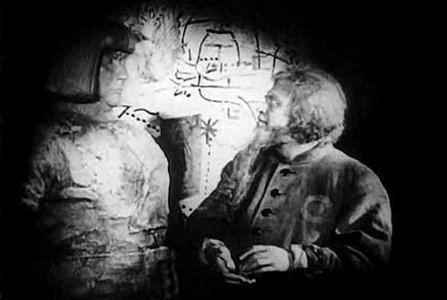
golem1In case you didn’t read Famous Monsters as a child, here’s the plot: in 15th century Prague, Rabbi Leow (Albert Steinrück) is poring over his arcane tomes and finds the stars predict disaster. The next day, the Jewish ghetto receives word that the Emperor has decreed all Jews will be exiled from the country in a month. Leow petitions the Emperor for an audience, as he has drawn up horoscopes for the king in the past, but he has a Plan B: the stars are also right for the creation of the Golem, a clay figure of a man to be given life by a magic word, and it is Leow’s aim to construct such a creature as a guardian for his people.

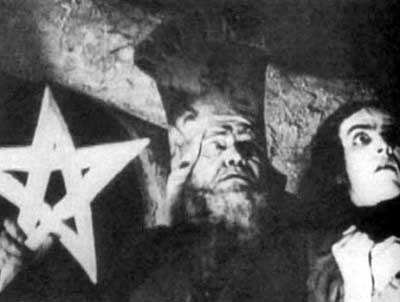
Leow performs a ritual involving magic circles and a staff that turns into a glowing star, to invoke the demon Astaroth and demand the word. This is a pretty amazing scene, and Murnau would borrow from it six years later for his production of Faust. Leow writes the provided word on a scroll, which is placed in an ornamental box that, when put on the Golem’s chest, does indeed impart life.

Golem-photo-1-400x302There is some standard stuff afterwards, of Leow and his son using the Golem as a servant; it has a tendency to be too literal in obeying orders, and is incredibly strong. Leow brings it along to his audience with the King (Otto Gebheür), which takes place during a “Festival of Roses”. Surrounded by many courtiers, the Golem begins to show some stirrings of human emotions; when the King asks Leow to perform some other miracle for their entertainment, Leow says he will show them “the history of my people, and our patriarchs,” but also warns the crowd that there must be no talking, or laughter.

So Leow magics up a 16th century movie showing the Exodus, and (I presume) Moses. The court Jester (Fritz Feld, in likely only his second role) makes a comment, the court laughs, and the castle collapses. Silly royalty should have listened to the Rabbi.

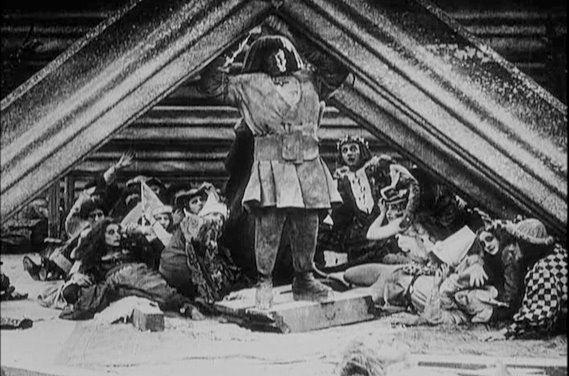
Golem as Strong ManFortunately, there is a Golem in the audience who holds up the collapsing ceiling like Big Bad John, saving the Emperor’s life, and causing him to pardon the Jews from their eviction. This would all be pretty hunky-dory, except Leow has noticed his clay servant’s peevishness and consults his book, discovering that as the stars progress, Astaroth will eventually reclaim its creation, turning the creature evil. The Golem, in fact, is reacting very badly when Leow tries to remove the box from its chest to turn it off. He finally succeeds, and decides that since the Golem has served its purpose, it’s time to destroy it.

He is interrupted from this by a summons to the synagogue to honor him and praise God for their delivery. Now, intertwined through all this drama. is the fact that the knight tasked with bringing the decree to the ghetto, Florian (Lothar Müthel), has been smitten by the very sight of Leow’s daughter, Miriam (the truly lovely Lyda Salmanova), and he has used Leow’s journey into the city to sneak into his house and spend the night with her. Once Leow heads off to the synagogue, his son discovers there’s a man in her room and, not knowing about the whole evil stars thing, reanimates the Golem to knock down the door.

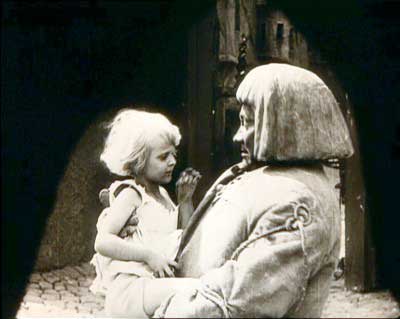
Golem-photo-6-400x319This, of course, is disastrous. It results in the death of Florian, the rabbi’s house in flames, and Miriam carried off by the Golem (although later she is mysteriously abandoned. Monsters. Go figure.) The Golem smashes down the gate of the ghetto, and finds a bunch of children playing, who mostly scatter at his approach. One does not, and offers the Golem an apple. The Golem lifts her up in his arms, and she innocently, curiously plucks the box off his chest. End of Golem.

Director and star Paul Wegener had made another early horror classic in 1913, The Student of Prague, during which he first heard of the legend of the Golem. By all indications, he felt he’d had to compromise too much on the previous two movies in the trilogy, and this was to be the definitive version. Architect Hans Poelzig designed the sets, and his recreations of the Jewish ghetto is one of the major reasons this is considered one of the great masterpieces of German Expressionist cinema.

der-golem-1920And yes, it is almost impossible to watch this and not see the prototype for many a movie that followed, especially James Whale’s Frankenstein. Look no further than the Golem’s shambling gait and those huge, bulky welder’s boots, the creature’s clumsy attempts to deal with unfamiliar emotions. Wegener’s Golem is more of a figure literally driven by demons, though, a far remove from Karloff’s portrayal of a pathetic, betrayed lost soul.

So there’s another classic down, and it is a classic not only because of its influence on later movies; it’s also more than a little affecting to consider the politics of the story. Or as my friend Mark Konecny put it, “I just couldn’t get past the whole foreshadowing the future of Europe thing.” Not just the increasingly frequent waves of violence against Jews (as I write this late July 2014, bewilderingly on the resurgence again), but in other ways: Apartheid nations and ghettos – still with us after all these centuries.

The Golem on Amazon